

Over the years, our production lines have handled thousands of custom rattan webbing orders, and one question keeps coming back from buyers worldwide.
Sourcing rattan cane webbing via OEM/ODM gives buyers access to full customization, consistent Grade A quality, lower unit costs through economies of scale, faster product development, sustainable sourcing traceability, and the freedom to focus on marketing and distribution instead of manufacturing complexities.
Whether you run a furniture factory in Europe, a building material wholesale business in the Middle East, or a private-label brand in Southeast Asia, understanding how OEM and ODM sourcing works can reshape your цепочки поставок 1. Let me walk you through the key advantages and practical details below.
How can I customize rattan cane webbing sizes and patterns for my unique furniture line?
When we first started receiving custom orders at our Foshan facility, many buyers were surprised by just how flexible the options really are. Most had been stuck buying standard rolls that never quite fit their designs.
With OEM rattan cane webbing sourcing, you can customize mesh size, weave pattern, roll width, roll length, cane strip thickness, and color finish to match your exact furniture specifications. This eliminates material waste and gives your product line a distinct look competitors cannot easily replicate.
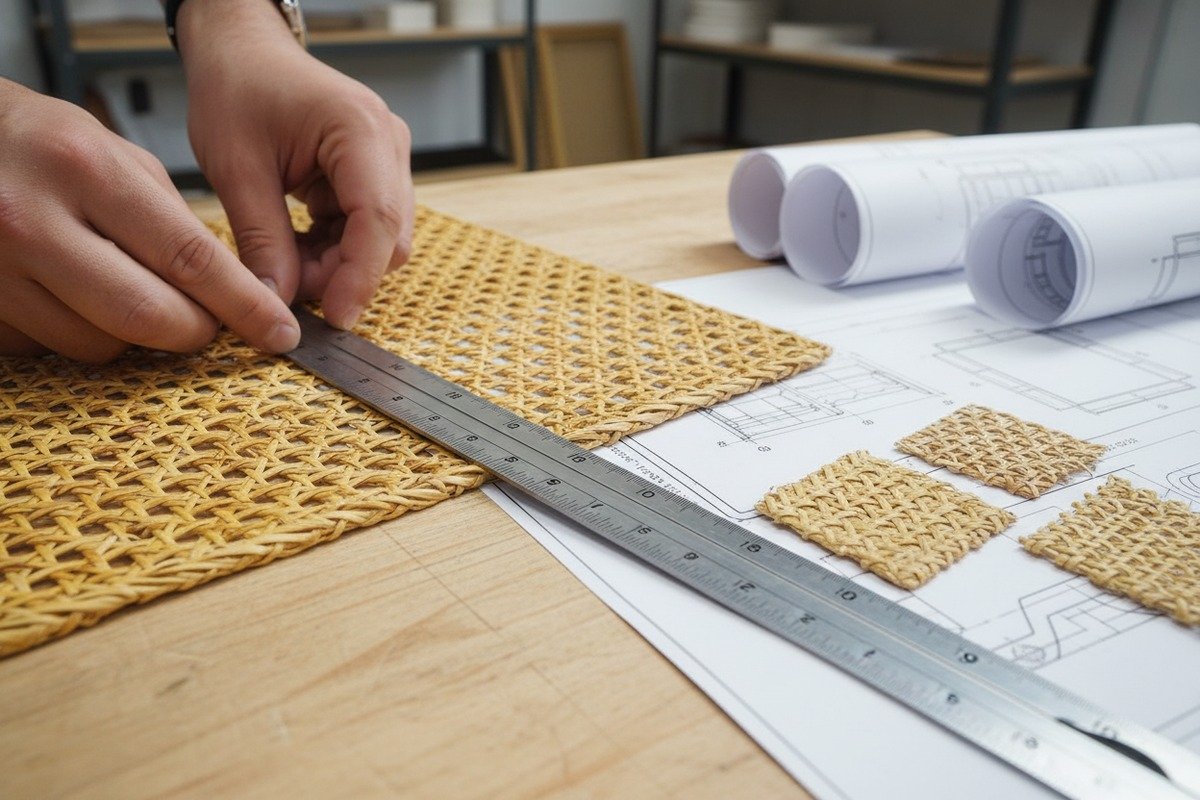
Customization is where OEM sourcing 2 truly shines. Instead of adapting your furniture design to whatever webbing sizes happen to be available, you flip the process. You tell the manufacturer what you need, and the factory builds to your specs. Here is how that works in practice.
Understanding OEM vs. ODM in Rattan Webbing
First, let's clarify the two models. OEM means the supplier produces rattan webbing to your exact design and specifications. You own the design. ODM means the supplier already has designs and patterns available, and you select from those or modify them slightly. You then sell under your own brand.
Both models open doors to customization. But OEM gives you full creative control, while ODM offers speed and lower development costs.
What Can You Actually Customize?
Here is a breakdown of the most common customization parameters our clients request:
| Customization Parameter | Стандартные варианты | OEM Custom Options |
|---|---|---|
| Размер сетки | 1/2 inch (standard) | 1/4 inch, 3/8 inch, 3/4 inch, 1 inch |
| Тип плетения | Open hexagonal (radio weave) | Basketweave, diamond motif, chevron, closed weave |
| Roll Width | 45 cm, 60 cm, 90 cm | Any width from 30 cm to 120 cm |
| Длина рулона | 15 m standard | 5 m to 50 m per roll |
| Cane Strip Width | 2.5 мм | 1.5 mm to 4 mm |
| Color / Finish | Natural beige | Bleached, stained, anti-mildew treated |
Pattern Selection and Design
Our weaving teams can produce classic patterns like the hexagonal open-mesh radio weave 3, dense square basketweave, and complex geometric diamond motifs. Each pattern changes the look and feel of the finished furniture piece dramatically. For example, open-mesh patterns work beautifully for chair backs and cabinet doors where airflow matters. Dense basketweave suits headboards and screens where privacy and texture are priorities.
We also offer synthetic rattan matting 4 with chevron wave designs and other intricate textures. These mimic natural wood fibers but add water resistance for outdoor or high-traffic applications.
Why Custom Sizing Reduces Waste
One thing many buyers overlook is material waste. When you buy standard 60 cm rolls but your cabinet doors need 52 cm panels, you lose 8 cm on every cut. Over a production run of 5,000 units, that waste adds up fast. Custom roll widths eliminate this problem entirely.
Отбеленные и обработанные варианты
Bleached rattan cane webbing is another popular custom option. The bleaching process lightens the natural color to a bright white or pale cream, which fits Scandinavian and coastal design aesthetics. We also apply anti-mildew treatments 5 for clients in humid climates like Thailand, the Philippines, and the Middle East. These treatments extend product life without changing the webbing's appearance or flexibility.
How do I ensure Grade A quality consistency when sourcing OEM rattan products from China?
Quality inconsistency is the number one complaint we hear from buyers who have tried switching suppliers. In our own QC department, we have seen firsthand how small lapses in sorting and grading can ruin an entire shipment.
To ensure Grade A quality consistency, establish clear material grading standards with your supplier, require pre-shipment inspections, request sample batches before bulk orders, verify the rattan origin and processing methods, and work with manufacturers who operate their own raw material sourcing facilities.
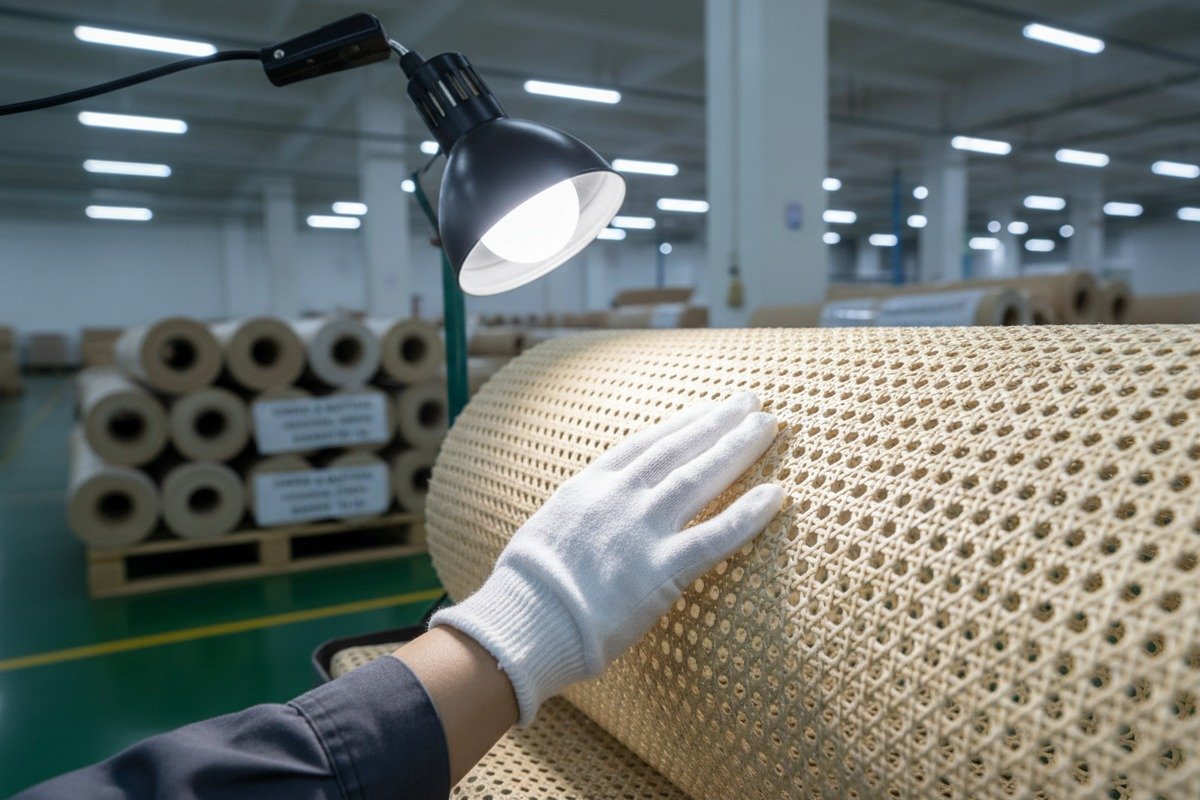
Quality consistency is not automatic. It requires systems, communication, and the right supply chain structure. Here is what that looks like from the inside of a rattan manufacturing operation.
What Defines Grade A Rattan Cane Webbing?
Ротанговая сетка класса А 6 has uniform strand thickness, consistent color tone across the full roll, no broken or missing strands in the weave, smooth surfaces free of splinters, and flexible pliability without cracking. Anything below this standard—uneven coloring, rough spots, or brittle strands—drops the material to Grade B or lower.
The Role of Raw Material Sourcing
Our factory in Indonesia sources rattan palms that are 5 to 7 years old. This age range produces cane with the best balance of flexibility and tensile strength. Younger palms yield cane that is too soft. Older palms produce cane that is brittle.
Because we control our own processing facility in Indonesia, we sort and grade the raw cane before it ever reaches our Foshan production lines. This upstream quality control is something most trading companies simply cannot offer.
Quality Control Checkpoints
Here is the multi-stage QC process we follow:
| QC Stage | What We Check | Action on Failure |
|---|---|---|
| Raw Material Intake | Cane age, moisture content, color uniformity | Reject batch or downgrade to B |
| Pre-Weaving | Strip width consistency, surface smoothness | Re-split or discard substandard strips |
| During Weaving | Pattern accuracy, tension evenness | Stop loom and adjust |
| Post-Weaving | Full roll visual inspection, flexibility test | Trim defective sections, re-roll |
| Pre-Shipment | Random sampling per AQL standards, packaging integrity | Hold shipment until corrected |
Practical Tips for Buyers
Request a sample roll before placing any bulk order. Compare it against a written specification sheet that includes acceptable tolerances for color variation, strip width, and mesh dimensions. When possible, visit the factory or arrange a third-party inspection 7. Ask your supplier whether they source raw materials directly or buy from intermediaries. Direct sourcing almost always means better consistency.
One of our regular clients, a purchasing manager in Thailand, initially faced quality issues with another supplier. After switching to our facility, she noticed the difference immediately—uniform color, no broken strands, and clean edges on every roll. The key was our vertically integrated supply chain 8 from Indonesian harvest to Chinese production.
Packaging Matters Too
Quality does not stop at the webbing itself. Poor packaging causes damage during shipping. Rolls should be wrapped in protective film, placed in sturdy cartons, and palletized properly. We use reinforced cardboard tubes inside each roll to prevent crushing. This is a detail many factories skip, but it makes a real difference when containers travel 30 or more days at sea.
Can I improve my profit margins by switching to a direct ODM rattan manufacturer?
We run the numbers with clients regularly, and the margin improvement from cutting out middlemen is often larger than people expect. Our experience shipping to over a dozen countries has shown us exactly where the savings come from.
Yes, switching to a direct ODM rattan manufacturer can improve profit margins by 15–30% by eliminating trading company markups, reducing product development costs, leveraging the manufacturer's existing designs, and benefiting from economies of scale on bulk production runs.
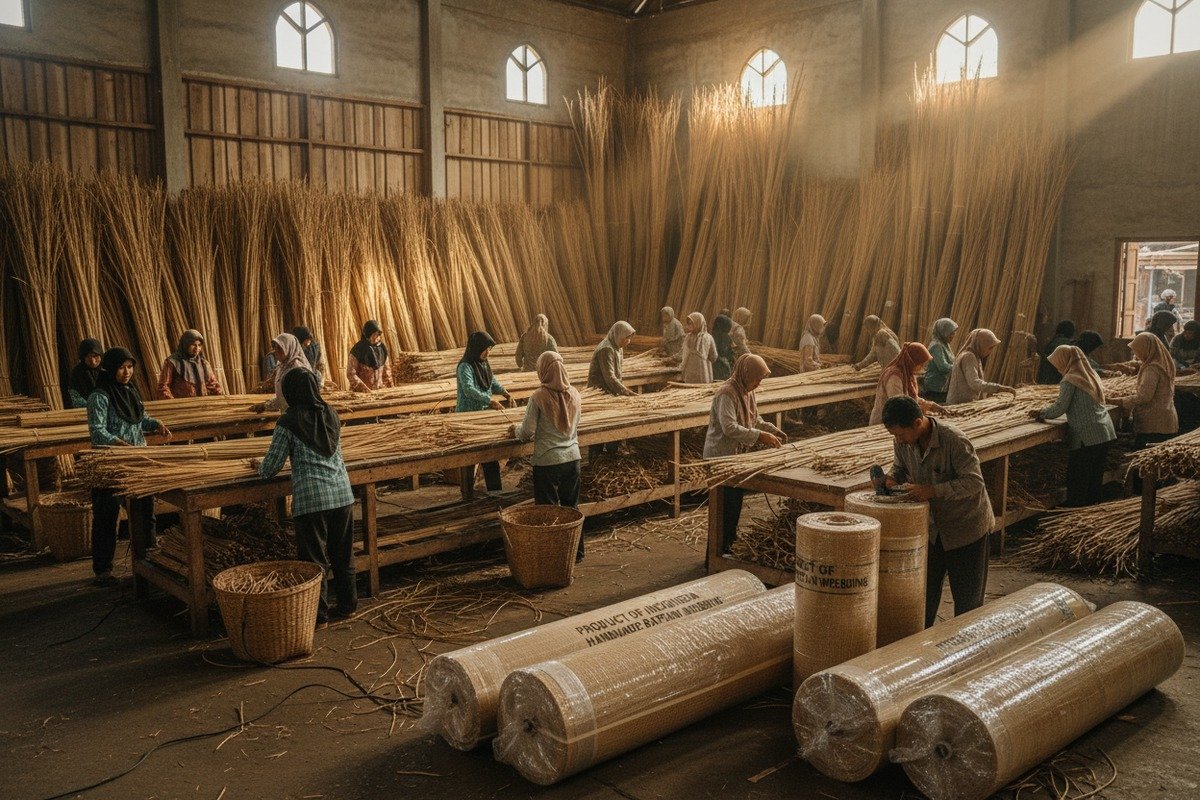
Let's break down the economics clearly. When you source through a trading company or multi-layer supply chain, each intermediary adds a markup of 10–20%. A direct manufacturer removes those layers. But the savings go beyond just price per roll.
Where the Cost Savings Come From
The ODM model is especially cost-effective because the manufacturer has already invested in product development 9. The designs, tooling, weaving patterns, and production workflows already exist. You are not paying for R&D from scratch. You simply select from proven designs, apply your brand, and order in bulk.
Compare that to full OEM development, where you might spend weeks and thousands of dollars on prototyping before production even begins. ODM gets you to market faster and cheaper.
Cost Comparison: ODM Direct vs. Trading Company
| Cost Factor | Via Trading Company | Direct ODM Manufacturer |
|---|---|---|
| Unit Price (per meter) | $3.50 – $5.00 | $2.20 – $3.50 |
| Design/Development Fee | $500 – $2,000 | Often $0 (existing designs) |
| Sample Cost | $50 – $100 + shipping | $20 – $50 (sometimes free) |
| Срок поставки | 30 – 45 days | 15 – 25 days |
| MOQ Flexibility | Higher (trader needs margins) | More negotiable |
| Communication | Indirect (through trader) | Direct with factory team |
These figures reflect real ranges we see across our export markets. The exact savings depend on order volume, pattern complexity, and material type.
Natural vs. Synthetic: Margin Implications
Material choice also affects margins. Natural rattan cane webbing carries a premium price in retail markets because consumers associate it with authenticity, craftsmanship, and sustainability. Your cost of goods is moderate, but retail markup potential is high. Synthetic rattan webbing costs less to produce and ship, and it appeals to buyers who need weather resistance and low maintenance. The margin percentage can be similar, but the absolute dollar margin per unit is often lower.
Here is a quick comparison:
| Фактор | Натуральная ротанговая тесьма | Синтетическая ротанговая тесьма |
|---|---|---|
| Raw Material Cost | Умеренная | Низкий |
| Retail Price Potential | High (premium positioning) | Умеренная |
| Durability (Indoor) | Отличная | Отличная |
| Durability (Outdoor) | Limited (moisture-sensitive) | Excellent (water-resistant) |
| Consumer Perception | Artisanal, eco-friendly | Practical, modern |
| Margin Potential | Высокий | Умеренная |
Reduced Capital Investment
Another margin advantage of ODM sourcing is that you do not need to invest in weaving machinery, factory space, or skilled labor. capital investment 10 Your capital stays free for marketing, distribution, and inventory. This is especially valuable for wholesalers and private-label brands that want to scale without the overhead of manufacturing.
Faster Time-to-Market
Speed matters in competitive markets. When a new interior design trend emerges—say, a demand for bleached rattan panels in Scandinavian-style furniture—an ODM manufacturer can deliver finished product within weeks. You skip the design phase entirely and go straight to production. That speed translates to revenue sooner, which directly supports better margins over the course of a year.
Scaling Without Risk
Working with a direct ODM manufacturer also reduces production risk. You are not managing raw material procurement, labor issues, or equipment maintenance. The factory absorbs those risks. Your job is to sell. This division of labor lets each party focus on what it does best, which drives efficiency on both sides.
What are the advantages of using a one-stop supplier for my private-label rattan webbing needs?
Managing five different suppliers for five different rattan products creates chaos. We built our one-stop supply chain specifically because our clients kept asking for a simpler way to source everything in one place.
A one-stop rattan supplier consolidates all product categories, quality standards, logistics, and communication into a single partnership. This reduces procurement complexity, lowers shipping costs through combined containers, ensures consistent quality across your full product range, and saves significant time on supplier management.

The concept of one-stop sourcing is simple, but its impact on a buyer's business is enormous. Let me explain why, based on how we have structured our operations across three self-invested factories and over 30 partner factories in Foshan.
What Does "One-Stop" Actually Mean?
It means you source natural rattan cane webbing, synthetic rattan matting, bleached rattan panels, rattan poles, rattan peel, and finished woven products—all from one supplier. You deal with one sales team, one quality standard, one shipping schedule, and one invoice. Instead of coordinating with multiple factories across different cities or countries, you have a single point of contact.
The Operational Benefits
Consider the daily reality of managing multiple suppliers. Each one has different lead times, different quality standards, different payment terms, and different communication styles. Multiply that by five or six product categories, and your procurement team spends more time managing suppliers than managing your business.
A one-stop supplier solves this. Here are the key operational advantages:
- Single quality standard across all rattan products, so your end customers receive consistent goods.
- Combined shipping in one container, which reduces per-unit freight costs by 20–40% compared to multiple smaller shipments.
- Simplified documentation with fewer invoices, fewer customs declarations, and less paperwork.
- Faster response times because your supplier already understands your brand, your standards, and your market.
- Easier reordering since all product specs and order history sit in one system.
Private-Label Benefits
For private-label buyers, a one-stop supplier is even more valuable. You can apply your branding, packaging, and labeling consistently across all product lines. The supplier handles printing, custom packaging, and labeling as part of the production process. This gives your brand a professional, unified appearance in the market—whether you sell natural hexagonal webbing, synthetic chevron matting, or bleached cane rolls.
Sustainability and Traceability
One-stop suppliers with vertically integrated operations offer better traceability. Because we own our rattan processing facility in Indonesia and manage production in Foshan, we can trace every roll of webbing back to its raw material source. This matters for buyers who need to demonstrate sustainable and ethical sourcing to their own customers or comply with import regulations in the EU and North America.
Rattan is inherently sustainable. It is a fast-growing climbing vine that does not require clear-cutting forests. Harvesting actually encourages new growth. When you source from a supplier who controls this full chain, you can confidently market your products as eco-friendly and renewable.
Risk Mitigation
Working with a one-stop supplier also reduces supply chain risk. If one of your five separate suppliers has a production delay, your entire product lineup could be affected. With a single supplier managing all categories, production scheduling is coordinated internally. Delays are caught and resolved before they cascade. And because the supplier has multiple production facilities—like our 30-plus partner factories—there is built-in redundancy. If one facility is at capacity, production shifts to another.
How to Choose the Right One-Stop Partner
Not every supplier that claims to be one-stop truly is. Here is what to look for:
- Verify they have their own factories, not just trading relationships.
- Ask for references from buyers in your target market.
- Request facility tours or third-party audit reports.
- Confirm they can supply both natural and synthetic rattan products.
- Check that they offer value-added services like anti-mildew treatment, custom bleaching, and private-label packaging.
- Ensure they have experience exporting to your country and understand your import requirements.
Our client base spans the Netherlands, Spain, USA, Australia, Turkey, and many more countries. Each market has unique requirements for documentation, packaging, and material certifications. A true one-stop supplier navigates all of these without you needing to educate them.
Заключение
Sourcing rattan cane webbing via OEM/ODM delivers customization, quality consistency, better margins, and streamlined operations—advantages that give your business a real competitive edge in today's market.
Сноски
1. Explains the concept and components of a supply chain. ↩︎
2. Replaced with Wikipedia for an authoritative definition of Original Equipment Manufacturer (OEM). ↩︎
3. Describes a specific rattan weaving pattern and its characteristics. ↩︎
4. Provides information on synthetic rattan materials and their properties. ↩︎
5. Details methods and importance of preventing mildew in materials. ↩︎
6. Defines quality standards and characteristics for rattan cane webbing. ↩︎
7. Explains the role and benefits of independent quality inspections. ↩︎
8. Replaced with Wikipedia for an authoritative definition of vertical integration. ↩︎
9. Explains the process and stages involved in product development. ↩︎
10. Defines capital investment and its role in business operations. ↩︎

 English
  Español de México
  العربية
  Deutsch
  Français
  Русский