
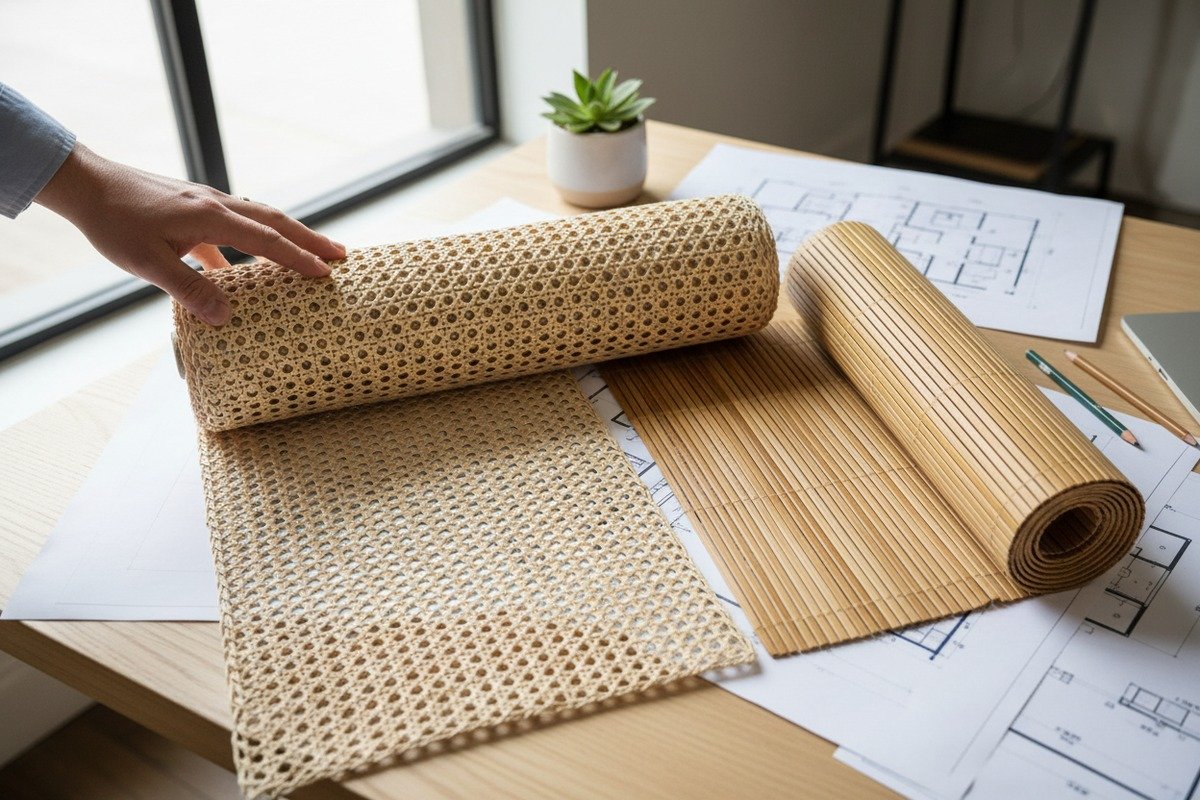
Every week, our sales team in Foshan fields the same question from furniture factories and material wholesalers around the world: “Aren’t rattan cane 1 and bamboo webbing basically the same thing?” It is a surprisingly common mix-up, and it leads to costly procurement mistakes—wrong flexibility, wrong look, wrong price point. The confusion is understandable because both materials are natural, woven, and popular in modern furniture design. But choosing the wrong one can mean cracked panels, unhappy end customers, and wasted container loads.
Rattan cane and bamboo webbing are two entirely different natural materials. Rattan cane comes from solid-core tropical palm vines and excels in flexible, intricate weaving. Bamboo webbing is made from hollow grass stalks, offering rigidity and lighter weight at a lower cost. They differ in texture, strength, aesthetics, and price.
Below, we break down the key differences across texture, durability, cost, and visual appeal so you can make the right sourcing decision for your next order.
How can I tell the difference in texture and strength between rattan cane and bamboo webbing for my furniture?
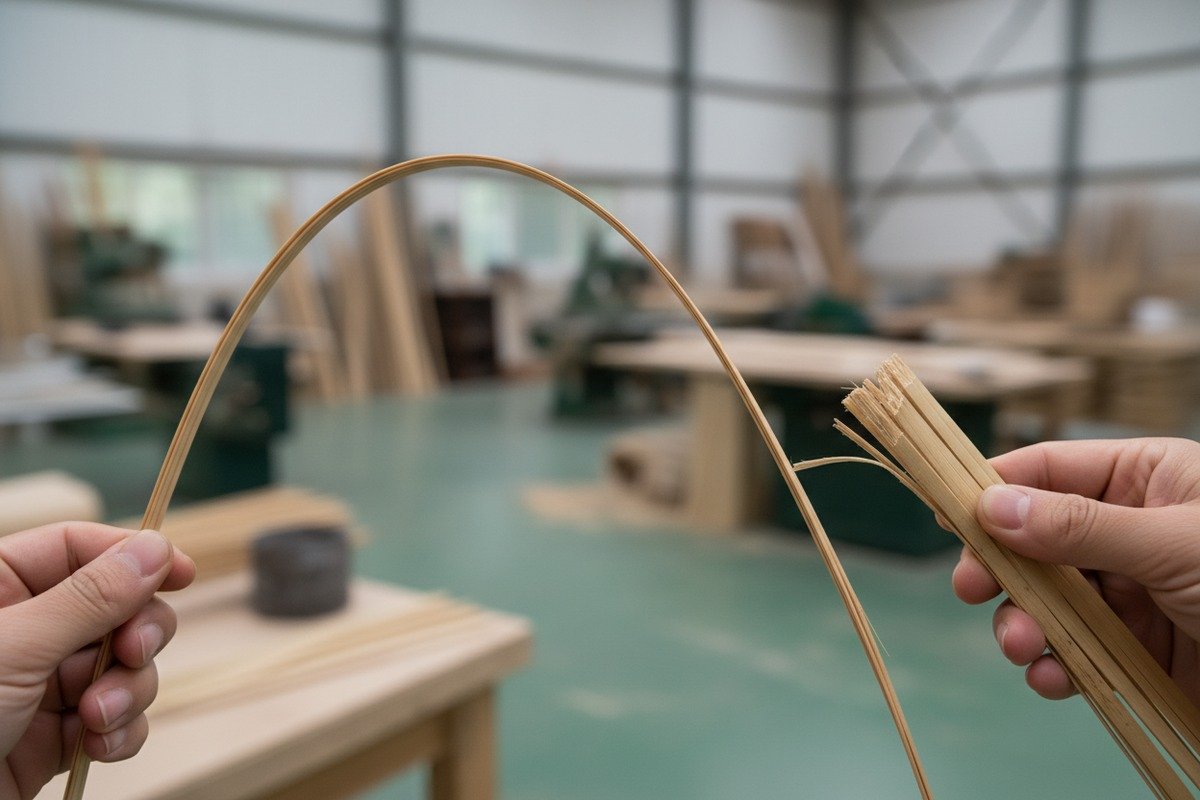
When we train new quality inspectors at our processing facility in Indonesia, the first test is simple: bend a strand. That single action reveals more about the material than any label ever could. Many buyers receive samples that look similar on camera, yet feel completely different in hand. The wrong pick means a woven panel that cracks during installation or a chair seat that sags after a few months.
Rattan cane has a solid, slightly fibrous core that bends smoothly without snapping, giving it a warm, organic texture. Bamboo webbing feels stiffer, lighter, and smoother because it comes from hollow culms. You can tell them apart by flexibility: rattan bends easily; bamboo resists bending and may crack under pressure.
Botanical Origins: Why the Materials Feel Different
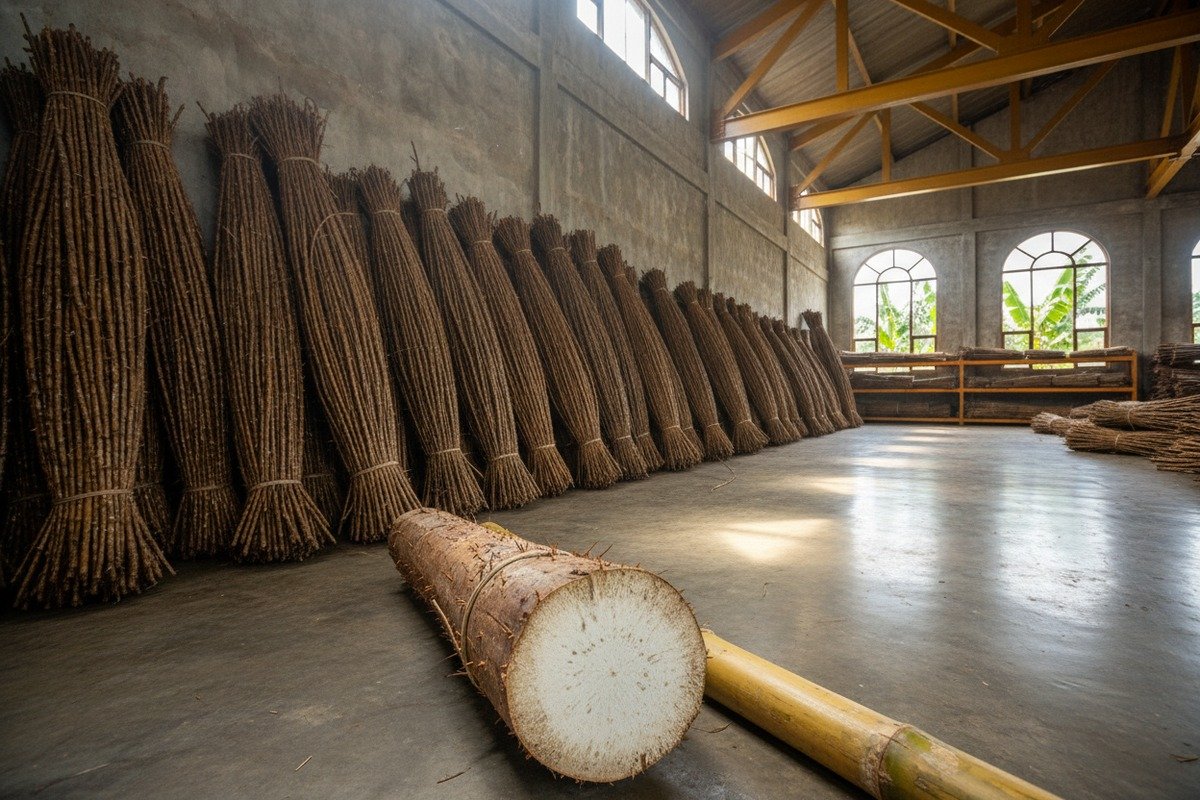
The texture difference starts at the plant level. Rattan is a climbing palm vine from the genera Calamus and Daemonorops. tropical palm vines 2 It grows as a thorny, rope-like creeper in the tropical rainforests of Southeast Asia, especially Indonesia. The vine is solid throughout—no hollow center, no segments. This solid core gives rattan its distinctive dense, slightly rough, fibrous feel when raw.
Bamboo, on the other hand, is a grass. It belongs to the family Poaceae 3. It grows as upright, segmented culms with a hollow interior. China is the world's largest bamboo producer, though it also grows in Africa, Southeast Asia, and Latin America. Because the culm wall is smooth and the interior is empty, bamboo strips feel lighter and slicker to the touch.
Key Physical Properties Side by Side
Here is a direct comparison of the properties that matter most when you handle both materials:
| Свойство | Rattan Cane | Бамбуковая сетка 4 |
|---|---|---|
| Internal Structure | Solid core throughout | Hollow with segmented nodes |
| Гибкость | High—bends and curves easily when steamed | Low—stiff, prone to cracking under force |
| Surface Texture | Slightly fibrous, matte, organic variations | Smoother, more uniform, sometimes glossy |
| Weight | Heavier and denser | Lighter due to hollow structure |
| Raw Color Range | Warm beige, straw yellow, cream tones | Wider range—green, yellow, golden brown |
| Typical Strand Shape | Round or half-round, sometimes flat-peeled | Flat strips from outer wall |
Strength: A Nuanced Story
Many people assume "stronger" means "better." But strength depends on the application. Bamboo has a higher compressive strength 5, which makes it excellent for rigid frames, flooring, and structural panels. Our clients who build bamboo ceiling panels love this rigidity.
Rattan cane, while softer, has superior tensile flexibility. tensile properties 6 It absorbs stress through bending rather than breaking. This is why rattan cane webbing is the go-to choice for chair seats, cabinet inserts, and headboards—areas that need to flex slightly under daily use without cracking. We have tested our rattan cane webbing rolls through repeated bending cycles, and quality Grade A material holds up far longer than bamboo strips under the same flex stress.
The Simple "Bend Test" for Buyers
If you receive a sample and you are not sure which material it is, try this:
- Hold a single strand at both ends.
- Gently bend it into a U shape.
- If it bends smoothly and holds the curve, it is rattan cane.
- If it resists, feels rigid, and shows stress lines or small cracks, it is bamboo.
This test takes five seconds. It has saved several of our wholesale clients from accepting mislabeled shipments.
Which material will provide better long-term durability for my specific manufacturing needs?
Over the past fifteen years of exporting rattan materials to more than twenty countries, we have tracked feedback from furniture factories on product lifespan. The answer to the durability question is never a simple one-liner—it depends on where the finished product will live, how it will be used, and how well it is maintained.
For indoor furniture like chair seats, cabinet doors, and headboards, rattan cane webbing lasts longer because its solid core resists fatigue from repeated flexing. Bamboo webbing performs better in rigid, structural applications like wall panels and ceilings where flex stress is minimal. Neither material is ideal for permanent outdoor use without protective treatment.
Indoor Durability: Rattan Takes the Lead
Rattan cane webbing, when properly processed and stored, can last 10 to 15 years in indoor furniture. The key is the solid core. It does not split along internal cavities because there are none. Our clients who manufacture dining chairs and bed heads report that Grade A rattan cane webbing maintains its shape and tension for years with minimal sagging.
Bamboo webbing can also last a long time indoors, but it is more sensitive to humidity changes. As humidity rises and falls with the seasons, bamboo strips can expand and contract. Over time, this cycling can cause warping or small cracks at the nodes. In climate-controlled environments, this is less of an issue.
Outdoor Use: Proceed with Caution
Neither material is naturally weatherproof. Direct sun causes rattan to yellow and become brittle over time. Bamboo can crack and split when exposed to repeated wet-dry cycles. If your production line includes outdoor furniture, both materials need a UV-resistant coating 7 and should ideally be used under covered areas like porches or patios.
Moisture and Humidity Resistance
Rattan cane has a less porous outer layer compared to bamboo. This gives it a slight natural advantage in humid environments. Our clients in the Netherlands and Australia—both regions with variable humidity—generally prefer rattan cane webbing for this reason. Bamboo webbing, if untreated, absorbs moisture more readily, which can lead to mold growth in tropical climates.
Maintenance Comparison
| Maintenance Factor | Ротанговая сетка | Бамбуковая сетка |
|---|---|---|
| Cleaning Method | Wipe with damp cloth, mild salt water | Wipe with damp cloth, avoid soaking |
| UV Sensitivity | Yellows and becomes brittle with prolonged exposure | More UV-resistant in some species, but still degrades |
| Humidity Tolerance | Good—less porous surface | Moderate—can warp or mold if untreated |
| Repairability | Easy to re-weave damaged sections | Difficult—rigid strips are harder to replace |
| Recommended Coating | Light lacquer or natural oil finish | Sealant or varnish for moisture protection |
Repairability: A Hidden Durability Factor
One advantage of rattan cane webbing that many buyers overlook is repairability. If a section of rattan webbing gets damaged—say, a pet scratches through a few strands—a skilled craftsman can re-weave that section without replacing the entire panel. Bamboo webbing, due to its rigidity, is much harder to patch. A damaged bamboo panel usually needs full replacement.
This matters for long-term cost calculations. A rattan chair that can be repaired three times over its life may ultimately cost less than a bamboo panel that must be replaced entirely each time.
How do the wholesale prices of rattan cane compare to bamboo webbing for my bulk procurement?
Price is usually the second question we hear from new clients—right after "what's the difference?" When we quote rattan cane webbing alongside bamboo webbing for the same order volume, the gap often surprises procurement managers. Understanding why the prices differ helps you budget accurately and choose the right material for your margin targets.
Rattan cane webbing typically costs two to three times more than bamboo webbing at wholesale. This premium reflects rattan's labor-intensive harvesting from wild rainforest vines, complex processing including sulfur treatment and hand-splitting, and limited growing regions concentrated in Indonesia. Bamboo is cheaper because it grows faster, is easier to process, and is farmed on a larger scale worldwide.
Why Rattan Costs More: The Supply Chain Story
Rattan vines grow wild in tropical rainforests. Harvesters must trek into dense jungle, cut the thorny vines by hand, and transport them out—often on foot. The raw stems then go through multiple processing steps: stripping the outer sheath, sulfur treatment 8 for a smooth finish, splitting into cores, and finally weaving into webbing sheets or rolls. Each step requires skilled labor.
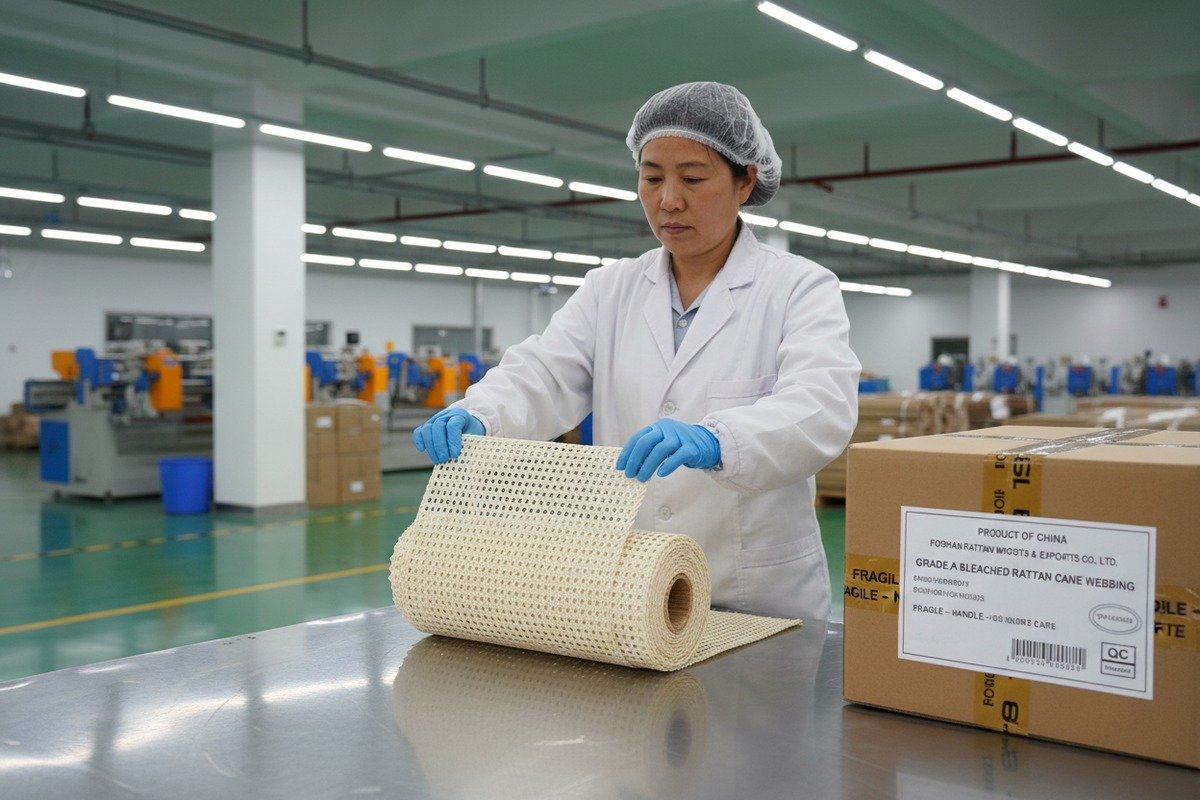
At our own rattan processing facility in Indonesia, we employ workers who have spent years mastering the art of splitting rattan cores to uniform thickness. This consistency is what separates Grade A webbing from lower grades, and it is a cost that cannot be automated away.
Why Bamboo Is More Affordable
Bamboo is cultivated on managed plantations, primarily in China. It grows extraordinarily fast—some species add a meter per day. Harvesting is mechanized in many cases. The culms are processed into strips using machines that cut, flatten, and dry the material in bulk. The supply is abundant, and the processing is less labor-dependent.
Price Range Comparison for Bulk Buyers
The table below gives a general sense of pricing at the wholesale level. Actual prices depend on grade, pattern, width, and order volume. These figures reflect our current market experience.
| Cost Factor | Ротанговая сетка | Бамбуковая сетка |
|---|---|---|
| Raw Material Cost | Higher—wild harvested, limited supply | Lower—plantation grown, abundant supply |
| Processing Labor | High—hand-split, hand-woven for premium grades | Moderate—more machine processing |
| Typical Wholesale Price Range | 2–3x the cost of bamboo webbing | Baseline reference |
| Minimum Order Flexibility | Often available in smaller MOQs | Larger MOQs common due to mass production |
| Shipping Weight per Roll | Heavier—increases freight cost slightly | Lighter—lower freight per unit |
| Price Trend (2023–2025) | Stable to slightly rising due to sustainability regulations | Stable, slight downward pressure from oversupply |
Total Cost of Ownership
Price per roll is not the whole picture. Consider these factors:
- Waste rate: Rattan cane webbing has lower waste during cutting and fitting because it does not crack easily. Bamboo webbing can lose 5–10% to edge cracking during installation.
- Return rate: Products made with rattan cane webbing see fewer customer complaints about cracking or warping, which reduces returns and warranty costs.
- Perceived value: End consumers associate rattan with premium, handcrafted quality. This allows furniture brands to charge higher retail prices, improving margins despite higher material costs.
For volume buyers who sell into the mid-to-premium segment, rattan cane webbing often delivers better margin per piece even though the input cost is higher. For budget-oriented product lines, bamboo webbing makes more financial sense.
Tips for Getting the Best Wholesale Price on Rattan
From our experience supplying wholesalers across more than twenty countries, here are practical tips:
- Order in full container loads to reduce per-unit freight costs.
- Consolidate patterns—ordering three patterns instead of ten keeps production efficient.
- Commit to annual volumes for price-lock agreements.
- Request Grade A material upfront to avoid quality-related reorders.
Our design team works closely with furniture factories in Spain, Australia, and the United States who are constantly trying to balance aesthetics with cost. The question of whether bamboo can replicate rattan's look comes up in nearly every product development meeting. The honest answer requires a closer look at what makes each material visually distinct.
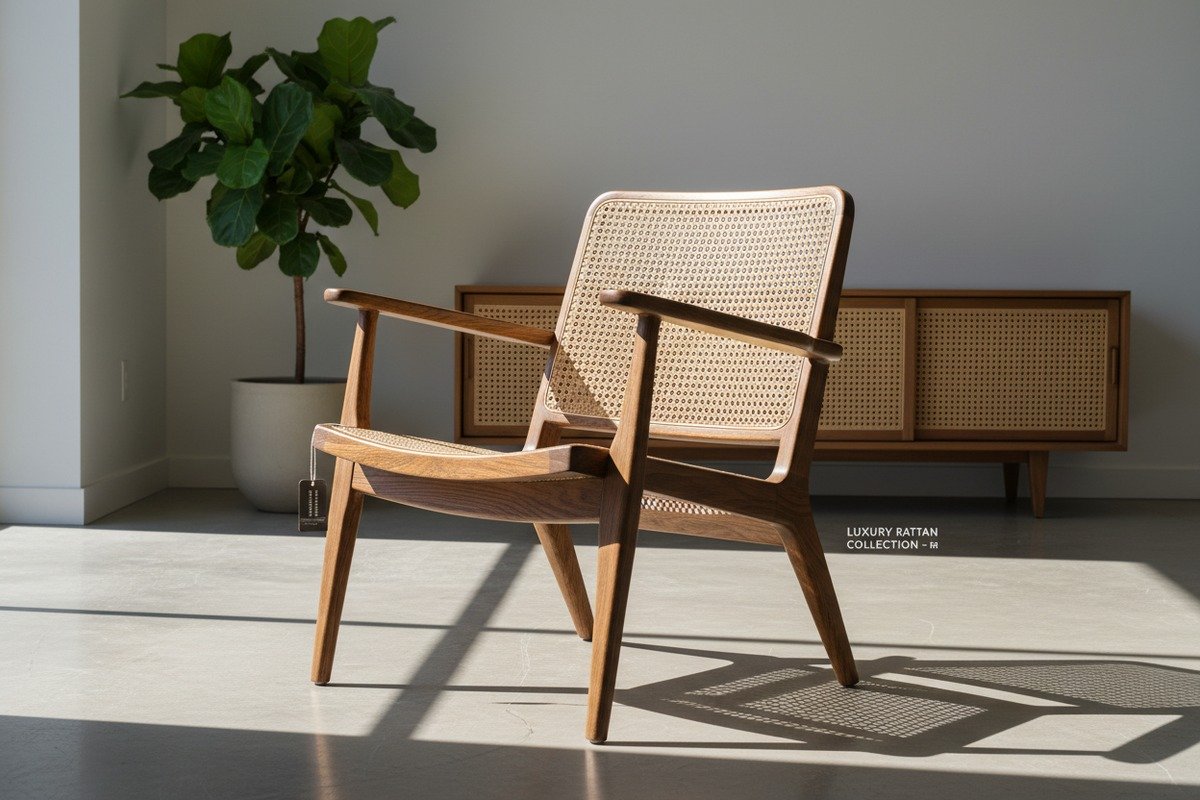
Bamboo webbing can look attractive and natural, but it cannot fully replicate the premium, artisanal aesthetic of rattan cane webbing. Rattan's organic strand variations, warm tonal depth, and ability to form complex patterns like hexagonal open-mesh or radio weave give it a handcrafted character that bamboo's straighter, more uniform strips cannot match.
Visual Character: Organic vs. Uniform
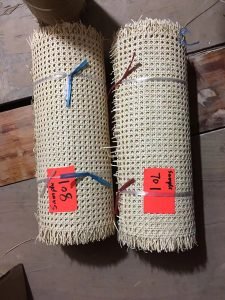
Rattan cane webbing has a naturally imperfect beauty. Each strand varies slightly in width, color, and texture. This creates the warm, artisanal feel that drives the bohemian and mid-century modern trends 9 dominating furniture design right now. The classic patterns—шестиугольную сетку 10 (often called "radio weave"), dense square basketweave, and complex diamond motifs—are only possible because rattan strands are flexible enough to weave into these intricate configurations.
Bamboo webbing has a cleaner, more geometric look. The strips are typically uniform in width and smoother in surface. This gives bamboo a more modern, minimalist feel. It works well for flat panels, simple grid patterns, and applications where straight lines are the design intent. But the hand-woven charm is absent.
Pattern Possibilities
Rattan cane webbing supports a wide range of woven patterns because the material bends without breaking. Our product catalog includes over fifteen distinct weave patterns, from tight closed weaves for cabinet inserts to open hexagonal mesh for decorative screens. Bamboo webbing is generally limited to simpler patterns—parallel strips, basic crosshatch, or chevron designs. The stiffness of bamboo prevents the tight curves needed for more complex motifs.
Color and Finish
Rattan cane webbing comes in a natural palette of light beige, straw yellow, and cream. It can also be bleached for a lighter, more contemporary look or stained in darker tones. The matte, fibrous surface absorbs stains and finishes well, giving manufacturers control over the final appearance.
Bamboo naturally shows more color variation—greens, yellows, and golden browns. While this can be attractive, it can also create inconsistency across large production runs. Achieving uniform color in bamboo webbing often requires additional processing steps.
Trend Alignment
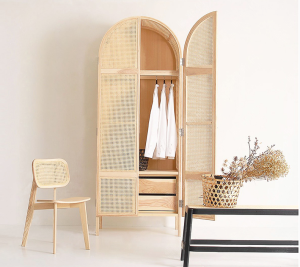
The current wave of boho, Japandi, and natural-material interior design strongly favors rattan cane webbing. Coffee tables with rattan-inset tops, bed heads with radio-weave panels, and cabinet doors with cane inserts are all trending heavily on design platforms and in retail showrooms across Europe and North America. Bamboo webbing fits into eco-minimalist and tropical design themes but does not carry the same "premium artisan" connotation in Western markets.
Synthetic Alternatives
It is worth noting that synthetic rattan matting exists. These plastic materials mimic the organic look of natural rattan with patterns like chevron waves and standard weaves in beige and tan tones. They offer superior weather resistance and consistent color. However, they lack the authentic texture and warmth of real rattan cane. For manufacturers targeting the premium segment, natural rattan remains the clear winner for perceived value.
Which Should You Choose for Premium Products?
If your end product targets mid-to-high-end retail and your customers value handcrafted aesthetics, rattan cane webbing is the right choice. If your product line focuses on affordable, eco-friendly basics where visual uniformity matters more than artisan charm, bamboo webbing is a solid option. Both materials have their place—but they are not interchangeable when premium appearance is the goal.
Заключение
Rattan cane and bamboo webbing serve different purposes. Choosing the right one depends on your product's design, budget, and end-use environment. We hope this guide helps you make a confident sourcing decision.
Сноски
1. Defines rattan and its use in weaving. ↩︎
2. Identifies the botanical genera of rattan. ↩︎
3. Confirms the botanical family of bamboo. ↩︎
4. Provides botanical and material context for bamboo. ↩︎
5. Authoritative source with a comprehensive definition of compressive strength. ↩︎
6. Explains tensile properties, which encompass flexibility under tension, from an academic source. ↩︎
7. Explains the need for UV-resistant coatings for outdoor furniture. ↩︎
8. Describes the sulfur treatment process for rattan. ↩︎
9. Discusses the fusion of bohemian and mid-century modern design. ↩︎
10. Illustrates a specific rattan weave pattern. ↩︎
 English
  Español de México
  العربية
  Deutsch
  Français
  Русский