

Сорсинг ротанговая сетка 1 sounds simple until you receive wildly different quotes from three suppliers for what looks like the same product. Over years of running our rattan processing facilities in Indonesia and coordinating production across more than 30 partner factories in Foshan, we have seen buyers overpay or under-specify again and again.
Rattan cane webbing prices depend on raw material grade, weave pattern complexity, order volume, and total landed cost including shipping and packaging. Natural rattan from mature Indonesian palms costs more than synthetic or young-harvest alternatives. Bulk orders lower unit prices, while specialty patterns and strict packaging standards add measurable expense.
Each of these factors deserves a closer look. Below, we break down the four main cost drivers so you can negotiate smarter and budget more accurately on your next order.
How does the grade of raw rattan material affect my final purchase price?
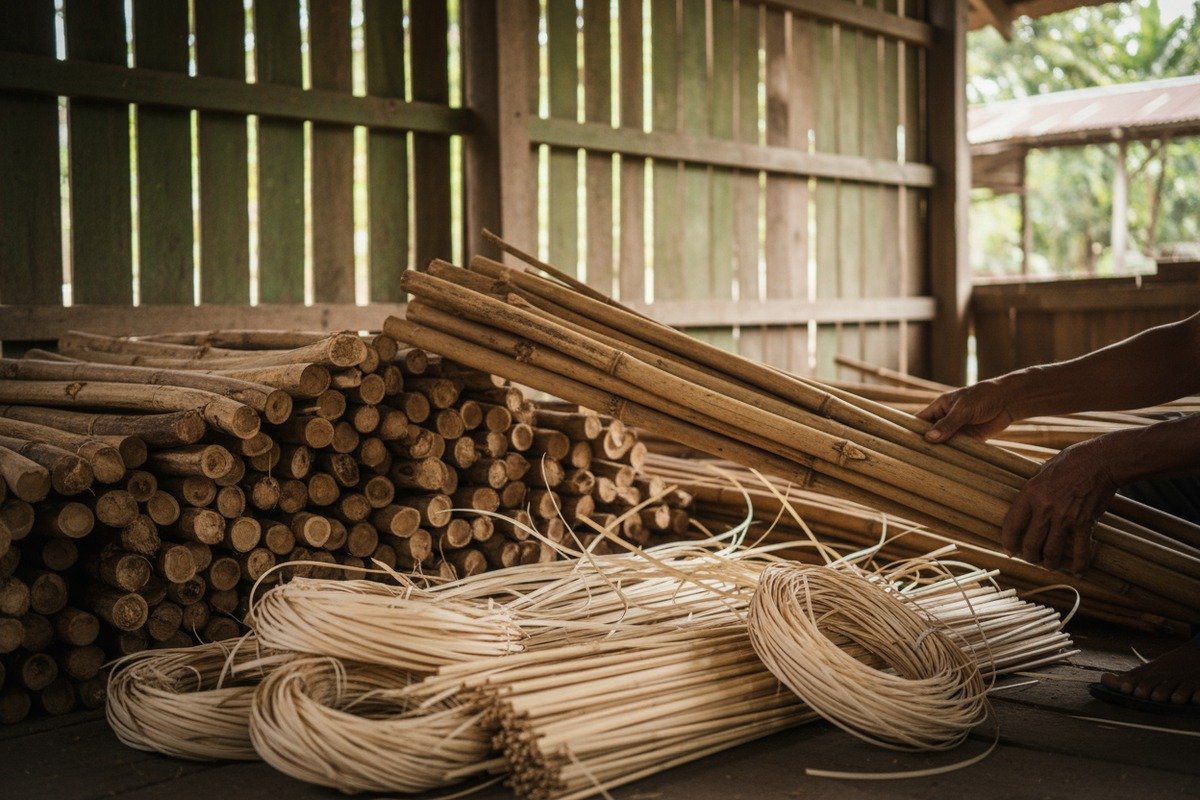
When our team in Indonesia selects raw rattan poles for processing, the grade we pick determines almost everything downstream — from yield rates to final webbing appearance. Many buyers focus only on pattern and width. They overlook that material grade is the silent price mover.
The grade of raw rattan directly controls your purchase price because higher-grade material yields more usable cane per pole, produces fewer defects, and delivers longer product lifespan. Grade A Indonesian rattan can cost 30–60% more than Grade C stock, but it reduces waste and complaints significantly.
What defines rattan grades?
Rattan grading is not standardized globally. Different regions use different systems. However, most suppliers in Southeast Asia classify raw rattan into three broad tiers based on maturity, diameter consistency, surface smoothness, and содержание влаги 2.
Grade A rattan comes from mature vines, typically 7–10 years old. The outer skin (which becomes cane) is thick, uniform in color, and free from insect damage. Grade B material may have minor color variation or slight surface blemishes. Grade C rattan is younger, thinner-skinned, and more prone to cracking during weaving.
How grade impacts price at each stage
The cost difference starts at the forest. Mature rattan takes longer to grow, so harvesters charge more. At our processing facility, Grade A poles have a usable yield of roughly 75–80%. Grade C poles drop to 50–60% because we discard more damaged sections. That waste gets passed into the price per meter of finished webbing.
| Сорт | Typical Pole Age | Usable Yield | Relative Cost per Meter | Expected Lifespan |
|---|---|---|---|---|
| Сорт А | 7–10 years | 75–80% | Highest (baseline) | 5+ years |
| Сорт B | 5–7 лет | 65–75% | 15–25% lower | 3–5 лет |
| Сорт C | 3–5 лет | 50–60% | 30–50% lower | 2–3 года |
Natural vs. synthetic: a grade conversation too
Beyond natural rattan grades, buyers also compare natural cane against synthetic (plastic or resin) webbing. Synthetic webbing 3 eliminates grading concerns entirely because it is manufactured to uniform specifications. It costs less per meter — often $5–$12 wholesale — but it lacks the texture, warmth, and sustainability story that natural rattan provides.
For buyers targeting the European or North American furniture market, natural Grade A rattan commands premium retail prices. The investment in better raw material pays off at the point of sale. For outdoor or high-humidity applications, synthetic may be the smarter pick despite its lower perceived value.
The hidden cost of choosing cheap grades
We have seen buyers save $0.50 per meter by choosing Grade C material, then lose entire shipments to cracking, discoloration, or customer complaints. The rework, returns, and reputational damage far exceed that initial saving. Our recommendation is always to match the grade to the end use. Grade B works well for decorative panels where minor variation adds character. Grade A is essential for high-end furniture lines where consistency matters.
Why do different weaving patterns and widths change my sourcing costs?
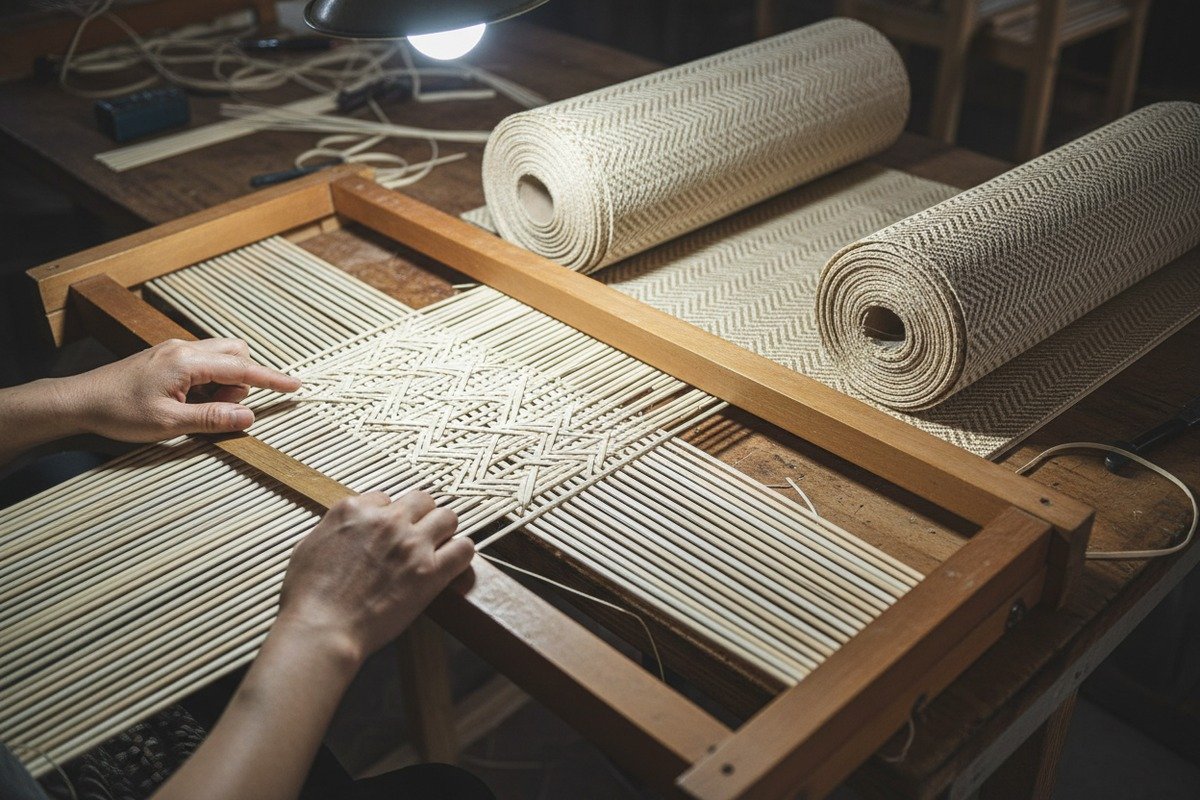
At our Foshan production lines, switching from a standard radio weave to a tight diamond pattern can add hours of labor per roll. Buyers often request a quote for "rattan webbing" without specifying the pattern, then wonder why the final price shifts when they send a reference photo.
Weaving patterns and widths change your sourcing costs because complex patterns require more skilled labor, longer production time, and higher material consumption per square meter. A dense close-weave uses up to 40% more rattan than an open hexagonal mesh of the same dimensions, and specialty widths above 90 cm demand custom loom setups.
Common patterns and their cost profiles
Not all weave patterns are created equal. The simplest — open hexagonal radio weave — uses less material and moves faster through production. The most complex — tight diamond or octagon weaves — require precise strand placement and more experienced weavers.
| Тип плетения | Material Use (Relative) | Labor Intensity | Typical Price Range (Wholesale/m) | Распространенное применение |
|---|---|---|---|---|
| Open Hexagonal (Radio Weave) | Низкий | Низкий | $5–$10 | Cabinet doors, headboards |
| Square Basketweave | Средний | Средний | $8–$15 | Chair seats, room dividers |
| Close Weave | Высокий | Высокий | $12–$20 | Wall panels, premium furniture |
| Diamond / Chevron | Высокий | Очень высокая | $15–$25 | Decorative panels, boutique furniture |
| Octagon with Flat Oval Reed | Очень высокая | Очень высокая | $18–$30 | Specialty restoration, luxury projects |
Why width matters more than you think
Standard production widths — 45 cm, 60 cm, and 90 cm — come off existing loom setups with no additional cost. When a buyer needs 100 cm or 120 cm, we often have to adjust the loom or use a different frame entirely. That setup time and potential material waste gets built into the quote.
Wider rolls also face higher rejection rates. A single broken strand at 120 cm width ruins more material than the same defect at 45 cm. Our quality control team catches these issues, but the scrap rate increases with width, and that increases your unit price.
Pre-woven cane vs. hand-woven strand cane
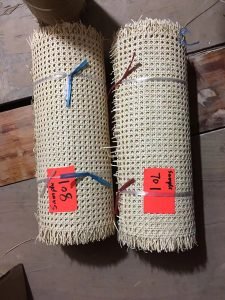
There is an important distinction between pre-woven cane webbing 5 (sold in sheets or rolls) and traditional strand cane (woven directly into a chair frame by a craftsman). Pre-woven webbing has already absorbed the labor cost of weaving. It is ready to cut and press into a groove. Hand-woven strand cane requires skilled labor at the furniture assembly stage.
For most of our B2B buyers — furniture factories and material wholesalers — pre-woven cane webbing is the standard purchase. It offers predictable costs, consistent patterns, and faster production. Hand-woven strand cane serves a niche restoration market where authenticity justifies the premium.
Semi-automated vs. fully handwoven production
Some patterns lend themselves to semi-automated weaving. Our factories use mechanical looms 6 for basic radio weave and square basketweave. This lowers labor cost and increases output speed. Complex patterns like diamond motifs and octagon weaves still require experienced hands. The labor difference can be 3–5x between a machine-assisted radio weave and a fully handwoven diamond pattern.
Buyers should ask suppliers directly: is this pattern machine-woven, semi-automated, or fully handwoven? The answer tells you a lot about the price and the consistency you can expect across large orders.
How do bulk order volumes and MOQ requirements influence my unit price?
One of the first questions we ask new clients on WhatsApp is: "What is your expected order volume?" The answer shapes the entire quote. A 50-meter trial order and a 5,000-meter production run live in completely different pricing universes.
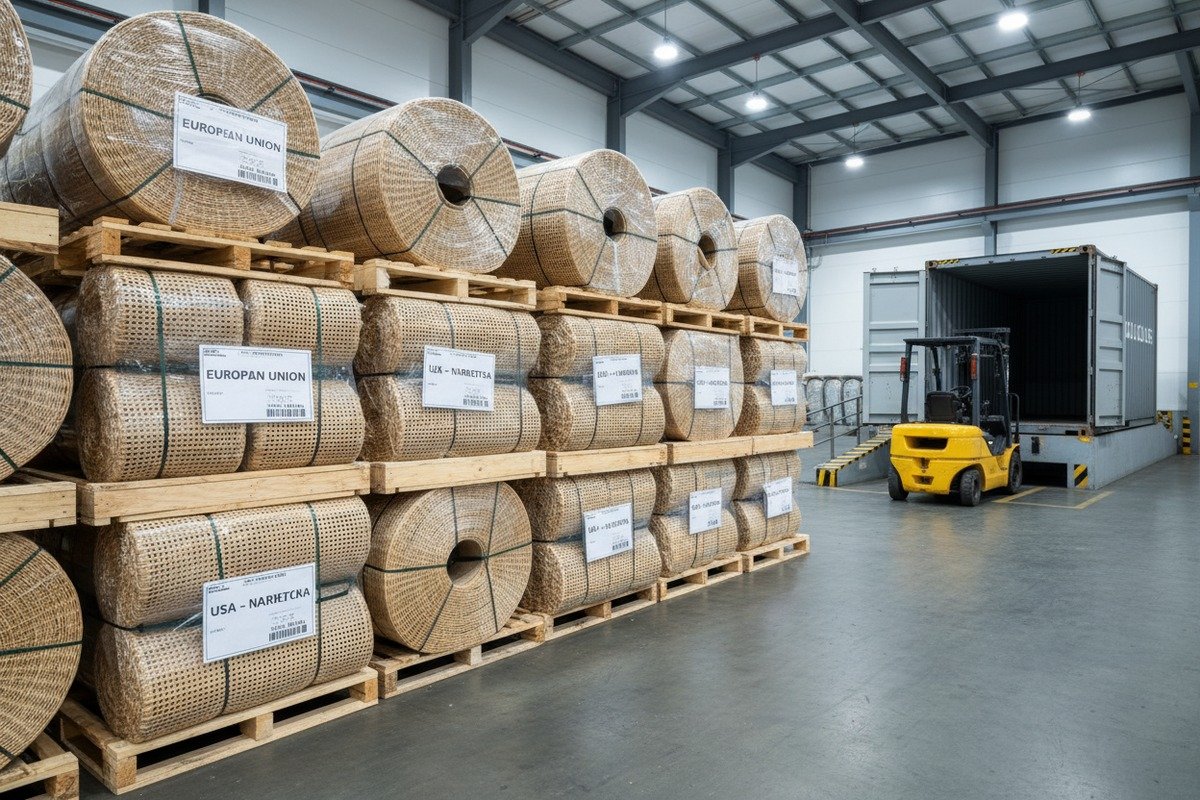
Bulk order volumes dramatically reduce your unit price because they spread fixed costs — loom setup, quality inspection, and logistics coordination — across more meters. Moving from a small trial order to a full container load can cut your per-meter cost by 30–50%. Most suppliers set MOQs between 100 and 500 meters per pattern to maintain production efficiency.
Understanding fixed vs. variable costs
Every order carries fixed costs 7 that do not change whether you buy 50 meters or 5,000 meters. These include loom setup, color matching, sample approval, export documentation, and basic packaging preparation. Variable costs — raw material, weaving labor, and finishing — scale with quantity.
On a 50-meter order, those fixed costs might add $2–$4 per meter to your price. On a 5,000-meter order, the same fixed costs spread to just $0.05–$0.10 per meter. That is the single biggest reason bulk orders cost less.
Typical MOQ tiers and pricing impact
| Объем заказа | Typical Price Impact | Supplier Willingness | Срок поставки |
|---|---|---|---|
| Under 100 meters | Retail or near-retail pricing | Limited; many suppliers decline | 5–10 дней |
| 100–500 метров | 10–20% below retail | Standard MOQ range | 10–15 days |
| 500–2,000 meters | 20–35% below retail | Preferred order size | 15–25 days |
| 2,000–5,000 meters | 35–50% below retail | Priority production | 20–35 дней |
| 5,000+ meters | Best negotiated pricing | Long-term contract terms | 30–45 days |
Why MOQs exist
Suppliers set минимальные объемы заказа 8 for practical reasons. Changing a loom from one pattern to another takes time. Our weaving teams need to adjust tension, strand spacing, and frame dimensions. Running a short batch of 30 meters and then resetting for the next order is inefficient. MOQs ensure that each production run covers at least the setup cost and generates reasonable margin.
For buyers who need small quantities across multiple patterns, we sometimes offer mixed-container solutions. You can combine several patterns into one shipment to reach container minimums while still getting competitive per-meter pricing on each SKU.
Negotiating better volume pricing
The most effective strategy we see from experienced purchasing managers is committing to annual volume with flexible delivery schedules. Instead of placing four separate 500-meter orders throughout the year, they sign a framework agreement for 2,000 meters with quarterly shipments. We can plan production more efficiently, lock in material prices, and pass those savings forward.
Another tactic is consolidating patterns. If you need radio weave in 60 cm and 90 cm widths, ordering both at the same time from the same factory reduces changeover costs. Grouping by material grade also helps — all Grade A orders together, for example.
Trial orders and sampling costs
Most buyers start with a sample or trial order before committing to bulk. We typically provide small sample pieces at material cost plus shipping. Trial orders of 50–100 meters are priced higher per meter, which some buyers misinterpret as the supplier being expensive. The trial price is not the bulk price. Always ask for tiered pricing when evaluating a new supplier.
What role do shipping and packaging standards play in my total landed cost?
Many buyers fixate on the per-meter price and forget that rattan webbing is bulky, lightweight, and fragile in transit. At our warehouses in Foshan, we have learned through hard experience that poor packaging choices can turn a profitable shipment into a total loss.
Shipping and packaging standards can add 15–30% to your total landed cost depending on destination, container utilization, and protection requirements. Rattan webbing ships by volume rather than weight, so container space efficiency is critical. Premium packaging with moisture barriers, rigid cores, and corner protection adds $0.30–$1.00 per meter but prevents costly damage claims.
The volume problem
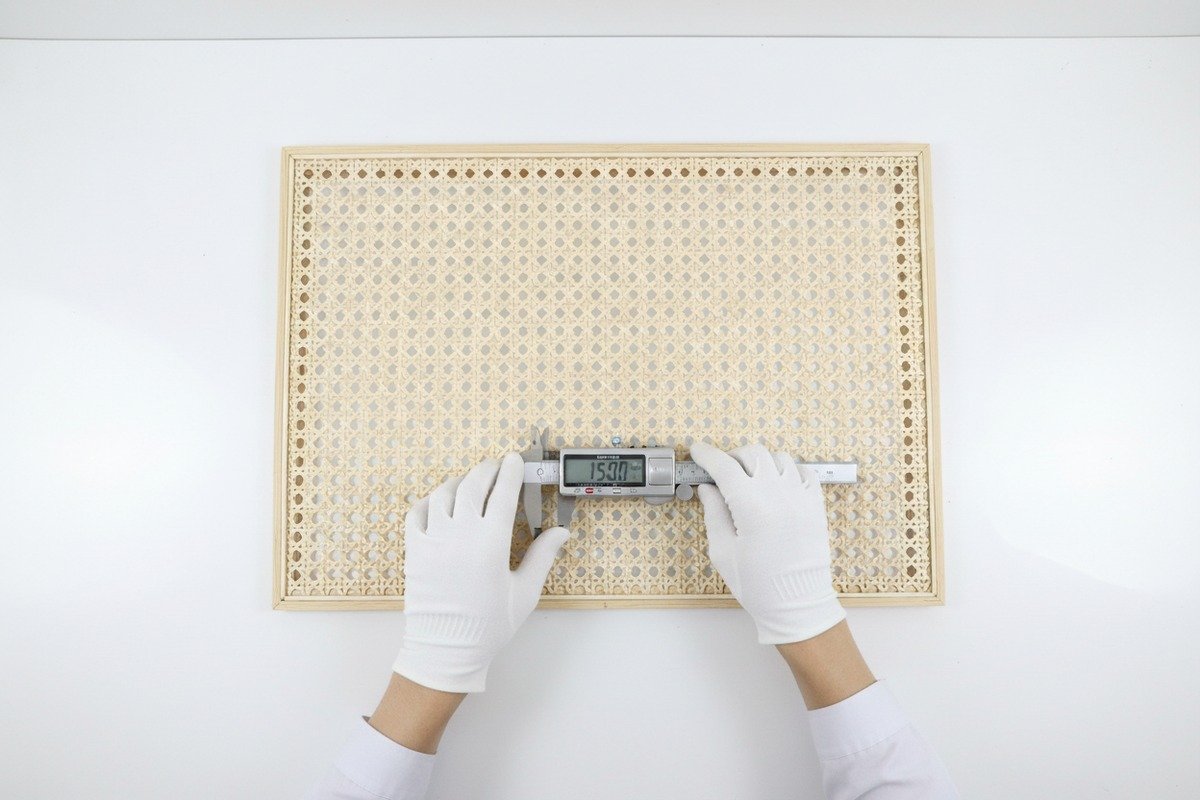
Rattan cane webbing is light but takes up space. A standard 20-foot container might hold 8,000–12,000 meters of rolled webbing depending on width and roll diameter. If rolls are loosely packed or poorly stacked, you waste container space and effectively pay more per meter for shipping.
Our logistics team optimizes roll diameters and stacking patterns for each container. We use inner cardboard cores of specific diameters to balance roll tightness (too tight damages the weave) against space efficiency (too loose wastes cubic meters).
Packaging tiers and their costs
| Packaging Level | Components | Added Cost per Meter | Уровень защиты | Лучше всего подходит для |
|---|---|---|---|---|
| Базовый | Plastic wrap + woven bag | $0.10–$0.20 | Низкий | Short-distance, domestic shipment |
| Стандартный | Cardboard core + plastic wrap + carton box | $0.30–$0.50 | Средний | Sea freight to nearby markets |
| Премиум | Cardboard core + moisture barrier film + carton + wooden crate | $0.60–$1.00 | Высокий | Long-distance sea freight, humid routes |
| Custom | Branded packaging, retail-ready labeling, individual panel wrapping | $1.00–$2.00+ | Highest | Direct-to-retail, private label |
Moisture: the silent shipment killer
Natural rattan absorbs moisture. A container sitting in a tropical port for two weeks can develop condensation inside. That moisture leads to mold, discoloration, and a musty smell that no buyer wants. We include silica gel packets and moisture barrier film in our standard and premium packaging tiers specifically to prevent this.
Buyers shipping to humid destinations — Southeast Asia, the Middle East during summer, or coastal European ports — should always request moisture protection. The extra $0.20–$0.40 per meter is trivial compared to the cost of rejecting a moldy container.
Freight mode comparison
Sea freight dominates rattan webbing logistics because air freight is cost-prohibitive for such a voluminous product. However, the choice between Full Container Load (FCL) and Less-than-Container Load (LCL) significantly impacts your landed cost.
FCL gives you the entire container. You control packing, reduce handling damage, and get a predictable freight cost. LCL shares container space with other cargo. It costs less upfront for small orders but introduces more handling points and potential damage.
For orders above 3,000 meters (roughly half a 20-foot container), FCL almost always makes more financial sense. Below that threshold, LCL or consolidated shipping through a freight forwarder works better.
Import duties and documentation
Depending on your destination country, rattan cane webbing may face import tariffs ranging from 0% to 15%. The классификации по коду ТН ВЭД 9 matters. Natural cane webbing and synthetic rattan webbing fall under different codes with different duty rates. Incorrect classification can trigger customs delays and unexpected charges.
We provide commercial invoices, packing lists, certificates of origin, and fumigation certificates as standard. Some markets — particularly the EU and Australia — require additional phytosanitary documentation for natural plant-based materials. These certificates add small costs but are non-negotiable for smooth customs clearance.
Calculating your true landed cost
Smart buyers calculate landed cost, not just FOB price. Landed cost includes: FOB price + inland freight to port + sea freight + insurance + import duties + customs brokerage + inland delivery to warehouse. Only when you have that complete number can you accurately compare suppliers.
A supplier offering $8 per meter FOB but requiring premium packaging and shipping from a remote port may cost more landed than a supplier at $9 per meter FOB with included standard packaging and proximity to a major shipping hub.
Заключение
Rattan cane webbing pricing is never just about the per-meter number. Material grade, weave complexity, order volume, and total landed cost 10 all interact to determine what you actually pay. Understanding these four factors puts you in a stronger negotiating position and helps you avoid costly surprises. If you need help calculating your specific project cost, reach out to our team at www.rattanwholesaler.com — we are happy to walk through the numbers with you.
Сноски
1. Provides a comprehensive guide to rattan cane webbing. ↩︎
2. Highlights a key quality parameter for natural materials. ↩︎
3. Differentiates natural rattan from its synthetic alternatives. ↩︎
4. Explains the importance of raw material quality in manufacturing. ↩︎
5. Directly defines and explains pre-woven cane webbing. ↩︎
6. Describes the equipment used in manufacturing rattan webbing. ↩︎
7. Explains a fundamental concept in business economics and pricing. ↩︎
8. Explains a common practice in wholesale purchasing. ↩︎
9. Explains a critical aspect of international trade and customs. ↩︎
10. Defines a comprehensive cost metric for imported goods. ↩︎

 English
  Español de México
  العربية
  Deutsch
  Français
  Русский