
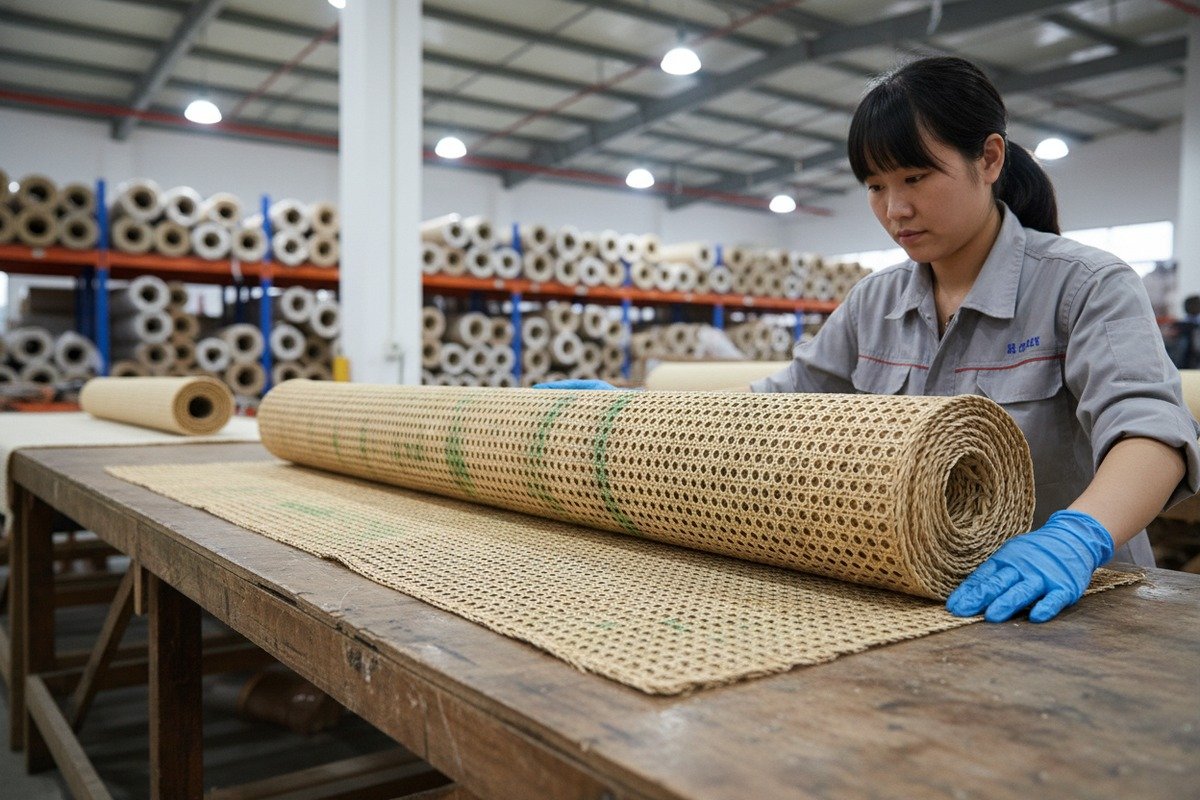
Every week, our warehouse team in Foshan fields calls from buyers who just unrolled their first batch of Grade C натурального ротангового плетения 1 and found unexpected green streaks across the surface. The reaction is always the same — confusion, then concern. Is the material defective? Is it moldy? Will it ruin the furniture? These are fair questions, and they deserve clear answers.
Grade C natural rattan cane webbing displays green markings primarily because it uses immature or mixed-origin cane that retains residual chlorophyll, and because lower-grade processing skips rigorous sorting and bleaching steps. Fungal staining from high-moisture tropical storage also contributes to these characteristic green spots.
In this article, we break down the science behind those green marks, explain how they affect quality, and help you decide whether Grade C rattan fits your project. Let’s start with the basics.
Why do I see green skin markings on my Grade C rattan cane webbing?
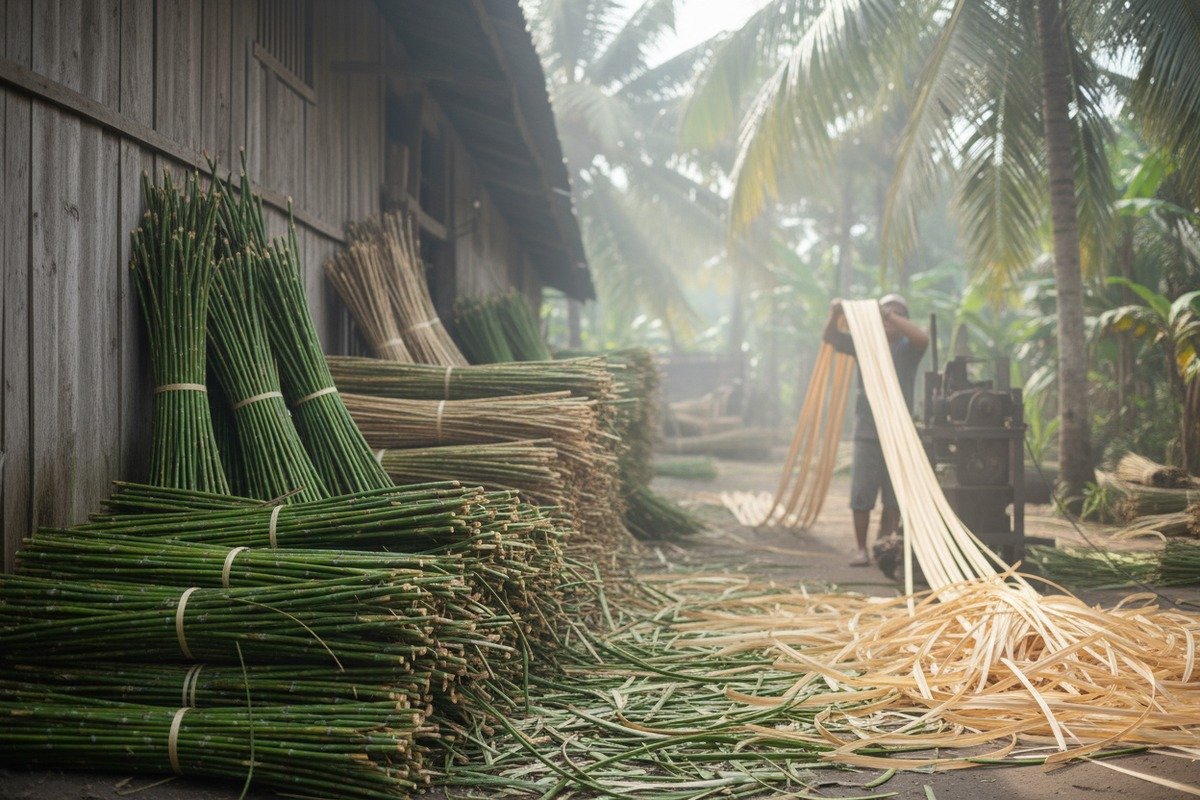
When we process rattan at our facility in Indonesia, the raw cane arrives in bundles straight from tropical forests. The outer peel is stripped, dried, and woven into sheets. But not every strip comes from the same vine or the same harvest window. Grade C material, by definition, accepts wider variation — and that's exactly where those green marks come from.
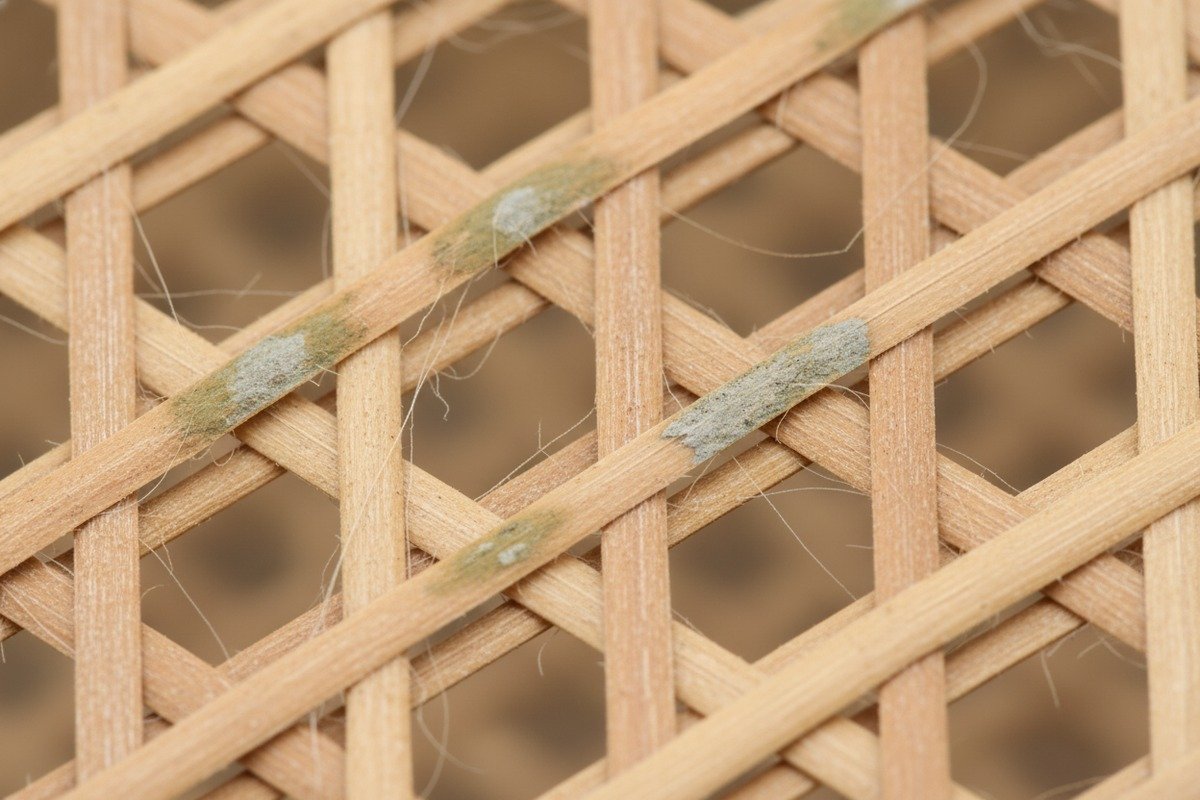
Green skin markings on Grade C rattan cane webbing result from residual chlorophyll in immature cane, fungal or mold staining caused by high moisture during tropical harvesting and storage, and the oxidation of natural tannins in the rattan fibers. Lower-grade processing does not remove these marks.
The Biology Behind the Green
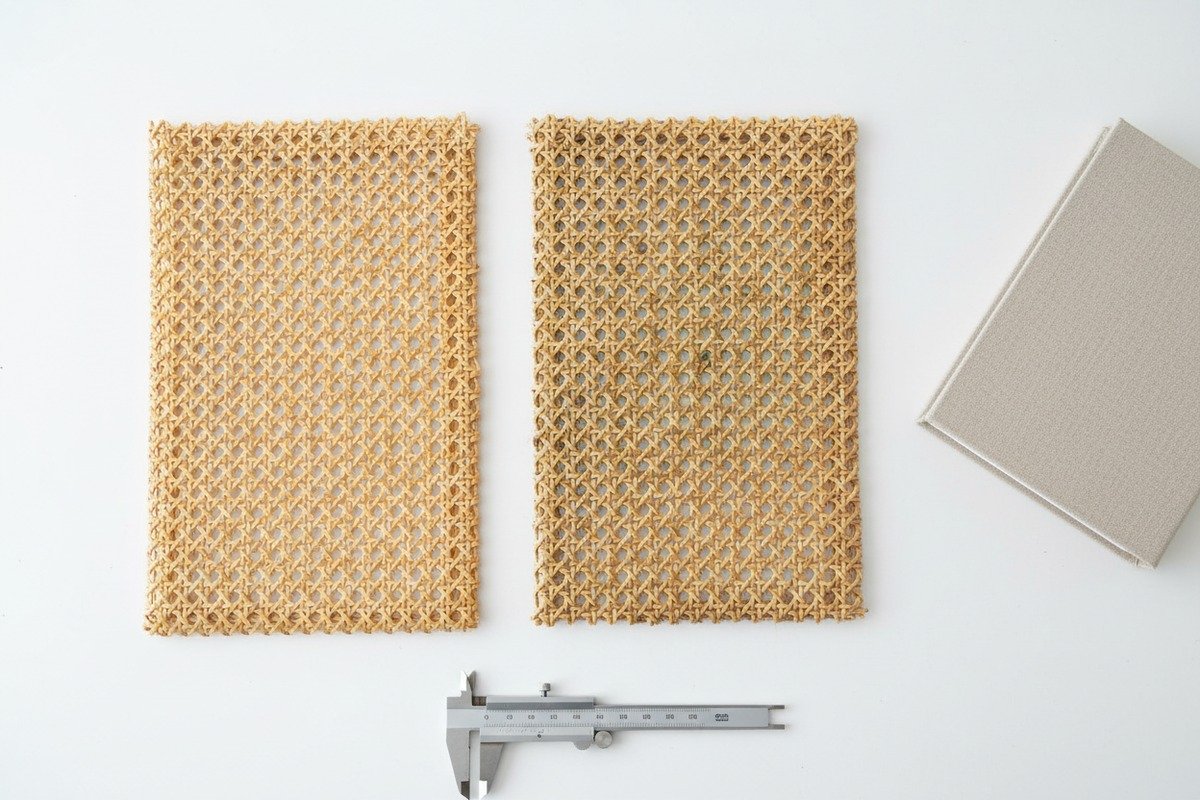
Ротанг — это climbing palm vine 2 from the genus Calamus. It grows in dense тропических лесах 3 across Southeast Asia, mainly Indonesia. The outer bark of the vine contains chlorophyll — the same green pigment found in leaves. When rattan is harvested at full maturity and properly dried, most chlorophyll breaks down. The result is that familiar golden-tan color.
But Grade C cane often includes strips from younger, less mature vines. These strips retain more chlorophyll. When they are woven into webbing sheets alongside mature strips, you see patches of green against the standard tan background.
Moisture and Mold: The Tropical Factor
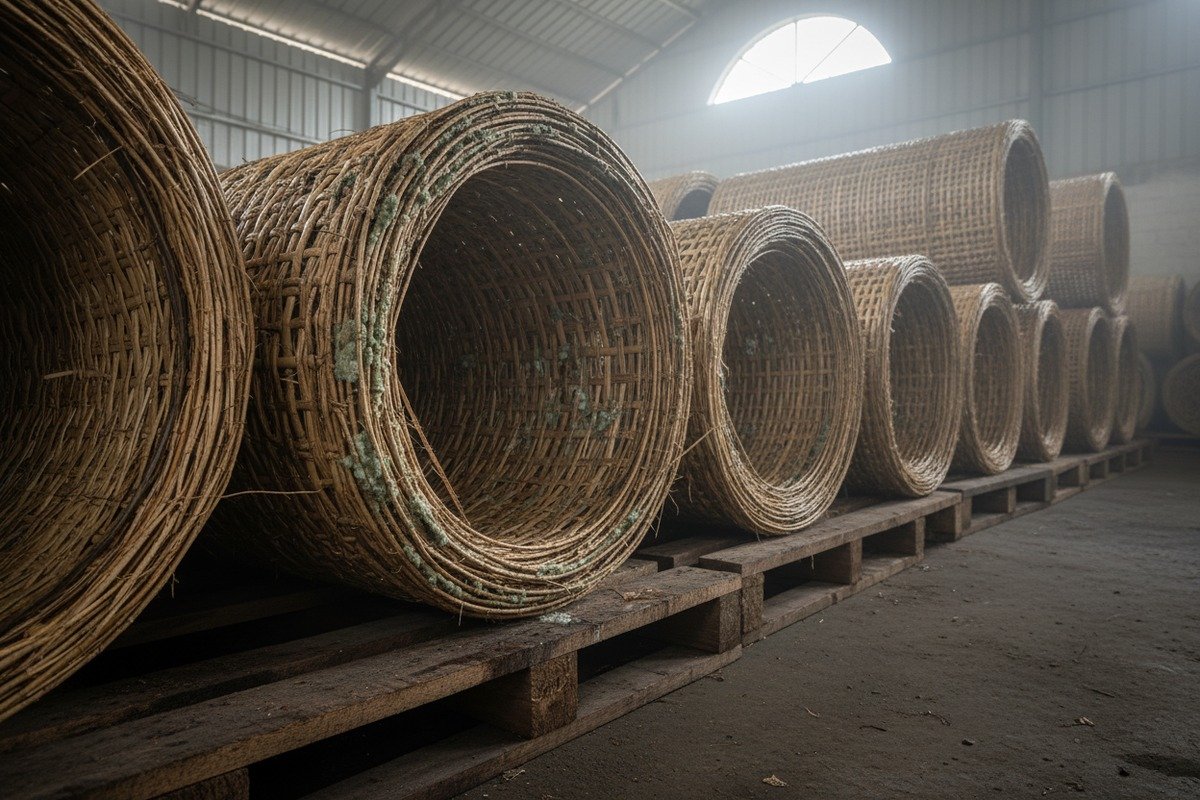
Indonesia's climate is hot and humid year-round. Humidity levels regularly exceed 80%. After harvest, rattan must be dried quickly and thoroughly. For premium grades (AAA, A, B), processors invest more time and labor in controlled drying and careful sorting. For Grade C, the process moves faster and tolerates higher содержание влаги 4.
When moisture stays above 12% in stored rattan, fungal spores 5 find a perfect home. Mold colonizes the surface and leaves behind greenish or grayish stains. These are not deep structural infections — they sit on or just below the surface. But they are visible and permanent without treatment.
Tannin Oxidation
Rattan contains natural tannins 6 and organic compounds. When these compounds are exposed to air and light, they can oxidize and shift color. In some cases, this oxidation produces a greenish discoloration. This effect is more pronounced in Grade C material because the strips are less uniform in density and composition.
How Grading Determines What You See
The grading system for natural rattan cane webbing is straightforward. Here is how it works:
| Сорт | Качество поверхности | Содержание влаги | Typical Defects | Lifespan (Indoor) |
|---|---|---|---|---|
| AAA / A | Uniform, smooth, elastic | 8–12% | Minimal blemishes | 15–20 лет |
| B | Standard, minor flaws | 10–14% | Small knots, slight color variation | 10–15 years |
| C | Irregular, rough texture | >12%, uneven | Green marks, scars, splits, knots | 5–10 лет |
| D | Poor elasticity, brittle | High, unstable | Severe defects throughout | <5 years |
Grade C is not rejected material. It is a recognized category with known characteristics. The green marks are one of those characteristics. They are expected, documented, and priced accordingly.
Why Grade C Skips Bleaching
Natural Grade C rattan is sold unbleached. Bleaching removes green marks and evens out color, but it adds cost and processing time. It also changes the material's feel and can reduce strength. For Grade C, the goal is affordability. Skipping bleaching keeps the price 30–50% lower than Grade A.
Will these green spots impact the strength and quality of my furniture?
Our quality control team tests every grade we ship, and this is the question that comes up most from furniture factories placing their first Grade C order. The concern is understandable. Green spots look like damage. But appearance and structural performance are two different things.
Green spots on Grade C rattan are mostly cosmetic. They do not cause immediate structural failure. However, Grade C webbing has lower density, higher moisture content, and shorter lifespan compared to premium grades. For indoor furniture with moderate use, it performs adequately for 5–10 years.
Surface Marks vs. Structural Integrity
The green marks from chlorophyll and tannin oxidation sit on or near the surface of the rattan strip. They do not penetrate the core fiber. A green-marked strip is not weaker than a tan strip from the same harvest — the color difference alone does not change tensile strength.
Mold stains are slightly different. If mold grew on the surface during storage, the top layer of fiber may be marginally softer. But standard surface mold does not eat through rattan the way wood rot destroys timber. The structural web of the cane remains intact.
The Real Quality Concerns with Grade C
The green marks themselves are not the main risk. The real issues with Grade C relate to the material's broader characteristics:
- Higher moisture content. Strips above 12% moisture are more prone to warping and shrinking as they dry out in your customer's home.
- Lower density. Grade C strips tend to be thinner and less uniform. This makes the woven sheet feel flimsier.
- More knots and splits. These weak points can become failure points under repeated stress.
- Irregular strip widths. Inconsistent widths create uneven tension in the weave, which can lead to sagging over time.
Performance Comparison by Application
| Применение | Grade C Suitability | Рекомендуемый сорт |
|---|---|---|
| Сиденье обеденного стула | Acceptable for light use | B or A for daily use |
| Панель дверцы шкафа | Good — low stress area | C works well |
| Headboard insert | Good — decorative only | C is cost-effective |
| Outdoor furniture | Not recommended | Synthetic PE rattan |
| High-end retail furniture | Not recommended | AAA or A |
| Поделки своими руками | Excellent fit | C is ideal |
Durability in Real-World Conditions
From our experience shipping to over 15 countries, Grade C rattan performs well in climate-controlled indoor environments. Buyers in the Netherlands and Australia use it for budget furniture lines and report satisfactory results for 5–7 years with basic care. In humid climates like Thailand or the Philippines, the lifespan may be shorter unless the webbing is sealed or finished.
The key takeaway: green marks are a cosmetic issue, not a structural one. But Grade C does carry other quality trade-offs that affect long-term durability.
Can I hide the green markings on Grade C rattan with stain or paint?
When we work with furniture factories in Turkey and Spain, many of them order Grade C rattan specifically because they plan to finish it with stain or paint. They want the cost savings of C-grade combined with a uniform final appearance. It works — but only if you do it correctly.
Yes, you can hide green markings on Grade C rattan using wood stain, spray paint, or tinted sealers. Oil-based stains in walnut or honey tones are most effective. Apply thin coats to avoid brittleness. Avoid heavy latex paint, which can crack and peel on flexible woven surfaces.
Staining: The Best Option for Natural Look
Oil-based wood stains 8 are the most popular choice among our clients who want to mask green marks while keeping a natural rattan appearance. The stain soaks into the fiber and creates an even tone. Darker colors — walnut, mahogany, espresso — hide green marks completely. Lighter tones like honey or golden oak may still show faint shadows of the marks underneath.
Here is a quick guide:
| Finishing Method | Green Mark Coverage | Flexibility After Application | Лучше всего подходит для |
|---|---|---|---|
| Oil-based wood stain | Excellent (dark tones) | High — stain absorbs into fiber | Furniture seats, backs |
| Water-based wood stain | Хорошая | Умеренная | Indoor decorative panels |
| Thin spray paint (acrylic) | Отличная | Moderate — apply thin coats | Cabinet inserts, wall panels |
| Heavy latex paint | Full coverage | Low — cracks on flex points | Not recommended for webbing |
| Tinted polyurethane | Very good | Высокий | High-traffic furniture |
| Clear sealant only | None — marks still visible | Высокий | When embracing natural look |
Step-by-Step Staining Process
- Clean the webbing. Wipe with a damp cloth to remove dust and loose debris. Let it dry completely.
- Lightly sand if needed. Use 220-grit sandpaper very gently on rough spots. Do not sand aggressively — rattan strips are thin.
- Apply the first coat. Use a foam brush or spray applicator. Work in one direction along the weave pattern. Thin coats only.
- Дайте высохнуть. Follow the stain manufacturer's drying time. Typically 2–4 hours for oil-based stains.
- Apply a second coat. For green marks that still show through, a second coat usually does the job.
- Seal with clear coat. A thin layer of clear polyurethane protects the stain and adds durability.
Spray Painting: Fast but Tricky
Spray paint works well for full-coverage color changes — white, black, or pastel tones for boho and Scandinavian furniture styles. The trick is thin layers. Three light coats beat one heavy coat every time. Heavy paint fills the weave holes, hides the texture, and cracks when the rattan flexes.
Our team recommends acrylic spray paint 9 designed for wicker or rattan. These formulas stay flexible after drying.
The Bleaching Debate
Some buyers ask about bleaching Grade C rattan to remove green marks before staining. Bleaching does lighten the color and reduce green tones. But it also weakens the fiber. Bleached rattan is more brittle and less elastic. For Grade C material — which already has lower density — bleaching can push the webbing below acceptable performance thresholds.
If you want a uniform light base color, consider ordering our bleached rattan webbing instead of bleaching Grade C yourself. Factory-bleached material uses controlled processes that preserve more fiber integrity than DIY bleaching.
Embracing the Green: A Design Choice
Not every green mark needs to be hidden. In the DIY and boho design community, imperfections are features. Some artisans on platforms like Etsy specifically market their products as using "natural, unprocessed rattan with organic color variations." The green marks add visual depth and authenticity that uniform plastic rattan cannot replicate.
If your target market values rustic charm over perfection, Grade C with its green marks might be exactly what sells.
Is Grade C rattan the right choice for my budget-friendly wholesale orders?
Over the past decade, we have supplied Grade C rattan to furniture factories across Asia, the Middle East, and Europe. Some of those clients have grown into our largest accounts. Others switched to higher grades after their first order. The right choice depends entirely on what you are making and who you are selling to.
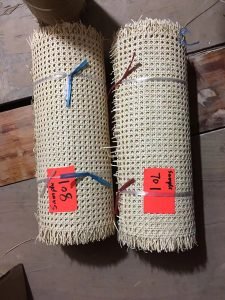
Grade C rattan is an excellent choice for budget-friendly wholesale orders when used in low-stress applications like decorative panels, cabinet inserts, and DIY craft products. It costs 30–50% less than Grade A. However, it is not suitable for high-end retail furniture or outdoor use.
When Grade C Makes Perfect Sense
Grade C rattan fills a specific market niche. It is not a compromise — it is a strategic choice for the right applications. Here are the scenarios where Grade C delivers the best value:
- Decorative furniture panels. Cabinet doors, room dividers, and headboard inserts see minimal physical stress. Grade C performs well here and saves significant cost.
- DIY and craft supply resale. The growing DIY market on platforms like Etsy, Amazon Handmade, and Walmart.com sells rattan webbing by the roll. Buyers in this segment prioritize price and availability over perfection.
- Budget furniture lines. If you manufacture entry-level furniture for price-sensitive markets, Grade C keeps your material costs low while still offering genuine natural rattan appeal.
- Hidden or covered applications. When the rattan will be covered by cushions, upholstery, or paint, surface imperfections become irrelevant.
When to Upgrade
Grade C is not the answer for every project. Here are clear signals to move up to Grade B or A:
- Contract furniture for hotels, restaurants, and commercial spaces where durability and appearance are both critical.
- High-end residential furniture marketed to design-conscious consumers who expect flawless finishes.
- Outdoor furniture (though for outdoor use, synthetic PE rattan is the better path entirely).
- Load-bearing seat panels on chairs used daily in dining rooms or offices.
Cost Comparison: Real Numbers
Pricing varies by order volume, weave pattern, and roll dimensions. But here is a general comparison based on our current catalog:
| Фактор | Сорт C | Сорт B | Grade A / AAA |
|---|---|---|---|
| Relative cost per square meter | Baseline (lowest) | 20–35% more | 40–70% more |
| Minimum order flexibility | Lower MOQ available | Standard MOQ | Higher MOQ typical |
| Однородность цвета | Variable per roll | Mostly consistent | Высокая однородность |
| Surface defects | Numerous (green marks, knots, scars) | Minor, occasional | Minimal to none |
| Best use case | Decorative, DIY, budget lines | Мебель среднего ценового сегмента | Premium, contract furniture |
| Processing included | Minimal sorting, no bleaching | Moderate sorting | Rigorous sorting, optional bleaching |
The Sustainability Angle
There is a sustainability argument for Grade C rattan that many buyers overlook. By using lower-grade material, you reduce waste in the supply chain. Cane that might otherwise be discarded gets a productive second life. In an industry moving toward certifications like GRS (Global Recycled Standard 10) and SGS quality marks, maximizing material utilization matters.
Some of our European clients specifically request Grade C as part of their zero-waste sourcing policies. They pair it with staining or painting to meet aesthetic standards while minimizing raw material waste.
Supplier Transparency Matters
One thing we always recommend: work with suppliers who are transparent about grading. At our facilities, we provide grade comparison charts, sample rolls, and detailed defect descriptions before you place a bulk order. You should know exactly what "Grade C" means before 500 rolls arrive at your warehouse.
Попросите у поставщика:
- Sample swatches of each grade
- Written grading criteria
- Photos of typical defects per grade
- Moisture content test results
This prevents surprises and helps you match the right grade to the right product line.
The Growing Market for "Imperfect" Natural Materials
A notable trend in interior design is the embrace of natural imperfections. Designers and consumers increasingly prefer materials that look handmade, organic, and real. Grade C rattan, with its green marks, knots, and color variation, fits this aesthetic perfectly. The material tells a story of tropical forests and traditional craft — something that perfectly uniform synthetic alternatives simply cannot offer.
For wholesalers serving the boho, coastal, and farmhouse décor markets, Grade C rattan is not just a budget option. It is a design choice.
Заключение
Green markings on Grade C rattan are natural, expected, and manageable. Understanding the grading system helps you make smarter purchasing decisions and match the right material to the right product.
Сноски
1. Provides general information about rattan as a material and its uses. ↩︎
2. Replaced with a Wikipedia page for ‘Calamus (palm)’, which is a genus of rattan palms, directly relevant to ‘climbing palm vine’ and mentioned in the article context. ↩︎
3. Replaced with an authoritative Britannica article defining tropical rainforests. ↩︎
4. Highlights the critical importance of moisture content in materials for various industries. ↩︎
5. Explains how mold, originating from fungal spores, grows in high moisture environments. ↩︎
6. Describes tannins as natural compounds found in plants and their oxidation process. ↩︎
7. Explains the basic biology and function of chlorophyll, a green pigment in plants. ↩︎
8. Explains the different types and properties of wood stains, including oil-based. ↩︎
9. Provides general information on paint composition and types, including acrylics. ↩︎
10. Replaced with the updated official page for the Global Recycled Standard on the Textile Exchange website. ↩︎

 English
  Español de México
  العربية
  Deutsch
  Français
  Русский