
Do you struggle to choose between natural and synthetic materials for your projects? Understanding their unique qualities will help you make the perfect selection for any design need.
Natural rattan matting offers warm elegance, bamboo provides structured texture, while synthetic versions deliver durability and weather resistance. Each serves distinct purposes based on project requirements.
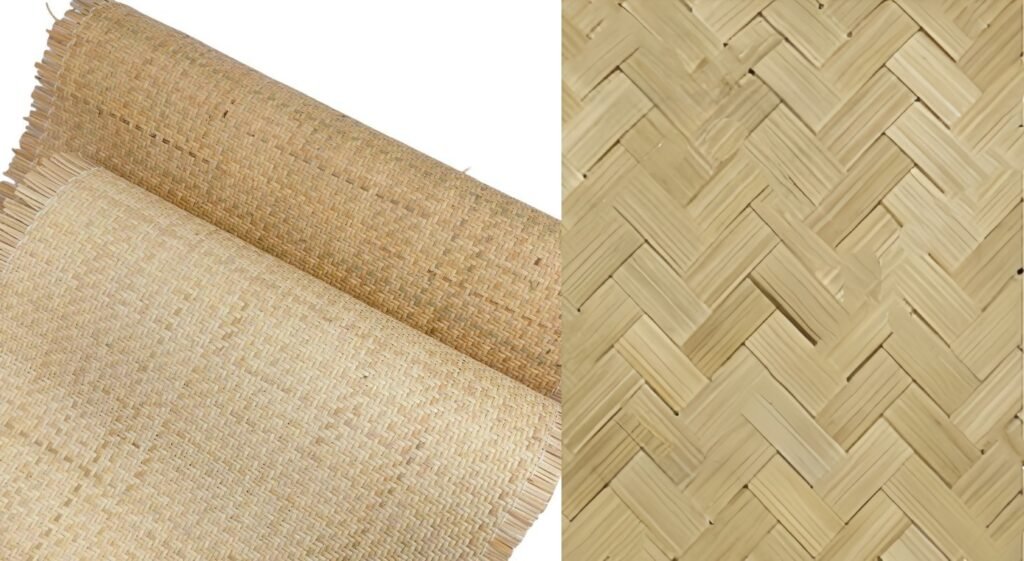
At SeaFan Rattan, we specialize in all these materials. Clients like hotel designer Peter and furniture maker Jacky regularly consult us about these choices. Let’s examine each option’s unique characteristics.
Natural Rattan Matting?
Do you need a material that combines natural beauty with flexible application? Standard materials often lack organic warmth. Our natural rattan matting1 delivers both aesthetic appeal and practical functionality.
Natural rattan matting provides an eco-friendly, elegant covering solution with distinctive woven patterns. It’s ideal for interior decoration and furniture applications where a natural aesthetic is desired.
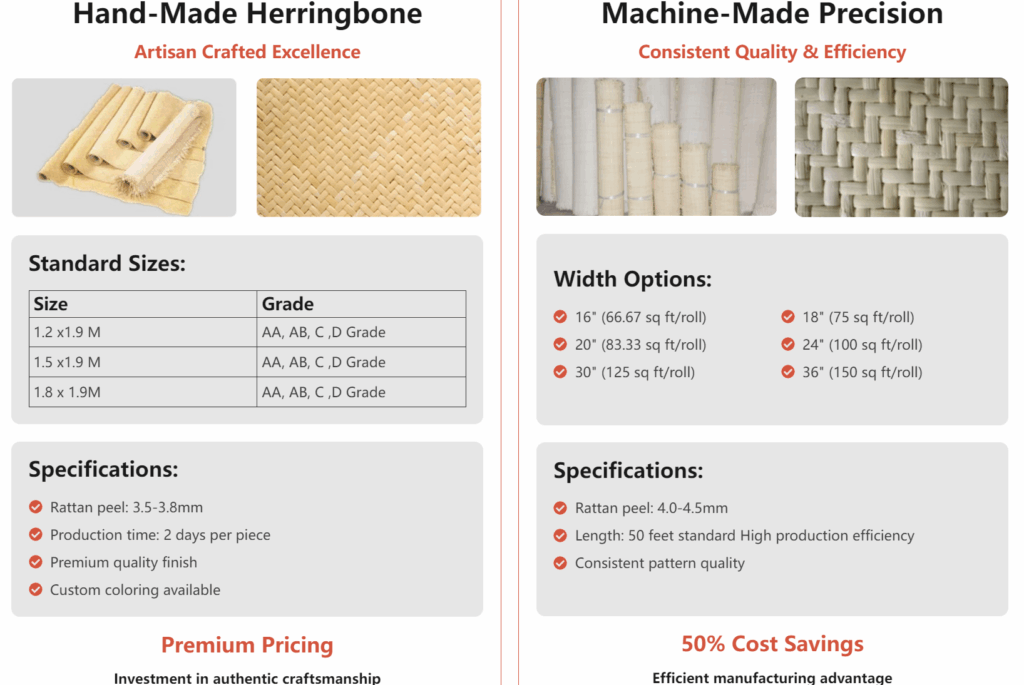
Our rattan matting comes in four quality grades that suit different needs:
- Qualité A: Premium quality with perfect color consistency – ideal for high-end furniture
- Qualité B: Mid-range option balancing quality and affordability
- Note C: Most practical choice for structural applications with some natural color variation
- Qualité D: Best for decorative purposes with beautiful coloring but less structural strength
| Caractéristique | Qualité A | Qualité B | Note C | Qualité D |
|---|---|---|---|---|
| Résistance | Très résistant | Fort | Fort | Decorative Only |
| Cohérence des couleurs | Parfait | Bon | Variable (peau verte) | Belles Tonalités Naturelles |
| Meilleure utilisation | Meubles de Luxe | Meubles de Qualité | Composants Structurels | Décoration Murale/Plafond |
| Prix | Le plus élevé | Modéré | Abordable | Le Plus Économique |
Depuis 2018, lorsque l'Indonésie a restreint les exportations de rotin brut, nous avons développé des solutions pour maintenir l'approvisionnement pour des clients comme les projets hôteliers de Peter. Bien que le rotin naturel reste notre offre premium, nous recommandons la qualité C pour les applications pratiques nécessitant de la résistance à un coût raisonnable, et la qualité D pour les installations purement décoratives où l'apparence prime. La flexibilité du cannage permet des applications créatives, des cloisons aux accents de plafond.
Bamboo Matting?
Vous recherchez un matériau naturel rentable avec un caractère distinctif ? Les options conventionnelles peuvent manquer de texture unique. Le nattage en bambou2 offre à la fois l'abordabilité et un attrait visuel saisissant.
Le cannage en bambou est un choix économique et durable, présentant des motifs de grain proéminents. Il est parfait pour créer des éléments de design d'inspiration asiatique ou des intérieurs rustiques-chics avec une excellente durabilité.
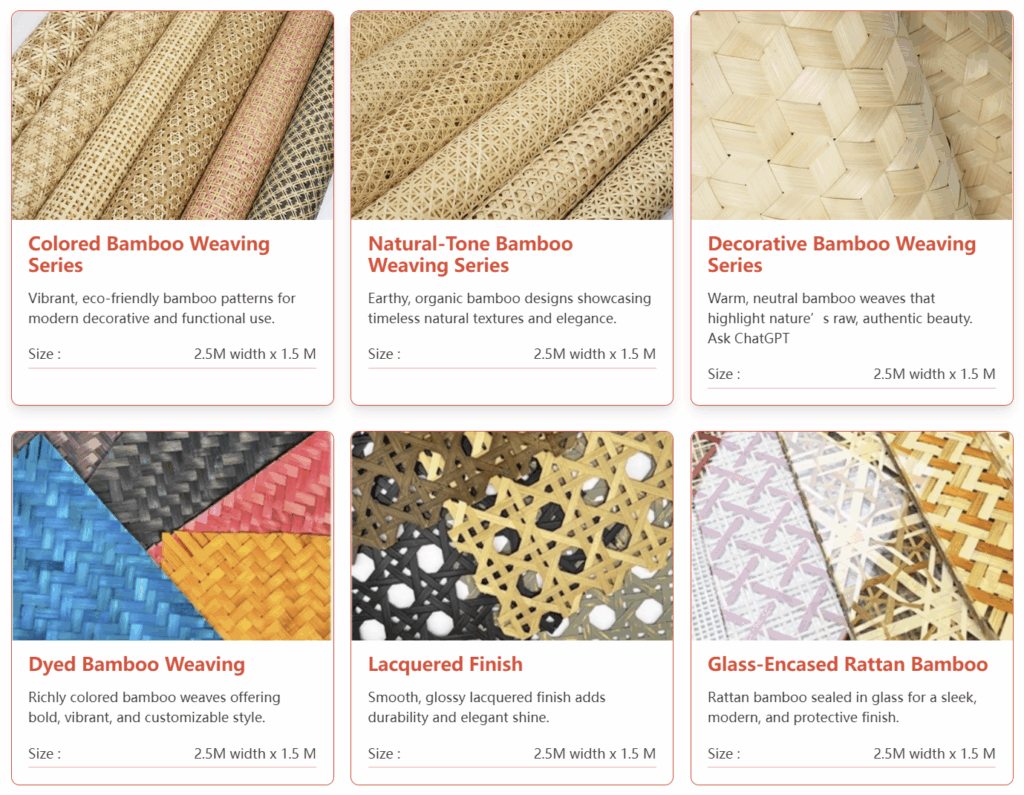
Les principaux avantages de notre cannage en bambou comprennent :
- Source du Matériau: 100% approvisionné localement en Chine avec un approvisionnement stable
- Cycle de Croissance: Régénération rapide (3-5 ans) le rend extrêmement durable
- Rentabilité: Environ 30-40% moins cher que les produits en rotin comparables
- Caractère visuel: Les motifs linéaires audacieux créent des looks signatures
- Propriétés structurelles: Excellente rigidité et capacité de charge
Contrairement au rotin qui doit être importé d'Indonésie, notre bambou provient de plantations chinoises nationales. Cela garantit une disponibilité constante à moindre coût – un facteur crucial pour les acheteurs en gros comme Adel. Bien que moins flexible que le rotin pour le tissage complexe, la résistance naturelle du bambou le rend idéal pour les panneaux muraux, les séparateurs de pièces ou les traitements de plafond nécessitant une intégrité structurelle. Les récentes avancées en matière de tissage mécanique permettent des motifs plus complexes que les nattes de bambou traditionnelles tissées à la main.
Synthetic Bamboo Matting and Synthetic Rattan Matting?
Vous aimez l'esthétique naturelle mais avez besoin de matériaux qui résistent aux conditions extérieures ? Les matériaux traditionnels se dégradent par mauvais temps. Nos alternatives synthétiques offrent une beauté durable avec un minimum d'entretien.
Nattes synthétiques3 reproduisent les looks naturels tout en offrant une résistance aux intempéries et une durabilité supérieures. C'est la solution parfaite pour les installations extérieures ou les zones à fort trafic nécessitant des performances à long terme.
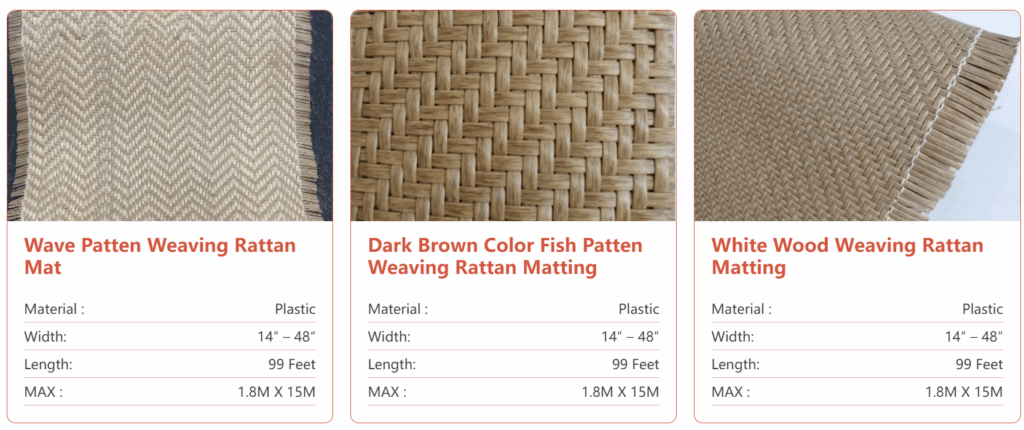
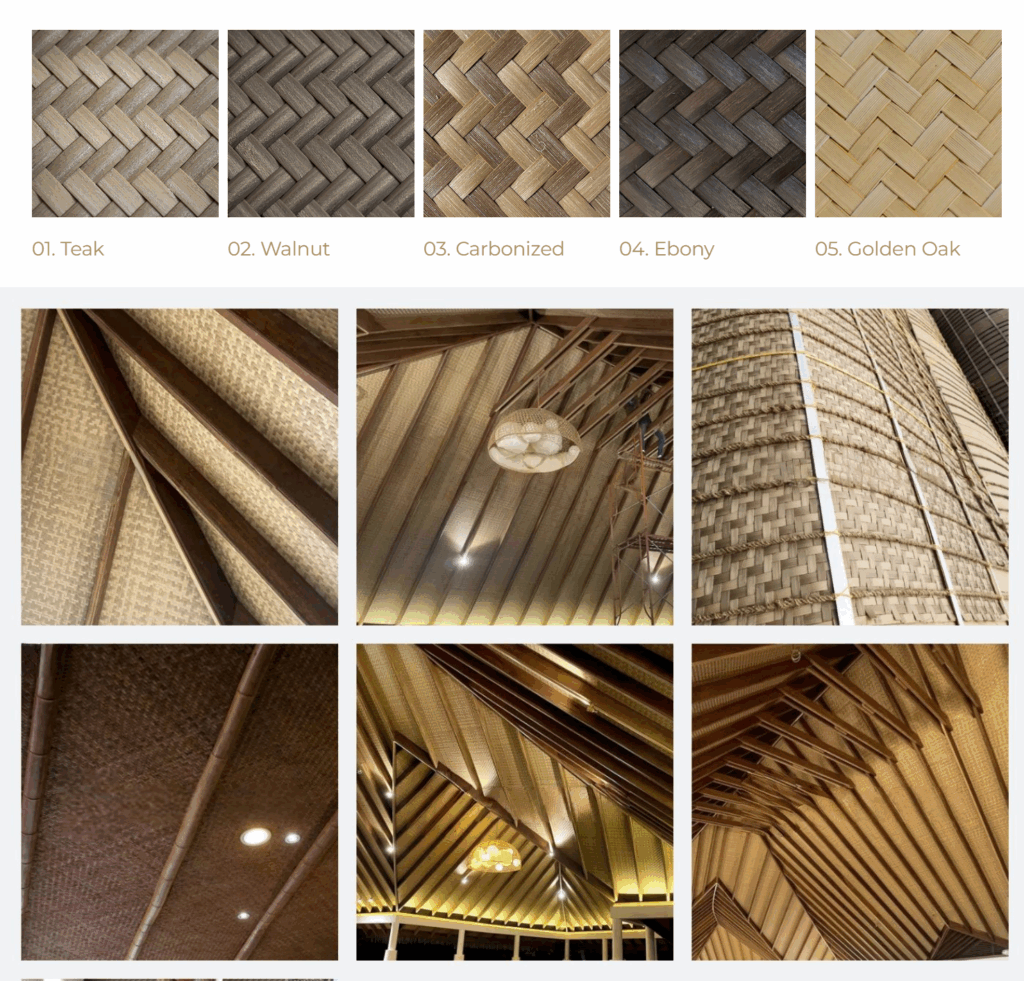
Depuis les défis d'approvisionnement en rotin de 2018, nous avons considérablement développé nos alternatives synthétiques :
Avantages clés :
- Résistance aux intempéries4: Les formulations stabilisées aux UV résistent au soleil, à la pluie et aux températures extrêmes
- Options de couleur: Plus de 15 couleurs standard avec correspondance des couleurs personnalisée disponible
- Économies: Environ 50% moins cher que le rotin naturel sur une utilisation à long terme
- Entretien facile: Nettoyage facile sans traitements spéciaux requis
- Durabilité: Testé pour résister à plus de 5 ans d'exposition extérieure
Nos innovations 2025 incluent :
- Plus de 10 motifs de sangles spécialisées pour l'extérieur
- Panneaux composites hybrides aluminium-rotin
- Finitions texturées imitant les imperfections des matériaux naturels
- Technologie de couleur résistante à la décoloration
Pour les projets hôteliers dans des lieux tropicaux comme les Maldives, Peter recommande nos options synthétiques qui conservent leur apparence malgré le soleil et l'humidité constants. La gamme de meubles d'extérieur de Jacky bénéficie d'une réduction des coûts de main-d'œuvre de 80% grâce à l'utilisation de nos panneaux synthétiques pré-tissés au lieu du tressage manuel de pièces entières.
Conclusion
Lors du choix entre le rotin naturel, le bambou ou le revêtement synthétique, tenez compte de votre budget, de votre environnement et de l'esthétique souhaitée. Chaque matériau offre des avantages uniques qui peuvent valoriser différents types de projets.
-
Explorez les avantages du revêtement en rotin naturel pour vos projets de décoration intérieure, alliant beauté et fonctionnalité. ↩
-
Explorez les avantages uniques du revêtement en bambou, y compris sa durabilité et son attrait esthétique pour vos projets de décoration intérieure. ↩
-
Explorez les avantages du revêtement synthétique, y compris sa durabilité et sa résistance aux intempéries, parfait pour l'esthétique extérieure. ↩
-
Découvrez comment la résistance aux intempéries améliore la longévité et les performances des matériaux d'extérieur, garantissant une beauté durable.
 English
  Español de México
  العربية
  Deutsch
  Français
  Русский