
Ne négligez-vous pas le matériau en rotin le plus rentable pour vos projets de mobilier ? L'écorce de rotin, souvent mise au rebut, recèle un potentiel surprenant pour un tressage de qualité à moindre coût.
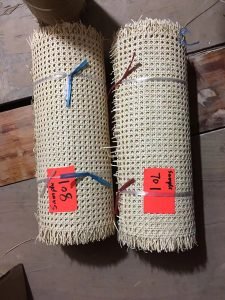
L'écorce de rotin pour le tressage offre une durabilité exceptionnelle pour le tressage à une fraction du coût du rotin premium, particulièrement idéale pour les meubles qui seront peints ou teints. Le rotin de qualité C avec son écorce verte naturelle offre une résistance supérieure tout en réduisant les dépenses de matériaux de 30 à 40 % par rapport aux qualités premium.
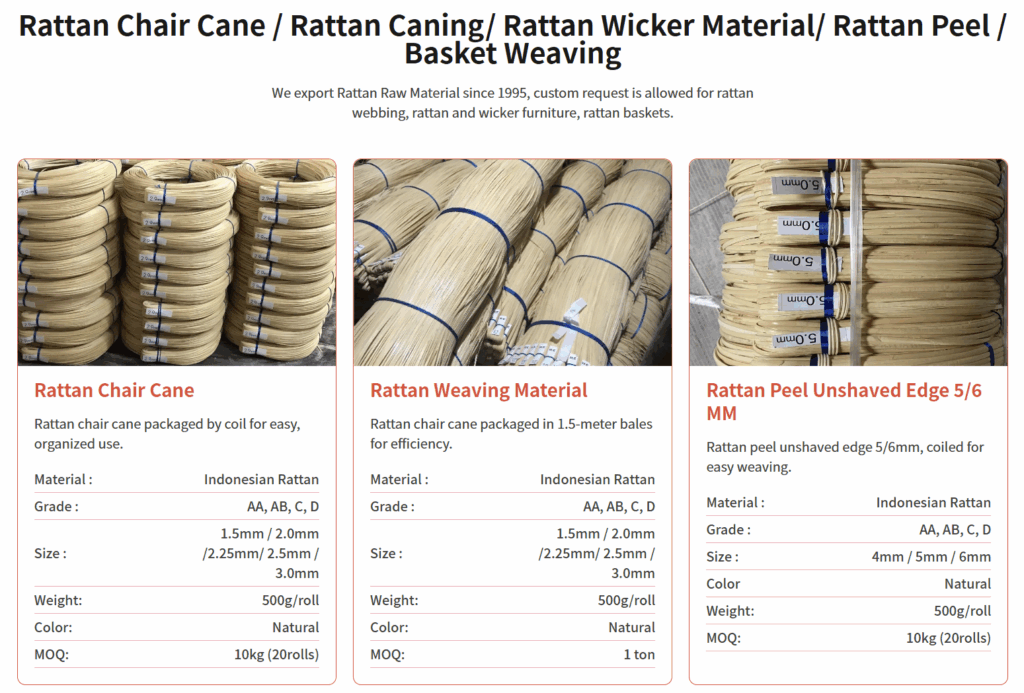
Pour plus de détails, vous pouvez consulter les détails de notre produit :
https://rattanwholesaler.com/rattan-chair-cane-basket-weaving/
Pour plus de vidéos, vous pouvez consulter notre page de vidéos :
https://video.rattanwholesaler.com/videos
Au cours de vingt-cinq années d'approvisionnement en rotin, j'ai découvert que la plupart des acheteurs occidentaux rejettent trop rapidement l'écorce de rotin. L'un de nos partenaires vietnamiens m'a d'abord montré comment l'écorce de qualité C – traditionnellement considérée comme "défectueuse" – fabrique en réalité les sièges de chaise les plus solides lorsqu'elle est correctement traitée.
Pourquoi l'écorce de rotin surpasse-t-elle la canne pleine pour certaines applications ?
Et si l'écorce de rotin "imparfaite" pouvait vous donner des résultats plus solides que les matériaux premium à moindre coût ? Le secret réside dans ses avantages structurels.
L'écorce de rotin structure de fibres superposées1 crée des brins naturellement imbriqués lors du tressage, résultant en une résistance à la traction supérieure par rapport aux matériaux à âme pleine. Les écorces offrent une meilleure flexibilité pendant le tressage et forment des motifs plus serrés et plus durables dans les produits finis.
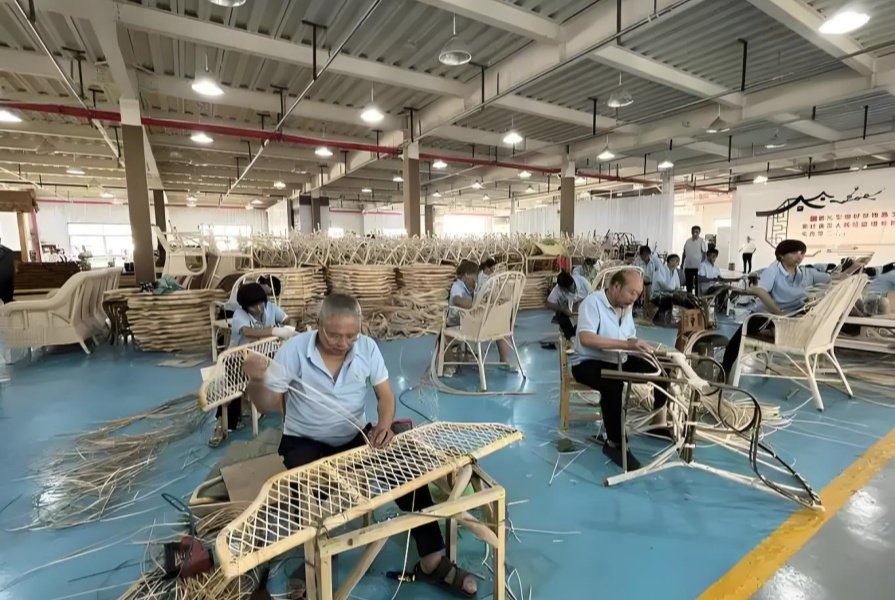
Les principaux avantages que nous avons documentés :
Supériorité structurelle
- 25 % de résistance à la déchirure supérieure à celle de la canne pleine
- L'imbrication naturelle des fibres crée un tressage stable
- Flexible tout en conservant sa mémoire de forme
Avantages économiques
- Coûte 40% moins cher que les matériaux de qualité A
- Rendement plus élevé par plant de rotin
- Déchets réduits lors du traitement
- Idéal pour les finitions peintes/teintées
Avantages de fabrication
- Plus facile à manipuler que les matériaux à âme rigide
- Nécessite moins de temps de trempage
- Plus tolérant lors du tressage
- Se conforme mieux aux surfaces courbes
Facteurs de durabilité
- Utilise plus de la plante (moins de déchets)
- Méthodes de récolte renouvelables
- Entièrement biodégradable
- Empreinte carbone plus faible
Comment sélectionner la bonne qualité d'écorce de rotin ?
Vous êtes confus par les différents grades de peau de rotin et lequel convient le mieux à votre projet ? Cette simple explication révèle le choix idéal pour chaque application.
La peau de rotin se décline en quatre grades distincts :
| Note | Couleur | Résistance | Meilleures utilisations | 6. Gamme de prix |
|---|---|---|---|---|
| A | Brun uniforme | Le plus élevé | Premium visible furniture | $$$$ |
| B | Light green patches | Élevé | Meubles milieu de gamme | $$$ |
| C | Distinct green peel | Très élevé | Painted/dark furniture | $$ |
| D | Variegated natural | Faible | Decorative elements | $ |
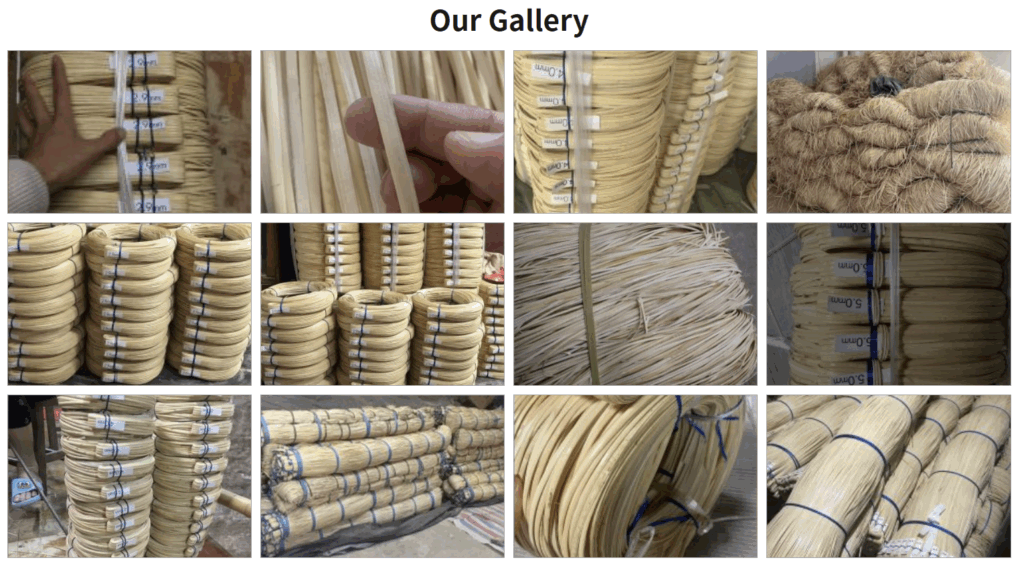
From our production experience:
Pour les fabricants de meubles :
- Grade C offers the best value for:
- Assises de chaise de salle à manger
- Barstool platforms
- Panneaux de tête de lit
- Any painted applications
Pour les architectes d'intérieur :
- Grade A for visible natural finishes2
- Grade D for:
- Wall coverings
- Revêtements de plafond
- Cloisons de séparation
- Backlit features
Special Considerations:
- Grade B balances quality and cost
- La peau de qualité C nécessite un traitement approprié3:
- Séchage contrôlé
- Teneur en humidité uniforme
- Stockage approprié
Astuce de pro :
Demandez toujours des échantillons montrant les deux côtés de la peau – la qualité varie considérablement entre les surfaces extérieure et intérieure.
Quelles innovations transforment l'utilisation de l'écorce de rotin ?
Saviez-vous que la peau de rotin est maintenant présente dans des matériaux composites de pointe ? La modeste peau connaît une renaissance high-tech.
Les applications modernes de la peau de rotin comprennent :
- Sangles hybrides peau-plastique
- Composites peau-aluminium renforcés
- Peaux de designer infusées de couleur
- Panneaux de peau pré-tissés pour la production de masse
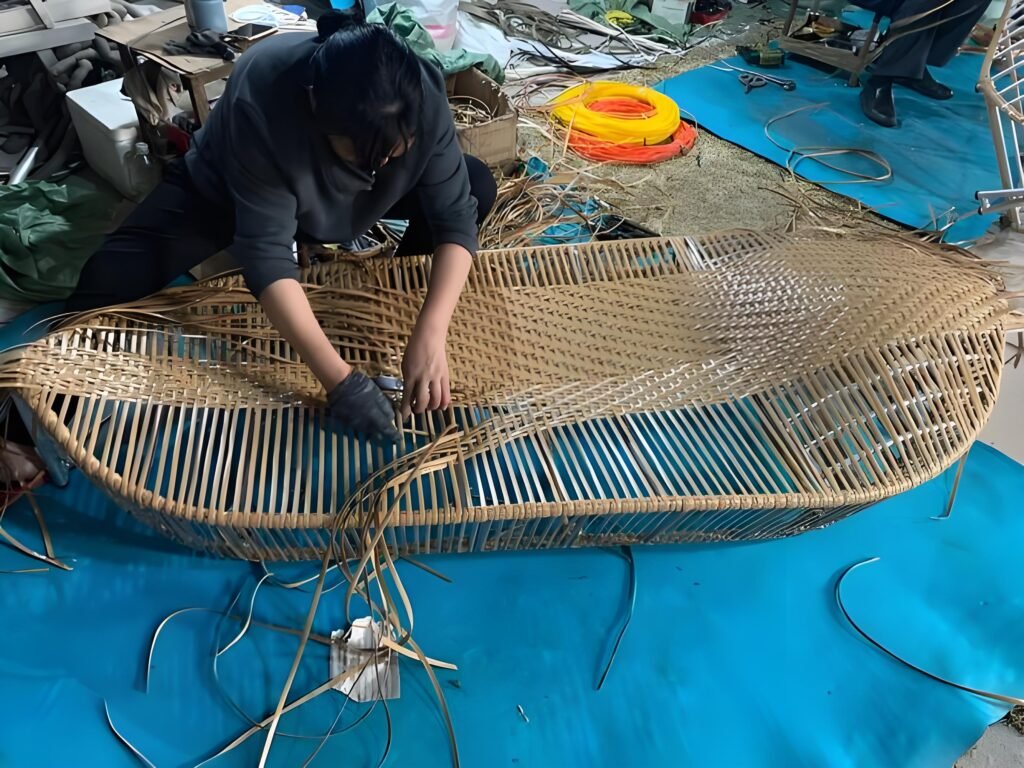
Les développements les plus passionnants :
Ingénierie des matériaux
- Peau revêtue de polymère pour usage extérieur
- Mélanges peau-fibre de bambou
- Panneaux structurels infusés de résine
- Traitements ignifuges
Innovations de production
- Bandes d'écorce coupées avec précision
- Tri automatisé par qualité
- Motifs de tissage conçus par ordinateur
- Optimisation de l'utilisation de l'écorce
Collaborations de designers
- Techniques de teinture personnalisées
- Applications multimédias
- Installations à l'échelle architecturale
- Translucidité axée sur l'éclairage
Avancées en matière de durabilité
- Revêtements protecteurs biosourcés
- Systèmes d'eau en circuit fermé
- Traitement alimenté à l'énergie solaire
- Initiatives zéro déchet
Conclusion
Autrefois considéré comme un sous-produit, l'écorce de rotin représente aujourd'hui l'un des matériaux de tissage naturels les plus polyvalents et les plus rentables. Ses propriétés uniques continuent d'inspirer des applications innovantes dans les industries du meuble, de l'architecture et du design.
-
Explorez comment la structure fibreuse en couches améliore la résistance à la traction et la durabilité des produits en écorce de rotin. ↩
-
Découvrez pourquoi l'écorce de rotin de qualité A est idéale pour les meubles haut de gamme avec des finitions naturelles, améliorant l'attrait esthétique et la résistance. ↩
-
Apprenez les techniques de traitement essentielles pour l'écorce de rotin de qualité C afin d'assurer la durabilité et la qualité de vos projets de meubles. ↩
 English
  Español de México
  العربية
  Deutsch
  Français
  Русский