
Chaque semaine, notre équipe commerciale reçoit des appels d'acheteurs qui ont reçu du cannage en rotin qui ne ressemblait en rien à l'échantillon qu'ils avaient approuvé. motifs de tissage 1. Les lanières étaient inégales, le tissage présentait des espaces et la couleur variait d'un rouleau à l'autre. Cette frustration remonte généralement à une cause principale : une inadéquation entre la qualité du rotin commandée et la qualité livrée.
Le cannage en rotin de qualité A est fabriqué à partir de lanières de rotin de première qualité et uniformes, avec des motifs de tissage serrés, des défauts quasi nuls et des traitements de finition avancés. La qualité B utilise des lanières standard qui peuvent présenter des imperfections mineures, des variations de couleur et une finition basique, ce qui la rend plus abordable mais moins raffinée pour les applications haut de gamme.
Comprendre cette différence n'est pas seulement académique traitements de finition 2. Cela affecte directement la qualité de vos produits, la satisfaction de vos clients et vos marges bénéficiaires. Ci-dessous, nous détaillons les distinctions clés, vous aidons à décider quelle qualité correspond à vos besoins et vous montrons comment vérifier ce que vous recevez de vos fournisseurs.
Comment puis-je distinguer physiquement la différence entre la sangle en rotin de qualité A et de qualité B ?
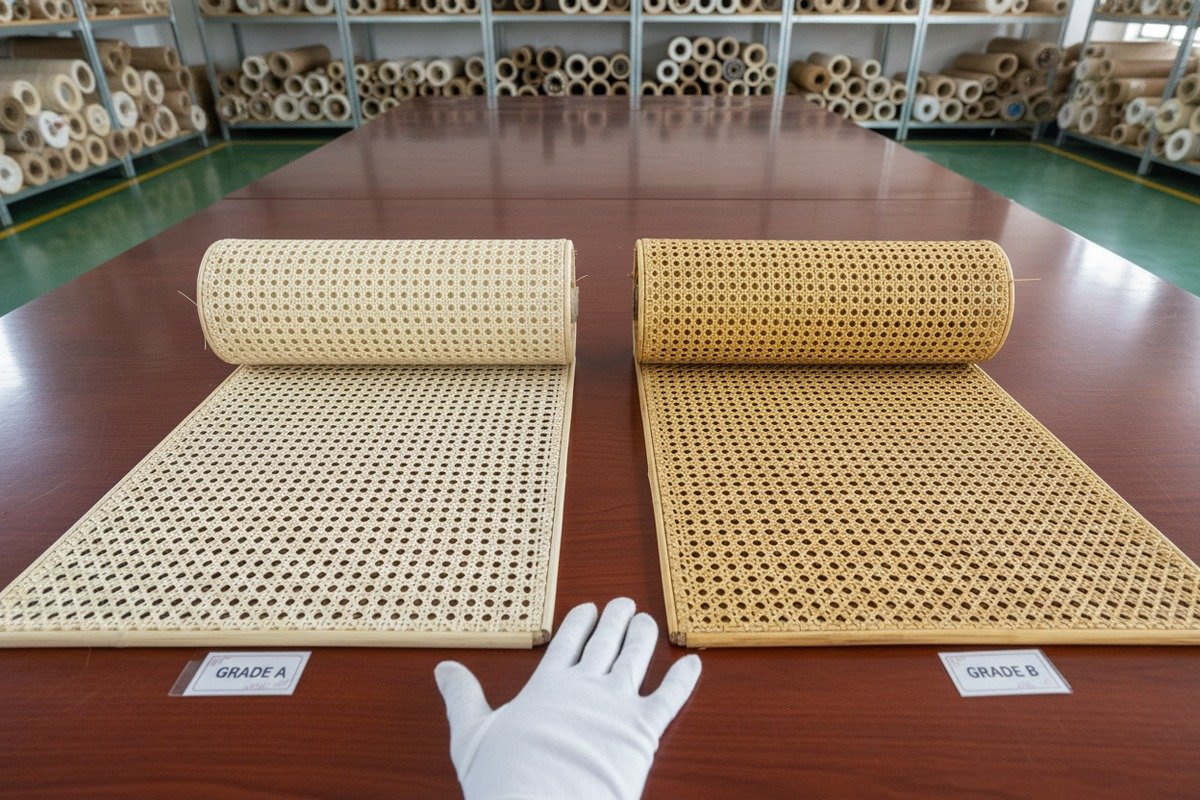
Lorsque nous plaçons des rouleaux de qualité A et de qualité B côte à côte sur la table d'inspection de notre entrepôt de Foshan, la plupart des acheteurs peuvent repérer la différence en quelques secondes. Certifications de durabilité 3. Mais savoir exactement quoi chercher permet de gagner du temps et d'éviter des erreurs de commande coûteuses.
Vous pouvez identifier le cannage en rotin de qualité A par ses bandes lisses et uniformes de largeur et de couleur constantes, son tissage serré sans espaces, et une surface polie sans nœuds ni fissures. Le cannage de qualité B présente souvent des marques naturelles visibles, de légères variations de couleur, des largeurs de bandes inégales et une texture plus grossière qui fonctionne toujours bien mais manque de perfection visuelle.
Qualité et uniformité des lanières
La différence la plus immédiate réside dans les lanières elles-mêmes. Approvisionnement éthique 4. Qualité A lanières de rotin 5 proviennent d'écorces de rotin soigneusement sélectionnées. Chaque lanière est coupée à une largeur et une épaisseur constantes. Lorsque vous passez votre main sur une feuille de qualité A, la surface est lisse et uniforme. Il n'y a pas d'effilement sur les bords et pas de résidus d'écorce rugueuse.
Les lanières de qualité B, en revanche, peuvent varier légèrement en largeur. Vous pourriez remarquer qu'une lanière est légèrement plus large que celle à côté. Certaines lanières peuvent présenter de petits nœuds ou des marques naturelles de l'écorce du rotin. Ces imperfections ne rendent pas le matériau inutilisable. Elles lui donnent simplement un aspect plus rustique et organique.
Serrage du tissage et cohérence du motif
Tenez une feuille de Grade A à la lumière. Le motif hexagonal ou carré semblera presque mécanique dans sa régularité. Chaque ouverture est de la même taille. Chaque intersection repose à plat sans fils lâches qui dépassent. Notre équipe de contrôle qualité vérifie cela sur chaque rouleau avant son expédition.
La sangle de Grade B conserve une bonne structure de motif. Mais vous pourriez remarquer de légers écarts ou chevauchements à certaines intersections. Dans un tissage hexagonal, certaines ouvertures peuvent être légèrement plus grandes que d'autres. Pour les panneaux cachés ou le support intérieur, cela importe peu. Pour un cannage de chaise visible sur une chaise de salle à manger de luxe, cela compte.
Finition de surface et couleur
La sangle de Grade A subit généralement un blanchiment, un ponçage et des traitements anti-moisissure 6. Cela produit une couleur propre et cohérente, généralement une teinte crème claire ou paille douce. La surface a un éclat subtil sans être brillante.
La sangle de Grade B repose souvent sur un séchage naturel avec un traitement chimique minimal. La couleur peut varier du miel chaud au brun clair, parfois au sein du même rouleau. Certains acheteurs préfèrent en fait cette variation naturelle pour les meubles de style bohème ou rustique.
Comparaison visuelle rapide
| Caractéristique | Qualité A | Qualité B |
|---|---|---|
| Largeur de bande | Uniforme, cohérent | Légères variations |
| Sensation de surface | Lisse, poncé | Plus grossier, peut avoir du duvet |
| Couleur | Ton crème/paille uniforme | Variation naturelle, peut changer |
| Nœuds ou marques | Aucun ou presque nul | Petits nœuds, marques mineures |
| Espacements de tissage | Serré, pas d'écarts visibles | Écarts légers occasionnels |
| Impression générale | Poli, raffiné | Rustique, organique |
Le test tactile
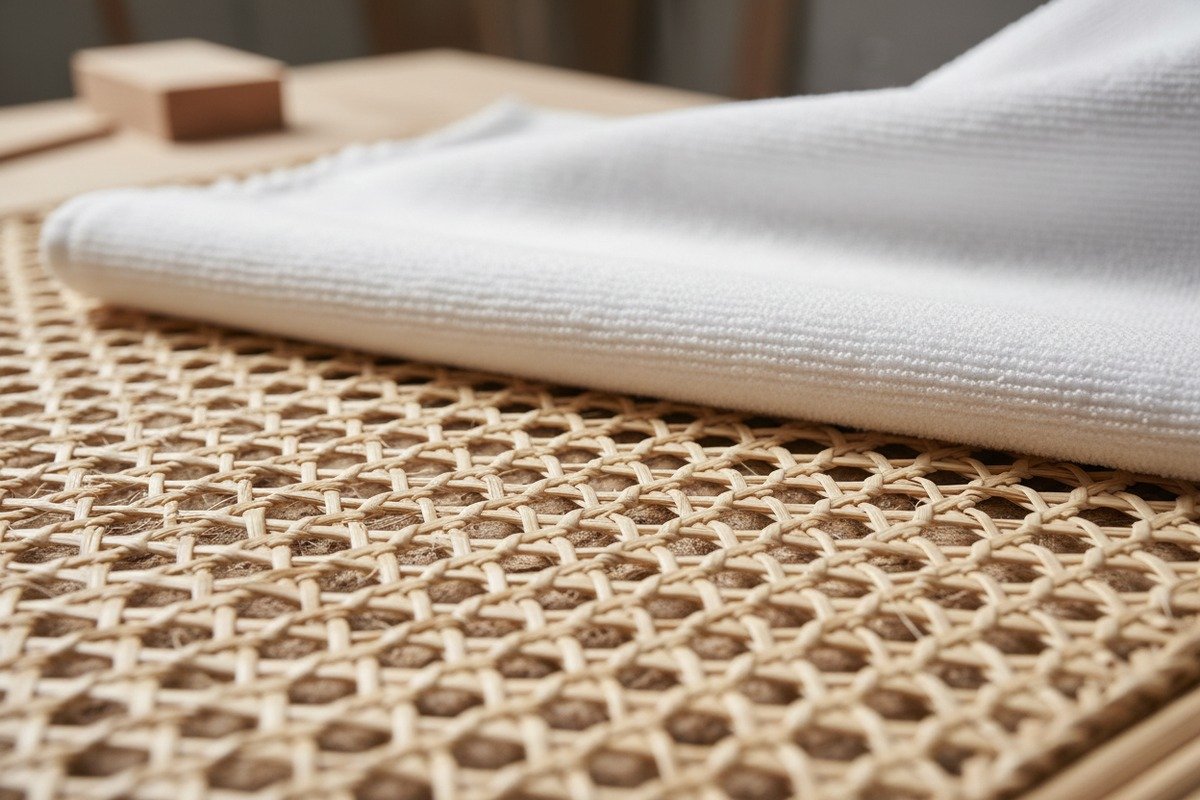
Voici un test simple que nous recommandons à tous nos acheteurs. Prenez un chiffon propre et faites-le glisser légèrement sur la surface. Sur la qualité A, le chiffon glisse sans accrocher. Sur la qualité B, le chiffon peut légèrement accrocher sur de petites extrémités de fibres ou des aspérités. Cela prend cinq secondes et vous en dit long.
Nos clients aux Pays-Bas et en Australie posent souvent cette question avant de passer leur première commande en gros. La réponse dépend moins du rotin lui-même que de l'endroit où il se retrouve dans votre produit fini.
La prime de prix de qualité A vaut la peine lorsque le cannage en rotin est un élément de design visible et principal sur des meubles haut de gamme, car il offre une esthétique et une durabilité constantes qui justifient des prix de détail plus élevés. Pour les panneaux cachés, les meubles économiques ou les applications d'artisanat de bricolage, la qualité B offre des performances adéquates à un coût nettement inférieur, protégeant ainsi vos marges.
Comprendre la différence de coût
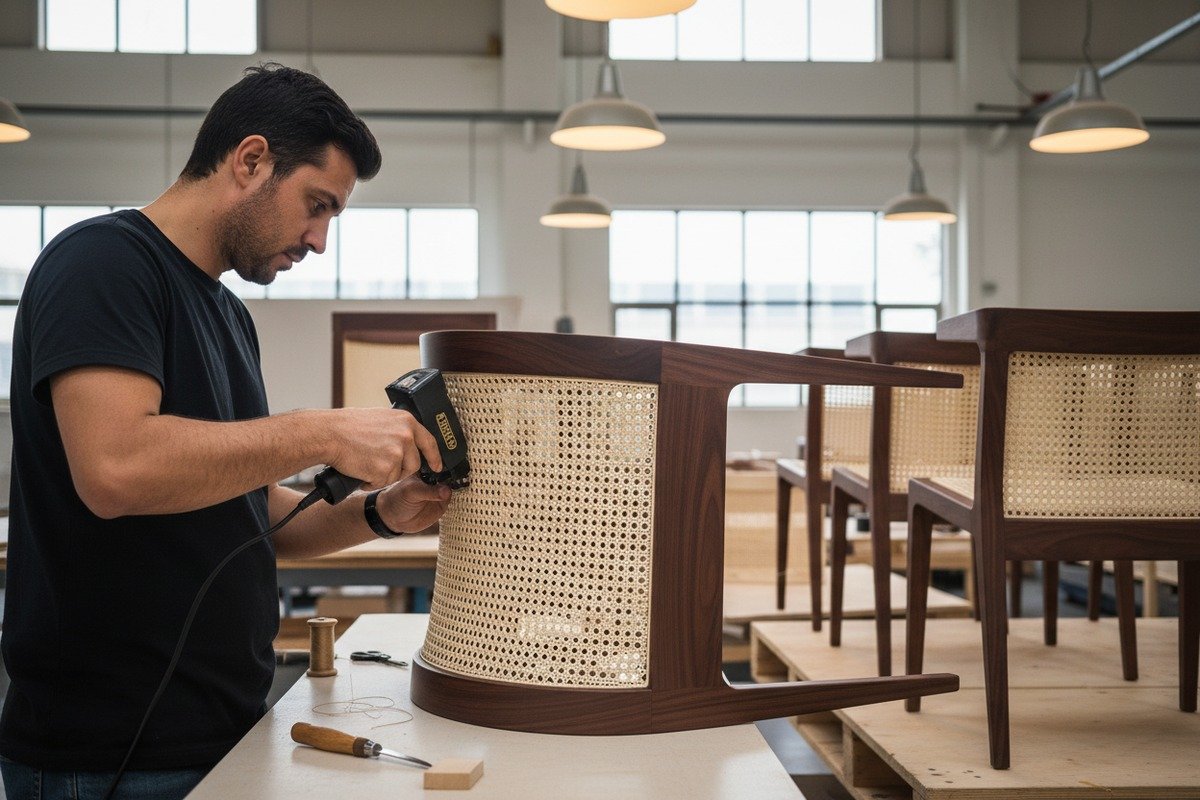
Le rotin de qualité A coûte plus cher pour des raisons évidentes. La sélection des matières premières est plus stricte – seules les meilleures écorces de rotin de cannes matures sont retenues. Le processus de finition ajoute des étapes : blanchiment, plusieurs cycles de ponçage, traitement anti-moisissure et séchage soigné. Chaque rouleau passe par davantage de points de contrôle qualité. Tout cela ajoute de la main-d'œuvre, du temps et du coût.
La qualité B saute ou raccourcit plusieurs de ces étapes. Le séchage naturel remplace le séchage contrôlé. Une finition minimale remplace un traitement en plusieurs étapes. Le résultat est un cycle de production plus rapide et un coût par mètre inférieur.
Quand la qualité A se justifie
Si vous fabriquez des meubles en cannage apparent – chaises de salle à manger, têtes de lit, portes d'armoire ou paravents décoratifs – la qualité A est presque toujours le bon choix. Voici pourquoi :
- Perception du détail. Les consommateurs finaux associent un cannage lisse et uniforme à un savoir-faire de qualité. Un seul rouleau avec une couleur inégale peut donner l'impression qu'une chaise à 500 € est bon marché.
- Taux de rejet. Les meubles destinés aux détaillants européens ou américains subissent une inspection. Les défauts visibles sont signalés. La qualité A réussit ces inspections à des taux beaucoup plus élevés, réduisant les retours et les retouches.
- Longévité. Les traitements anti-moisissure et résistants aux UV 7 présents dans la sangle de qualité A premium prolongent la durée de vie du produit, en particulier dans les climats humides 8 comme ceux de Thaïlande, des Philippines ou de l'Australie côtière.
Quand la qualité B a du sens pour les affaires
La qualité B n'est pas un compromis, c'est un choix stratégique dans le bon contexte. Considérez ces scénarios :
- Panneaux de fond sur des meubles où le rotin est recouvert ou à peine visible.
- Lignes de produits économiques ciblant les marchés sensibles aux prix.
- Étapes de prototypage et d'échantillonnage où vous avez besoin de matériel pour les tests, pas pour la vente.
- Marchés du bricolage et de l'artisanat où les clients adoptent le look naturel et fait à la main.
Répartition coûts-avantages
| Facteur | Qualité A | Qualité B |
|---|---|---|
| Coût du matériau par mètre | Plus élevé | Plus bas |
| Étapes de finition incluses | 5–7 étapes | 2–3 étapes |
| Taux de rejet QC en production | Faible (moins de 3%) | Modéré (5–10%) |
| Soutien du prix de détail | Prix premium possible | Budget à milieu de gamme |
| Risque de retour/plainte | Minimal | Plus élevé pour les applications visibles |
| Meilleur cas d'utilisation | Meubles de luxe, exportation | Meubles économiques, panneaux cachés, bricolage |
Un scénario de commande réel
L'un de nos clients turcs gère deux gammes de produits : un ensemble de salle à manger en rotin de qualité supérieure et une collection de mobilier de jardin économique. Pour l'ensemble de salle à manger, ils commandent de la sangle hexagonale blanchie de qualité A — chaque rouleau est inspecté, et la cohérence soutient un prix de détail de 800 € par ensemble. Pour la gamme de mobilier de jardin, ils utilisent de la sangle carrée naturelle de qualité B. La légère variation de couleur ajoute en fait du caractère au design décontracté, et le coût inférieur des matériaux maintient l'ensemble à un prix compétitif de 250 €.
Les deux gammes se vendent bien. La clé était de faire correspondre la qualité au positionnement du produit.
Quel grade de rotin dois-je choisir pour garantir que mes produits répondent aux normes d'exportation haut de gamme ?
D'après notre expérience d'exportation dans plus d'une douzaine de pays — y compris les États-Unis, les Pays-Bas, l'Espagne et l'Australie — nous avons constaté directement comment la sélection de la qualité détermine si une expédition passe l'inspection ou est signalée. Les normes d'exportation sont strictes, et la qualité de la sangle que vous choisissez est la première ligne de défense.
Pour les normes d'exportation haut de gamme, sélectionnez le cannage en rotin de qualité A. Son taux de défauts proche de zéro, son aspect uniforme, ses traitements avancés anti-moisissure et résistants aux UV, ainsi que sa couleur constante répondent aux inspections de qualité rigoureuses exigées par les détaillants de meubles haut de gamme en Europe, en Amérique du Nord et en Australie, où les défauts visibles entraînent des rejets.
Ce que les inspecteurs d'exportation recherchent réellement
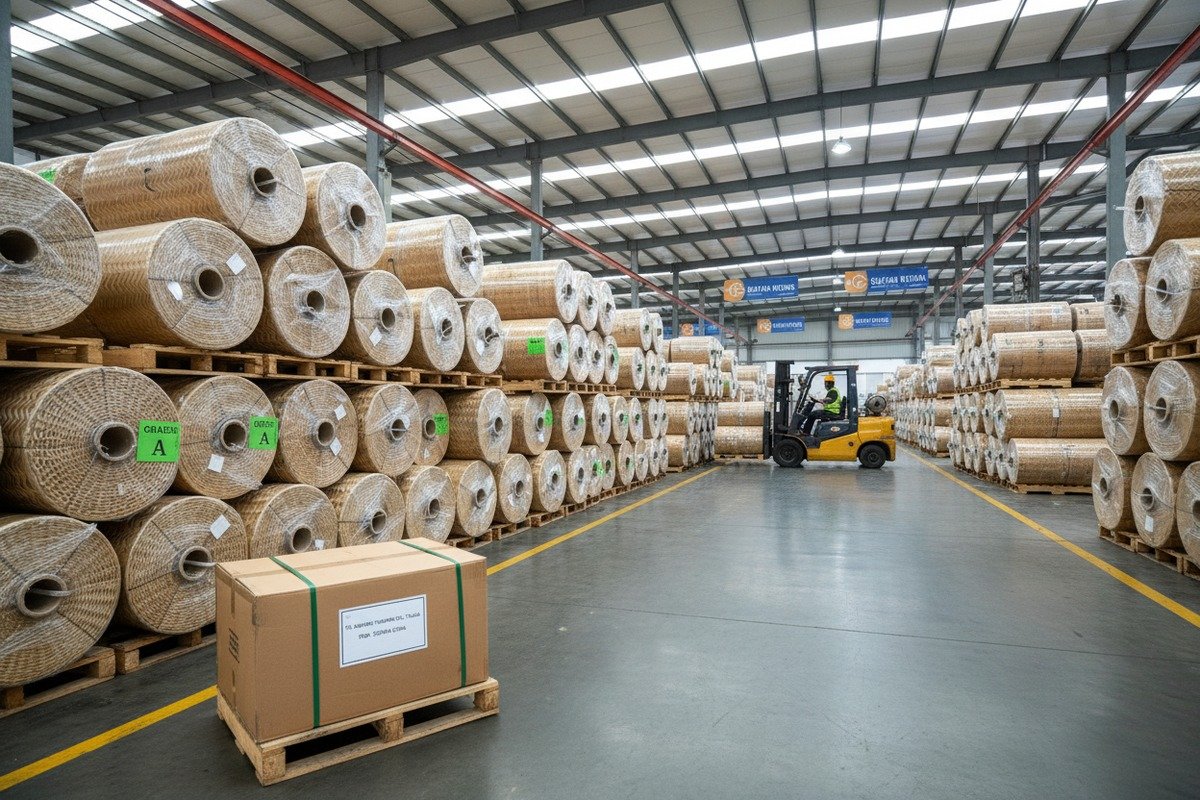
Lorsqu'un conteneur de meubles en rotin arrive à Rotterdam ou à Los Angeles, les inspecteurs tiers ne se contentent pas de jeter un coup d'œil à la surface. Ils vérifient des critères spécifiques qui se rapportent directement à la qualité de la sangle :
- Défauts de surface. Tous les nœuds, fissures, décolorations ou fils lâches visibles sur les panneaux de rotin exposés sont documentés.
- Cohérence des couleurs. Les inspecteurs comparent les panneaux sur plusieurs unités. Si la chaise A a une teinte crème chaude et que la chaise B du même lot tire vers le jaune-brun, il s'agit d'un écart de qualité.
- Intégrité structurelle. Ils appuient sur la sangle, la plient et vérifient les signes de fragilité ou de délaminage.
- Moisissure et odeur. C'est essentiel. Le rotin non traité ou sous-traité peut développer de la moisissure pendant le transport maritime, surtout lors du voyage de plus de 30 jours d'Asie en Europe. Le traitement anti-moisissure de Grade A aborde ce problème directement.
Sélection de la qualité par marché
| Marché cible | Qualité recommandée | Raison principale |
|---|---|---|
| Commerce de détail de luxe européen (Pays-Bas, Espagne, Grèce) | Qualité A | Exigences strictes en matière de cosmétique et d'absence de moisissure |
| Mobilier américain milieu à haut de gamme | Qualité A | Les programmes de contrôle qualité des détaillants signalent les défauts visibles |
| Intérieur/extérieur australien | Grade A avec traitement anti-UV | L'exposition au soleil exige une finition avancée |
| Hôtellerie du Moyen-Orient (Dubaï, Arabie Saoudite) | Qualité A | Les projets prestigieux exigent une esthétique irréprochable |
| Marché intérieur d'Asie du Sud-Est (Thaïlande, Philippines) | Grade A ou B selon le niveau de prix | Le climat humide rend le traitement anti-moisissure essentiel pour le Grade A |
| Exportation de bricolage et d'artisanat | Qualité B | Sensibilité au coût ; les acheteurs acceptent la variation naturelle |
Certifications de durabilité et approvisionnement éthique
C'est un facteur de plus en plus important pour les marchés d'exportation. Les acheteurs européens en particulier souhaitent une documentation prouvant que le rotin a été récolté de manière durable. La sangle de qualité A provenant de fournisseurs réputés, en particulier ceux qui possèdent leurs propres installations de traitement du rotin en Indonésie, comme nous, est plus susceptible d'être traçable. Nous pouvons documenter l'approvisionnement à partir de jardins de rotin gérés plutôt que de la récolte incontrôlée en forêt primaire.
Le matériau de qualité B est souvent approvisionné par des canaux plus larges et moins documentés. Cela ne signifie pas automatiquement qu'il n'est pas durable, mais la piste documentaire peut être plus mince, ce qui peut poser problème lorsque votre acheteur demande une preuve.
Traitements avancés qui comptent pour l'exportation
Au-delà du traitement anti-moisissure de base, la sangle de qualité A intègre de plus en plus :
- Revêtements résistants aux UV qui empêchent le jaunissement et la fragilité dus à l'exposition au soleil.
- Traitements antifongiques biodégradables qui satisfont aux exigences d'étiquetage sans produits chimiques.
- Séchage à humidité contrôlée qui garantit que la sangle arrive à destination sans déformation.
Ces traitements augmentent les coûts mais éliminent les problèmes post-arrivée qui détruisent les relations avec les acheteurs.
Le coût caché d'un mauvais choix
Nous avons eu un jour un prospect qui est venu nous voir après une mauvaise expérience avec un autre fournisseur. Ils avaient commandé ce qu'on leur avait dit être de qualité A pour un projet hôtelier à Dubaï. Le matériau s'est avéré être de qualité B au mieux. Douze panneaux présentaient une incohérence de couleur, et trois avaient des nœuds visibles. L'hôtel a rejeté l'expédition. L'acheteur a perdu le coût du matériel, le coût de l'expédition et le client. Cette seule erreur a coûté plus cher que la différence entre les prix de la qualité A et de la qualité B sur l'ensemble de la commande.
Comment puis-je vérifier que mon grossiste livre du matériel authentique de qualité supérieure pour mes commandes ?
L'exploitation de trois usines et de notre propre installation de traitement du rotin en Indonésie nous a donné une vision claire de la manière dont la classification peut être mal représentée, parfois intentionnellement, parfois par un contrôle qualité négligent. Savoir comment vérifier ce que vous recevez est essentiel pour protéger votre entreprise.
Pour vérifier le véritable cannage de rotin de qualité A, inspectez les échantillons pour une largeur de bande uniforme, une texture de surface lisse, une couleur cohérente, un tissage serré sans espaces et des preuves de finition anti-moisissure. Demandez des photos de production, des rapports d'inspection par des tiers et des certifications de matériaux. Comparez les rouleaux livrés aux échantillons approuvés dans des conditions d'éclairage constantes avant d'accepter les expéditions.
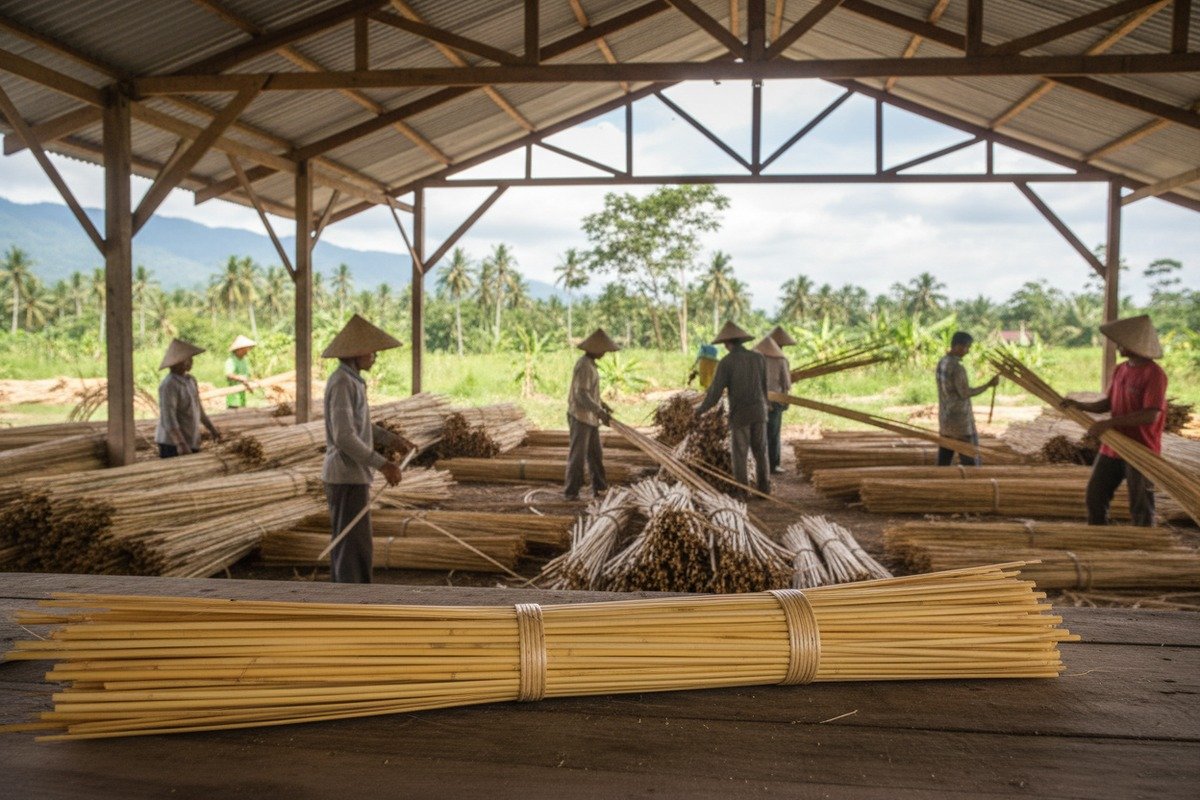
Processus de vérification étape par étape
Ne vous fiez pas uniquement à la parole de votre fournisseur. Établissez un système de vérification qui détecte les problèmes avant qu'ils n'atteignent votre chaîne de production ou votre client.
Étape 1 : Demandez des échantillons physiques avant de commander. Demandez au moins deux coupes d'échantillons, une du début d'un rouleau et une du milieu. La cohérence de la qualité doit être maintenue tout au long. Si le fournisseur n'envoie qu'une seule pièce parfaite, c'est un signal d'alarme.
Étape 2 : Établissez un échantillon de référence. Conservez un échantillon de Grade A approuvé dans votre bureau. Lorsque de nouvelles expéditions arrivent, comparez-les côte à côte. Vérifiez la couleur, la texture, la largeur des bandes et la densité du tissage par rapport à ce point de référence.
Étape 3 : Utilisez le test de frottement du tissu. Comme mentionné précédemment, faites glisser un chiffon blanc propre sur la surface. Le Grade A ne devrait pas s'accrocher. Si le tissu s'accroche aux fibres, le traitement est incomplet.
Étape 4 : Vérifiez le traitement anti-moisissure. La sangle de Grade A correctement traitée a une odeur légère et propre, pas de moisi ni trop chimique. Le matériau non traité a parfois une odeur herbacée ou légèrement humide, surtout s'il est expédié depuis des climats humides.
Étape 5 : Mesurez la cohérence de la largeur des bandes. Utilisez un pied à coulisse ou une règle simple. Mesurez la largeur des bandes à cinq points aléatoires sur un rouleau. Le Grade A devrait présenter une variation inférieure à 0,5 mm. Le Grade B présente souvent une variation de 1 mm ou plus.
Drapeaux rouges suggérant une substitution de qualité
| Signe d'avertissement | Ce que cela pourrait signifier |
|---|---|
| Prix significativement inférieur au marché pour la qualité A | Probablement qualité B étiquetée A |
| Le fournisseur refuse d'envoyer plusieurs échantillons | Dissimuler l'incohérence au sein des rouleaux |
| Aucune documentation sur le processus de finition | Peut manquer des étapes anti-moisissure ou de blanchiment |
| Changement de couleur notable entre les rouleaux d'une même commande | Mauvais classement ou expédition de qualité mixte |
| Texture de surface rugueuse ou duveteuse | Ponçage insuffisant, typique de la qualité B |
| Le fournisseur ne peut pas nommer l'origine de l'approvisionnement en rotin | Traçabilité limitée, plus difficile de vérifier la qualité |
Inspection par un tiers
Pour les grosses commandes, en particulier celles destinées aux marchés d'exportation exigeants, nous recommandons toujours une inspection par un tiers 10. Des entreprises comme SGS, Bureau Veritas, ou des agences d'inspection locales à Foshan et Guangdong peuvent vérifier votre expédition avant qu'elle ne quitte le port. Le coût de l'inspection n'est qu'une fraction du coût de réception de matériaux de qualité inférieure.
Spécifiez dans votre brief d'inspection exactement ce qui constitue la qualité A pour votre commande : tolérance de largeur de bande, plage de couleurs acceptable, norme de densité du tissage et seuil de défaut. Sans spécifications claires, même des inspecteurs honnêtes ne peuvent pas déceler les problèmes de qualité.
Construisez une relation, pas seulement une transaction
La manière la plus fiable d'assurer la cohérence de la qualité est de travailler avec un fournisseur transparent sur son processus de fabrication. Visitez l'usine si possible. Demandez à voir le processus de classement et d'inspection. Un fournisseur qui invite à l'examen est généralement celui qui n'a rien à cacher.
Dans nos installations, nous accueillons les visites d'acheteurs et les appels vidéo depuis l'atelier de production. Nous guidons les clients à travers les étapes de séparation, de coupe, de tissage, de finition et d'inspection afin qu'ils comprennent exactement ce qui entre dans leurs rouleaux de qualité A. Cette transparence renforce la confiance, et la confiance est ce qui maintient la cohérence des commandes au fil des ans.
Documentez tout
Conservez des enregistrements de chaque commande : échantillons approuvés, photos du matériel reçu, rapports d'inspection et toute communication concernant les spécifications de qualité. En cas de litige, la documentation est votre outil le plus puissant. Elle vous aide également à suivre si la qualité se dégrade au fil du temps avec un fournisseur particulier.
Conclusion
Choisir entre le rotin tressé de qualité A et de qualité B dépend de l'adéquation de la qualité du matériau à l'usage de votre produit, à votre marché et à votre prix. Sachez quoi rechercher, vérifiez ce que vous recevez, et vos produits en rotin répondront de manière constante aux normes que vos acheteurs attendent.
Notes de bas de page
1. Discute des motifs courants de tissage du rotin et de leur création. ↩︎
2. Détaille les différentes étapes de traitement et de finition du rotin, y compris la fumigation et la conservation. ↩︎
3. Discute des certifications telles que le FSC pour l'approvisionnement durable en rotin et la préservation de l'environnement. ↩︎
4. Met en évidence l'importance des pratiques d'approvisionnement éthiques dans l'industrie du rotin. ↩︎
5. Explique les caractéristiques des bandes de rotin et leur utilisation dans le tissage. ↩︎
6. Fournit des méthodes et des solutions pour prévenir et éliminer la moisissure des meubles en rotin. ↩︎
7. Explique comment les traitements résistants aux UV protègent le rotin des dommages causés par le soleil et de la décoloration. ↩︎
8. Propose des conseils d'entretien pour les meubles en rotin dans les environnements humides. ↩︎
9. Définit le cannage en rotin, son origine et son processus de tissage. ↩︎
10. Définit l'inspection par un tiers comme un processus indépendant d'assurance qualité. ↩︎
 English
  Español de México
  العربية
  Deutsch
  Français
  Русский