
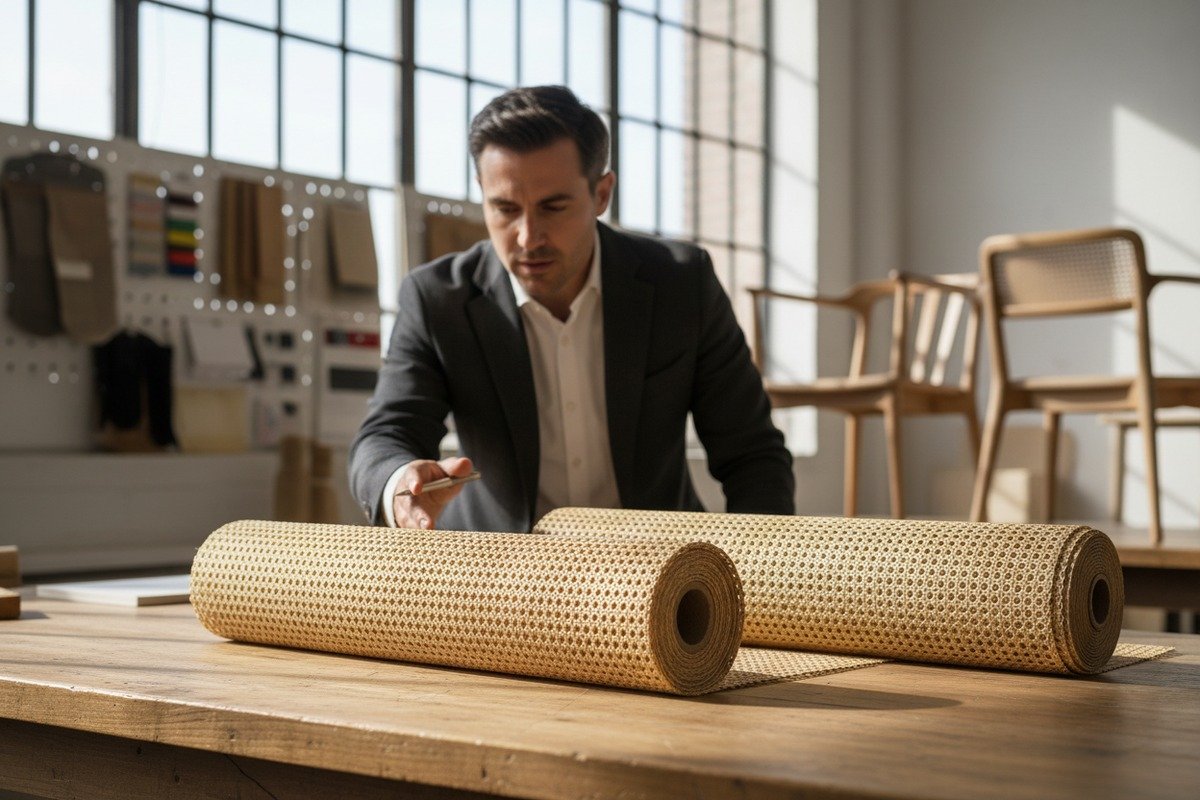
Chaque semaine, notre équipe commerciale à Foshan reçoit des appels d'acheteurs qui ont trop dépensé pour une mauvaise qualité de rotin ou qui ont reçu une sangle incohérente qui a ruiné une production entière. origine des espèces 1. La frustration est réelle. Choisir entre les qualités ressemble à un jeu de hasard quand on ne peut pas toucher la matière avant de commander un conteneur entier. Et le coût de se tromper ? Matière gaspillée, expéditions retardées et clients finaux mécontents.
Pour choisir la bonne qualité de cannage en rotin naturel pour votre budget, comparez l'origine de l'espèce, la méthode de traitement, l'uniformité du tissage et la consistance des brins. Choisissez la qualité A pour les projets de meubles haut de gamme nécessitant une esthétique irréprochable, et les qualités standard pour les applications décoratives ou intérieures économiques où de légères variations sont acceptables.
Ce guide explique exactement comment fonctionne le classement, combien coûte chaque qualité par rapport aux autres, et comment éviter les erreurs d'approvisionnement les plus courantes. méthode de traitement 2. Que vous dirigiez une usine de meubles ou que vous vendiez en gros des matériaux de construction, les informations ci-dessous vous aideront à acheter plus intelligemment.
Comment distinguer la natte en rotin naturel de qualité A et de qualité B ?
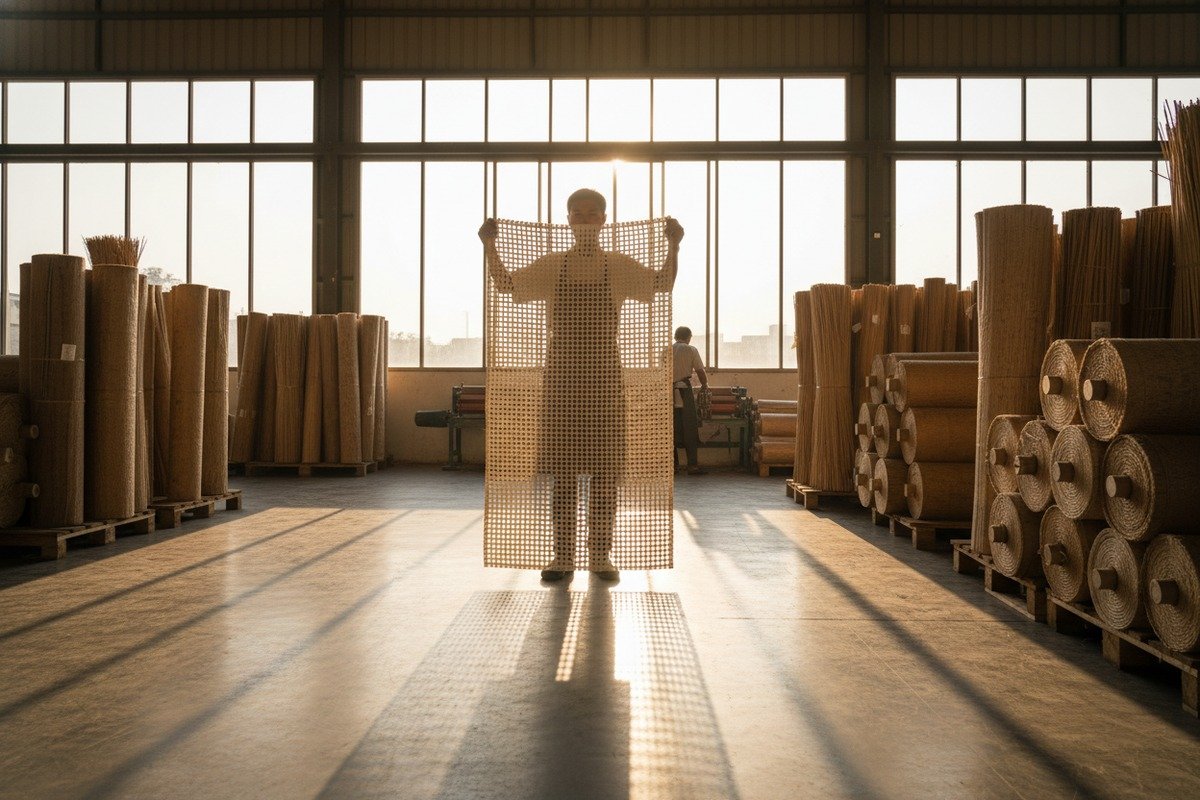
Lorsque nous traitons le rotin brut dans notre usine indonésienne, le classement a lieu à plusieurs points de contrôle avant qu'une seule bobine ne soit expédiée. Sangle en rotin naturel de qualité A 3. Pourtant, de nombreux acheteurs ont encore du mal à distinguer les qualités une fois que la matière arrive dans leur entrepôt. La confusion coûte cher et prend du temps.
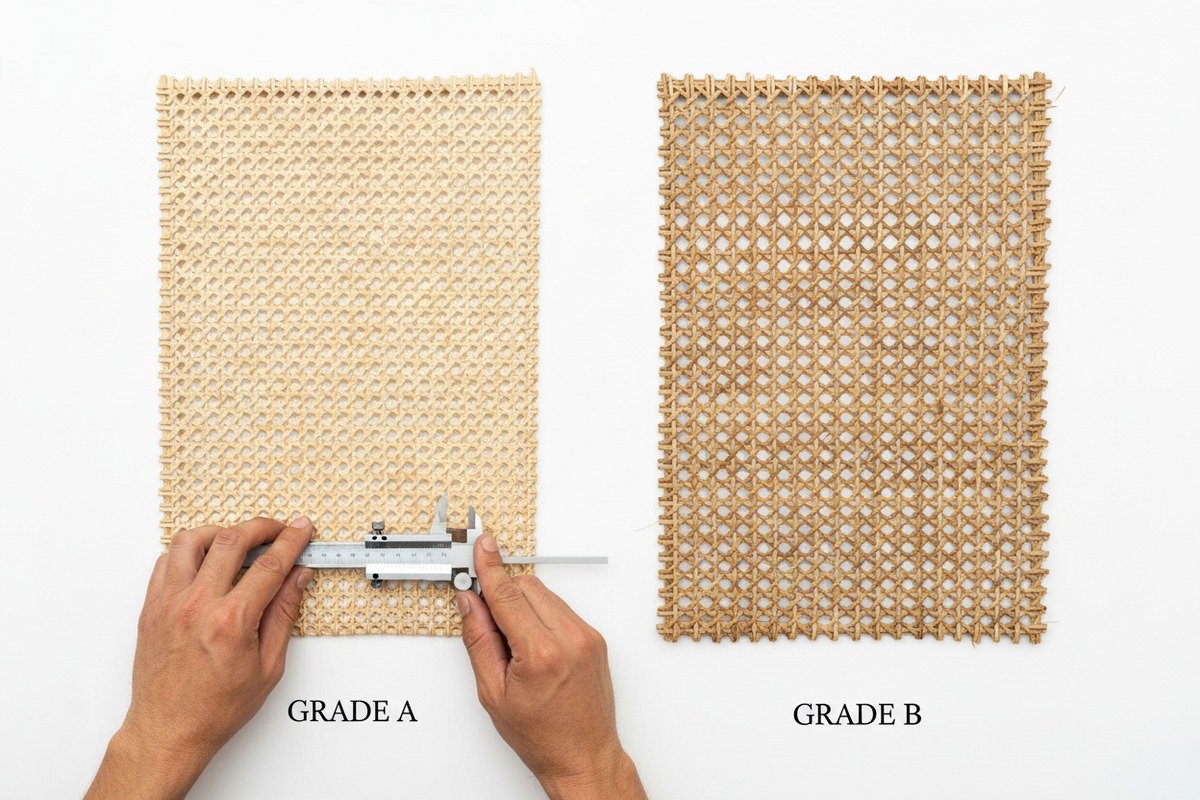
La cannage en rotin naturel de qualité A présente une épaisseur de brin uniforme, une couleur naturelle constante, une tension de tissage serrée, un minimum de nœuds visibles et aucune imperfection de surface. La cannage de qualité B peut présenter de légères variations de couleur, des nœuds occasionnellement rugueux et de petites irrégularités dans l'espacement du tissage qui n'affectent pas l'intégrité structurelle mais réduisent l'attrait visuel.
Différences visuelles que vous pouvez repérer immédiatement
Le moyen le plus rapide de distinguer les qualités est une simple inspection visuelle. intégrité structurelle 4. Posez une section d'un mètre à plat sous la lumière naturelle. La sangle de qualité A est uniforme. La couleur coule d'un bord à l'autre sans taches sombres ni stries pâles. Les ouvertures hexagonales ou carrées sont symétriques. Les nœuds sont à fleur de la surface de la fibre.
La sangle de qualité B raconte une histoire différente. Vous remarquerez de légères variations de ton, peut-être une teinte verdâtre ici, une tache ambre plus foncée là. Certains nœuds peuvent dépasser légèrement. La tension du tissage peut se relâcher par endroits, créant des ouvertures qui ne sont pas parfaitement uniformes. Aucun de ces défauts ne rend la qualité B inutilisable. Ils la rendent simplement moins adaptée aux applications à haute visibilité.
Le test tactile
La flexibilité est aussi importante que l'apparence. Passez vos doigts le long des fibres. Le rotin de qualité A est lisse. Il se plie sans se casser. La qualité B peut sembler plus rugueuse aux nœuds et résister à la flexion par endroits. Cette différence devient critique lors de l'installation. Les fibres plus rigides se cassent lorsque vous pressez la sangle dans une rainure de clavette.
Critères de classement clés en un coup d'œil
| Critères | Qualité A | Qualité B |
|---|---|---|
| Cohérence des couleurs | Ton uniforme de paille à doré | Légère variation, taches vertes ou foncées |
| Qualité du nœud | Lisse, affleurant la surface | Parfois surélevé ou rugueux |
| Épaisseur des brins | Cohérent sur toute la bobine | Légères fluctuations de diamètre |
| Tension du tissage | Espacement serré et uniforme sur toute la longueur | Légère souplesse dans certaines zones |
| Finition de surface | Lisse, sans échardes | Points rugueux occasionnels |
| Usage typique | Meubles haut de gamme, panneaux visibles | Panneaux intérieurs, applications cachées |
Les grades de traitement ajoutent une autre couche
Au-delà du niveau de qualité A/B, la sangle en rotin existe également en grades de traitement qui affectent la couleur. Notre chaîne de production gère trois types principaux. La sangle verdâtre naturelle est la moins traitée — elle conserve la couleur de la paille brute avec de subtiles teintes vertes. La sangle jaunâtre naturelle subit un processus de tri et un traitement léger plus laborieux qui réchauffe le ton. La sangle blanchie, qu'elle soit semi ou totale, utilise la vapeur ou des agents naturels pour obtenir une finition blanche ou ivoire clair constante.
Chaque grade de traitement s'ajoute au grade de qualité. Vous pouvez obtenir une sangle blanchie de grade A ou une sangle blanchie de grade B. Le traitement affecte la couleur. Le grade de qualité affecte la cohérence structurelle et visuelle.
Classification basée sur l'espèce
Tout le rotin n'est pas la même plante. le rotin Manau 5 pousse jusqu'à un grand diamètre d'environ 4 pouces et produit des brins épais et solides idéaux pour les cadres de meubles structurels. Rotin Tohiti 6, avec un diamètre moyen de 1 à 2 pouces, est plus flexible et mieux adapté au tissage complexe. L'espèce que vous choisissez affecte à la fois le prix et les performances.
| Espèces de rotin | Diamètre | Flexibilité | Résistance | 6. Gamme de prix | Meilleure application |
|---|---|---|---|---|---|
| Manau | Jusqu'à 4" | Modéré | Très élevé | $$$ | Cadres structurels, meubles haut de gamme |
| Rotin Tohiti | 1–2" | Élevé | Modéré | $$ | Tissage, cintrage, panneaux décoratifs |
| Standard mixte | Varie | Modéré | Modéré | $ – $$ | Sangle d'usage général |
Comprendre ces distinctions vous évite de commander un matériau qui semble correct mais qui est inadapté. Un acheteur qui a besoin de sangles pour des inserts de portes d'armoire n'a pas besoin de la résistance de qualité Manau. Un acheteur qui fabrique des sièges de chaise structurels en a besoin.
Quel grade de rotin dois-je choisir pour correspondre au budget de mon projet de mobilier spécifique ?
Au cours de la dernière décennie, nous avons expédié du rotin à des usines de meubles dans plus de 15 pays, et la question la plus fréquente concerne toujours l'équilibre entre la qualité et le coût. Personne ne veut dépenser trop, mais personne ne veut non plus de retours de produits.
Choisissez du cannage en rotin naturel ou blanchi de qualité A pour les surfaces de meubles visibles et haut de gamme où une esthétique irréprochable justifie le prix. Pour les projets de milieu de gamme, le cannage naturel indonésien standard offre une excellente flexibilité à un coût modéré. Pour les projets de bricolage économiques, décoratifs ou d'extérieur, envisagez des alternatives en cannage synthétique de qualité standard ou en PE.
Commencez par le type de votre projet
Avant de comparer les prix, définissez ce que le rotin va faire. Un siège de chaise supporte le poids du corps et les frottements quotidiens. Un insert de porte d'armoire se trouve derrière une vitre et est rarement touché. Un panneau de tête de lit est visible mais ne supporte pas de charge. Chaque scénario exige une qualité différente.
Pour les meubles structurels à fort trafic comme les chaises de salle à manger et les tabourets de bar, la sangle de qualité A vaut l'investissement. La tension uniforme du tissage signifie que chaque brin supporte la charge uniformément. Les nœuds lisses évitent les points faibles qui pourraient casser sous une contrainte répétée.
Pour les panneaux décoratifs, les séparateurs de pièces ou les abat-jour, la sangle de qualité standard fonctionne parfaitement. La légère variation de couleur ajoute du caractère. La légère texture des nœuds est invisible à portée de main.
Niveaux de budget adaptés aux besoins du projet
Voici comment nous guidons généralement les acheteurs dans leur décision.
| Catégorie de prix | Qualité recommandée | Traitement | Origine | Application typique |
|---|---|---|---|---|
| Premium ($$$) | Grade A, basé à Manau | Blanchi ou jaunâtre naturel | Indonésien | Chaises de salle à manger haut de gamme, armoires de luxe |
| Milieu de gamme ($$) | Grade A/B, Rotin Tohiti | Jaunâtre ou verdâtre naturel | Indonésien | Meubles standards, têtes de lit, panneaux |
| Budget ($) | Standard mixte | Verdâtre naturel | Vietnamien ou mélangé | Projets de bricolage, panneaux cachés, prototypes |
| Économique ($) | Rotin synthétique PE 7 | Coloré en usine | Divers | Meubles d'extérieur, zones à forte humidité |
Le vrai coût du rotin bon marché
J'ai vu des acheteurs rechercher le prix au mètre le plus bas et finir par perdre de l'argent. Voici pourquoi. La sangle de qualité inférieure présente plus d'incohérences par rouleau. Une usine de meubles qui découpe des panneaux à partir de sangles incohérentes gaspille plus de matériaux pour faire correspondre les couleurs et éviter les sections tachées. Le taux de rebut augmente. Le temps de travail augmente car les ouvriers passent plus de temps à trier et à aligner.
D'autre part, la sangle de qualité A se coupe proprement. Chaque section a le même aspect. Les ouvriers travaillent vite. Le rebut reste faible. Le coût unitaire plus élevé entraîne souvent un coût de projet total inférieur coût total du projet 8.
Correspondance des couleurs avec la finition de vos meubles
La couleur est plus importante que ce que la plupart des acheteurs ne le réalisent. Le rotin blanchi s'associe magnifiquement au chêne blanc, au frêne et aux laques de couleur claire. Il convient aux designs scandinaves et minimalistes. Le rotin jaunâtre naturel complète le noyer, le teck et l'acajou. Le rotin verdâtre naturel convient aux styles rustiques et bohèmes où un aspect non raffiné est intentionnel.
Si vous ne faites pas correspondre le ton du rotin à la finition du bois, la pièce entière semble décalée. Dépenser un peu plus pour la bonne qualité de traitement évite entièrement ce problème.
Considérations intérieures vs extérieures
Le rotin naturel est sensible à l'humidité. Il absorbe l'humidité, gonfle et peut développer de la moisissure s'il est laissé à l'extérieur sans protection. Pour les meubles d'extérieur, le rotin synthétique en PE est le choix pratique. Il résiste aux dommages causés par les UV, à la pluie et aux variations de température. Il coûte moins cher au mètre que le rotin naturel de qualité A et dure plus longtemps dans les environnements exposés.
Mais pour un usage intérieur, le rotin naturel est irremplaçable. Il respire. Il vieillit gracieusement, développant une patine chaude au fil des ans. Il apporte une authenticité organique que le synthétique ne peut reproduire. Si votre projet est intérieur, investissez dans le naturel. S'il est extérieur, optez pour le synthétique et économisez votre budget pour là où le naturel brille vraiment.
Comment puis-je éviter les problèmes de cohérence de la qualité lors de l'approvisionnement en rotin économique ?
L'une des leçons les plus douloureuses que nos clients nous ont partagées concerne la réception d'un premier échantillon qui semble parfait, puis l'obtention d'une commande complète qui ne lui ressemble en rien. Nous avons conçu notre processus de contrôle qualité spécifiquement pour éviter cet écart entre l'échantillon et l'expédition.
Pour éviter les problèmes de cohérence de la qualité avec le rotin économique, demandez des échantillons de pré-production du lot réel, établissez des spécifications de classement claires dans votre bon de commande, exigez des photos d'inspection en cours de fabrication et travaillez avec des fournisseurs qui possèdent leurs propres installations de traitement pour contrôler la qualité à chaque étape de la production.
Pourquoi la cohérence se dégrade
Le rotin est une matière naturelle. Contrairement au plastique ou au métal, aucun brin n'est identique. La couleur varie entre les saisons de récolte. La flexibilité change avec l'âge de la plante. L'espacement des nœuds varie d'un brin à l'autre. Lorsqu'un fournisseur s'approvisionne auprès de plusieurs petits collecteurs sans traitement centralisé, chaque lot peut avoir un aspect et une sensation différents.
Le rotin économique est particulièrement vulnérable à ce problème. Un prix plus bas signifie souvent que le fournisseur a sauté les étapes de tri. Ils ont regroupé des brins de qualité mixte dans le même rouleau. Ils n'ont pas séparé les tons verdâtres des tons jaunâtres. Le résultat est un rouleau qui semble acceptable de l'extérieur mais révèle des incohérences une fois déroulé sur le sol de l'usine.
Comment définir des spécifications claires
La meilleure protection est une spécification d'achat détaillée. Ne dites pas simplement "bande de rotin naturelle, Grade A". Cela laisse trop de place à l'interprétation. Au lieu de cela, spécifiez ce qui suit dans votre bon de commande :
- Plage de diamètre des brins (par exemple, 3,0 mm à 3,5 mm)
- Plage de couleurs acceptable (fournir un échantillon physique ou une référence Pantone)
- Fréquence maximale des nœuds par mètre
- Exigence de douceur des nœuds (affleurant uniquement, pas de nœuds saillants)
- Motif de tissage et taille des trous (par exemple, hexagonal, ouvertures de ¾")
- Dimensions du rouleau et méthode d'emballage
Lorsque nous traitons les commandes dans notre usine, des spécifications détaillées facilitent le travail de notre équipe de qualité. Ils savent exactement quoi vérifier. Ils peuvent rejeter les rouleaux non conformes avant qu'ils n'atteignent la ligne d'emballage.
Trempage et installation : un facteur de qualité caché
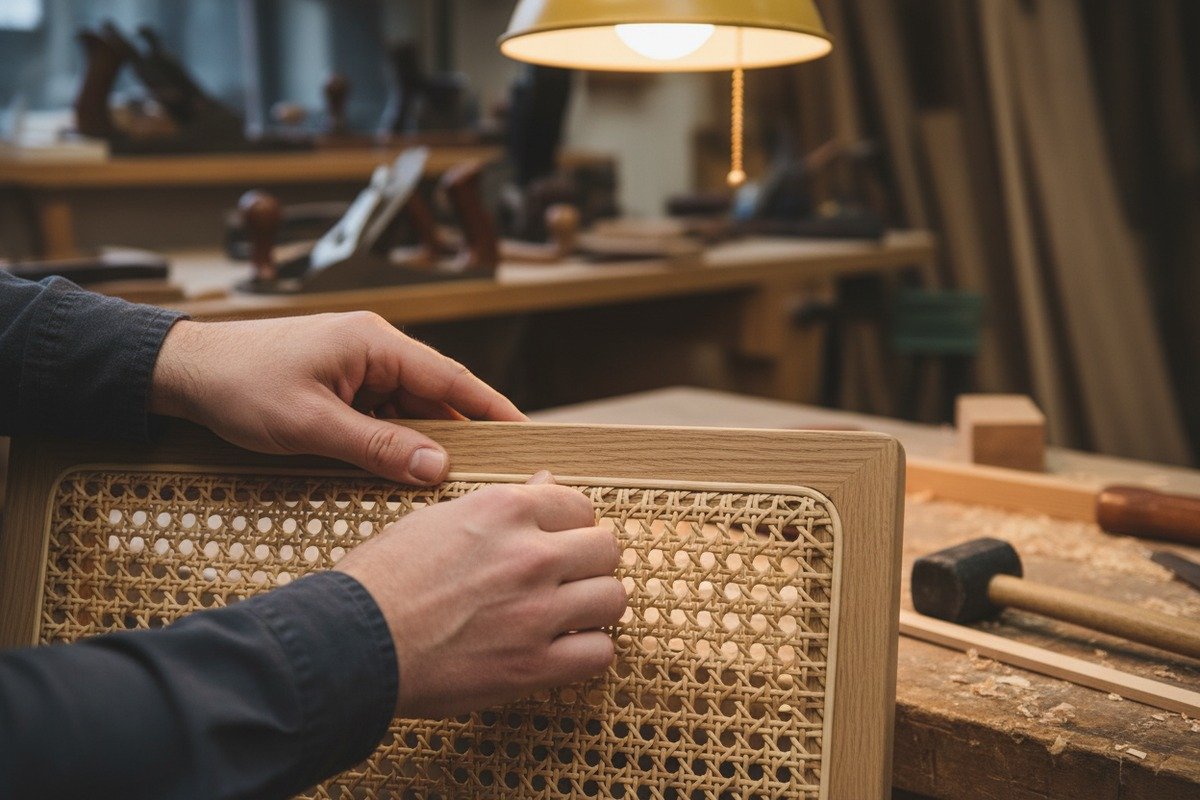
Même une bande parfaite peut échouer si votre équipe l'installe mal. La bande de canne naturelle doit tremper pendant environ 3 heures avant l'installation. Cela ramollit les brins et les rend suffisamment souples pour être pressés dans les rainures de la feuillure sans se fissurer. Un sous-trempage entraîne des brins cassants qui se cassent. Un sur-trempage entraîne un tissage lâche qui s'affaisse après séchage.
La qualité compte aussi ici. Les bandes de qualité supérieure plus denses avec une tension de tissage plus serrée peuvent nécessiter un trempage légèrement plus long. Les bandes de qualité économique avec une tension plus lâche absorbent l'eau plus rapidement mais peuvent perdre leur forme si elles restent trop longtemps dans l'eau. Testez toujours une petite section d'abord.
La stratégie du marché des "seconds"
Voici une astuce que les acheteurs expérimentés utilisent. Demandez à votre fournisseur des rouleaux "seconds" ou des chutes. Ce sont des rouleaux qui n'ont pas passé l'inspection de Grade A en raison d'un petit défaut, d'une légère déviation de couleur ou d'une longueur courte. Ils se vendent souvent de 30 % à 50 % en dessous du prix du Grade A.
Pour les applications cachées — à l'intérieur des façades de tiroirs, derrière un revêtement en tissu ou pour des essais — les secondes sont un achat judicieux. La clé est d'inspecter chaque rouleau individuellement. Toutes les secondes n'ont pas le même défaut. Certains sont des rouleaux presque parfaits qui manquent simplement d'un centimètre de la longueur standard.
Construisez une relation, pas seulement une transaction
La cohérence s'améliore considérablement lorsque vous travaillez avec le même fournisseur au fil du temps. Ils apprennent vos normes. Ils mettent de côté le matériel qui correspond à vos préférences. Ils signalent les problèmes potentiels avant l'expédition. Cette dynamique relationnelle est difficile à construire lorsque vous recherchez le devis le moins cher auprès d'un fournisseur différent à chaque commande. Les petites économies par mètre compensent rarement le risque de cohérence.
Quels sont les principaux facteurs à prendre en compte pour obtenir le meilleur rapport qualité-prix pour mon achat en rotin ?
Après avoir géré des exportations sur trois continents, nous avons remarqué que les acheteurs qui obtiennent la meilleure valeur ne sont pas nécessairement ceux qui paient le moins par mètre. Ce sont ceux qui pensent à l'équation totale — matériau, main-d'œuvre, déchets, durée de vie et satisfaction du client final.
Les principaux facteurs pour une valeur optimale du rotin comprennent l'adéquation de l'espèce, le grade de traitement, l'origine, le motif de tissage, la cohérence des brins, le comportement au trempage, la durabilité à long terme, la fiabilité du fournisseur, les certifications d'approvisionnement durable et le coût total de possession, y compris le taux de déchets, la main-d'œuvre d'installation et la fréquence de remplacement attendue.
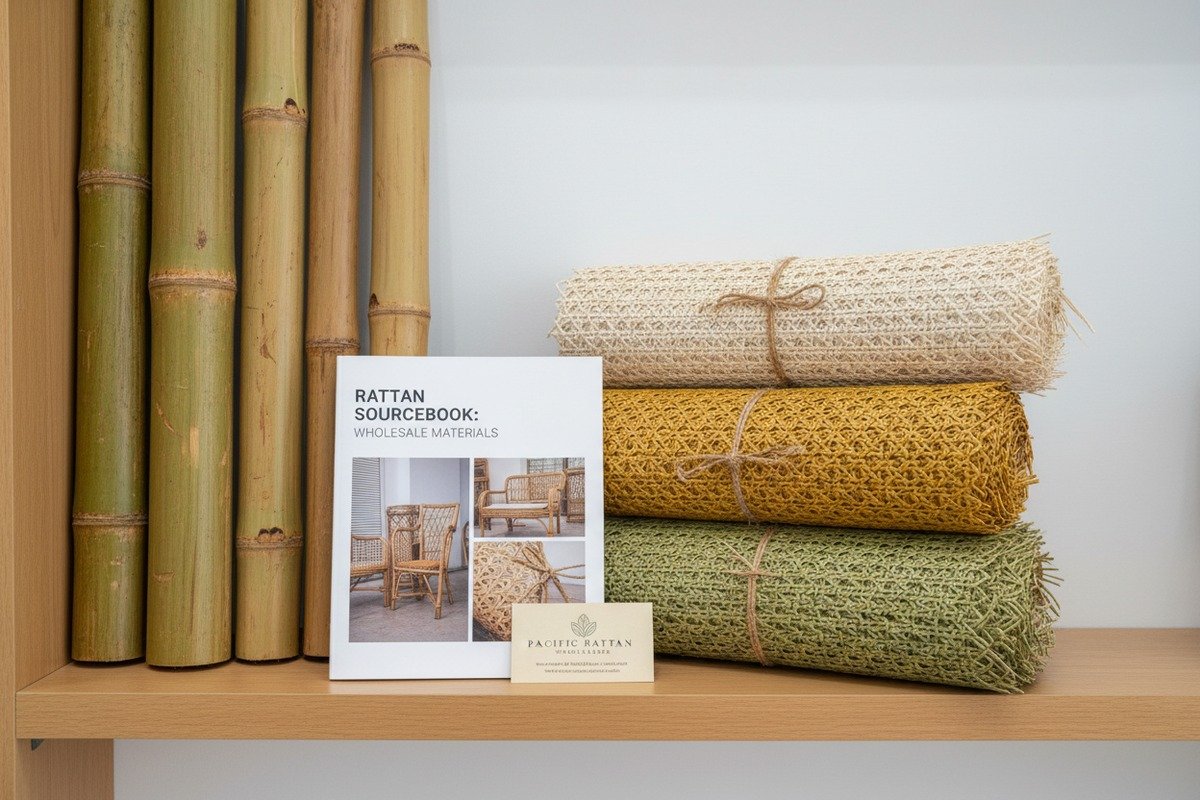
Facteur 1 : L'origine compte plus que vous ne le pensez
Le rotin indonésien domine le marché haut de gamme pour une bonne raison. Le climat produit du rotin avec une peau plus lisse, une couleur naturelle plus claire et une flexibilité supérieure. Ces caractéristiques rendent le rotin indonésien plus facile à tisser en motifs serrés et uniformes. Il se plie sans se fissurer lors de l'installation. Il accepte le blanchiment uniformément.
Le rotin vietnamien coûte moins cher. Il a tendance à être plus sombre, plus rugueux et légèrement moins flexible. Pour les projets où ces caractéristiques sont acceptables — meubles rustiques, panneaux intérieurs non manipulés directement — le rotin vietnamien offre une valeur solide.
Notre propre installation de traitement en Indonésie nous donne un contrôle direct sur la sélection des matières premières. Nous classons à la source avant que le rotin n'atteigne notre entrepôt de Foshan. Ce contrôle en amont est quelque chose à rechercher chez tout fournisseur.
Facteur 2 : Le motif de tissage affecte à la fois le prix et les performances
Tous les motifs de tissage ne coûtent pas le même prix à produire. Le cannage hexagonal ouvert (le motif classique de siège de chaise) utilise moins de matériau par mètre carré qu'un tissage panier serré. Un tissage radio avec des rayons rayonnants nécessite plus de précision et de main-d'œuvre. Les motifs denses en losange utilisent plus de rotin par unité de surface et prennent plus de temps à tisser.
Choisissez votre motif en fonction de la fonction d'abord, puis de l'esthétique. Les tissages ouverts respirent mieux pour l'assise. Les tissages serrés offrent plus d'intimité visuelle pour les portes d'armoires. Les différences de coût de main-d'œuvre et de matériaux entre les motifs peuvent varier de 15 % à 40 %.
Facteur 3 : Coût total de possession
C'est là que les acheteurs avisés se démarquent. Considérez ce scénario. L'acheteur A paie 3 € par mètre pour une sangle de qualité B. L'acheteur B paie 4,50 € par mètre pour une sangle de qualité A. L'acheteur A subit un taux de rebut de 15 % en raison d'incohérences et remplace les sièges de chaise après 3 ans. L'acheteur B a un taux de rebut de 5 % et les chaises durent 7 ans.
Sur une période de 7 ans, l'acheteur A dépense plus en rotin, plus en main-d'œuvre et plus en réparations sous garantie. Le coût initial plus élevé de l'acheteur B se traduit par un coût de cycle de vie plus faible.
Facteur 4 : Durabilité et demande du marché
À partir de 2025, les certifications de durabilité ne seront plus facultatives pour de nombreux marchés. certifications d'approvisionnement durable 10 Les acheteurs européens et australiens exigent de plus en plus d'éco-certifications. Le rotin est intrinsèquement renouvelable — il pousse plus vite que la plupart des bois durs — mais le traitement est important. Le blanchiment sans produits chimiques par vapeur, les emballages biodégradables et les chaînes d'approvisionnement documentées ajoutent une valeur qui justifie une prime de prix modérée.
Les acheteurs qui peuvent commercialiser leurs meubles comme étant fabriqués avec du rotin d'origine durable obtiennent des prix de détail plus élevés. Le coût supplémentaire du matériau certifié se traduit souvent par des marges plus élevées sur le produit fini.
Facteur 5 : Durabilité de l'emballage et de l'expédition
Un facteur que de nombreux acheteurs novices négligent. Le cannage en rotin est délicat pendant le transport. Un mauvais emballage entraîne des bords écrasés, des brins fissurés et des rouleaux qui arrivent déformés. Nous renforçons nos rouleaux avec des mandrins en carton protecteurs et les enveloppons dans un film résistant à l'humidité. Cela coûte un peu plus cher à expédier, mais réduit considérablement les réclamations pour dommages.
Demandez à votre fournisseur comment il emballe. Demandez des photos des rouleaux emballés. Un rouleau endommagé dans un conteneur peut annuler les économies que vous avez négociées sur le prix.
Facteur 6 : Échantillons avant de s'engager
Commandez toujours des échantillons. Pas des photos numériques. Des échantillons physiques. Touchez-les. Pliez-les. Trempez un morceau pendant 3 heures et testez sa résistance. Comparez les échantillons de différents fournisseurs côte à côte. Ce petit investissement initial évite des erreurs coûteuses sur les commandes en gros.
Notre équipe envoie des kits d'échantillons qui comprennent la qualité A, la qualité standard et différents types de traitement afin que les acheteurs puissent faire des comparaisons éclairées avant de s'engager sur un volume.
Conclusion
Choisir la bonne qualité de rotin consiste à faire correspondre la qualité du matériau aux besoins du projet, et non pas simplement à choisir l'option la moins chère. Définissez votre application, fixez des spécifications claires, demandez des échantillons de lots et calculez le coût total de possession pour la meilleure valeur à long terme.
Notes de bas de page
1. Décrit les origines et la diversité des espèces de rotin. ↩︎
2. Explique les étapes du traitement du rotin brut. ↩︎
3. Décrit les caractéristiques de la cannage de qualité supérieure. ↩︎
4. Wikipédia fournit une définition claire et faisant autorité de l'intégrité structurelle, qui est un type de source autorisé. ↩︎
5. Wikipédia fournit une entrée complète et faisant autorité pour Calamus manan, également connu sous le nom de rotin Manau, qui est un type de source autorisé. ↩︎
6. Décrit les propriétés et les applications du rotin Tohiti. ↩︎
7. Explique la nature et les avantages du rotin synthétique en PE pour une utilisation en extérieur. ↩︎
8. Définit le coût total du projet et ses composantes. ↩︎
9. Donne un aperçu général du rotin et de ses utilisations. ↩︎
10. Souligne l'importance des pratiques d'approvisionnement durables et des certifications. ↩︎
 English
  Español de México
  العربية
  Deutsch
  Français
  Русский