
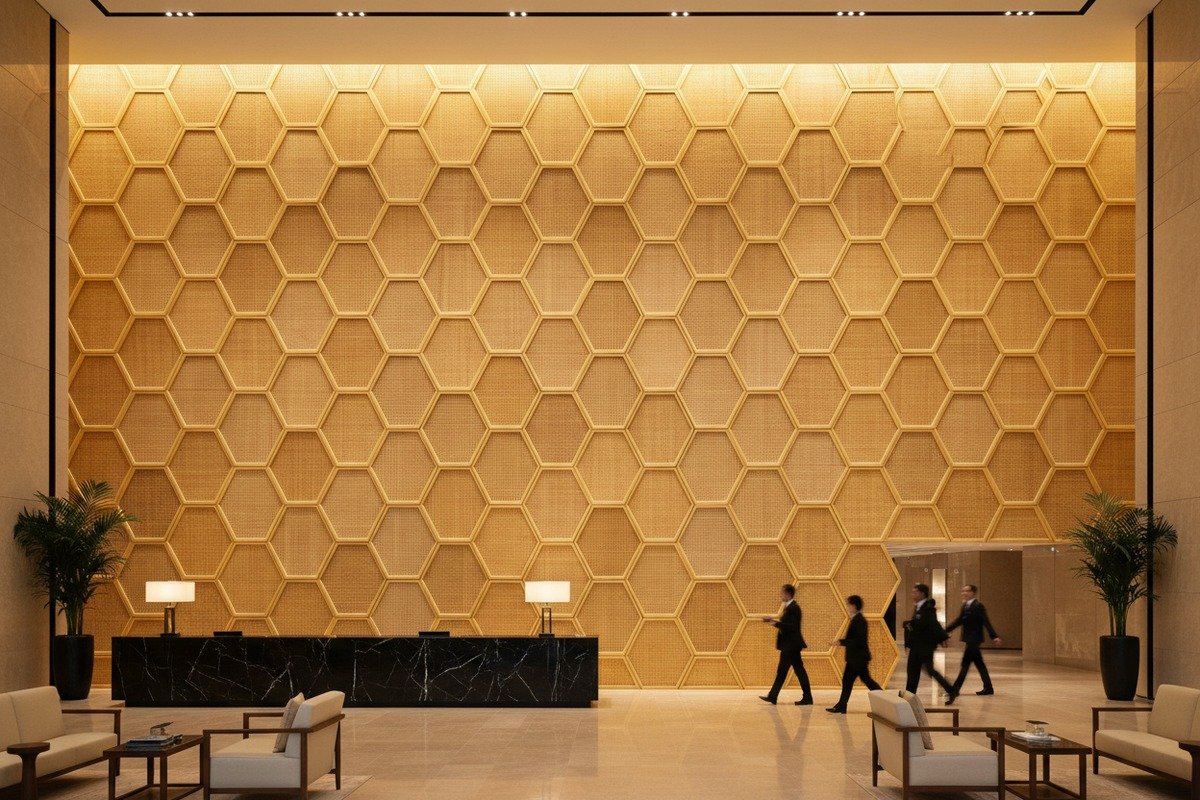
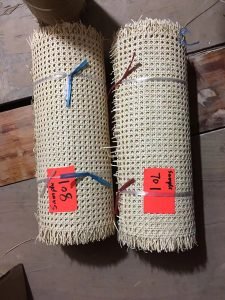
Chaque année, notre équipe de production reçoit des dizaines de demandes de chaînes hôtelières et de designers commerciaux se demandant si cannage rotin 1 peut vraiment performer à grande échelle.
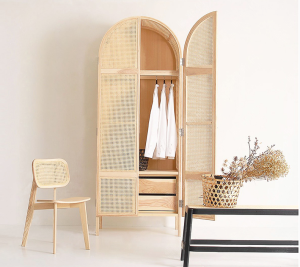
Oui, le cannage en rotin convient parfaitement aux intérieurs commerciaux et hôteliers à grande échelle. Lorsqu'il est obtenu en tant que matériau de qualité A avec un traitement ignifuge approprié et installé avec des techniques professionnelles, il offre une durabilité durable, une chaleur naturelle et une polyvalence de conception dans les halls, les chambres d'hôtes, les restaurants et les murs d'accent.
Ci-dessous, nous détaillons les principales préoccupations que les responsables des achats et les architectes d'intérieur soulèvent le plus souvent — durabilité, cohérence de l'approvisionnement, sécurité incendie et gestion des coûts — afin que vous puissiez prendre une décision éclairée pour votre prochain projet.
Comment puis-je m'assurer que la cannage en rotin est suffisamment durable pour les environnements hôteliers à fort trafic ?
Nous avons expédié du cannage en rotin à des hôtels à Dubaï, en Australie et dans toute l'Asie du Sud-Est Matériau de qualité A 2. La question numéro un qui se pose lors de l'échantillonnage est toujours la même : ce matériau résistera-t-il dans un hall ou un restaurant très fréquenté ?
Pour garantir la durabilité dans les environnements hôteliers à fort trafic, spécifiez une natte en rotin naturel de grade A avec un revêtement en polyuréthane ou laqué, demandez des rapports de test de résistance à la traction à votre fournisseur et mettez en œuvre un plan de maintenance programmé qui comprend le contrôle de l'humidité et un nouveau revêtement périodique.

Pourquoi le rotin naturel est plus résistant qu'il n'y paraît
De nombreux acheteurs supposent que, parce que le cannage est fin et flexible, il doit être fragile. C'est une idée fausse. Le cannage est fabriqué à partir de la peau extérieure du palmier rotin 3. Cette couche extérieure est la partie la plus dense de la plante. Elle a une résistance à la traction élevée 4, ce qui signifie qu'elle résiste aux forces de traction et de pression. Lorsqu'il est tissé en motif de maille, les bandes entrelacées répartissent le poids uniformément sur la surface. C'est pourquoi les chaises en cannage servent les maisons et les espaces publics depuis des siècles.
Lors de nos tests, une feuille de cannage de qualité A correctement finie peut supporter des charges d'assise continues sans s'affaisser pendant des années. Le mot clé ici est "correctement finie"."
Traitements de surface qui prolongent la durée de vie
Le rotin brut est un matériau organique. Sans protection de surface 5, il absorbera l'humidité, se desséchera et finira par se fissurer. Pour un usage commercial, le traitement de surface n'est pas facultatif. Il est essentiel.
Voici les traitements protecteurs les plus courants que nous appliquons ou recommandons :
| Type de traitement | Protection offerte | Idéal pour | Fréquence de réapplication |
|---|---|---|---|
| Revêtement en polyuréthane | Résistance à l'humidité, protection UV | Meubles d'intérieur, panneaux muraux | Tous les 2–3 ans |
| Laque à base d'eau | Barrière légère contre l'humidité, aspect naturel | Panneaux décoratifs, plafonds | Tous les 1–2 ans |
| Finition à l'huile de tung | Pénétration profonde des fibres, aspect mat | Murs d'accent, surfaces à faible contact | Annuellement |
| Scellant à résine synthétique | Protection robuste contre l'humidité et les taches | Sièges de restaurant, comptoirs de bar | Tous les 3 à 5 ans |
Bonnes pratiques d'entretien pour les hôtels
Même le meilleur matériau a besoin d'entretien. Pour les environnements hôteliers, nous recommandons la routine suivante :
- Hebdomadaire : Dépoussiérez avec une brosse douce ou passez l'aspirateur avec un embout brosse.
- Mensuel : Essuyez avec un chiffon légèrement humide. Ne jamais tremper la toile.
- Trimestriel : Inspectez les fils lâches ou les petites fissures. Réparez localement avec de la colle à bois et serrez jusqu'à séchage.
- Annuel : Appliquez une fine couche de rafraîchissement de votre finition choisie.
L'humidité est l'ennemi silencieux. Les hôtels situés dans des climats tropicaux doivent maintenir l'humidité intérieure entre 40 % et 60 %. contrôle de l'humidité 6 Trop sec, le rotin se fissure. Trop humide, des moisissures peuvent se développer. Un simple hygromètre mural aide le personnel à surveiller les conditions.
Stratégie de réparation modulaire
Un avantage de la toile de rotin par rapport aux panneaux pleins est sa réparabilité. Si une section est endommagée dans une tête de lit d'hôtel ou un séparateur de pièce, vous n'avez pas besoin de remplacer l'intégralité de la pièce. Notre usine peut produire des panneaux de remplacement dans le même motif de tissage et la même taille exacts. L'installateur retire la section endommagée et insère le nouveau panneau. Cette approche modulaire permet d'économiser du temps et de l'argent sur la durée de vie de l'installation.
Puis-je trouver suffisamment de rotin de qualité A constant pour couvrir mon projet commercial à grande échelle ?
Lorsque notre équipe commerciale travaille avec des responsables des achats sur des projets hôteliers nécessitant 5 000 mètres carrés ou plus, la préoccupation concernant la cohérence de l'approvisionnement est soulevée à chaque conversation. C'est une inquiétude légitime.
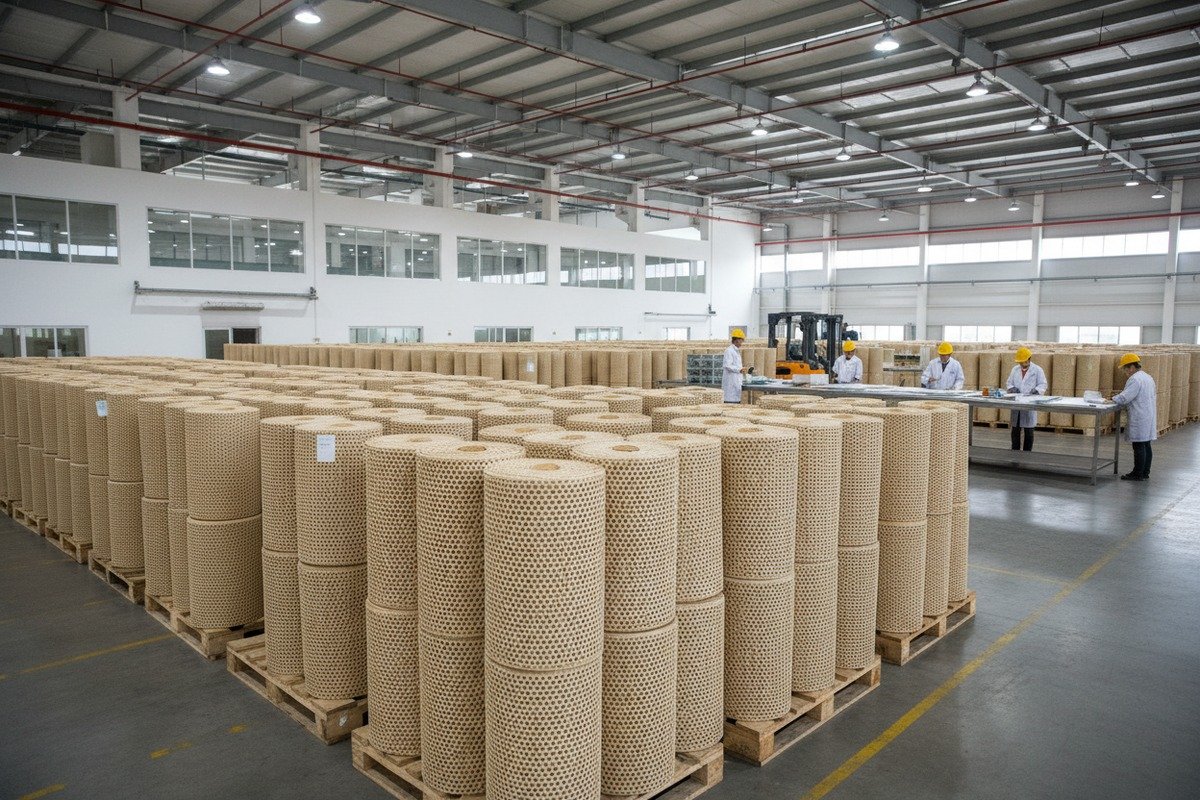
Oui, vous pouvez vous procurer du cannage en rotin de qualité A constant à grande échelle en vous associant à un fournisseur qui contrôle la chaîne des matières premières, des plantations de rotin et des installations de traitement aux usines de tissage. Recherchez des fournisseurs ayant leurs propres usines de traitement indonésiennes qui peuvent garantir une couleur uniforme, une épaisseur de brin et une densité de tissage sur l'ensemble de votre commande.
Le défi de la chaîne d'approvisionnement
Le rotin est un produit naturel. Il pousse les forêts tropicales 7 dans toute l'Asie du Sud-Est, principalement en Indonésie, qui produit plus de 80 % de l'approvisionnement mondial en rotin. Parce qu'il est naturel, deux cannes de rotin ne sont pas identiques. La couleur varie. L'épaisseur varie. La flexibilité varie.
Pour un petit projet d'artisanat, ces variations ajoutent du charme. Pour une chaîne hôtelière commandant du cannage pour 200 têtes de lit de chambres d'hôtes, les variations posent problème. Si le panneau numéro 1 est miel doré et le panneau numéro 150 est crème pâle, le résultat semble incohérent et peu professionnel.
Comment nous résolvons le problème de la cohérence
Dans notre usine de traitement indonésienne, les cannes de rotin brutes passent par un processus de classement et de tri en plusieurs étapes avant même d'atteindre un métier à tisser. Voici à quoi ressemble le flux de travail :
- Sélection de la récolte : Nous travaillons avec des partenaires de plantation qui récoltent le rotin au stade de maturité optimal, ni trop jeune (fibres faibles) ni trop vieux (cassant).
- Classement : Chaque canne est inspectée et triée par grades. Les cannes de grade A ont un diamètre uniforme, aucun dommage causé par les insectes et une couleur cohérente.
- Épluchage : Des machines épluchent la peau extérieure en bandes de largeur et d'épaisseur contrôlées.
- Tri des couleurs : Les bandes épluchées sont à nouveau triées par nuance de couleur pour créer des lots uniformes.
- Tissage : Les lots assortis sont tissés en feuilles du même motif et de la même densité.
- Inspection de la qualité : Les rouleaux finis sont vérifiés pour les défauts, mesurés pour la précision dimensionnelle et emballés.
Ce processus prend plus de temps et de main-d'œuvre que de simplement tisser la matière première disponible. Mais c'est la seule façon de garantir la cohérence que les grands projets commerciaux exigent.
Que demander à votre fournisseur
Si vous évaluez des fournisseurs pour un grand projet, posez ces questions :
| Question | Pourquoi c'est important |
|---|---|
| Possédez-vous ou gérez-vous directement une installation de traitement du rotin ? | Les intermédiaires ne peuvent pas contrôler la qualité des matières premières. |
| Pouvez-vous fournir des échantillons du même lot qui remplira ma commande ? | Garantit que ce que vous approuvez est ce que vous recevez. |
| Quelle est votre capacité de production mensuelle pour la sangle de qualité A ? | Confirme qu'ils peuvent répondre à votre volume sans retards. |
| Triez-vous les lanières d'osier pelées par couleur avant le tissage ? | Cette étape est essentielle pour la cohérence visuelle. |
| Pouvez-vous fournir un rapport de contrôle qualité avec chaque expédition ? | Documente l'épaisseur des brins, le nombre de mailles et le taux de défauts. |
| Quel est votre délai de livraison pour les commandes supérieures à 3 000 mètres carrés ? | Vous aide à planifier votre calendrier de projet avec précision. |
Personnalisation à grande échelle
Au-delà de la cohérence, les grands projets nécessitent souvent une personnalisation. Vous pourriez avoir besoin d'un motif de tissage spécifique pour correspondre à la vision de votre designer. Ou vous pourriez avoir besoin de cannage dans un blanc décoloré ou une teinte noyer teinté au lieu d'un miel naturel.
Notre usine propose plusieurs motifs de tissage standard — y compris le maillage hexagonal ouvert, le tissage panier carré serré et les motifs en losange — et nous pouvons développer des motifs personnalisés pour les commandes supérieures à une quantité minimale. Les couleurs peuvent être obtenues par des procédés de blanchiment, de teinture ou de fumage, tous appliqués avant le tissage pour garantir que la couleur pénètre uniformément chaque brin.
La capacité de personnalisation à grande échelle est ce qui distingue un véritable partenaire de fabrication d'une société de négoce qui revend simplement ce qui est disponible en stock.
Quels traitements ignifuges dois-je demander pour le cannage en rotin utilisé dans les espaces intérieurs publics ?
La sécurité incendie est un domaine où nos conversations avec les équipes d'approvisionnement des hôtels deviennent très sérieuses très rapidement. Lorsque nous fournissons du cannage pour le hall d'un hôtel cinq étoiles ou un restaurant commercial, nous savons que le matériau doit répondre aux codes incendie locaux. Couper les coins ici n'est pas une option.
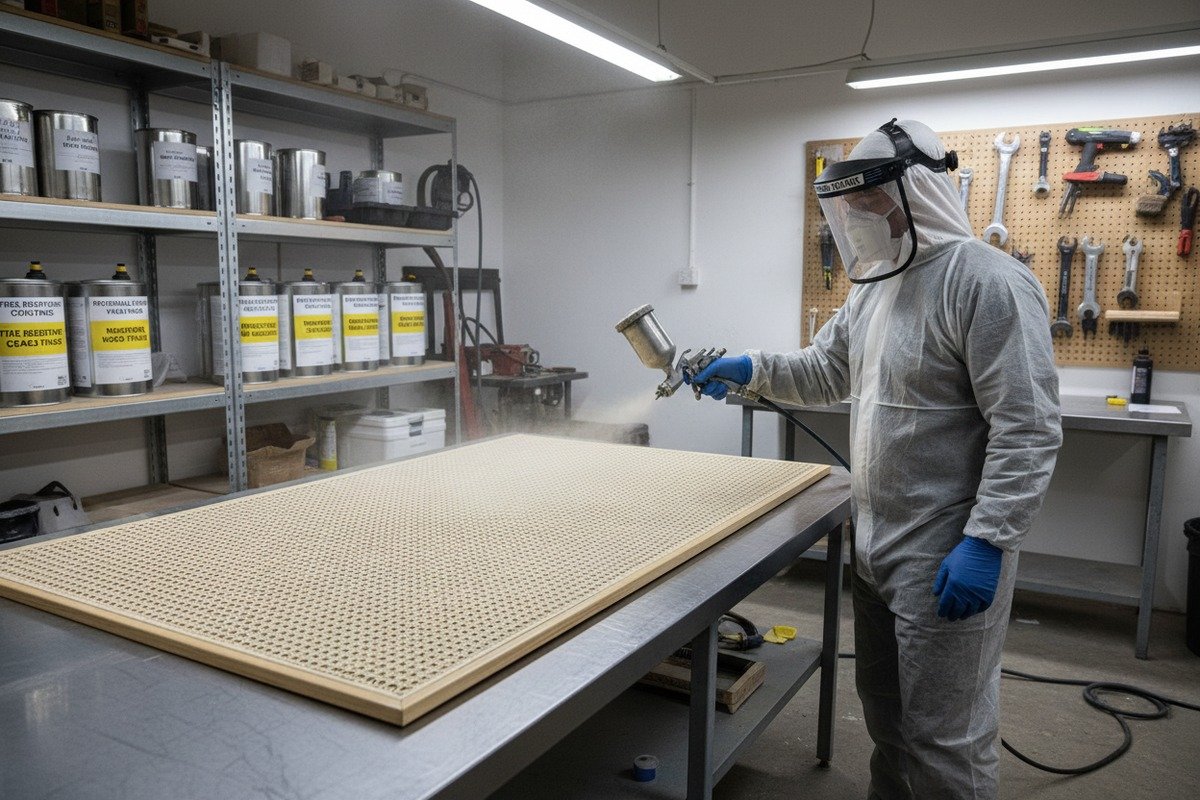
Pour les toiles en rotin dans les espaces intérieurs publics, demandez un traitement ignifuge de classe B1 ou ASTM E84 classe A appliqué par imprégnation sous pression ou par trempage profond. Demandez toujours un certificat de test tiers confirmant que le traitement répond à votre code du bâtiment local, qu'il s'agisse de la norme chinoise GB, de la norme européenne EN 13501 ou de la norme américaine ASTM E84.
Comprendre les classements au feu pour les matériaux d'intérieur
Les codes du bâtiment du monde entier classent les matériaux d'intérieur en fonction de leur comportement lorsqu'ils sont exposés à la flamme. La norme spécifique dépend du pays et de la juridiction locale de votre projet. Voici les normes les plus couramment référencées pour le cannage en rotin utilisé dans les intérieurs commerciaux :
| Standard | Région | Classification clé | Ce qu'il mesure |
|---|---|---|---|
| GB 8624 (Classe B1) | Chine | Matériau ignifuge | Inflammabilité, propagation de la flamme, dégagement de chaleur |
| EN 13501-1 | Union européenne | Classes A1 à F | Réaction au feu, production de fumée |
| ASTM E84 8 | États-Unis | Classe A, B ou C | Indice de propagation de la flamme, indice de développement de la fumée |
| AS 5637 | Australie | Groupe 1, 2 ou 3 | Inflammabilité, propagation de la flamme, dégagement de chaleur |
| BS 476 | Royaume-Uni | Classe 0, 1, 2, 3 | Propagation de la flamme en surface |
Pour la plupart des projets hôteliers et commerciaux, vous aurez besoin d'une classification d'au moins Classe B1 (Chine), Classe B (États-Unis) ou Euroclasse B-s1,d0 (UE). Votre architecte ou ingénieur incendie du projet pourra vous indiquer précisément quelle norme s'applique à votre installation.
Comment le traitement ignifuge agit sur le rotin
Le rotin est un matériau organique. Comme le bois, il brûlera lorsqu'il sera exposé à une chaleur et à une flamme soutenues. Traitement ignifuge 9ne rendent pas le rotin ininflammable. Ils le rendent résistant au feu, ce qui signifie qu'il résiste à l'inflammation, ralentit la propagation de la flamme et réduit la production de fumée.
Il existe deux méthodes principales pour appliquer des produits chimiques ignifuges sur le cannage en rotin :
Imprégnation sous pression : Le cannage est placé dans une chambre étanche. L'air est retiré, et une solution ignifuge est forcée dans les fibres sous pression. C'est la méthode la plus efficace car le produit chimique pénètre profondément dans les brins de rotin, pas seulement en surface.
Méthode par trempage profond : Le cannage est immergé dans une solution ignifuge pendant une période prolongée, généralement de 24 à 48 heures. C'est moins efficace que l'imprégnation sous pression 10 mais offre tout de même une protection significative pour les applications intérieures où le matériau n'est pas proche de sources de chaleur directes.
Une simple pulvérisation de surface est généralement insuffisante pour la conformité commerciale. Elle peut être éliminée lors du nettoyage et ne pénètre pas dans la fibre. Nous déconseillons fortement de s'appuyer sur des traitements par pulvérisation seule pour toute installation dans un espace public.
Ce qu'il faut demander à votre fournisseur
Lorsque vous commandez du cannage en rotin ignifuge, soyez précis dans votre bon de commande. Indiquez la norme incendie à laquelle vous devez vous conformer. Demandez un certificat de test tiers, pas seulement une auto-déclaration du fournisseur. Les laboratoires d'essai réputés comprennent SGS, TÜV, Intertek et Bureau Veritas.
Demandez également si le traitement ignifuge affecte l'apparence ou la flexibilité du matériau. Certains traitements peuvent légèrement foncer la couleur ou rendre le cannage plus rigide. Un bon fournisseur fournira des échantillons traités afin que vous puissiez évaluer l'impact visuel et tactile avant de vous engager sur la commande complète.
Une note sur les alternatives synthétiques
Pour les zones où le risque d'incendie est particulièrement élevé, comme près des passe-plats de cuisine ou des entourages de cheminée, envisagez un cannage synthétique en PE plutôt que du rotin naturel. Les options synthétiques peuvent être conçues avec des additifs ignifuges intégrés dans la résine plastique, offrant une résistance au feu intrinsèque sans nécessiter de traitement chimique post-production. Elles offrent également une résistance à l'eau, ce qui est un avantage près des cuisines et des bars.
Cependant, le cannage synthétique manque de la chaleur et de la texture organiques du rotin naturel. La plupart des designers préfèrent le rotin naturel pour les zones destinées aux clients et réservent les options synthétiques pour les zones de service ou les zones à haut risque.
Comment le choix d'un fournisseur direct d'usine m'aidera-t-il à gérer les coûts pour l'approvisionnement en mobilier de mon hôtel ?
Au cours des deux dernières décennies, nous avons observé la chaîne d'approvisionnement du rotin des deux côtés : en tant que fabricant exploitant trois usines et en tant que partenaire de responsables des achats qui doivent justifier chaque dollar de leur budget. La différence de coût entre l'achat direct auprès d'une usine et le passage par plusieurs intermédiaires est significative.
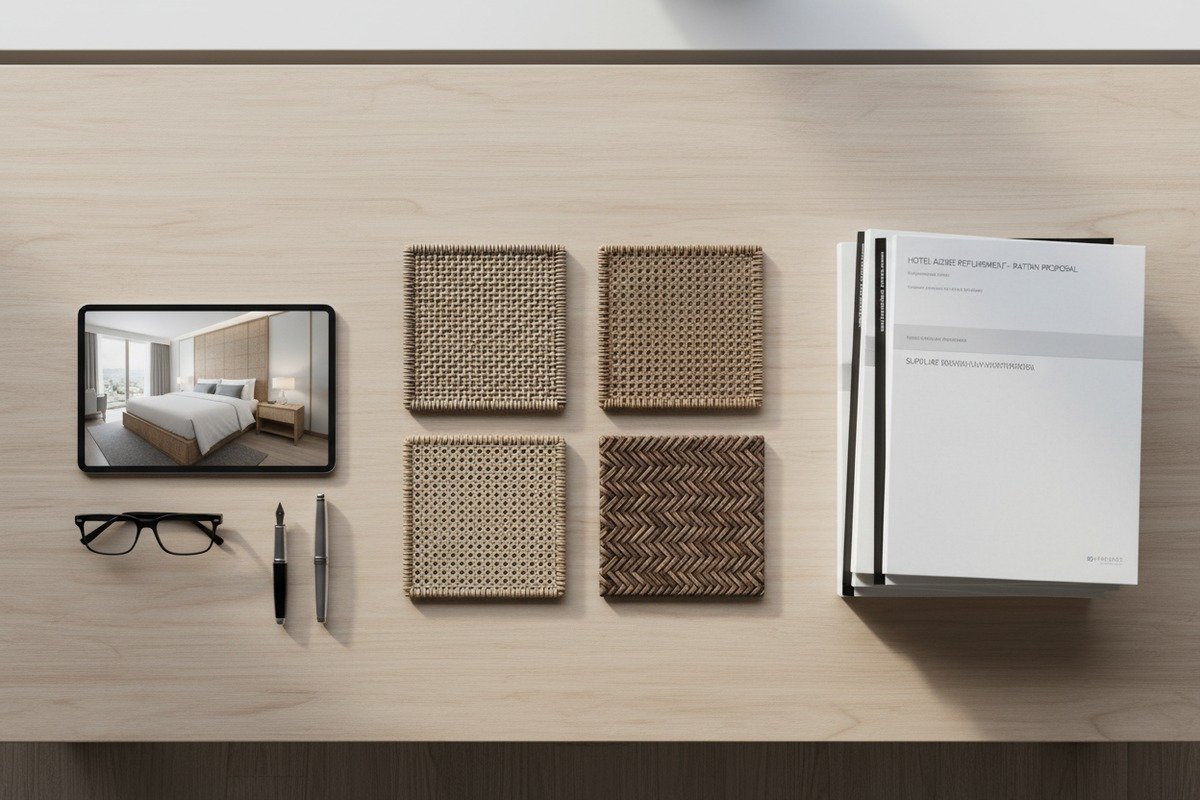
Choisir un fournisseur direct d'usine pour la cannage en rotin élimine les majorations des intermédiaires, donne accès à des prix basés sur le volume et vous permet de contrôler les spécifications des matériaux, réduisant ainsi les déchets, les retouches et les coûts imprévus. Les relations directes accélèrent également la communication, l'échantillonnage et la résolution des litiges, ce qui réduit le coût total de votre projet.
Le coût caché des intermédiaires
Lorsque vous achetez du rotin tressé par l'intermédiaire d'une société commerciale, vous payez sa marge en plus du prix de l'usine. Cette marge se situe généralement entre 15 % et 40 %, selon le produit et le marché. Pour un grand projet hôtelier nécessitant des milliers de mètres carrés, cette majoration se traduit par des dizaines de milliers de dollars.
Mais le coût financier n'est qu'une partie du problème. Les intermédiaires ajoutent également des couches de communication. Votre demande de modification de conception va de vous au commerçant, puis du commerçant à l'usine. La réponse de l'usine revient de la même manière. Chaque étape ajoute du temps, et chaque transfert crée des opportunités de mauvaise communication.
Prix direct usine : une comparaison réelle
Pour illustrer l'avantage de coût, voici une comparaison simplifiée pour un projet hôtelier hypothétique nécessitant 2 000 mètres carrés de rotin naturel de qualité A dans un tissage hexagonal ouvert standard :
| Composant du coût | Par l'intermédiaire d'une société commerciale | Usine directe |
|---|---|---|
| Coût de base du matériau par m² | $8.50 | $8.50 |
| Marge de la société commerciale (25 %) | $2.13 | $0.00 |
| Coût rendu par m² (avant expédition) | $10.63 | $8.50 |
| Coût total du matériau (2 000 m²) | $21,260 | $17,000 |
| Économies avec l'usine directe | — | $4,260 |
Ces chiffres sont illustratifs, mais le schéma est cohérent dans nos devis réels. Pour les commandes plus importantes, les économies par unité augmentent car les usines peuvent offrir des remises dégressives sur volume que les commerçants répercutent rarement.
Au-delà du prix unitaire : Coût total de possession
Les responsables des achats avisés vont au-delà du prix affiché. Voici d'autres facteurs de coût qu'une relation directe avec l'usine permet de maîtriser :
Vitesse d'échantillonnage : Lorsque vous travaillez directement avec nous, nous pouvons produire et expédier des échantillons en 3 à 5 jours. Par l'intermédiaire d'un intermédiaire, ce délai s'étend à 2 à 3 semaines car l'intermédiaire doit demander, recevoir, inspecter et transmettre l'échantillon.
Personnalisation sans surcoût : De nombreuses sociétés de négoce facturent un supplément pour les spécifications non standard car elles doivent négocier séparément avec leur source d'usine. Lorsque vous traitez directement avec l'usine, la personnalisation fait partie du flux de production normal, et non d'un supplément.
Litiges de qualité : Si une expédition arrive avec des défauts, la résolution du problème par l'intermédiaire d'un intermédiaire peut prendre des semaines d'échanges. La communication directe avec l'usine permet une résolution plus rapide, incluant souvent l'expédition de panneaux de remplacement en quelques jours.
Optimisation de l'emballage : L'emballage est un coût caché, surtout pour la sangle en rotin qui peut être endommagée pendant le transport si elle n'est pas correctement roulée et protégée. Notre équipe conçoit l'emballage en fonction de la route d'expédition spécifique et du climat de destination. Un intermédiaire a moins d'incitation et moins de connaissances pour optimiser cette étape.
Comment évaluer un fournisseur direct d'usine
Tous les fournisseurs qui prétendent être une usine ne le sont pas réellement. Voici des moyens pratiques de vérifier :
- Demandez une visite d'usine ou une visite vidéo en direct de l'atelier de production.
- Demandez les documents d'enregistrement de l'entreprise indiquant la fabrication comme activité commerciale principale.
- Vérifiez s'ils possèdent leur propre installation de traitement de matières premières. Une entreprise qui possède une usine de transformation indonésienne, comme nous, a une structure de coûts fondamentalement différente de celle d'un revendeur.
- Regardez leur gamme de produits. Une vraie usine offre plusieurs motifs de tissage, tailles et finitions car elle contrôle les métiers à tisser. Un commerçant n'offre généralement que ce qui est actuellement en stock.
- Demandez les quantités minimales de commande. Les usines fixent les MOQ en fonction de l'efficacité de la production. Les commerçants fixent les MOQ en fonction de leurs propres objectifs de marge.
Travailler directement avec une usine ne consiste pas seulement à économiser de l'argent sur chaque rouleau de sangle. Il s'agit de construire une relation qui vous donne le contrôle de la qualité, du calendrier et du coût sur l'ensemble du cycle de vie de votre projet.
Conclusion
La sangle en rotin est un matériau éprouvé et évolutif pour les intérieurs commerciaux et hôteliers lorsque vous abordez la durabilité, la cohérence, la sécurité incendie et le coût grâce au bon partenariat d'usine.
Notes de bas de page
1. Définit la sangle en rotin, son origine et ses utilisations courantes dans le mobilier et la décoration intérieure. ↩︎
2. Explique le classement du rotin, y compris les caractéristiques et l'importance de la qualité du matériau de grade A. ↩︎
3. Remplacé HTTP 404 par un document faisant autorité de la FAO sur la taxonomie, la biologie et l'écologie du rotin, qui sont des palmiers grimpants. ↩︎
4. Fournit une définition claire de la résistance à la traction et de son importance en ingénierie des matériaux. ↩︎
5. Explique comment les revêtements en polyuréthane offrent une protection de surface, une durabilité et une résistance à l'usure. ↩︎
6. Fournit des directives pour maintenir des niveaux d'humidité intérieure optimaux pour la santé et la préservation des matériaux. ↩︎
7. Détaille les caractéristiques, le climat et la biodiversité des biomes de forêts tropicales. ↩︎
8. Explique la norme ASTM E84 sur les caractéristiques de combustion de surface des matériaux de construction. ↩︎
9. Décrit les méthodes et les produits chimiques utilisés pour le traitement ignifuge de divers tissus et textiles. ↩︎
10. Remplacement de la page HTTP 404 par une ressource éducative faisant autorité expliquant les bases du traitement sous pression du bois. ↩︎
 English
  Español de México
  العربية
  Deutsch
  Français
  Русский