
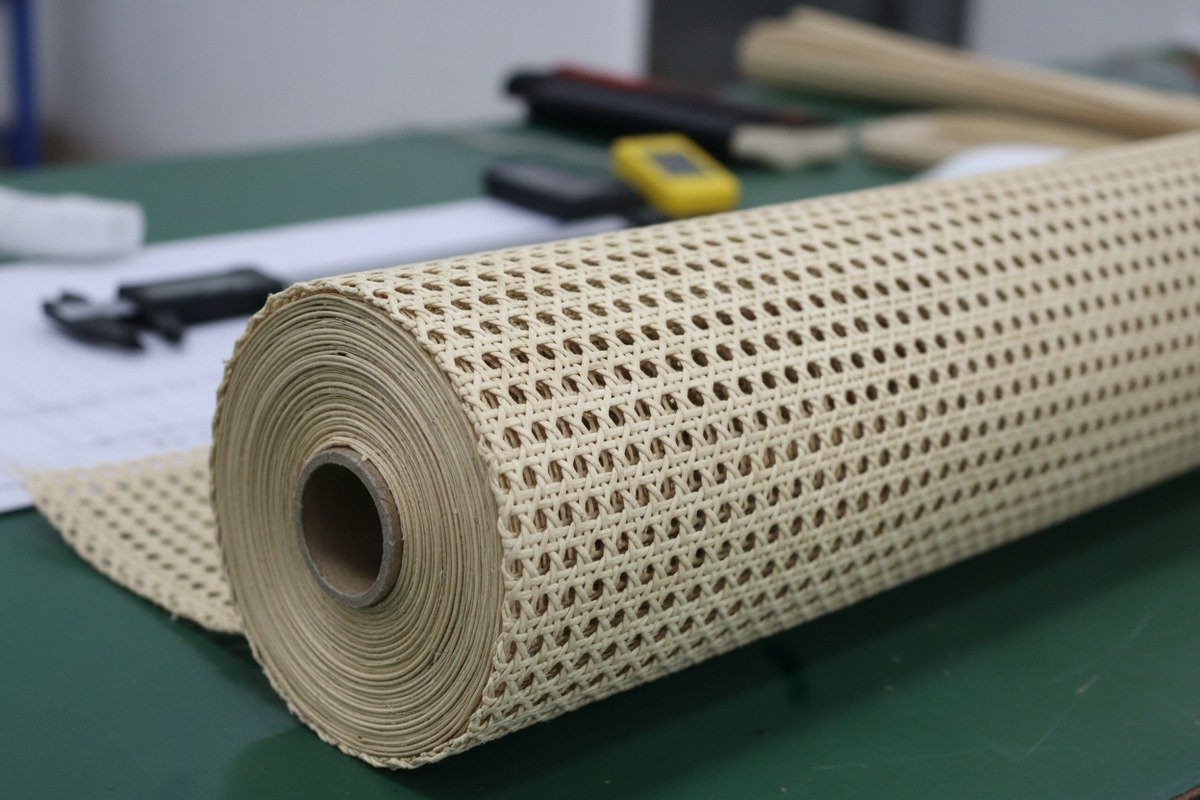
Chaque semaine, notre équipe de contrôle qualité 1 rejette des rouleaux de cannage 2 qui semblent bien à première vue mais échouent à un examen plus approfondi. Les usines de meubles qui utilisent à leur insu ces matériaux de qualité inférieure sont confrontées à des plaintes de clients, à des retours de produits et à une réputation de marque endommagée. Le problème est simple : la plupart des acheteurs ne savent pas exactement ce qui distingue la qualité A du reste.
Le cannage en rotin de qualité A répond à des normes strictes en matière d'apparence et de performance. Il présente une surface lisse et délicate, exempte de fissures ou de défauts, une couleur uniforme semi-blanchie, une largeur et une épaisseur de bande uniformes, une excellente élasticité et ténacité, un effilochage minimal aux bords coupés et une stabilité dimensionnelle fiable sous les changements d'humidité normaux.
Ce guide détaille tous les repères visuels et de performance dont vous avez besoin pour vous procurer en toute confiance du cannage en rotin de qualité A. Nous expliquerons comment le repérer, le tester, vérifier sa cohérence et comprendre pourquoi il est important pour votre entreprise. Passons aux détails.
Comment puis-je distinguer visuellement le cannage en rotin de qualité A des matériaux de qualité inférieure ?
Lorsque nous disposons des échantillons de différentes qualités côte à côte dans notre showroom de Foshan, les différences sautent immédiatement aux yeux. Pourtant, de nombreux responsables des achats qui commandent en ligne n'ont jamais cette chance de comparer. Sans repères visuels clairs, il est facile de payer des prix de qualité A pour des matériaux de qualité B ou C.
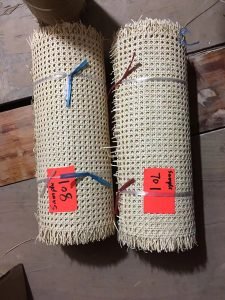
Vous pouvez distinguer le cannage en rotin de qualité A à sa surface lisse et sans fissures, sa couleur uniforme allant du beige clair au blanc légèrement plus clair, sa largeur de bande constante, son motif de tissage serré et régulier, et ses défauts naturels minimaux. Les qualités inférieures présentent des textures plus rugueuses, des fissures visibles, des variations de couleur et une épaisseur de brin inégale.
La texture de surface raconte l'histoire
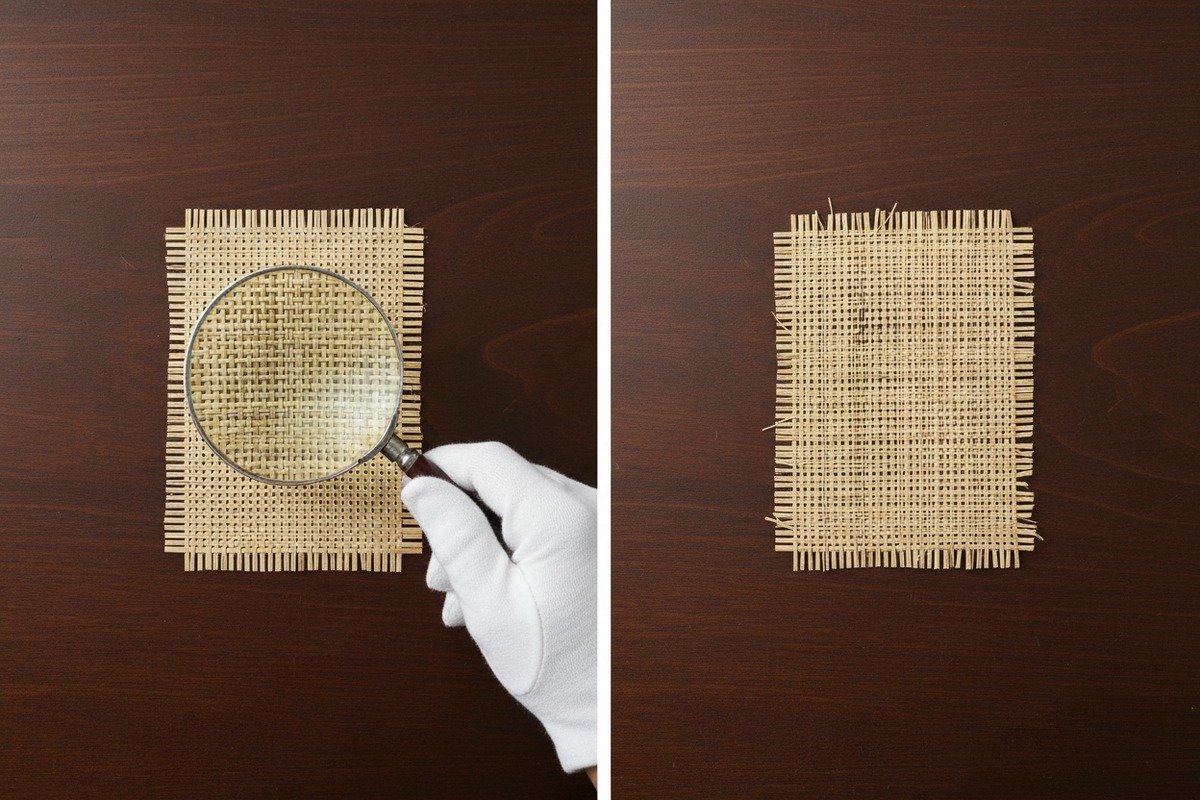
La première chose à vérifier est la texture de surface 3. Le cannage en rotin de qualité A utilise la meilleure écorce de la peau extérieure du rotin mature tiges de rotin 4. Cette écorce est naturellement lisse et présente un léger éclat. Passez vos doigts sur une feuille de qualité A. Elle doit être délicate, presque soyeuse. Il ne doit y avoir aucune zone rugueuse, aucune fibre saillante et aucune écharde.
Les qualités inférieures utilisent des couches internes ou des écorces de rotin plus jeune et moins mature. Ces lanières sont plus rugueuses. Vous pourriez remarquer de minuscules crêtes ou des fibres duveteuses qui dépassent de la surface. Les matériaux de qualité C et D présentent souvent des fissures visibles le long des brins individuels. Ces fissures sont des points faibles qui se casseront sous la contrainte.
L'uniformité de la couleur est importante
Le cannage de qualité A a une couleur uniforme sur toute la feuille. La teinte est généralement un beige clair, un jaune paille ou une nuance légèrement plus blanche. Cela provient d'une sélection rigoureuse des matières premières et d'un traitement cohérent. Certains produits de qualité A subissent un léger processus de semi-blanchiment ou de calcinage pour uniformiser la couleur.
Les qualités inférieures présentent des variations de couleur évidentes. Vous verrez des taches plus foncées, des zones verdâtres ou des teintes incohérentes d'un brin à l'autre. Cela se produit parce que les fabricants mélangent des écorces de différents lots, âges ou parties du rotin.
Tableau comparatif visuel rapide
| Caractéristique | Qualité A | Qualité B | Grade C/D |
|---|---|---|---|
| Sensation de surface | Lisse, délicat | Légèrement rugueux | Grossier, fibreux |
| Uniformité de la couleur | Très uniforme | Variation modérée | Incohérence évidente |
| Fissures/déchirures | Aucun ou minimal | Occasionnel | Fréquent |
| Cohérence de la largeur des bandes | Très uniforme | Variation mineure | Visiblement inégal |
| Serrage du tissage | Trous précis et uniformes | Légères irrégularités | Motif lâche ou irrégulier |
| Qualité du bord coupé | Net, effilochage minimal | Quelques effilochages | Déchirures importantes |
Intégrité du motif de tissage
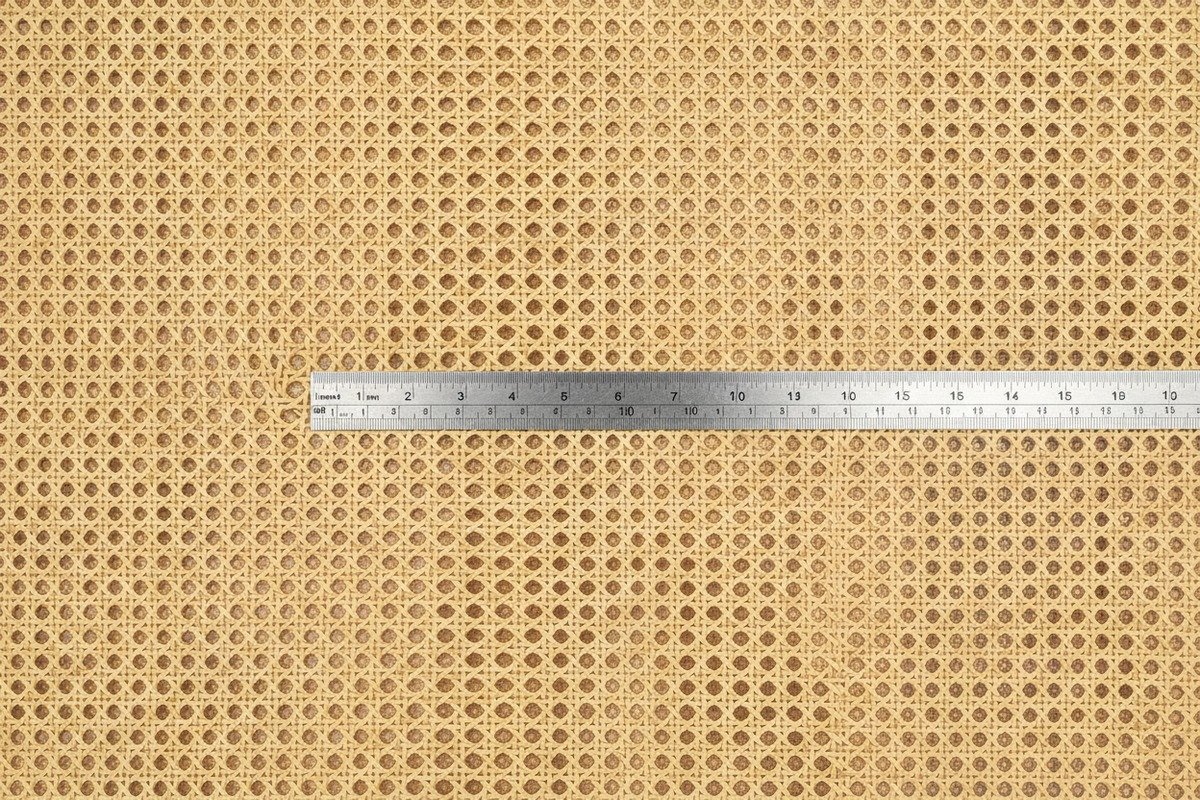
Regardez le motif de tissage 5 attentivement. Dans une feuille hexagonale à mailles ouvertes de qualité A, chaque trou doit avoir la même taille. L'espacement standard des mailles de 1/2" doit être constant d'un bord à l'autre. Les fils doivent se croiser sous des angles uniformes.
Dans les grades inférieurs, vous verrez des trous de tailles variables. Certains fils peuvent se chevaucher incorrectement ou laisser des espaces. Le motif général semble "décalé" même si vous ne pouvez pas le déterminer immédiatement. Cette incohérence devient très visible une fois que la toile est installée sur le meuble.
Dimensions des bandes
Chaque bande de rotin individuelle dans la toile de qualité A a une largeur et une épaisseur constantes. Nos équipes de coupe utilisent des outils de précision pour maintenir l'uniformité. Lorsque les bandes varient en largeur, le tissage perd son aspect géométrique net. Les bandes de qualité A sont généralement uniformes à une fraction de millimètre près. La qualité B peut varier d'un millimètre ou plus. Les bandes de qualité C et D peuvent sembler visiblement différentes les unes des autres au sein de la même feuille.
Quels repères de performance dois-je rechercher pour m'assurer que ma sangle en rotin ne se déformera pas ou ne cassera pas ?
Notre usine de production en Indonésie traite des milliers de tiges de rotin chaque mois, et nous avons appris qu'une belle apparence ne signifie rien si la toile échoue dans une utilisation réelle. Les usines de meubles qui sautent les tests de performance se retrouvent avec des sièges de chaise affaissés et des brins cassés en quelques mois. Comprendre les bons points de référence vous évite des retours coûteux.
Le cannage en rotin de qualité A doit présenter une grande élasticité qui reprend sa forme lorsqu'on appuie dessus, une résistance à la traction élevée qui résiste à la rupture sous charge, une excellente résistance à l'usure sur des années d'utilisation quotidienne, une stabilité dimensionnelle sous les fluctuations normales d'humidité, et aucune effilochage ou fendillement aux bords coupés après l'installation.

Élasticité et Résistance
Élasticité 6 est l'indicateur de performance le plus important. La toile de rotin de qualité A doit fléchir sans se fissurer. Appuyez fermement votre pouce au centre d'une feuille de toile. Elle doit céder légèrement puis reprendre sa forme d'origine. Si elle reste enfoncée ou si vous entendez un craquement, le matériau manque de la résistance requise pour le mobilier.
Cette élasticité provient de la haute densité de fibres de l'écorce de rotin premium. Les tiges de rotin indonésien matures sont connues pour leurs caractéristiques dodues, fermes et résistantes. L'écorce de ces tiges a des fibres naturelles étroitement tassées qui permettent la flexion sans se casser.
Résistance à la traction et à la charge
Un siège de chaise fabriqué à partir de toile de rotin de qualité A doit supporter un poids important sans se déchirer. Bien que les indices de charge exacts varient selon le motif de tissage et la conception du cadre, le matériau de qualité A doit résister à des cycles répétés de position assise et debout sans montrer de signes de séparation des brins.
Nous recommandons un simple test de traction. Prenez un seul brin de la toile et essayez de le casser à la main. Les brins de qualité A nécessitent une force notable pour se casser. Les brins de qualité C ou D se cassent facilement d'un coup sec.
Tableau des points de référence de performance
| Indicateur de performance | Norme de qualité A | Qualité inférieure typique |
|---|---|---|
| Élasticité | Revient à sa forme initiale après une pression | Reste bosselé ou se fissure |
| Résistance à la rupture du fil | Nécessite une force importante | Se casse facilement à la main |
| Résistance à l'usure 7 | Années d'utilisation quotidienne sans effilochage | Montre des signes d'usure en quelques mois |
| Réponse à l'humidité | Expansion/contraction minimale | Gonflement ou rétrécissement important |
| Acceptation de la finition | Absorbe la teinture/le vernis uniformément | Absorption tachetée, inégale |
| Odeur | Parfum naturel neutre, doux | Forte odeur chimique ou de moisi |
| Résistance aux UV (traité) | Maintient la couleur 12 mois et plus en extérieur | Décoloration en quelques semaines |
Stabilité dimensionnelle sous l'humidité
Le rotin est un matériau naturel. Il absorbe et libère l'humidité. La sangle de qualité A présente une expansion ou une contraction minimale lors des changements d'humidité normaux en intérieur. Stabilité dimensionnelle 8 Cette stabilité provient d'un séchage approprié lors de la production. Notre processus de séchage amène la teneur en humidité à un niveau optimal avant le tressage.
Si la sangle est mal séchée, elle gonfle par temps humide et rétrécit par temps sec. Cela provoque un affaissement en été et un resserrement en hiver. Au fil du temps, ce mouvement constant affaiblit les brins et desserre le tissage.
Réponse de la finition et du traitement
La sangle de qualité A accepte uniformément les teintures, les laques et les huiles. La porosité constante de la surface lisse signifie qu'il n'y a pas de taches inégales. C'est important car la plupart des usines de meubles appliquent au moins une couche de finition. Si la sangle absorbe la finition de manière inégale, le produit final a l'air bon marché.
Vérifiez également l'odeur. Le matériau de qualité A ne devrait avoir qu'une légère odeur naturelle de rotin. Les odeurs chimiques fortes indiquent un sur-traitement. Les odeurs de moisi suggèrent un stockage inapproprié ou un séchage insuffisant. Les deux sont des signaux d'alarme.
L'innovation 2025 : résistance aux UV
Une tendance croissante en 2025 est la sangle en rotin traitée résistante aux UV pour une utilisation en extérieur. Le rotin traditionnel était limité aux applications intérieures. Les nouveaux traitements UV permettent à la sangle de qualité A de conserver sa couleur et son intégrité structurelle lorsqu'elle est exposée au soleil. Cela ouvre des applications pour les clôtures de jardin, les cloisons extérieures et les meubles de patio. Cependant, même avec un traitement UV, nous recommandons un placement ombragé ou semi-extérieur pour une longévité maximale.
Comment puis-je vérifier que le rotin de qualité A que j'importe a une couleur et une texture uniformes sur toute la bobine ?
Lorsque nous expédions du rotin tressé à des acheteurs aux Pays-Bas, en Australie ou aux États-Unis, l'une des préoccupations les plus courantes que nous entendons concerne la cohérence. Un échantillon peut sembler parfait, mais qu'en est-il du rouleau entier ? Qu'en est-il des dix rouleaux suivants ? Cette anxiété est légitime. L'incohérence de la couleur et de la texture est la plainte de qualité numéro un dans le commerce du rotin.
Pour vérifier la cohérence sur un rouleau entier, inspectez des échantillons du début, du milieu et de la fin de chaque rouleau. Vérifiez la largeur de la bande avec un pied à coulisse, comparez la couleur à la lumière naturelle du jour, sentez la texture à la main à plusieurs endroits et demandez la documentation de contrôle qualité du fournisseur, y compris les enregistrements d'approvisionnement des lots et les certificats de classement.
La méthode d'inspection en trois points
Ne regardez pas seulement la couche extérieure d'un rouleau. Déroulez suffisamment de matière pour vérifier trois points : le début, le milieu et la fin. La couleur peut changer au sein d'un même rouleau si le fabricant a combiné des bandes de différents lots. La texture peut changer si les réglages de la machine ont dérivé pendant le tressage.
À chaque point de contrôle, tenez la sangle à la lumière naturelle du jour. L'éclairage artificiel peut masquer les différences de couleur. Comparez les trois sections côte à côte. La couleur devrait être indiscernable entre les sections.
Mesure de l'uniformité des bandes
Apportez un pied à coulisse numérique. Mesurez la largeur et l'épaisseur des bandes individuelles à chaque point de contrôle. Pour la qualité A, la variation de largeur devrait être négligeable. L'épaisseur doit rester constante. Documentez vos mesures. Ces données deviennent un levier si vous devez déposer une réclamation pour qualité plus tard.
Liste de contrôle de vérification du fournisseur
| Étape de vérification | Ce qu'il faut vérifier | Drapeau rouge |
|---|---|---|
| Comparaison des échantillons | Faire correspondre l'échantillon à la commande en gros | L'échantillon est différent de l'expédition |
| Dossiers de lot | Documentation de lot à source unique | Pas de dossiers ou de sourcing mixte |
| Étiquetage des rouleaux | Marquage de la qualité sur chaque rouleau | Étiquettes non marquées ou génériques |
| Inspection par un tiers | Rapport de CQ indépendant disponible | Le fournisseur refuse l'inspection |
| Vérification de la couleur à la lumière du jour | Ton uniforme du début à la fin | Changements notables de couleur |
| Mesure de la bande | Lectures du pied à coulisse à 3+ points | Variation largeur/épaisseur >0,5 mm |
| Test tactile de surface | Douceur constante sur toute la surface | Zones rugueuses dans certaines zones |
| Vérification du motif de tissage | Espacement uniforme des trous | Ouvertures irrégulières ou étirées |
Demander la documentation de CQ de l'usine
Les fournisseurs réputés tiennent des registres de contrôle qualité pour chaque lot de production. Dans nos installations, nous photographions les rouleaux à différentes étapes et enregistrons l'origine de l'approvisionnement en rotin. Nous pouvons retracer chaque rouleau jusqu'à la plantation indonésienne 9 et la date de traitement spécifiques.
Demandez ces enregistrements à votre fournisseur. S'il ne peut pas vous les fournir, c'est une préoccupation. La constance de qualité de grade A dépend de l'approvisionnement auprès de la même récolte de rotin mature, du traitement dans les mêmes conditions et du tissage sur des machines correctement calibrées.
Le problème de l'approvisionnement par lot
Voici une vérité que de nombreux fournisseurs ne vous diront pas. La qualité du rotin varie selon la saison, la région et même la plantation individuelle. Le rotin indonésien de Kalimantan a des caractéristiques différentes de celui de Sulawesi. Le mélange de sources dans une seule série de production crée une incohérence que même les tisserands qualifiés ne peuvent pas masquer.
Lorsque nous produisons du cannage de grade A, nous utilisons des lots d'origine unique. Toutes les bandes d'une série de production proviennent de la même récolte. Cela coûte plus cher en gestion des matières premières, mais garantit l'uniformité de couleur et de texture qu'exige le grade A.
Qu'en est-il de la variation naturelle ?
Certains acheteurs s'inquiètent de toute variation. Il est important de comprendre que le rotin est un matériau naturel. Même le grade A présentera une variation organique très subtile. Ceci est différent de l'incohérence. La variation organique signifie une gamme naturelle douce, dans un spectre étroit. L'incohérence signifie des différences choquantes qui ressemblent au mélange de deux produits différents.
Le grade AAA, le plus haut niveau, offre la plus grande uniformité. Le grade A autorise la plus légère variation naturelle, mais reste bien dans les limites acceptables pour le mobilier haut de gamme. Si votre projet exige une uniformité absolue, spécifiez AAA et attendez-vous à un prix premium.
Pourquoi investir dans la cannage de rotin de qualité A est-il le bon choix pour la réputation de mon usine de meubles ?
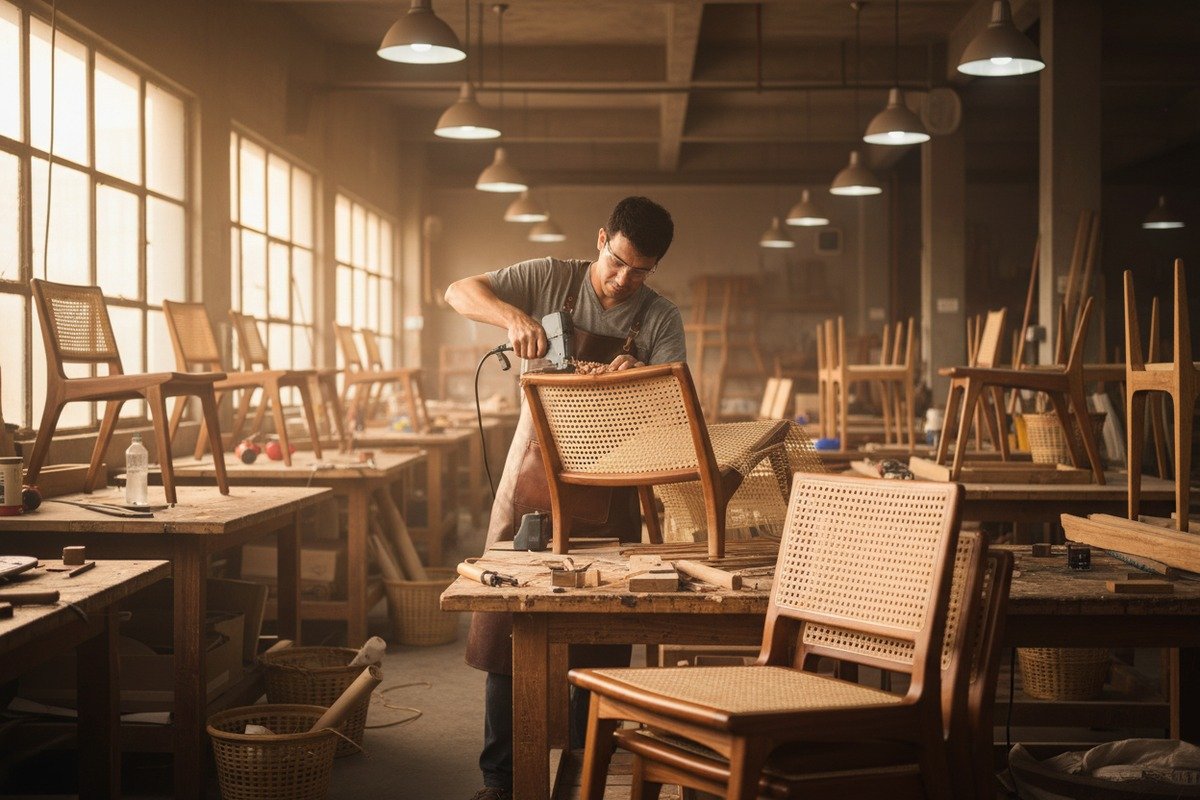
Au cours des quinze dernières années d'exportation de matériaux en rotin vers plus d'une douzaine de pays, nous avons vu des usines naître et disparaître en fonction d'une seule décision : la qualité des matériaux. Les usines qui font des économies sur le grade du cannage économisent un peu sur les matières premières. Mais elles perdent beaucoup plus en retours, plaintes et lente érosion de la confiance des acheteurs.
Investir dans une toile d'osier de qualité A protège la réputation de votre usine en garantissant une esthétique supérieure, une durée de vie plus longue des produits, moins de réclamations sous garantie et une satisfaction client constante. Le coût plus élevé du matériau est compensé par une réduction des retours, des commandes répétées et la possibilité de fixer des prix plus élevés pour vos meubles finis.
Le véritable coût des grades inférieurs
De nombreux responsables des achats se concentrent sur le coût au mètre. Les sangles de qualité B ou C peuvent être 20 à 40 % moins chères que celles de qualité A. Mais considérez les coûts cachés. Une chaise avec des sangles de qualité C qui s'affaisse en six mois déclenche une réclamation sous garantie. L'usine paie le matériel de remplacement, la main-d'œuvre, l'expédition et le coût intangible d'un client mécontent qui en parle à d'autres.
Nous avons vu ce scénario se dérouler avec des clients qui avaient initialement commandé des qualités inférieures pour " tester le marché ". En un cycle de production, ils sont passés à la qualité A car les plaintes ne valaient pas les économies réalisées.
Positionnement haut de gamme sur le marché
Les sangles en rotin de qualité A permettent à vos meubles de concurrencer dans le segment haut de gamme. Les projets d'hôtellerie de luxe, les lignes de meubles de designer et les marques de détail haut de gamme exigent tous la qualité A ou supérieure. Ces clients paient plus cher par unité et commandent en plus grands volumes. Ils ont également tendance à être des acheteurs fidèles et récurrents.
Si votre usine utilise la qualité B ou C, vous êtes limité aux marchés à petit budget où les marges sont faibles et la concurrence est féroce. La qualité A ouvre les portes à des clients haut de gamme qui privilégient la qualité à la marque.
Répartition du retour sur investissement
| Facteur | Qualité A | Qualité B/C |
|---|---|---|
| Coût du matériau par mètre | Plus élevé | Plus bas |
| Durée de vie du produit | 5-10+ ans | 1-3 ans |
| Taux de retour client | Très faible (<21%) | Modéré à élevé (10-20%) |
| Fréquence des réclamations sous garantie | Rare | Courant |
| Taux de commandes répétées | Élevé | Faible |
| Positionnement sur le marché | Haut de gamme/luxe | Budget/milieu de gamme |
| Qualité de finition | Uniforme, professionnel | Incohérent, amateur |
| Perception de la marque | Fiable, de haute qualité | Peu fiable, bon marché |
Durabilité et histoire de la marque
Les acheteurs de meubles d'aujourd'hui se soucient de durabilité 10. Le rotin de qualité A provient de plantations indonésiennes matures et récoltées de manière responsable. Le processus de production est écologique, avec un traitement chimique minimal et aucune pollution. Cela donne à votre usine une histoire convaincante à raconter.
Les consommateurs et les acheteurs commerciaux s'interrogent de plus en plus sur l'origine des matériaux. Une usine qui utilise du rotin certifié de qualité A peut honnêtement revendiquer un approvisionnement durable. Ce récit est puissant sur des marchés comme l'Europe, l'Australie et l'Amérique du Nord, où la conscience environnementale motive les décisions d'achat.
Personnalisation et flexibilité
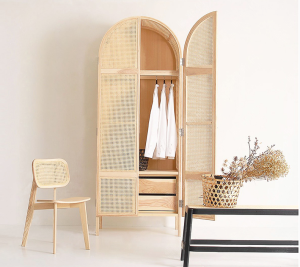
La qualité constante du cannage de qualité A facilite la personnalisation. Que vous ayez besoin d'une maille hexagonale ouverte espacée de 1/2 pouce, d'un tissage radio à motifs carrés ou d'une maille serrée pour les portes d'armoires, le matériau de qualité A produit des résultats nets et prévisibles à chaque fois.
Notre équipe travaille régulièrement avec des usines de meubles qui ont besoin de largeurs personnalisées allant de 40 cm à 120 cm, de longueurs de rouleaux spécifiques, et même d'emballages OEM avec la marque propre de l'usine. L'uniformité du grade A signifie que les commandes personnalisées sont identiques aux commandes standard. Avec des grades inférieurs, les séries personnalisées produisent souvent des résultats imprévisibles car la matière première elle-même est incohérente.
La perspective à long terme
Construire une marque de meubles prend des années. Un lot de rotin de mauvaise qualité peut anéantir des mois de construction de réputation. Des clients en Thaïlande, en Turquie et aux États-Unis nous ont dit que leurs acheteurs demandent spécifiquement le grade A de notre installation parce qu'ils l'ont testé et lui font confiance.
Cette confiance se traduit directement par une croissance des affaires. Les usines de meubles réputées pour la qualité de leurs matériaux obtiennent des recommandations, des contrats plus importants et un pouvoir de fixation de prix premium. Le petit investissement supplémentaire dans le cannage de qualité A se rentabilise maintes et maintes fois.
Conclusion
Le cannage en rotin de qualité A se distingue par des normes d'apparence vérifiées et des références de performance éprouvées. Sourcez judicieusement, inspectez minutieusement, et votre usine de meubles bâtira une qualité et une confiance durables.
Notes de bas de page
1. Remplacé par un article discutant du contrôle qualité comme aspect crucial de la fabrication, effectué par une équipe de contrôle qualité. ↩︎
2. Remplacé par un guide complet sur le cannage en rotin. ↩︎
3. Remplacé par un article Wikipédia fournissant une définition générale de la texture de surface. ↩︎
4. Remplacé par un article expliquant le rotin comme matière première du cannage, y compris ses parties comme l'écorce extérieure. ↩︎
5. Explique ce qu'est un motif de tissage et son impact sur les propriétés du tissu. ↩︎
6. Fournit une définition complète de l'élasticité en physique et en science des matériaux. ↩︎
7. Définit la résistance à l'usure comme la capacité d'un matériau à résister à la perte de volume due à des actions mécaniques. ↩︎
8. Remplacé par un article fournissant une définition claire de la stabilité dimensionnelle. ↩︎
9. Remplacé par un article détaillant l'industrie indonésienne du rotin, y compris ses racines écologiques et sa récolte durable. ↩︎
10. Discute de la durabilité du rotin en raison de sa croissance rapide et de sa récolte non destructive. ↩︎
 English
  Español de México
  العربية
  Deutsch
  Français
  Русский