
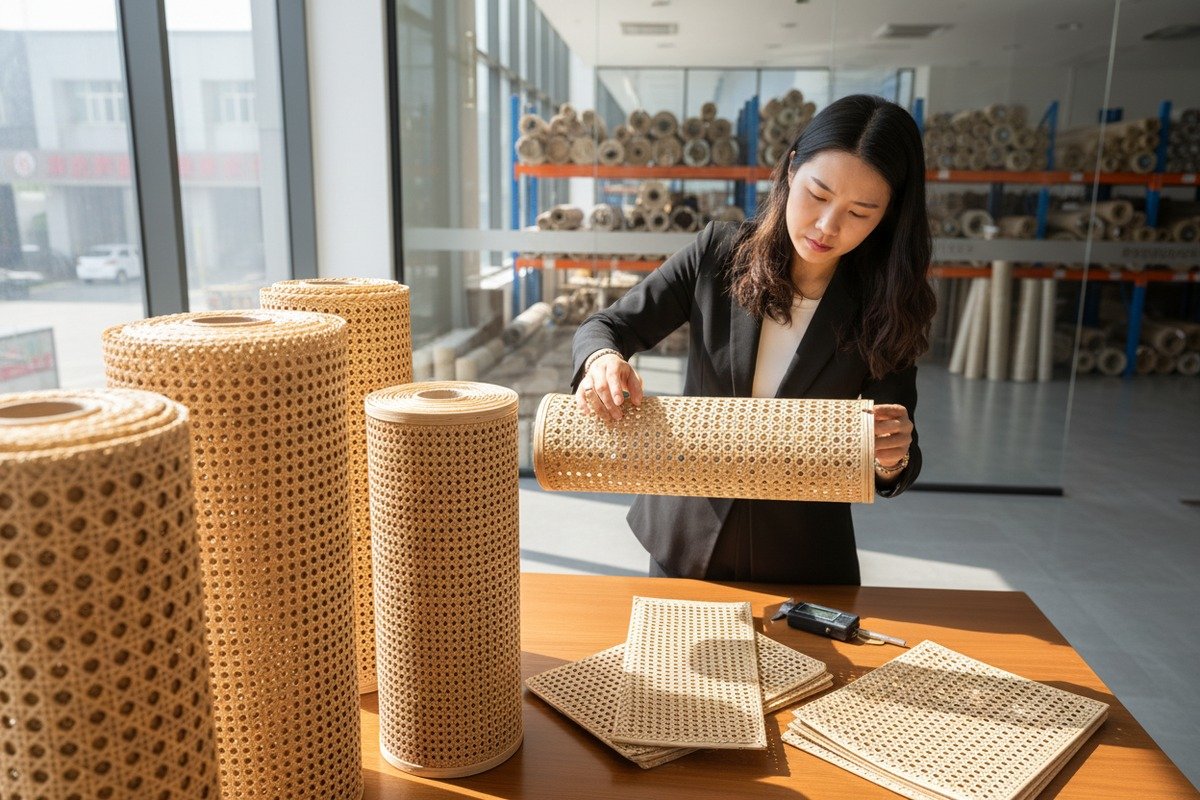
Chaque semaine, notre équipe commerciale à Foshan reçoit des dizaines de demandes de prix de la part d'usines de meubles et de grossistes de matériaux du monde entier Yuan chinois 1. La frustration la plus courante que nous entendons est la suivante : deux rouleaux apparemment identiques de le cannage en rotin naturel 2 peuvent avoir des prix très différents. Sans comprendre les facteurs qui expliquent ces chiffres, les acheteurs paient trop cher pour des matériaux médiocres ou courent après des devis bon marché qui se dégradent en moins d'un an.
Les prix du cannage en rotin naturel sont déterminés par la qualité du matériau (grade AAA/A par rapport à B/C), l'origine du rotin et les coûts de transformation, la complexité du motif de tissage et les dimensions du rouleau, ainsi que le volume total de votre commande. Comprendre ces facteurs clés peut vous aider à réduire vos coûts d'approvisionnement de 20 à 30 % tout en maintenant la qualité que vos projets exigent.
Ci-dessous, nous détaillons chaque facteur de prix. Que vous dirigiez une usine de meubles en Thaïlande, que vous vendiez en gros des matériaux de construction en Europe ou que vous gériez les achats pour un projet à grande échelle, ce guide vous aidera à prendre des décisions d'approvisionnement plus éclairées.
Comment la qualité du rotin naturel influence-t-elle le prix que je paie ?
Une leçon que nous avons apprise tôt en gérant notre propre installation de transformation du rotin en Indonésie est que tous les troncs de rotin ne produisent pas la même qualité de lanières. La différence entre un matériau de première qualité et un matériau de qualité inférieure n'est pas seulement esthétique — elle détermine directement la durée de vie de votre produit fini et la quantité de retouches que votre atelier devra effectuer.
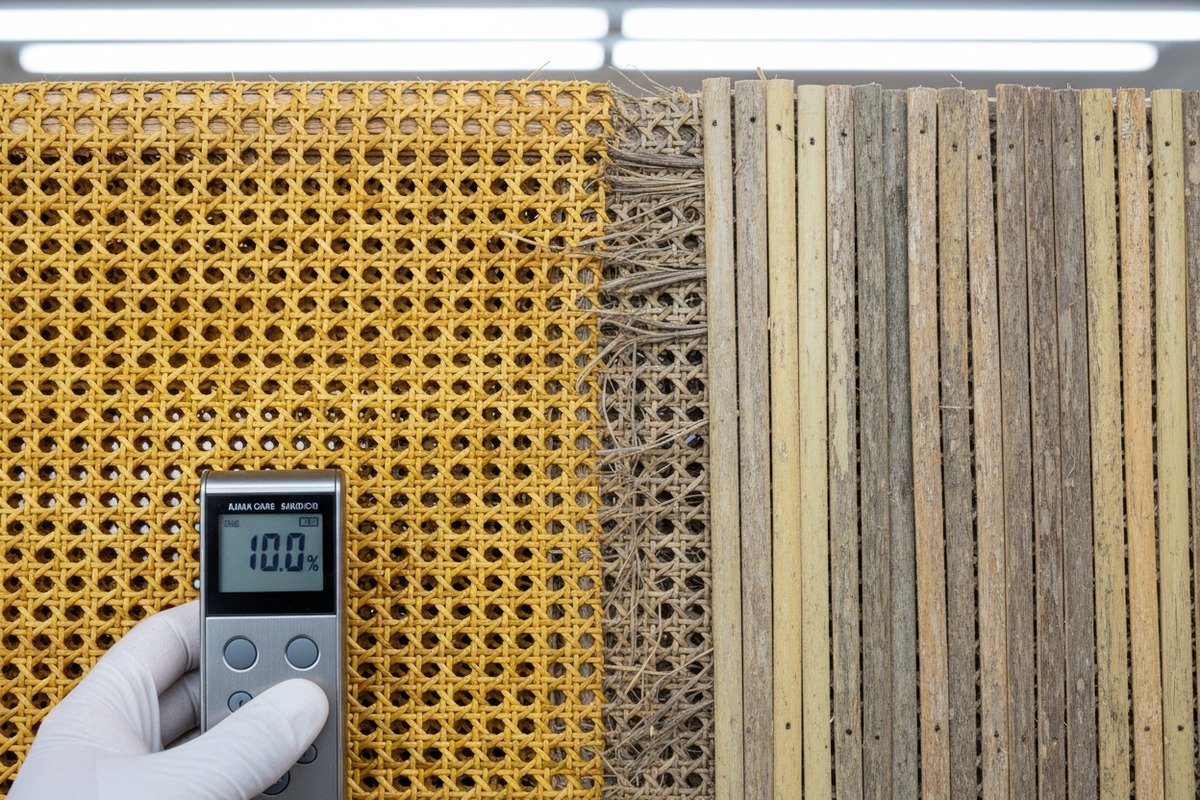
La qualité du rotin naturel est le principal facteur de prix, représentant 40 à 50 % de la variance des coûts. Le rotin de qualité supérieure AAA/A présente une épaisseur de bande uniforme, une couleur dorée riche, des surfaces lisses et une teneur en humidité optimale de 8 à 12 %, tandis que le matériau de qualité inférieure B/C présente des irrégularités, des tons ternes et une fragilité qui entraîne une défaillance du produit dans les 2 à 3 ans.
Qu'est-ce qui rend le rotin de qualité AAA/A plus cher
Le rotin de première qualité commence à la récolte. Les lianes de rotin matures — généralement âgées de 7 à 10 ans — produisent les fibres les plus denses et les plus flexibles. Notre équipe de transformation en Indonésie sélectionne à la main les lianes en fonction de la régularité du diamètre et de l'intégrité de la peau avant même qu'elles n'atteignent les machines de fendage. Le résultat est des lanières avec un effilement minimal, des motifs de grain serrés et un lustre naturel que les matériaux moins chers ne peuvent tout simplement pas reproduire.
Le rotin de haute qualité subit également un séchage soigneux. Nous visons un la teneur en humidité 3 entre 8 % et 12 %. Trop humide, et le cannage moisit pendant le transport maritime. Trop sec, et il devient cassant et se fissure pendant le tissage ou lorsque l'utilisateur final l'applique sur les cadres de meubles. Ce processus de séchage contrôlé ajoute du temps et des coûts, mais il évite les plaintes de qualité qui nuisent aux relations à long terme avec les acheteurs.
Comment les matériaux de qualité inférieure échouent
Le rotin de qualité B/C est souvent récolté sur des lianes plus jeunes ou endommagées. Les lanières varient en largeur et en épaisseur au sein du même rouleau. La couleur est incohérente — vous pouvez voir des stries pâles à côté de taches sombres. La surface est rugueuse, parfois avec une séparation visible des fibres. Les usines de meubles qui utilisent ce matériau signalent des taux de casse plus élevés lors de l'installation, et le produit fini a tendance à s'affaisser ou à se déformer en deux à trois ans.
Comparaison des grades de qualité
| Caractéristique | Qualité supérieure AAA/A | Bas de gamme B/C |
|---|---|---|
| Uniformité des bandes | Largeur et épaisseur constantes, effilement minimal | Irrégulier, points faibles visibles |
| Couleur et grain | Ton doré riche, grain naturel serré | Texture terne, inégale, grossière |
| Teneur en humidité | Contrôlé 8–12% | Souvent trop sec ou trop humide |
| Densité et poids | Haute densité, sensation substantielle | Faible densité, fragile |
| Durabilité | Résistant à la rupture, stable dimensionnellement pendant 5 ans et plus | Cassant, sujet à la déformation, échoue en 2–3 ans |
| 6. Gamme de prix | 2–3× plus élevé que la basse qualité | Coût le plus bas par pied |
Le coût caché du rotin bon marché
Économiser 30% sur le matériel semble attrayant jusqu'à ce que vous preniez en compte les retours, les retouches et les dommages à la réputation. Nous avons vu des fabricants de meubles passer à nos rouleaux de qualité AAA après une seule saison de plaintes de clients concernant des sièges de chaise affaissés fabriqués à partir d'importations bon marché. Le calcul est simple : payer plus cher à l'avance pour une sangle cohérente et durable coûte moins cher sur la durée de vie du produit. Si votre client final s'attend à des meubles de qualité qui durent une décennie, la qualité du rotin que vous vous procurez n'est pas un endroit pour faire des économies.
Pourquoi les coûts d'origine et de traitement des matières premières modifient-ils mon devis final ?
Nos trois usines nous donnent une vision unique de la chaîne des coûts. Nous traitons le rotin brut en Indonésie, tissons et finissons les produits à Foshan, et expédions dans le monde entier. À chaque étape, les coûts s'accumulent — et les choix faits à chaque étape se reflètent dans le prix final de votre facture.
L'origine du rotin et les coûts de traitement modifient votre devis car le rotin indonésien est proposé à un prix supérieur en raison de la qualité supérieure de la vigne et des conditions climatiques, tandis que la récolte, le décorticage, l'ébullition, le séchage et le tressage manuel qualifié, qui demandent beaucoup de main-d'œuvre, ajoutent des couches de coûts. Les fluctuations monétaires, les tarifs commerciaux et la logistique d'expédition influencent davantage le prix rendu que vous payez.
Pourquoi le rotin indonésien coûte plus cher — et pourquoi les acheteurs le choisissent toujours
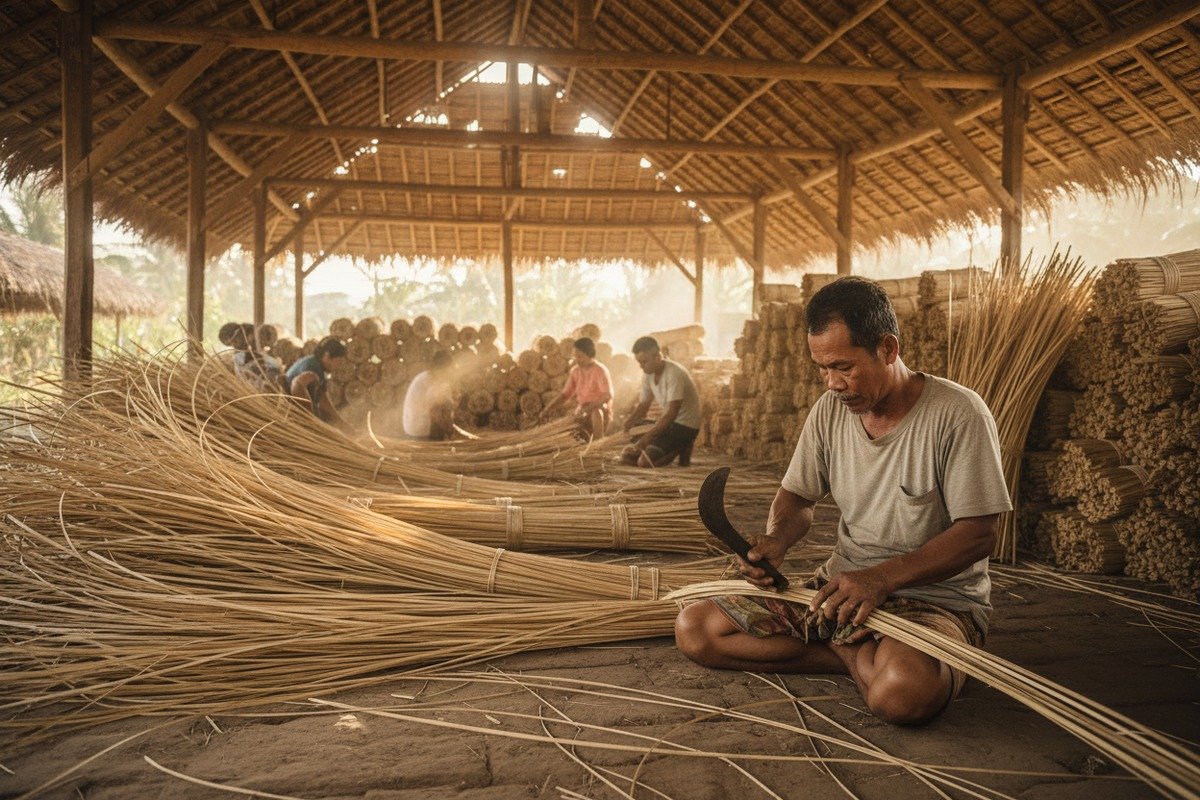
L'Indonésie produit certains des meilleurs rotins du monde. Le climat tropical 4, le sol volcanique et les précipitations abondantes créent des conditions de croissance idéales. Les lianes de rotin indonésien sont plus charnues et plus solides que celles de nombreuses autres régions. Cela se traduit par des bandes de canne d'une meilleure flexibilité, d'une couleur plus riche et d'une plus grande résistance à la traction 5. Lorsque notre équipe à Kalimantan sélectionne des perches brutes, nous choisissons parmi un pool de matières premières naturellement supérieures.
Mais cette qualité a un coût. La récolte indonésienne repose fortement sur le travail manuel. Les ouvriers parcourent les forêts, coupent les lianes matures et les transportent vers les sites de traitement — souvent par rivière. Les lianes sont ensuite décortiquées, bouillies dans des solutions antifongiques, séchées au soleil ou au four, et triées par qualité. Chaque étape nécessite des mains expertes et du temps.
Répartition des coûts de traitement
Voici une vue simplifiée des coûts de traitement :
| Stade de traitement | Impact sur les coûts | Notes |
|---|---|---|
| Récolte et transport | 15–20 % du coût de la matière première | Main-d'œuvre manuelle, emplacements forestiers éloignés |
| Décapage et Refente | 10–15% | Ouvriers qualifiés ou machines semi-automatisées |
| Ébullition et Traitement | 5–10% | Solutions antifongiques et anti-insectes |
| Séchage (au soleil ou en étuve) | 5–10% | Le séchage en étuve coûte plus cher mais offre un meilleur contrôle de l'humidité |
| Calibrage et Tri | 5% | Inspection manuelle pour l'uniformité |
| Tissage | 25–35% | Tisserands expérimentés, la complexité du motif compte |
| Contrôle Qualité et Emballage | 5–10% | Inspection, emballage protecteur pour l'exportation |
Comment les politiques commerciales et la monnaie affectent votre résultat net
Les facteurs géopolitiques jouent un rôle réel. L'Indonésie a périodiquement restreint les exportations de rotin brut pour encourager la transformation à valeur ajoutée nationale. Cela signifie que les acheteurs qui veulent du rotin brut non transformé sont confrontés à des limitations d'exportation et à des coûts plus élevés. Pendant ce temps, les taux de change entre la roupie indonésienne 6, le yuan chinois et votre monnaie locale peuvent faire varier les coûts débarqués de 5 à 10 % en un seul trimestre. Nous conseillons à nos partenaires de longue date de verrouiller les prix pour une saison ou de négocier en USD pour réduire cette volatilité.
1. Les coûts d'expédition ont également changé l'équation depuis 2020. Les tarifs des conteneurs depuis l'Asie du Sud-Est ont grimpé en flèche et ne se sont que partiellement normalisés. Le rotin est léger mais volumineux, donc les coûts de fret par mètre cube sont importants. Travailler avec un fournisseur qui comprend la consolidation et l'emballage efficace — comme nous le faisons dans nos entrepôts de Foshan — peut réduire considérablement votre coût d'expédition par rouleau.
2. Avantages des usines chinoises pour des prix de gros compétitifs
3. Alors que l'Indonésie excelle dans la qualité des matières premières, les usines chinoises comme la nôtre à Foshan optimisent le coût du produit fini. Avec plus de 30 usines partenaires dans la région et une infrastructure logistique établie 4. , nous consolidons les commandes, réduisons les délais de livraison et répercutons ces gains d'efficacité. Notre modèle hybride — rotin indonésien traité et tissé par la fabrication chinoise — offre aux acheteurs le meilleur des deux mondes : un matériau de première qualité à un prix compétitif. 7, 5. Le rotin indonésien est prisé pour sa rondeur et sa résistance à la traction supérieures grâce à des conditions de croissance tropicales idéales.
Quels motifs de tissage et dimensions spécifiques augmenteront mon budget d'approvisionnement ?
10. Motifs de tissage courants et leurs implications sur les coûts.
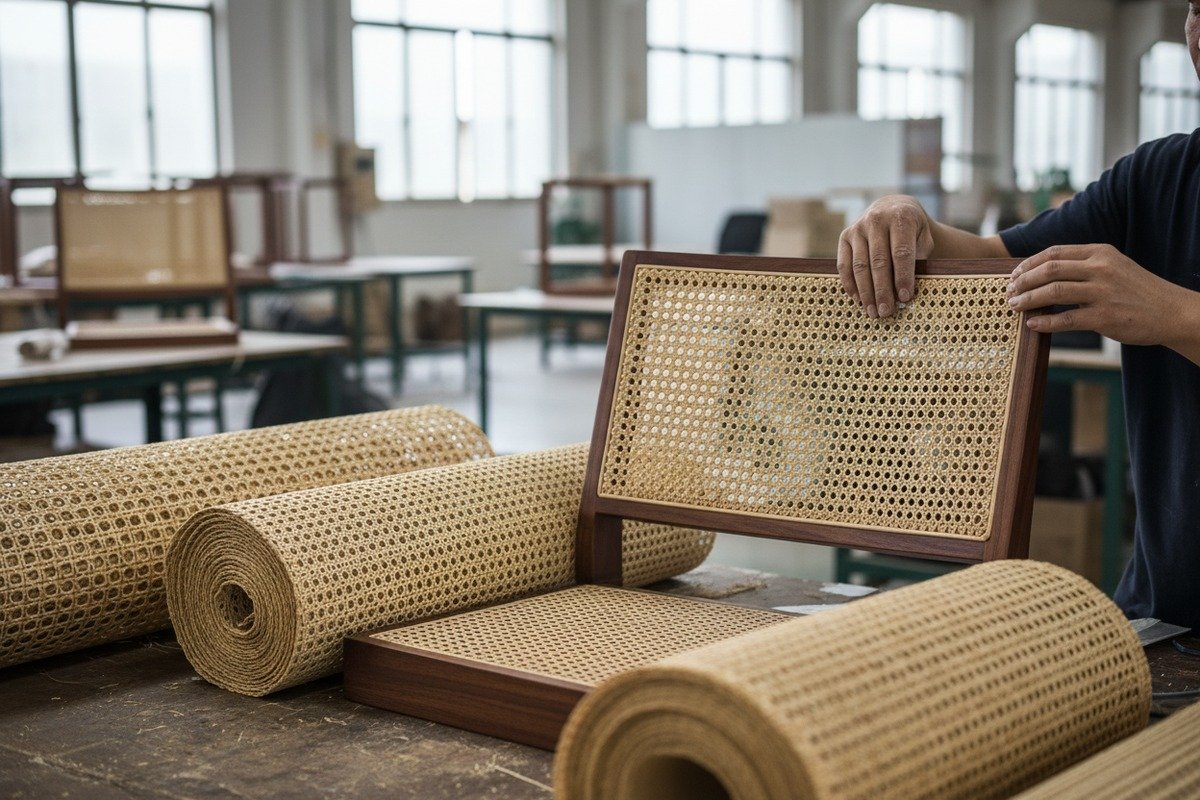
Les motifs complexes de tissage comme le cannage ouvert hexagonal et les motifs diamantés denses nécessitent une main-d'œuvre plus qualifiée et plus de matériaux par mètre carré, ce qui augmente considérablement les coûts. Les rouleaux plus larges (36 pouces et plus) et les longueurs plus importantes augmentent également les prix en raison du volume de matériaux plus élevé, de la difficulté accrue du tissage et des taux de déchets plus importants pendant la production.
11. Tous les motifs de tissage ne sont pas créés égaux. Le motif classique
12. — souvent appelé "treillis de canne" — est le motif le plus reconnu. Il utilise des lanières de canne tressées à la main six fois pour créer une structure semblable à un nid d'abeille. Ce motif nécessite un espacement et une tension précis, et même les tisserands expérimentés travaillent à un rythme modéré pour maintenir l'uniformité. natte ouverte hexagonale 8 13. Le tissage radio utilise un motif radial de lanières de canne ancrées à un point central. Il est couramment utilisé dans les dossiers de chaises ronds ou ovales. La mise en place est plus longue que le tissage en ligne droite, ce qui ajoute au coût.
14. Les motifs de tissage serré, comme le tissage serré de roseau ou le tissage panier serré, utilisent des roseaux ovales plats tissés serrés ensemble. Ceux-ci utilisent plus de matériau par pied carré mais nécessitent moins de dextérité manuelle. Le facteur de coût ici est le volume de matière première plutôt que la complexité de la main-d'œuvre.
15. Les motifs de maille carrée et de tissage ouvert ont tendance à être les plus économiques car ils utilisent moins de matériau et suivent des motifs simples et répétitifs.
Square mesh and open weave patterns tend to be the most economical because they use less material and follow simpler, repetitive patterns.
Comparaison des prix par motif et par dimension
| Motif / Spécification | Utilisation des matériaux | Intensité de la main-d'œuvre | Niveau de prix relatif |
|---|---|---|---|
| Canne ouverte hexagonale (largeur 18 pouces) | Modéré | Élevé | Moyen-haut |
| Canne ouverte hexagonale (largeur 36 pouces) | Élevé | Très élevé | Élevé |
| Tissage radio (largeur 40–60 cm) | Modéré | Élevé | Moyen-haut |
| Maille carrée / Grille ouverte (18–24 pouces) | Faible | Faible-Moyen | Bas-moyen |
| Panier serré / Tissage serré (24–36 pouces) | Très élevé | Moyen | Moyen-haut |
| Motif diamant dense (personnalisé) | Élevé | Très élevé | Le plus élevé |
Comment les dimensions influencent votre coût
La largeur est importante. Un rouleau de 18 pouces est plus simple à tisser et à manipuler. Un rouleau de 36 pouces nécessite une configuration de métier à tisser plus large, exerce une plus grande contrainte sur le matériau pendant le tissage et produit plus de déchets sur les bords. Nos données de production montrent que les taux de déchets augmentent d'environ 3 à 5 % sur les rouleaux étroits à 8 à 12 % sur les rouleaux de plus de 30 pouces de large.
La longueur joue également un rôle, mais elle joue en votre faveur. Les rouleaux plus longs – disons 50 pieds par rapport à 10 pieds – répartissent le coût d'installation sur plus de matériau. Le prix par pied diminue à mesure que la longueur augmente. Par exemple, les prix de détail sur des plateformes comme Etsy peuvent commencer à 12,34 $ CA par pied pour un seul pied de sangle hexagonale de 36 pouces, mais baissent à 10,61 $ CA par pied pour 49 pieds. En quantités de gros, les économies sont encore plus spectaculaires.
Les dimensions personnalisées augmentent également les coûts. Si vous avez besoin d'une largeur non standard – disons 28 pouces au lieu des 24 standard – nous devrons peut-être ajuster les réglages du métier à tisser et couper selon les spécifications, ce qui augmente la main-d'œuvre et les déchets. Dans la mesure du possible, nous recommandons aux clients de travailler avec des largeurs standard (18, 24 ou 36 pouces) pour optimiser les coûts.
Choisir le bon motif pour votre application
Le meilleur motif dépend de votre produit final. Pour le cannage de sièges de chaise classique, le cannage hexagonal ouvert reste la norme. Pour les inserts de portes d'armoires et les têtes de lit, un tissage radio plus serré ou un tissage panier offre un aspect plus fini. Pour les cadres de meubles d'extérieur où une alternative synthétique peut être plus pratique, nous pouvons fournir Sangle en plastique PE 9 qui imite les textures naturelles à un coût par unité inférieur avec une plus grande résistance aux intempéries.
Comment puis-je optimiser mon volume de commande pour obtenir des prix de gros plus compétitifs ?
Au fil des ans, nous avons aidé des centaines d'acheteurs — des petits propriétaires de boutiques Etsy aux grandes usines de meubles aux Pays-Bas et en Australie — à structurer leurs commandes pour obtenir les meilleurs prix possibles. La différence entre une commande intelligente et une commande coûteuse dépend souvent de la compréhension des seuils de volume, des stratégies de consolidation et du calendrier.
Vous pouvez optimiser le volume de vos commandes en consolidant les références en moins de livraisons plus importantes, en atteignant les quantités minimales de commande pour les prix de gros, en mélangeant les catégories de produits pour remplir efficacement les conteneurs et en planifiant les commandes en fonction des cycles de production. Les rouleaux en vrac de 50 pieds ou plus permettent généralement d'économiser 30 à 50 % par pied par rapport aux achats au détail au pied.
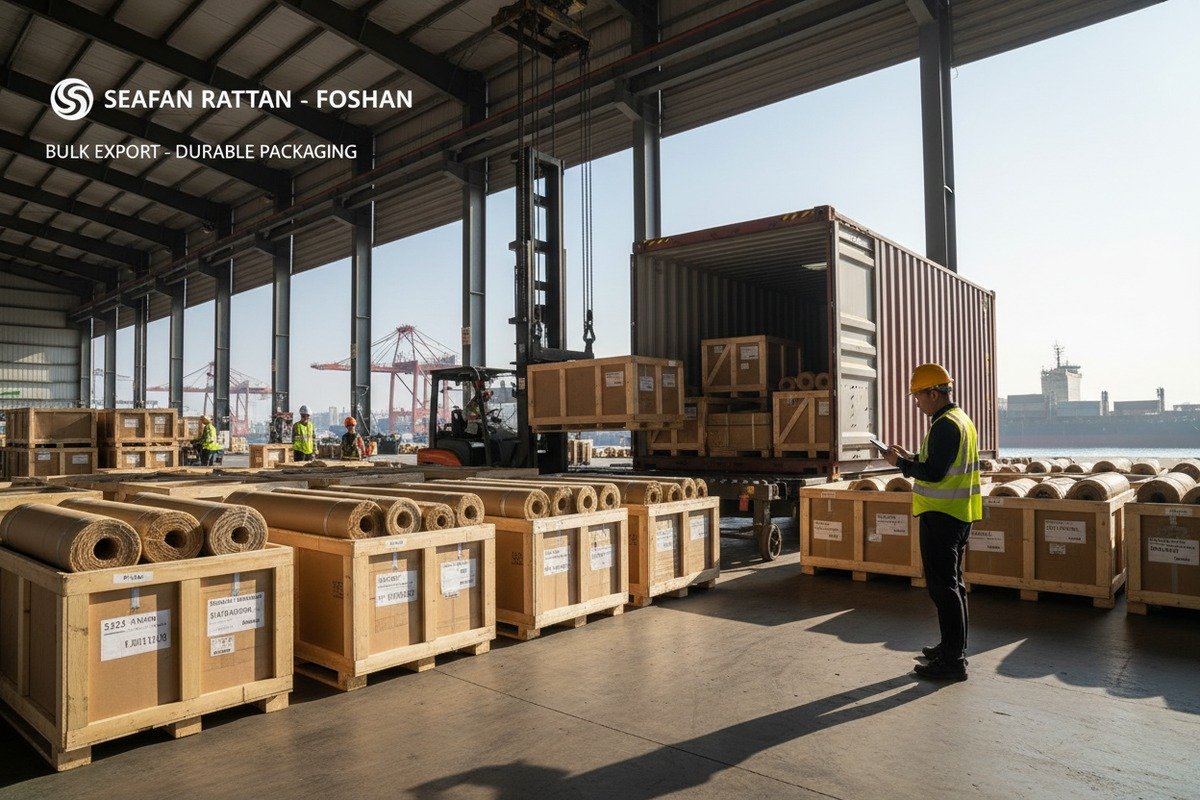
Vente au détail par rapport à la vente en gros : les chiffres parlent d'eux-mêmes
L'écart entre les prix de détail et de gros pour la sangle de cannage en rotin naturel est important. Examinons des exemples concrets provenant de divers canaux :
| Source / Canal | Produit | Prix par pied (environ) | Notes |
|---|---|---|---|
| Etsy (Détail, 1 pied) | 36" Hexagonal Naturel | CA$12.34 | Petite quantité, prix promotionnel |
| Etsy (Vente au détail, 49 pieds) | 36" Hexagonal Naturel | CA$10.61 | Remise sur volume sur la plateforme |
| HH Perkins (Détail spécialisé) | Rouleau de qualité A de 50 pieds, 18–36 pouces" | ~$7.50 USD | Fournisseur spécialisé en cannage |
| Walmart (Détail) | Rouleau de maille en rotin | ~$20.07/rouleau | Remise par rapport à $23.65 |
| Vente en gros directe (par exemple, Seafan Rattan) | Rouleaux en vrac de 50 pieds et plus, spécifications personnalisées | $3.50–6.00 USD | Dépend de la qualité, de la largeur, du motif |
Le message est clair. Acheter un pied à la fois sur une plateforme de vente au détail peut vous coûter deux à trois fois plus cher par pied que de passer une commande en gros directement auprès d'un fabricant.
Stratégies qui permettent réellement d'économiser de l'argent
Voici les approches que nous recommandons à nos clients B2B :
Consolider les SKUS en une seule expédition. Si vous avez besoin de toile d'osier hexagonale, de tissage radio et de tiges de rotin, combinez-les en une seule commande. Cela optimise l'espace du conteneur et réduit les coûts d'expédition par article.
Atteindre les seuils de MOQ. La plupart des fournisseurs de gros, y compris nous, proposent des prix échelonnés. Atteindre le premier niveau de MOQ – souvent 100 à 500 mètres selon le produit – débloque la première remise significative. Les niveaux supérieurs offrent des économies plus importantes.
Planifier les commandes saisonnières. La production de rotin a des cycles naturels. Commander pendant les mois creux (généralement le premier et le début du deuxième trimestre) peut raccourcir les délais de livraison et parfois garantir de meilleurs prix car la capacité de l'usine est plus disponible.
Demander des échantillons d'abord, puis s'engager. Nous encourageons toujours les nouveaux acheteurs à commander des rouleaux d'échantillons avant de s'engager sur un lot important. Un petit investissement en échantillon – généralement moins de 50 $ – évite des erreurs coûteuses lors de la montée en puissance.
Négocier des accords à long terme. Si vous achetez de manière constante, un accord-cadre avec des prix bloqués pendant six ou douze mois vous protège des fluctuations monétaires et des variations des prix des matières premières. Plusieurs de nos partenaires en Turquie et en Arabie Saoudite utilisent cette approche pour stabiliser leurs budgets d'approvisionnement annuels.
Quand les petites commandes ont du sens
Tous les acheteurs n'ont pas besoin d'un conteneur complet. Si vous dirigez une petite entreprise de restauration de meubles ou une boutique de bricolage, des plateformes comme Etsy et des détaillants spécialisés ont leur utilité. La prime par mètre est le coût de la commodité, d'un engagement moindre et d'une livraison plus rapide. Mais une fois que votre utilisation mensuelle dépasse constamment 50 à 100 pieds, l'économie penche fortement en faveur de l'approvisionnement direct en gros.
Nous proposons également des conteneurs mixtes pour les acheteurs de volume moyen. Au lieu de commander un seul produit en grande quantité, vous pouvez combiner la toile d'osier naturelle, la toile synthétique en PE, les tiges de rotin et les panneaux tissés en une seule expédition. Cette approche vous permet de tester plusieurs produits tout en bénéficiant de prix compétitifs sur l'ensemble.
Conclusion
Le prix de la cannage en rotin naturel dépend de la qualité, de l'origine, du traitement, du motif de tissage, des dimensions et du volume de la commande. Comprendre ces facteurs vous aide à vous approvisionner plus intelligemment, à négocier mieux et à établir des partenariats durables avec les fournisseurs.
Notes de bas de page
1. Définit le yuan chinois comme l'unité de base de la monnaie officielle de la Chine. ↩︎
2. Explique ce qu'est le cannage en rotin et son processus de production. ↩︎
3. Remplacé par une définition faisant autorité de la teneur en humidité provenant de Wikipédia. ↩︎
4. Décrit les caractéristiques déterminantes d'un climat tropical, y compris la température et l'humidité. ↩︎
5. Remplacé par une définition faisant autorité de la résistance à la traction ultime provenant de Wikipédia. ↩︎
6. Définit la roupie indonésienne comme la monnaie officielle de l'Indonésie. ↩︎
7. Fournit une définition complète des composants et de l'importance de l'infrastructure logistique. ↩︎
8. Décrit les caractéristiques du motif de tissage hexagonal ouvert du cannage. ↩︎
9. Décrit les caractéristiques clés et les applications du sanglage en polypropylène. ↩︎
10. Explique le fonctionnement des quantités minimales de commande (MOQ) échelonnées en entreprise. ↩︎


 English
  Español de México
  العربية
  Deutsch
  Français
  Русский