
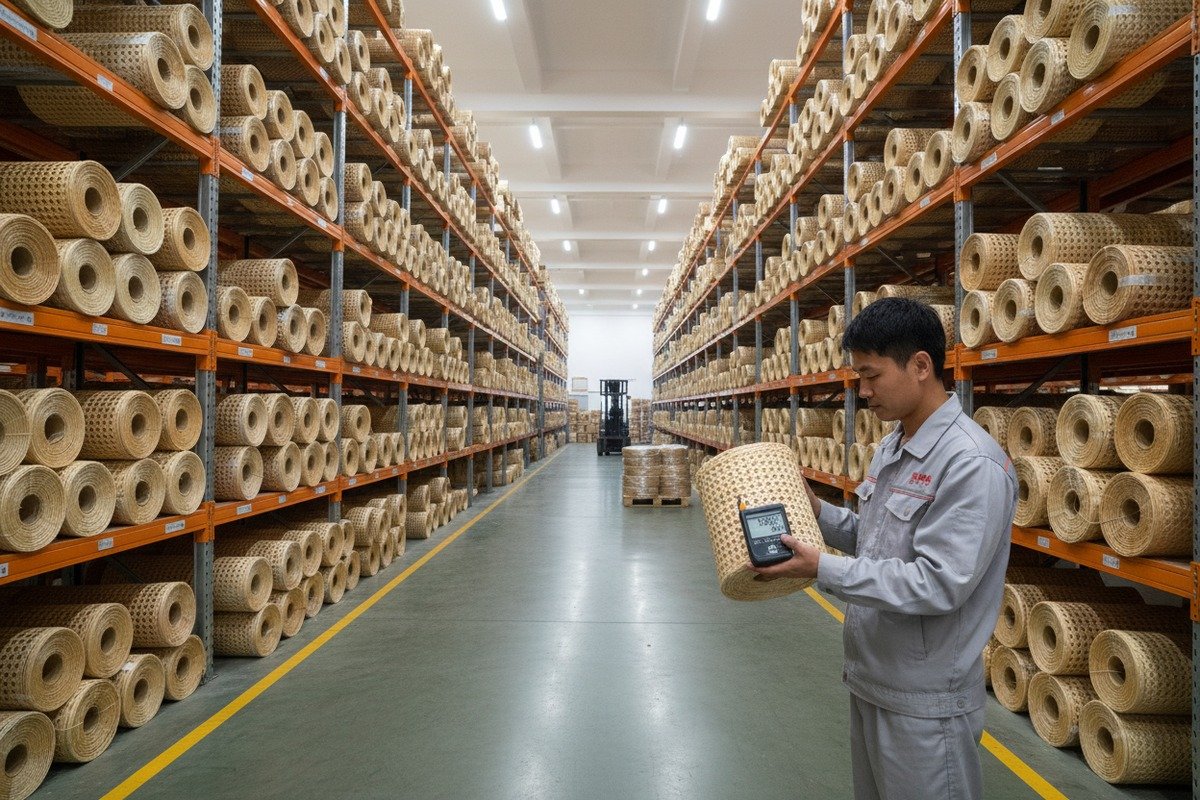
Chaque année, nous voyons des conteneurs de beaux cannage rotin 1 arriver dans les entrepôts des clients pour développer des taches de moisissure foncée ou de minuscules trous de scarabées en quelques semaines. C'est déchirant. Travaillant dans nos trois usines et expédiant dans plus d'une douzaine de pays, nous savons que l'humidité et les insectes peuvent détruire rapidement le rotin.
Pour éviter la moisissure et les parasites dans le cannage en rotin, vous devez contrôler l'humidité entre 40 et 60 %, appliquer des huiles protectrices ou des revêtements d'étanchéité, assurer une bonne circulation de l'air pendant le stockage, nettoyer régulièrement avec des solutions douces et utiliser des répulsifs naturels comme des blocs de cèdre ou des sprays d'huile de neem près du matériau.
Ce guide vous accompagne étape par étape. Que vous dirigiez une usine de meubles en Thaïlande, une opération de gros aux Pays-Bas ou une entreprise de matériaux de construction aux États-Unis, ces méthodes garderont votre stock de rotin en sécurité et vendable. Décomposons cela section par section.
Comment puis-je stocker correctement ma canne en rotin pour éviter la croissance de moisissures dans mon entrepôt ?
Nous expédions du cannage en rotin vers des marchés tropicaux comme la Thaïlande et les Philippines depuis des années. La plainte la plus fréquente des responsables d'entrepôt est la moisissure. Elle apparaît souvent dans le premier mois de stockage si les conditions sont mauvaises.
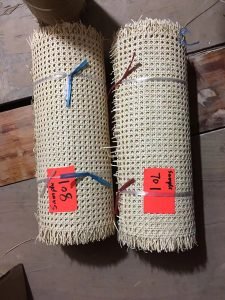
Stockez le cannage en rotin dans un entrepôt sec et bien ventilé, avec une humidité maintenue entre 40 et 60 %. Gardez les rouleaux surélevés du sol sur des palettes ou des étagères, à l'écart des murs, et utilisez des déshumidificateurs ou des sachets de gel de silice dans les espaces clos pour absorber l'excès d'humidité et prévenir la colonisation par les moisissures.
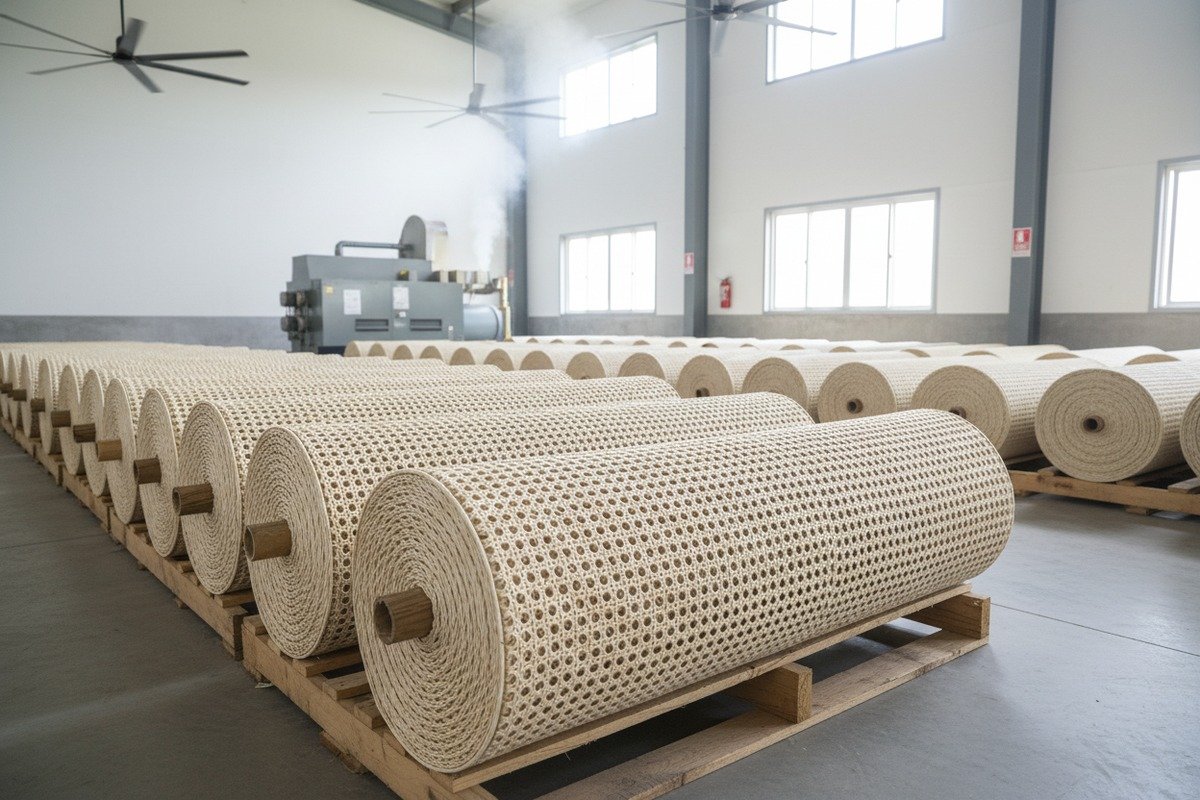
Le cannage en rotin est fabriqué à partir de la peau extérieure des lianes de palmier rotin. Il est poreux par nature. Cela signifie qu'il absorbe l'humidité de l'air comme une éponge. Lorsque l'humidité reste supérieure à 70% pendant quelques jours seulement, les spores de moisissure trouvent un foyer parfait dans ces fibres organiques. Comprendre cela vous aide à voir pourquoi le stockage est la première ligne de défense.
Élevez et espacez votre stock
Ne placez jamais les rouleaux ou les feuilles de rotin directement sur un sol en béton. Le béton transpire. Il libère de l'humidité vers le haut, surtout dans les climats tropicaux ou côtiers. Utilisez des palettes en bois ou des étagères métalliques pour maintenir le rotin à au moins 15 cm du sol. Laissez au moins 10 cm d'espace entre le mur et votre stock. Cet espace permet à l'air de circuler librement autour de toutes les faces du matériau.
Contrôlez l'air
L'air stagnant est le meilleur ami de la moisissure. Installez des ventilateurs de plafond ou des ventilateurs portables pour maintenir la circulation de l'air. Si votre entrepôt se trouve dans une région à forte humidité comme Singapour, le Vietnam ou la Floride côtière, investissez dans des déshumidificateurs commerciaux. Les déshumidificateurs intelligents avec hygromètres intégrés peuvent automatiquement maintenir le point idéal de 40–60%. Pour les petites salles de stockage, sachets de gel de silice 2 coincés entre les rouleaux fonctionnent étonnamment bien.
Ajustements saisonniers
Le risque de moisissure n'est pas constant. Il augmente pendant les saisons de mousson, les vagues d'humidité estivale et les périodes de pluie. Pendant ces périodes, augmentez les réglages de votre déshumidificateur et vérifiez votre stock deux fois par semaine. Pendant les saisons plus sèches, vous pouvez réduire la surveillance à une fois par semaine.
| Facteur de stockage | Pratique recommandée | Risque si ignoré |
|---|---|---|
| Contact avec le sol | Élever sur des palettes ou des étagères | L'absorption d'humidité provoque de la moisissure sur la couche inférieure |
| Distance du mur | Gardez un espace de 10+ cm | Trapped humid air breeds mold colonies |
| Humidity level | 40–60% relative humidity | Above 70% triggers rapid mold growth |
| Circulation de l'air | Fans or open ventilation | Stagnant air creates mold-friendly pockets |
| Inspection frequency | Weekly (twice weekly in wet seasons) | Late detection leads to full-batch loss |
| Moisture absorbers | Silica gel or dehumidifiers | Enclosed spaces trap humidity inside packaging |
L'emballage compte aussi
From our production line in Indonesia, we have learned that packaging choices affect mold risk during transit and storage. Avoid sealing rattan in fully airtight plastic wrap for long periods. Use breathable packaging materials or perforate plastic wrapping to let air exchange happen. If a client requests vacuum packaging for shipping, advise them to open and air the material immediately upon arrival.
A warehouse manager in Australia once told us he lost an entire pallet because he left shrink-wrapped rattan in a container for three weeks during summer. The trapped moisture turned the entire batch green with mold. That story reinforced our standard recommendation: unwrap and ventilate within 48 hours of receiving shipment.
Quels traitements dois-je rechercher pour garantir que mes matériaux en rotin résistent aux parasites ?
Lorsque nous traitons le rotin dans notre usine en Indonésie, la prévention des parasites commence avant même que le matériau ne quitte l'usine. Les termites, les vrillettes et les fourmis charpentières sont naturellement attirés par les fibres de rotin non traitées. Ignorer le traitement, c'est jouer avec votre inventaire.
Recherchez des cannages en rotin traités avec des conservateurs à base de bore, des revêtements antifongiques ou séchés au four. Les options naturelles comprennent les traitements à l'huile de neem et à l'huile de tung. Ces traitements pénètrent les fibres pour repousser les termites, les coléoptères et les fourmis tout en conservant la flexibilité et l'apparence naturelle du matériau.
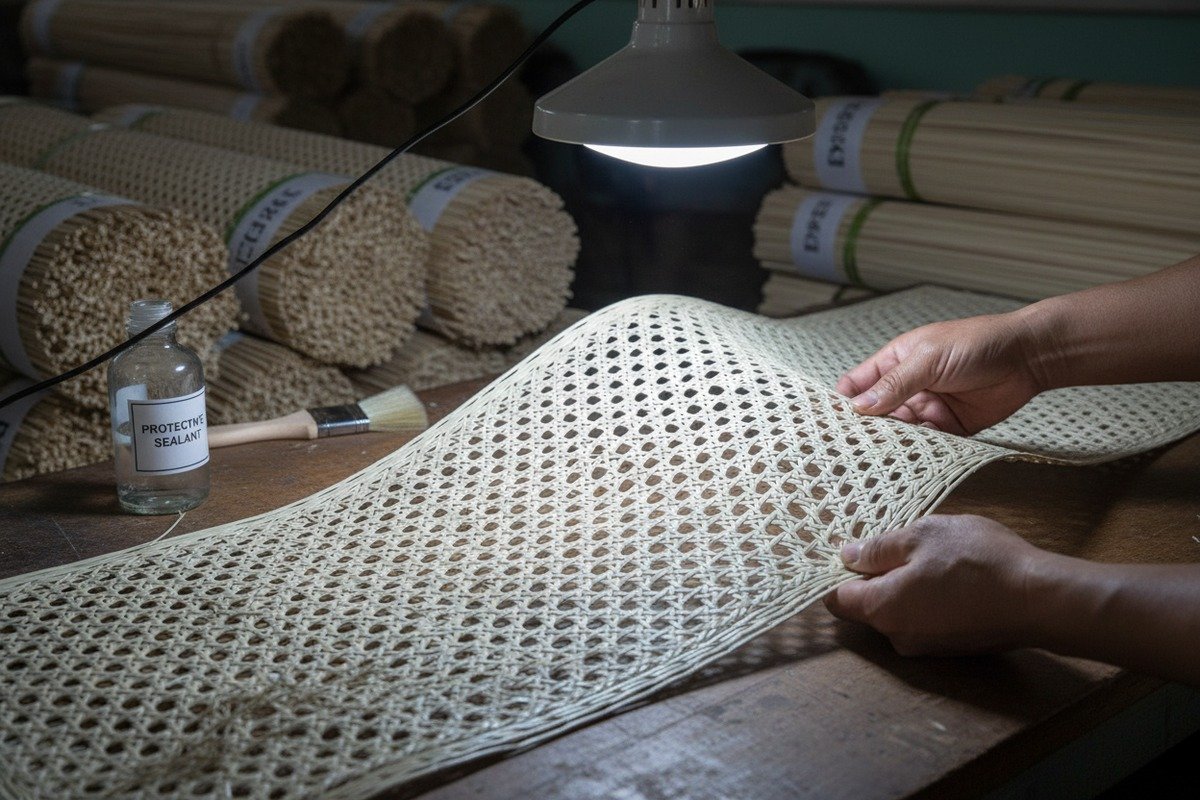
Les dommages causés par les parasites dans le rotin sont souvent invisibles jusqu'à ce qu'il soit trop tard. Les insectes forent de minuscules trous de l'intérieur. Les termites rongent le cœur avant que vous ne remarquiez des dommages en surface. C'est pourquoi le traitement préventif est non négociable pour tout acheteur sérieux.
Traitements de niveau usine
Dans notre usine de traitement du rotin, nous utilisons une approche en plusieurs étapes. Premièrement, le rotin brut est séché au four pour réduire sa teneur en humidité interne en dessous de 12 %. traitement séché au four 4 Cela seul rend le matériau beaucoup moins attrayant pour les insectes. Deuxièmement, nous appliquons des solutions à base de bore. Le bore est un sel minéral toxique pour les insectes xylophages mais sans danger pour les humains et les animaux domestiques aux concentrations de traitement. Il pénètre profondément dans les fibres et reste efficace pendant des années.
Certaines usines fumigent également le rotin avec du phosphure de gaz 5 avant l'exportation. Cela tue toutes les larves ou œufs déjà présents. Demandez à votre fournisseur si son rotin a été séché au four, traité chimiquement ou fumigé. S'il ne peut pas répondre clairement, c'est un signal d'alarme.
Traitements naturels vs. chimiques
Il y a un débat en cours dans notre industrie sur les traitements naturels par rapport aux traitements chimiques contre les parasites. Voici une comparaison équilibrée :
| Type de traitement | Exemples | Avantages | Inconvénients |
|---|---|---|---|
| Conservateurs à base de bore 6 | Borax, solutions d'acide borique | Pénétration profonde, longue durée, faible toxicité pour l'homme | Nécessite une application professionnelle |
| Séchage au four | Traitement thermique à 60°C+ | Tue les larves existantes, réduit l'humidité | N'empêche pas à lui seul les infestations futures |
| Huile de neem 7 | Extrait de neem pressé à froid | Répulsif naturel contre les insectes, sûr, écologique | Nécessite une réapplication tous les 3 à 6 mois |
| L'huile de tung 8 / Huile de lin | Huiles siccatives naturelles | Scelle les fibres, repousse les insectes, nourrit le matériau | Temps de séchage lent, peut attirer la poussière si sur-appliqué |
| Fumigation à la phosphine | Gaz phosphure d'aluminium | Tue tous les stades de vie des insectes | Toxique pendant l'application, nécessite une certification |
| Sprays synthétiques | Produits à base de perméthrine | Action rapide, à large spectre | Peut décolorer le rotin naturel, préoccupations environnementales |
Que demander à votre fournisseur
Lors de l'approvisionnement en cannage de rotin, nous recommandons toujours aux acheteurs de poser ces questions :
- Ce lot a-t-il été séché au four ? Quelle était l'humidité finale ?
- Un traitement conservateur a-t-il été appliqué ? Si oui, quel produit chimique et à quelle concentration ?
- Y a-t-il un certificat de fumigation pour cette expédition ?
- Recommandez-vous des traitements post-achat pour mon climat ?
Un bon fournisseur répondra sans hésitation aux quatre questions. Dans notre usine, nous fournissons des certificats de traitement avec chaque expédition et adaptons notre traitement au climat de destination. Une expédition à destination de l'Arabie saoudite sèche reçoit un traitement différent de celle à destination de la Thaïlande humide.
Gestion intégrée des nuisibles après l'achat
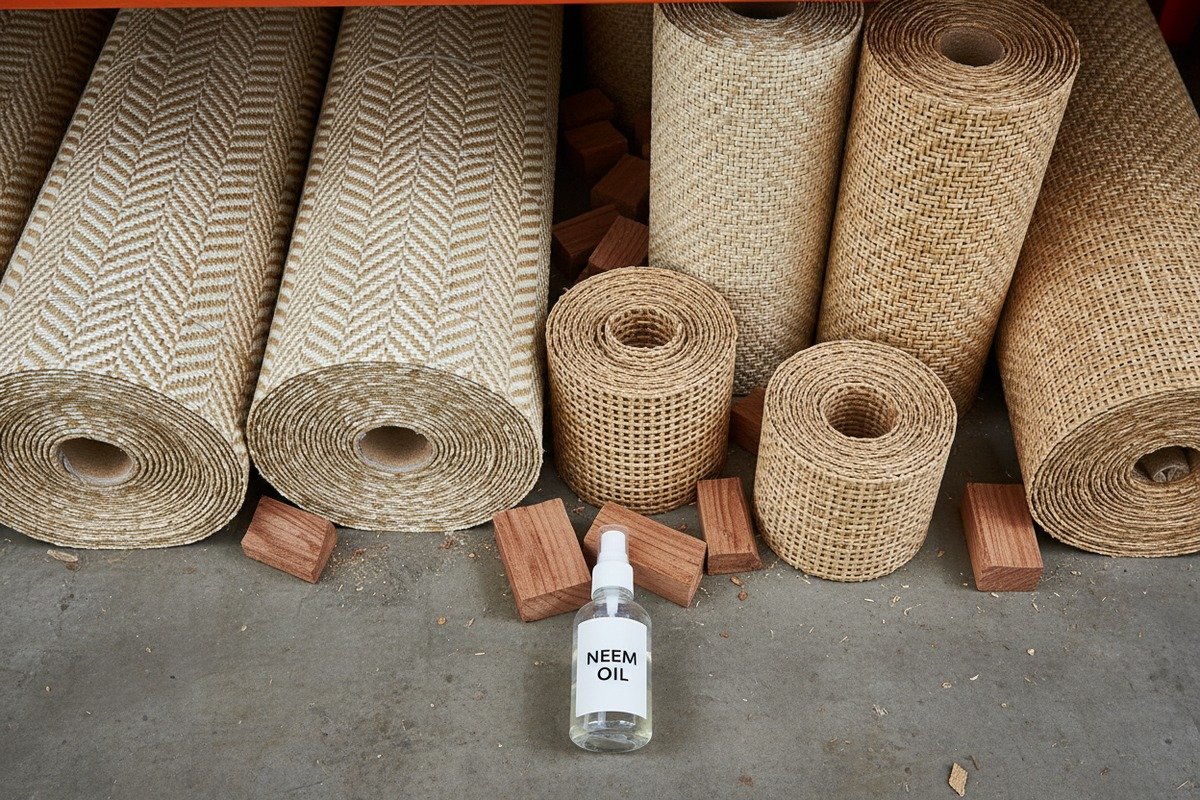
Même le rotin traité bénéficie d'une vigilance continue. Gestion intégrée des nuisibles 9 Placez des blocs de cèdre ou des sachets de lavande près du rotin stocké. Ces répulsifs naturels découragent les mites et les petits coléoptères. Un spray d'huile de neem diluée appliqué trimestriellement ajoute une autre couche de protection. Inspectez votre stock mensuellement. Recherchez de minuscules trous, une poudre fine ressemblant à de la sciure (frass) ou de petites ailes près du matériau. La détection précoce sauve des lots entiers.
Comment puis-je maintenir l'environnement idéal pour éviter que mon cannage en rotin ne développe de la moisissure ?
D'après notre expérience d'exportation dans plus d'une douzaine de pays, nous avons constaté le même schéma se répéter. Un acheteur investit dans du cannage de qualité A, l'installe magnifiquement, puis de la moisissure apparaît en une saison parce que l'environnement a été négligé. Le matériau n'est pas le problème. Les environs le sont.
Maintenez un environnement idéal pour le cannage en rotin en maintenant l'humidité intérieure entre 40 et 60 %, en assurant des températures ambiantes constantes entre 18 et 25 °C, en assurant une bonne circulation de l'air, en évitant l'exposition directe au soleil et en plaçant les pièces en rotin à l'écart des sources d'eau telles que les salles de bains, les cuisines et les fenêtres qui fuient.

La moisissure est un champignon de surface étroitement lié à la moisissure. Il prospère dans des environnements chauds, humides et stagnants. La porosité naturelle du rotin le rend particulièrement vulnérable. Mais avec les bons contrôles environnementaux, vous pouvez empêcher la moisissure de se former.
Température et humidité : les deux piliers
Des conditions constantes sont plus importantes que des conditions parfaites. Les variations sauvages de température font que les fibres de rotin se dilatent et se contractent. Cela crée des micro-fissures où l'humidité s'accumule et la moisissure s'installe. Maintenez la température ambiante stable entre 18 et 25 °C. Associez cela à un contrôle de l'humidité à 40-60 %.
Sur les marchés tropicaux comme le Vietnam et les Philippines, où notre usine expédie régulièrement, nous recommandons de faire fonctionner la climatisation ou les déshumidificateurs pendant les mois les plus humides. Dans les climats plus secs comme le Moyen-Orient, le plus grand risque est le sur-séchage. Le rotin qui devient trop sec devient cassant et se fissure. Une légère brumisation toutes les deux semaines aide dans les conditions arides.
Stratégies de circulation de l'air
Une bonne circulation de l'air est une prévention gratuite contre la moisissure. Voici des étapes pratiques :
- Positionnez les meubles en rotin à au moins 10 cm des murs.
- Ouvrez régulièrement les fenêtres par temps doux.
- Utilisez des ventilateurs oscillants dans les pièces fermées.
- Évitez de placer le rotin dans des coins morts ou derrière des rideaux épais.
- Dans les espaces commerciaux, envisagez des systèmes CVC avec des capteurs d'humidité.
Lumière du soleil : ami et ennemi
La lumière naturelle aide à décourager la moisissure car les rayons UV tuent les spores de surface. Cependant, la lumière directe du soleil est destructrice pour le rotin. Elle décolore, dessèche les fibres et provoque des fissures avec le temps. La solution est la lumière indirecte. Placez le rotin près des fenêtres mais utilisez des rideaux transparents ou des films anti-UV. Dans les régions très ensoleillées comme la Floride, l'Australie ou le Moyen-Orient, les sprays de protection UV ajoutent une couche de sécurité.
| Facteur environnemental | Plage idéale | Trop bas | Trop haut |
|---|---|---|---|
| Humidité relative | 40–60% | En dessous de 30 % : les fibres se fissurent, deviennent cassantes | Au-dessus de 70 % : développement de moisissures et de mildiou |
| Température ambiante | 18–25°C | En dessous de 10°C : risque de condensation sur les surfaces froides | Au-dessus de 30°C : accélère l'évaporation de l'humidité, provoque la fragilité |
| Circulation de l'air | Flux modéré et constant | Air stagnant : formation de moisissures par endroits | Courants d'air forts : peuvent sécher et stresser les fibres de manière inégale |
| Exposition à la lumière | Lumière naturelle indirecte | Trop sombre : favorise la croissance fongique | Soleil direct : décoloration, fissures, dégradation des fibres |
Solutions domotiques pour 2025
Les déshumidificateurs et hygromètres intelligents ne sont plus des articles de luxe. Bon nombre de nos clients à Singapour et sur la côte australienne utilisent désormais des capteurs d'humidité connectés au Wi-Fi qui les alertent lorsque les niveaux augmentent. Certains systèmes s'intègrent au CVC pour un réglage automatique. L'investissement se rentabilise après avoir sauvé ne serait-ce qu'un lot de rotin de première qualité des dommages causés par les moisissures.
Adaptations régionales
Des climats différents exigent des approches différentes. À Singapour, où l'humidité dépasse régulièrement 90%, les déshumidificateurs et le gel de silice sont des outils quotidiens essentiels. Dans les zones côtières d'Espagne ou de Grèce, l'air salin ajoute un facteur de corrosion supplémentaire. Un rinçage trimestriel à l'eau douce suivi d'un séchage complet permet d'éliminer les dépôts de sel qui accélèrent la dégradation des fibres. Dans les marchés chauds et secs comme l'Arabie Saoudite et l'Iran, l'objectif est d'éviter le dessèchement excessif par une application périodique d'humidité légère et un conditionnement à l'huile.
Quelles sont les meilleures façons de nettoyer et de protéger mes produits en rotin contre les dommages causés par les insectes ?
Notre équipe de production à Foshan reçoit souvent des appels de clients fidèles demandant comment entretenir le rotin après l'installation. Le nettoyage et la protection ne sont pas des tâches uniques. Ce sont des habitudes continues qui déterminent si le rotin dure deux ans ou vingt.
Nettoyez le cannage en rotin chaque semaine avec une brosse douce ou un aspirateur pour enlever la poussière et les débris. Pour un nettoyage plus en profondeur, utilisez un chiffon humide avec du vinaigre dilué ou du savon doux, puis séchez soigneusement. Protégez contre les insectes en appliquant des huiles naturelles comme l'huile de lin ou l'huile de tung tous les trois à six mois et en utilisant des répulsifs à base de cèdre ou de neem à proximité.
Il existe une distinction importante entre le nettoyage réactif et la protection proactive. Le nettoyage réactif élimine les traces existantes de moisissure ou de parasites. Les soins proactifs arrêtent les problèmes avant qu'ils ne commencent. Les deux sont importants, mais les soins proactifs permettent d'économiser beaucoup plus d'argent et de matériaux à long terme.
Routine d'entretien hebdomadaire
La poussière n'est pas seulement un problème esthétique. Les particules de poussière retiennent l'humidité et nourrissent les spores de moisissure et les minuscules insectes. Une routine hebdomadaire simple empêche l'accumulation :
- Utilisez une brosse douce ou un aspirateur avec un embout brosse.
- Brossez dans le sens du tissage pour éviter d'accrocher les fibres.
- Portez une attention particulière aux crevasses et aux intersections de tissage serré.
- Essuyez avec un chiffon en microfibre sec après le brossage.
Cela prend cinq minutes par pièce. C'est l'habitude la plus efficace pour la longévité du rotin.
Nettoyage en profondeur si nécessaire
Si vous remarquez une décoloration, une odeur de moisi ou un résidu collant, un nettoyage plus approfondi est nécessaire. Voici la méthode que nous recommandons à nos clients en gros :
- Mélangez une partie vinaigre blanc 10 avec une partie d'eau dans un vaporisateur.
- Vaporisez légèrement la zone affectée. Ne pas saturer.
- Essuyez délicatement avec un chiffon doux.
- Séchez immédiatement avec une serviette propre.
- Utilisez un ventilateur ou un sèche-cheveux à basse température pour vous assurer que les crevasses sont complètement sèches.
La solution de vinaigre est légèrement acide. Elle tue les spores de moisissures et repousse les insectes sans endommager les fibres de rotin. Certaines personnes préfèrent une solution de savon doux comme le savon à l'huile Murphy dilué dans l'eau. Les deux fonctionnent bien.
Le débat sur l'eau de Javel
Certains guides recommandent de l'eau de Javel diluée pour les taches de moisissures tenaces. Nous conseillons une extrême prudence. L'eau de Javel peut affaiblir les fibres naturelles de rotin, surtout avec une utilisation répétée. Si vous devez utiliser de l'eau de Javel, maintenez un ratio très faible - une cuillère à soupe par litre d'eau - et rincez abondamment ensuite. Dans la plupart des situations, le vinaigre est plus sûr et suffisamment efficace.
Application d'huile protectrice
Les huiles sont la meilleure défense à long terme pour le rotin. Elles nourrissent les fibres, maintiennent la souplesse et créent une fine barrière que les insectes trouvent peu attrayante. Voici ce qui fonctionne :
- Huile de lin: Choix traditionnel. Pénètre en profondeur. Appliquez des couches fines avec un chiffon doux. Laissez sécher 24 heures entre les couches.
- L'huile de tung: Légèrement plus résistant à l'eau que le lin. Excellent pour le rotin utilisé près des cuisines ou des salles de bain.
- Huile minérale: Option plus légère. Bon pour les pièces décoratives qui ne sont pas beaucoup utilisées.
- Huile de citron: Ajoute un parfum agréable et des propriétés répulsives douces contre les insectes.
Appliquez de l'huile tous les trois à six mois. Dans les climats humides, privilégiez tous les trois mois. Dans les climats secs, tous les six mois suffit généralement. Évitez de trop huiler. Trop d'huile crée une surface grasse qui attire en fait la poussière et les parasites.
Huile vs. Vernis : Faire le bon choix
C'est un débat courant chez les fabricants et les acheteurs de meubles. Voici notre évaluation honnête basée sur des années d'expérience de production :
Les huiles maintiennent la respirabilité. Elles laissent l'humidité piégée s'échapper de l'intérieur du rotin. C'est essentiel pour prévenir la moisissure. Les vernis et les laques épaisses créent une surface dure et scellée. Ils sont superbes au début et offrent une forte imperméabilité. Mais si de l'humidité pénètre en dessous - par une fissure, une jointure ou par l'arrière - elle est piégée. L'humidité piégée entraîne une moisissure interne que vous ne pouvez pas voir avant que les dégâts ne soient graves.
Notre recommandation : utilisez des huiles pour le cannage naturel en rotin. Réservez les vernis pour le rotin synthétique ou les alternatives en rotin PE où la pénétration de l'humidité n'est pas une préoccupation.
Répulsifs naturels contre les insectes
Les insecticides chimiques fonctionnent mais comportent des risques pour la santé et l'environnement. Les alternatives naturelles sont efficaces pour la plupart des situations de parasites du rotin :
- Blocs ou copeaux de cèdre: Placez près du stockage du rotin. L'huile de cèdre repousse les mites, les coléoptères et certaines fourmis.
- Sachets de lavande: Efficace contre les mites et les petits insectes volants.
- Spray d'huile de neem: Diluez 5 ml d'huile de neem dans 500 ml d'eau. Vaporisez sur les surfaces en rotin trimestriellement. Le neem perturbe l'alimentation et la reproduction des insectes.
- Mélanges d'huiles essentielles: L'arbre à thé, l'eucalyptus et la citronnelle mélangés à de l'eau créent un répulsif naturel à large spectre.
Remplacez les blocs et les sachets de cèdre tous les six mois car leurs huiles diminuent avec le temps.
Conclusion
Protéger le cannage de rotin de la moisissure et des parasites dépend de bonnes habitudes : contrôler l'humidité, assurer la circulation de l'air, appliquer des huiles respirantes, nettoyer régulièrement et utiliser des répulsifs naturels. Commencez par ces bases, et votre rotin restera beau pendant des années.
Notes de bas de page
1. Fournit une définition et les propriétés matérielles du cannage de rotin. ↩︎
2. Explique la fonction et l'utilisation du gel de silice pour l'absorption de l'humidité. ↩︎
3. Explique la plage d'humidité critique pour prévenir la croissance des moisissures. ↩︎
4. Explique comment le séchage au four réduit l'humidité et repousse les parasites. ↩︎
5. Décrit le gaz phosphine comme un fumigant pour l'éradication des parasites. ↩︎
6. Remplacé HTTP unknown par une source gouvernementale faisant autorité sur les conservateurs du bois, y compris les borates. ↩︎
7. Remplacé HTTP 404 par une fiche d'information universitaire faisant autorité sur l'huile de neem comme pesticide. ↩︎
8. Explique les qualités protectrices de l'huile de tung pour le bois. ↩︎
9. Définit une approche holistique de la lutte antiparasitaire. ↩︎
10. Explique l'utilisation du vinaigre blanc pour le retrait de la moisissure. ↩︎

 English
  Español de México
  العربية
  Deutsch
  Français
  Русский