
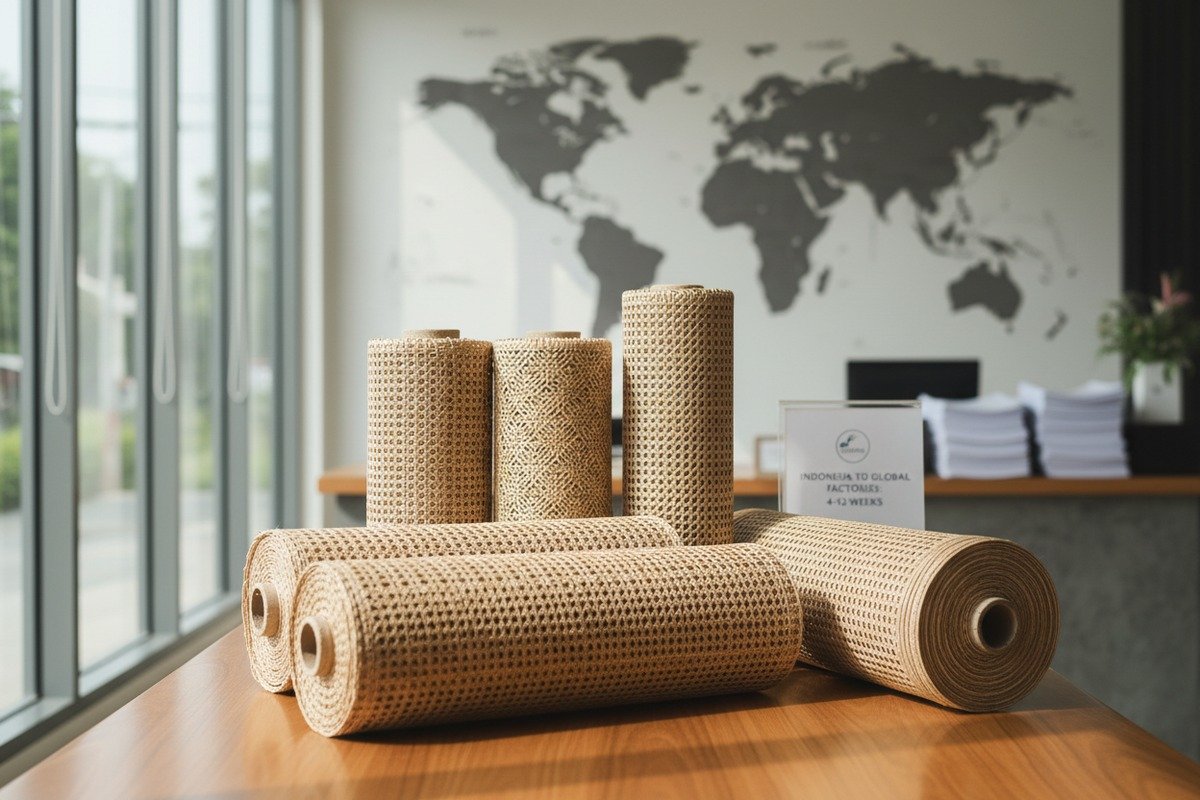
Chaque semaine, notre équipe commerciale répond à la même question des responsables des achats du monde entier : “ Combien de temps avant que ma cannage en rotin personnalisé ne soit expédié ? ” C'est une question légitime, qui mérite une réponse approfondie. Lorsque vous planifiez le lancement d'un produit ou le réapprovisionnement de vos étagères pour votre entreprise de matériaux d'ameublement, un délai vague peut vous coûter cher. Les livraisons tardives entraînent des délais manqués, des clients finaux frustrés et une perte de confiance. Le problème est que le cannage en rotin naturel 1 n'est pas comme commander une feuille de contreplaqué. Il provient de les forêts tropicales 2, passe par plusieurs étapes artisanales et traverse les océans avant d'atteindre votre entrepôt.
La cannage naturel en rotin personnalisé nécessite généralement un délai de 4 à 12 semaines, couvrant l'approvisionnement en matières premières en Indonésie, une production en plusieurs étapes comprenant le tri, le séchage, l'épissure et le tissage à la main ou à la machine, ainsi que l'expédition internationale. Les motifs standard sont expédiés plus rapidement, tandis que les largeurs sur mesure, les tissages complexes et les grands volumes prolongent le délai.
Ci-dessous, nous détaillons exactement ce qui se passe pendant ces semaines, et ce que vous pouvez faire pour accélérer les choses. Que vous commandiez 50 rouleaux ou 5 000, comprendre chaque étape vous aide à planifier plus intelligemment et à éviter les surprises coûteuses.
Combien de temps faudra-t-il pour que ma commande de sangle naturelle en rotin personnalisée soit prête à être expédiée ?
L'une des premières choses que nous disons aux nouveaux acheteurs à notre siège de Foshan est la suivante : toutes les commandes de rotin ne sont pas égales. Une commande répétée de rouleaux standard de 18 pouces à tissage ouvert passe beaucoup plus rapidement dans notre chaîne qu'un motif hexagonal personnalisé pour la première fois dans une largeur non standard. L'attente n'est pas aléatoire ; elle suit une séquence claire d'étapes de production, chacune avec son propre calendrier.
Une commande personnalisée typique passe par huit étapes de production — du tri du rotin brut à l'inspection finale de la qualité — et est prête à être expédiée en 4 à 8 semaines pour des volumes modérés. Ajoutez 2 à 4 semaines pour le fret maritime, et la plupart des acheteurs reçoivent les marchandises dans les 6 à 12 semaines suivant la confirmation de la commande.
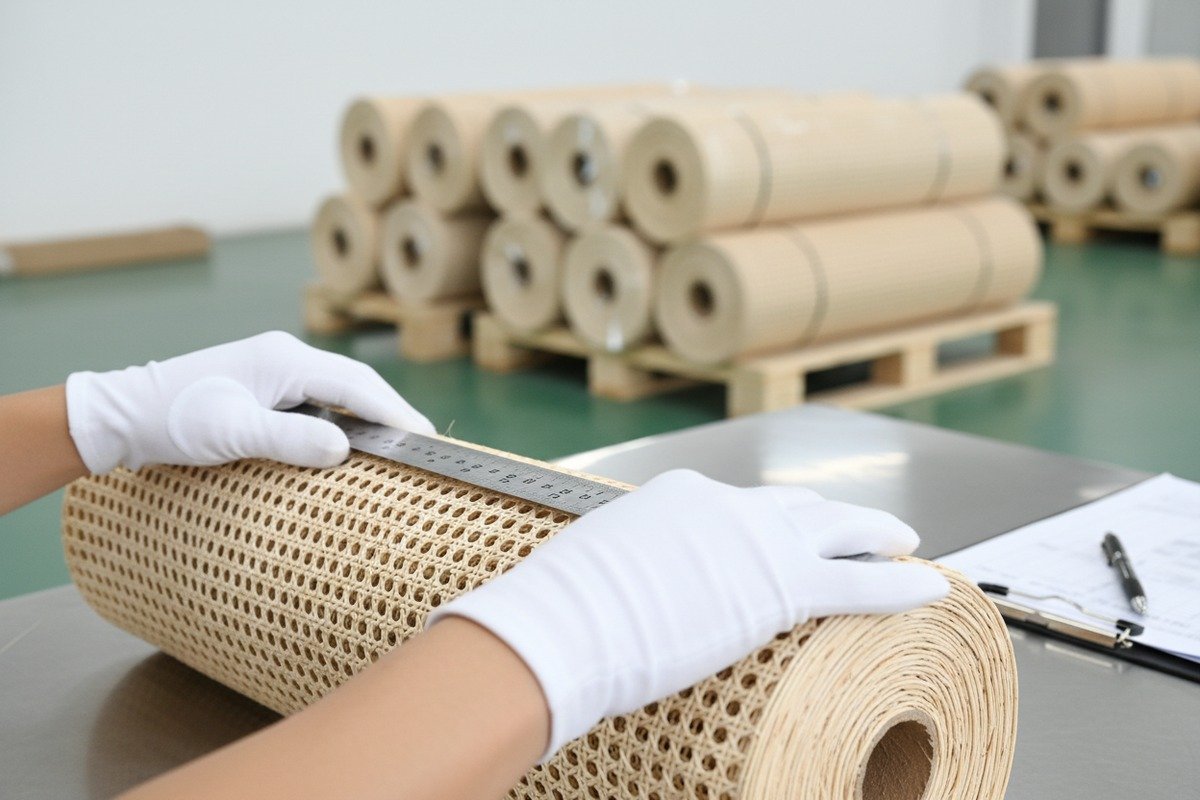
Comprendre les étapes de production
Le cannage naturel en rotin commence son voyage dans les forêts tropicales de Indonésie 3. Notre propre installation de traitement du rotin y gère les premières étapes : récolte, tri par diamètre et qualité, et nettoyage initial. Le rotin brut passe ensuite par le polissage pour enlever les nœuds et les aspérités, le pelage pour séparer la peau extérieure, et un séchage soigneux pour réduire la teneur en humidité sans craquer les fibres.
Une fois séchées, les lanières passent par l'épissure 4. Comme le rotin naturel varie en longueur, les ouvriers joignent à la main des morceaux plus courts bout à bout. Cette étape est lente mais critique : des lanières mal épissées se cassent pendant le tissage. Après l'épissure, les lanières sont prêtes pour le métier à tisser.
Le tissage lui-même se fait selon deux méthodes principales. La méthode de la machine "Flying Thread" méthode de la machine 5 gère les motifs plus simples comme le tissage carré classique ou le tissage radio à une vitesse décente. La méthode "LaHua" méthode artisanale 6 est utilisée pour les motifs complexes tels que les motifs hexagonaux ajourés ou les motifs en étoile. Un seul tisserand qualifié peut réaliser un rouleau de 16 pouces de large en environ une journée de travail. Ce point de référence est important lorsque vous passez à des centaines de rouleaux.
Calendrier de production détaillé
| Stade | Durée typique | Notes |
|---|---|---|
| Approvisionnement et tri des matières premières | 1–2 semaines | Réalisé dans notre usine en Indonésie |
| Polissage et épluchage | 2–3 jours | Retire les nodules, sépare la peau extérieure |
| Séchage | 3–5 jours | Dépend des conditions météorologiques ; séchage au four disponible |
| Épissure | 2–4 jours | Manuel ; varie selon la longueur de la bande |
| Tissage (machine) | 1 jour par rouleau | Pour les motifs carrés/radiaux standard |
| Tissage (à la main/LaHua) | 1–2 jours par rouleau | Pour les motifs hexagonaux, en étoile ou personnalisés |
| Finition et traitement | 2–3 jours | Blanchiment, anti-moisissure, inspection |
| Emballage et palettisation | 1–2 jours | Emballage en rouleaux ou en feuilles plates |
Pour une commande personnalisée de taille moyenne de 200 rouleaux, l'étape de tissage seule peut prendre 4 à 6 semaines si une petite équipe est affectée. C'est pourquoi nous affectons plusieurs tisserands en parallèle pour les commandes en gros. Une fois la production terminée, l'inspection finale de la qualité examine chaque rouleau pour l'uniformité, la tension du tissage et les défauts de surface. Les rouleaux qui échouent sont retravaillés ou remplacés, ce qui peut ajouter quelques jours supplémentaires.
L'expédition ajoute son propre calendrier
Après la production, votre commande doit encore voyager. Fret maritime 7 du sud de la Chine vers les principaux ports prend généralement 2 à 4 semaines selon la destination. Les expéditions vers les Pays-Bas ou l'Espagne durent en moyenne environ 25 jours. Les livraisons sur la côte ouest des États-Unis durent environ 18 à 22 jours. L'Australie se situe à environ 15 à 20 jours. Ce sont des estimations port à port ; le transport intérieur et le dédouanement 8 ajoutent plus de temps.
Ainsi, lorsqu'un acheteur nous demande "combien de temps", nous donnons toujours l'image complète : le temps de production plus le temps de transit. Sauter l'une ou l'autre moitié entraîne des surprises que personne ne souhaite.
Quels facteurs pourraient potentiellement retarder le délai de livraison de ma toile de rotin en vrac ?
Lorsque nous gérons les calendriers de production dans nos trois usines et plus de 30 installations partenaires à Foshan, les retards proviennent rarement d'une seule source. Ils s'accumulent. Un retard de pluie de deux jours en Indonésie se combine avec un goulot d'étranglement dans l'épissage, qui entre ensuite en collision avec une pénurie de conteneurs d'expédition. Les acheteurs qui comprennent ces points de risque négocient de meilleurs délais et évitent les mauvaises surprises.
Les commandes en gros de cannage en rotin font face à des retards provenant de plusieurs sources : qualité incohérente des matières premières nécessitant un tri supplémentaire, perturbations météorologiques pendant la récolte et le séchage, exigences complexes de motifs personnalisés, rejets de contrôle qualité, et problèmes de logistique internationale tels que la congestion portuaire, les pénuries de conteneurs et les blocages douaniers.
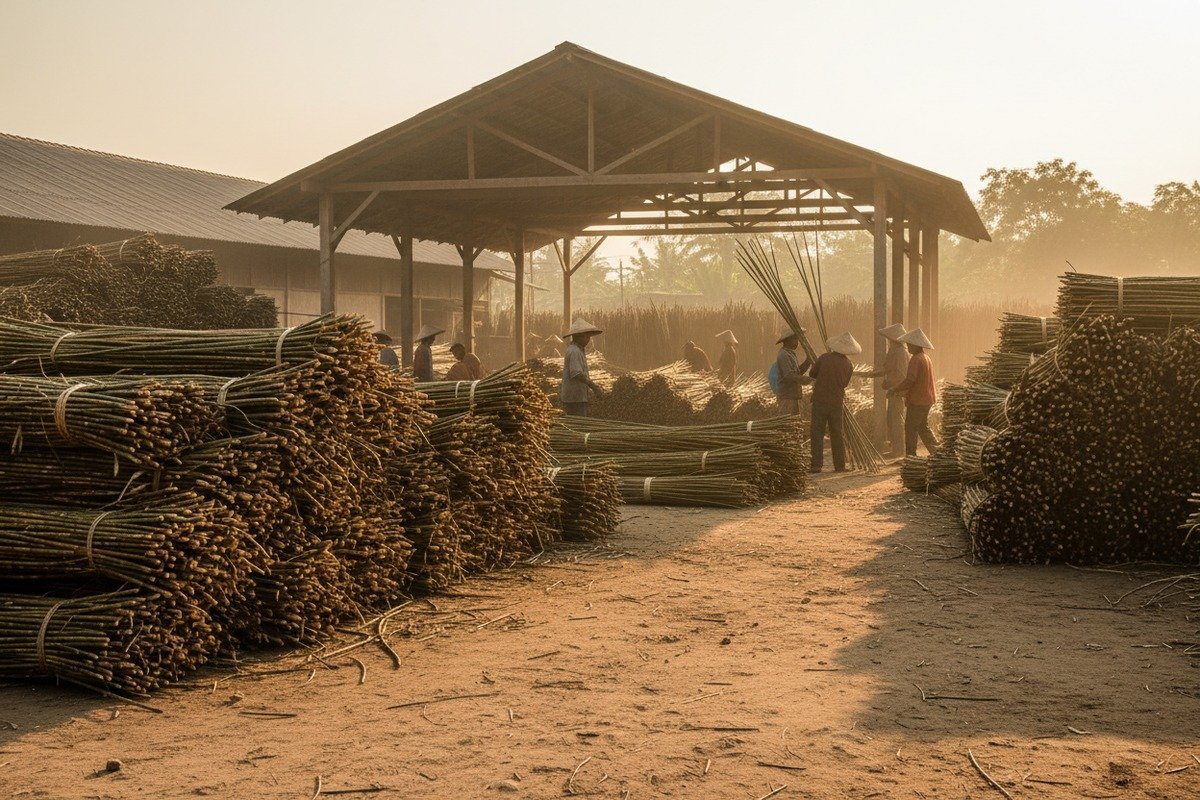
Variabilité des matières premières
Le rotin naturel n'est pas un produit fabriqué en usine. Chaque tige de rotin pousse différemment. Les diamètres varient. Les longueurs diffèrent. Certaines pièces ont plus de nœuds que d'autres. Notre équipe en Indonésie trie le rotin brut par qualités avant le traitement. Lorsqu'une récolte particulière donne plus de matière de Grade B que prévu, il faut plus de temps pour accumuler suffisamment de bandes de Grade A pour une commande premium. Ce goulot d'étranglement de tri est la cause la plus fréquente des retards précoces.
L'épissure complique le problème. Des bandes plus courtes signifient plus de joints par rouleau. Chaque joint est fait à la main. Pour une commande de 200 rouleaux, même une légère baisse de la longueur moyenne des bandes peut ajouter des jours de travail d'épissure.
Perturbations météorologiques et saisonnières
La récolte du rotin a lieu dans les forêts tropicales. La saison des pluies en Indonésie (environ de novembre à mars) rend l'accès aux forêts plus difficile et ralentit les temps de séchage. Même avec le séchage au four disponible, l'excès d'humidité dans le rotin fraîchement récolté nécessite un traitement plus long. Nous avons vu les temps de séchage passer de 3 jours à plus d'une semaine pendant la haute saison des pluies.
Complexité de la personnalisation
Tous les motifs ne se tissent pas à la même vitesse. Voici une comparaison :
| Type de motif | Méthode de tissage | Vitesse relative | Risque de retard |
|---|---|---|---|
| Tissage carré / radial | Machine (fil volant) | Rapide | Faible |
| Tissage serré en panier | Machine + finition à la main | Moyen | Moyen |
| Tissage hexagonal ajouré | Main (LaHua) | Lent | Élevé |
| Tissage étoile / octogonal | Main (LaHua) | Lent | Élevé |
| Largeur personnalisée (non standard) | Réglage manuel | Lent | Élevé |
Si vous demandez un motif hexagonal dans une largeur non standard de 20 pouces, le tisserand doit recalibrer son métier et éventuellement créer un gabarit personnalisé. Ce temps d'installation empiète sur les jours de production.
Rejets du contrôle qualité
Notre équipe d'inspection vérifie chaque rouleau avant l'emballage. Elle recherche les bandes cassées, la tension inégale, l'incohérence des couleurs et les taches de moisissure. Pour les commandes standard, le taux de rejet se situe autour de 3 à 5 %. Pour les tissages personnalisés complexes, il peut atteindre 8 à 10 % car les motifs sont plus difficiles à exécuter de manière cohérente. Les rouleaux rejetés retournent pour être retravaillés ou remplacés, ajoutant 2 à 5 jours.
Variables de logistique et d'expédition
Après la production, la logistique mondiale présente ses propres risques. Pénuries de conteneurs 9 sont devenues plus fréquentes depuis 2020. La congestion portuaire dans les grands hubs comme Shanghai ou Rotterdam peut ajouter une semaine ou plus. Les inspections douanières pour les produits à base de bois et de plantes déclenchent parfois des contrôles phytosanitaires 10 qui retiennent les expéditions pendant plusieurs jours. Les grands rouleaux volumineux de rotin tressé nécessitent également une palettisation soignée pour éviter les dommages, et les rouleaux surdimensionnés peuvent ne pas s'adapter aux configurations de conteneurs standard sans arrangements spéciaux.
Lacunes de communication
Celle-ci est souvent négligée. Lorsqu'un acheteur met une semaine à approuver un échantillon de pré-production ou à confirmer un changement de motif, cette semaine est ajoutée directement au délai de livraison. D'après notre expérience d'exportation vers les États-Unis, l'Australie et l'Europe, les projets les plus rapides sont ceux où l'acheteur désigne une personne de contact dédiée qui répond dans les 24 heures.
Comment puis-je réduire le délai de livraison de mes commandes de matériaux en rotin sous marque de distributeur ?
Nous avons travaillé avec des responsables des achats, de la Thaïlande aux Pays-Bas, qui avaient besoin de livraisons plus rapides sans sacrifier la qualité. Au fil des ans, notre équipe a identifié un ensemble clair de stratégies qui réduisent systématiquement de plusieurs jours, voire de plusieurs semaines, le délai d'exécution total. L'idée clé : la plupart des gains de temps se produisent avant même le début de la production.
Pour raccourcir le délai de livraison, les acheteurs devraient choisir des motifs et des largeurs de tissage standard, approuver rapidement les échantillons, passer des commandes pendant les saisons creuses, maintenir des prévisions continues avec leur fournisseur et envisager de conserver des stocks de sécurité pour les SKUs populaires. La consolidation des commandes en moins de livraisons plus importantes réduit également le temps logistique par unité.
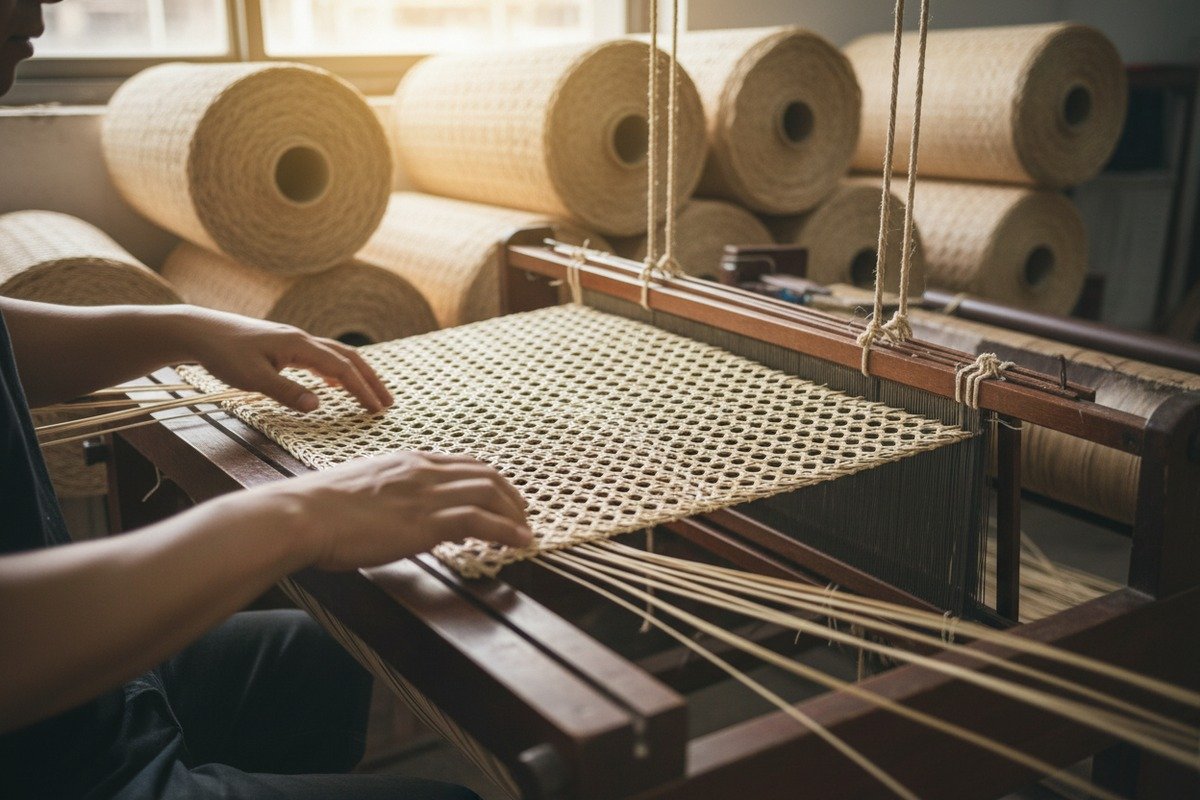
Choisissez le standard plutôt que le sur mesure lorsque c'est possible
Le moyen le plus rapide de recevoir vos marchandises est de commander des motifs et des largeurs que votre fournisseur produit déjà régulièrement. Dans notre usine, le tissage carré standard en rouleaux de 16 ou 18 pouces est toujours à un stade de production. Choisir une option standard peut réduire votre attente de 1 à 3 semaines par rapport à une conception entièrement sur mesure.
Si vous avez besoin d'un motif personnalisé, essayez de le verrouiller en tant que SKU récurrent. Une fois que nous avons configuré les gabarits et formé les tisserands à votre conception spécifique, les commandes répétées sont beaucoup plus rapides que la première production.
Accélérez le processus d'approbation
Chaque jour passé à attendre l'approbation d'un échantillon est un jour où votre créneau de production reste inactif. Voici des étapes pratiques :
- Demandez des maquettes numériques ou des photos avant l'expédition des échantillons physiques.
- Désignez un seul décideur habilité à approuver les échantillons.
- Définissez une fenêtre de révision interne de 48 heures pour les échantillons.
- Utilisez des appels vidéo pour examiner les échantillons en temps réel plutôt que d'attendre le courrier.
Nous avons vu des acheteurs réduire leur délai de deux semaines simplement en approuvant les échantillons en 3 jours au lieu de 10.
Planifiez les commandes en fonction des périodes saisonnières
| Placement de la commande | Saison en Indonésie | Impact attendu sur le délai de livraison |
|---|---|---|
| Avril – Juin | La saison sèche commence | Délais de livraison les plus courts ; meilleur flux de matières premières |
| Juillet – Septembre | Pic de la saison sèche | Séchage rapide ; disponibilité élevée des tisserands |
| Octobre – Novembre | Transition vers la saison humide | Modéré ; prévoir des jours tampons |
| Décembre – Mars | Saison des pluies | Délais de livraison les plus longs ; retards de séchage probables |
Passer votre commande en avril ou mai vous donne la meilleure chance de production rapide. Le rotin brut circule régulièrement depuis les forêts indonésiennes, le séchage est rapide et la capacité de l'usine est généralement disponible avant la période de pointe du troisième trimestre.
Maintenir une prévision glissante
Si vous partagez avec nous une prévision de demande sur 3 ou 6 mois, nous pouvons pré-positionner les matières premières et réserver la capacité de tissage. Ceci est particulièrement utile pour les acheteurs qui commandent les mêmes modèles de manière répétée. Une prévision glissante transforme votre délai de livraison de réactif à proactif.
Envisager un stock de sécurité pour les SKUs clés
Pour vos modèles de tissage en rotin les plus vendus, conserver un petit stock tampon dans votre entrepôt local vous protège des surprises de la chaîne d'approvisionnement. Même 2 à 4 semaines de stock de sécurité peuvent combler le fossé lors d'un retard de production ou d'une perturbation d'expédition. Nous aidons plusieurs de nos acheteurs de longue date aux Pays-Bas et en Australie à gérer cela en étalant les expéditions tout au long de l'année.
Consolider les expéditions
L'expédition de cinq petites commandes séparément coûte plus cher en temps et en argent qu'une seule expédition consolidée. Regrouper votre commande de rotin tressé avec d'autres produits en rotin — tels que des poteaux en rotin, des lanières d'écorce de rotin ou des panneaux tressés — dans un seul conteneur réduit le temps de fret et le traitement douanier par unité.
Dois-je ajuster ma planification des stocks en fonction des délais de livraison saisonniers pour le rotin naturel ?
Lorsque nous examinons les données de commande annuelles sur nos marchés d'exportation — de l'Arabie saoudite à l'Australie — un schéma clair émerge. Les acheteurs qui ignorent la saisonnalité finissent par passer des commandes urgentes en décembre et paient des tarifs de fret premium pour respecter les délais. Les acheteurs qui planifient en fonction du calendrier du rotin naturel économisent de l'argent et du stress. La question n'est pas de savoir si la saisonnalité est importante. C'est de savoir à quel point elle devrait influencer votre calendrier d'achat.
Oui, ajuster la planification des stocks pour les délais de production saisonniers du rotin est essentiel. La saison des pluies en Indonésie (novembre-mars) ralentit la récolte et le séchage, prolongeant la production de 2 à 4 semaines. Les acheteurs avisés anticipent leurs commandes aux deuxième et troisième trimestres, constituent des stocks de sécurité avant la saison des pluies et utilisent des prévisions glissantes pour maintenir un approvisionnement constant tout au long de l'année.
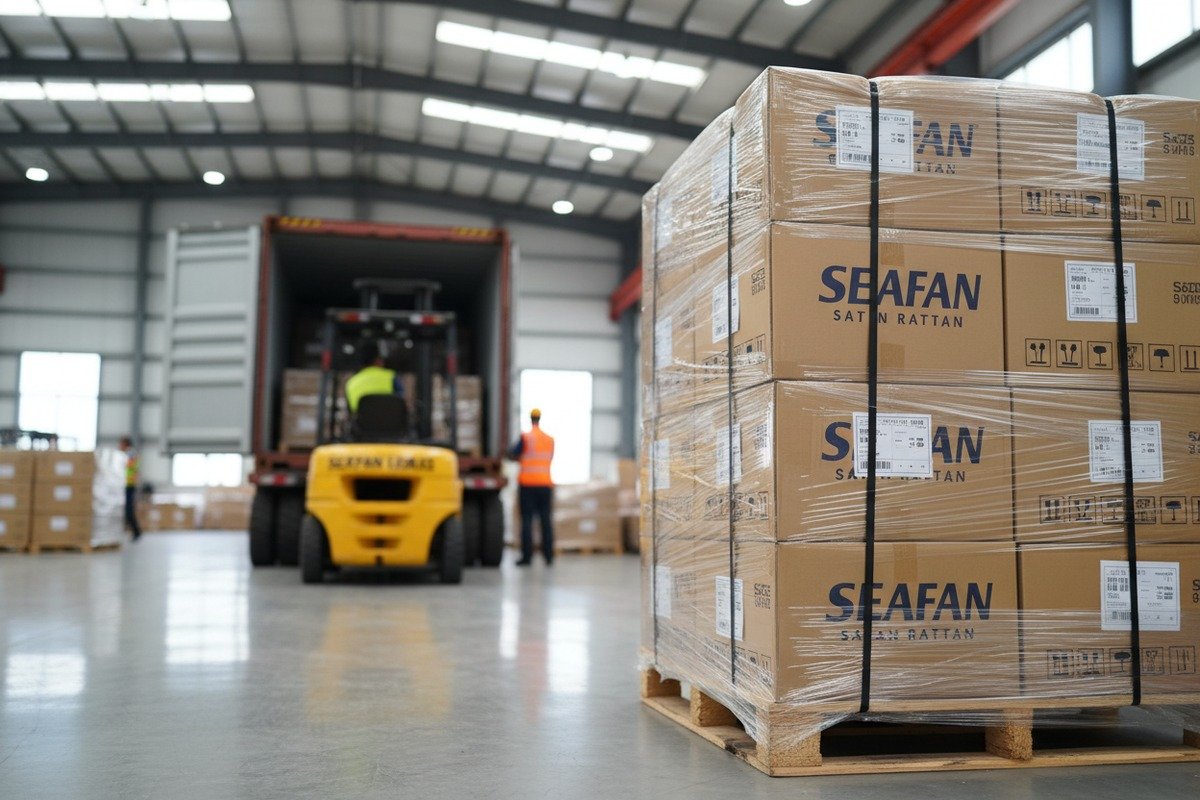
La réalité saisonnière du rotin naturel
Contrairement aux matériaux synthétiques produits dans des usines à climat contrôlé, le rotin naturel dépend de la météo. La plante de rotin pousse dans les forêts tropicales d'Indonésie, où la saison des pluies apporte de fortes précipitations de novembre à mars environ. Pendant cette période, les sentiers forestiers deviennent boueux et parfois impraticables. La récolte ralentit. Le rotin fraîchement coupé absorbe plus d'humidité, nécessitant des cycles de séchage plus longs. Même notre capacité de séchage au four a des limites pendant les pics d'humidité.
L'effet en aval est réel. Lorsque notre installation en Indonésie envoie moins de matières premières à nos usines de Foshan, les files d'attente de production s'allongent. Les commandes passées en décembre prennent souvent 2 à 4 semaines de plus que des commandes identiques passées en mai.
Comment la saisonnalité affecte votre entreprise
Prenons l'exemple d'un grossiste de matériaux d'ameublement aux États-Unis qui vend du rotin tressé à de petits fabricants de meubles et à des détaillants de bricolage. Leur saison de vente la plus forte s'étend de mars à août, lorsque les propriétaires entreprennent des projets de rénovation et de décoration. Si ce grossiste attend jusqu'en janvier pour passer une commande en gros, il commande pendant la pire fenêtre de production possible — et s'attend à une livraison pendant ses mois de vente les plus chargés.
L'approche la plus intelligente : passez votre commande principale en avril ou mai pour une livraison en juillet. Ensuite, passez une deuxième commande, plus petite, en août pour une livraison en novembre afin de couvrir la fin de la demande et la saison des cadeaux de fin d'année.
Un cadre de commande saisonnier pratique
| Trimestre | Action recommandée | Justification |
|---|---|---|
| T1 (janv.–mars) | Examiner le stock ; passer de petites commandes d'appoint | Saison des pluies en Indonésie ; délais de livraison plus longs |
| T2 (avr.–juin) | Passer les commandes principales en gros | Début de la saison sèche ; fenêtre de production la plus rapide |
| T3 (juil.–sept.) | Passer les commandes secondaires ; confirmer les besoins du T4 | Pleine saison sèche ; idéal pour les séries personnalisées |
| T4 (oct.–déc.) | Recevoir les expéditions ; conserver un stock de sécurité | Transition vers la saison des pluies ; éviter les nouvelles grosses commandes |
Naturel vs. Synthétique : Une comparaison saisonnière
Certains acheteurs envisagent de passer au rotin PE synthétique pour une partie de leur gamme de produits afin d'éviter la variabilité saisonnière. C'est une stratégie valable pour les meubles d'extérieur, où le matériau synthétique offre de toute façon une meilleure résistance aux intempéries. Mais pour les meubles d'intérieur et la décoration haut de gamme, la texture et la chaleur du rotin naturel restent irremplaçables. La plupart de nos acheteurs de longue date maintiennent les deux gammes : le naturel pour les produits haut de gamme et le synthétique pour les gammes d'extérieur ou économiques.
Le message clé : ne laissez pas les retards saisonniers vous pousser à changer de matériau si vous ne le souhaitez pas. Planifiez plutôt vos achats de rotin naturel en fonction du calendrier. Privilégiez la saison sèche. Constituez un stock tampon. Partagez vos prévisions avec votre fournisseur afin qu'il puisse pré-positionner les matières premières.
La communication est votre meilleur atout
À notre bureau de Foshan, nous envoyons des mises à jour trimestrielles sur la capacité saisonnière à nos acheteurs réguliers. Ces mises à jour comprennent les délais de livraison estimés pour les mois à venir, la disponibilité des matières premières et toute perturbation logistique connue. Les acheteurs qui lisent ces mises à jour et ajustent leurs commandes en conséquence ne connaissent presque jamais de ruptures de stock. Ceux qui les ignorent finissent souvent par demander un fret aérien coûteux en février.
Si votre fournisseur actuel n'offre pas de conseils saisonniers, demandez-les. Un bon fournisseur de rotin devrait être en mesure de vous dire, en langage clair, quand commander et quand attendre.
Conclusion
Comprendre les délais de livraison pour les cannages en rotin naturel personnalisés vous donne le contrôle de votre chaîne d'approvisionnement. Planifiez en fonction des saisons indonésiennes, choisissez des motifs standard lorsque possible, approuvez rapidement les échantillons et maintenez une communication ouverte avec votre fournisseur. Ces étapes simples transforment les attentes imprévisibles en délais gérables et maintiennent votre entreprise en bon état de marche.
Notes de bas de page
1. Wikipédia est une source faisant autorité expliquant le cannage et le rotin dans le mobilier. ↩︎
2. Fournit une définition générale et les caractéristiques des forêts tropicales. ↩︎
3. Fournit des informations officielles sur le pays d'Indonésie. ↩︎
4. Explique le concept général de l'épissure et ses applications. ↩︎
5. Décrit les principes et les types de machines à tisser industrielles. ↩︎
6. Explique le processus traditionnel et l'importance du tissage à la main. ↩︎
7. Définit le transport maritime et son rôle dans le commerce mondial. ↩︎
8. Explique le processus obligatoire pour les marchandises entrant ou sortant d'un pays. ↩︎
9. Discute des causes et de l'impact des pénuries mondiales de conteneurs d'expédition. ↩︎
10. Explique les exigences et le but de la certification phytosanitaire pour les produits végétaux. ↩︎

 English
  Español de México
  العربية
  Deutsch
  Français
  Русский