
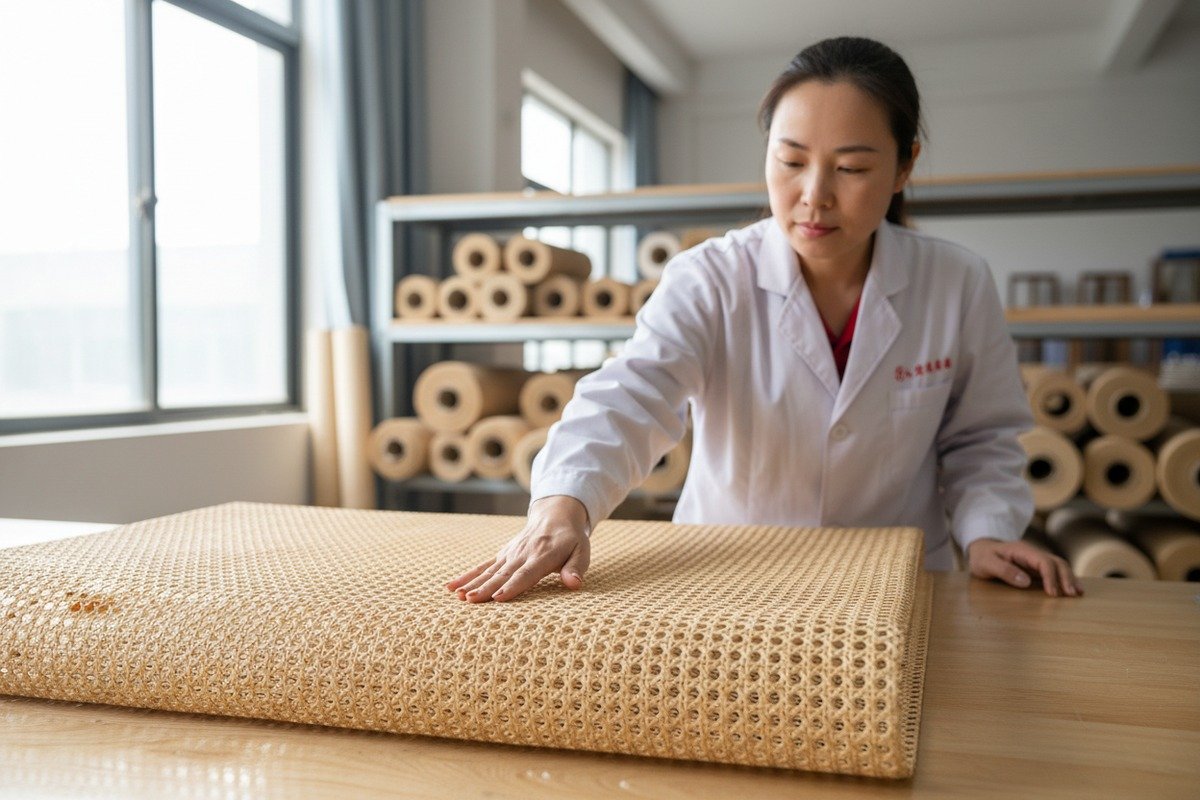
Chaque semaine, notre équipe de contrôle qualité 1 à Foshan inspecte des milliers de mètres de cannage rotin 2 avant qu'il ne soit expédié dans le monde entier. Le problème ? De nombreux acheteurs reçoivent un matériau qui ne ressemble en rien à ce qu'ils ont commandé. Sans savoir comment évaluer visuellement la qualité, vous risquez de payer des prix élevés pour du rotin médiocre.
Vous évaluez visuellement la qualité du cannage en rotin naturel en examinant cinq facteurs clés : uniformité et constance de l'épaisseur des lanières, teinte et lustre naturel, douceur de la surface et absence de défauts, densité du tissage et régularité des trous, et flexibilité sans craquelures. Les qualités supérieures présentent un matériau lisse, de teinte uniforme et tissé serré.
Ci-dessous, je vais vous guider à travers chaque point de contrôle visuel afin que vous puissiez évaluer en toute confiance toute sangle en rotin qui arrive à votre porte. Que vous soyez un acheteur d'usine de meubles ou un grossiste de matériaux, ces compétences vous feront économiser de l'argent et des maux de tête.
Comment puis-je identifier la cohérence des couleurs et la brillance naturelle de ma sangle en rotin de qualité A ?
L'une des premières choses que notre équipe de tri vérifie sur le site de production en Indonésie est la couleur. Lorsqu'un rouleau de sangle semble tacheté ou terne dès la sortie de l'emballage, nous savons que quelque chose s'est mal passé en amont. La couleur raconte une histoire sur la qualité des matières premières et le soin apporté au traitement. matériau en rotin naturel 3
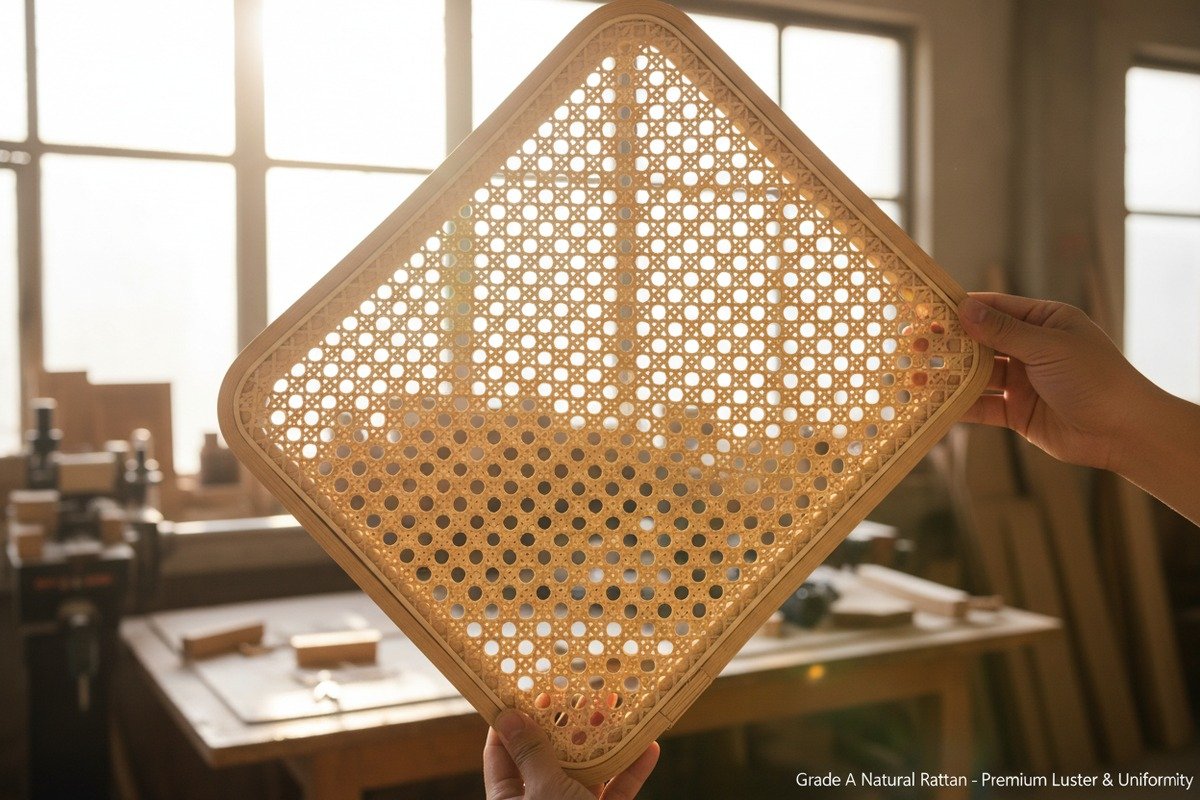
Le cannage en rotin de qualité A présente une teinte chaude et uniforme, allant du miel à la paille, sur toute la feuille, avec un subtil lustre naturel. Vous devriez observer une variation de couleur minimale entre les lamelles individuelles, aucune tache sombre ou zone grise, et un éclat doux qui réfléchit la lumière uniformément plutôt qu'il n'apparaît plat ou crayeux.
Que signifie réellement la "cohérence des couleurs" ?
La cohérence des couleurs ne signifie pas que chaque bande est identique. Le rotin est un matériau naturel. Une légère variation tonale est normale et même souhaitable. Elle prouve que le matériau est authentique. Mais le mot clé est "légère". Dans les sangles de qualité A ou AAA, les bandes restent dans une gamme de couleurs étroite. Pensez-y comme une ressemblance familiale plutôt qu'un clone.
Lorsque vous déroulez votre expédition, tenez-la d'abord à bout de bras. Votre œil devrait voir un ton unifié, pas un patchwork. Ensuite, rapprochez-vous. Les bandes individuelles peuvent varier d'une nuance, mais aucune ne devrait ressortir comme étant manifestement plus foncée ou plus claire.
Le test de lustre
Le lustre naturel provient de la peau extérieure du palmier rotin 4. Lorsque le rotin est correctement pelé, aminci et séché, cette peau conserve un léger éclat. Il n'est pas brillant comme une laque. Il ressemble plutôt à la douce lueur d'un bois bien entretenu.
Voici ce qu'il faut rechercher :
- Tenez la feuille à un angle de 45 degrés sous la lumière naturelle.
- Inclinez-la lentement. Vous devriez voir une subtile réflexion de lumière se déplacer sur la surface.
- Si la surface semble plate et mate, sans aucune réflexion, le matériau peut être trop sec, mal traité ou de qualité inférieure.
Indicateurs de couleur par qualité
| Caractéristique de couleur | Grade AAA/A | Qualité B | Grade C/D |
|---|---|---|---|
| Ton général | Miel chaud, jaune paille | Brun clair avec une certaine variation | Terne, grisâtre ou inégal |
| Variation bande à bande | Minimal, reste dans une seule gamme de teintes | Modéré, quelques bandes se démarquent | Élevé, patchwork évident |
| Taches sombres | Aucune ou extrêmement rare | Petites taches occasionnelles | Fréquent, dispersé |
| Lustre | Doux éclat naturel | Léger éclat, quelques zones ternes | Plat, pas d'éclat visible |
| Options blanchies | Blanc-crème uniforme et propre | Légère jaunisse par endroits | Blanchiment tacheté et inégal |
Drapeaux rouges courants de couleur
Méfiez-vous de ces signes avant-coureurs. Les tons gris ou cendrés signifient souvent que le rotin a été stocké dans des conditions humides ou récolté trop tard. Les teintes vertes suggèrent un séchage insuffisant. Les taches noires peuvent indiquer de la moisissure ou des dommages causés par des insectes. Et si la couleur semble artificiellement uniforme avec un éclat semblable à du plastique, vous pourriez avoir affaire à du rotin synthétique se faisant passer pour du naturel.
D'après notre expérience d'exportation dans plus d'une douzaine de pays, nous avons constaté que les acheteurs en Europe et aux États-Unis ont tendance à préférer les tons chauds et naturels de miel du matériau de qualité A non blanchi. Les acheteurs en Asie du Sud-Est préfèrent parfois les options blanchies pour la teinture ultérieure. Dans tous les cas, la norme de cohérence reste la même.
Quels défauts de surface spécifiques dois-je rechercher lors de la vérification de la qualité de mon matériau en rotin ?
Lorsque nous effectuons nos contrôles qualité à l'usine, l'inspection de surface est l'endroit où la plupart des lots sont déclassés. Un rouleau peut avoir une couleur parfaite mais échouer quand même 9. , de légers décalages de couleur et des variations de texture occasionnelles sont presque entièrement masqués une fois que vous appliquez une teinture, une laque ou une peinture. Si votre usine finit le tressage après l'installation, le grade B est presque identique au grade A sur le produit fini. 5. Savoir quoi chercher ici sépare les acheteurs expérimentés de ceux qui se retrouvent avec des retours.
Lors de la vérification de la qualité du cannage en rotin, recherchez les fissures, les fentes, les zones rugueuses, les nœuds visibles, les trous d'insectes, les taches de moisissure, un excès de duvet et des épissures mal intégrées. Le matériau de qualité A a une surface lisse et propre avec presque aucune imperfection, tandis que les qualités inférieures présentent une rugosité croissante, des nœuds et des cassures de surface qui compromettent à la fois l'apparence et la durabilité.
Le test de douceur de surface
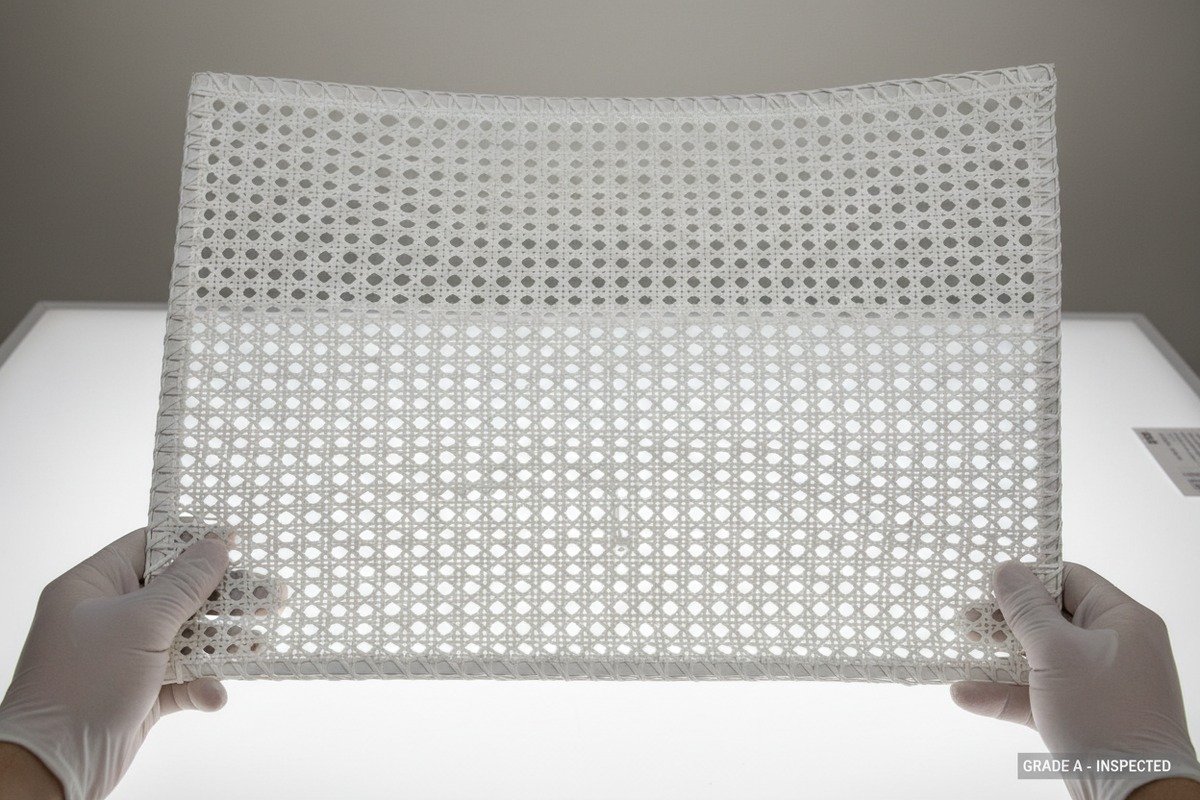
Passez légèrement le bout des doigts sur la surface de la sangle. Le matériau de qualité A doit être lisse et uniforme. Vous ne devriez sentir aucune écharde ni aucune arête vive. Les bandes doivent avoir une épaisseur constante. Si vous sentez des crêtes, des bosses ou des zones rugueuses, le matériau n'a pas été correctement amincie ou poncé pendant le traitement.
Dans notre usine de traitement indonésienne, le l'étape de calandrage 6 est essentielle. Les ouvriers passent les feuilles tissées sur une flamme contrôlée pour brûler le duvet fin et les fibres semblables à des cheveux. Cette étape est ce qui donne à la sangle de qualité A sa surface propre et raffinée. Si vous l'ignorez ou la bâclez, vous obtenez un produit flou et rugueux.
Catégories de défauts et sévérité
Tous les défauts ne sont pas égaux. Voici comment nous les classons :
| Defect Type | Description | Impact sur la qualité | Acceptable en qualité A ? |
|---|---|---|---|
| Fissures capillaires | Minuscules fissures de surface le long du fil | Mineur si rare | Seulement 1-2 par mètre carré |
| Fentes profondes | Fissures sur toute l'épaisseur de la bande | Majeur | Non |
| Zones rugueuses | Zones où le pelage de surface est inégal | Modéré | Non |
| Nœuds | Nœuds visibles de la plante de rotin | Mineur si lisse | Uniquement si intégré en douceur |
| Trous d'insectes | Petits trous ronds causés par des insectes xylophages | Majeur | Non |
| Moisissure/Taches sombres | Décoloration due à des dommages causés par l'humidité | Majeur | Non |
| Duvet/Poils de fibres | Fines fibres se dressant à la surface | Mineur | Non, doit être brûlé proprement |
| Épissures/Joints | Points où les bandes sont connectées | Mineur si bien fait | Maximum 1-2, presque invisibles |
| Effilochage des bords | Fibres lâches sur les bords coupés des feuilles | Mineur | Minimal aux bords du rouleau uniquement |
Comment effectuer un scan visuel approprié
Voici l'approche étape par étape utilisée par nos inspecteurs QC :
- Déroulez au moins deux mètres de la sangle sur une surface propre et plane.
- Tenez-vous directement au-dessus et scannez lentement toute la largeur, de gauche à droite.
- Mettez-vous à la hauteur des yeux de la surface. Cet angle révèle les bosses et les crêtes que vous manquez d'en haut.
- Tenez une lampe de poche à un angle bas sur la surface. Les ombres mettront en évidence les défauts en relief, les fissures ou les rugosités.
- Retournez la feuille. Vérifiez également le verso. Certains défauts n'apparaissent que sur une face.
- Pour les expéditions en vrac, échantillonnez au moins trois rouleaux provenant de différentes parties de la palette.
La connexion flexibilité
Les défauts de surface prédisent souvent une faiblesse structurelle. Une bande avec des fissures en surface se cassera lorsqu'elle sera pliée. Une bande avec des dommages causés par des insectes a des fibres internes compromises. L'inspection de surface n'est donc pas seulement cosmétique. Elle vous indique combien de temps la sangle durera dans un meuble fini.
Nous disons toujours à nos clients grossistes d'effectuer un test de pliage rapide parallèlement au contrôle visuel. Prenez une seule bande sur le bord. Pliez-la doucement en forme de U. La qualité A se plie en douceur sans bruit de craquement. La qualité B peut montrer une légère résistance. La qualité C ou D craquera ou se fendra.
Comment puis-je juger de la précision du tissage et de l'uniformité des trous dans ma livraison de rotin en vrac ?
Après des années d'expédition de cannage en rotin vers des usines de meubles en Europe, aux États-Unis et au Moyen-Orient, nous avons appris que la qualité du tissage est le point où se concentrent le plus les plaintes des acheteurs. précision du tissage 7 Les problèmes de couleur et de surface sont faciles à repérer. Mais les problèmes de tissage ? Ils apparaissent plus tard, lors de l'installation, quand il est trop tard.
Jugez la précision du tissage en vérifiant trois éléments : la taille cohérente des trous sur toute la feuille, des rangées droites et parallèles sans dérive, et une tension uniforme sans affaissement ni zones trop tendues. Dans les sangles de qualité, chaque ouverture hexagonale, carrée ou octogonale doit être identique en forme et en taille, et les bandes doivent se croiser à des angles nets et réguliers.
Pourquoi l'uniformité des trous est importante
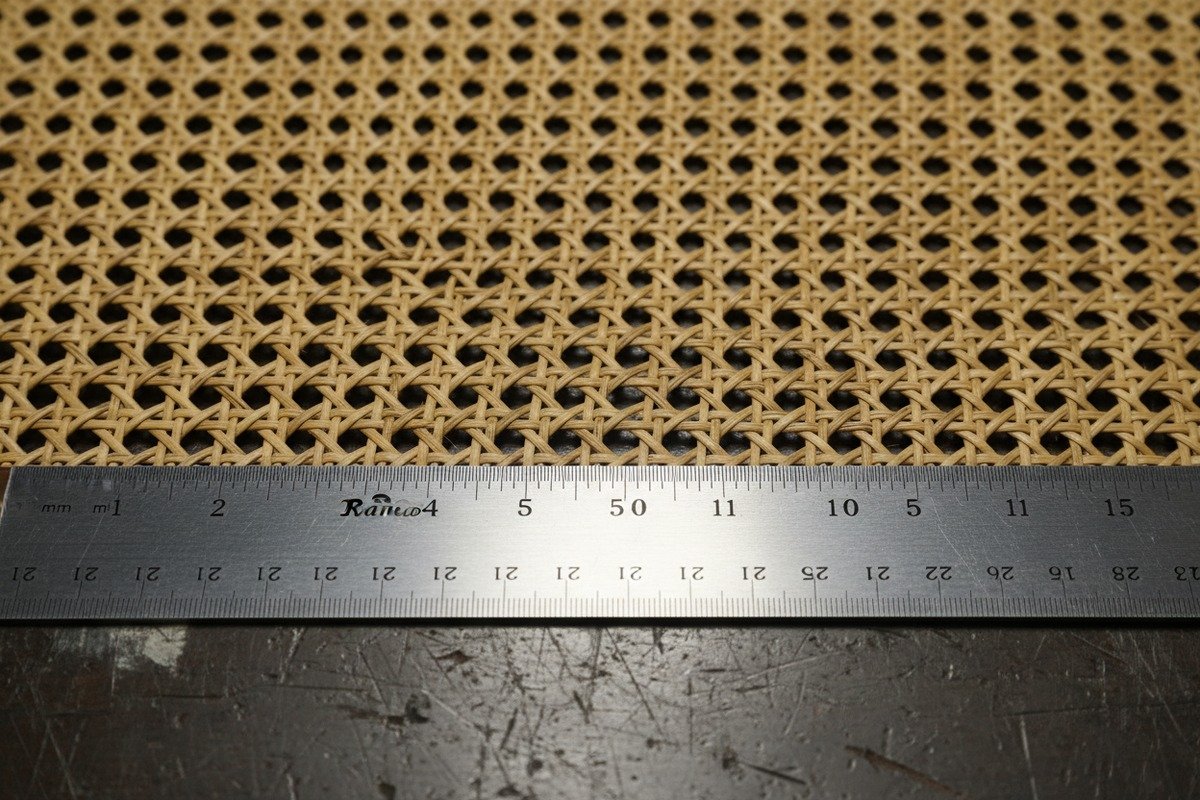
Dans la plupart des motifs de cannage en rotin, qu'ils soient classiques natte ouverte hexagonale 8, tissage radio, ou tissage serré, les trous font le motif. Ils définissent l'apparence. Si les trous varient en taille et en forme, la pièce finie a l'air négligée. Pour les usines de meubles qui fabriquent des chaises et des têtes de lit haut de gamme, des trous inégaux signifient des produits rejetés et un travail perdu.
Voici un moyen pratique de vérifier. Posez la feuille à plat. Choisissez un trou au centre. Comparez-le maintenant aux trous sur les bords, les coins et l'extrémité opposée. Ils devraient se ressembler comme des copies. Si les trous des bords sont étirés ou comprimés par rapport au centre, la tension du tissage était incohérente.
Mesurer la précision du tissage
Vous n'avez pas besoin d'outils sophistiqués. Une simple règle et vos yeux font la majeure partie du travail.
| Point de contrôle | Ce qu'il faut mesurer | Norme de qualité A | Drapeau rouge |
|---|---|---|---|
| Taille des trous | Diamètre ou largeur des ouvertures | Cohérent dans une variance de 1 mm | La variance dépasse 2 mm |
| Droiture des rangées | Alignement des rangées horizontales/verticales | Les rangées sont droites et parallèles | Dérive ou ondulation visible |
| Angles d'intersection | Là où les bandes se croisent | Angles nets et constants | Chevauchement, regroupement ou écarts |
| Espacement des rangées | Distance entre les bandes parallèles | Uniforme partout | Espaces irréguliers |
| Finition des bords | Comment le tissage se termine sur les bords | Bord net et sécurisé | Bandes lâches, effilochées |
| Tension | Tension sur la feuille | Souplesse uniforme et légère à la pression | Zones affaissées ou zones trop rigides |
Vérifications spécifiques au motif
Différents motifs de tissage présentent des défis de précision différents. Le cannage hexagonal ouvert (l'aspect classique des chaises en cannage) exige une symétrie parfaite de chaque hexagone. Si une seule lanière se déplace, toute la rangée se déforme.
Le tissage serré (tissage en panier serré) nécessite une largeur de lanière constante car il n'y a pas de trous pour masquer les variations. Une lanière plus épaisse ou plus fine brise le rythme visuel.
Le tissage radial, avec son motif d'éventail rayonnant, nécessite un espacement angulaire précis. Des angles inégaux créent des éventails asymétriques qui paraissent amateurs.
Le test de lumière pour la qualité du tissage
L'une de nos astuces de contrôle qualité les plus fiables est le test de lumière. Tenez la feuille de cannage contre une fenêtre ou une source de lumière vive. Regardez à travers depuis le côté arrière. Chaque ouverture devrait laisser passer à peu près la même quantité de lumière. Si certains trous sont visiblement plus grands ou plus petits, ou si vous voyez des zones bloquées où les lanières se regroupent, la qualité du tissage est inférieure à la qualité A.
Ce test révèle également les épissures et les jonctions cachées. Lorsqu'une lanière se termine et qu'une nouvelle commence, le chevauchement doit être minimal et serré. Des épissures négligées créent des zones épaisses qui déforment les trous voisins.
Stratégie d'échantillonnage pour les expéditions en vrac
Pour les grosses commandes, vous ne pouvez pas inspecter chaque rouleau. Mais un échantillonnage intelligent permet de détecter les problèmes tôt. Nous recommandons d'inspecter au moins 10% des rouleaux dans toute expédition. Prélevez des échantillons du dessus, du milieu et du bas de la palette. Déroulez au moins un mètre complet de chaque rouleau échantillonné. Vérifiez le début, le milieu et la fin car la qualité peut varier à l'intérieur d'un même rouleau si la tension du tisserand a changé pendant la production.
Puis-je reconnaître visuellement la différence entre le rotin indonésien haut de gamme et les alternatives économiques ?
C'est une question que nous entendons constamment de la part de nouveaux clients grossistes. Ils voient deux rouleaux côte à côte lors d'un salon professionnel. Les prix diffèrent de 40 %. Les deux ressemblent à du rotin. Les deux se sentent comme du rotin. Alors, comment les distinguer ? Ayant exploité notre propre usine de traitement du rotin en Indonésie pendant des années, nous avons développé un œil averti pour les différences.
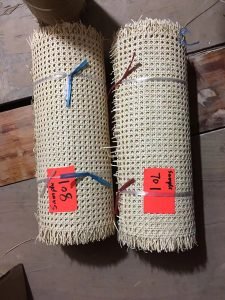
Oui, vous pouvez distinguer le rotin indonésien haut de gamme des alternatives économiques grâce à des indices visuels et tactiles. Le véritable rotin indonésien de première qualité a une teinte miel chaude, un grain fin et serré, une densité élevée qui produit un son solide lorsqu'on le tapote, une flexibilité souple sans craquer, et une légère odeur boisée. Les alternatives économiques apparaissent généralement plus ternes, sont plus légères et manquent de cette combinaison de caractéristiques.
Le facteur d'origine
L'Indonésie produit la grande majorité du rotin de haute qualité au monde. Le climat tropical et spécifique l'espèce Calamus 9 qui y poussent donnent une canne d'une densité, d'une flexibilité et d'une structure de grain supérieures. Le rotin d'autres sources peut sembler similaire à première vue, mais il est souvent inférieur en durabilité et en maniabilité.
Le défi est que de nombreux fournisseurs sont vagues sur l'origine. Ils disent "rotin d'Asie du Sud-Est" sans spécifier le pays ou l'espèce. Cette ambiguïté est souvent intentionnelle. Quand un fournisseur déclare fièrement "rotin indonésien", il n'a généralement rien à cacher.
Le test d'authentification des cinq sens
Voici le test pratique que notre équipe enseigne à chaque nouvel acheteur qui visite notre showroom de Foshan :
Vue : Regardez le grain. Le rotin indonésien de première qualité a un grain fin et serré 10 des lignes courant le long de chaque bande. Le matériau économique a un grain plus grossier et plus espacé. La couleur doit être chaude, pas grisâtre.
Toucher : Passez votre pouce le long d'une bande. Le rotin de première qualité est lisse et légèrement cireux en raison de ses huiles naturelles. Les alternatives économiques sont sèches, rugueuses ou papyracées.
Son : Tapez la sangle avec votre ongle contre une surface dure. Le rotin dense et de haute qualité produit un bruit sourd et solide, presque boisé. Le matériau de faible densité sonne creux ou terne.
Flexibilité : Pliez doucement une bande. Le rotin de qualité supérieure se courbe en douceur et reprend sa forme. Le rotin économique résiste, se fissure ou reste plié.
Odeur : Tenez le matériau près de votre nez. Le rotin naturel indonésien a une légère odeur boisée-terreuse agréable. Le matériau synthétique sent le plastique. Le rotin traité chimiquement en excès sent fort ou acide.
Guide de comparaison visuelle
| Caractéristique | Rotin indonésien de qualité supérieure | Alternatives économiques |
|---|---|---|
| Grain | Fin, serré, constant | Grossier, large, irrégulier |
| Couleur | Miel chaud à paille dorée | Pâle, délavé ou grisâtre |
| Texture de surface | Sensation lisse, légèrement cireuse | Sec, rugueux ou papyracé |
| Épaisseur de la bande | Constant, environ 1/16" | Variable, certaines bandes visiblement plus épaisses/fines |
| Nœuds | Intégré en douceur, à peine visible | Proéminent, bosselé, parfois fissuré |
| Densité | Lourd pour sa taille, solide | Léger, semble creux ou fragile |
| Flexibilité | Souple, se plie sans se fissurer | Rigide ou cassant, peut se casser |
| Odeur | Doux, boisé, terreux | Aucun, chimique ou moisi |
Méfiez-vous des imitations synthétiques
Le marché a connu une augmentation du rotin synthétique qui imite la matière naturelle avec une précision impressionnante. D'après les images de produits avec lesquelles nous travaillons quotidiennement, nous savons que le cannage synthétique peut présenter des motifs géométriques complexes dans des palettes monochromes chaudes qui ressemblent remarquablement à du vrai rotin à distance.
Comment les distinguer de près :
- Le rotin naturel présente des irrégularités. Chaque brin est légèrement unique. Les brins synthétiques sont parfaitement uniformes.
- Le rotin naturel présente un grain visible sous grossissement. La matière synthétique a une section transversale lisse et homogène.
- Le rotin naturel absorbe l'eau. Déposez une petite quantité sur la surface. S'il perle et roule, le matériau est probablement synthétique ou fortement enduit.
- Test de brûlage (utilisez une extrême prudence) : Une minuscule fibre de rotin naturel se carbonisera et sentira le bois brûlé. Le rotin synthétique fondra et sentira le plastique.
La question du rapport coût-valeur
Certains acheteurs se demandent si le rotin indonésien haut de gamme vaut la différence de prix de 2 à 3 fois par rapport aux alternatives économiques. La réponse dépend de l'utilisation finale. Pour les surfaces de meubles visibles — dossiers de chaises, panneaux de tête de lit, façades de meubles — le rotin indonésien de qualité A fait une différence spectaculaire dans l'apparence et la longévité du produit fini. Pour les éléments structurels cachés ou les lignes de meubles économiques, le matériau de qualité B, voire C, peut donner des résultats acceptables à un coût beaucoup plus bas.
Notre recommandation aux clients grossistes est de stocker plusieurs qualités. Adaptez la qualité à l'application. C'est ainsi que les usines de meubles intelligentes optimisent leurs coûts de matériaux sans sacrifier la qualité là où elle compte.
Conclusion
L'évaluation visuelle du cannage en rotin se résume à une liste de contrôle disciplinée : couleur, surface, tissage et authentification de l'origine. Faites confiance à vos yeux, à vos doigts et à ces tests pratiques pour protéger votre investissement et livrer des produits de qualité à vos clients.
Notes de bas de page
1. Remplacé par un article Wikipédia fournissant un aperçu général et faisant autorité du contrôle qualité, qui mentionne également les équipes de contrôle qualité dans la gestion de projet. ↩︎
2. Explique ce qu'est le rotin, y compris son utilisation dans le cannage. ↩︎
3. Remplacé par un document de l'Organisation des Nations Unies pour l'alimentation et l'agriculture (FAO) qui détaille la taxonomie, la biologie et l'écologie du rotin, s'alignant sur la source et le contenu faisant autorité d'origine. ↩︎
4. Remplacé par un article Wikipédia sur le rotin, qui décrit de manière exhaustive le rotin comme un type de palmier grimpant. ↩︎
5. Remplacé par un article discutant des défauts de fabrication, y compris les défauts de surface, ce qui est pertinent pour évaluer la qualité du produit dans un contexte de fabrication. ↩︎
6. Remplacé par un article Wikipédia spécifiquement sur le calcinage dans les textiles, fournissant une explication faisant autorité du processus. ↩︎
7. Fournit un aperçu du tissage, y compris l'importance de motifs cohérents. ↩︎
8. Fournit un contexte historique pour les techniques de conception et de construction de meubles. ↩︎
9. Fournit des informations botaniques sur le genre Calamus, qui comprend le rotin. ↩︎
10. Explique les caractéristiques du grain du bois et sa relation avec la qualité du matériau. ↩︎
 English
  Español de México
  العربية
  Deutsch
  Français
  Русский