
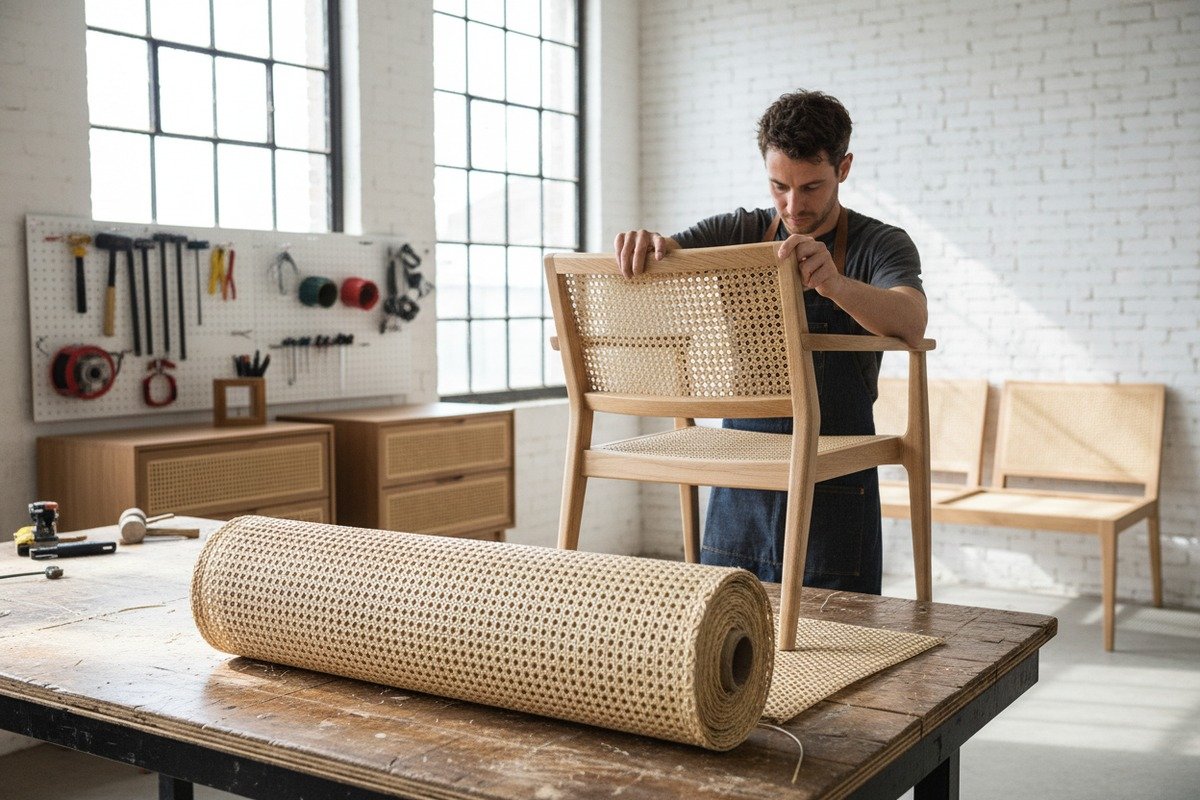
Chaque semaine, sur notre site de production à Foshan, nous traitons des milliers de mètres de cannage rotin 1 — et la demande ne cesse de croître.
Le cannage en rotin est populaire pour la fabrication de meubles car il combine une durabilité exceptionnelle, une légèreté durable, un attrait esthétique naturel et une polyvalence de conception à un coût compétitif, permettant aux usines de produire des meubles écologiques et élégants qui répondent à la demande croissante des consommateurs pour les matériaux organiques sur les marchés résidentiels et commerciaux.
Cet article détaille les raisons exactes de la popularité croissante de ce matériau. Nous abordons l'approvisionnement de qualité, les avantages en matière de conception, la sélection des fournisseurs et les stratégies de prix. Que vous dirigiez une usine de meubles ou que vous gériez les achats pour un grossiste, vous trouverez ici des réponses pratiques.
Comment puis-je m'assurer que la cannage en rotin que je me procure répond aux normes de qualité de mon usine ?
Une qualité de cannage incohérente a déjà causé des retards de production sur nos lignes plus d'une fois. normes de qualité 2 C'est un casse-tête que tout responsable des achats connaît bien.
Pour vous assurer que le cannage en rotin répond aux normes de qualité de votre usine, établissez des spécifications de classement claires dès le départ, demandez des échantillons avant expédition pour chaque lot de production, vérifiez directement l'installation de traitement du fournisseur et mettez en œuvre des inspections des matériaux entrants couvrant l'épaisseur des brins, la densité du tissage, la teneur en humidité et l'uniformité de la couleur.
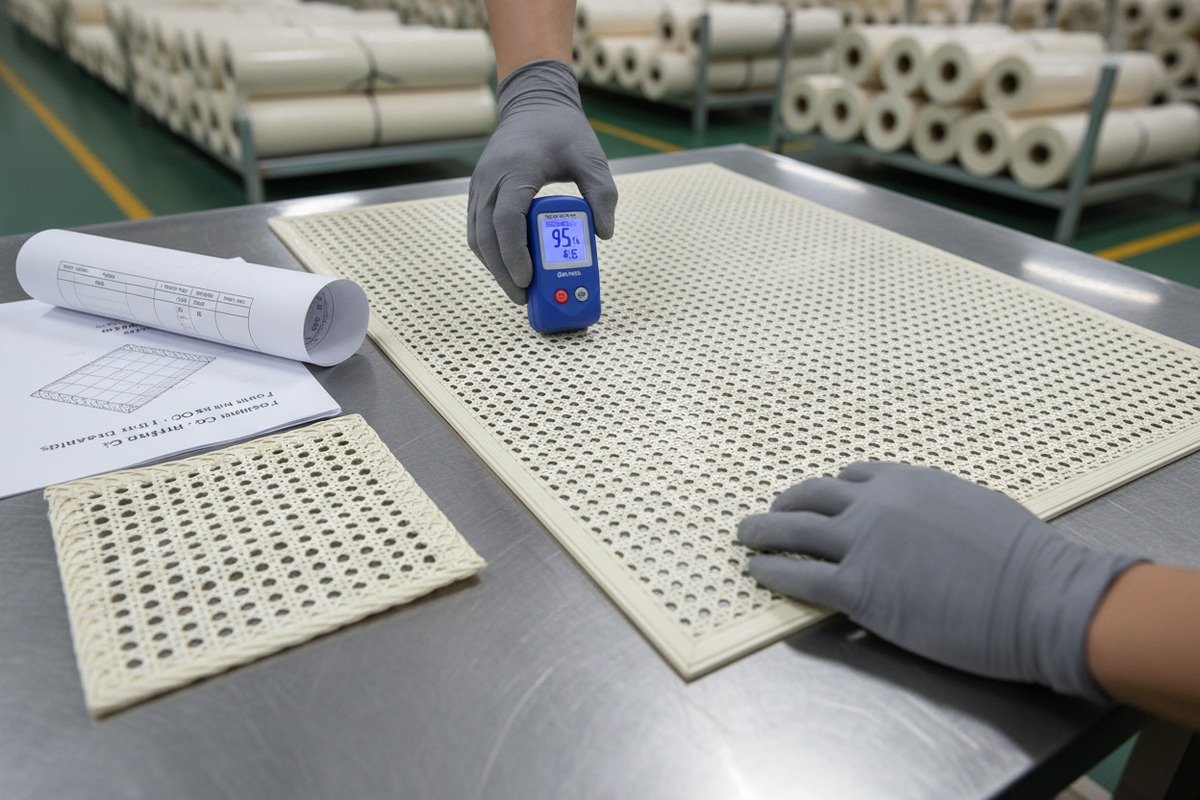
Le contrôle qualité du cannage en rotin commence bien avant que le matériau n'atteigne votre usine. Il commence à la source — l'installation de traitement du rotin. Lorsque notre équipe visite notre propre usine de traitement du rotin en Indonésie, nous vérifions le rotin brut à chaque étape. L'écorce extérieure doit être pelée proprement. Les bandes du cœur intérieur doivent avoir une largeur constante. Toute irrégularité ici cause des problèmes en aval.
Définissez votre grade de qualité
Tout le cannage en rotin n'est pas identique. Le marché reconnaît généralement trois grades. Savoir quel grade vos produits nécessitent vous fait gagner du temps et de l'argent.
| Note | Qualité des brins | Cohérence des couleurs | Meilleure utilisation |
|---|---|---|---|
| Grade A (Premium) | Épaisseur uniforme, pas de nœuds, surface lisse | Très cohérent, variation de couleur minimale | Meubles haut de gamme, surfaces visibles |
| Grade B (Standard) | Petits nœuds autorisés, légère variation d'épaisseur | Variation modérée, acceptable pour les finitions teintées | Meubles milieu de gamme, panneaux semi-visibles |
| Grade C (Économique) | Nœuds visibles, largeur de brin variable | Variation notable | Meubles économiques, applications cachées ou recouvertes |
Définir les points de contrôle de l'inspection entrante
Lorsque la sangle arrive dans votre entrepôt, suivez une simple liste de contrôle. Premièrement, vérifiez la teneur en humidité 3. Idéalement, il devrait se situer entre 8 et 14 %. Trop sec, le rotin se fissure lors de l'installation. Trop humide, il favorise la moisissure pendant le stockage. Deuxièmement, examinez la densité du tissage. Comptez les brins par pouce carré et comparez-les à l'échantillon que vous avez approuvé. Troisièmement, regardez la couleur. Le rotin naturel présente des variations organiques, mais les grandes taches sombres ou les marques de blanchiment signalent un mauvais traitement.
Demander des échantillons de lot avant l'expédition
Nous encourageons toujours nos clients — des Pays-Bas à l'Australie — à demander une coupe d'échantillon de chaque lot de production avant l'expédition. Cette seule étape évite la plupart des litiges de qualité. Un fournisseur fiable n'hésitera pas à envoyer un échantillon de 30 cm x 30 cm pour votre examen.
Surveiller les défauts courants
Les brins cassés dans le motif de tissage affaiblissent toute la feuille. Une tension inégale provoque le gauchissement de la sangle lors de son application sur un cadre. Une odeur chimique suggère un blanchiment excessif ou un traitement inapproprié. Ce sont des signaux d'alarme. Si votre fournisseur ne peut pas expliquer et corriger ces problèmes, il est temps de chercher ailleurs.
La création d'un document de normes de qualité — même une simple fiche technique d'une page — donne à votre fournisseur un objectif clair. Elle vous protège également en cas de litige. Dans notre usine, nous accueillons les spécifications détaillées. Elles rendent la production plus fluide pour tout le monde.
Pourquoi devrais-je choisir du cannage en rotin naturel pour mes créations de meubles modernes ?
Lorsque nous avons commencé à fournir de la sangle en rotin à des marques de meubles européennes il y a dix ans, certains designers pensaient qu'elle avait l'air "trop traditionnelle". Cette perception s'est complètement inversée.
Choisissez du cannage en rotin naturel pour le mobilier moderne car il offre une texture chaleureuse et organique qui contraste magnifiquement avec les matériaux contemporains comme le métal et le verre, assure une excellente respirabilité pour le confort d'assise, soutient les objectifs de fabrication durable et permet une flexibilité de conception créative pour les têtes de lit, les façades d'armoires et les panneaux décoratifs.

Le monde du design a changé. Les consommateurs veulent des pièces qui semblent authentiques. La sangle en rotin naturel offre cette authenticité d'une manière que les matériaux synthétiques ne peuvent tout simplement pas. La qualité tactile — légèrement rugueuse, chaude au toucher — crée une expérience sensorielle. Elle connecte les gens à la nature à l'intérieur de leur maison.
Polyvalence esthétique à travers les styles
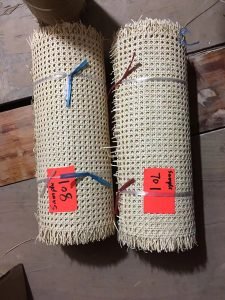
La sangle en rotin n'est pas limitée à un seul langage de conception. Elle s'adapte. Le motif classique à maille ouverte hexagonale "tissage radio" s'intègre parfaitement aux esthétiques modernes du milieu du siècle. Un tissage panier carré dense convient aux designs scandinaves minimalistes. Le motif complexe en losange ajoute du drame aux intérieurs bohèmes ou côtiers.
Notre usine produit des toiles d'ameublement dans de multiples motifs. Nous proposons également des toiles de rotin blanchies pour les clients qui souhaitent une palette plus claire et plus neutre. Les tons chauds beige, jaune paille et crème de la toile naturelle complètent les surfaces en bois, en pierre et même en béton.
Comment cela se compare aux alternatives
Les designers nous demandent souvent comment le rotin naturel se compare aux options synthétiques et à d'autres matériaux. Voici une comparaison simple.
| Caractéristique | Cannage en rotin naturel | Sangle en rotin synthétique | Panneaux en bois massif |
|---|---|---|---|
| Esthétique | Variations chaudes, organiques, uniques | Uniforme, aspect plastique | Aspect solide, lourd |
| Respirabilité | Excellent (tissage ouvert) | Limité | Aucun |
| Poids | Très léger | Léger | Lourd |
| Durabilité | Renouvelable, biodégradable | À base de pétrole, non biodégradable | Dépend de l'approvisionnement |
| Flexibilité | Élevé — facile à façonner | Modéré | Faible |
| Qualité tactile | Texture riche et naturelle | Sensation lisse et artificielle | Lisse, froid |
| Coût | Modéré | Faible à modéré | Élevé |
L'avantage de la durabilité
Cela prend de plus en plus d'importance chaque année. Le rotin est un palmier qui pousse rapidement dans les forêts tropicales 4. Il ne nécessite pas de coupe à blanc. La récolte du rotin soutient en fait les écosystèmes forestiers car la plante a besoin de la canopée pour pousser. La canne — la couche extérieure de la tige de rotin — est pelée sans détruire la plante. Elle se régénère.
Pour les marques de meubles qui commercialisent auprès des consommateurs soucieux de l'environnement 5 en Europe, en Amérique du Nord et en Australie, c'est une histoire puissante. La natte de rotin naturelle est biodégradable en fin de vie. La natte synthétique finit dans les décharges. Les calculs environnementaux sont clairs.
Innovation de conception avec des matériaux hybrides
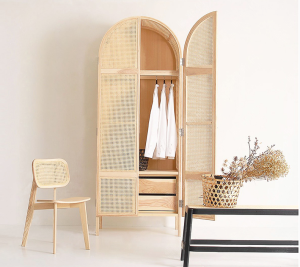
Certaines des pièces de mobilier modernes les plus frappantes que nous ayons vues de nos clients combinent la natte de rotin avec des cadres en acier thermolaqué noir 6, des plateaux en verre trempé ou des accents de marbre. Le contraste fonctionne car la texture chaude et organique du rotin adoucit les bords durs des matériaux industriels. Il crée un équilibre visuel.
Les portes d'armoire avec des inserts en rotin permettent la circulation de l'air tout en dissimulant le contenu — une solution pratique et belle. Les têtes de lit enveloppées de tissage radio ajoutent de la profondeur et de la chaleur aux chambres sans lourdeur visuelle. Les séparateurs de pièces en panneaux de natte de rotin créent une séparation dans les espaces ouverts tout en gardant la zone lumineuse et aérée.
Comment trouver un fournisseur fiable et unique pour tous mes besoins en matériaux en rotin ?
Au fil des ans, nous avons entendu la même frustration de la part des responsables des achats : jongler avec cinq ou six fournisseurs pour différents matériaux en rotin fait perdre du temps, augmente les coûts d'expédition et crée des incohérences de qualité.
Trouvez un fournisseur de rotin fiable et complet en évaluant leur gamme de produits dans toutes les catégories de rotin, en vérifiant qu'ils possèdent ou contrôlent directement les installations de traitement, en vérifiant leur expérience d'exportation dans votre région, en demandant des références à des clients d'usines existants et en confirmant qu'ils peuvent fournir une qualité constante pour les produits de cannage naturel, de nattes synthétiques et de rotin blanchi.
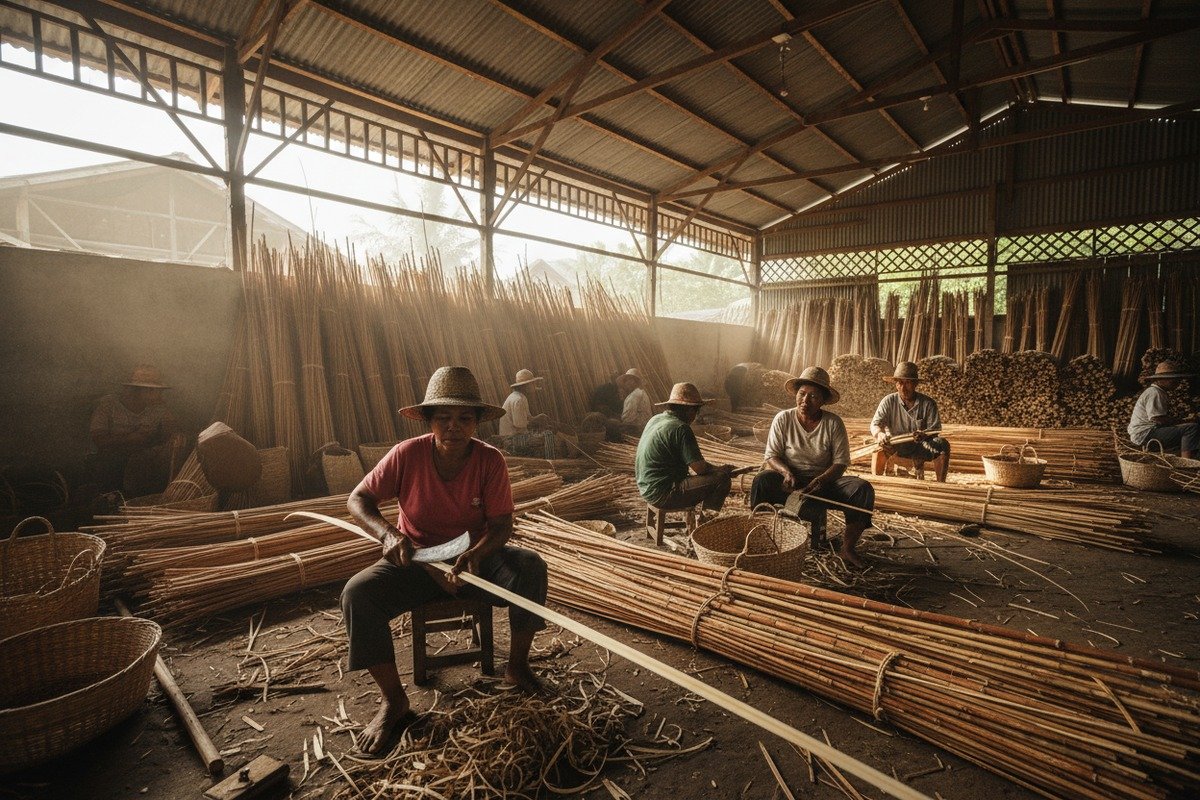
Un fournisseur unique ne se contente pas de vendre des produits. Il résout les problèmes de chaîne d'approvisionnement 8. Lorsque votre usine a besoin de cannage en rotin naturel à motif tissé radio, de nattes en rotin synthétique à motif chevrons et de cannage blanchi — le tout pour la même série de production — travailler avec un seul fournisseur simplifie tout.
Que rechercher chez un fournisseur
Commencez par la gamme de produits. Un véritable grossiste de rotin unique couvre tout le spectre : cannage naturel dans plusieurs motifs, nattes en rotin synthétique dans diverses textures et couleurs, options blanchies et teintes, tiges de rotin, écorce de rotin et feuilles tissées. Si un fournisseur n'offre qu'une ou deux catégories, vous devrez toujours vous approvisionner auprès d'autres.
Ensuite, vérifiez leur contrôle de la chaîne d'approvisionnement. Possèdent-ils ou investissent-ils dans des installations de transformation 9? Nos trois usines auto-investies — y compris notre usine de transformation de rotin en Indonésie — nous donnent un contrôle direct sur la qualité des matières premières. Nous ne dépendons pas entièrement de transformateurs tiers. Cela est important car cela signifie que nous pouvons retracer les problèmes de qualité jusqu'à la source et les résoudre rapidement.
Critères d'évaluation clés
| Critères | Pourquoi c'est important | Comment vérifier |
|---|---|---|
| Gamme de produits | Réduit le nombre de fournisseurs nécessaires | Demander le catalogue complet des produits avec spécifications |
| Propriété de l'usine | Assure le contrôle qualité à la source | Demander des photos d'usine, des certifications, inviter à une visite |
| Expérience d'exportation | Réduit les problèmes d'expédition et de douane | Demander la liste des pays d'exportation et les clients de référence |
| Flexibilité MOQ | Permet des commandes d'essai avant engagement | Demander le MOQ par catégorie de produit |
| Vitesse de communication | Empêche les retards de production | Testez le temps de réponse sur WhatsApp ou par e-mail |
| Disponibilité des échantillons | Confirme la qualité réelle du produit | Commandez des échantillons avant de vous engager dans la production en gros |
L'avantage du réseau d'usines partenaires
Au-delà de nos propres installations, nous travaillons avec plus de 30 usines partenaires dans la région de Foshan. Ce réseau nous permet de gérer des commandes importantes et diverses sans goulots d'étranglement. Si une usine est spécialisée dans les motifs à tissage serré et une autre excelle dans les conceptions en maille ouverte, nous dirigeons chaque produit vers la bonne installation. Le résultat est une meilleure qualité dans l'ensemble.
Pour des clients comme Ranoo en Thaïlande — un responsable des achats qui valorise la haute qualité à des prix compétitifs et communique rapidement via WhatsApp — avoir un point de contact unique pour tous les matériaux en rotin permet d'économiser des heures de coordination chaque semaine. Une commande. Une norme de qualité. Un envoi. Une facture.
Drapeaux rouges à surveiller
Soyez prudent avec les fournisseurs qui ne peuvent pas fournir de documentation au niveau de l'usine. S'ils ne peuvent pas vous montrer où le rotin est traité, il s'agit probablement d'une société commerciale qui ajoute une marge sans ajouter de valeur. De plus, méfiez-vous des fournisseurs qui acceptent toutes les demandes personnalisées sans poser de questions. Un fournisseur compétent vous interrogera sur votre application, vos exigences en matière de qualité et votre marché final. Ces questions témoignent de leur expertise.
Enfin, testez la relation avec une petite commande avant de vous engager dans des conteneurs. La véritable fiabilité d'un fournisseur se révèle lorsque quelque chose tourne mal — et comment il le gère.
Comment puis-je obtenir des prix compétitifs sur des toiles de rotin en gros sans sacrifier la qualité de mes produits ?
Les négociations de prix sont une réalité quotidienne dans notre activité. Nous parlons à des acheteurs d'usines qui doivent atteindre un coût cible par unité tout en maintenant un niveau de qualité que leurs clients finaux attendent.
Obtenez des prix compétitifs sur la cannage en rotin en gros sans sacrifier la qualité en consolidant les commandes entre les catégories de produits auprès d'un seul fournisseur, en vous engageant à des volumes de commande réguliers pour de meilleurs tarifs, en spécifiant le niveau de qualité exact requis pour éviter de payer trop cher pour un produit premium inutile, en optimisant l'emballage pour réduire les coûts d'expédition et en planifiant les achats en fonction des cycles de disponibilité des matières premières.
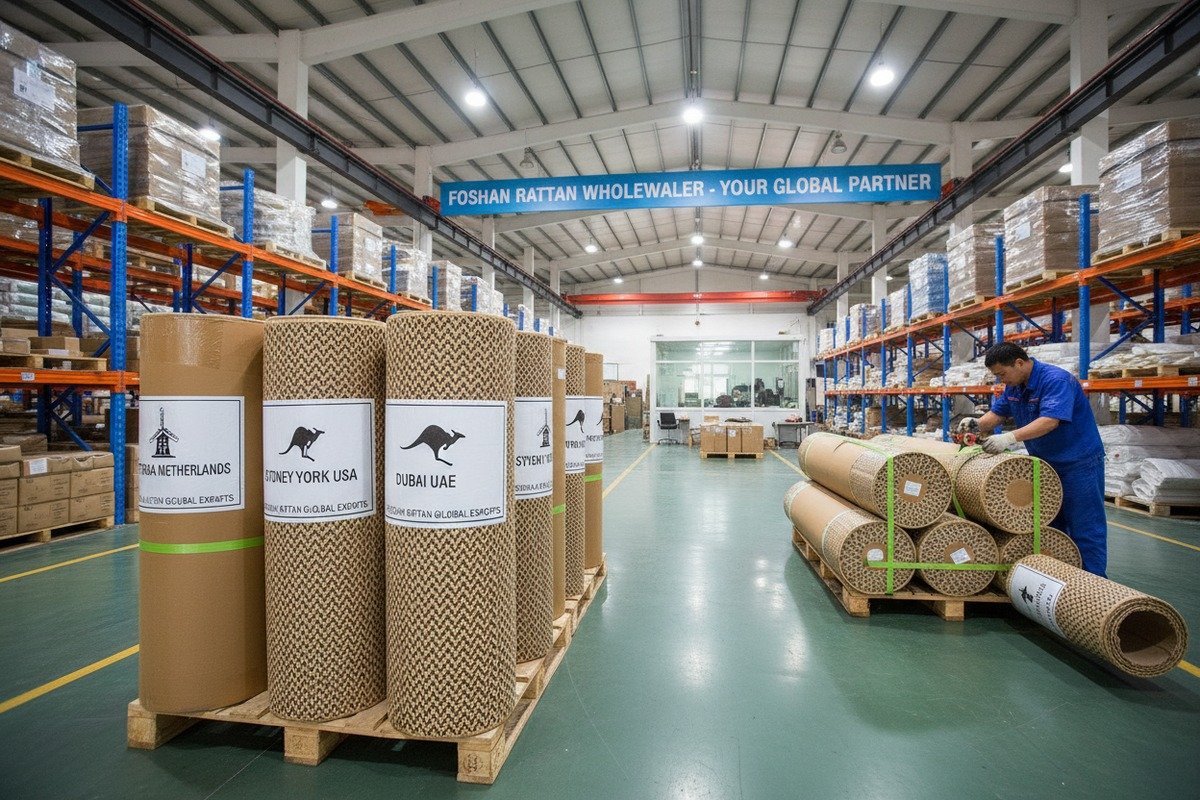
Le prix et la qualité ne sont pas ennemis. Ils peuvent coexister lorsque vous abordez l'approvisionnement de manière stratégique. La clé est de comprendre d'où viennent les coûts — et quels coûts vous pouvez influencer sans dégrader le produit.
Comprendre la structure des coûts
Le prix du cannage en rotin dépend de plusieurs facteurs. Le coût des matières premières fluctue avec les saisons de récolte en Indonésie et dans d'autres pays d'Asie du Sud-Est. La main-d'œuvre de transformation — épluchage, fendage, tissage — s'ajoute à la base. La complexité du motif compte aussi. Un tissage simple et ouvert est plus rapide à produire qu'un motif complexe en losanges.
Voici une répartition générale de l'utilisation de votre argent dans une commande groupée typique :
| Composant du coût | Part approximative | Votre niveau d'influence |
|---|---|---|
| Matière première en rotin | 30–40% | Faible (dicté par le marché) |
| Traitement et tissage | 25–35% | Moyen (choix du motif) |
| Classement et inspection de la qualité | 5–10% | Élevé (sélection de la qualité) |
| Emballage | 5–10% | Élevé (optimisation des spécifications) |
| Expédition et logistique | 15–25% | Moyen (consolidation du volume) |
Stratégies qui fonctionnent réellement
Consolidez vos commandes. Au lieu d'acheter du cannage naturel auprès d'un fournisseur, du tapis synthétique auprès d'un autre et du rotin blanchi auprès d'un troisième, regroupez tout chez un seul fournisseur. Le volume combiné vous donne un pouvoir de négociation. Nous offrons une meilleure tarification par unité lorsqu'un client commande dans plusieurs catégories de produits, car cela améliore notre efficacité de planification de la production.
Engagez-vous sur les volumes prévisionnels. Si vous pouvez partager une prévision d'achat trimestrielle ou annuelle, votre fournisseur peut planifier l'approvisionnement en matières premières et la planification de la production plus efficacement. Cela se traduit par des coûts inférieurs qui vous sont répercutés. Cela sécurise également votre approvisionnement pendant les périodes de forte demande lorsque la disponibilité des matériaux se resserre.
Choisissez la bonne qualité — pas la qualité la plus élevée. Si votre rotin tressé sera peint, teinté ou utilisé dans une application semi-cachée, la qualité premium A est une dépense inutile. La qualité standard B vous offre des performances solides à un prix nettement inférieur. Adaptez la qualité à l'application.
Optimisation de l'emballage
L'emballage est un facteur de coût souvent négligé. Le rotin tressé est léger mais volumineux. La façon dont il est roulé, empilé et protégé affecte directement le nombre de mètres qui rentrent dans un conteneur. Nous avons travaillé avec des clients pour repenser l'emballage — en passant de l'emballage plastique individuel à un emballage en rouleaux consolidés avec protection des bords — et avons réduit leurs coûts d'expédition par unité jusqu'à 15 %.
Un emballage durable évite également les dommages pendant le transport. Un seul rouleau endommagé crée des déchets, des retards de production et parfois des plaintes de clients. Investir un peu plus dans la qualité de l'emballage coûte souvent moins cher qu'il ne rapporte.
Planifiez vos achats
La disponibilité du rotin brut suit des cycles saisonniers. La récolte culmine pendant les saisons sèches en Asie du Sud-Est. Commander pendant ou juste après les périodes de pic de récolte permet généralement d'obtenir de meilleurs prix car l'offre de matières premières est abondante. Inversement, commander pendant la saison des pluies — lorsque la récolte ralentit — peut entraîner une offre plus restreinte et des prix plus élevés.
Nous conseillons à nos clients à long terme de planifier leurs commandes importantes en fonction de ces cycles. C'est une tactique simple que de nombreux acheteurs négligent, mais elle permet de réaliser systématiquement des économies de 5 à 10 % sur les coûts des matières premières.
Les relations à long terme battent les bonnes affaires ponctuelles
Les prix les plus compétitifs que nous proposons sont destinés aux clients qui sont avec nous depuis des années. Ils bénéficient de créneaux de production prioritaires, d'un accès privilégié aux nouveaux motifs et de prix qui reflètent le volume total de notre relation — pas seulement une seule commande. Établir un partenariat avec votre fournisseur de rotin est le moyen le plus fiable d'obtenir des prix compétitifs durables.
Conclusion
Le cannage en rotin doit sa popularité à ses performances réelles — durabilité, polyvalence, beauté et valeur sur lesquelles les fabricants de meubles peuvent compter à chaque cycle de production.
Notes de bas de page
1. Cet article fournit un guide complet sur ce qu'est le cannage, sa matière première (le rotin) et son processus de production. ↩︎
2. Explique la norme ISO 9001 comme une norme mondiale de gestion de la qualité dans la fabrication. ↩︎
3. Détaille l'importance de la teneur en humidité pour la stabilité du bois dans la fabrication de meubles. ↩︎
4. Décrit les caractéristiques et l'emplacement des forêts tropicales, habitat naturel du rotin. ↩︎
5. Fournit des statistiques et des tendances sur le marché en croissance des consommateurs soucieux de l'environnement. ↩︎
6. Explique le revêtement en poudre comme une finition durable et résistante aux intempéries pour les meubles en métal. ↩︎
7. Confirme le statut du rotin comme matériau naturel à croissance rapide et durable. ↩︎
8. Décrit les défis et les perturbations courants dans la gestion moderne de la chaîne d'approvisionnement. ↩︎
9. Souligne l'importance du contrôle des installations de traitement pour la qualité des matières premières. ↩︎
10. Définit l'optimisation de l'emballage et son rôle dans la réduction des coûts et l'amélioration de l'efficacité. ↩︎
 English
  Español de México
  العربية
  Deutsch
  Français
  Русский