
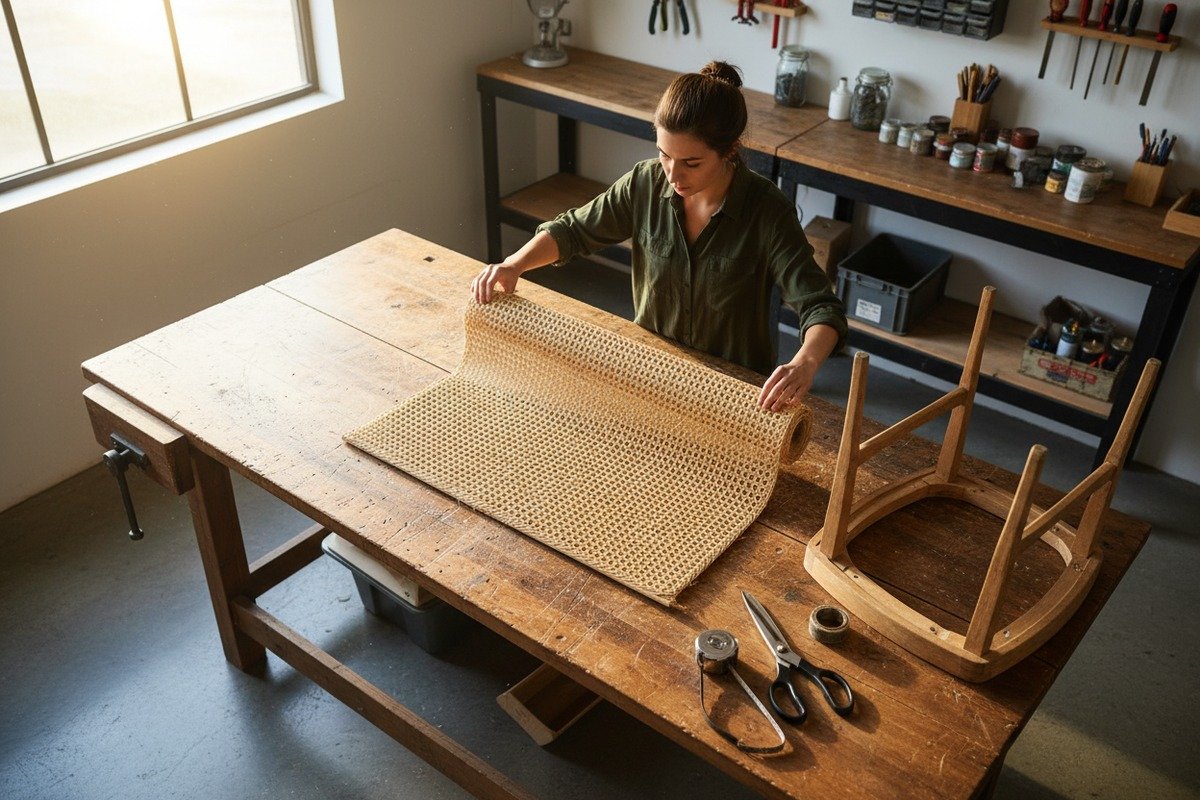
Chaque semaine, notre équipe de service client entend la même frustration de la part des acheteurs novices : ils ont choisi la mauvaise taille, la mauvaise tresse ou un rotin de mauvaise qualité qui s'est fissuré après l'installation.
Pour choisir la meilleure natte en rotin pour un débutant en bricolage, concentrez-vous sur quatre points : vérifiez la qualité du matériau de grade A, adaptez le motif de tissage au type de votre projet, mesurez précisément votre meuble pour obtenir la bonne taille de rouleau, et approvisionnez-vous auprès d'un fournisseur fiable avec des normes de classement transparentes et un stock constant.
Ce guide vous accompagne étape par étape. Nous aborderons la classification de la qualité, motif de tissage 1, les tests de durabilité et où trouver le meilleur rapport qualité-prix Qualité du matériau de grade A 2. À la fin, vous vous sentirez confiant pour choisir le bon cannage rotin 3 pour votre tout premier projet.
Comment identifier la rotin de qualité Grade A pour mon premier projet ?
Lorsque nous traitons le rotin brut dans notre usine en Indonésie, la classification se fait directement à la table de tri tresse radio ou carrée 4. La plupart des débutants sautent cette étape et se retrouvent avec un matériau incohérent qui ruine leur projet.
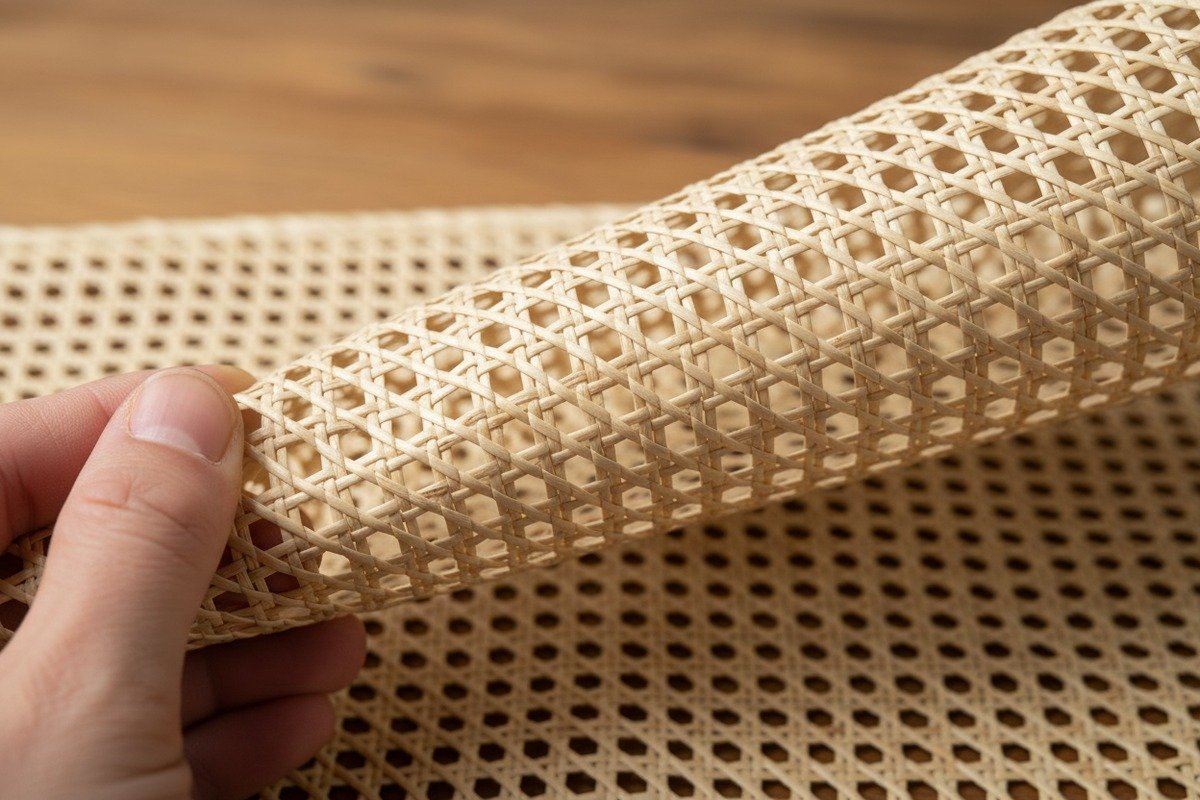
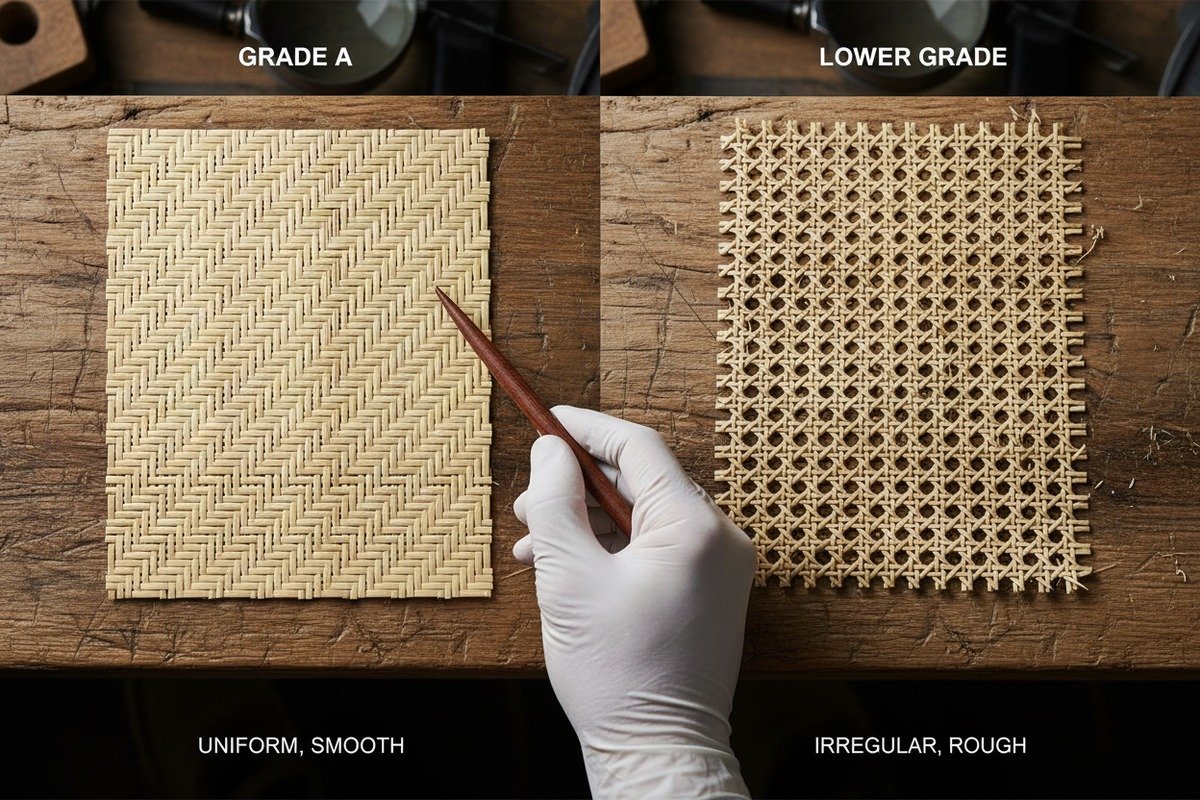
Le cannage en rotin de qualité A présente une épaisseur de brin uniforme, une couleur constante beige clair ou jaune paille, sans fissures visibles ni taches sombres, des surfaces d'écorce lisses et des intersections de tissage serrées et régulières. Il doit sembler souple mais ferme, pas cassant ni trop sec lorsque vous pliez un échantillon.
Que signifie réellement "Grade A" ?
Le grade A n'est pas seulement une étiquette marketing. Il fait référence à la sangle en rotin fabriquée à partir de la peau extérieure de palmiers rotin matures. Les brins sont triés à la main pour assurer la cohérence de la couleur et de l'épaisseur. Dans notre usine de transformation, les ouvriers retirent tous les brins présentant des nœuds, une décoloration ou des fissures avant le tissage.
Voici ce qui différencie les grades :
| Caractéristique | Qualité A | Qualité B | Note C |
|---|---|---|---|
| Couleur du fil | Beige clair uniforme à jaune paille | Légère variation de couleur | Taches sombres et tons mélangés perceptibles |
| Texture de surface | Pelage lisse et propre | Petites rugosités | Surface rugueuse et inégale |
| Épaisseur du brin | Cohérent sur toute la feuille | Légère variation | Incohérence évidente entre épais et fin |
| Flexibilité | Bends without cracking | Légère résistance | Cassant, sujet à la rupture |
| Serrage du tissage | Intersections régulières, pas d'espaces | Petits espaces par endroits | Tissage lâche, trous visibles |
| Meilleure utilisation | Restauration de meubles, surfaces visibles | Panneaux cachés, pièces d'entraînement | Projets d'artisanat, usage non structurel |
Comment inspecter avant d'acheter
Vous n'avez pas besoin d'être un expert. Passez vos doigts sur la surface. La sangle de qualité A est lisse au toucher. Si vous sentez des bosses rugueuses ou si des fibres s'accrochent à votre peau, il s'agit probablement d'une qualité inférieure. Tenez la feuille à la lumière. Le motif du tissage doit paraître symétrique. Tout espace irrégulier signale un travail de mauvaise qualité.
Pliez doucement un petit coin. Un bon rotin fléchit sans se casser. S'il se casse ou se fissure, le matériau est trop sec ou trop vieux. Ceci est particulièrement important si vous prévoyez d'enrouler la sangle autour de cadres de meubles courbes.
Le test de couleur
Le rotin brut et non traité a une teinte verdâtre. Le rotin de qualité A traité est jaunâtre ou beige clair. Le traitement consiste à retirer la couche extérieure verte, ce qui augmente le coût de la main-d'œuvre. C'est pourquoi le rotin de qualité A traité coûte plus cher. Mais pour les surfaces de meubles visibles comme les sièges de chaises et les façades de meubles, l'aspect plus net en vaut la peine.
Une erreur courante chez les débutants est de supposer que le rotin plus foncé est meilleur. En réalité, les taches sombres indiquent souvent l'âge, l'exposition à la moisissure ou un séchage irrégulier. Visez toujours des tons clairs et uniformes. Si vous souhaitez une finition plus foncée, vous pouvez teindre ou teindre le rotin vous-même avant l'installation pour un résultat plus uniforme.
Demandez d'abord des échantillons
Nous vous recommandons toujours de demander un échantillon avant de vous engager dans une commande complète. Un morceau de 30 cm de côté est suffisant pour vérifier la couleur, la texture, la flexibilité et la densité du tissage. Cette petite étape vous évite des erreurs coûteuses, surtout si vous commandez par rouleau.
Quel motif de tressage en rotin et quelle taille de rouleau dois-je choisir pour mon bricolage de meubles ?
De nos lignes de production à Foshan, nous produisons plus d'une douzaine de motifs de tissage. Mais pour les débutants, le choix se limite vraiment à trois ou quatre options en fonction de votre type de meuble et de votre style personnel.
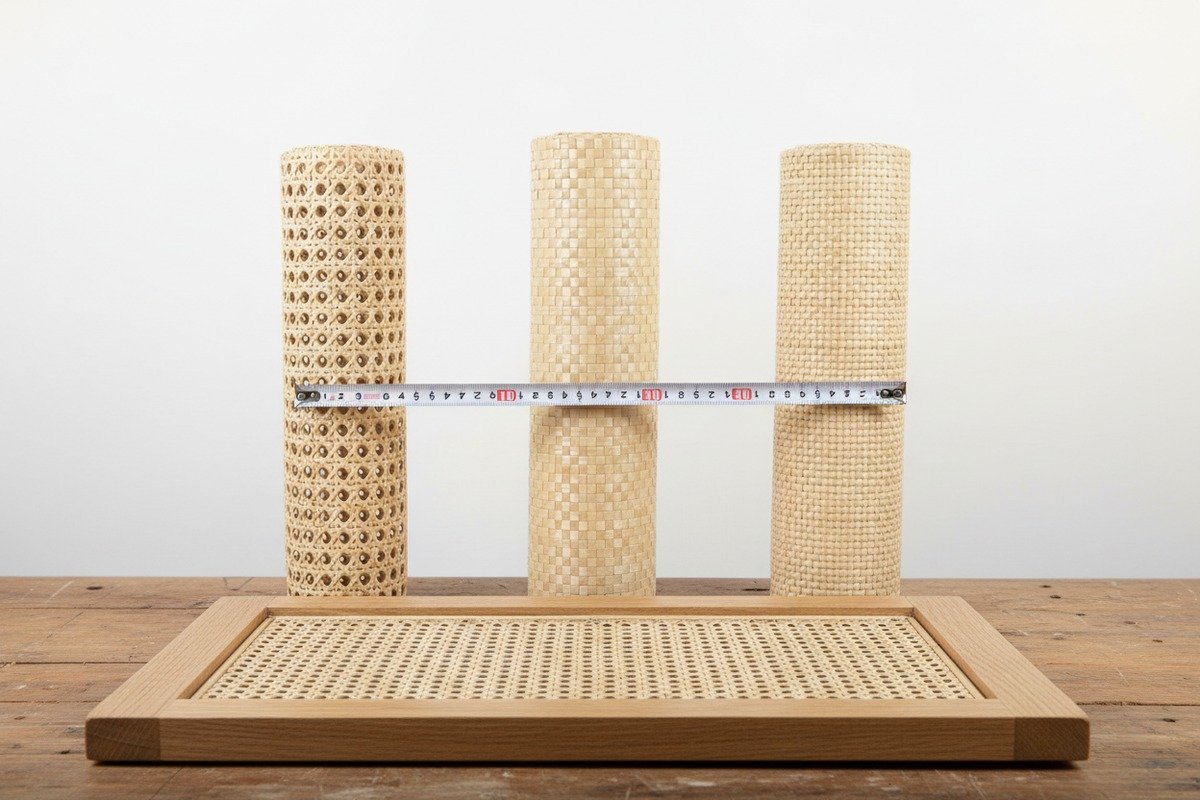
Choisissez un tissage hexagonal ouvert pour la restauration classique de sièges de chaise, un tissage radio ou carré pour les inserts de meubles modernes, et un tissage serré pour les panneaux muraux ou les têtes de lit. Pour la taille du rouleau, mesurez le point le plus large de votre projet et ajoutez 2 pouces de chaque côté pour la marge de rainure, puis sélectionnez parmi les largeurs standard de 18, 24 ou 36 pouces.
Comprendre les motifs de tissage courants
Chaque motif de tissage remplit un objectif différent. Voici une ventilation des options les plus populaires pour les débutants en bricolage :
| Motif de tissage | Apparence | Idéal pour | Niveau de difficulté |
|---|---|---|---|
| Hexagonal (Maille ouverte) | Aspect nid d'abeille classique avec des espaces ouverts | Assises de chaise, restauration de meubles traditionnels | Facile |
| Tissage radio (carré) | Motif carré en grille | Portes d'armoire, inserts de meubles modernes | Facile |
| Fermer le tissage 5 | Dense, pas de trous visibles | Têtes de lit, panneaux muraux, plafonds | Facile |
| Chevrons | Motif en V diagonal | Panneaux décoratifs, pièces d'accent | Modéré |
| Motif diamant | Formes complexes de diamants géométriques | Meubles d'exception, projets artistiques | Avancé |
Pour votre premier projet, tenez-vous-en au tissage ouvert hexagonal 6 ou au tissage radio. Ce sont les motifs les plus indulgents. Ils s'étirent uniformément une fois mouillés et se placent à plat dans les cadres rainurés sans trop de difficultés.
Comment mesurer pour la bonne taille de rouleau
Les erreurs de mesure sont la principale raison pour laquelle les débutants gaspillent du matériel. Voici la méthode simple que notre équipe recommande :
Tout d'abord, mesurez la partie la plus large de l'ouverture de votre meuble. Pour une assise de chaise, mesurez de bord de rainure à bord de rainure. Ajoutez ensuite 2 pouces de chaque côté. Ce matériau supplémentaire se glisse dans la rainure et est fixé avec une baguette.
Par exemple, si l'ouverture de votre assise de chaise mesure 14 pouces de large, vous avez besoin d'au moins 18 pouces de largeur de sangle. La plupart des fournisseurs vendent des rouleaux dans des largeurs standard de 18, 24 et 36 pouces. La longueur est généralement vendue au pied courant, vous n'achetez donc que ce dont vous avez besoin.
Pré-coupé vs. Rouleaux entiers
Si vous ne faites qu'une seule chaise, une pièce pré-coupée vous fait économiser de l'argent. Mais si vous prévoyez de faire plusieurs projets, un rouleau entier vous offre une meilleure valeur par pied. Gardez à l'esprit que la plupart des fournisseurs n'acceptent pas les retours sur les pièces coupées, alors mesurez deux fois avant de commander.
Assortir le motif au style du projet
Le motif de tissage que vous choisissez change entièrement l'aspect de votre pièce finie. Un tissage ouvert hexagonal ajoute une touche bohème et côtière. Un tissage serré crée un look moderne plus épuré et sophistiqué. Le tissage radio se situe quelque part entre les deux avec sa grille équilibrée et structurée.
Pensez à la pièce où vivront vos meubles. Un ensemble de salle à manger de maison de plage est superbe avec une maille ouverte. Une tête de lit de chambre élégante se marie mieux avec un tissage serré. Considérez aussi la lumière. Les tissages ouverts laissent passer la lumière, ce qui est magnifique pour les abat-jour et les séparateurs de pièces, mais moins bien pour les écrans de confidentialité.
Lorsque nos clients aux Pays-Bas et en Australie commandent pour la vente au détail, ils stockent souvent le tissage hexagonal et le tissage serré en plus grands volumes. Ces deux motifs couvrent environ 80% des applications de bricolage courantes.
Comment puis-je savoir si le cannage en rotin est suffisamment résistant pour mon application spécifique ?
Au fil des ans, nous avons expédié du rotin à des usines de meubles dans plus de 30 pays. La question de la durabilité revient dans presque toutes les conversations. Et la réponse dépend toujours de l'endroit et de la manière dont vous prévoyez de l'utiliser.
Le cannage en rotin naturel est durable pour les meubles d'intérieur, offrant une bonne résistance à l'usure et une faible conductivité thermique. Il dure des années avec des soins de base. Pour une utilisation en extérieur, choisissez du rotin synthétique, qui résiste aux rayons UV, à la pluie et à la moisissure. Faites toujours correspondre le type de matériau à l'environnement de votre projet pour une durée de vie maximale.
Durabilité intérieure vs. extérieure
C'est la décision la plus critique. Le rotin naturel 7 est un matériau d'origine végétale. Il respire bien, reste frais en été et est chaud en hiver grâce à sa faible conductivité thermique 8. Mais il ne supporte pas bien l'humidité sur de longues périodes. Une exposition constante à la pluie ou à une humidité élevée peut provoquer des moisissures, du gauchissement et une dégradation des fibres.
Rotin synthétique 9, fabriqué en plastique stabilisé aux UV, imite l'aspect du rotin naturel mais résiste bien mieux aux conditions extérieures. Il résiste aux bactéries, à la moisissure et à la décoloration due au soleil. Si votre projet est une chaise de patio ou une armoire d'extérieur, le synthétique est le choix pratique.
| Facteur de durabilité | Rotin naturel | Rotin synthétique |
|---|---|---|
| Résistance aux UV | Faible – se décolore et sèche en plein soleil | Élevée — Stabilisé aux UV pour une utilisation en extérieur |
| Résistance à l'humidité | Faible — absorbe l'eau, risque de moisissure | Élevée — imperméable, résistant à la moisissure |
| Résistance à l'usure | Bon — résiste bien à une utilisation quotidienne en intérieur | Excellent — résiste aux rayures et à l'abrasion |
| Tolérance à la température | Modérée — éviter la chaleur ou le froid extrêmes | Élevée — fonctionne dans une large gamme de températures |
| Durée de vie (avec soin) | 10-20 ans en intérieur | 10-15 ans en extérieur |
| Écologie | Entièrement biodégradable, renouvelable | Non biodégradable, à base de pétrole |
| Sensation Esthétique | Chaud, authentique, artisanal | Imitation proche mais toucher légèrement plastique |
Le test de pliage et le test d'immersion
Avant d'installer, effectuez deux tests rapides. Premièrement, le test de pliage. Prenez une mèche du bord de votre cannage et pliez-la à 90 degrés. Le rotin naturel de qualité A se plie en douceur sans se fissurer. S'il casse, le matériau est soit vieux, mal stocké, soit de mauvaise qualité.
Deuxièmement, le test d'immersion. Trempez un petit morceau de cannage en rotin naturel dans de l'eau tiède pendant 15 à 20 minutes. Il devrait devenir visiblement plus souple et plus malléable. Ceci est essentiel pour l'installation. S'il ne s'adoucit pas beaucoup après le trempage, le rotin a peut-être été trop séché ou traité chimiquement, ce qui compromet sa durabilité à long terme.
Humidité et entretien
Le rotin naturel réagit à votre environnement intérieur. Dans les climats très secs, il peut rétrécir et se fissurer. Dans les climats humides, il peut gonfler et s'affaisser. La solution est simple. Par temps sec, vaporisez légèrement le cannage avec de l'eau toutes les quelques semaines. Dans des conditions humides, assurez une bonne circulation de l'air autour des meubles.
Pour le nettoyage, utilisez une brosse douce pour enlever la poussière. Évitez les nettoyants chimiques agressifs. Une solution d'eau et de savon doux convient pour un nettoyage en profondeur. Ne jamais nettoyer le rotin naturel au nettoyeur haute pression.
Considérations sur la capacité de poids
Pour les sièges de chaises, le cannage en rotin supporte un poids modéré lorsqu'il est correctement installé dans un cadre rainuré avec une baguette. Cependant, il n'est pas conçu pour une utilisation intensive en tant que siège à lui seul. Le cadre assure le travail structurel. Le rotin fournit la surface d'assise. Assurez-vous toujours que votre cadre en bois est solide et que la rainure est propre avant l'installation.
Si vous utilisez du rotin pour des applications non structurelles comme des têtes de lit, des façades de meubles ou des panneaux muraux, les préoccupations de durabilité sont minimes. Le matériau doit simplement conserver sa forme et avoir une belle apparence. Dans ces cas, même le rotin naturel de qualité B peut bien fonctionner pendant des années.
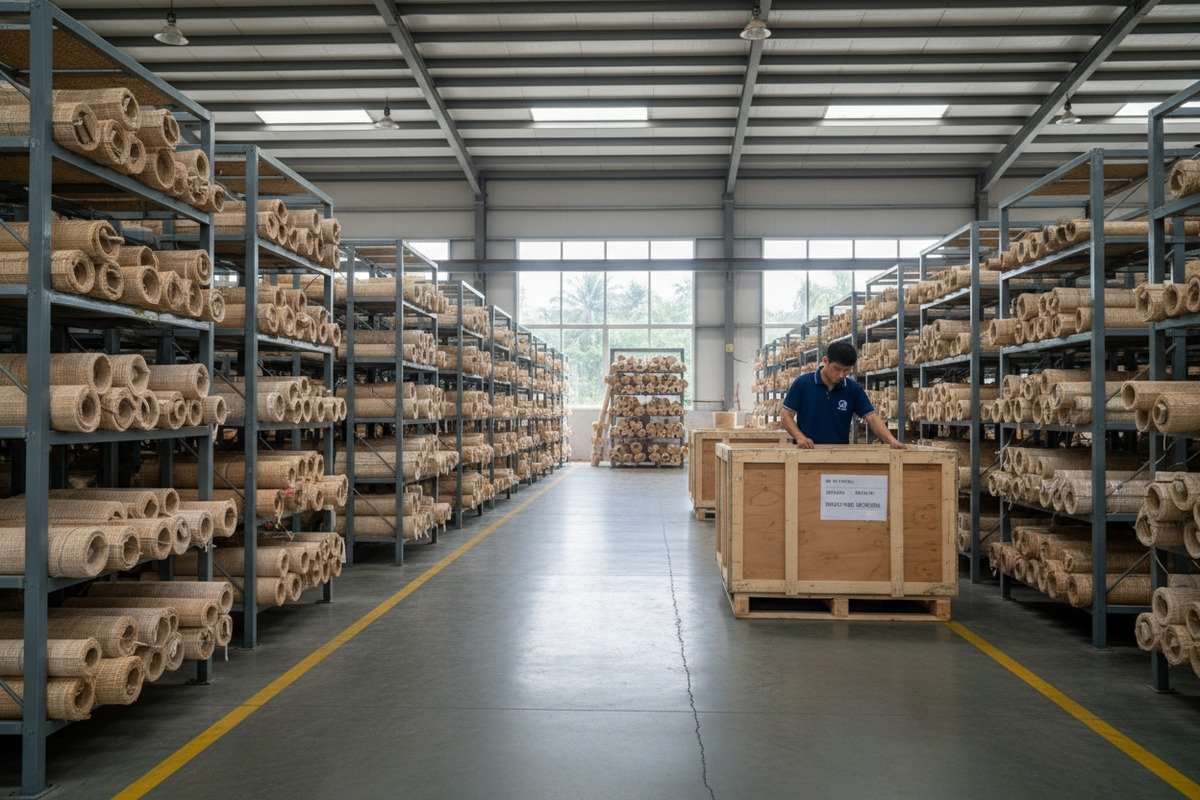
Gérer trois usines auto-investies et travailler avec plus de 30 installations partenaires à Foshan nous a appris exactement ce qui distingue les bons fournisseurs des peu fiables. L'étape de l'approvisionnement est là où de nombreux débutants en bricolage économisent intelligemment leur argent ou le gaspillent entièrement.
Trouvez des matériaux en rotin de première qualité en vous approvisionnant auprès de grossistes établis ayant un accès direct aux usines en Indonésie ou en Chine, des systèmes transparents de classification de la qualité et des quantités de commande flexibles. Comparez les prix par pied courant auprès d'au moins trois fournisseurs, demandez des échantillons avant les commandes en gros et vérifiez que l'emballage protège le matériau pendant l'expédition.
Que rechercher chez un fournisseur
Tous les fournisseurs de rotin ne se valent pas. Certains sont des commerçants qui achètent auprès de plusieurs sources sans contrôle qualité. D'autres, comme notre opération chez Seafan Rattan, contrôlent le processus depuis la récolte des matières premières en Indonésie jusqu'aux produits finis à Foshan. Cette intégration verticale est importante car elle signifie que chaque rouleau peut être retracé jusqu'à son origine.
Voici les points clés à évaluer :
Transparence de la classification. Un bon fournisseur étiquette clairement ses produits comme étant de qualité A, B ou C. Si un fournisseur ne mentionne pas du tout la classification, c'est un signal d'alarme. Vous pourriez recevoir un matériau de qualité mixte.
Disponibilité des échantillons. Tout fournisseur réputé vous enverra des échantillons. S'ils refusent ou facturent des frais excessifs pour les échantillons, passez votre chemin.
Flexibilité des commandes minimales. Pour les débutants en bricolage, vous ne voulez pas vous engager dans des rouleaux massifs. Recherchez des fournisseurs qui vendent au mètre linéaire ou proposent des pièces prédécoupées plus petites.
Qualité de l'emballage. Le rotin est un matériau naturel. Il a besoin d'un emballage approprié pour survivre à l'expédition sans fissures, moisissures ou écrasement. Dans nos installations, nous utilisons des tubes en carton renforcé et un emballage anti-humidité pour les commandes internationales. Renseignez-vous auprès de votre fournisseur sur ses méthodes d'emballage.
Conseils pour comparer les prix
Le prix du rotin varie en fonction de l'origine du matériau, de la qualité, du motif de tissage et de la largeur du rouleau. Voici un cadre général pour vous aider à comparer :
Le rotin naturel traité de qualité A coûte plus cher que le rotin verdâtre brut en raison du travail supplémentaire nécessaire pour retirer la couche extérieure verte. Les motifs de tissage serré coûtent généralement un peu plus cher que les tissages ouverts en raison de la densité de matériau plus élevée par pied carré. Les rouleaux plus larges (36 pouces) offrent une meilleure valeur par pied que les rouleaux étroits (18 pouces) lorsque vous avez plusieurs projets prévus.
Comparez toujours les prix sur une base par pied carré, pas seulement par rouleau. Un rouleau moins cher peut être plus étroit ou plus court, vous donnant moins de matériau pour un prix apparemment plus bas.
Fournisseurs en ligne vs. Fournisseurs spécialisés
De nombreux débutants commencent par des places de marché en ligne comme Alibaba ou Amazon. Ces plateformes offrent la commodité mais peuvent manquer de cohérence en matière de qualité. Lisez attentivement les avis. Recherchez des vendeurs avec des certifications d'usine vérifiées et des taux de commandes répétées élevés.
Les fournisseurs spécialisés axés sur la restauration de meubles et le tressage de paniers ont tendance à offrir des sélections mieux organisées. Ils comprennent le matériau et peuvent vous conseiller sur le bon produit pour votre projet.
Pour le meilleur rapport qualité-prix, envisagez d'acheter directement auprès d'un grossiste comme nous à www.rattanwholesaler.com. Même si vous êtes un petit acheteur, de nombreux grossistes acceptent désormais de plus petites quantités pour les clients de bricolage. Les prix sont nettement inférieurs à ceux de la vente au détail, et vous avez accès à toute la gamme de qualités, de motifs et de largeurs.
Créer un kit de démarrage
Pour votre premier projet de bricolage en rotin, voici ce que nous vous recommandons de commander :
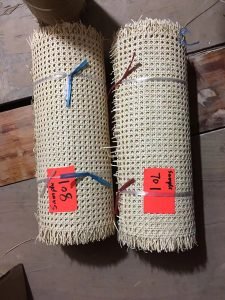
Un rouleau de cannage hexagonal à maille ouverte de qualité A dans la largeur mesurée. Une latte assortie à la taille de la rainure de votre cadre. Un outil de pose de latte 10. Ciseaux tranchants ou un cutter. Colle à bois ou colle pour rotin. Un vaporisateur pour tremper et humidifier.
Achetez 10 à 15 % de matériau supplémentaire au-delà de vos mesures. Cela couvre les erreurs, les coupes d'entraînement et les ajustements mineurs. Il est beaucoup moins cher de commander un peu plus à l'avance que de passer une deuxième commande et de payer à nouveau les frais d'expédition.
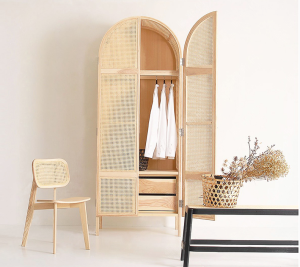
Envisagez de commencer par un petit projet comme un insert de porte d'armoire ou un panneau de plateau décoratif. Cela vous permet de vous entraîner à couper, tremper, étirer et fixer sans la pression de travailler sur un meuble de valeur. Une fois que vous êtes à l'aise avec les techniques, passez à la restauration d'un siège de chaise ou d'une tête de lit.
Conclusion
Choisir le bon cannage en rotin dépend de la connaissance de votre qualité, de l'adaptation de votre motif de tissage, du test de durabilité et de l'approvisionnement auprès d'un fournisseur de confiance aux normes transparentes.
Notes de bas de page
1. Décrit diverses techniques de tissage du rotin. ↩︎
2. Détaille le processus de classification de la qualité du rotin. ↩︎
3. Explique le matériau et son origine. ↩︎
4. Décrit l'apparence du tissage radio ou carré. ↩︎
5. Définit le rotin à tissage serré et ses utilisations décoratives. ↩︎
6. Explique les caractéristiques du tissage ouvert hexagonal. ↩︎
7. Fournit un aperçu complet du rotin naturel en tant que plante et matériau. ↩︎
8. Présente des données scientifiques sur les propriétés thermiques des fibres de rotin. ↩︎
9. Explique la composition et les avantages du rotin synthétique. ↩︎
10. Décrit la fonction de l'outil pour fixer la cannage. ↩︎
 English
  Español de México
  العربية
  Deutsch
  Français
  Русский