
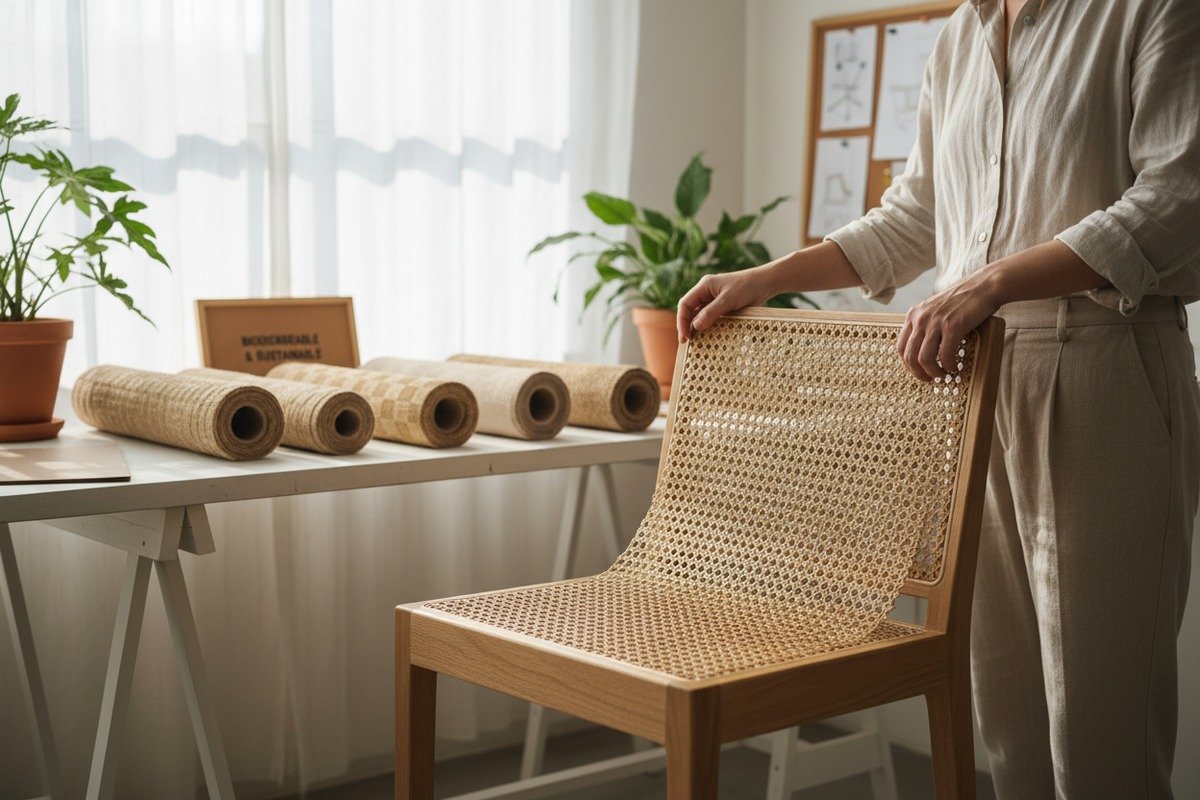
Chaque semaine, notre équipe commerciale répond à la même question des fabricants de meubles et des grossistes d'Europe, du Moyen-Orient et d'Asie du Sud-Est : le rotin qu'ils achètent est-il véritablement renouvelable ?
Oui, le cannage en rotin naturel est à la fois renouvelable et écologique. Les palmiers rotins arrivent à maturité en seulement deux à sept ans, ne nécessitent aucune déforestation pour la récolte et produisent un matériau entièrement biodégradable qui ne laisse aucun résidu toxique en fin de vie. Ses faibles exigences de traitement et sa légèreté réduisent encore son empreinte carbone globale.
Mais toute l'histoire est plus nuancée qu'un simple “ oui ”. La source du rotin, la manière dont il est traité et les certifications qui l'accompagnent comptent. Ci-dessous, nous analysons tous les aspects afin que vous puissiez prendre des décisions d'approvisionnement éclairées.
Comment puis-je être sûr que le cannage en rotin que je me procure est vraiment renouvelable ?
Au cours de la dernière décennie, notre équipe d'approvisionnement en Indonésie a visité des dizaines de plantations de rotin et de sites de récolte sauvage. La différence entre une source bien gérée et une source mal gérée est frappante, et elle a un impact direct sur la renouvelabilité de votre matériau.
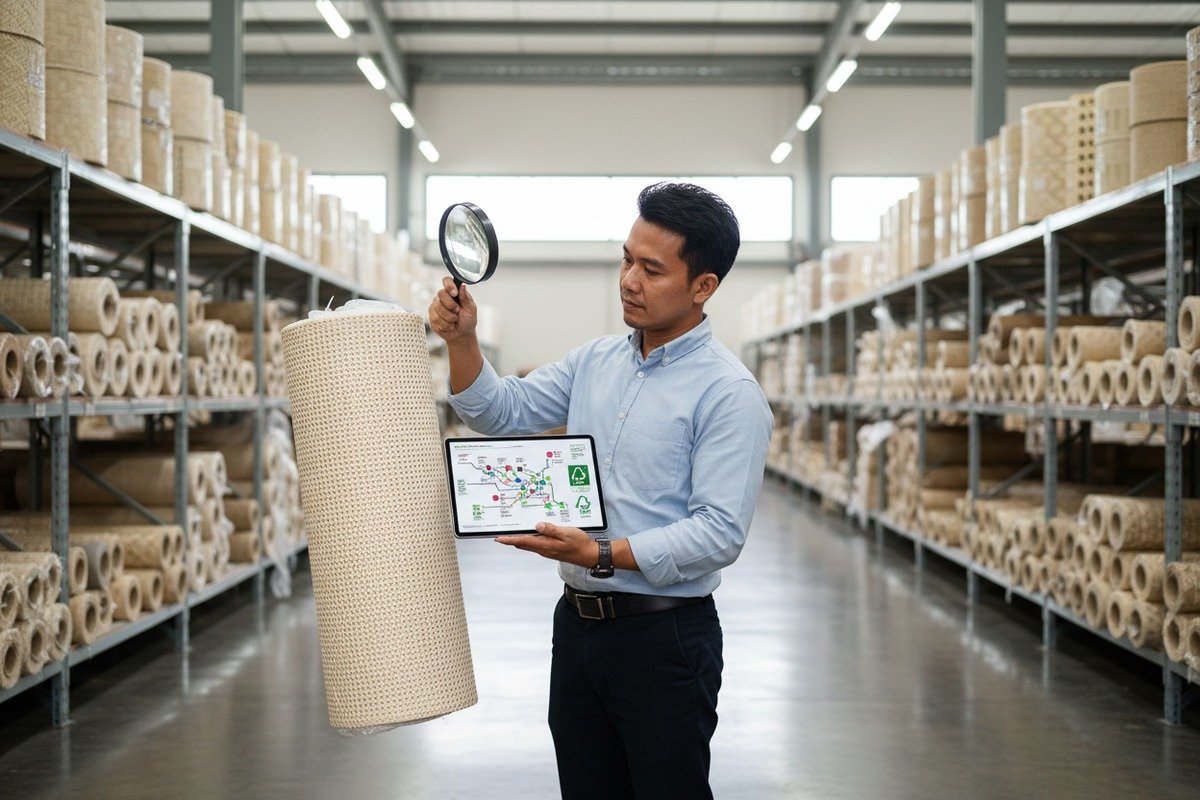
Pour confirmer que votre cannage en rotin est véritablement renouvelable, vérifiez que le fournisseur peut retracer la matière jusqu'à des forêts ou des plantations gérées de manière responsable, idéalement soutenues par une certification FSC ou une accréditation écologique équivalente. La transparence de la chaîne d'approvisionnement, les cycles de récolte documentés et les audits par des tiers sont les indicateurs les plus fiables de la véritable renouvelabilité.
Pourquoi le rotin repousse-t-il si vite ?
Le rotin est un palmier grimpant 1. Il ne pousse pas comme un arbre. Il envoie de longues tiges flexibles à travers la canopée de la forêt. Ces tiges peuvent atteindre leur pleine maturité en aussi peu que deux à sept ans. Comparez cela aux bois durs comme le teck ou le chêne, qui nécessitent 20 à 30 ans, voire plus. Ce cycle de croissance rapide est le fondement de l'affirmation de renouvelabilité du rotin.
Lorsqu'une tige de rotin est récoltée, le système racinaire reste vivant. De nouvelles tiges poussent à partir de la même base. Cela signifie que la plante n'est pas détruite pendant la récolte. La forêt reste intacte. Aucune coupe à blanc n'est nécessaire.
Comment vérifier votre chaîne d'approvisionnement
Tout le rotin n'est pas récolté de manière responsable. Certaines régions souffrent de surexploitation. Voici une liste de contrôle pratique que nous partageons avec nos clients B2B :
| Étape de vérification | Ce qu'il faut rechercher | Drapeau rouge |
|---|---|---|
| Documentation du fournisseur | Permis de récolte, certificats d'origine | Aucun document disponible |
| Certification | FSC, PEFC 2, ou équivalent local | Affirmations sans preuve |
| Plantation vs récolte sauvage | Les plantations gérées offrent plus de contrôle | Zones de récolte sauvage non réglementées |
| Traçabilité | Chaîne de possession claire de la forêt à l'usine | Plusieurs intermédiaires anonymes |
| Audit sur site | Volonté d'autoriser les visites d'usine ou de plantation | Refus de fournir un accès |
Le rôle des certifications
Certification FSC 3 est la référence absolue. Il confirme que le rotin a été récolté dans des sources gérées de manière responsable. Cependant, l'industrie du rotin n'a pas encore de schéma de certification mondial standardisé et largement adopté. C'est une réelle lacune. Dans notre usine de traitement du rotin en Indonésie, nous travaillons directement avec les récoltants locaux pour maintenir la traçabilité, même lorsque les certifications formelles ne sont pas disponibles. Nous documentons les lieux de récolte, les volumes et les délais de repousse.
Rotin de récolte sauvage vs. rotin de plantation
Le rotin récolté à l'état sauvage pousse naturellement dans les sous-bois des forêts tropicales. Lorsqu'il est bien géré, cela crée des incitations économiques pour les communautés locales à protéger les forêts plutôt qu'à les défricher. Le rotin de plantation offre une offre et une qualité plus prévisibles. Les deux peuvent être durables, mais les deux peuvent aussi être mal gérés. La clé est la transparence.
Certains fournisseurs mélangent du rotin sauvage et de plantation sans le divulguer. Si votre gamme de produits dépend d'affirmations de durabilité, demandez à votre fournisseur de spécifier le type de source. Nous étiquetons toujours nos expéditions avec des données d'origine afin que nos partenaires grossistes puissent communiquer avec précision avec leurs propres clients.
Pourquoi devrais-je choisir le rotin naturel plutôt que les matériaux synthétiques pour mes projets écoresponsables ?
Lorsque nous avons commencé à produire du rotin naturel et synthétique dans nos usines de Foshan, nous pensions que les clients choisiraient toujours le synthétique pour sa durabilité. Nous nous trompions. L'engouement pour le rotin naturel a été spectaculaire, en particulier chez les acheteurs européens et australiens.
Le rotin naturel surpasse les alternatives synthétiques dans les projets écoresponsables car il est entièrement biodégradable, n'émet pas de composés organiques volatils, nécessite beaucoup moins d'énergie pour être produit et soutient la préservation des forêts tropicales. Le rotin synthétique, généralement fabriqué à partir de plastique PE, offre une résistance aux intempéries mais contribue à la pollution plastique et ne peut pas se décomposer naturellement.
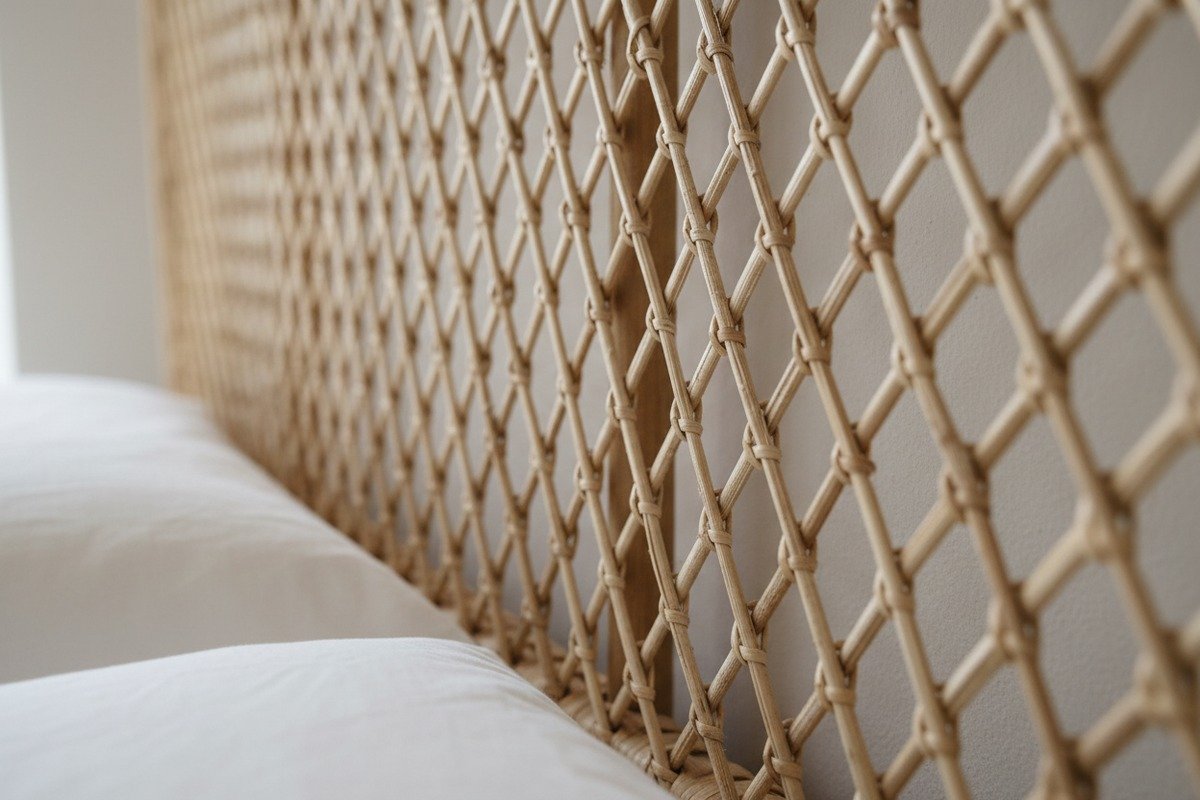
Comparaison des matériaux en un coup d'œil
Comprendre les différences fondamentales aide les responsables des achats à prendre de meilleures décisions. Voici comment les deux matériaux se comparent :
| Propriété | Cannage en rotin naturel | Rotin synthétique (plastique PE) |
|---|---|---|
| Biodégradable | Oui, entièrement | Non |
| Émissions de COV | Aucun (non traité) | Possible, selon la production |
| Empreinte carbone (production) | Faible | Modéré à élevé |
| Durabilité en extérieur | Limité (sensible à l'humidité) | Excellent |
| Durée de vie en intérieur | Des décennies avec des soins appropriés | Decades |
| Élimination en fin de vie | Compostable ou recyclable | Décharge ou recyclage spécialisé |
| Esthétique | Chaud, organique, texturé | Uniforme, toucher moins naturel |
| Coût | Compétitif | Similaire ou légèrement inférieur |
L'avantage de la biodégradabilité
C'est la plus grande différence. Le cannage en rotin naturel se décompose naturellement. Il ne laisse aucun résidu toxique. Lorsqu'un meuble en rotin atteint la fin de sa vie utile, vous pouvez le composter, le réutiliser ou recycler le matériau. Le rotin synthétique reste dans une décharge pendant des centaines d'années. Pour les marques qui s'adressent aux consommateurs soucieux de l'environnement, cette distinction n'est pas seulement un argument de vente, c'est un avantage environnemental mesurable.
Qualité de l'air intérieur
Le rotin naturel non traité n'émet pas de COV. de composés organiques volatils 5 C'est important pour les meubles utilisés dans les chambres, les salons et les espaces pour enfants. De nombreux consommateurs vérifient désormais les niveaux de COV avant d'acheter. Si votre gamme de produits cible les marchés soucieux de leur santé ou axés sur la famille, le rotin naturel vous donne un avantage clair.
Quand le synthétique est judicieux
Nous ne rejetons pas entièrement le rotin synthétique. Pour les meubles d'extérieur exposés à la pluie, à l'humidité et aux rayons UV, le rotin synthétique à base de PE offre de meilleures performances. Le rotin naturel est sensible à l'humidité et aux variations de température. Il peut se fissurer ou se déformer dans des conditions extérieures difficiles. La réponse honnête est : utilisez du rotin naturel lorsque vous le pouvez, et du synthétique uniquement lorsque vous le devez.
Considérations de coût pour les grossistes
Certains acheteurs supposent que le rotin naturel coûte beaucoup plus cher. En réalité, l'écart de prix est faible, surtout lorsque vous achetez en gros volumes. Notre cannage naturel de qualité A est proposé à un prix compétitif par rapport aux alternatives synthétiques de milieu de gamme. Et la prime marketing que vous pouvez facturer pour un produit véritablement écologique compense souvent toute différence de coût.
Quel est l'impact environnemental des méthodes de traitement utilisées pour ma sangle en rotin ?
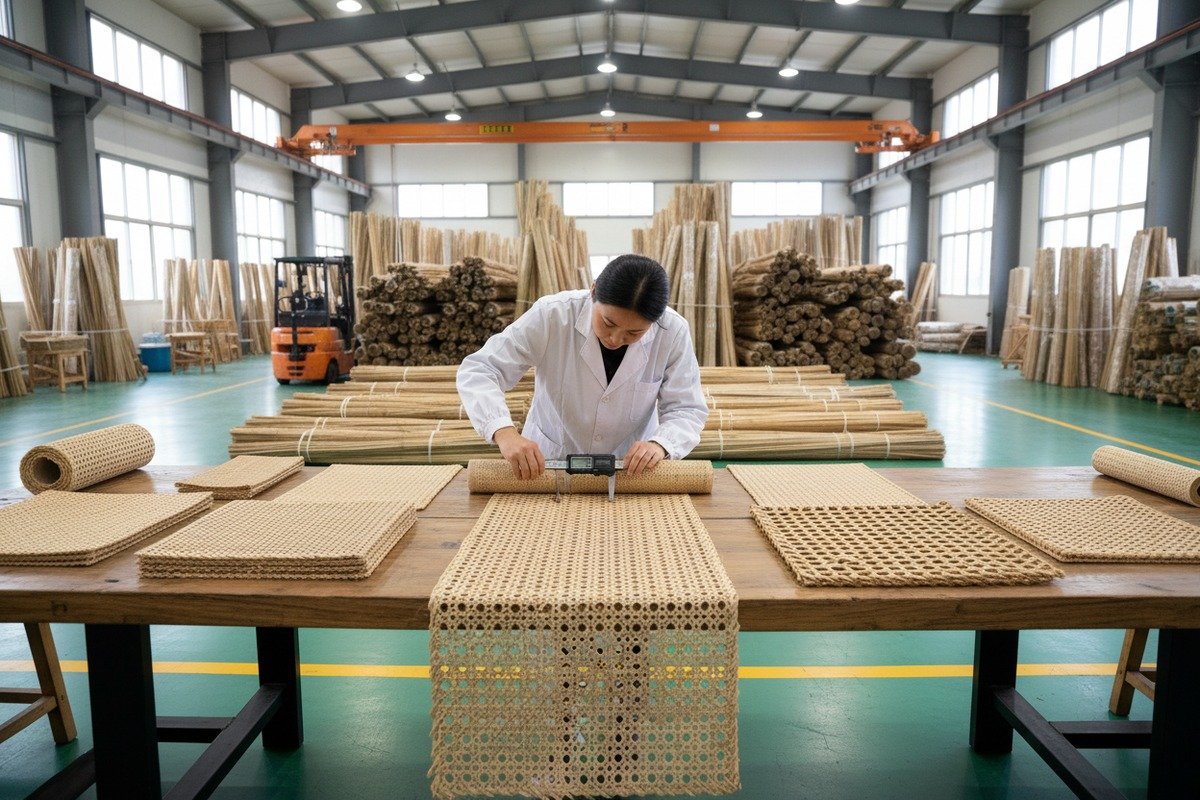
Comment est fabriqué le cannage en rotin naturel.
L'impact environnemental du traitement du rotin varie considérablement. Un traitement minimal — épluchage, fendage, séchage et tissage — maintient l'empreinte carbone à un niveau bas et évite les produits chimiques nocifs. Cependant, certains fabricants appliquent des finitions synthétiques, des agents de blanchiment chimiques ou des revêtements à base de pétrole qui introduisent des COV, réduisent la biodégradabilité et compromettent les références écologiques du matériau.

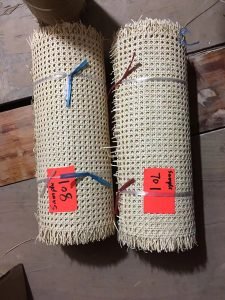
Le processus de base est simple. La peau extérieure de la tige de rotin est pelée par des machines. Cette peau est coupée en fines lanières souples. Les lanières sont séchées, généralement au soleil dans les exploitations traditionnelles. Ensuite, elles sont tissées en feuilles ou en rouleaux de cannage. Sous cette forme de base, aucun produit chimique n'est nécessaire. Aucune machine lourde n'est requise. La consommation d'énergie est minimale.
Là où les problèmes peuvent survenir.
Les problèmes apparaissent lorsque les fabricants ajoutent des traitements. Voici les étapes de traitement les plus courantes qui ont un impact sur la durabilité :
Introduit du chlore ou du peroxyde dans les eaux usées
| Étape de traitement | Impact environnemental | Alternative écologique |
|---|---|---|
| Blanchiment chimique | Blanchiment au soleil ou lavage léger au peroxyde d'hydrogène | Ajoute des COV, réduit la biodégradabilité |
| Revêtement de laque synthétique | Finitions à l'huile naturelle (lin, tung) | Fumigation (anti-moisissure) |
| Utilise du dioxyde de soufre ou du bromure de méthyle | Traitement thermique ou séchage contrôlé | Teinture avec des colorants synthétiques |
| Contamination des eaux usées | Colorants naturels ou à base d'eau | Collage adhésif |
| Les colles à base de pétrole émettent des COV | Adhésifs à base d'eau ou d'origine végétale | Dans notre usine, nous utilisons un traitement thermique au lieu d'une fumigation chimique pour la prévention des moisissures. Nous proposons des options non revêtues et finies à l'huile naturelle pour les clients qui ont besoin de maintenir une biodégradabilité complète. Ces choix coûtent un peu plus cher, mais ils préservent l'intégrité environnementale du matériau. |
Empreinte de transport.
Le rotin pousse dans les régions tropicales, principalement en Indonésie, au Vietnam, aux Philippines et dans certaines parties de l'Afrique. Si votre usine ou votre entrepôt se trouve en Europe ou en Amérique du Nord, le matériau doit être expédié sur des milliers de kilomètres. Ce transport ajoute à l'empreinte carbone.
Cependant, le rotin est léger. Un conteneur de 20 pieds de cannage en rotin pèse beaucoup moins lourd qu'un conteneur identique rempli de panneaux de bois dur ou de composants métalliques. Un poids plus faible signifie une consommation de carburant plus faible par unité. Nous optimisons le chargement des conteneurs pour maximiser l'efficacité volumique, ce qui réduit davantage les émissions d'expédition par unité.
Si l'impact du traitement compte pour votre marque, posez ces questions avant de passer une commande :.
Que demander à votre fournisseur
Quels produits chimiques sont utilisés pendant le traitement ?
- Comment la prévention des moisissures est-elle gérée ?
- Les finitions sont-elles naturelles ou synthétiques ?
- Qu'advient-il des eaux usées de traitement ?
- Le fournisseur peut-il fournir
- fiches de données de sécurité des matériaux Ces questions ne sont pas déraisonnables. Tout fabricant responsable devrait pouvoir y répondre clairement. Nous fournissons une documentation de traitement à tous nos clients grossistes et OEM sur demande. 7?
Le traitement de base du cannage en rotin naturel (pelage, fendage, séchage, tissage) nécessite une énergie minimale et aucun produit chimique nocif.
Comment l'intégration du rotin naturel dans ma gamme de produits améliore-t-elle la note de durabilité de ma marque ?
Ce que mesurent réellement les évaluations de durabilité.
L'intégration du rotin naturel dans votre gamme de produits améliore la note de durabilité de votre marque en réduisant la dépendance aux matériaux non renouvelables, en diminuant l'empreinte carbone de vos produits, en favorisant une élimination biodégradable en fin de vie et en fournissant des éco-crédits vérifiables qui trouvent un écho auprès des consommateurs de plus en plus soucieux de l'environnement et des agences de notation tierces.
Les évaluations de durabilité par des tiers examinent plusieurs facteurs. Le rotin naturel obtient de bons résultats dans la plupart d'entre eux :
: Le cycle de croissance du rotin de deux à sept ans obtient des notes élevées.
- Renouvelabilité des matières premièresEmpreinte carbone.
- : Matériau léger avec une faible énergie de traitement.: Matériau léger avec une faible énergie de traitement.
- Biodégradabilité: Notes maximales pour le rotin naturel non traité.
- Éthique de la chaîne d'approvisionnement: Points attribués pour le soutien aux communautés rurales dans les régions en développement.
- Toxicité: Pas de COV sous forme non traitée.
La demande des consommateurs est réelle
Il ne s'agit pas seulement de certifications sur papier. Le comportement des consommateurs évolue. Les acheteurs, en particulier en Europe, en Australie et en Amérique du Nord, recherchent activement des produits aux attributs écologiques authentiques. Une enquête de 2023 par NielsenIQ 8 a révélé que les produits avec des allégations de durabilité ont connu une croissance 1,7 fois plus rapide que ceux sans. Le rotin confère à votre gamme de produits une histoire de durabilité tangible, visible et authentique.
L'avantage esthétique
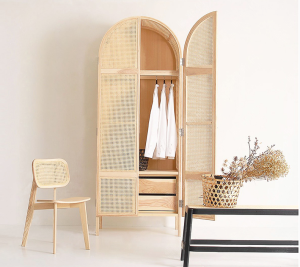
La durabilité ne doit pas nécessairement être ennuyeuse. Le cannage en rotin naturel ajoute de la chaleur, de la texture et du caractère aux meubles. L'aspect organique s'intègre aux styles mid-century modern, boho, scandinave et farmhouse. Il convient aux portes d'armoires, aux têtes de lit, aux séparateurs de pièces, aux panneaux muraux et aux sièges de chaises. Cette polyvalence signifie que vous pouvez utiliser un seul matériau dans plusieurs catégories de produits, simplifiant ainsi votre chaîne d'approvisionnement et réduisant les déchets liés à l'utilisation de nombreux matériaux différents.
Construire une histoire de durabilité crédible
Voici des étapes pratiques pour transformer votre approvisionnement en rotin en un atout de marque :
- Documentez votre chaîne d'approvisionnement. Sachez d'où vient votre rotin et comment il est transformé.
- Demandez des certifications. FSC ou équivalent. Si non disponible, demandez des documents d'origine et des détails sur le traitement.
- Communiquez de manière transparente. Partagez l'histoire sur vos pages produits. Incluez l'origine du matériau, la méthode de transformation et les options de fin de vie.
- Évitez le greenwashing. Ne prétendez pas être "100% durable" si votre rotin a des revêtements synthétiques ou des origines inconnues. Soyez honnête sur les compromis.
- Collaborez avec votre fournisseur. Nous travaillons avec des clients pour créer des fiches techniques de matériaux et des documents de durabilité qu'ils peuvent utiliser dans leur propre marketing et leurs rapports de conformité.
Valeur à long terme
Le cannage en rotin correctement entretenu dure des décennies. Cette longévité réduit la fréquence de remplacement. Moins de remplacements signifient moins de consommation de matériaux, moins d'énergie de fabrication et moins de déchets. Pour les marques qui calculent des métriques de durabilité du cycle de vie 9, cette durabilité est un avantage significatif. Une porte d'armoire lambrissée de rotin qui dure 15 ans a une fraction de l'impact environnemental d'une alternative synthétique remplacée tous les cinq ans.
Positionnement concurrentiel
De plus en plus de détaillants et de distributeurs exigent désormais des données de durabilité de leurs fournisseurs. Si vous êtes un grossiste de matériaux pour meubles ou une usine fournissant de grandes chaînes de distribution, avoir du rotin naturel dans votre catalogue renforce votre position. Cela montre que vous êtes en avance sur les tendances réglementaires et les attentes des consommateurs. Nous avons des clients qui ont remporté de nouveaux contrats spécifiquement parce qu'ils pouvaient fournir du cannage en rotin naturel vérifié avec une traçabilité complète.
Conclusion
Le cannage en rotin naturel est véritablement renouvelable et écologique, mais seulement lorsqu'il est approvisionné de manière responsable, transformé proprement et soutenu par une documentation transparente de votre fournisseur.
Notes de bas de page
Remplacé par un document de la FAO sur la taxonomie, la biologie et l'écologie du rotin, qui décrit le rotin comme un palmier grimpant. ↩︎
Site officiel du Programme pour la Reconnaissance des Certifications Forestières, une autre norme forestière. ↩︎
Source officielle de la certification Forest Stewardship Council, une norme clé pour la foresterie durable. ↩︎
Fournit des informations botaniques générales et des caractéristiques des palmiers rotins. ↩︎
Définit les COV et explique leur impact sur la qualité de l'air intérieur et la santé. ↩︎
Fournit des informations sur les problèmes environnementaux et les impacts de la pollution plastique. ↩︎
Explique le but et l'importance des Fiches de Données de Sécurité des Matériaux (FDS) pour la sécurité chimique. ↩︎
Soutient les affirmations concernant la demande des consommateurs et le comportement d'achat lié à la durabilité. ↩︎
Définit l'Analyse du Cycle de Vie (ACV) comme un outil de mesure de l'impact environnemental. ↩︎
 English
  Español de México
  العربية
  Deutsch
  Français
  Русский