
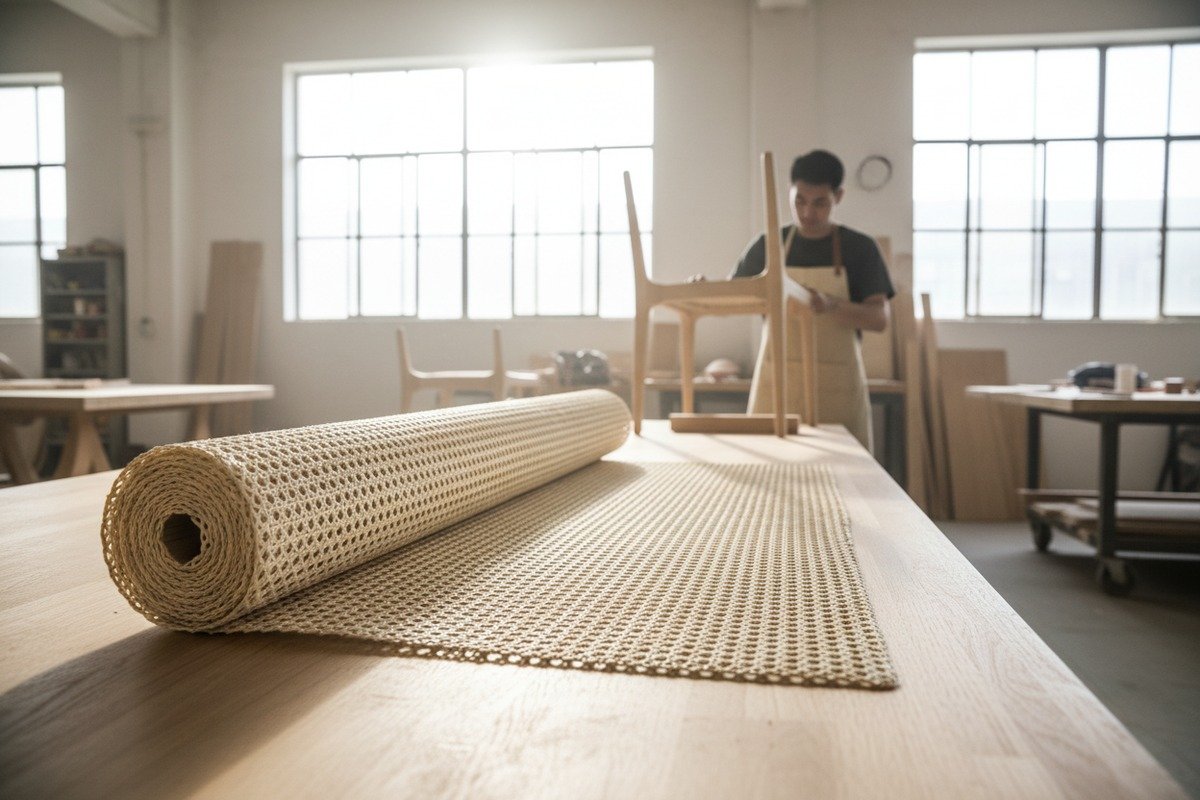
Chaque année, notre usine de production en Indonésie traite des milliers de rouleaux de cannage rotin 1, et la demande la plus courante de nos clients fabricants de meubles ? “ Pouvez-vous le blanchir plus clair ? ” La demande pour ce look propre, aéré et moderne a grimpé en flèche. Mais voici le problème que de nombreux acheteurs découvrent trop tard : tout blanchiment n'est pas égal, et le mauvais processus peut discrètement détruire la qualité même pour laquelle vous payez.
Le blanchiment éclaircit le cannage en rotin pour une esthétique raffinée et moderne, mais il peut réduire la flexibilité, augmenter la fragilité et provoquer une incohérence des couleurs si des produits chimiques agressifs sont utilisés. Les méthodes de blanchiment sans produits chimiques ou écologiques préservent l'intégrité structurelle, la respirabilité et la durabilité à long terme beaucoup plus efficacement que les traitements agressifs traditionnels.
Ci-dessous, nous détaillons exactement comment le blanchiment affecte la qualité du rotin dans quatre domaines critiques qui importent le plus aux fabricants de meubles et aux grossistes de matériaux. Que vous vous approvisionniez en rouleaux en vrac ou que vous conceviez une nouvelle gamme de produits, ce guide vous aidera à prendre des décisions plus éclairées.
Le processus de blanchiment rendra-t-il ma cannage en rotin plus cassant avec le temps ?
C'est la question que nous entendons le plus souvent de nos clients aux Pays-Bas et en Australie, en particulier ceux qui construisent des lignes de meubles d'intérieur destinées à durer une décennie ou plus. Ils aiment le look lumineux et propre. Mais ils s'inquiètent des retours et des réclamations de garantie à long terme.
Oui, le blanchiment chimique agressif peut rendre le cannage en rotin plus cassant avec le temps en éliminant les huiles naturelles et en modifiant la structure cellulaire des fibres. Cependant, les méthodes de blanchiment sans produits chimiques comme la vapeur ou les agents de blanchiment naturels réduisent considérablement ce risque et maintiennent la souplesse d'origine du rotin pendant des années.
Comment le blanchiment modifie le rotin au niveau des fibres
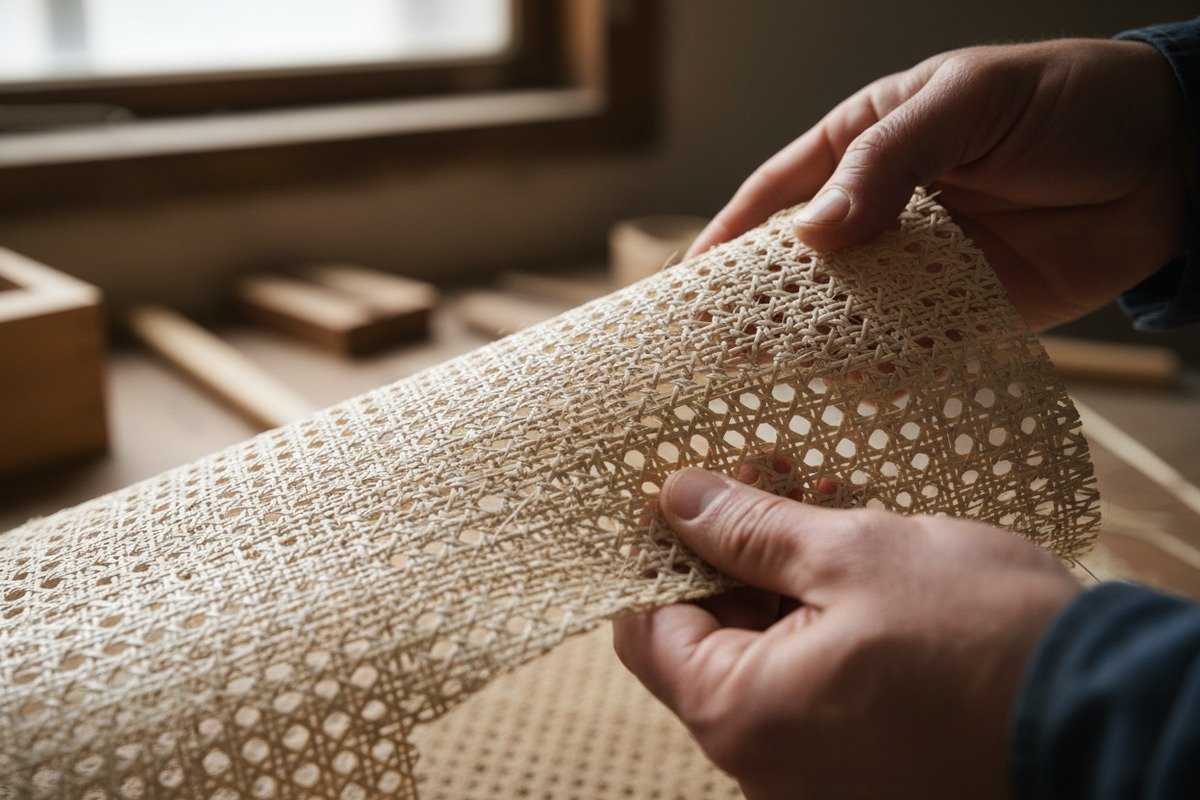
Le cannage en rotin est fabriqué à partir de la peau extérieure des lianes de rotin, un membre de la famille des palmiers. Cette peau extérieure contient de l'holocellulose, de la lignine et des huiles naturelles 2. Ces composants confèrent au rotin sa flexibilité et sa résilience caractéristiques. Lorsque vous blanchissez le rotin à l'aide d'agents chimiques puissants tels que le peroxyde d'hydrogène 3 à fortes concentrations ou des solutions à base de chlore, vous décomposez certains de ces composants. La structure de l'holocellulose s'affaiblit. Les huiles naturelles s'évaporent. Ce qui reste est une fibre plus claire et plus blanche qui est belle mais a perdu une partie de son renforcement interne.
Pensez-y comme à des cheveux. Blanchissez vos cheveux une fois doucement, et ils restent doux. Blanchissez-les à plusieurs reprises avec des produits chimiques puissants, et ils deviennent secs et se cassent facilement. Les fibres de rotin réagissent de la même manière.
Le rôle du traitement à l'huile avant le blanchiment
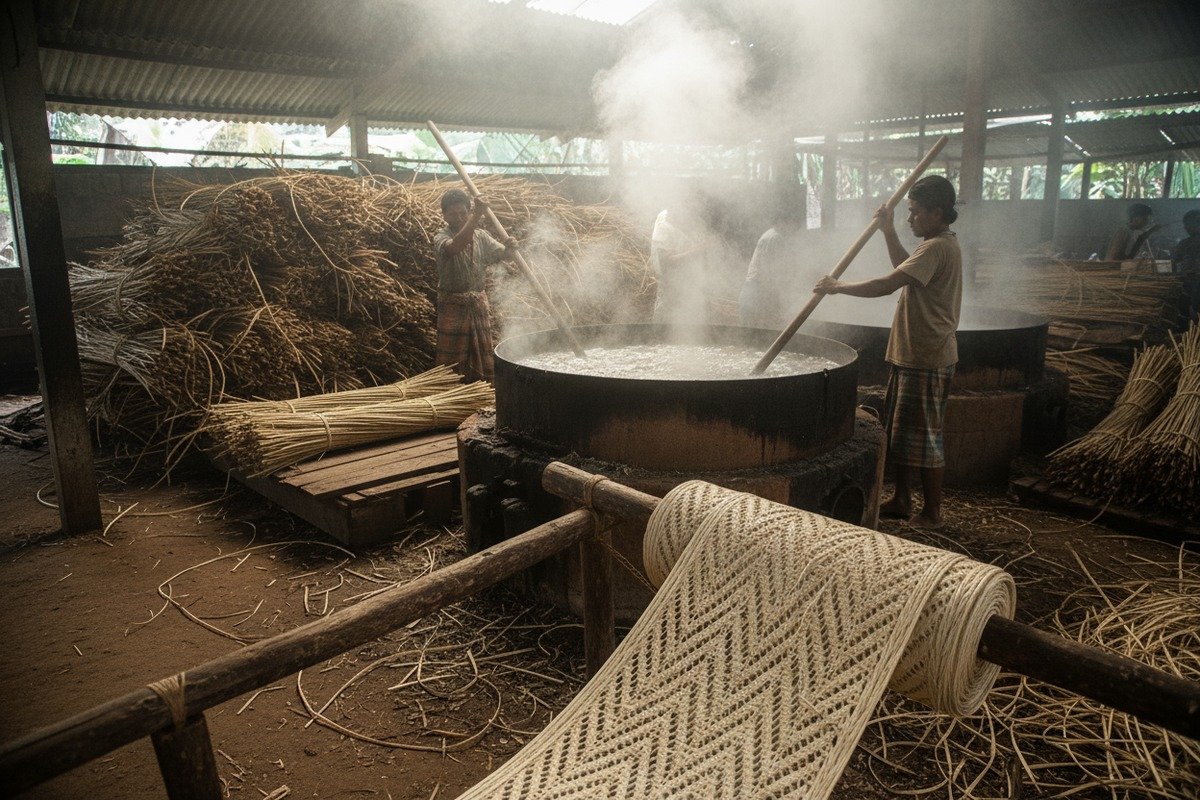
Dans notre usine de transformation indonésienne, nous suivons une séquence traditionnelle. D'abord, le rotin brut est bouilli dans de l'huile pendant 10 à 20 minutes. Ce étape de traitement à l'huile 4 élimine les impuretés, ajoute une couche protectrice et prépare la fibre à un traitement ultérieur. Lorsque le blanchiment a lieu après un traitement à l'huile approprié, le rotin conserve davantage sa flexibilité naturelle. Sauter cette étape — ou la précipiter — entraîne des résultats nettement plus cassants après le blanchiment.
Chimique vs. Sans produits chimiques : une comparaison directe
| Facteur | Blanchiment chimique agressif | Blanchiment sans produits chimiques (vapeur/agents naturels) |
|---|---|---|
| Risque de fragilité | Élevé — les fibres se dessèchent et se fissurent | Faible — les huiles naturelles sont largement préservées |
| Résultat de couleur | Blanc très vif, parfois inégal | Blanc cassé à crème, plus uniforme |
| Résistance des fibres 5 rétention | 60–75 % de l'original | 85–95 % de l'original |
| Risque d'émanations | Oui, surtout à l'intérieur | Minimal à inexistant |
| Coût | Plus faible au départ | Légèrement plus élevé mais moins de retours |
Ce que cela signifie pour vos produits
Si vous êtes une usine de meubles ou un grossiste, la fragilité se traduit directement par un échec du produit. Les chaises se fissurent. Les têtes de lit se fendent. Les panneaux d'armoires se déforment et se cassent. Notre recommandation, basée sur plus de 15 ans de traitement du rotin, est simple : demandez toujours à votre fournisseur quelle méthode de blanchiment il utilise. S'il ne peut pas répondre clairement, c'est un signal d'alarme. Dans notre usine, nous utilisons par défaut la vapeur et des agents de blanchiment naturels pour toutes les commandes de qualité supérieure, car la différence de qualité à long terme est mesurable et significative.
Comment puis-je assurer la cohérence des couleurs sur mes commandes en gros de rotin blanchi ?
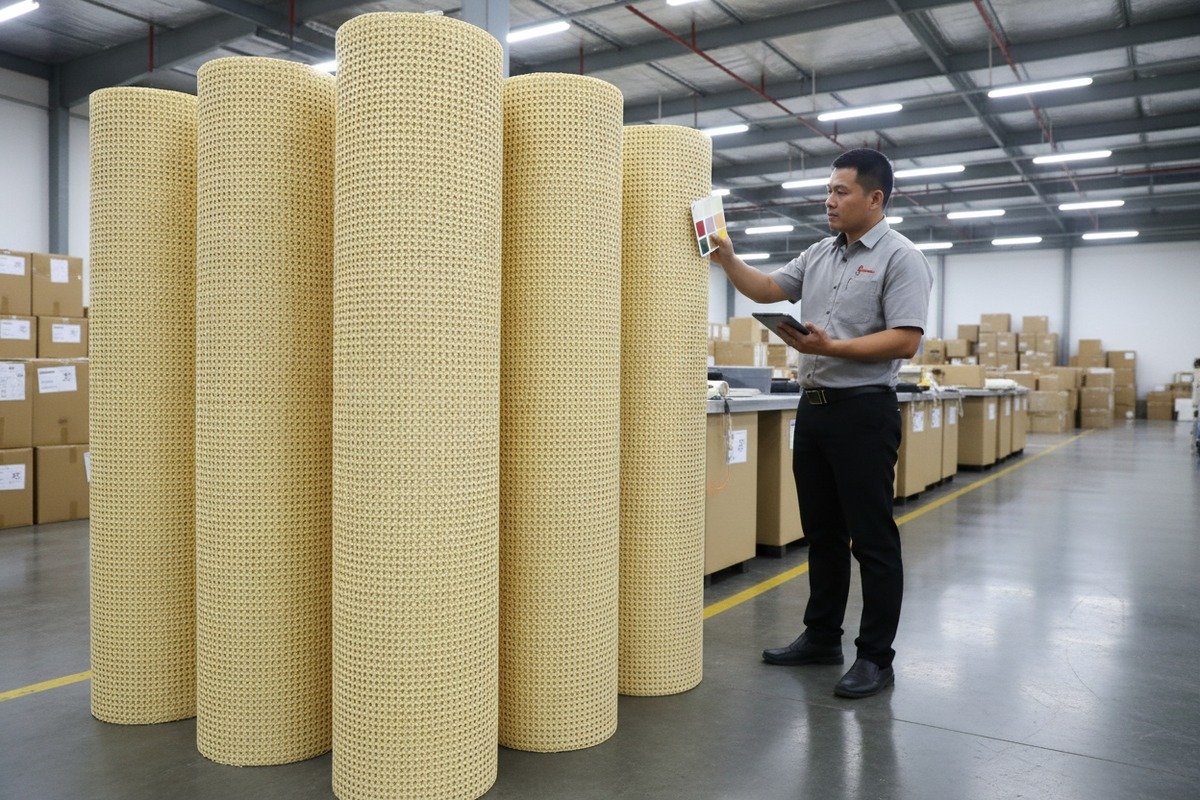
Lorsque nous expédions une commande de 500 rouleaux à un grossiste de matériaux pour meubles en Espagne ou à une usine aux États-Unis, une seule plainte peut anéantir toute la relation : " La couleur ne correspond pas ". Le blanchiment incohérent est l'un des plus grands problèmes dans le chaîne d'approvisionnement en rotin 6. Cela entraîne des retards, des litiges et des retouches coûteuses.
Assurer la cohérence des couleurs du rotin blanchi en vrac nécessite un classement rigoureux des matières premières, des paramètres de blanchiment contrôlés (temps, température, concentration de l'agent) et une inspection de qualité post-blanchiment. Travailler avec un fournisseur qui exploite sa propre installation de traitement, plutôt que de s'approvisionner auprès de plusieurs petits ateliers, réduit considérablement la variation d'un lot à l'autre.
Pourquoi la variation de couleur se produit
Le rotin est un matériau naturel. Chaque liane pousse différemment. Certaines sections sont plus denses. Certaines absorbent l'humidité plus rapidement. Certaines ont une peau extérieure plus épaisse. Lorsque vous blanchissez un lot, les fibres plus denses blanchissent plus lentement. Les fibres plus fines blanchissent plus rapidement. Le résultat ? Des taches, des stries et des différences de teinte notables entre les rouleaux, voire au sein d'un même rouleau. Ce n'est pas un défaut de l'agent de blanchiment. C'est une caractéristique des matériaux naturels qui doit être gérée par le contrôle du processus.
Notre processus de classement et de tri
Dans notre usine, nous trions le rotin brut en trois grades de densité avant tout blanchiment. Chaque grade reçoit un temps de traitement légèrement différent. C'est un travail supplémentaire, mais c'est le seul moyen fiable d'obtenir des résultats cohérents sur des centaines de rouleaux.
| Étape du processus | Objectif | Impact sur la cohérence des couleurs |
|---|---|---|
| Raw material grading 7 | Tri par densité et épaisseur des fibres | Assure une absorption uniforme du blanchiment |
| Durée de trempage contrôlée | Durée ajustée par grade | Empêche le sur-blanchiment des fibres fines |
| Surveillance de la température | Maintenir une chaleur de traitement stable | Évite les réactions chimiques inégales |
| Inspection post-blanchiment | Contrôle qualité visuel et tactile | Capture des rouleaux aberrants avant l'emballage |
| Second séchage et classement | Tri final par teinte | Regroupe les rouleaux assortis pour les commandes uniques |
Conseils pour les acheteurs commandant du rotin blanchi en vrac
Premièrement, demandez toujours un rouleau échantillon avant de confirmer une commande importante. Comparez-le à la lumière naturelle, pas aux lumières fluorescentes d'entrepôt. Deuxièmement, spécifiez votre plage de couleurs acceptable par écrit. Des termes comme "blanc clair" ou "crème" signifient différentes choses pour différentes personnes. Si possible, fournissez un échantillon physique ou une référence Pantone 8. Troisièmement, demandez à votre fournisseur s'il traite tous les rouleaux dans la même installation et le même lot. Lorsqu'un fournisseur s'approvisionne dans cinq petits ateliers différents, la cohérence est presque impossible à garantir.
Nous vous recommandons également de commander une petite quantité tampon, généralement 5 à 10 % supplémentaires, car même avec un excellent contrôle du processus, le matériau naturel présentera toujours de légères variations. Avoir des rouleaux supplémentaires à portée de main évite les arrêts de production si un ou deux rouleaux sortent de votre teinte cible.
Techniques avancées pour une cohérence premium
Certains fabricants, y compris notre installation, utilisent le blanchiment à la vapeur dans des pièces à climat contrôlé. Cela élimine deux variables majeures : l'humidité ambiante et les fluctuations de température. Le résultat est une gamme de couleurs plus serrée sur l'ensemble du lot. Son exploitation coûte plus cher, mais pour les clients qui vendent des meubles haut de gamme sur les marchés européens ou australiens, le supplément en vaut la peine. Leurs clients finaux attendent la perfection, tout comme eux.
Le blanchiment affecte-t-il la flexibilité du rotin lorsque je l'utilise pour mes créations de meubles ?
Notre équipe travaille souvent directement avec des designers de meubles en Turquie, en Grèce et au Moyen-Orient qui souhaitent du rotin blanchi pour des pièces modernes et minimalistes. Le premier prototype est parfait. Mais ensuite, ils essaient de plier le cannage sur une courbe serrée ou de l'étirer sur un cadre, et il se fissure. Ce moment de frustration conduit généralement à un appel à notre équipe technique.
Le blanchiment affecte la flexibilité du rotin, mais le degré dépend entièrement de la méthode utilisée. Le blanchiment chimique agressif élimine les huiles naturelles et affaiblit les liaisons des fibres, réduisant la souplesse jusqu'à 25–40 %. Les méthodes sans produits chimiques comme la vapeur préservent la majeure partie de la flexibilité d'origine du rotin, le rendant adapté aux conceptions de meubles courbes et complexes.
Comprendre la flexibilité naturelle du rotin
Le rotin tire sa flexibilité de trois éléments : les huiles naturelles présentes dans les fibres, la structure intacte de l'holocellulose et une teneur en humidité adéquate. Le rotin frais et non blanchi a une couleur beige clair et beurrée et se plie facilement sans se fissurer. Lorsque le blanchiment élimine ou dégrade l'un de ces trois éléments, la flexibilité diminue. Plus le blanchiment est agressif, plus la perte est importante.
Comparaison des différentes méthodes de blanchiment sur la flexibilité
| Méthode de blanchiment | Flexibilité conservée | Idéal pour | Limites |
|---|---|---|---|
| Chimique à base de chlore | 60–75% | Applications en panneaux plats | Se fissure sur les courbes serrées |
| Peroxyde d'hydrogène (haute concentration) | 65–80% | Courbure modérée | Nécessite un post-conditionnement soigné |
| Traitement à la vapeur avec des agents naturels | 85–95% | Cadres incurvés, formes complexes | Légèrement moins blanc que le chimique |
| Pas de blanchiment (naturel) | 100% | Toutes applications | S'assombrit avec le temps |
Implications pratiques pour la conception de meubles
Si votre conception nécessite que le rotin s'enroule autour d'un dossier de chaise incurvé ou d'une tête de lit arrondie, la flexibilité n'est pas une option, elle est essentielle. Nous avons vu des cas où une usine a commandé du rotin blanchi chimiquement, a essayé de l'appliquer sur un cadre incurvé et a perdu 15% du matériau en raison de fissures lors de l'installation. C'est du matériel gaspillé, de la main-d'œuvre gaspillée et des livraisons retardées.
Pour les applications plates telles que les inserts de portes d'armoires, les panneaux muraux ou les cloisons, le rotin blanchi chimiquement peut convenir. Le matériau est plat et n'a pas besoin de se courber. Mais pour toute conception avec des courbes, des arches ou des applications tendues, nous recommandons fortement le rotin blanchi sans produits chimiques ou, au minimum, du rotin qui a été correctement traité à l'huile avant le blanchiment.
Conditionnement post-blanchiment
Même avec un blanchiment sans produits chimiques, le rotin bénéficie d'un conditionnement post-traitement. Dans notre usine, nous appliquons une légère couche de huile minérale ou huile de lin 9 après le blanchiment et avant la dernière étape de séchage. Cela restaure l'humidité de surface, améliore la souplesse et crée une subtile couche protectrice. Nous conseillons à nos clients de faire de même s'ils stockent du rotin blanchi pendant de longues périodes avant utilisation. Un simple essuyage avec de l'huile diluée sur le dessous de la sangle, suivi de 2 à 4 heures de séchage à l'air, peut faire une différence notable dans la maniabilité.
Le dilemme du designer : couleur vs fonction
De nombreux designers souhaitent un rotin aussi blanc que possible. Mais le résultat le plus blanc provient généralement du blanchiment le plus agressif. C'est le compromis essentiel. Notre conseil est de commencer avec une attente de couleur réaliste. Un crème doux ou un blanc chaud obtenu par étuvage sera toujours plus performant qu'un blanc blanchi éclatant en termes de flexibilité, de durabilité et d'apparence à long terme. Nous montrons à nos clients des échantillons comparatifs côte à côte, et la plupart choisissent la teinte légèrement plus chaude une fois qu'ils sentent la différence de flexibilité dans leurs mains.
Puis-je toujours garantir une longue durée de vie à mes produits si j'utilise des matériaux en rotin blanchi ?
Nous avons eu des conversations honnêtes avec nos clients grossistes aux États-Unis et en Australie à ce sujet précis. Ils construisent des marques. Ils veulent promettre à leurs clients qu'une chaise ou une armoire en rotin durera. L'utilisation de matériaux blanchis semble risquée. Mais cela ne doit pas l'être.
Oui, vous pouvez garantir une longue durée de vie au produit avec des matériaux en rotin blanchi, à condition que le blanchiment utilise des méthodes sans produits chimiques ou douces, que le rotin soit correctement huilé avant le traitement, et que le produit fini reçoive des finitions protectrices appropriées telles que des scellants UV et des applications d'huile légère. Le rotin blanchi correctement traité peut durer aussi longtemps que le rotin naturel.
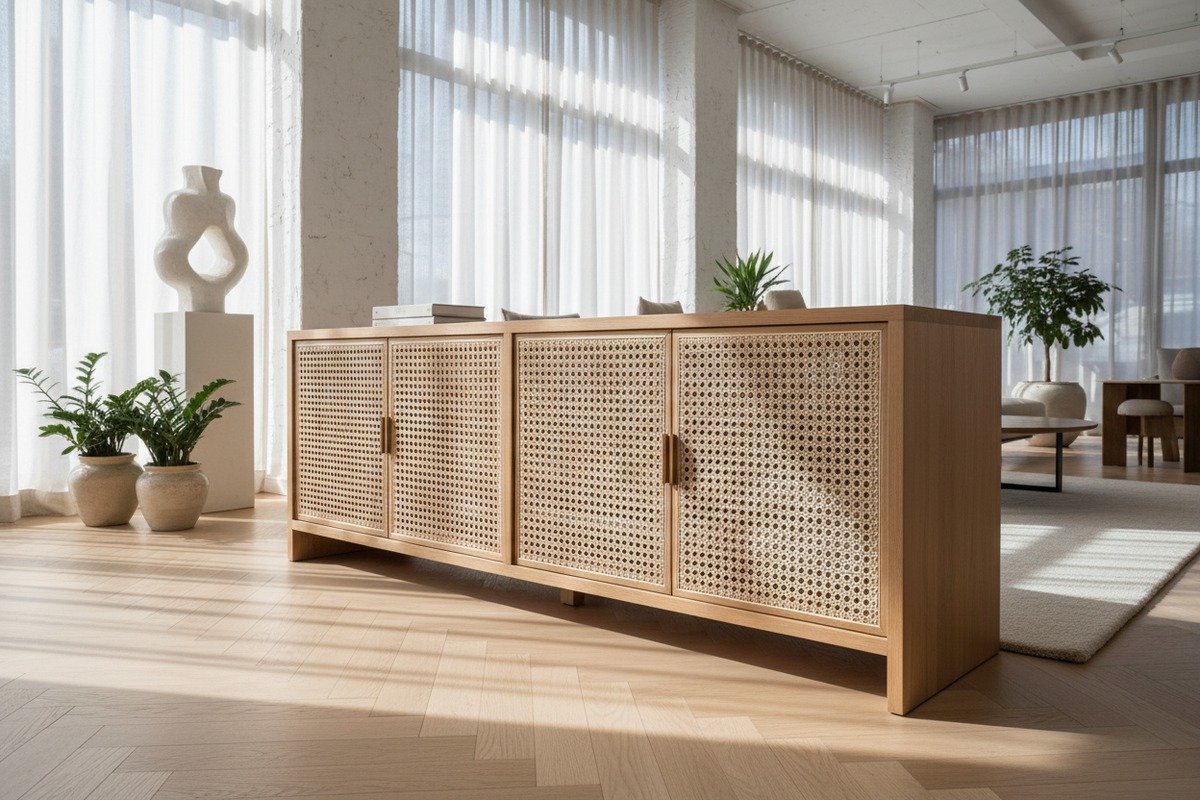
Qu'est-ce qui détermine la durée de vie du rotin ?
La durée de vie dépend de quatre facteurs : la qualité de la matière première, la méthode de traitement, l'environnement d'utilisation finale et la routine d'entretien. Le blanchiment n'est qu'une variable dans cette équation. Un produit en rotin naturel mal traité peut se dégrader plus rapidement qu'un produit blanchi bien traité. La clé est de contrôler les quatre facteurs, pas d'éviter complètement le blanchiment.
Blanchiment et résistance aux parasites
Un avantage souvent négligé du blanchiment est qu'il améliore la résistance aux champignons et aux insectes. Le processus traditionnel de traitement à l'huile et de blanchiment a été initialement développé non pas pour l'esthétique, mais pour la conservation. Le rotin dans les climats tropicaux est vulnérable à la moisissure, aux coléoptères et à d'autres parasites. La combinaison du traitement à l'huile et du blanchiment crée un environnement hostile à ces organismes. Selon des recherches soutenues par le INBAR (Réseau International pour le Bambou et le Rotin) 10, le rotin correctement traité présente une durabilité considérablement améliorée et se vend plus cher sur les marchés internationaux en raison de son utilisabilité prolongée.
Considérations sur la durée de vie intérieure vs extérieure
L'environnement dans lequel votre produit évolue est d'une importance capitale. À l'intérieur, le rotin blanchi peut durer de nombreuses années avec un minimum d'entretien. Le principal ennemi à l'intérieur est l'air sec des systèmes de chauffage, qui peut faire perdre de l'humidité aux fibres et les faire craquer. Une légère application d'huile une ou deux fois par an évite cela.
À l'extérieur, le rotin blanchi est exposé à deux menaces supplémentaires : les rayons UV et l'humidité. L'exposition aux UV provoque un jaunissement et une dégradation de la surface. Les cycles d'humidité – humidification et séchage – provoquent un gonflement et un rétrécissement qui affaiblissent le tressage au fil du temps. Pour les produits d'extérieur, un scellant résistant aux UV est indispensable. Nous recommandons à nos clients d'appliquer une finition transparente bloquant les UV avant de vendre tout produit en rotin blanchi destiné à une utilisation sur patio ou à l'extérieur.
Recommandations d'entretien pour les utilisateurs finaux
| Tâche d'entretien | Fréquence | Produits à utiliser | Objectif |
|---|---|---|---|
| Dépoussiérage léger | Hebdomadaire | Chiffon doux ou brosse douce | Retirer les débris de surface |
| Conditionnement à l'huile | Tous les 6 à 12 mois | Huile de lin diluée ou savon à l'huile Murphy | Restaurer l'humidité et la souplesse |
| Application de scellant UV | Annuellement (extérieur uniquement) | Spray transparent résistant aux UV ou à appliquer au pinceau | Prévenir le jaunissement et le craquellement |
| Nettoyage en profondeur | Au besoin | Eau avec une solution de vinaigre doux | Retirer les taches et la moisissure |
| Éviter la lumière directe du soleil | En cours | Rideaux, ombre ou repositionnement | Minimiser les dommages causés par les UV |
Durabilité dans le monde réel : ce que nous apprenons de nos clients
Plusieurs de nos clients de longue date en Europe utilisent notre rotin blanchi sans produits chimiques dans leurs gammes de produits depuis plus de huit ans. Leurs meubles sont toujours en service. Le cannage n'a pas craqué et la couleur n'a que légèrement viré vers un crème chaud, un changement que la plupart des utilisateurs finaux préfèrent en fait. Le secret ? Un traitement approprié à la source et des instructions d'entretien claires fournies avec chaque produit.
Nous recevons également des retours de clients bricoleurs qui blanchissent ou teignent le rotin à la maison pour rénover des pièces vintage. Les résultats varient considérablement. Sans conditions contrôlées et post-traitement approprié, le rotin blanchi à la maison a tendance à jaunir plus rapidement et à perdre sa souplesse en deux à trois ans. Cela renforce la valeur du blanchiment traité en usine où chaque variable est gérée.
Associer le rotin blanchi à la bonne palette de design
La longévité n'est pas seulement physique, elle est aussi visuelle. Le rotin blanchi s'associe magnifiquement avec le blanc, le crème et les bois clairs comme le chêne et le frêne. Il s'intègre parfaitement dans les intérieurs scandinaves, côtiers et minimalistes modernes. Le rotin naturel, quant à lui, complète les bois plus foncés comme le noyer et l'acajou. Choisir la bonne association garantit que le produit reste visuellement pertinent et ne semble pas démodé, ce qui prolonge sa durée de vie perçue dans la maison du consommateur.
Conclusion
Le blanchiment du cannage en rotin n'est pas intrinsèquement nocif, il s'agit de choisir la bonne méthode. Les processus sans produits chimiques préservent la résistance, la souplesse et la longévité tout en offrant l'esthétique moderne que vos clients désirent. Collaborez avec un fournisseur qui contrôle l'ensemble du processus, de la classification des matières premières à l'inspection finale.
Notes de bas de page
1. Wikipedia fournit un aperçu complet et faisant autorité du cannage, qui comprend le cannage en rotin, dans le contexte du mobilier. ↩︎
2. Fournit des détails scientifiques sur la composition chimique des fibres de rotin. ↩︎
3. Wikipedia offre une explication complète et faisant autorité du peroxyde d'hydrogène, de ses propriétés chimiques et de ses utilisations comme agent de blanchiment. ↩︎
4. Décrit le processus traditionnel d'huilage du rotin et ses avantages. ↩︎
5. Définit la résistance des fibres et son importance pour la qualité et les performances du matériau. ↩︎
6. Fournit une analyse de la chaîne de marché du rotin et de sa dynamique. ↩︎
7. Explique la classification des matières premières comme un processus de contrôle qualité essentiel. ↩︎
8. Fournit un aperçu complet du système de correspondance des couleurs Pantone. ↩︎
9. Cet article compare directement l'huile minérale et l'huile de lin pour le traitement du bois, détaillant leurs différences, leurs propriétés et leurs applications, ce qui est pertinent dans le contexte du traitement des fibres naturelles comme le rotin. ↩︎
10. Fournit des informations sur le Réseau international du bambou et du rotin (INBAR). ↩︎
 English
  Español de México
  العربية
  Deutsch
  Français
  Русский