
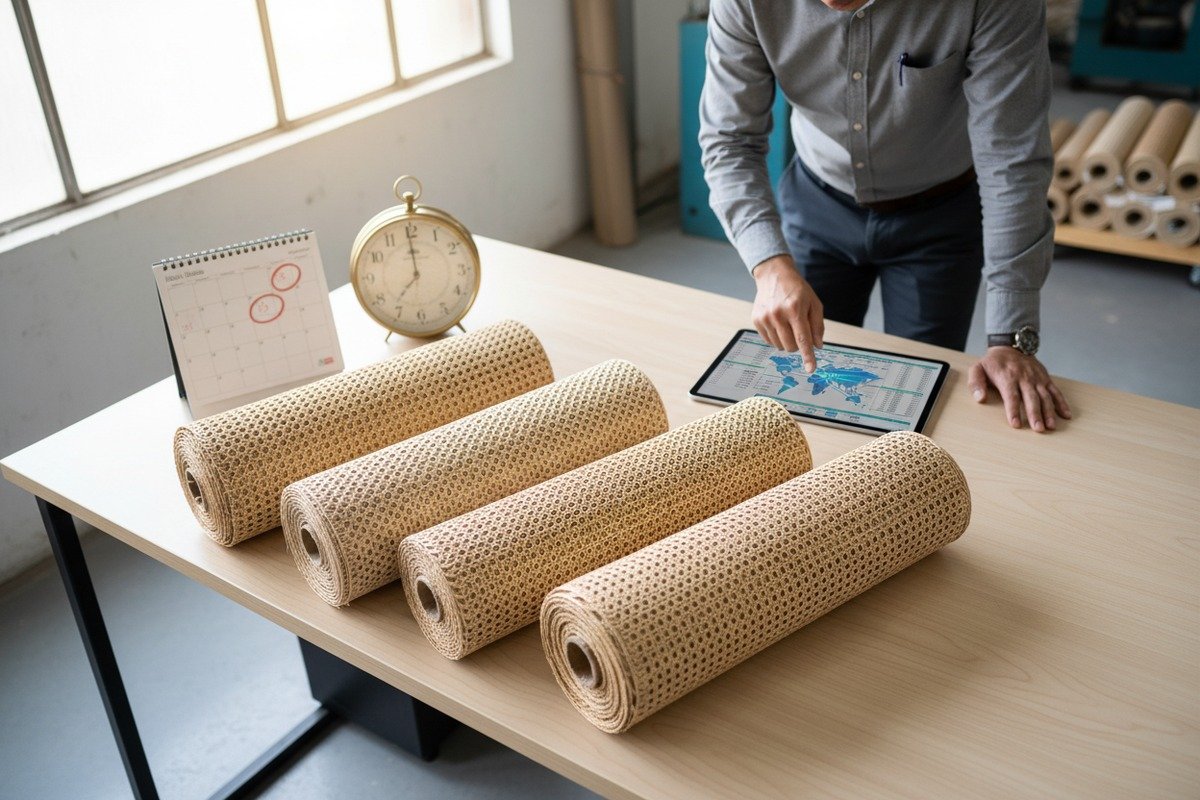
Chaque semaine, notre équipe commerciale reçoit des appels de fabricants de meubles qui ont sous-estimé le temps commandes de cannage en rotin personnalisé 1 nécessaire pour arriver à leur atelier.
Les délais de production typiques pour les cannages en rotin personnalisés varient de 10 à 15 jours ouvrables pour la production, plus 8 à 20 jours pour l'expédition internationale. Les motifs standard avec des matériaux en stock sont expédiés plus rapidement, tandis que les conceptions de tissage uniques, les finitions spéciales ou les commandes en gros volume peuvent prolonger les délais à 4 à 6 semaines au total.
Comprendre chaque étape du processus d'approvisionnement vous aide à planifier plus intelligemment l'expédition internationale 2. Ci-dessous, nous détaillons les délais de production, les facteurs de retard courants, les fenêtres d'expédition et les stratégies pour que votre ligne de meubles fonctionne sans interruption.
Combien de temps faudra-t-il pour fabriquer mes spécifications personnalisées de cannage en rotin ?
Lorsque nous planifions les cycles de production dans nos trois usines, la réponse dépend de ce que signifie réellement "personnalisé" pour votre commande spécifique.
La fabrication de cannage en rotin personnalisé prend généralement 10 à 15 jours ouvrables, de l'approbation de l'échantillon à la production des produits finis. Des modifications simples comme des largeurs personnalisées ou des découpes de motifs standard peuvent être réalisées en 1 à 3 jours, tandis que des motifs de tissage personnalisés complexes, des couleurs de teinture spéciales ou des commandes en gros volumes peuvent nécessiter 15 à 20 jours.
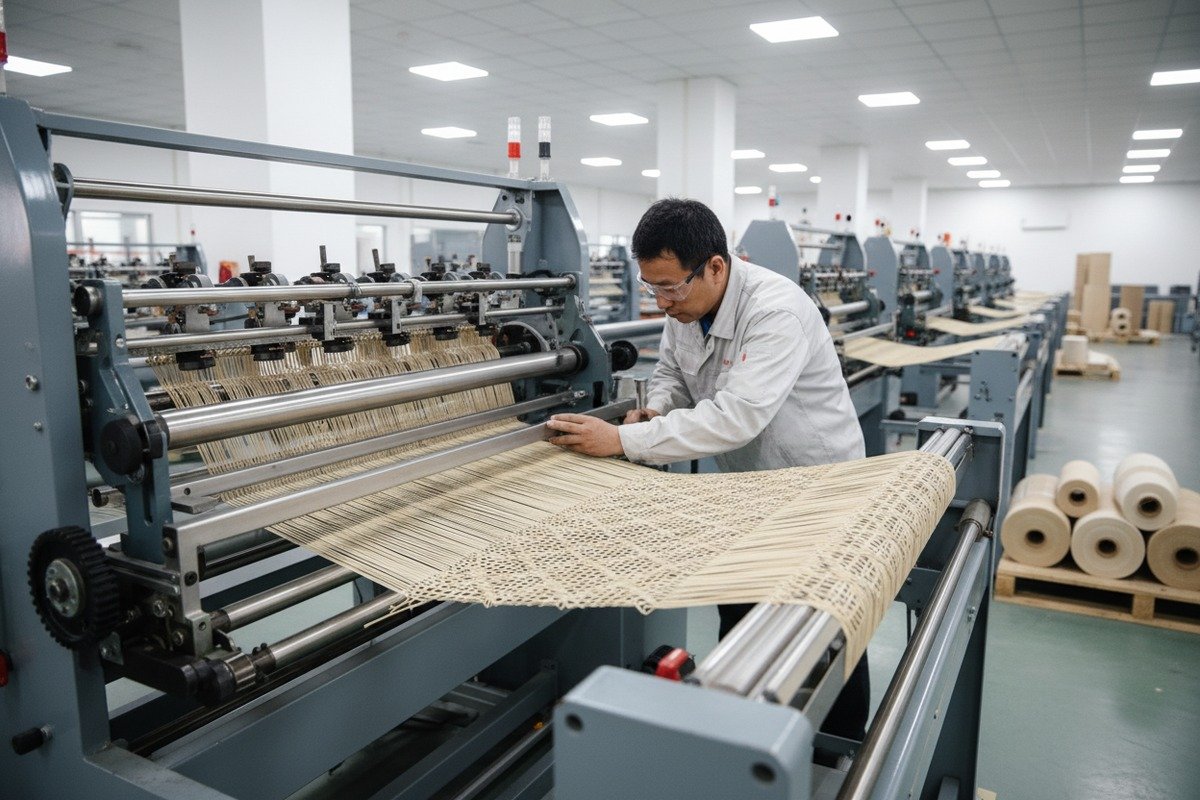
Décomposition des étapes de production
Le calendrier de fabrication n'est pas un bloc de temps unique. C'est une chaîne d'étapes. Chaque étape a sa propre horloge. Voici ce qui se passe à partir du moment où vous confirmez votre commande.
Étape 1 : Consultation de conception et échantillonnage. C'est là que la plupart des acheteurs perdent du temps sans s'en rendre compte. Vous nous envoyez vos spécifications — type de motif, largeur, longueur, couleur, finition. Nous créons un échantillon physique. Pour les motifs standard comme tissage radio à maille hexagonale ouverte 3 ou le tissage panier carré, l'échantillonnage prend 1 à 2 jours. Pour un motif diamant géométrique entièrement nouveau ou une correspondance de couleur personnalisée, attendez-vous à 3 à 5 jours.
Étape 2 : Approbation de l'échantillon. Cette étape est entièrement entre les mains de l'acheteur. Certains clients approuvent dans les 24 heures. D'autres prennent une semaine pour un examen interne. Chaque jour de retard ici repousse votre date de livraison.
Étape 3 : Production de masse. Une fois approuvé, le site de production entre en action. Notre usine utilise plus de 165 machines à tisser automatisées aux côtés de tisserands qualifiés. Les commandes standard sont produites en 7 à 10 jours. Les productions à haut volume supérieures à 3 000 kg peuvent nécessiter 12 à 15 jours.
Étape 4 : Contrôle qualité et finition. L'inspection, la coupe, le roulage et l'emballage ajoutent 1 à 2 jours. Nous vérifions la densité du tissage, la cohérence des couleurs et les dimensions des rouleaux avant toute expédition.
Chronologie de production par type de commande
| Type de commande | Temps de production typique | Variables clés |
|---|---|---|
| Motif en stock, largeur standard (45–60 cm) | 1–3 jours | Disponible en stock d'entrepôt |
| Largeur/longueur personnalisée, motif standard | 5–7 jours | Réglage de la machine et découpe |
| Motif de tissage personnalisé, rotin naturel | 10–15 jours | Tissage à la main ou reprogrammation de la machine |
| Couleur/finition personnalisée (blanchie, teintée) | 12–18 jours | Temps de teinture, de séchage et de durcissement |
| Commande en gros 3 000+ kg, spécifications standard | 10–15 jours | Nécessite l'allocation complète de la chaîne de production |
| Rotin synthétique PE/PP 4, motif personnalisé | 8–12 jours | Extrusion plus rapide mais configuration du motif nécessaire |
Naturel vs. Synthétique : Le choix du matériau affecte-t-il la vitesse ?
Oui. Rotin naturel 5 provient du palmier indonésien. Il nécessite la récolte, le séchage, le classement et le fendage avant le début du tressage. Si notre usine de traitement indonésienne a en stock du rotin pré-classé, la production commence immédiatement. Si un diamètre de rotin spécifique est en rupture de stock, ajoutez 5 à 7 jours pour la préparation de la matière première.
Le rotin synthétique PE/PP est extrudé à partir de granulés de plastique. La matière première est toujours disponible. La production est plus rapide et plus prévisible. Mais la correspondance des couleurs personnalisées pour le synthétique nécessite toujours un mélange et des essais, ce qui ajoute 2 à 3 jours.
Une chose que nous disons à chaque acheteur : le moyen le plus rapide d'obtenir des délais courts est de choisir parmi les motifs existants et les dimensions standard. Le sur-mesure est beau. Le sur-mesure prend aussi du temps.
Quels facteurs pourraient potentiellement retarder le calendrier de production de ma commande de rotin en vrac ?
Au cours de la dernière décennie, nous avons expédié du rotin dans plus de 30 pays. Des retards se produisent. Mais la plupart d'entre eux sont évitables une fois que vous savez où se cachent les risques.
Les facteurs de retard les plus courants comprennent les cycles d'approbation lents des échantillons, les pénuries de matières premières pendant les saisons de récolte de pointe, les contraintes de capacité des usines pendant le T3-T4, les cycles de révision des couleurs personnalisées, les rejets de qualité nécessitant des retouches et des spécifications incomplètes ou peu claires au stade de la commande.
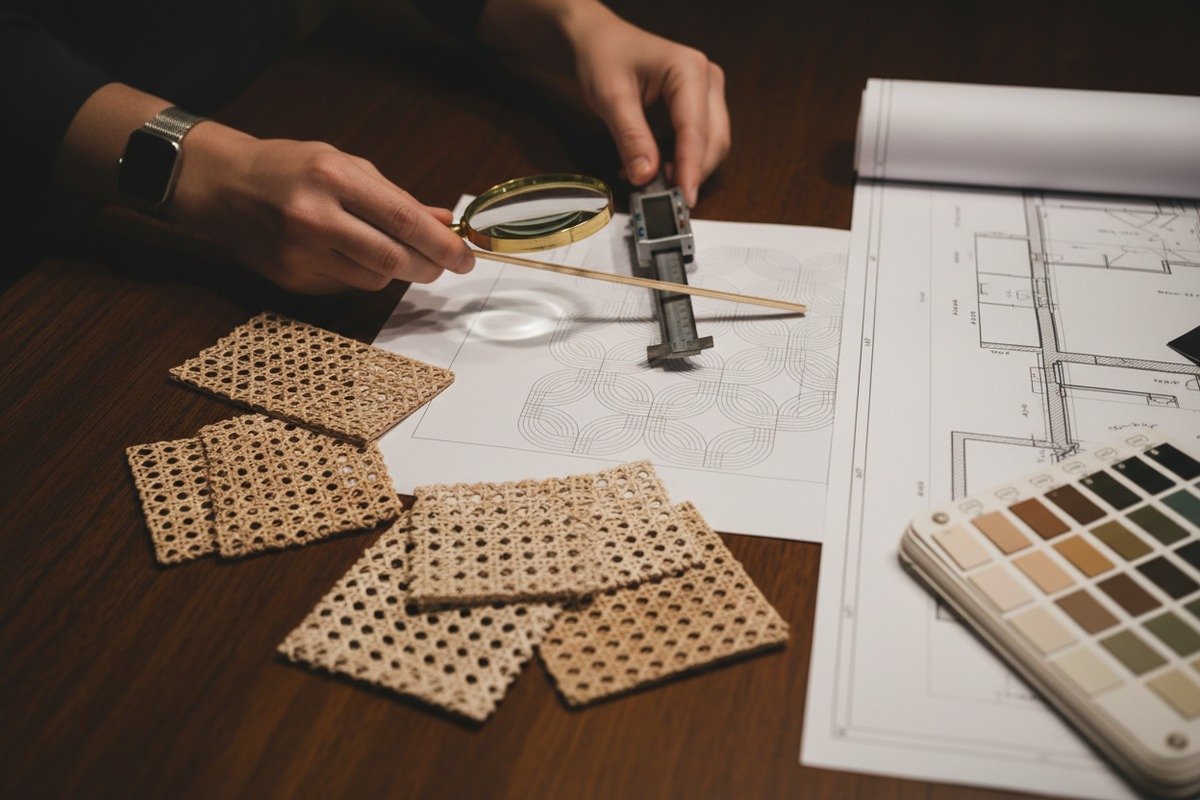
Les six principaux risques de retard
1. Spécifications peu claires. C'est le retard numéro un que nous constatons. Un acheteur demande une "couleur naturelle" sans préciser s'il s'agit de non blanchi, légèrement poncé ou laqué. Nous produisons un échantillon. L'acheteur dit qu'il est trop foncé. Nous en produisons un autre. Deux semaines disparaissent. Fournissez toujours un échantillon de référence physique ou un code couleur Pantone.
2. Boucles de révision. Chaque révision de conception ajoute 2 à 4 jours. Certains projets passent par trois ou quatre rondes. Nous recommandons de limiter les révisions à deux rondes maximum en envoyant des dessins détaillés à l'avance.
3. Raw Material Availability. Natural rattan is a tropical crop. Indonesia supplies over 80% of the world's rattan. Raw Material Availability 6 Monsoon seasons, export regulations, and local demand all affect supply. When a specific cane grade runs short, we may need to wait for the next shipment from our Indonesian facility.
4. Peak Season Congestion. July through November is peak ordering season for the furniture industry in Europe and North America. Factories run at full capacity. Lead times can stretch 20% to 30% longer during these months.
5. Quality Rejections. Our QC team inspects every roll. If weave density or color consistency falls below grade A standards, that batch goes back to the production line. This protects you from receiving defective goods, but it adds 2 to 3 days.
6. Minimum Order Quantity Conflicts. Bulk synthetic rattan orders typically require a 300 kg minimum. If your order sits just below the MOQ threshold, it may be grouped with another client's run — which means waiting for that second order to come in.
Delay Risk Assessment Table
| Delay Factor | Potential Time Added | Preventability |
|---|---|---|
| Unclear specifications | 5–10 jours | High — provide detailed specs and references |
| Plusieurs cycles de révision | 4 à 12 jours | Élevé — limiter à 2 cycles avec un brief clair |
| Pénurie de matières premières | 5–7 jours | Moyen — commander pendant les mois creux |
| Congestion de la saison de pointe | 3–7 jours | Moyen — passer les commandes avant juillet |
| Retravail de contrôle qualité | 2–3 jours | Faible — nécessaire pour une production de qualité A |
| Retards de regroupement des MOQ | 3–5 jours | Moyen — atteindre ou dépasser les seuils de MOQ |
| Vacances internationales (Nouvel An chinois, Aïd) | 7–14 jours | Élevé — planifier en fonction des calendriers de vacances connus |
Comment les outils numériques réduisent les retards
En 2025, nous avons commencé à utiliser le prototypage numérique et la visualisation 3D pour les motifs personnalisés. Les acheteurs peuvent voir un rendu réaliste de leur motif de tissage avant que nous ne coupions un seul fil. Cela réduit la phase d'approbation des échantillons de 40 % à 50 %. Nous utilisons également des prévisions de la demande basées sur l'IA pour pré-stocker les qualités de rotin à forte demande, de sorte que les retards de matières premières deviennent moins fréquents.
Le suivi basé sur la blockchain est un autre outil émergent. Bien qu'il ne soit pas encore standard dans l'industrie, il permet aux acheteurs de voir exactement où se trouve leur rotin — de la forêt indonésienne à l'usine de Foshan en passant par le conteneur d'expédition. Cette transparence n'accélère pas la production, mais elle élimine l'anxiété de l'incertitude.
La façon la plus simple d'éviter les retards ? Communiquez tôt, communiquez clairement et finalisez votre conception avant de passer la commande de production.
Quel temps de transit dois-je prévoir pour l'expédition de mes matériaux en rotin de Chine à mon entrepôt ?
Notre équipe logistique à Foshan coordonne chaque semaine les expéditions vers les Pays-Bas, les États-Unis, l'Australie et le Moyen-Orient. Les délais d'expédition varient beaucoup plus que ce que la plupart des acheteurs attendent.
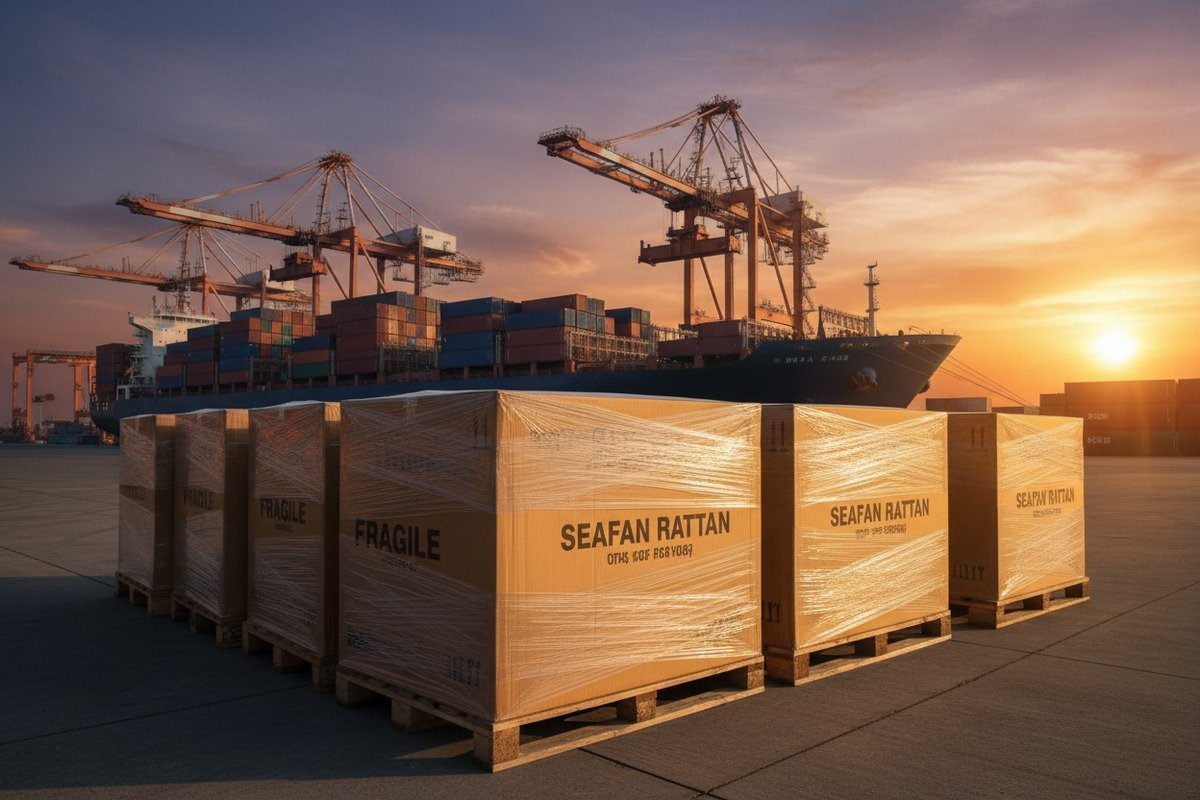
Le fret maritime de la Chine vers la côte ouest des États-Unis prend 15 à 20 jours, tandis que les expéditions vers l'Europe prennent en moyenne 25 à 35 jours. Le fret aérien réduit le transit à 5 à 7 jours mais coûte 4 à 6 fois plus cher. Prévoyez 3 à 7 jours supplémentaires pour le dédouanement, la manutention portuaire et la livraison du dernier kilomètre à votre entrepôt.
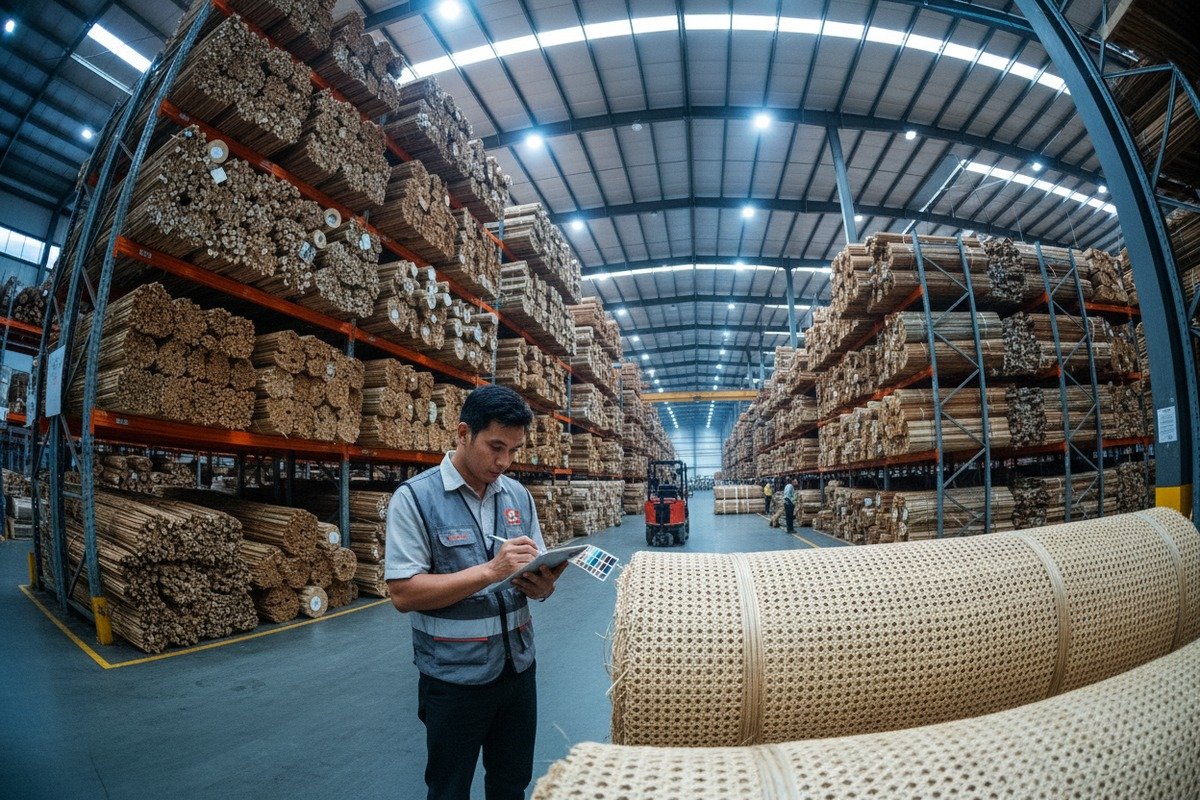
Comparaison des méthodes d'expédition
Choisir la bonne méthode d'expédition est un équilibre entre le coût, la vitesse et la taille de la commande. Voici une comparaison pratique basée sur nos enregistrements d'exportation réels.
| Méthode d'expédition | Temps de transit (Chine vers États-Unis) | Temps de transit (Chine vers UE) | Coût par M3 (Approx.) | Idéal pour |
|---|---|---|---|---|
| Chargement complet de conteneur (FCL) par voie maritime | 15–20 jours | 25–35 jours | $800–$1,500 | Commandes en vrac 10+ M3 |
| Chargement partiel de conteneur (LCL) par voie maritime | 20–30 jours | 30–40 jours | $150–$300 par M3 | Commandes de taille moyenne 1–9 m³ |
| Fret aérien | 5–7 jours | 5–8 jours | $5–$8 par kg | Expéditions urgentes ou échantillons |
| Fret ferroviaire (Chine vers UE) | 18–22 jours | N/A pour les États-Unis | $1 000–$1 800 par m³ | Commandes de volume moyen à destination de l'UE |
| Courrier express (DHL/FedEx) | 3–5 jours | 4–6 jours | $8–$12 par kg | Petits échantillons de moins de 50 kg |
Variables clés qui affectent le temps de transit
Le port d'origine est important. Notre usine de Foshan expédie depuis le port de Nansha à Guangzhou ou le port de Shekou à Shenzhen. Ce sont tous deux des ports internationaux majeurs avec des départs quotidiens. Les petites usines dans les zones rurales de l'Indonésie peuvent n'avoir que des horaires de navires hebdomadaires, ajoutant 3 à 7 jours de temps d'attente.
Congestion du port de destination. Los Angeles et Long Beach ont connu une grave congestion ces dernières années. Bien que la situation se soit améliorée en 2025, des retards de 2 à 5 jours se produisent encore pendant la haute saison. Rotterdam et Hambourg ont tendance à être plus prévisibles.
Dédouanement. Les produits en rotin nécessitent des codes SH appropriés et des certificats phytosanitaires 7 pour les matières naturelles. Si votre documentation est incomplète, les douanes peuvent retenir votre envoi pendant 3 à 10 jours ouvrables. Nous fournissons toute la documentation nécessaire — certificat d'origine, liste de colisage, facture commerciale et certificats de fumigation — pour éviter cela.
Livraison du dernier kilomètre. Faire passer votre conteneur du port à votre entrepôt ajoute 1 à 3 jours au niveau national. Si vous êtes situé à l'intérieur des terres (par exemple, Dallas ou Madrid), prévoyez environ 5 jours pour le transport routier.
Délai de livraison total : Production plus expédition
Voici un calendrier réaliste pour une commande personnalisée standard expédiée depuis notre usine de Foshan :
- Création et approbation de l'échantillon : 3–7 jours
- Production : 10–15 jours
- Contrôle qualité et emballage : 1–2 jours
- Fret maritime 8 vers la côte ouest des États-Unis : 15–20 jours
- Douanes et dernier kilomètre : 3–7 jours
- Total : 32–51 jours
Pour les acheteurs européens, ajoutez 10 à 15 jours à la fenêtre d'expédition. Pour les acheteurs d'Asie du Sud-Est ou du Moyen-Orient, soustrayez 5 à 10 jours de l'estimation du fret maritime.
La conclusion est simple. Si vous avez besoin de sangles en rotin personnalisées dans votre entrepôt dans 6 semaines, passez votre commande aujourd'hui. Pas le mois prochain.
Comment puis-je optimiser mon calendrier d'approvisionnement pour que ma production de meubles reste sur la bonne voie ?
Nous avons travaillé avec des responsables des achats dans plus de 30 pays, et ceux qui ne manquent jamais de rotin partagent tous les mêmes habitudes.
Pour que la production de meubles reste sur la bonne voie, passez vos commandes de cannage en rotin au moins 6 à 8 semaines avant votre date de début de production, maintenez un stock de sécurité de 2 à 4 semaines, utilisez des prévisions glissantes pour anticiper la demande et pré-approuvez les conceptions d'échantillons avant la haute saison pour éviter les retards de révision.
Établir un calendrier d'approvisionnement
La plus grande erreur que font les acheteurs est de commander de manière réactive. Ils attendent que le stock de rotin soit bas, puis se précipitent pour une commande urgente. Les commandes urgentes coûtent plus cher. Elles comportent également un risque plus élevé de problèmes de qualité car l'usine comprime sa fenêtre de contrôle qualité.
Au lieu de cela, établissez un calendrier d'approvisionnement trimestriel. Voici un exemple de calendrier que nous recommandons à nos clients à long terme :
Janvier-février : Passez les commandes de production du T2 avant la fermeture du Nouvel An chinois. Les usines ferment pendant 10 à 15 jours. Les commandes passées fin janvier peuvent ne pas être expédiées avant la mi-mars.
Mars-Mai : Fenêtre de commande idéale. Les usines sont pleinement opérationnelles. Les délais de livraison sont à leur plus court. C'est à ce moment-là que vous devriez commander pour les séries de production d'été et de début d'automne.
Juin-Août : Passez les commandes du T4 et de la saison des fêtes. La concurrence pour la capacité des usines augmente. Commandez tôt pour réserver votre créneau de production.
Septembre-Novembre : Congestion maximale. Si vous n'avez pas encore commandé, attendez-vous à des délais de livraison prolongés. Envisagez le fret aérien pour les besoins urgents.
Décembre : Pré-commandez pour le T1 de l'année suivante. De nombreuses usines offrent des prix de réservation anticipée pour les commandes passées avant la ruée de fin d'année.
Sept stratégies pour des délais de livraison plus courts
1. Pré-approuver les conceptions. Verrouillez votre motif de tissage, votre couleur et vos dimensions avant d'avoir besoin du matériau. Stockez les échantillons approuvés auprès de votre fournisseur afin que les futures commandes sautent entièrement l'étape d'échantillonnage.
2. Utiliser la production modulaire. Pour les projets personnalisés complexes, demandez des sections préfabriquées. Notre usine peut tisser des modules standard que votre équipe assemble sur place, réduisant ainsi le délai de livraison total de 20 % à 30 %.
3. Maintenir un stock de sécurité. Conservez 2 à 4 semaines de vos motifs de sanglage les plus utilisés dans votre propre entrepôt. Ce tampon absorbe les retards d'expédition mineurs sans interrompre votre chaîne de production.
4. Consolider les fournisseurs. Travailler avec un grossiste de rotin unique – plutôt que de s'approvisionner en différents matériaux auprès de différentes usines – simplifie la logistique et réduit les retards de coordination. Nous fournissons du cannage naturel, du rotin synthétique PE/PP, du rotin blanchi et des panneaux tissés à partir d'un seul point de commande.
5. Tirer parti de la prévision par IA. Partagez vos prévisions de production avec votre fournisseur. Lorsque nous connaissons votre courbe de demande, nous pouvons pré-stocker les matières premières et réserver du temps machine. Cela seul peut réduire votre délai de livraison de 3 à 5 jours.
6. Planifier des expéditions partielles. Pour les grosses commandes, demandez des livraisons échelonnées. Recevez les 30 % premiers par fret aérien pour commencer la production immédiatement, tandis que les 70 % restants suivent par voie maritime. Cette approche hybride équilibre coût et rapidité.
7. Établir une relation. Les clients de longue date bénéficient d'une planification prioritaire. Lorsque notre usine est à 90 % de sa capacité, les acheteurs fidèles passent en tête de file. Ceci n'est écrit dans aucun contrat, mais c'est ainsi que fonctionne chaque usine.
Référence rapide : Meilleures pratiques d'approvisionnement
| Stratégie | Temps gagné | Impact sur les coûts |
|---|---|---|
| Bibliothèque d'échantillons pré-approuvée | 3–7 jours | Pas de coût supplémentaire |
| Préfabrication modulaire | 3–5 jours | Légère prime pour l'installation |
| Stock de sécurité 9 (2–4 semaines) | Absorbe tous les retards mineurs | Coût d'entreposage |
| Consolidation des fournisseurs | 2–4 jours de temps de coordination | Coût unitaire souvent plus bas |
| Prévision de la demande par IA 10 | 3–5 jours de préparation des matériaux | Gratuit avec partage de données |
| Expédition partielle par air/mer | 10–15 jours pour le premier lot | 15–20% coût d'expédition plus élevé |
| Relation fournisseur à long terme | Accès prioritaire à la file d'attente | Avantages de la remise sur volume |
Les directeurs des achats qui réussissent sont ceux qui traitent l'approvisionnement en rotin comme un processus continu, et non comme une transaction unique. Planifiez à l'avance. Communiquez souvent. Maintenez votre pipeline plein.
Conclusion
Les délais de livraison du cannage en rotin personnalisé sont gérables lorsque vous comprenez les étapes de production, anticipez les retards, budgétez les expéditions et planifiez l'approvisionnement de manière proactive.
Notes de bas de page
1. Fournit un aperçu général du cannage en rotin. ↩︎
2. Explique le processus de déplacement des marchandises entre les pays. ↩︎
3. Décrit un motif de tissage de rotin spécifique et courant. ↩︎
4. Explique la composition et les caractéristiques du rotin synthétique. ↩︎
5. Détaille l'origine, les propriétés et les utilisations du rotin naturel. ↩︎
6. Discute des facteurs qui ont un impact sur l'approvisionnement en matières premières. ↩︎
7. Définit les documents officiels pour le commerce des produits végétaux. ↩︎
8. Describes the method of transporting goods by sea. ↩︎
9. Explains buffer inventory to mitigate stockout risks. ↩︎
10. Details the use of AI for predicting product demand. ↩︎

 English
  Español de México
  العربية
  Deutsch
  Français
  Русский