
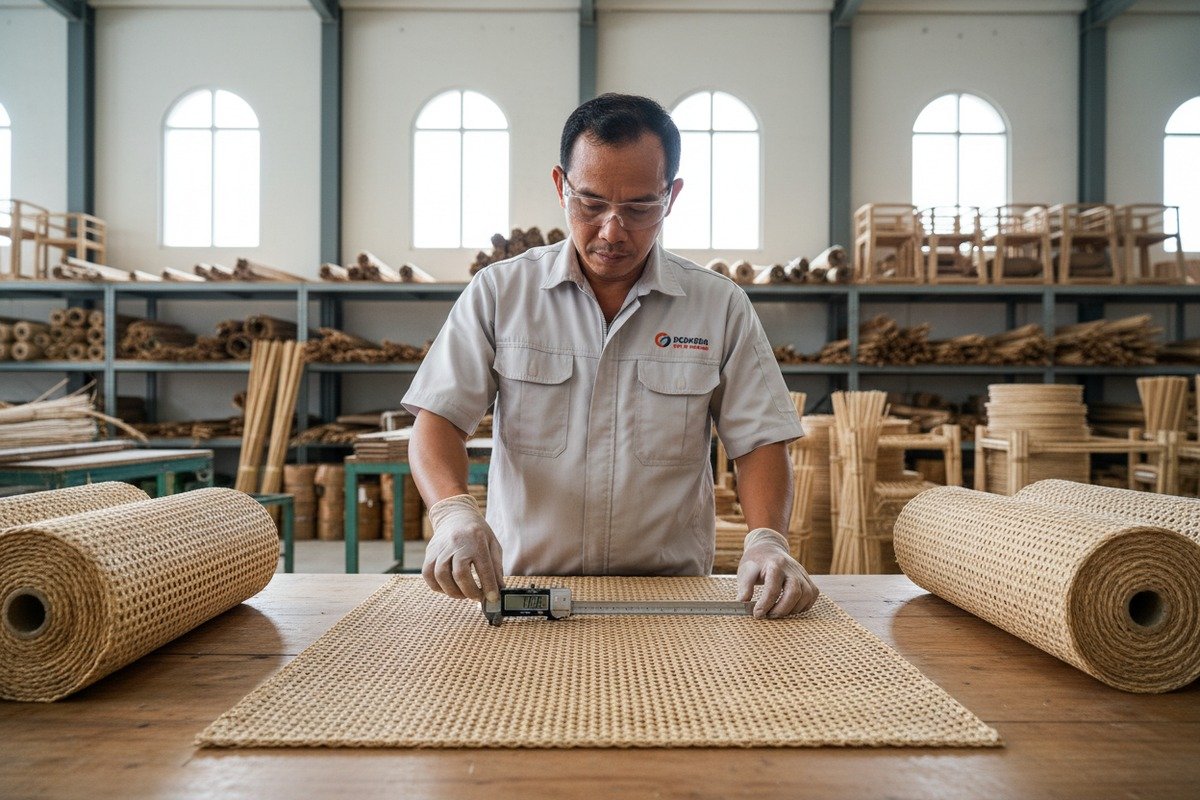
Approvisionnement cannage rotin 1 without understanding grades is like buying fabric blindfolded. You risk overpaying for low quality or missing the grade your project actually needs rattan quality grades 2. Having operated our own rattan processing facility in Indonesia and three factories in Foshan, we see buyers struggle with this daily.
Rattan cane webbing is classified into 3 to 5 quality grades—from AAA/Premium down to C/D—based on strip uniformity, color consistency, surface smoothness, weave tightness, density, flexibility, and moisture content. Higher grades suit fine furniture, while lower grades work for budget crafts and non-structural decor.
This guide breaks down each grade with visual cues, sourcing strategies, and supplier verification steps high-end furniture production 3. Whether you run a furniture factory or wholesale materials, you will learn exactly how to identify, compare, and negotiate rattan quality. Let’s start with the visual differences.
How can I visually distinguish between Grade A and Grade B rattan cane webbing?
When our quality inspectors sort rattan webbing at the Indonesian facility, the differences between Grade A and Grade B are clear within seconds mid-century modern furniture designs 4. But for buyers receiving samples for the first time, these distinctions can be confusing and costly to miss.
Grade A rattan cane webbing shows consistent strip width, even honey-gold color, a smooth defect-free surface, and a tight uniform weave. Grade B webbing has slight color variations, minor surface blemishes, occasional irregular strip widths, and a looser weave pattern with visible inconsistencies.

The Five-Point Visual Test
You do not need lab equipment to tell grades apart pratiques de travail éthiques 5. Use this simple five-point check every time you receive samples or shipments.
1. Strip Width and Thickness
Pick up the webbing and look along the strips. Grade A strips have consistent width from end to end. They do not taper or bulge. Grade B strips often show slight taper. Some strips are thicker than others. This creates weak spots in the weave.
2. Color and Grain
Hold the webbing under natural light. Grade A has a rich, even honey-gold tone. The grain is fine and tight. Grade B may show patches of lighter or darker color. The grain can look coarser in places. Blotchy gray tones are a red flag—they suggest Grade C or lower.
3. Surface Quality
Run your fingertips across the surface. Grade A feels smooth with clean edges. No splinters, no rough spots. Grade B may have minor blemishes, small cracks, or occasional knots. If you feel splinters catching your skin, that is Grade C territory.
4. Weave Tightness
Lay the webbing flat. In Grade A, every opening in the weave is the same size. The pattern is precise. In Grade B, you will notice some openings are slightly larger or smaller. The overall pattern holds, but it lacks the crispness of Grade A.
5. Flexibility and Density
Bend the webbing gently. Grade A is supple. It bends without cracking. It also feels substantial—not flimsy. Tap it and you hear a solid sound. Grade B is still flexible, but it may feel lighter. Some strips might crack under stress.
Quick Reference: Grade A vs. Grade B
| Caractéristique | Qualité A | Qualité B |
|---|---|---|
| Largeur de la bande | Consistent, no taper | Slight irregularities |
| Couleur | Even honey-gold | Variation mineure de couleur |
| Surface | Lisse, sans défauts | Small blemishes or knots |
| Tissage | Tight, uniform openings | Slightly uneven pattern |
| Flexibilité | Supple, no cracking | Acceptable, some stiffness |
| Densité | Solid feel, substantial | Slightly lighter |
| Teneur en humidité 6 | 8–12%, stable | May vary, slight warping risk |
The Tap and Bend Test
We train all our warehouse staff on two fast tests. First, tap the webbing with your knuckle. A dense, solid sound means high-quality fiber. A hollow or flat sound means lower density. Second, bend a strip about 90 degrees. Grade A bounces back. Grade B may hold the bend slightly. Grade C snaps.
What About Grade AAA and Grade C/D?
Grade AAA is the premium tier. It has everything Grade A offers but with near-perfect uniformity. The color is richer. The surface is flawless. We reserve this grade for luxury furniture clients in the Netherlands and Australia.
Grade C and D sit at the other end. You will see blotchy gray tones, coarse grain, rough surfaces with insect damage or fungal marks, and brittle strips. The weave is sloppy. These grades work only for non-structural crafts or hidden applications.
Which rattan quality grade is best suited for my high-end furniture production?
Every month, furniture factory buyers ask our sales team this exact question. The answer depends on your product line, your end customer, and how much of the webbing is visible. Choosing the wrong grade can ruin a premium piece—or waste money on material nobody will see.
For high-end furniture production, Grade A or Grade AAA rattan cane webbing is the best choice. These grades offer flawless surfaces, tight uniform weaves, excellent flexibility, and consistent honey-gold color that meets the aesthetic and durability standards required for luxury and mid-century modern furniture designs.

Why Premium Grades Matter for Luxury Furniture
High-end furniture buyers in markets like the US, Europe, and Australia expect perfection. A single rough spot or color mismatch on a chair back or headboard panel can trigger a return. When we supply webbing for luxury brands, we use Grade A minimum. For truly premium pieces, we recommend Grade AAA.
The difference is not just visual. Premium grades resist stretching and warping over years of use. The tight grain structure and proper moisture content (8–12%) mean the webbing holds its shape even in humid climates.
Adapter la qualité à l'application
Not every part of a furniture piece needs the same grade. Here is how we advise our factory clients:
| Furniture Component | Qualité recommandée | Raison |
|---|---|---|
| Chair backs and seats | Grade AAA or A | Fully visible, load-bearing |
| Inserts de porte d'armoire | Qualité A | Visible, aesthetic priority |
| Panneaux de tête de lit | Grade AAA or A | Large visible area, focal point |
| Interior shelf backing | Qualité B | Hidden, non-structural |
| Decorative accents | Qualité A | Visible but small area |
| Projets d'artisanat DIY | Grade B ou C | Cost-sensitive, non-critical |
Indonesian vs. Other Origins for Premium Use
Our Indonesian facility processes rattan that grows in a unique climat tropical 7. This gives the cane higher density and better tenacity compared to alternatives from Vietnam or China. The color is naturally richer. The fibers are tighter.
Some suppliers argue that processing matters more than origin. There is truth to that—proper polishing and drying can improve lower-origin cane. But in our experience exporting to over a dozen countries, Indonesian-sourced Grade A consistently outperforms other origins in both look and longevity.
That said, not every project demands Indonesian material. If you produce mid-range furniture, a well-processed Grade A from another origin can work. The key is testing samples under real conditions.
The Real Cost of Choosing the Wrong Grade
One of our Turkish clients once switched from Grade A to Grade B to save 15% on material costs. Within six months, their return rate tripled. The webbing on their dining chairs showed uneven color after exposure to sunlight. Some panels warped. The savings evaporated.
Premium grades cost more upfront. But they protect your brand and reduce warranty claims. For high-end production, Grade A is the floor. Grade AAA is the ceiling. Choose based on how visible and how structural the application is.
How do I ensure I am getting the best price for the specific rattan grade I need?
Pricing rattan cane webbing is tricky. We have seen buyers pay Grade A prices for Grade B material—and others negotiate Grade B prices for genuine Grade A. The gap between grades can be 20–40% in cost, so getting this right matters for your margins.
To get the best price for your rattan grade, request graded samples before ordering, compare at least three suppliers with transparent grading systems, negotiate based on volume and long-term contracts, and verify that the delivered grade matches your approved sample through independent inspection.

Understanding the Price Structure
Rattan webbing prices depend on grade, pattern, roll width, origin, and order volume. Here is a general pricing framework based on current market conditions:
| Note | Retail Price Range (per sq ft) | Wholesale Indicator | Typical Buyer |
|---|---|---|---|
| Grade AAA | $8–$15+ | Negotiable at volume | Luxury furniture brands |
| Qualité A | $4–$10 | Competitive at 500+ rolls | Mid-to-high furniture factories |
| Qualité B | $2–$5 | Lower MOQ flexibility | Mid-range decor, wholesalers |
| Grade C/D | $0.95–$3 | Bulk pricing available | DIY, crafts, hidden uses |
These ranges vary by supplier, pattern complexity (hexagonal radio weave vs. simple square), and roll dimensions. Popular specs like 24-inch wide rolls in 1/2-inch center-to-center mesh tend to be most competitively priced due to high demand.
Five Steps to Secure Better Pricing
Step 1: Define Your Grade Clearly
Before contacting any supplier, write down exactly what grade you need. Use the visual criteria from the first section. Send this specification with your inquiry. Vague requests like "good quality" invite confusion.
Step 2: Request Graded Samples
Always ask for samples of each grade the supplier offers. At our facilities, we send labeled samples—Grade AAA, A, and B—so buyers can see and feel the difference. Compare samples side by side.
Step 3: Compare Multiple Suppliers
Get quotes from at least three suppliers. Make sure they are quoting the same grade, pattern, and roll size. A lower price means nothing if the grade is also lower.
Step 4: Leverage Volume and Commitment
We offer better unit pricing for annual contracts and larger MOQs. A one-time order of 50 rolls gets one price. A commitment to 200 rolls per quarter gets another. Ask about tiered pricing.
Step 5: Build in Quality Verification
Include a quality clause in your purchase order. State that delivered goods must match the approved sample. This protects you from grade substitution and gives you leverage if quality dips.
Watch for Hidden Costs
Cheap webbing often comes with hidden costs. Brittle Grade C material wastes labor when it cracks during installation. Uneven moisture content causes warping after delivery, leading to customer complaints. Factor in waste rates and rework time when comparing prices. A slightly higher unit cost for Grade A can actually lower your total cost per finished piece.
The Role of Indonesia's Export Ban
Since 2011, Indonesia has banned les exportations de rotin brut 8. This pushed global prices up for processed webbing because all value-addition now happens domestically. For buyers, this means Indonesian Grade A is priced higher—but you are getting a fully processed, quality-controlled product. Sourcing from hubs like Foshan, where we consolidate Indonesian-processed webbing with our own production, can offer cost advantages through combined logistics.
What steps should I take to verify the quality consistency of my rattan webbing supplier?
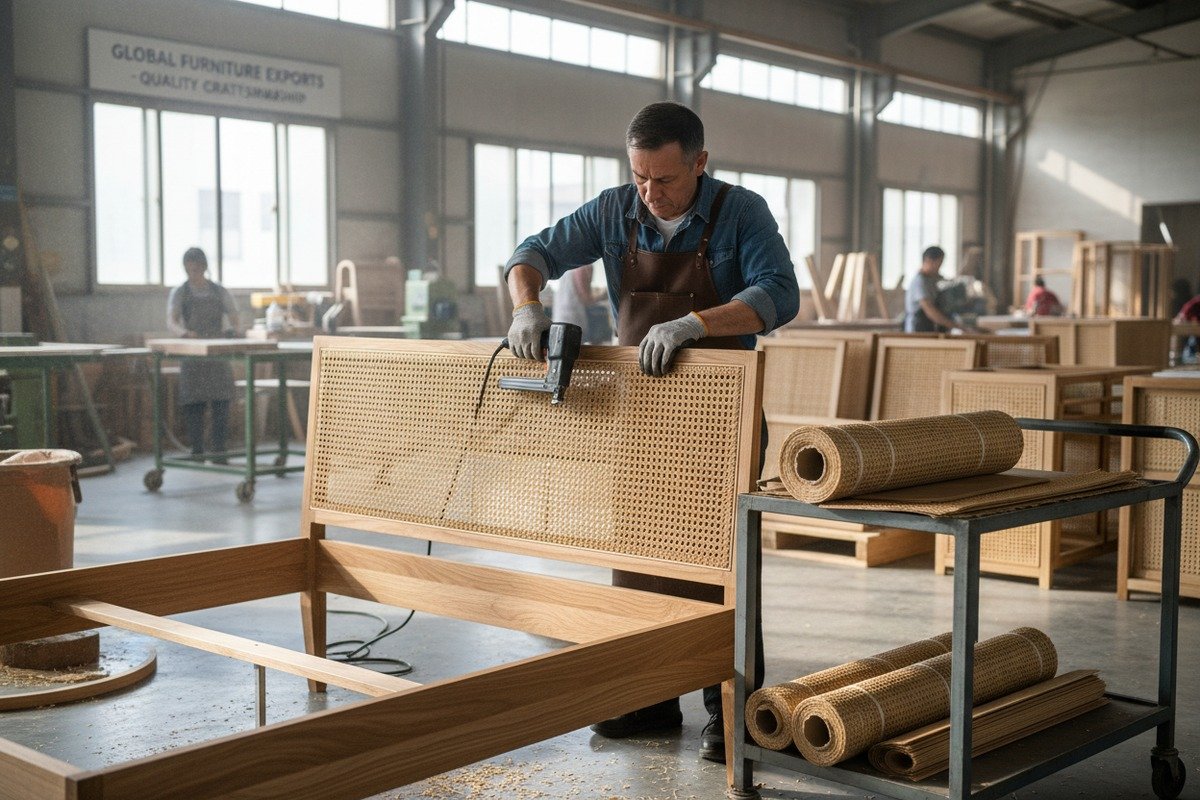
After years of working with buyers from the Netherlands to Saudi Arabia, we know that finding a good supplier is only half the battle. The real challenge is making sure quality stays consistent from the first order to the fiftieth. Consistency issues are the number one pain point our clients mention.
To verify supplier consistency, establish a sample approval process, conduct random inspections on every shipment, request moisture content reports, visit the production facility when possible, and track defect rates over time to identify patterns before they become costly problems.
Build a Sample Approval System
Every new supplier relationship should start with a formal sample approval. Request three to five sample pieces of the grade you need. Inspect them using the five-point visual test. Approve one sample and keep it as your reference standard. Require the supplier to match this standard on every order.
At our facilities, we store a counter-sample for each client. When a shipment is ready, our QC team compares the production batch against the stored counter-sample before packing. This simple step catches most consistency issues.
Implement Incoming Inspection
Do not rely solely on the supplier's quality control. Set up your own incoming inspection process. Check at least 10% of rolls or sheets per shipment. Look for:
- Strip width consistency
- Color uniformity across different rolls
- Surface defects (cracks, knots, fungal marks)
- Weave tightness and pattern accuracy
- Moisture content (use a pin-type moisture meter; target 8–12%)
Track Defect Rates
Keep a simple spreadsheet. Log every shipment with date, quantity, grade ordered, and number of defective rolls. Calculate defect rates over time. If defects exceed 3–5%, raise the issue with your supplier immediately. A good supplier will investigate and correct.
Visit the Production Facility
Nothing replaces an in-person visit. Walk the production floor. Watch how raw cane is polished, stripped, dried, and graded. See how webbing is woven. Check storage conditions—rattan must be kept in controlled humidity. We welcome factory visits at both our Foshan and Indonesian locations because transparency builds trust.
Verify Certifications and Treatments
Ask your supplier about post-harvest treatments. Anti-mildew applications and sterilization are essential, especially for shipments to humid climates. Request documentation. Also look for certifications related to un approvisionnement durable 9 and ethical labor practices. These certifications often correlate with a supplier's overall commitment to quality control.
Test the "Memory" of the Rattan
One advanced quality indicator is rattan's memory—its ability to return to its original form after bending. Superior fiber structure shows excellent memory. Inferior material stays bent or stretches permanently. Test this on every new batch by bending a strip 90 degrees and releasing. Grade A should snap back cleanly.
Drapeaux rouges à surveiller
| Drapeau rouge | Ce que cela indique |
|---|---|
| Supplier refuses to send graded samples | Lack of formal grading system |
| Moisture content above 14% | Rushed drying, warping risk |
| Color varies significantly between rolls | Inconsistent raw material batches |
| Brittle strips that snap when bent | Poor processing or old stock |
| No anti-mildew treatment documentation | Risk of mold during shipping/storage |
| Resistance to factory visits | Possible subcontracting or low standards |
| No counter-sample retention policy | No quality baseline for repeat orders |
Long-Term Supplier Relationship
The best way to ensure consistency is to invest in the relationship. Share your quality standards clearly. Give feedback on every shipment—positive and negative. Work with suppliers who view quality control as a partnership, not a policing exercise. When we work with long-term clients, we proactively flag any raw material changes that might affect quality. This kind of communication prevents surprises.
Conclusion
Classifying rattan cane webbing grades comes down to knowing what to look for, testing what you receive, and building strong supplier relationships 10. Use the visual checks, grading tables, and verification steps in this guide to source with confidence every time.
Notes de bas de page
1. Defines rattan cane webbing as a woven material from climbing palm vines. ↩︎
2. Explains the process and key factors in classifying rattan quality. ↩︎
3. Discusses rattan’s role and selection in luxury furniture manufacturing. ↩︎
4. Explores the characteristics of rattan in mid-century modern furniture design. ↩︎
5. Defines ethical labor practices within furniture manufacturing supply chains. ↩︎
6. Details the ideal moisture content for wood in furniture manufacturing. ↩︎
7. Describes the natural habitat and diversity of rattan palms. ↩︎
8. Explains the Indonesian policy banning raw rattan exports and its intent. ↩︎
9. Highlights principles for choosing and sourcing sustainable materials. ↩︎
10. Emphasizes the importance of collaborative and strategic supplier relationships. ↩︎

 English
  Español de México
  العربية
  Deutsch
  Français
  Русский