
Matériau en rotin : la fibre naturelle intemporelle pour la vie moderne
What is Rattan?
Rotin is a natural vine-like climbing palm primarily found in tropical regions of Asia, Africa, and Australia. Known for its strength, flexibility, and natural beauty, rattan material has been used for centuries to create furniture, baskets, and decorative items. Today, it’s one of the most sustainable materials used in eco-friendly furniture design.
Why Rattan Material is Gaining Popularity
In an era focused on sustainability and natural aesthetics, rattan has made a huge comeback. Homeowners, designers, and eco-conscious consumers love rattan for its organic texture, lightweight structure, and renewable qualities. Whether in modern homes or outdoor patios, rattan seamlessly combines elegance with sustainability.
L'origine et l'histoire du rotin
Rattan has been used in traditional crafts for hundreds of years. Originating in Southeast Asia, especially Indonesia, Malaysia, and the Philippines, it became a staple for weaving and furniture-making. During the colonial era, rattan furniture gained global recognition for its durability and tropical charm.
Rattan in Ancient Craftsmanship
Ancient artisans used rattan to craft baskets, mats, and even weapons due to its sturdy yet flexible nature. Its ability to be bent into shapes without breaking made it perfect for intricate designs.
Global Spread and Cultural Significance
As trade expanded, rattan products spread to Europe and America, becoming a symbol of exotic elegance. Today, rattan is not just a material—it’s a representation of craftsmanship, nature, and cultural heritage.
Types of Rattan
Rotin naturel
Natural rattan comes from the climbing palm plant. It’s durable, strong, and biodegradable. Each stem is cut, dried, and shaped into furniture or décor.
Synthetic Rattan (PE Rattan or Resin Rattan)
Synthetic rattan is made from polyethylene or resin, designed to mimic natural rattan but with enhanced weather resistance. It’s perfect for outdoor furniture as it withstands UV rays and rain.
Differences Between Natural and Synthetic Rattan
| Caractéristique | Rotin naturel | Rotin synthétique |
|---|---|---|
| Origine | Plant-based | Man-made (Plastic resin) |
| Durabilité | Sensitive to weather | Highly durable outdoors |
| Texture | Organic and warm | Smooth and uniform |
| Entretien | Needs care | Easy to clean |
Rattan vs. Bamboo: Understanding the Difference
While rattan and bamboo look similar, they are not the same. Bamboo is hollow and rigid, while rattan is solid and flexible. This makes rattan ideal for furniture weaving, whereas bamboo is often used for construction or décor.
Structure and Growth
Rattan grows as a vine wrapping around trees, while bamboo grows straight as a stalk. Their differing structures give them unique applications in design and manufacturing.
Flexibility and Use
Rattan bends easily without cracking, making it perfect for crafting curves and loops in furniture. Bamboo, on the other hand, is more suitable for straight designs and frames.
How Rattan is Harvested
Rattan harvesting is usually done by hand in tropical forests. The vines are cut, cleaned, and sun-dried before being processed. Proper harvesting ensures that the plant regenerates, promoting forest conservation.
Pratiques de récolte durable
Responsible sourcing focuses on not overharvesting and maintaining forest balance. Indonesia leads in sustainable rattan farming, ensuring eco-friendly trade.
Rattan Material Properties
- Strong and Flexible: Can be shaped easily yet remains durable.
- Lightweight: Easy to move and transport.
- Écologique : 100% renewable and biodegradable.
- Aesthetic: Warm, natural tones that blend with any décor style.
Uses of Rattan Material
Meubles en rotin
From chairs and sofas to bed frames and dining sets, rattan furniture adds a cozy, tropical charm to any space.
Home Décor and Accessories
Rattan mirrors, lamp shades, wall panels, and baskets enhance interiors with natural beauty.
Handicrafts and Baskets
Traditional handwoven baskets and trays showcase the artistry and skill involved in rattan weaving.
Rattan in Modern Interior Design
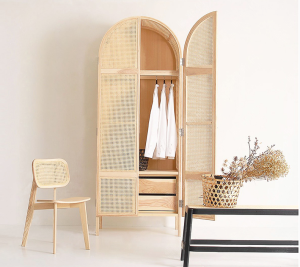
Rattan has become a favorite material in bohemian, coastal, and minimalist interior design. Its natural tones pair beautifully with white walls, greenery, and soft fabrics.
Bohemian and Tropical Styles
Rattan brings earthy textures and laid-back vibes to boho-inspired interiors.
Minimalist and Eco-Chic Décor
In modern minimalism, rattan adds warmth and texture without overpowering the simplicity of the design.
Advantages of Rattan Material
- Environmentally sustainable
- Lightweight and easy to handle
- Long-lasting when maintained properly
- Budget-friendly compared to hardwoods
- Versatile for both indoor and outdoor use
Disadvantages of Rattan Material
- Not ideal for constant exposure to moisture
- Requires regular cleaning
- Can fade in direct sunlight
- Natural fibers may become brittle over time
Caring for Rattan Products
Conseils de nettoyage
Use a soft brush or vacuum to remove dust. Wipe with a damp cloth and mild soap solution. Avoid soaking the material.
Storage and Maintenance
Keep rattan furniture in dry areas and cover it when not in use outdoors. Apply furniture oil to maintain flexibility and prevent cracking.
Rattan in Outdoor vs. Indoor Use
Outdoor Use
For patios and gardens, synthetic rattan is ideal due to its weather resistance.
Indoor Use
Natural rattan suits living rooms, bedrooms, and sunrooms, offering warmth and a relaxed feel.
The Future of Rattan Industry
With sustainability becoming a global trend, rattan is leading the way in eco-friendly design. Designers are experimenting with modern styles, combining rattan with metal and glass for a contemporary twist.
Where to Buy Quality Rattan Products
Look for trusted local craftsmen or verified online stores specializing in handmade products. Check for authenticity by feeling the texture—real rattan is warm, uneven, and organic.
Conclusion
Rattan material isn’t just a design trend—it’s a lifestyle choice that connects modern living with nature. Its eco-friendly qualities, elegant look, and versatility make it a timeless favorite. Whether natural or synthetic, rattan continues to shape sustainable design for generations to come.
FAQ
1. Is rattan furniture durable?
Yes, rattan is strong and durable, especially when well-maintained and kept away from excessive moisture.
2. Can rattan furniture be used outdoors?
Synthetic (PE) rattan is perfect for outdoor use, while natural rattan should be kept indoors or in covered spaces.
3. How do I clean rattan furniture?
Wipe gently with a damp cloth and mild soap, and regularly remove dust with a vacuum or brush.
4. Is rattan an eco-friendly material?
Absolutely. It’s a renewable, biodegradable, and sustainable natural resource.
5. What’s the difference between rattan and wicker?
Rattan is the material, while wicker refers to the weaving technique used to make furniture and décor.
 English
  Español de México
  العربية
  Deutsch
  Français
  Русский