
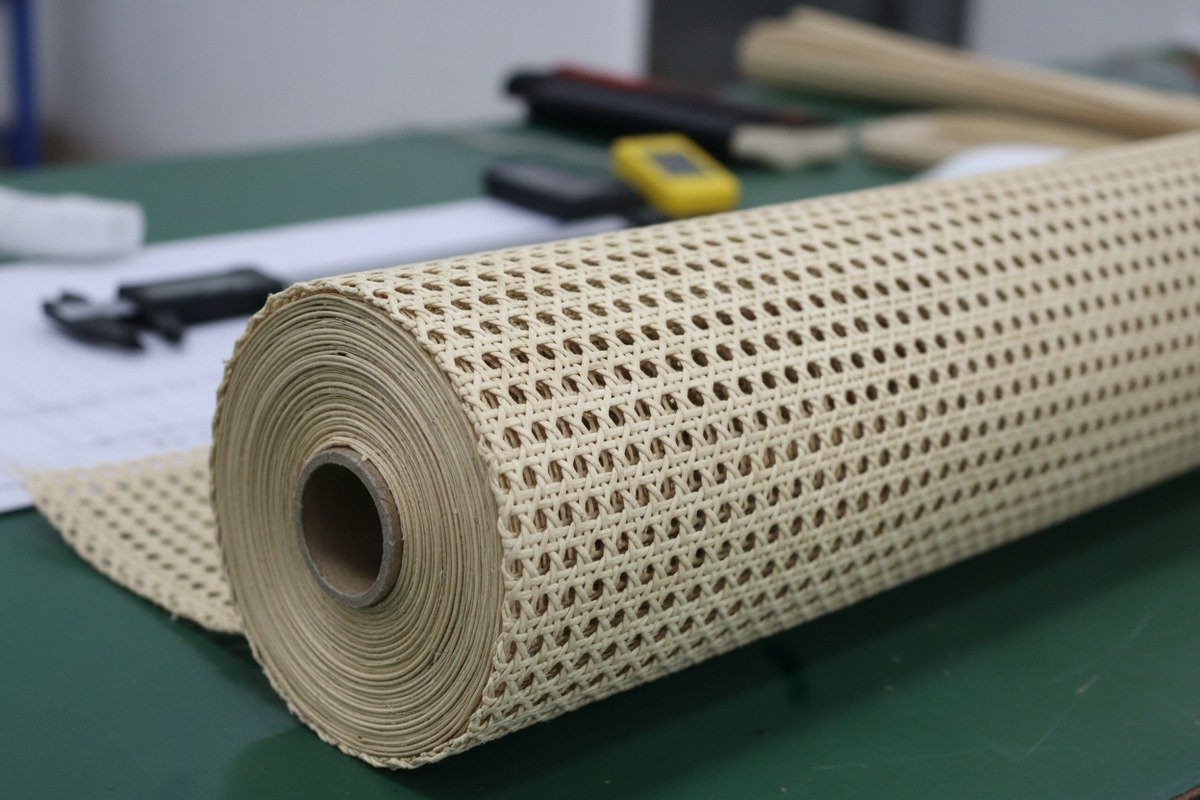
Chaque semaine, notre équipe de contrôle qualité 1 rejects rolls of cannage 2 that look fine at first glance but fail under closer inspection. Furniture factories that unknowingly use these substandard materials face customer complaints, product returns, and damaged brand reputation. The problem is simple: most buyers don’t know exactly what separates Grade A from the rest.
Grade A rattan cane webbing meets strict appearance and performance standards. It features a smooth, delicate surface free from cracks or blemishes, a uniform semi-bleached color, consistent strip width and thickness, excellent elasticity and toughness, minimal fraying at cut edges, and reliable dimensional stability under normal humidity changes.
This guide breaks down every visual and performance benchmark you need to confidently source Grade A rattan webbing. We will cover how to spot it, test it, verify consistency, and understand why it matters for your business. Let’s get into the details.
How can I visually distinguish Grade A rattan cane webbing from lower-tier materials?
When we lay out samples from different grades side by side in our Foshan showroom, the differences jump out immediately. Yet many purchasing managers who order online never get that chance to compare. Without clear visual benchmarks, it's easy to pay Grade A prices for Grade B or C material.
You can distinguish Grade A rattan cane webbing by its smooth, crack-free surface, uniform light beige to slightly whiter color, consistent strip width, tight and even weave pattern, and minimal natural defects. Lower grades show rougher textures, visible cracks, color variation, and uneven strand thickness.
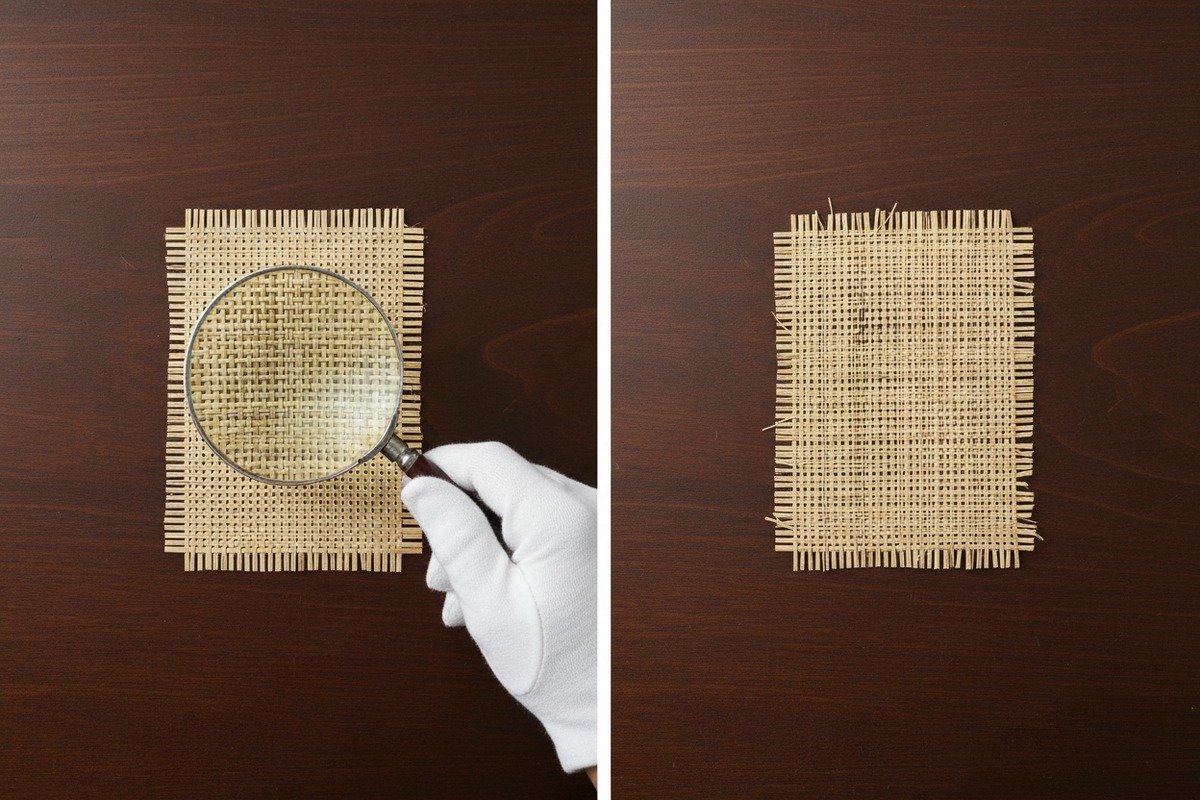
Surface Texture Tells the Story
The first thing to check is surface texture 3. Grade A rattan cane webbing uses the finest peel from the outer skin of mature tiges de rotin 4. This peel is naturally smooth and has a slight sheen. Run your fingers across a Grade A sheet. It should feel delicate, almost silky. There should be no rough patches, no raised fibers, and no splintering.
Lower grades use inner layers or peels from younger, less mature rattan. These strips feel coarser. You may notice tiny ridges or fuzzy fibers sticking up from the surface. Grade C and D materials often have visible cracks along individual strands. These cracks are weak points that will break under stress.
L'uniformité de la couleur est importante
Grade A webbing has a uniform color across the entire sheet. The tone is typically a light beige, straw yellow, or slightly whiter shade. This comes from careful selection of raw material and consistent processing. Some Grade A products undergo a light semi-bleaching or singeing process to even out the color.
Lower grades show obvious color variation. You'll see darker spots, greenish patches, or inconsistent tones from strand to strand. This happens because manufacturers mix peels from different batches, ages, or parts of the rattan pole.
Quick Visual Comparison Table
| Caractéristique | Qualité A | Qualité B | Grade C/D |
|---|---|---|---|
| Sensation de surface | Smooth, delicate | Légèrement rugueux | Coarse, fibrous |
| Uniformité de la couleur | Très uniforme | Variation modérée | Obvious inconsistency |
| Cracks/splits | Aucun ou minimal | Occasionnel | Fréquent |
| Strip width consistency | Very even | Variation mineure | Visiblement inégal |
| Serrage du tissage | Precise, uniform holes | Slight irregularities | Loose or uneven pattern |
| Cut edge quality | Net, effilochage minimal | Some fraying | Significant splitting |
Intégrité du motif de tissage
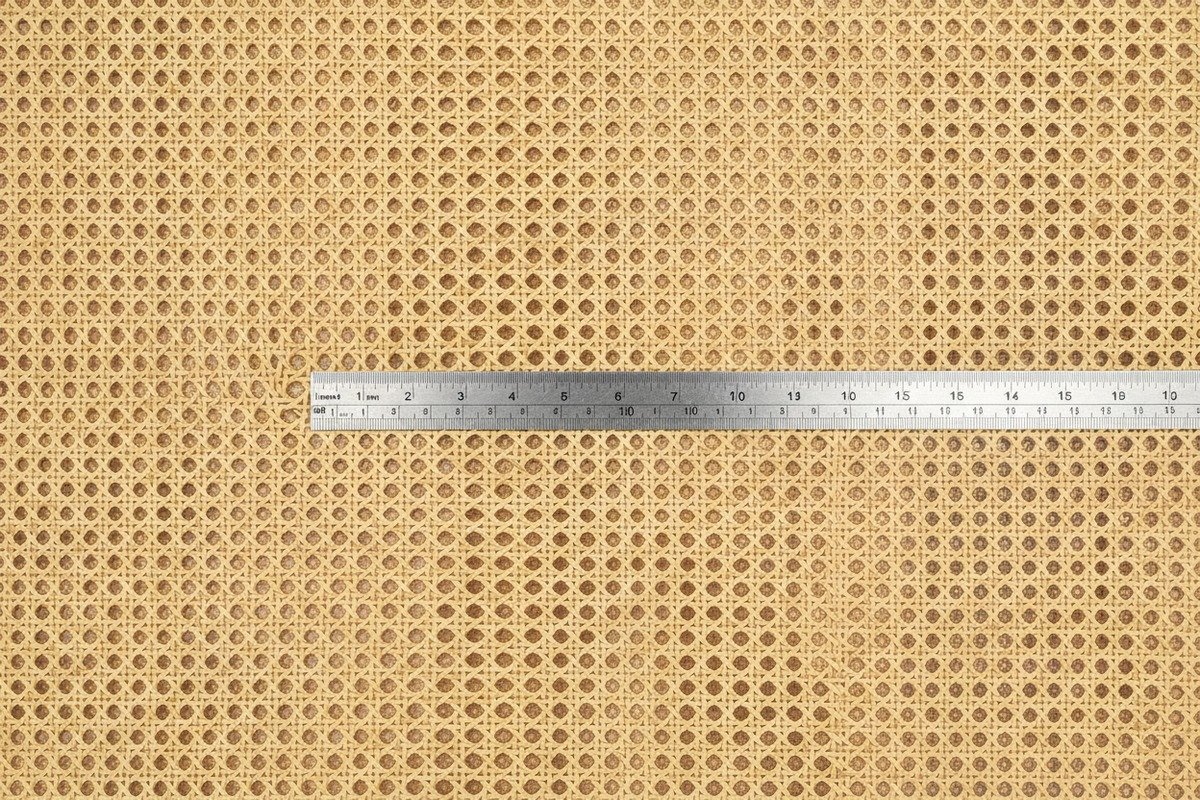
Look at the motif de tissage 5 closely. In a Grade A hexagonal open-mesh sheet, every hole should be the same size. The standard 1/2" mesh spacing should be consistent from edge to edge. Strands should cross at uniform angles.
In lower grades, you'll see holes that vary in size. Some strands may overlap incorrectly or leave gaps. The overall pattern looks "off" even if you can't pinpoint why at first. This inconsistency becomes very visible once the webbing is installed on furniture.
Strip Dimensions
Each individual rattan strip in Grade A webbing has a consistent width and thickness. Our cutting teams use precision tools to maintain uniformity. When strips vary in width, the weave loses its clean geometric look. Grade A strips are typically uniform within fractions of a millimeter. Grade B might vary by a millimeter or more. Grade C and D strips can look visibly different from each other within the same sheet.
What performance benchmarks should I look for to ensure my rattan webbing won't sag or break?
Our production facility in Indonesia processes thousands of rattan poles every month, and we've learned that beautiful appearance means nothing if the webbing fails in real use. Furniture factories that skip performance testing end up with sagging chair seats and snapped strands within months. Understanding the right benchmarks saves you from costly returns.
Grade A rattan cane webbing should demonstrate high elasticity that springs back when pressed, strong tensile strength that resists breaking under load, excellent wear resistance over years of daily use, dimensional stability under normal humidity fluctuations, and no fraying or splitting at cut edges after installation.

Elasticity and Toughness
Élasticité 6 is the single most important performance indicator. Grade A rattan webbing should flex without cracking. Press your thumb firmly into the center of a webbing sheet. It should give slightly and then spring back to its original shape. If it stays dented or if you hear a cracking sound, the material lacks the toughness required for furniture.
This elasticity comes from the high fiber density in premium rattan peel. Mature Indonesian rattan poles are known for plump, firm, and tough characteristics. The peel from these poles has tightly packed natural fibers that allow flex without breaking.
Tensile Strength and Load Resistance
A chair seat made from Grade A rattan webbing must support significant weight without tearing. While exact load ratings vary by weave pattern and frame design, Grade A material should withstand repeated sitting and standing cycles without showing signs of strand separation.
We recommend a simple pull test. Take a single strand from the webbing and try to snap it by hand. Grade A strands require noticeable force to break. Grade C or D strands snap easily with a quick pull.
Performance Benchmark Table
| Performance Metric | Norme de qualité A | Lower Grade Typical |
|---|---|---|
| Élasticité | Springs back fully after depression | Stays dented or cracks |
| Strand snap resistance | Requires significant force | Breaks easily by hand |
| Wear resistance 7 | Years of daily use without fraying | Shows wear within months |
| Humidity response | Minimal expansion/contraction | Significant swelling or shrinking |
| Finishing acceptance | Absorbs stain/lacquer uniformly | Blotchy, uneven absorption |
| Odeur | Neutral, mild natural scent | Strong chemical or musty smell |
| UV resistance (treated) | Maintains color 12+ months outdoors | Fades within weeks |
Dimensional Stability Under Humidity
Rattan is a natural material. It absorbs and releases moisture. Grade A webbing demonstrates minimal expansion or contraction under normal indoor humidity changes. Dimensional Stability 8 This stability comes from proper drying during production. Our drying process brings moisture content to an optimal level before weaving.
If webbing is poorly dried, it will swell in humid conditions and shrink in dry ones. This causes sagging in summer and tightening in winter. Over time, this constant movement weakens the strands and loosens the weave.
Finishing and Treatment Response
Grade A webbing accepts stains, lacquers, and oils uniformly. The consistent porosity of the smooth surface means no blotchy spots. This matters because most furniture factories apply at least one finishing coat. If the webbing absorbs finish unevenly, the final product looks cheap.
Also check for odor. Grade A material should have only a mild, natural rattan scent. Strong chemical smells indicate over-processing. Musty smells suggest improper storage or inadequate drying. Both are red flags.
The 2025 UV-Resistant Innovation
A growing trend in 2025 is UV-resistant treated rattan webbing for outdoor use. Traditional rattan was limited to indoor applications. New UV treatments allow Grade A webbing to maintain its color and structural integrity when exposed to sunlight. This opens up applications for garden fences, outdoor partitions, and patio furniture. However, even with UV treatment, we recommend shaded or semi-outdoor placement for maximum longevity.
How do I verify that the Grade A rattan I'm importing has consistent color and texture across the entire roll?
When we ship rattan webbing to buyers in the Netherlands, Australia, or the USA, one of the most common concerns we hear is about consistency. A sample might look perfect, but what about the full roll? What about the next ten rolls? This anxiety is valid. Color and texture inconsistency is the number one quality complaint in the rattan trade.
To verify consistency across an entire roll, inspect samples from the beginning, middle, and end of each roll. Check strip width with a caliper, compare color under natural daylight, feel texture by hand at multiple points, and request the supplier's quality control documentation including batch sourcing records and grading certificates.
The Three-Point Inspection Method
Don't just look at the outer layer of a roll. Unroll enough material to check three spots: the start, the middle, and the end. Color can shift within a single roll if the manufacturer combined strips from different batches. Texture may change if the machine settings drifted during weaving.
At each checkpoint, hold the webbing up to natural daylight. Artificial lighting can mask color differences. Compare all three sections side by side. The color should be indistinguishable between sections.
Measuring Strip Uniformity
Bring a digital caliper. Measure the width and thickness of individual strips at each checkpoint. For Grade A, width variation should be negligible. Thickness should remain consistent. Document your measurements. This data becomes leverage if you need to file a quality claim later.
Supplier Verification Checklist
| Verification Step | Ce qu'il faut vérifier | Drapeau rouge |
|---|---|---|
| Sample comparison | Match sample to bulk order | Sample looks different from shipment |
| Batch records | Single-source batch documentation | No records or mixed sourcing |
| Roll labeling | Grade marking on each roll | Unmarked or generic labels |
| Inspection par un tiers | Independent QC report available | Supplier refuses inspection |
| Daylight color check | Uniform tone start to end | Noticeable shifts in color |
| Strip measurement | Caliper readings at 3+ points | Width/thickness variation >0.5mm |
| Surface touch test | Consistent smoothness throughout | Rough patches in some areas |
| Weave pattern check | Uniform hole spacing | Irregular or stretched openings |
Request Factory QC Documentation
Reputable suppliers maintain quality control records for each production batch. At our facilities, we photograph rolls at various stages and record the rattan sourcing origin. We can trace every roll back to the specific Indonesian plantation 9 and processing date.
Ask your supplier for these records. If they can't provide them, that's a concern. Grade A consistency depends on sourcing from the same mature rattan harvest, processing under the same conditions, and weaving on properly calibrated machines.
The Batch Sourcing Problem
Here is a truth many suppliers won't tell you. Rattan quality varies by season, region, and even individual plantation. Indonesian rattan from Kalimantan has different characteristics than rattan from Sulawesi. Mixing sources in a single production run creates inconsistency that even skilled weavers can't hide.
When we produce Grade A webbing, we use single-origin batches. All strips in one production run come from the same harvest. This costs more in raw material management, but it guarantees the color and texture uniformity that Grade A demands.
What About Natural Variation?
Some buyers worry about any variation at all. It's important to understand that rattan is a natural material. Even Grade A will have very subtle, organic variation. This is different from inconsistency. Organic variation means a gentle, natural range within a tight spectrum. Inconsistency means jarring differences that look like mixing two different products.
Grade AAA, the highest tier, offers the tightest uniformity. Grade A allows the slightest natural variation but stays well within acceptable limits for high-end furniture. If your project demands absolute uniformity, specify AAA and expect a premium price.
Why is investing in Grade A rattan webbing the right choice for my furniture factory's reputation?
Over the past fifteen years of exporting rattan materials to more than a dozen countries, we've watched factories rise and fall based on one decision: material quality. The factories that cut corners on webbing grade save a little on raw materials. But they lose far more in returns, complaints, and the slow erosion of buyer trust.
Investing in Grade A rattan webbing protects your factory's reputation by ensuring superior aesthetics, longer product lifespan, fewer warranty claims, and consistent customer satisfaction. The higher material cost is offset by reduced returns, repeat orders, and the ability to command premium pricing for your finished furniture.

The True Cost of Lower Grades
Many purchasing managers focus on per-meter cost. Grade B or C webbing might be 20-40% cheaper than Grade A. But consider the hidden costs. A chair with Grade C webbing that sags within six months triggers a warranty claim. The factory pays for replacement material, labor, shipping, and the intangible cost of a dissatisfied customer who tells others.
We've seen this scenario play out with clients who initially ordered lower grades to "test the market." Within one production cycle, they switched to Grade A because the complaints weren't worth the savings.
Premium Positioning in the Market
Grade A rattan webbing enables your furniture to compete in the high-end segment. Luxury hospitality projects, designer furniture lines, and premium retail brands all require Grade A or higher. These clients pay more per unit and order in larger volumes. They also tend to be loyal, repeat buyers.
If your factory uses Grade B or C, you're limited to budget markets where margins are thin and competition is fierce. Grade A opens doors to premium clients who value quality over price.
Return on Investment Breakdown
| Facteur | Qualité A | Qualité B/C |
|---|---|---|
| Coût du matériau par mètre | Plus élevé | Plus bas |
| Product lifespan | 5-10+ ans | 1-3 ans |
| Customer return rate | Very low (<2%) | Moderate to high (10-20%) |
| Warranty claim frequency | Rare | Courant |
| Repeat order rate | Élevé | Faible |
| Market positioning | Premium/luxury | Budget/mid-range |
| Finishing quality | Uniform, professional | Inconsistent, amateurish |
| Brand perception | Trustworthy, high-quality | Unreliable, cheap |
Sustainability and Brand Story
Today's furniture buyers care about durabilité 10. Grade A rattan is sourced from mature, responsibly harvested Indonesian plantations. The production process is eco-friendly, with minimal chemical treatment and no pollution. This gives your factory a compelling story to tell.
Consumers and commercial buyers increasingly ask about material origins. A factory that uses certified Grade A rattan can honestly claim sustainable sourcing. This narrative is powerful in markets like Europe, Australia, and North America where environmental consciousness drives purchasing decisions.
Customization and Flexibility
Grade A webbing's consistent quality makes customization easier. Whether you need hexagonal open-mesh in 1/2" spacing, radio weave in square patterns, or close weave for cabinet doors, Grade A material produces clean, predictable results every time.
Our team regularly works with furniture factories that need custom widths from 40cm to 120cm, specific roll lengths, and even OEM packaging with the factory's own branding. Grade A's uniformity means custom orders look identical to standard ones. With lower grades, custom runs often produce unpredictable results because the raw material itself is inconsistent.
The Long-Term Perspective
Building a furniture brand takes years. One batch of poor-quality rattan can undo months of reputation building. We've had clients in Thailand, Turkey, and the USA tell us that their buyers specifically request Grade A from our facility because they've tested it and trust it.
That trust translates directly into business growth. Furniture factories with a reputation for quality materials get referrals, larger contracts, and premium pricing power. The small additional investment in Grade A webbing pays for itself many times over.
Conclusion
Grade A rattan cane webbing stands apart through verified appearance standards and proven performance benchmarks. Source wisely, inspect thoroughly, and your furniture factory will build lasting quality and trust.
Notes de bas de page
1. Replaced with an article that discusses quality control as a crucial aspect of manufacturing, which is performed by a quality control team. ↩︎
2. Replaced with a comprehensive guide on rattan cane webbing. ↩︎
3. Replaced with a Wikipedia article providing a general definition of surface texture. ↩︎
4. Replaced with an article explaining rattan as the source material for cane webbing, including its parts like the outer bark. ↩︎
5. Explains what a weave pattern is and its impact on fabric properties. ↩︎
6. Provides a comprehensive definition of elasticity in physics and materials science. ↩︎
7. Defines wear resistance as a material’s ability to resist loss of volume from mechanical actions. ↩︎
8. Replaced with an article providing a clear definition of dimensional stability. ↩︎
9. Replaced with an article detailing Indonesia’s rattan industry, including its ecological roots and sustainable harvesting. ↩︎
10. Discusses rattan’s sustainability due to its rapid growth and non-destructive harvesting. ↩︎

 English
  Español de México
  العربية
  Deutsch
  Français
  Русский