
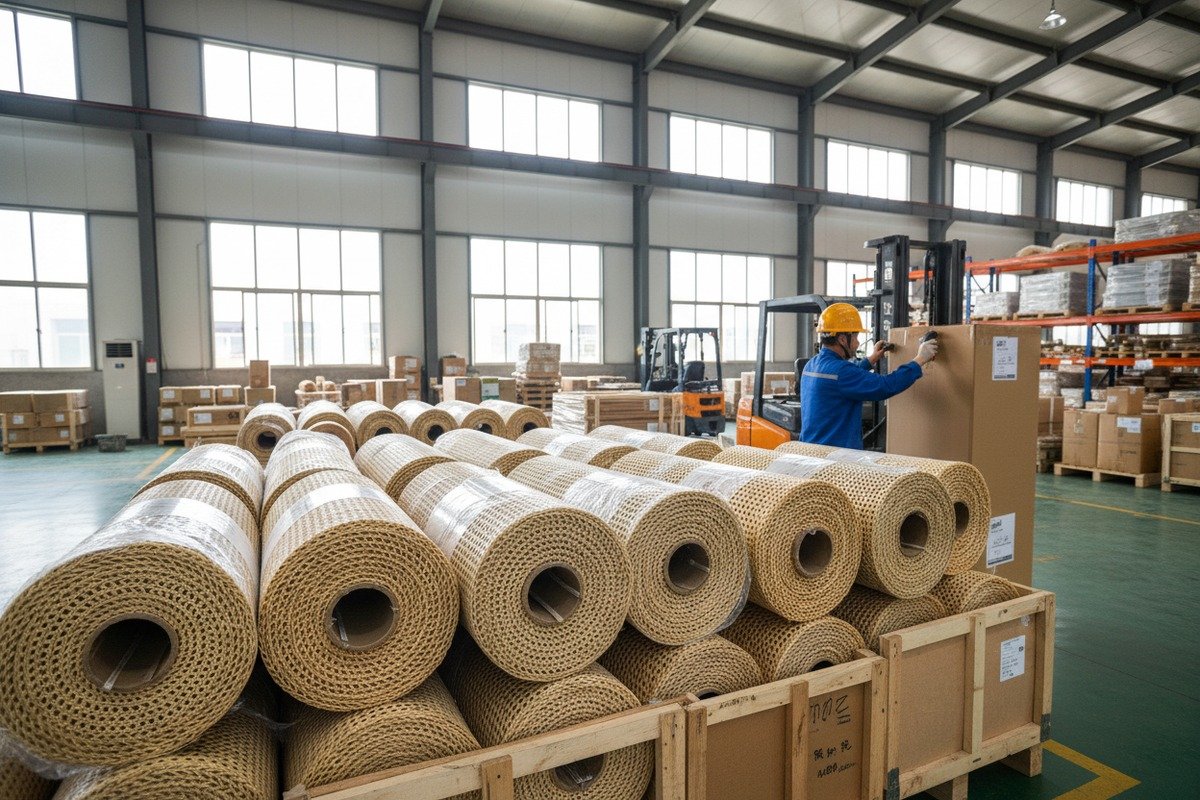
Chaque semaine, notre entrepôt de Foshan expédie des milliers de rouleaux de cannage en rotin outre-mer — et les défaillances d'emballage causent encore les pertes les plus évitables dans cette industrie.
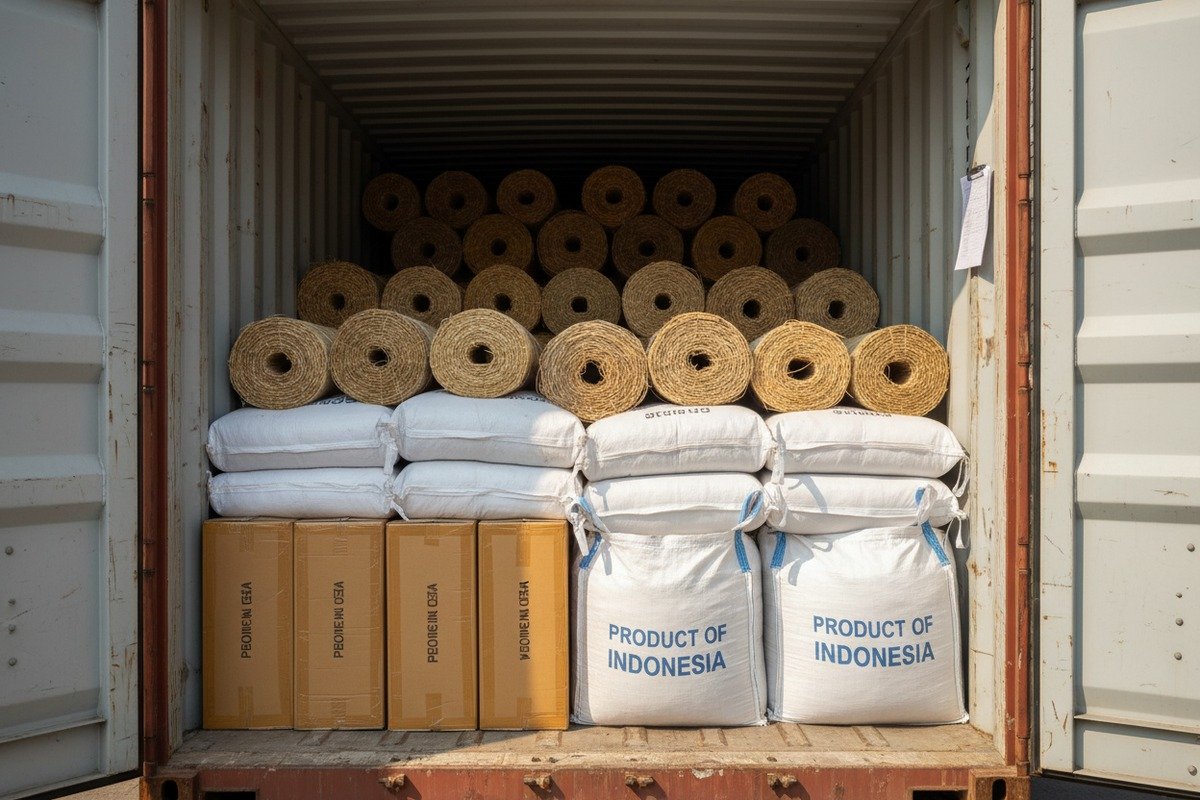
Les méthodes d'emballage les plus courantes pour l'importation de cannage en rotin en vrac sont l'emballage en rouleaux et l'emballage en sacs en vrac. Les rouleaux standard sont enveloppés dans un film résistant à l'humidité, rembourrés avec un matériau de protection, puis placés dans des cartons de qualité export ou des caisses en bois. Le rotin naturel nécessite également un traitement de fumigation avant l'expédition.
Un emballage adéquat fait la différence entre un rotin vierge prêt pour la production et un conteneur rempli de matériaux moisis et déformés. cartons ondulés 1. Ci-dessous, nous détaillons exactement ce que vous devez savoir — des méthodes d'emballage sécurisées à l'étiquetage personnalisé et à la protection contre l'humidité — afin que votre prochaine importation en vrac arrive en parfait état.
Comment puis-je m'assurer que ma vannerie en rotin en vrac est emballée en toute sécurité pour éviter tout dommage pendant le transport ?
Nous avons vu des conteneurs arriver dans les ports des Pays-Bas et d'Australie avec des rouleaux écrasés et des motifs de tissage brisés — presque toujours parce que l'emballage était une réflexion après coup plutôt qu'une priorité.
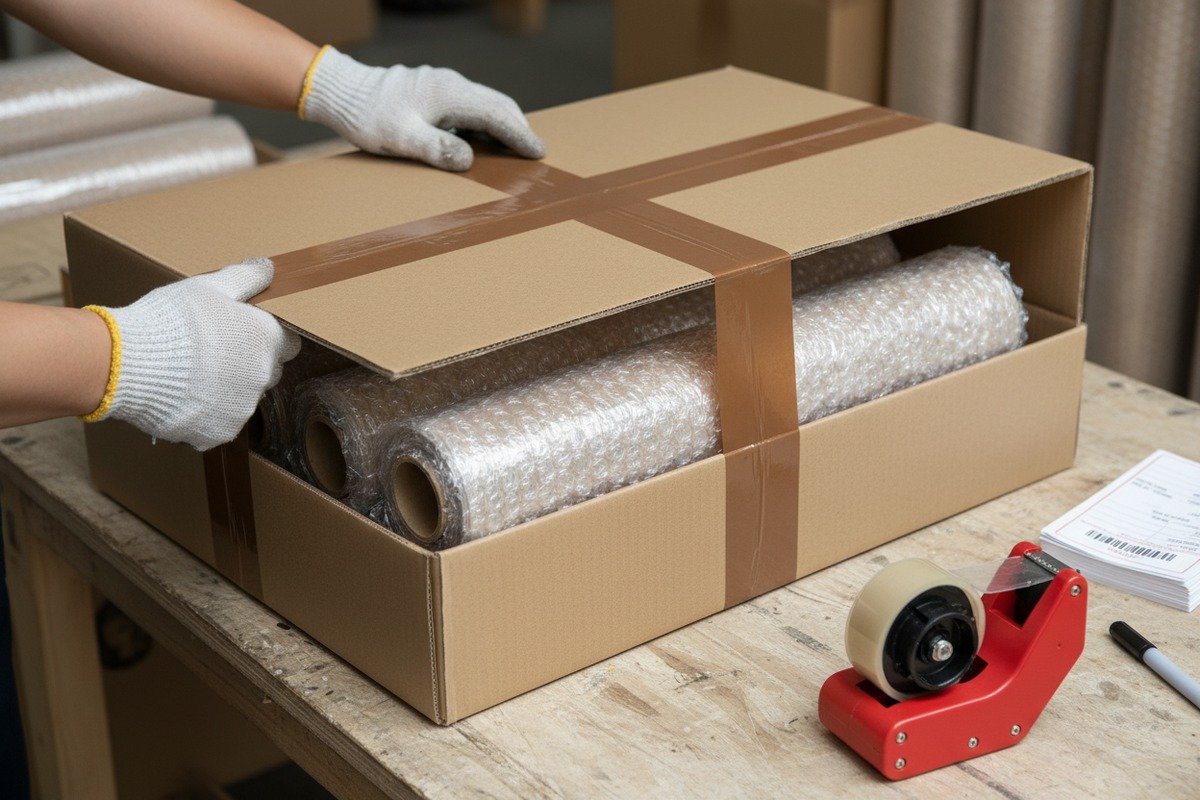
Pour assurer un emballage sécurisé, chaque rouleau de rotin doit être enroulé serré, enveloppé dans du papier résistant à l'humidité ou un film plastique, rembourré avec du papier bulle ou de la mousse, et placé dans des cartons ondulés renforcés ou des caisses en bois scellées avec du ruban adhésif résistant en forme de H pour une intégrité maximale.
Pourquoi un enroulement serré est important d'abord
Avant toute application d'emballage extérieur, le rouleau lui-même doit être enroulé correctement. Dans notre usine de traitement du rotin en Indonésie, les ouvriers enroulent chaque pièce de cannage en rotin naturel serré autour d'un tube central en carton ou en plastique. Ce support interne empêche le rouleau de s'affaisser ou de développer des plis pendant le transport. Sans cela, les rouleaux peuvent s'aplatir sous le poids des cartons empilés dans un conteneur d'expédition.
Un rouleau lâche se déplacera à l'intérieur de son emballage. Ce déplacement provoque des frictions. La friction endommage le motif de tissage délicat. Nous l'avons appris à nos dépens il y a des années lorsqu'une expédition en Espagne est arrivée avec des marques d'abrasion visibles sur des dizaines de rouleaux. Depuis lors, chaque rouleau quittant nos usines fait l'objet d'une vérification de fermeté avant l'emballage.
L'approche d'emballage en couches
L'emballage professionnel du cannage en rotin suit un système en couches. Voici comment nous le structurons :
| Couche | Matériau | Objectif |
|---|---|---|
| Couche 1 (Intérieure) | Papier kraft 2 ou film rétractable en plastique | Empêche la poussière et l'humidité légère |
| Couche 2 (Milieu) | Papier bulle ou feuille de mousse | Absorbe les chocs et les vibrations |
| Couche 3 (Extérieure) | Carton ondulé de qualité d'exportation ou caisse en bois | Protection structurelle et résistance à l'empilage |
Chaque couche remplit une fonction spécifique. Sautez une couche, et vous augmentez le risque de dommages. Par exemple, de nombreux fournisseurs économiques sautent la couche de rembourrage intermédiaire pour réduire les coûts. Cette petite économie entraîne souvent des sangles fissurées ou déformées, ce qui coûte beaucoup plus cher à remplacer.
Normes de scellage et d'étiquetage
Le carton extérieur doit être correctement scellé. Nous utilisons du ruban d'emballage résistant appliqué en H : une bande le long de la couture centrale, deux bandes le long de chaque bord. Cela évite l'ouverture accidentelle lors des manipulations brutales dans les ports.
Un étiquetage clair est tout aussi important. Chaque carton doit afficher :
- Nom du produit et SKU
- Dimensions du rouleau (largeur × longueur)
- Poids par carton
- Pays d'origine
- Instructions de manipulation : " Fragile ", " Conserver au sec ", " Sens de présentation "
- Adresse de destination et port
Nous imprimons également des codes-barres sur chaque carton pour les acheteurs qui utilisent des systèmes de gestion d'entrepôt 3. Ce petit détail rend la réception et le suivi des stocks beaucoup plus rapides du côté de l'acheteur.
Stratégie de chargement des conteneurs
À l'intérieur du conteneur, les rouleaux doivent être palettisés lorsque cela est possible. Des cales (blocs de bois ou sacs gonflables) comblent les espaces entre les palettes pour éviter les déplacements. La répartition du poids est également importante. Les cartons les plus lourds vont en bas, les plus légers en haut. Pour un conteneur standard de 20 pieds, nous pouvons charger environ 800 à 1 200 rouleaux selon les spécifications de largeur et de longueur. Un empilage correct élimine environ 90% des plaintes pour dommages de transit que nous recevions auparavant.
Quelles sont les options d'emballage standard auxquelles je dois m'attendre pour mes rouleaux de rotin en gros ?
Lorsque notre équipe traite les commandes pour les grossistes de matériaux de meubles dans des pays comme la Turquie, les États-Unis et l'Australie, la première question porte toujours sur le format d'emballage — car il affecte directement le coût du fret et la manutention en entrepôt.
Les options d'emballage standard pour les rouleaux de rotin en gros comprennent l'emballage individuel des rouleaux dans des cartons ondulés, l'emballage en paquets de plusieurs rouleaux sur palettes et l'emballage en sacs en vrac pour les commandes en grand volume. Les rouleaux de rotin naturel mesurent généralement 15 mètres de long, tandis que les variantes synthétiques peuvent atteindre 30 mètres par rouleau.
Emballage en rouleaux — Le standard de l'industrie
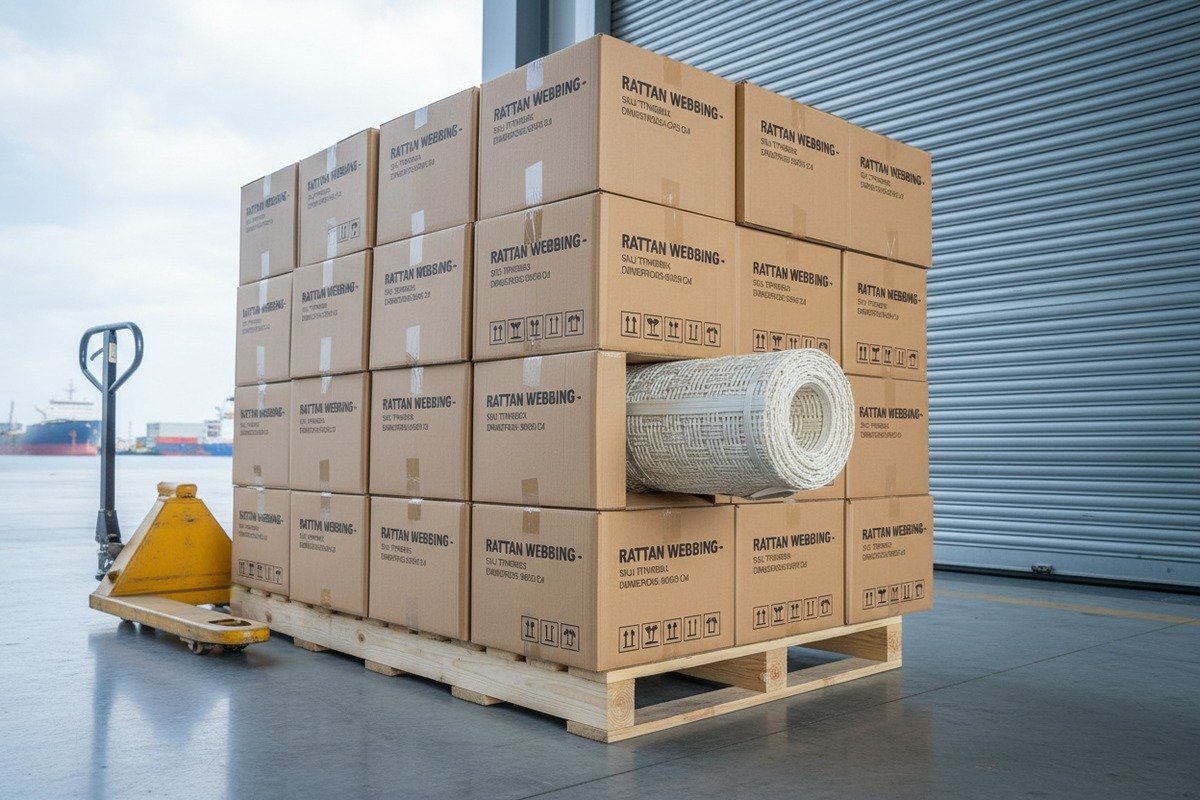
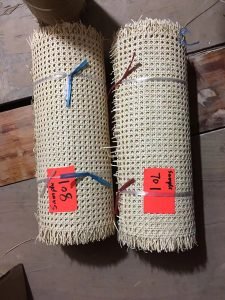
L'emballage en rouleaux est la méthode la plus utilisée. Chaque rouleau est emballé individuellement et mis en boîte. Ce format est idéal pour les acheteurs qui doivent couper et distribuer les rouleaux à plusieurs clients ou lignes de production. C'est aussi le plus facile à inspecter à l'entrepôt de réception — vous ouvrez un carton, vous vérifiez un rouleau.
Les spécifications standard des rouleaux varient entre le rotin naturel et synthétique :
| Spécification | Cannage en rotin naturel | Sangle en rotin synthétique |
|---|---|---|
| Longueur du rouleau | 10–15 mètres | 15–30 mètres |
| Largeur du rouleau | 35–90 cm (courant : 60 cm) | 35–120 cm |
| Espacement des trous | 1/2 pouce (standard) | 1/2 pouce (personnalisable) |
| Poids par rouleau | 1,5–3 kg | 2–5 kg |
| Noyau intérieur | Tube en carton | Tube en plastique ou en carton |
| Emballage extérieur | Papier kraft + film à bulles | Film rétractable en plastique |
Les rouleaux de rotin naturel sont plus courts car les brins de canne naturels ont des longueurs limitées. Les rouleaux synthétiques peuvent être fabriqués en longueurs continues plus importantes, c'est pourquoi de nombreux acheteurs à gros volumes les préfèrent pour leur rentabilité.
Emballage en faisceaux et sur palettes
Pour les commandes plus importantes, nous regroupons plusieurs rouleaux en faisceaux — généralement 5 à 10 rouleaux attachés ensemble et placés sur une palette en bois. Cette méthode accélère le chargement et le déchargement aux deux extrémités. L'emballage sur palette convient mieux aux acheteurs qui disposent d'un accès par chariot élévateur dans leurs entrepôts.
Chaque palette est filmée avec un film industriel pour plus de stabilité. Des protections d'angle sont placées sur les quatre bords pour éviter l'écrasement. Les dimensions des palettes sont standardisées pour s'adapter aux largeurs de conteneurs — soit 1 000 × 1 200 mm (palette Europe 4) soit 1 016 × 1 219 mm (palette US).
Emballage en grands sacs pour un volume maximal
Les grands sacs, parfois appelés sacs FIBC (Flexible Intermediate Bulk Containers), sont utilisés pour les commandes à très grand volume. Cette méthode sacrifie la protection individuelle des rouleaux pour une utilisation maximale de l'espace du conteneur. Les rouleaux sont empilés à l'intérieur de grands sacs en polypropylène tissé 5 qui peuvent contenir 20 à 50 rouleaux chacun.
Cette option convient aux acheteurs qui privilégient le coût d'expédition par unité le plus bas possible et qui disposent d'installations pour reconditionner à l'arrivée. Cependant, nous la recommandons généralement uniquement pour le rotin synthétique, car le rotin naturel est plus fragile et bénéficie d'une protection individuelle en carton.
Choisir la bonne option
La décision repose sur trois facteurs : le volume de la commande, les capacités de l'entrepôt et si le rotin sera revendu ou utilisé en production. Nous discutons toujours de ces facteurs avant de finaliser l'emballage, car le mauvais choix entraîne des coûts inutiles ou un risque de dommages.
Puis-je demander des longueurs de rouleaux personnalisées et un étiquetage privé pour mes importations de rotin ?
Nos lignes de production à Foshan traitent des commandes personnalisées tous les jours — d'un grossiste à Dubaï qui a besoin de rouleaux synthétiques de 25 mètres à une usine de meubles aux Philippines qui exige un branding spécifique sur chaque carton.
Oui, la plupart des fournisseurs de rotin établis proposent des longueurs de rouleaux, des largeurs, des motifs de tissage et un étiquetage privé personnalisés. Vous pouvez spécifier des dimensions allant de 35 cm à 120 cm de largeur et jusqu'à 30 mètres de longueur pour les synthétiques, ainsi que des emballages de marque, des autocollants personnalisés, des options de couleur et des conceptions de cartons imprimés.
Qu'est-ce qui peut être personnalisé ?
La personnalisation dans l'importation de sangles en rotin couvre bien plus que la taille des rouleaux. Voici une ventilation complète de ce que nous personnalisons régulièrement pour nos clients grossistes :
| Zone de personnalisation | Options disponibles | MOQ typique |
|---|---|---|
| Longueur du rouleau | 5m, 10m, 15m, 20m, 25m, 30m | 100 rouleaux |
| Largeur du rouleau | 35cm, 45cm, 60cm, 90cm, 120cm | 100 rouleaux |
| Motif de tissage | Maille ouverte hexagonale, tressage panier carré, motif losange, vague chevron | 200 rouleaux |
| Couleur | Naturel, blanchi, teinté, teint sur mesure | 300 rouleaux |
| Type de matériau | Rotin naturel, synthétique PE, plastique, cordon papier, coton | 100 rouleaux |
| Autocollants marque privée | Logo personnalisé, informations produit, code-barres | 500 rouleaux |
| Cartons imprimés | Boîtes personnalisées en couleur | 1 000 rouleaux |
| Étiquettes volantes | Forme, matière et impression personnalisées | 500 rouleaux |
Comment fonctionnent les longueurs personnalisées
Pour le rotin synthétique, le réglage de la longueur du rouleau est simple. Nos machines à tisser peuvent être réglées sur n'importe quelle longueur. Nous programmons simplement la mesure souhaitée, et la machine coupe à cet endroit. Les matériaux synthétiques comme le rotin PE ou le cordon de papier sont continus, il n'y a donc aucune limitation naturelle.
Le rotin naturel est différent. Comme la canne brute a une longueur finie, les rouleaux de plus de 15 mètres peuvent nécessiter un assemblage — ce qui peut créer des coutures visibles. La plupart des acheteurs qui ont besoin de longueurs plus importantes pour l'efficacité de la production choisissent des alternatives synthétiques pour cette raison. Si vous avez besoin de rotin naturel en coupes courtes et premium (disons 5 mètres pour un emballage de vente au détail de bricolage), cela peut être facilement organisé.
Étiquetage privé pour les revendeurs
L'étiquetage privé est devenu un service majeur pour nos clients en gros, en particulier ceux qui vendent sur des plateformes de commerce électronique. Lorsqu'un grossiste de matériaux de meubles aux États-Unis souhaite vendre de la sangle en rotin sous sa propre marque, nous nous occupons de tout, de la conception et du placement de l'étiquette à l'impression des cartons.
Le processus est simple. Vous nous envoyez vos fichiers de logo et votre conception d'emballage. Notre équipe de conception les formate pour l'impression. Après votre approbation, nous produisons les étiquettes et les cartons en interne. L'ensemble du processus ajoute environ 5 à 7 jours au délai de production, en fonction de la complexité de la conception.
Certains clients demandent également des codes QR sur leurs emballages qui renvoient à des guides d'installation ou à des pages de produits. C'est une tendance croissante avec l'essor des projets de restauration de meubles de bricolage. Nous pouvons accepter n'importe quel format de code.
Quantités minimales de commande pour les travaux personnalisés
Les commandes personnalisées nécessitent des quantités minimales. Les produits standard peuvent être expédiés en plus petites quantités, mais les longueurs personnalisées, les couleurs ou les emballages imprimés impliquent des coûts de mise en place qui doivent être répartis sur un volume de commande raisonnable. Les MOQ indiqués dans le tableau ci-dessus sont des directives — nous pouvons négocier en fonction de la valeur globale de la commande et du plan d'achat à long terme de l'acheteur.
Comment puis-je protéger ma cannage en rotin de l'humidité et de la moisissure pendant le transport longue distance ?
L'humidité est l'ennemi numéro un du cannage en rotin pendant le transport. Au cours de nos années d'exportation depuis les ports de Guangzhou et de Shenzhen, nous avons suivi de près les réclamations pour dommages liés à l'humidité — et presque toutes auraient pu être évitées avec une préparation adéquate.
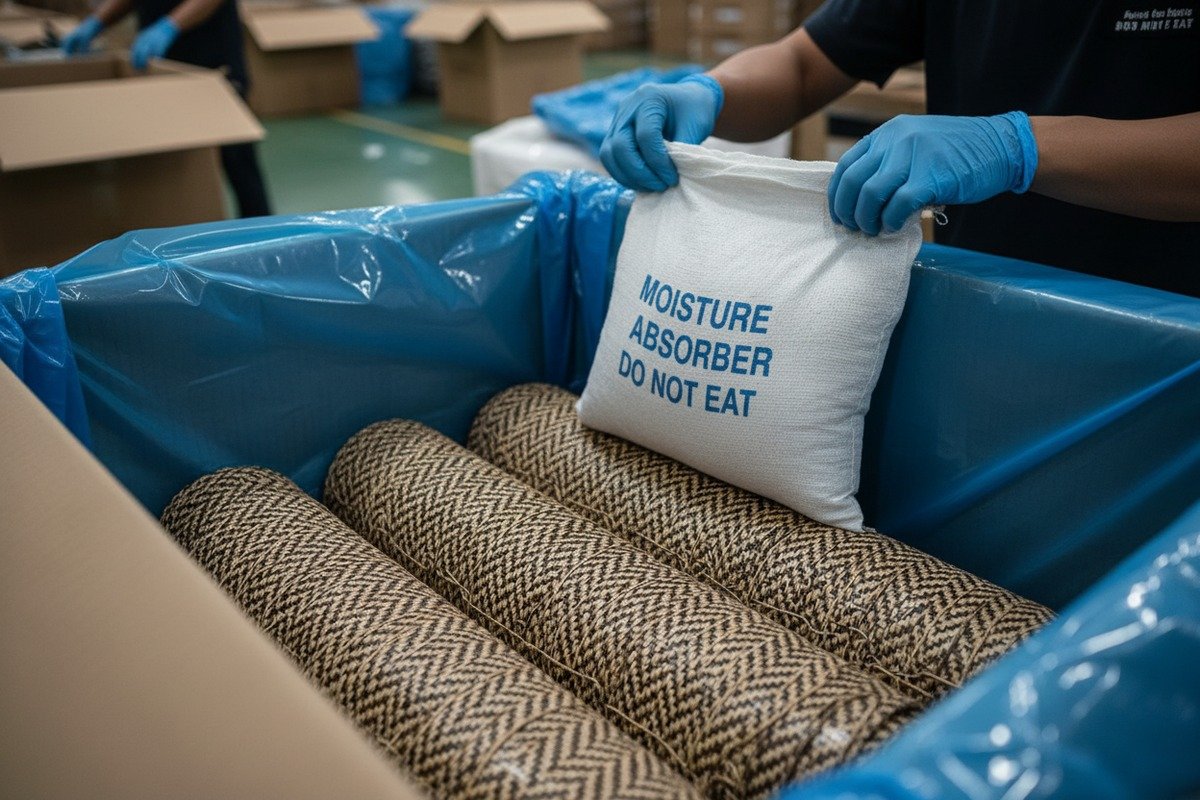
Pour protéger le cannage en rotin de l'humidité et de la moisissure, utilisez un emballage résistant à l'humidité, incluez des sachets de gel de silice déshydratant à l'intérieur de chaque carton, assurez un séchage adéquat après le tressage avant l'emballage, appliquez un traitement de fumigation pour le rotin naturel et utilisez des sacs déshydratants pour conteneurs afin de contrôler les niveaux d'humidité tout au long du voyage.
Comprendre le problème de l'humidité
Les conteneurs de fret maritime connaissent des fluctuations de température spectaculaires. Lorsqu'un conteneur passe d'un port chaud à des températures océaniques plus fraîches, de la condensation se forme sur le plafond et les parois du conteneur. Ce phénomène, appelé " pluie de conteneur ", goutte sur la cargaison. Si votre rotin n'est pas correctement protégé, l'humidité pénètre l'emballage et provoque la croissance de moisissures en quelques jours.
Le rotin naturel est particulièrement vulnérable. C'est une matière organique avec des fibres naturelles la teneur en humidité 6. S'il n'est pas correctement séché avant l'emballage, l'humidité résiduelle à l'intérieur des fibres offre un environnement idéal pour la prolifération des spores de moisissures. Le rotin synthétique est beaucoup plus résistant, mais même les produits synthétiques peuvent développer des moisissures de surface si l'humidité piégée n'a aucun moyen de s'échapper.
Préparation avant emballage
Dans notre usine de traitement en Indonésie, chaque lot de rotin naturel subit un séchage et un durcissement post-tissage. Le cannage est étalé dans des salles de séchage contrôlées où la température et l'humidité sont surveillées. La teneur en humidité cible avant l'emballage est inférieure à 12 %. Au-delà, le risque de moisissure augmente considérablement.
Pour le rotin blanchi — populaire sur les marchés de meubles haut de gamme en Europe et en Australie — le processus de blanchiment ajoute de l'humidité. Les rouleaux blanchis nécessitent donc un temps de séchage supplémentaire. Se précipiter dans cette étape est l'erreur la plus courante que nous constatons chez les fournisseurs de moindre qualité.
Fumigation et certification
Les importations de rotin naturel nécessitent un traitement de fumigation 7 pour prévenir les parasites et les moisissures pendant le transport. Ce processus utilise du bromure de méthyle 8 ou un traitement thermique pour tuer tous les organismes vivant dans les fibres organiques. Après le traitement, un certificat de fumigation est délivré. Ce document est essentiel pour le dédouanement 9 dans la plupart des pays importateurs.
La fumigation doit être effectuée après l'emballage du rotin, mais avant la fermeture du conteneur. L'emballage doit permettre la pénétration du fumigant — c'est pourquoi l'emballage en papier kraft est préféré au film plastique entièrement scellé pour le rotin naturel. Certains acheteurs demandent à tort un scellage plastique hermétique, pensant que cela empêche l'humidité de pénétrer. En réalité, cela piège l'humidité existante à l'intérieur et bloque l'efficacité de la fumigation.
Contrôle de l'humidité dans le conteneur
Au-delà de l'emballage individuel des rouleaux, le conteneur lui-même nécessite une gestion de l'humidité. Nous plaçons sacs déshydratants pour conteneurs 10 — de grands sachets à base de chlorure de calcium — suspendus au plafond du conteneur et le long des parois. Ces sacs absorbent l'excès d'humidité et empêchent la pluie de conteneur d'atteindre la cargaison.
Pour les commandes de grande valeur ou les expéditions vers des destinations particulièrement humides comme l'Inde, la Thaïlande ou les Philippines, nous tapissons également le sol du conteneur avec des tapis absorbant l'humidité. Combiné à des espaces de ventilation appropriés entre les palettes, ce système de défense multicouche maintient les niveaux d'humidité gérables pendant des voyages qui peuvent durer de 20 à 30 jours.
Naturel vs. Synthétique : Le facteur humidité
C'est là que le débat naturel versus synthétique devient très pratique. De nombreux clients qui importaient initialement uniquement du rotin naturel ont commencé à ajouter des options synthétiques à leurs gammes de produits spécifiquement en raison de problèmes d'humidité. Le rotin PE synthétique n'absorbe pas l'eau, ne favorise pas la croissance des moisissures et ne nécessite pas de fumigation. Pour les applications de mobilier d'extérieur ou les expéditions vers les climats tropicaux, c'est le choix le plus sûr.
Cela dit, le rotin naturel reste irremplaçable pour sa texture authentique, sa chaleur et sa respirabilité. Les clients qui desservent les marchés du mobilier d'intérieur haut de gamme — en particulier en Europe — continuent de le demander. La clé est une préparation adéquate, pas une évitement. Avec un séchage, une fumigation et une protection en conteneur corrects, le rotin naturel peut voyager en toute sécurité sur n'importe quelle route maritime.
Référence rapide : Liste de contrôle de la protection contre l'humidité
- Sécher le rotin à moins de 12 % d'humidité avant l'emballage
- Emballer dans du papier kraft résistant à l'humidité mais respirant
- Ajouter des sachets de gel de silice déshydratant à l'intérieur de chaque carton
- Fumiger le rotin naturel et obtenir une certification
- Utiliser des sacs déshydratants pour conteneurs (minimum 6 par conteneur de 20 pieds)
- Tapisser le sol du conteneur avec des tapis absorbant l'humidité pour les longs voyages
- Laisser des espaces de ventilation entre les palettes
- Éviter l'emballage plastique entièrement hermétique sur le rotin naturel
Conclusion
Un emballage approprié n'est pas un accessoire à votre importation de rotin — c'est le fondement. De l'emballage des rouleaux au contrôle de l'humidité, en passant par l'étiquetage personnalisé et la fumigation, chaque étape protège votre investissement et votre réputation auprès de vos propres clients.
Notes de bas de page
1. Explique la composition et les avantages du carton ondulé pour l'emballage et l'expédition. ↩︎
2. Met en évidence la résistance, la polyvalence et les propriétés écologiques du papier Kraft dans l'emballage. ↩︎
3. Définit le logiciel WMS et son rôle dans l'optimisation des opérations d'entrepôt et le suivi des stocks. ↩︎
4. Fournit les dimensions standard et les caractéristiques de la palette Europe pour l'efficacité logistique. ↩︎
5. Wikipédia fournit un aperçu faisant autorité et général des grands récipients pour vrac souples (GRVS), qui sont fabriqués à partir de polypropylène tissé. ↩︎
6. Discute de l'impact de la teneur en humidité sur la fiabilité de l'emballage et les propriétés du bois. ↩︎
7. Fournit un aperçu complet de la fumigation des conteneurs dans le transport maritime international. ↩︎
8. La page ISPM 15 de Wikipédia est une source faisant autorité qui détaille le bromure de méthyle comme traitement internationalement accepté pour les matériaux d'emballage en bois. ↩︎
9. Explique le processus obligatoire de dédouanement des marchandises entrant ou sortant d'un pays. ↩︎
10. Explique comment les sachets dessiccants contrôlent l'humidité et préviennent la pluie de conteneur pendant le transit. ↩︎
 English
  Español de México
  العربية
  Deutsch
  Français
  Русский