
Quelles sont les conditions préalables pour importer du cannage en rotin, des nattes en rotin et du cœur de rotin de Chine, et quelle est la capacité de charge des différentes spécifications ?
I often see buyers stuck between paperwork and safety. I make importing simple and I give clear load data so seating passes tests without redesign.
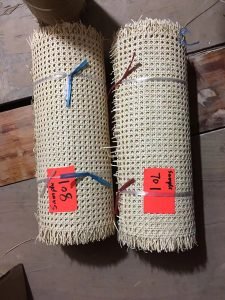
You need a business ID, consignee and tax details, HS codes, and basic import documents. I provide mesh count, strip width, grade, roll specs, and tested load capacity for popular patterns in natural and plastic cane webbing.
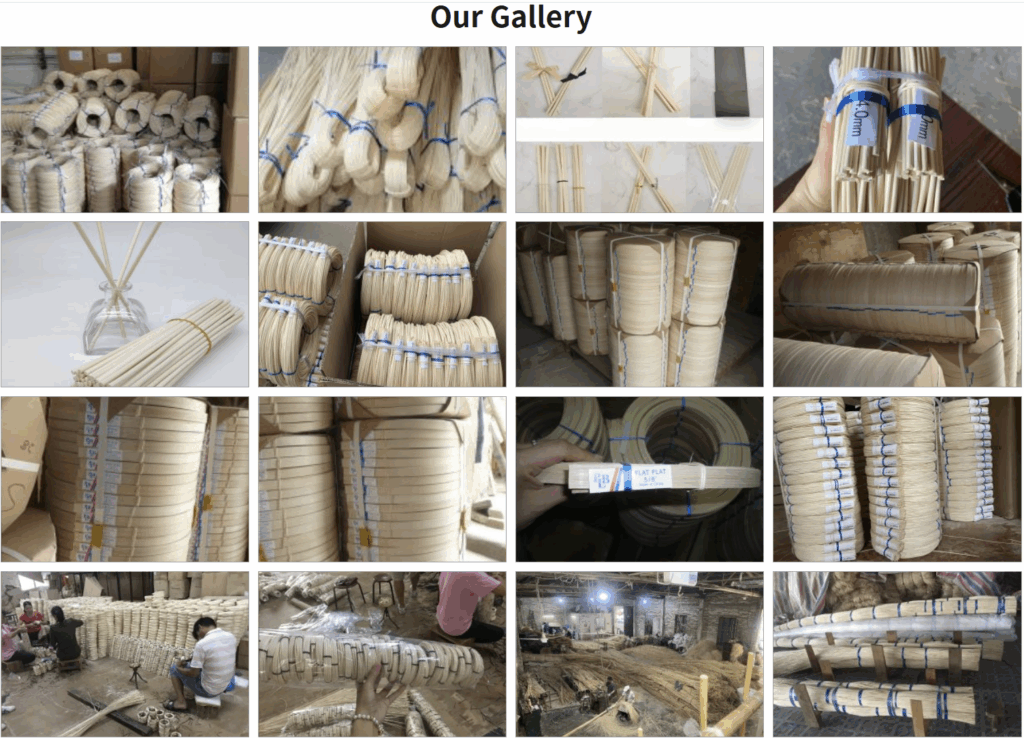
I will list import steps and compliance first. Then I will explain mesh counts, strip widths, grades, and how each choice changes seat load. I will share our lab data and show frame tips that raise capacity.
How do I choose mesh count and strip width to meet seat load requirements for dining chairs?
Many chairs fail because the mesh is too open or the strips are too thin. I size mesh and strip width to spread load and reduce stress at edges.
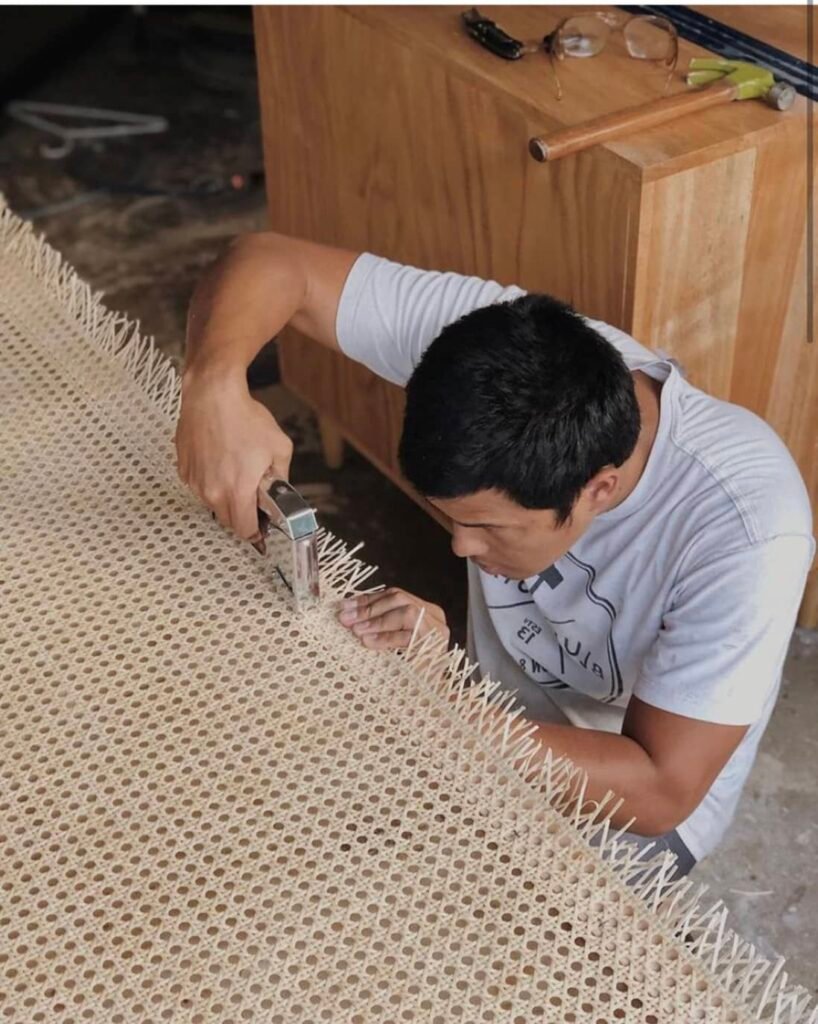
I use tighter meshes and wider strips for higher loads. For dining seats, 1/2″ or 5/8″ hex with 4.0–5.0 mm strips works well. I combine Grade C core for seat strength and Grade B faces for cleaner show surfaces.
Dive deeper: Mesh, strip, and grade mapping for seat loads
I start from your target test: EN 12520, BIFMA X5.4, or your local hotel standard. For 120–140 kg static seat load, 1/2″ hex spreads force better than 7/8″. 5/8″ also works if the strip width is 4.0–5.0 mm and the seat aperture is small. Wider strips raise tensile area and cut stress at the frame groove. I use Grade C chair cane for the seat because it has strong fibers even with green peel, and I stain dark to hide peel. I lace borders with 3.0–4.0 mm core to lock edges and prevent pull-out. If the design wants a decorative face, I use Grade B webbing for the visible panel and keep Grade C underlayers for strength. For herringbone or close weave mats, load rises because the pattern has more material per area. Herringbone with 5.0–6.0 mm flat strips performs well on hotel dining chairs. I always add a 10–12 mm seat rail groove depth and a firm adhesive line to clamp the webbing evenly. Pre-soak and tension are critical so the weave seats and stays stable after dry.
Can you provide tested weight-bearing data for popular patterns like 1/2″, 5/8″, and Herringbone?
Buyers ask for numbers they can show their QC. I test panels and seats in-house and with third-party labs.
Yes. I share panel tensile1 and seat load data for 1/2″, 5/8″, and herringbone pattern2s. I provide reports for natural cane and plastic webbing, including UV and heat performance for outdoor grades.
Dive deeper: Typical load results and how to read them
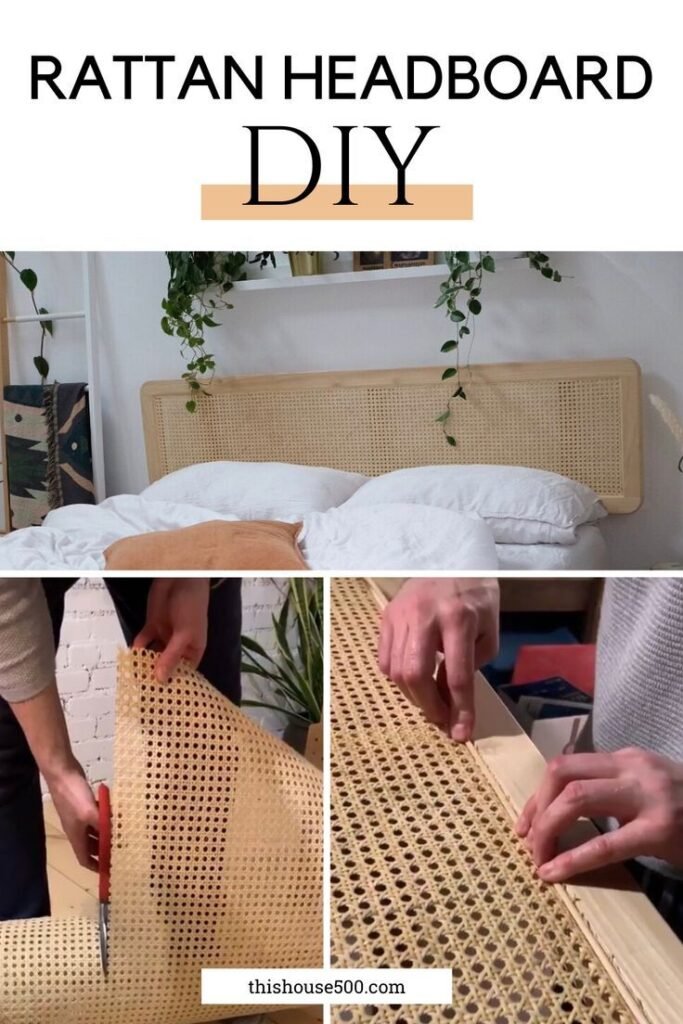
I run two tests. First, panel tensile1 across the weave to get breaking force per 10 cm strip. Second, seat load on a framed sample to simulate a chair. Typical indoor natural cane results: 1/2″ hex, 4.5 mm strips, Grade C, panel tensile1 280–340 N per 10 cm; framed seat, static load 120–140 kg without failure when the groove depth is 12 mm and lacing is correct. 5/8″ hex with 4.0 mm strips gives 240–300 N per 10 cm; framed seat handles 110–130 kg. Herringbone flat with 5.0–6.0 mm strips shows 350–420 N per 10 cm; framed seat handles 140–160 kg. Plastic cane webbing shows higher numbers: 1/2″ hex, 5.0 mm strips, panel tensile1 380–460 N per 10 cm; framed seat 150–180 kg. Outdoor plastic with UV stabilizers keeps more strength after heat and sun. I include tolerance bands because humidity, frame groove, and tension change results. I provide full PDFs with test setup photos, strip width, mesh, grade, and failure mode notes so your QC can compare apples to apples.
Will plastic cane webbing offer higher tensile strength for commercial seating?
Natural cane feels warm but loses some strength with humidity swings. Plastic webbing keeps strength and color in tough use.
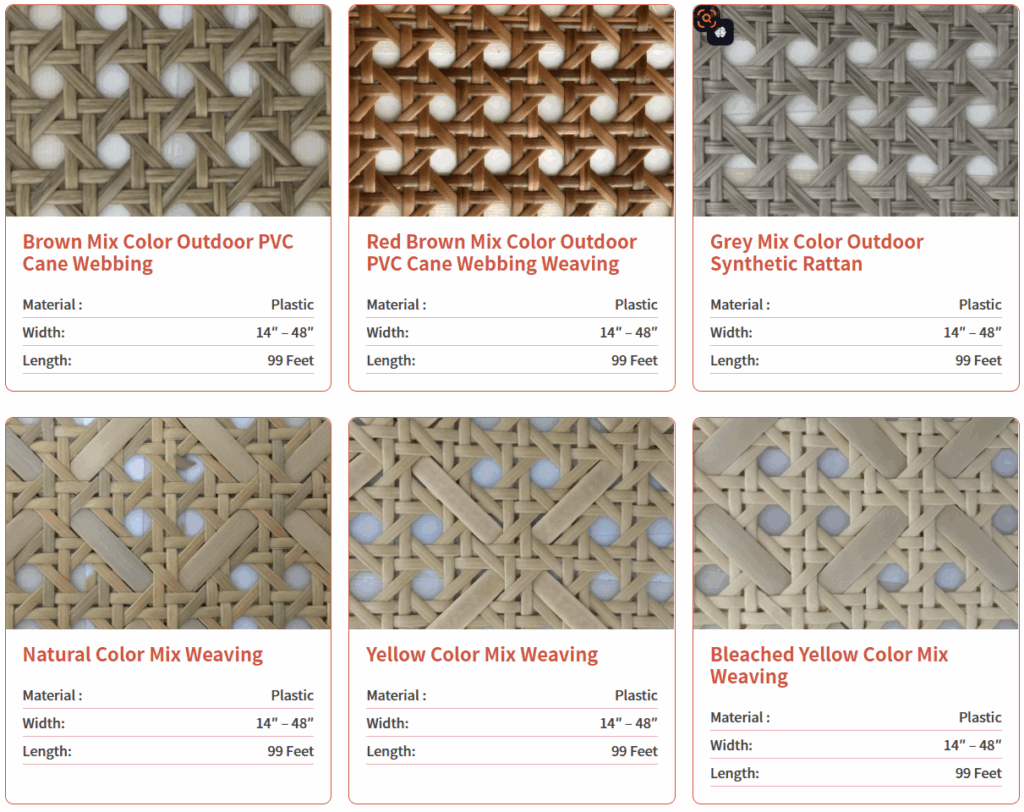
Yes. Plastic cane webbing has higher tensile strength and more stable performance, especially for hotel and café seating. It also keeps color under UV and heat and reduces hand weaving time.
Dive deeper: Material choice, durability, and cost
I recommend plastic cane webbing for high-traffic seating because it has consistent fiber strength and does not swell or shrink like natural cane. In our tests, outdoor plastic 1/2″ hex with 5.0 mm strips held 150–180 kg static seat load in a proper frame. After 2000+ hours UV and 70°C exposure, the capacity stayed within 85–90% of baseline. Natural cane can drop more after dry cycles and rehydration. Plastic webbing cuts labor by up to 80% because we use pre-woven panels. It suits KD frames and speeds assembly across large orders. We offer 15+ colors and 20+ patterns, including hex, square, herringbone, and close weave, so you can hit a design brief without sacrificing strength. I still use natural cane indoors for touch and heritage look, but for commercial dining, bars, and pool cafés, plastic webbing gives stronger numbers and steadier QC. I also provide edge binding, pre-trim, and batch labels to keep production organized.
Comment le humidity3 et frame design4 affect the final load capacity I can expect?
I see strong weaves fail in weak frames. Humidity and groove details matter as much as mesh choice.
Humidity swings change tension in natural cane. Frame groove depth, radius, and lacing pattern control pull-out. I design frames and sealing methods to stabilize tension and raise capacity.
[^4] and [humidity](https://bioresources.cnr.ncsu.edu/resources/effect-of-moisture-content-on-the-load-carrying-capacity-and-stiffness-of-corner-wood-based-and-plastic-joints/)[^3] effects](https://rattanwholesaler.com/wp-content/uploads/2025/09/125886-768x1024.jpg "Humidity and [frame design](https://anglelock.com/blog/machine-base-frame-design)[^4] impact on capacity")
Dive deeper: Environment, framing, and installation rules
I plan for humidity3 first. In dry climates or heavy air-conditioning, natural cane can over-dry and lose elasticity. I pre-soak, tension evenly, and seal both faces with a thin clear coat to slow moisture change. In humid areas, I add more border lacing and use tighter meshes to control sag. Frame design is the next lever. I use 10–12 mm groove depth, a soft radius at the groove edge to avoid cutting strips, and 6–8 mm of glue line contact. I avoid sharp staples; I hide fasteners in grooves and bind edges with 3.0–4.0 mm core. I keep seat apertures smaller than 42 cm for natural cane in dining chairs if the mesh is 5/8″. For larger apertures or bar stools, I move to 1/2″ hex or herringbone, or I switch to plastic webbing. I add cross rails under seats when the design is minimal to share load. I set a maintenance plan: check tension after 2–4 weeks, wipe with mild soap, avoid soaking, and protect from direct sun near windows. These steps raise capacity and make test results repeatable.
Conclusion
You need basic import documents and clear specs. I size mesh and strips to your load target, share test data for each pattern, and design frames and sealing to stabilize capacity indoors and outdoors.
- Learning about panel tensile testing can provide insights into material strength and safety. ↩ ↩ ↩ ↩
- Herringbone patterns can enhance both aesthetics and load-bearing capacity in furniture. ↩
- Understanding humidity’s impact on materials can help you optimize frame design for better load capacity. ↩ ↩
- Exploring frame design best practices can significantly improve your project’s structural integrity and performance. ↩
 English
  Español de México
  العربية
  Deutsch
  Français
  Русский