
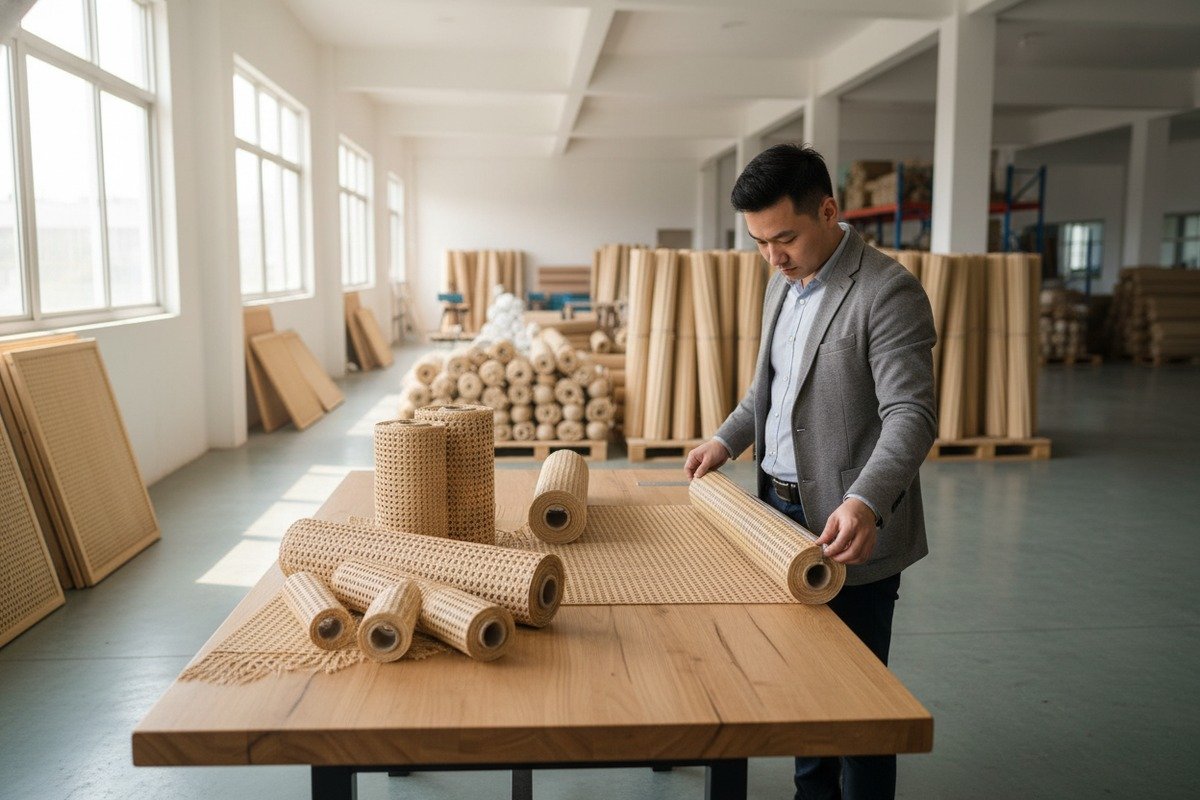
كل أسبوع، يجيب فريق المبيعات لدينا على نفس السؤال من مشتري مصانع الأثاث حول العالم - ”ما هو طول اللفة القياسي لنسيج قصب الروطان الخاص بكم؟”
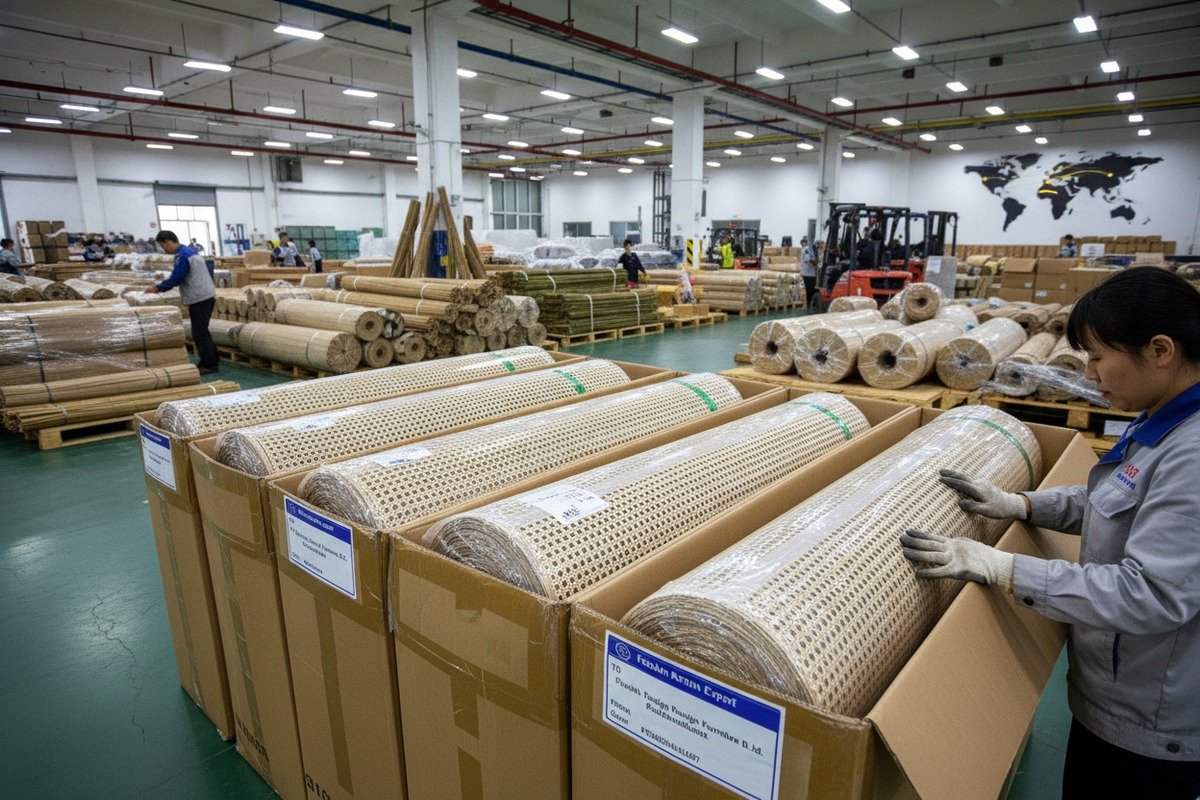
لا يوجد معيار عالمي واحد لطول لفات قصب الروطان الطبيعي. تتراوح أطوال اللفات الشائعة من 5 أقدام إلى 50 قدمًا (حوالي 1.5 إلى 15 مترًا)، اعتمادًا على المورد ونمط النسيج والتطبيق المقصود. معظم اللفات ذات الجودة الاحترافية تُشحن بأطوال 10 أمتار أو 15 مترًا، بينما تأتي اللفات المخصصة للبيع بالتجزئة غالبًا في قطع أقصر بطول 4 إلى 6 أقدام.
الإجابة ليست بسيطة كرقم واحد. يعتمد طول اللفة على حجم مشروعك وميزانيتك وكيفية حصول موردك على الروطان ومعالجته. جنوب شرق آسيا 1. أدناه، نقوم بتفصيل العوامل الرئيسية التي تحدد طول اللفة، وكيفية اختيار الخيار المناسب لمصنعك أو ورشتك، وما الذي يجب الانتباه إليه عند الطلب بكميات كبيرة.
ما هي خيارات الطول القياسية التي يمكنني اختيارها لالتفافات قصب الروطان الخاصة بي؟
غالبًا ما يفترض المشترون الذين يدخلون هذا السوق لأول مرة أن هناك حجم لفة واحد ثابت، تمامًا مثل الخشب الرقائقي أو لفات القماش. يؤدي هذا الافتراض إلى الإفراط في الطلب، وهدر المواد، وتجاوز الميزانية.
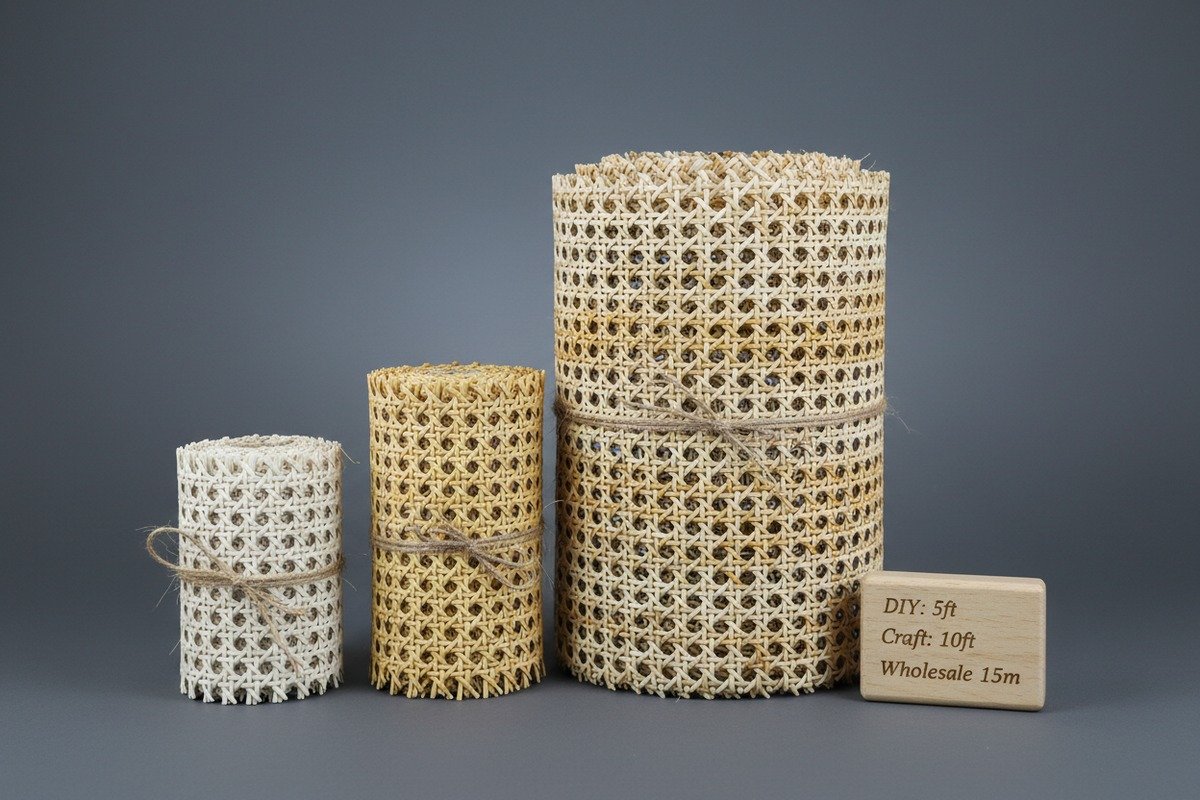
يتوفر قش الروطان الطبيعي بشكل شائع بأطوال لفات تبلغ 5 أقدام، و 10 أقدام، و 15 مترًا، وتصل إلى 50 قدمًا. عادةً ما يقدم الموردون بالتجزئة لفات أقصر تتراوح من 4 إلى 10 أقدام، بينما يوفر الموردون بالجملة والمصانع لفات أطول تتراوح من 10 إلى 15 مترًا لمشاريع الإنتاج على نطاق واسع.
لماذا لا يوجد طول "قياسي" واحد
يأتي الروطان الطبيعي من نخيل الروطان 2, ، وهو نبات متسلق يتم حصاده بشكل أساسي في جنوب شرق آسيا. يختلف طول المادة الخام نفسها. على عكس البدائل الاصطناعية التي يمكن بثقها إلى أي طول، فإن خيوط الروطان الطبيعية لها حدود طبيعية. هذه الحقيقة البيولوجية تشكل أطوال اللفات التي يمكن للموردين تقديمها.
في منشأة معالجة الروطان لدينا في إندونيسيا، نعمل مباشرة مع قصب الروطان المحصود. يحدد طول الخيط القابل للاستخدام بعد التنظيف والتقسيم والتصنيف المدة التي يمكن أن يستمر فيها النسيج المستمر. تتطلب الأنسجة الممتازة مثل ثماني دقيق 1/2 بوصة 3 خيوط أطول وخالية من العيوب. أنماط الشبكة المربعة المفتوحة الأبسط أكثر تساهلاً ويمكن إنتاجها في لفات مستمرة أطول.
خيارات طول اللفة الشائعة حسب شريحة السوق
| شريحة السوق | طول اللفة النموذجي | نطاق العرض النموذجي | الاستخدام الأساسي |
|---|---|---|---|
| افعلها بنفسك / البيع بالتجزئة | 4–6 أقدام (48–72 بوصة) | 15.5 بوصة - 24 بوصة" | إصلاح مقاعد الكراسي، حرف يدوية صغيرة |
| ترميم احترافي | 10 أقدام (120 بوصة) | 18 بوصة – 30 بوصة" | ترميم الأثاث، ألواح الخزائن |
| تجارة الجملة / المصنع | 10–15 مترًا (32–50 قدمًا) | 24 بوصة – 39.5 بوصة" | خطوط الإنتاج، الأثاث الكبير |
| طلبات مخصصة / بالجملة | حتى 50 قدمًا (600 بوصة) | 12 بوصة – 39.5 بوصة" | مشاريع مصممة خصيصًا، ألواح معمارية |
العرض مهم أيضًا
لا يوجد طول اللفة بمعزل عن غيره. العرض هو النصف الآخر من المعادلة. العروض الأكثر شيوعًا في أسواق التصدير لدينا - هولندا والولايات المتحدة الأمريكية وأستراليا والشرق الأوسط - هي 18 بوصة و 24 بوصة و 36 بوصة. اللفات الأعرض تكلف أكثر لكل قدم خطي لأنها تتطلب المزيد من المواد وإعدادات نول أكثر تعقيدًا.
لـ مصانع الأثاث 4 خطوط الإنتاج الجارية، نوصي عمومًا بلفات بطول 15 مترًا بعرض 24 بوصة. يغطي هذا الطول معظم أعمال تنجيد الكراسي وألواح الخزائن دون زيادة في القطع المتبقية. بالنسبة لتجار الجملة الذين يعيدون البيع للمتاجر الصغيرة، توفر اللفات بطول 10 أقدام بعرض 18 بوصة أو 24 بوصة توازنًا جيدًا بين المخزون القابل للإدارة وأسعار البيع بالتجزئة التنافسية.
يؤثر نمط النسيج على الأطوال المتاحة
لا تأتي جميع أنماط النسيج بخيارات طول متماثلة. إليك مرجع سريع:
| نمط النسج | أقصى طول عملي للبكرة | ملاحظات |
|---|---|---|
| دقيق ثماني الأضلاع 1/2 بوصة | 10–15 مترًا | يتطلب خيوطًا طويلة وعالية الجودة |
| شبكة مربعة مفتوحة | يصل إلى 15 مترًا | أكثر تساهلاً في طول الخيط |
| زخرفة ماسية | 8-12 مترًا | النسيج الضيق يحد من التشغيل المستمر |
| نسيج الراديو | 10–15 مترًا | نمط كلاسيكي، متوفر على نطاق واسع |
| نسج سلة كثيف | 5-10 أمتار | مادة ثقيلة، يفضل البكرات الأقصر لسهولة التعامل |
تدرج منصات البيع بالتجزئة مثل Etsy الآن أطوالًا مقطوعة حسب الطلب في زيادات قدرها 6 بوصات، من 6 أقدام إلى 49 قدمًا. هذا رائع للهواة، ولكن بالنسبة لمشتري المصانع، فإن الطلب من مورد جملة متخصص يمنحك تناسقًا وأسعارًا وتحكمًا أفضل في الجودة.
هل يمكنني تخصيص طول اللفة لتقليل هدر المواد في مصنع الأثاث الخاص بي؟
أحد أكبر الصداع الذي نسمعه من مديري المشتريات هو نفايات المواد 6. لا يمكن لمصنع يقطع 200 مقعد كرسي يوميًا تحمل إهدار 15% من كل لفة لأن الطول لا يتناسب مع تخطيط الإنتاج.
نعم، يقدم معظم موردي قش الروطان الراسخين أطوال لفائف مخصصة مصممة خصيصًا لاحتياجات الإنتاج الخاصة بك. من خلال تحديد الطول الدقيق لكل لفة بناءً على تخطيط القطع الخاص بك، يمكنك تقليل هدر المواد بنسبة 10-20٪، وخفض التكاليف لكل وحدة، وتبسيط سير عمل المصنع الخاص بك.
كيف تعمل الأطوال المخصصة عمليًا
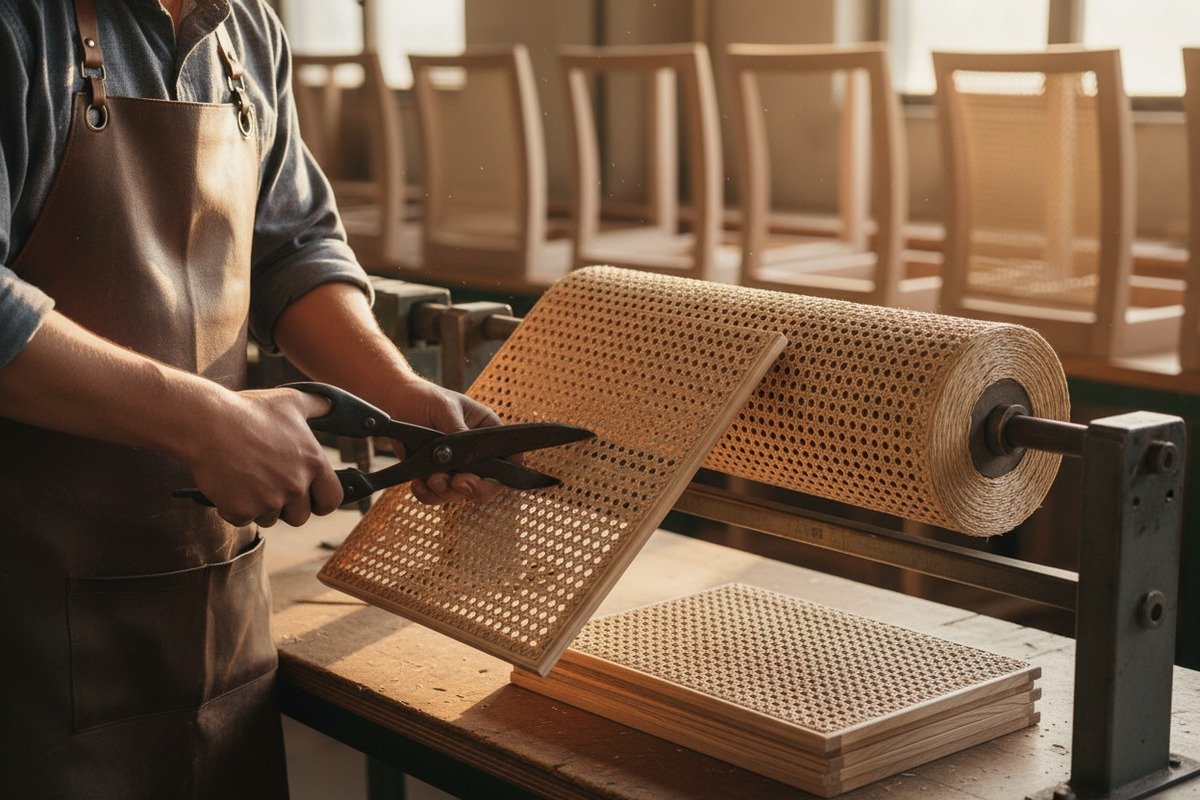
عندما يتصل بنا مصنع أثاث، فإن خطوتنا الأولى هي فهم نمط القطع الخاص بهم. على سبيل المثال، إذا احتاج المشتري إلى قطع بمقاس 18 بوصة × 20 بوصة لمقاعد الكراسي مع تداخل 2 بوصة على كل جانب (لذلك قطع فعلية بمقاس 22 بوصة × 24 بوصة)، فإننا نحسب عدد القطع التي تتناسب مع عرض اللفة وطول اللفة. ثم نوصي بطول لفة ينتج عنه قطع بأعداد صحيحة مع الحد الأدنى من المواد المتبقية.
هذا ليس مفهومًا جديدًا في صناعة المنسوجات. قامت مصانع الأقمشة بذلك لعقود. ولكن في صناعة الروطان، لا يزال العديد من الموردين الأصغر يقدمون أطوالًا ثابتة فقط. العمل مع الشركة المصنعة التي تتحكم في عملية النسيج - كما نفعل في منشأتنا الإندونيسية - يمنحك المرونة لتحديد ما تحتاجه بالضبط.
الرياضيات وراء تقليل النفايات
لنفترض أنك تطلب لفة قياسية بطول 15 مترًا وعرض 24 بوصة. قالب القطع الخاص بك هو 22 بوصة × 24 بوصة. تحصل على قطعة واحدة عبر العرض. على طول 15 مترًا (590 بوصة)، تحصل على 26 قطعة مع حوالي 18 بوصة من النفايات. هذا حوالي 3% من النفايات - مقبول.
ولكن إذا كان قالبك 22 بوصة × 20 بوصة، تحصل على 29 قطعة مع حوالي 10 بوصات من النفايات. قم بتغيير طول اللفة إلى 14.8 مترًا (582.6 بوصة)، وتحصل على 29 قطعة مع أقل من 3 بوصات من النفايات. هذا التعديل الصغير يوفر المواد في كل لفة عبر آلاف اللفات سنويًا.
الحد الأدنى لكميات الطلب للأطوال المخصصة
عادة ما تأتي الأطوال المخصصة مع متطلبات الحد الأدنى للطلب. إليك ما يمكن توقعه:
| نوع المورد | الحد الأدنى للطلب للأطوال المخصصة | المهلة الزمنية | تأثير السعر |
|---|---|---|---|
| تاجر جملة مصنع (مثل Seafan Rattan) | 50-100 لفة | 15–25 يومًا | سعر عادي إلى علاوة طفيفة |
| بائع تجزئة متخصص (مثل HH Perkins) | غير متاح عادة | غير متاح | تسعير ثابت |
| سوق عبر الإنترنت (مثل Etsy) | 1 لفة (مقطوعة حسب الطلب من المخزون) | 3–7 أيام | 10–20% مميز |
بالنسبة للمشترين على نطاق المصنع الذين يطلبون مئات اللفات، فإن فرق التكلفة بين اللفة القياسية واللفة ذات الطول المخصص غالبًا ما يكون ضئيلًا. المدخرات الناتجة عن تقليل النفايات تفوق بكثير أي علاوة لكل لفة. لقد رأينا عملاء في تركيا وهولندا يقللون من إنفاقهم السنوي على الخيزران بنسبة 8–12% بمجرد التحول من لفات ثابتة بطول 15 مترًا إلى أطوال مخصصة محسّنة.
كلمة تحذير بشأن الطلبات المخصصة
الأطوال المخصصة قوية، لكنها تتطلب تواصلًا واضحًا. حدد الطول بالمتر والبوصة. قم بتأكيد طريقة القياس - يقيس بعض الموردين من الحافة الأمامية للشريط، بينما يدمج البعض الآخر الجزء الملفوف الأولي. اطلب دائمًا عينة لفة أولاً. تلقى أحد عملائنا في المملكة العربية السعودية ذات مرة 200 لفة كان كل منها أقصر بـ 6 بوصات لأن المصنع قاس بشكل مختلف. هذا النوع من الأخطاء يمكن تجنبه بعينة بسيطة قبل الإنتاج.
كيف يؤثر طول اللفة على تكاليف الشحن ومتانة التعبئة والتغليف؟
تكاليف الشحن 7 يمكن أن تنجح أو تفشل صفقة في التجارة الدولية. لقد رأينا مشترين يختارون موردًا أرخص فقط ليكتشفوا أن تكلفة الشحن لكل لفة ألغت المدخرات - لأن اللفات كانت طويلة جدًا بالنسبة للصناديق القياسية وتتطلب معالجة خاصة.
يؤثر طول اللفة بشكل مباشر على تكاليف الشحن من خلال تأثيره على أبعاد العبوة والوزن وتصنيف الشحن. غالبًا ما تتطلب اللفات الأطول (أكثر من 10 أمتار) أنابيب كرتونية مقواة أو صناديق خشبية، مما يضيف 15–25% إلى تكاليف التعبئة والتغليف. تتناسب اللفات الأقصر مع الصناديق القياسية، مما يقلل من رسوم الشحن وخطر التلف أثناء النقل.
العلاقة بين طول اللفة وحجم العبوة
يتم لف شريط الخيزران حول أنبوب قلب من الورق المقوى أو البلاستيك. يحدد طول اللفة قطر هذا الأسطوانة. لفة بطول 5 أمتار بعرض 24 بوصة لها قطر صغير نسبيًا - يسهل وضعها في صندوق، ويسهل تكديسها على منصة نقالة. لفة بطول 15 مترًا بنفس العرض لها قطر أكبر بكثير وأثقل. إنها تحتاج إلى أنبوب أقوى، ولف خارجي أكثر سمكًا، وتكديس أكثر حرصًا على المنصات.
في تجربتنا في الشحن إلى أكثر من اثنتي عشرة دولة، فإن النقطة المثالية للشحن البحري هي اللفة بطول 10 أمتار. إنها تتناسب جيدًا داخل صناديق التصدير القياسية، وتتكدس بكفاءة على المنصات، وتحافظ على الوزن الإجمالي لكل صندوق ضمن حدود شركات النقل الشائعة.
خيارات التعبئة حسب طول اللفة
تتطلب أطوال اللفائف المختلفة استراتيجيات تغليف مختلفة. إليك ما نوصي به عادةً لعملائنا:
| طول اللفة | التغليف الموصى به | الوزن التقريبي للحزمة (عرض 24 بوصة) | ملاحظات الشحن |
|---|---|---|---|
| 4–6 أقدام | غلاف بولي + كرتون قياسي | 1.5–3 كجم | يشحن كطرد صغير؛ الشحن الجوي ممكن |
| 10 أقدام | غلاف بولي + كرتون مقوى | 3–5 كجم | كرتون قياسي، قابل للتحميل على منصة نقالة |
| 10 أمتار | أنبوب كرتوني + كرتون + غلاف بلاستيكي | 6–10 كجم | مثالي للشحن البحري |
| 15 مترًا | أنبوب مقوى + صندوق خشبي أو غلاف منصة نقالة | 10–15 كجم | قد يتطلب معالجة خاصة |
| 50 قدمًا | صندوق خشبي أو منصة مخصصة | 15–25 كجم | قد تنطبق رسوم الشحن للأحجام الكبيرة |
يزداد خطر التلف مع الطول
اللفائف الأطول أكثر عرضة للتلف. الخطران الرئيسيان هما التجعد وتلف الرطوبة. التجعد في حبل الروطان دائم - فهو يكسر الألياف ويدمر اللوحة. اللفائف الأطول لديها مساحة سطح أكبر معرضة لقوى الانحناء أثناء المناولة. إذا قام عامل الرافعة الشوكية بإمالة منصة نقالة ولو قليلاً، يمكن أن تتطور لفة بطول 15 مترًا إلى تجعد يجعل عدة أقدام من المواد غير قابلة للاستخدام.
الرطوبة هي العدو الآخر. يمتص الروطان الطبيعي الرطوبة. أثناء النقل البحري - خاصة على الطرق عبر المناطق الاستوائية - يمكن أن ترتفع رطوبة الحاوية بشكل حاد. يمكن أن تتطور اللفائف الأطول المخزنة في عبوات غير مهواة إلى بقع عفن في عمق اللفة حيث لا يدور الهواء. نحن نقاوم ذلك عن طريق إضافة أكياس هلام السيليكا داخل كل لفة ولفها بفيلم بولي مقاوم للرطوبة.
مقارنة التكاليف: اللفائف القصيرة مقابل اللفائف الطويلة
على عكس المتوقع، قد يكون طلب العديد من اللفائف القصيرة أرخص في الشحن من عدد أقل من اللفائف الطويلة. عشر لفائف بطول 5 أمتار لكل منها تزن تقريبًا نفس وزن ثلاثة لفائف ونصف بطول 15 مترًا، ولكن اللفائف الأقصر تتناسب مع صناديق قياسية تتكدس بإحكام على منصة نقالة. تترك اللفائف الطويلة مساحة ميتة وقد تتطلب تغليفًا مخصصًا.
بالنسبة لعملائنا في الولايات المتحدة الأمريكية وأستراليا، حيث تكون تكاليف التسليم للميل الأخير مرتفعة، غالبًا ما نوصي بلفائف بطول 10 أمتار كحل وسط. إنها طويلة بما يكفي لكفاءة الإنتاج ولكنها مدمجة بما يكفي للشحن الاقتصادي.
كيف تضمن بقاء جودة الخيزران ثابتة عبر كامل طول لفتي؟
عدم اتساق الجودة هو القاتل الصامت لثقة المشتري. لفة تبدأ بنسيج ضيق ومتجانس ولكنها تنتهي بخيوط فضفاضة وتغير في اللون أسوأ من منتج متوسط باستمرار - لأنها تخلق رفضًا غير متوقع في خط الإنتاج.
نحافظ على اتساق الجودة عبر طول اللفة بالكامل من خلال عملية متعددة الخطوات: تصنيف خيوط الروطان الخام قبل النسج، واستخدام أنوال معايرة لتوتر موحد، وإجراء فحوصات بصرية في منتصف اللفة، وإجراء فحوصات جودة نهائية على اللون، وإحكام النسج، وسلامة الخيوط قبل التعبئة.
يبدأ الأمر بتصنيف المواد الخام
اتساق الجودة 8 يبدأ قبل النول بوقت طويل. في منشأة المعالجة الإندونيسية لدينا، يتم فرز خيوط الروطان الواردة حسب القطر والمرونة واللون. يتم فصل الخيوط الرفيعة جدًا أو الهشة جدًا أو ذات اللون غير المناسب. فقط خيوط الدرجة الأولى - المتجانسة في السماكة واللون الطبيعي - تدخل في لفات شبك الروطان الممتازة لدينا.
هذه الخطوة التصنيفية حاسمة لأن الروطان الطبيعي يختلف من حصاد إلى آخر. يميل الروطان المحصود خلال موسم الجفاف إلى أن يكون أفتح في اللون وأكثر هشاشة. الروطان في موسم الأمطار أكثر مرونة ولكنه يمكن أن يحمل المزيد من الرطوبة. نمزج الدفعات للحفاظ على مظهر وشعور متسقين على مدار العام.
معايرة النول والتحكم في الشد
عملية النسيج نفسها هي المكان الذي يتم فيه تحقيق الاتساق أو فقده. يتم معايرة أنوالنا للحفاظ على شد متساوٍ عبر العرض والطول الكاملين للفة. معايرة النول 9 إذا انخفض الشد، يصبح النسيج فضفاضًا. إذا ارتفع، يمكن أن تنكسر الخيوط.
بالنسبة لنسيج الأوكتجون الدقيق مقاس 1/2 بوصة - والذي يُعتبر على نطاق واسع المعيار الذهبي لترميم الأثاث - فإن التحكم في الشد أمر بالغ الأهمية بشكل خاص. يجب أن تكون الفتحات السداسية متجانسة في الحجم. حتى اختلاف 2 مم يكون مرئيًا في المنتج النهائي. يقوم مشغلو أنوالنا بفحص إعدادات الشد كل 2 متر من الإنتاج.
فحص منتصف اللفة ونهاية اللفة
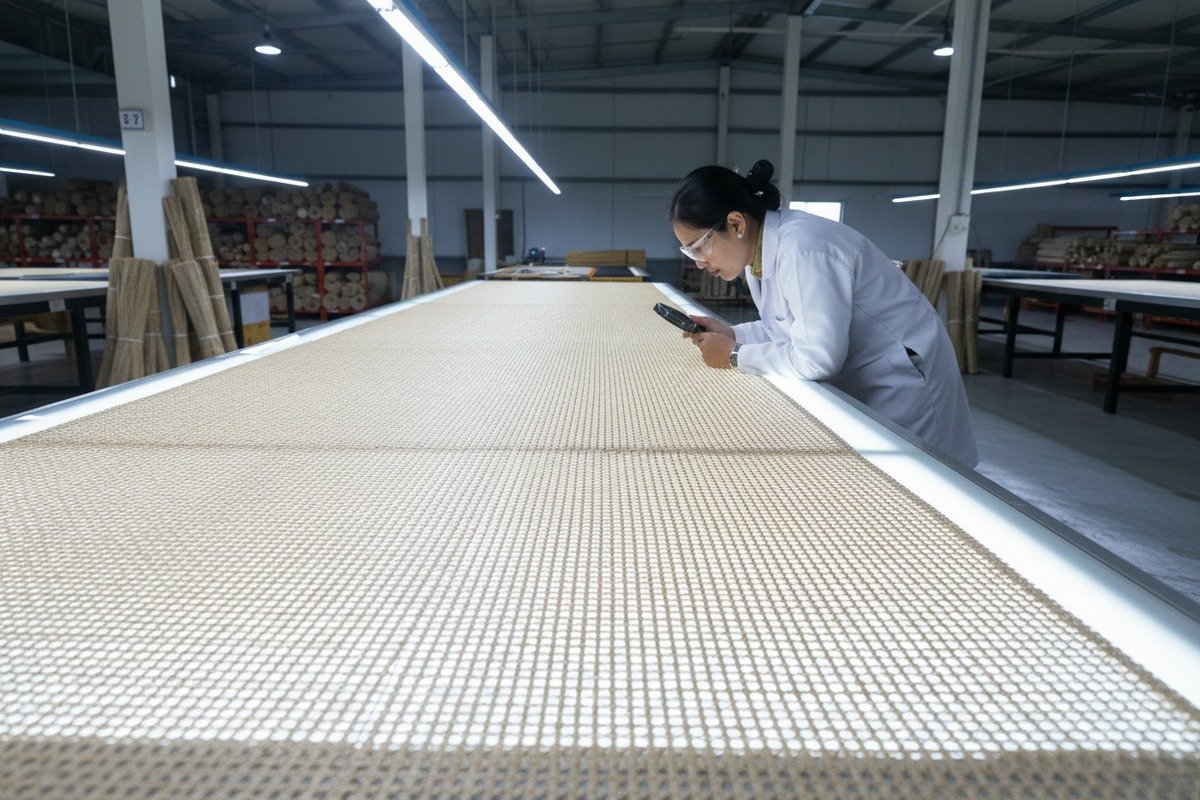
لا ننتظر حتى تنتهي اللفة للتحقق من الجودة. يقوم مفتشونا بفحص شبك الروطان على فترات منتظمة أثناء الإنتاج. يبحثون عن:
- اتساق النسيج: هل الفتحات متسقة في الحجم والشكل؟
- سلامة الخيوط: هل هناك أي خيوط مكسورة أو مشقوقة أو مفقودة؟
- اتساق اللون: هل يحافظ شبك الروطان على نفس الظل من البداية إلى النقطة الحالية؟
- جودة الحافة: هل الحواف نظيفة ومتساوية، أم أن هناك خيوطًا مهترئة أو مفكوكة؟
إذا تم العثور على عيب في منتصف اللفة، يتم تمييز القسم وإزالته. ثم يتم إعادة ربط اللفة بلحام نظيف، ويتم تسجيل موقع اللحام على ملصق التعبئة حتى يعرف المشتري بالضبط مكانه.
اختبار النقع المسبق
قبل التعبئة، نسحب عينات عشوائية من اللفات المكتملة ونقوم بإجراء اختبار نقع. يحتاج نسيج قصب الروطان الطبيعي إلى النقع في الماء الدافئ لمدة 15-30 دقيقة قبل التركيب ليصبح مرنًا. يؤكد اختبارنا أن النسيج على طول اللفة بالكامل يستجيب بشكل موحد للنقع - لا توجد أقسام تبقى صلبة، ولا توجد أقسام تصبح لينة جدًا.
هذا شيء يتجاهله العديد من المشترين عند تقييم الموردين. اللفة التي تنسج بشكل جميل على النول ولكنها تتصرف بشكل غير متوقع أثناء النقع ستسبب مشاكل في أرضية المصنع. يكتشف اختبار النقع قبل الشحن لدينا هذه المشكلات قبل مغادرة المنتج لمنشأتنا.
إمكانية التتبع وسجلات الدُفعات
تحمل كل لفة نقوم بشحنها رمز دفعة يعود إلى دفعة المواد الخام، وعامل النول، وسجلات الفحص، وتاريخ الإنتاج. إذا أبلغ مشترٍ في إسبانيا عن مشكلة في اللفة رقم 2024-BH-0347، يمكننا سحب تاريخ الإنتاج الكامل في غضون دقائق. هذه الإمكانية ليست شائعة في صناعة الروطان، ولكنها ضرورية للحفاظ على شراكات جودة طويلة الأجل.
للعملاء الذين يطلبون ذلك، نقدم أيضًا تقارير فحص من طرف ثالث. يزور العديد من مشترين الجملة لدينا في هولندا والولايات المتحدة الأمريكية وكلاء مراقبة الجودة الخاصين بهم منشأتنا قبل الشحن. نرحب بهذه عمليات الفحص لأنها تعزز الثقة التي تبقي شراكاتنا قوية.
خاتمة
اختيار طول اللفة المناسب لنسيج قصب الروطان الطبيعي لا يتعلق بإيجاد معيار عالمي - بل يتعلق بمطابقة الطول لمشروعك، وسير عمل الإنتاج الخاص بك، ولوجستيات الشحن الخاصة بك، وتوقعات الجودة الخاصة بك.
ملاحظات سفلية
1. يسلط الضوء على الدور الهام لإندونيسيا في إنتاج الروطان في جنوب شرق آسيا. ↩︎
2. يوفر معلومات نباتية عن أنواع النباتات Calamus rotang، المعروفة أيضًا باسم الروطان الشائع. ↩︎
3. يصف أنماط نسيج القصب المفتوح، بما في ذلك التصاميم السداسية. ↩︎
4. يقدم نظرة عامة على صناعة الأثاث والمنتجات ذات الصلة. ↩︎
5. يقدم قش الخيزران كمادة متعددة الاستخدامات للأثاث والديكور. ↩︎
6. يستكشف الاستراتيجيات وأهمية تقليل هدر المواد في عمليات التصنيع. ↩︎
7. يفصل العوامل المختلفة التي تؤثر على تكاليف وأسعار الشحن الدولي. ↩︎
8. يؤكد على الأهمية الحاسمة لمراقبة الجودة في عمليات التصنيع. ↩︎
9. يناقش دور المعايرة في ضمان الدقة والجودة في آلات إنتاج المنسوجات. ↩︎
10. يشرح أهمية شهادات وفحص المواد الخام في التصنيع. ↩︎
 English
  Español de México
  العربية
  Deutsch
  Français
  Русский