
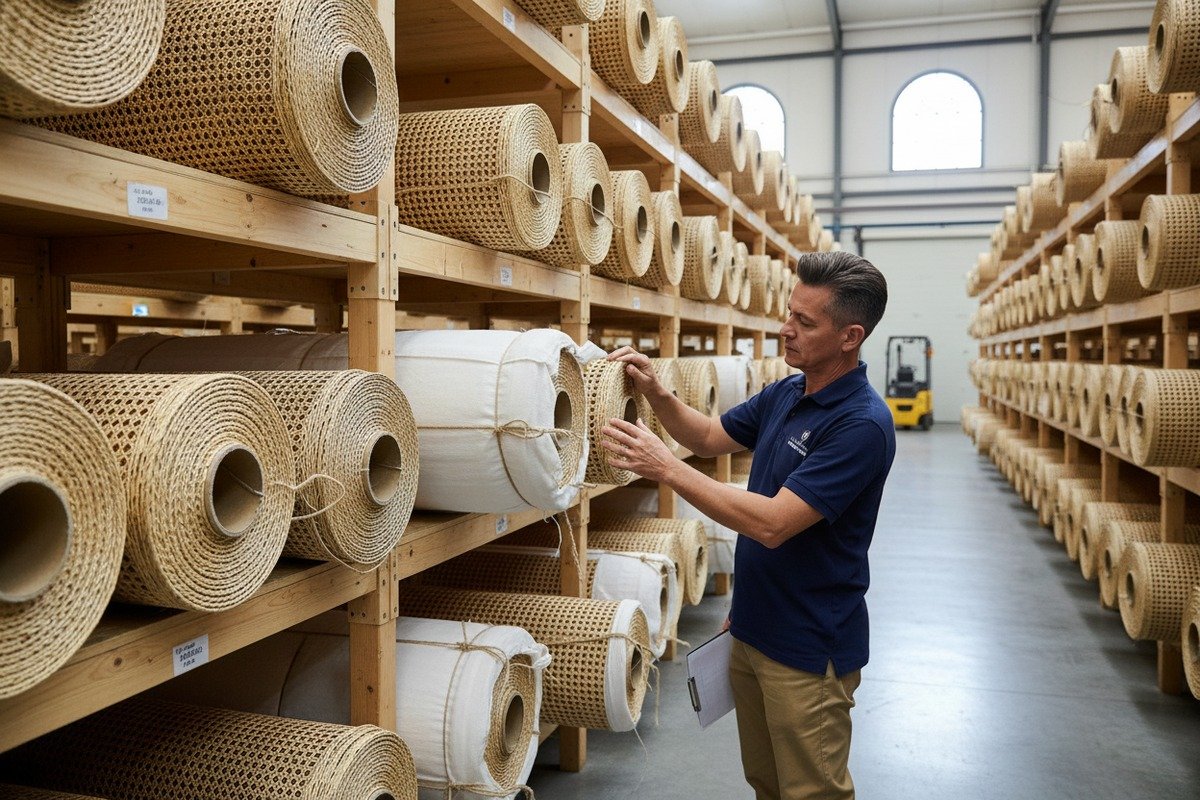
لقد قمنا بالشحن rattan cane webbing 1 تصل إلى أكثر من 30 دولة من مصانعنا في فوشان وإندونيسيا، وأكثر شكوى نسمعها من المشترين الجدد ليست حول نمط النسيج أو اللون - بل هي حول التلف أثناء التخزين. الحواف المتشققة، والبقع العفن، والأوراق الملتوية يمكن أن تحول لفة جميلة من القصب الطبيعي إلى نفايات باهظة الثمن. نسيج البولي بروبلين المنسوج 2. تزداد المشكلة حدة بشكل خاص عندما يشتري تجار الجملة بكميات كبيرة ويخزنون اللفائف لأسابيع أو أشهر قبل إعادة بيعها أو استخدامها في الإنتاج. إذا سبق لك أن قمت بفك قطعة من حبل الروطان لتجدها هشة، أو متغيرة اللون، أو مليئة بالحشرات الصغيرة، فأنت تعرف الإحباط.
لتخزين لفات قصب الروطان بشكل صحيح، احتفظ بها في مكان بارد وجاف بدرجة حرارة 60-75 فهرنهايت ورطوبة نسبية تتراوح بين 40-60%، ولفها بشكل فضفاض حول أنابيب متينة، وقم بتغليفها بقطعة قماش تسمح بالتهوية، وافحصها كل 30 يومًا بحثًا عن العفن أو الآفات أو الهشاشة.
أدناه، نقوم بتفصيل كل عامل حاسم - درجة الحرارة، الرطوبة، التكديس، التغليف، والفحص - حتى تتمكن من حماية استثمارك والحفاظ على كل لفة في حالة مثالية.
ما هي مستويات درجة الحرارة والرطوبة المثالية لتخزين قش الروطان الخاص بي؟
تراقب فرق المستودعات لدينا في كل من فوشان وإندونيسيا بيانات المناخ على مدار الساعة لأن حتى ارتفاع قصير في الرطوبة يمكن أن يدمر منصة نقالة كاملة من حبل القصب. العديد من المشترين لا يدركون أن الروطان استرطابي 3- يمتص الرطوبة ويطلقها من الهواء باستمرار. هذه الخاصية الوحيدة هي السبب الجذري لمعظم حالات فشل التخزين.
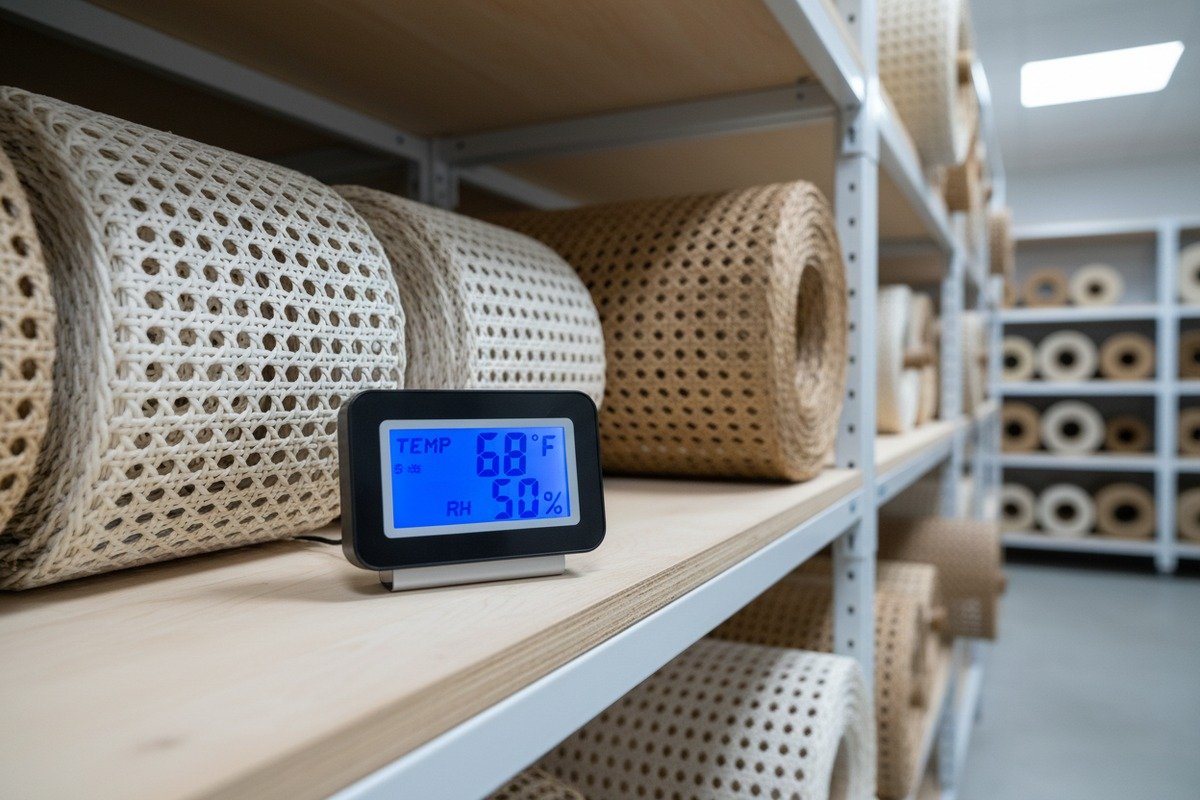
البيئة المثالية لتخزين قصب الروطان هي 60-75 درجة فهرنهايت (15-24 درجة مئوية) مع رطوبة نسبية تتراوح بين 40-60%. تتسبب درجات الحرارة التي تقل عن 50 درجة فهرنهايت في تصلب الألياف، بينما تؤدي الرطوبة التي تزيد عن 70% إلى نمو العفن والالتواء في غضون أيام.
لماذا يتفاعل الروطان مع الرطوبة بسرعة كبيرة
حبل القصب الروطان مصنوع من لحاء أشجار الكروم الروطان المقشرة، وهي نخيل متسلق استوائي 4. تم تصميم التركيب الخلوي لهذه الألياف بطبيعتها لامتصاص الماء. عندما ترتفع الرطوبة فوق 70%، تتورم الألياف. عندما تنخفض دون 30%، فإنها تتقلص وتتشقق. هذا التمدد والانكماش المستمر هو ما يسبب الالتواء، والتشقق، والكسر النهائي.
في منشأة الإنتاج لدينا، نقوم بتجفيف حبل القصب إلى محتوى الرطوبة 5 حوالي 10-12% قبل اللف. هذه هي النقطة المثالية. إذا دفعت بيئة التخزين محتوى الرطوبة هذا أعلى أو أقل، يبدأ التلف.
مرجع سريع لدرجة الحرارة والرطوبة
| الحالة | النطاق | تأثير على الروطان |
|---|---|---|
| درجة الحرارة المثالية | 60–75 فهرنهايت (15–24 درجة مئوية) | تبقى الألياف مرنة ومستقرة |
| بارد جدًا | أقل من 50 فهرنهايت (10 درجة مئوية) | تتصلب الألياف، خطر التشقق عند الفرد |
| حار جدًا | أعلى من 90 فهرنهايت (32 درجة مئوية) | تجفيف متسارع، هشاشة، بهتان اللون |
| الرطوبة المثالية | 40–60% رطوبة نسبية | توازن رطوبة أمثل، لا خطر للعفن |
| جاف جدًا | أقل من 30% رطوبة نسبية | تشقق، انقسام، اهتراء عند الحواف |
| رطب جدًا | فوق 70% RH | نمو العفن، التواء، رائحة عفنة، جذب الآفات |
أدوات عملية للتحكم في المناخ
لا تحتاج إلى منشأة عالية التقنية. أساسي مقياس رطوبة رقمي 6 يكلف أقل من $15 ويوفر لك قراءات دقيقة. ضع واحدًا بالقرب من مخزون الخيزران الخاص بك على مستوى الرف - وليس على الحائط عبر الغرفة. إذا كنت في منطقة رطبة مثل جنوب شرق آسيا الساحلي أو جنوب الولايات المتحدة، يمكن لإزالة الرطوبة البسيطة أن تحافظ على منطقة التخزين الخاصة بك في النطاق المطلوب. للمناطق الجافة، يعمل جهاز ترطيب الهواء بالضباب البارد.
نوصي أيضًا بإعادة الاستخدام أكياس هلام السيليكا 7 موضوعة داخل كل لفة ملفوفة. إنها تخفف تقلبات الرطوبة الصغيرة ويسهل إعادة شحنها في الفرن. تجنب تخزين اللفات مباشرة على أرضيات خرسانية أو على جدران خارجية، حيث ينقل كلاهما الرطوبة والبرودة. استخدم منصات نقالة أو أرفف خشبية بدلاً من ذلك.
مصادر ضوء الشمس والحرارة
ضوء الشمس المباشر هو عدو صامت آخر. الأشعة فوق البنفسجية 8 تبييض اللون الذهبي الطبيعي لنسيج الخيزران في غضون أسابيع. كما أنها تجفف الألياف بشكل غير متساوٍ، مما يجعل جانبًا واحدًا من اللفة هشًا بينما يظل الجانب الآخر مرنًا. احتفظ باللفات بعيدًا عن النوافذ، والمناور، ومصادر الحرارة مثل المشعات أو أنابيب الماء الساخن.
كيف يجب أن أكدس أو أرتب لفائف الخيزران الخاصة بي لمنعها من التشوه؟
عندما نقوم بإعداد شحنات بالجملة لعملائنا في مصانع الأثاث في هولندا وإسبانيا وأستراليا، فإن طريقة ترتيب اللفات داخل الحاوية لا تقل أهمية عن المناخ. لقد رأينا نسيجًا جيدًا تمامًا يصل إلى وجهته مسحوقًا، أو متداخلًا، أو مجعدًا بشكل دائم بسبب سوء التكديس.
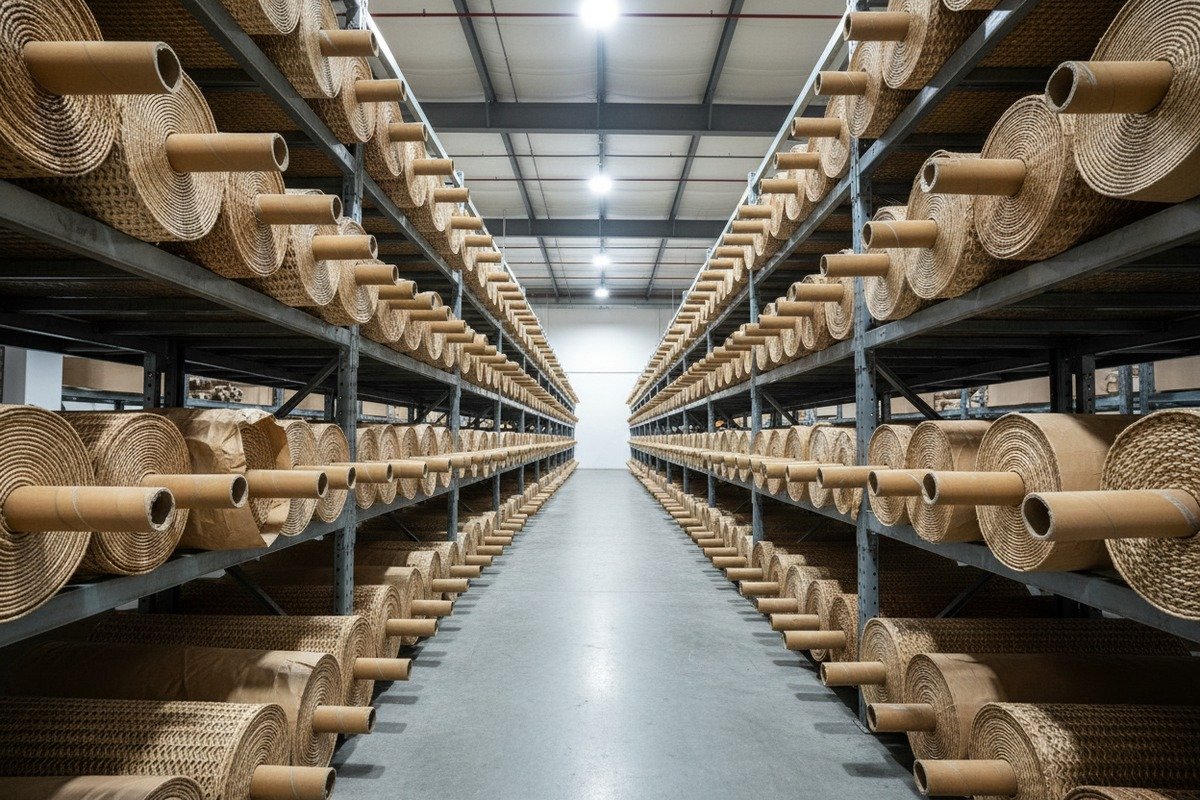
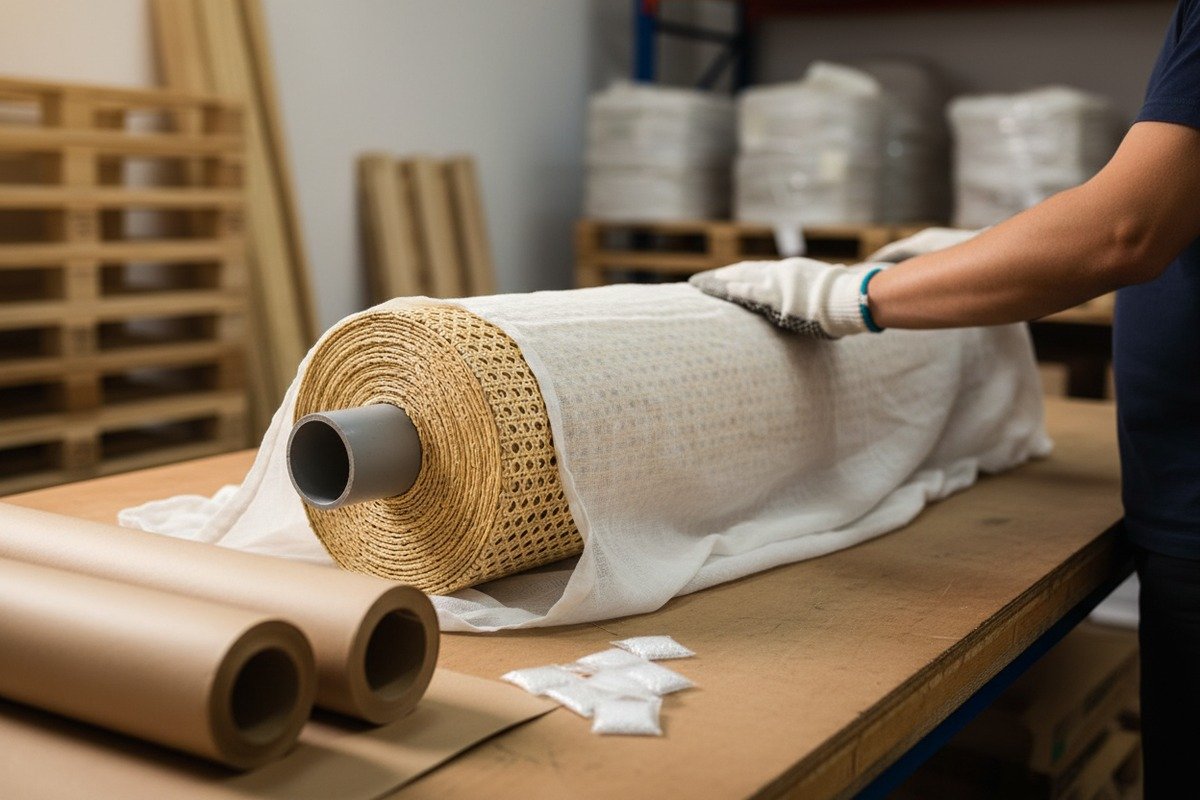
قم بتخزين لفات قصب الروطان أفقيًا على أرفف قوية، مدعومة بأنابيب من الورق المقوى أو PVC بقطر لا يقل عن 3-4 بوصات. لا تضع أبدًا أكثر من ثلاث لفات فوق بعضها البعض بدون فواصل، وتجنب أي انحناءات ضيقة أو ضغط يسبب تجعدًا دائمًا.
الأنبوب الأساسي مهم
كل لفة تحتاج إلى أنبوب أساسي. إذا وصلت لفاتك بدون أنبوب، أدخل أنبوبًا من الورق المقوى أو PVC قبل التخزين. يمنع الأنبوب من انهيار المركز، مما يسبب تجاعيد لن تزول. نستخدم أنابيب بقطر 3-4 بوصات (7.5-10 سم) في مصانعنا. أي شيء أصغر يجبر القصب على الانحناء بشدة مما قد يؤدي إلى تشقق النسيج بمرور الوقت.
للتخزين طويل الأمد لأكثر من بضعة أسابيع، أنابيب PVC أفضل من الورق المقوى لأنها تقاوم الرطوبة ولا تنضغط تحت الوزن.
التخزين الأفقي مقابل الرأسي
| وضع التخزين | الإيجابيات | السلبيات |
|---|---|---|
| أفقي (على الجانب) | توزيع متساوٍ للوزن، لا يوجد تداخل، سهولة الوصول | يشغل مساحة رف أكبر |
| رأسي (واقفًا) | يوفر مساحة أرضية | تسحب الجاذبية الطبقات الداخلية للأسفل، مما يسبب تداخلًا وتلفًا للحواف |
| معلق من قضيب | لا يوجد ضغط، تدفق هواء جيد | يتطلب دعمًا قويًا، غير عملي للفات الثقيلة |
نوصي دائمًا بالتخزين الأفقي. عندما تقف اللفات رأسيًا، تسحب الجاذبية ببطء الطبقات الداخلية للأسفل. يُطلق على هذا اسم التداخل - تنزلق نهايات اللفة بشكل غير متساوٍ، ويتشوه النسيج. وضع اللفات على جوانبها يلغي هذا الخطر تمامًا.
قواعد التكديس
إذا كان لا بد لك من تكديس اللفات، فحدد الحد الأقصى للتكديس بثلاث لفات. ضع فاصلًا مسطحًا - ورقة من الورق المقوى الخالي من الأحماض أو قطعة من القماش المسامي - بين كل لفة. هذا يمنع وزن اللفات العلوية من طباعة نمط النسيج من لفة إلى أخرى.
لا تضع أبدًا أشياء ثقيلة فوق لفات الخيزران. حتى صندوق من الأجهزة الموضوع على لفة لبضعة أيام يمكن أن يترك بقعة مسطحة دائمة.
التباعد لتدفق الهواء
اترك مسافة 4-6 بوصات على الأقل بين اللفات وبين اللفات والجدران. يمنع دوران الهواء الجيد تكون جيوب الرطوبة. إذا قمت بتعبئة اللفات بإحكام معًا على رف، ستحصل اللفات المركزية على تدفق هواء أقل، ويمكن أن يتطور العفن دون أن يلاحظ.
نصائح التعامل
تعامل دائمًا مع اللفات بأيدي نظيفة وجافة أو قفازات قطنية. يمكن للزيوت من الجلد أن تلطخ القصب الطبيعي فاتح اللون. عند نقل اللفات، ادعمها على طولها بالكامل. لا تمسك طرفًا واحدًا وتدع الباقي يتدلى - يمكن للوزن أن يمدد ويشوه النسيج.
ما نوع الغلاف الواقي الذي يجب أن أستخدمه للحفاظ على لفات قش الروطان الخاصة بي خالية من الغبار؟
يقوم فريق التعبئة لدينا بلف كل لفة صادرة، وقد اختبرنا عشرات المواد على مر السنين. يمكن أن يتسبب الغلاف الخاطئ في ضرر بنفس القدر الذي يسببه عدم وجود غلاف على الإطلاق. كان لدينا ذات مرة عميل في المملكة العربية السعودية أعاد لف اللفات في غلاف بلاستيكي سميك للتخزين في المستودعات. في غضون شهر، تشكل التكثف في الداخل، ودمر العفن 15% من الدفعة.
استخدم مواد تغليف تسمح بالتهوية مثل قماش الموسلين غير المبيض، أو ورق الأنسجة الخالي من الأحماض، أو قماش البولي بروبلين المنسوج لحماية لفات قصب الروطان من الغبار مع السماح بتدوير الهواء. تجنب الغلاف البلاستيكي المحكم الذي يحبس الرطوبة ويعزز نمو العفن.
اختيار مادة التغليف المناسبة
ليست كل الأغطية متساوية. المتطلب الرئيسي هو التهوية. يحتاج الخيزران إلى إطلاق كميات صغيرة من بخار الرطوبة باستمرار. الغلاف الذي يمنع هذا التبادل يخلق مناخًا دقيقًا داخل اللفة يؤدي إلى العفن.
| مادة التغليف | التهوية | حماية من الغبار | التكلفة | الأفضل لـ |
|---|---|---|---|---|
| قماش موسلين غير مبيض | ممتاز | ممتاز | منخفض إلى متوسط | التخزين طويل الأجل، اللفات الكبيرة |
| ورق أنسجة خالٍ من الأحماض | جيد | جيد | منخفض | التبطين بين اللفات، قصير الأجل |
| أكياس البولي بروبلين (PP) المنسوجة | جيد | ممتاز | منخفض | الشحن وتخزين المستودعات |
| ورق كرافت | معتدل | جيد | منخفض جدًا | خيار قصير الأجل، اقتصادي |
| غلاف بلاستيكي قابل للتمدد | لا شيء | ممتاز | منخفض | لا يوصى به أبدًا للخيزران |
| أكياس محكمة الغلق بالتفريغ | لا شيء | ممتاز | متوسط | فقط للقطع الصغيرة والجافة تمامًا |
كيفية لف اللفة خطوة بخطوة
ابدأ بالتأكد من أن اللفة جافة تمامًا. إذا تعرضت للبلل لأي سبب، اتركها تجف في الهواء لمدة 24 ساعة على الأقل في منطقة جيدة التهوية قبل لفها. ثم اتبع هذه الخطوات:
- ضع اللفة على سطح نظيف.
- إذا كانت الحواف المقطوعة مكشوفة، قم بتثبيتها بشريط من شريط الرسام منخفض الالتصاق لمنع التآكل. تجنب الأشرطة اللاصقة القوية - يمكن أن تسحب الألياف عند إزالتها.
- ضع ورقة من قماش الموسلين أو ورق الأنسجة الخالي من الأحماض بحجم كافٍ لتغطية اللفة بالكامل.
- لف الغلاف حول القصب بشكل فضفاض. لا تشده بقوة.
- قم بطي أو ربط الأطراف. استخدم خيط قطني أو أربطة مطاطية - وليس أربطة بلاستيكية، والتي يمكن أن تسبب انبعاج الحواف.
- ضع 2-3 عبوات هلام السيليكا قابلة لإعادة الاستخدام داخل الغلاف قبل الإغلاق.
- قم بتسمية الخارج بأبعاد اللفة، ونوع النمط، وتاريخ التخزين.
ملاحظة حول الإضافات الطاردة للحشرات
ضع قطعة صغيرة من خشب الأرز أو كيس من اللافندر المجفف داخل الغلاف. كلاهما طارد طبيعي للحشرات ولن يترك بقايا كيميائية على قصبك. تجنب كرات العث - فهي تحتوي على النفثالين، والذي يمكن أن يترك رائحة يصعب إزالتها من الألياف الطبيعية.
بالنسبة للعملاء في المناطق الاستوائية أو ذات الرطوبة العالية، نوصي أحيانًا بوضع اللفة المغلفة داخل كيس خارجي من البولي بروبلين المنسوج مع بضع عبوات إضافية من هلام السيليكا. هذا يمنحك طبقة مزدوجة من الحماية دون التضحية بالتهوية.
الحماية من الضوء
يجب تخزين اللفات المغلفة بعيدًا عن النوافذ والأضواء الفلورية. إذا كانت منطقة التخزين الخاصة بك تحتوي على أضواء علوية تظل مضاءة لفترات طويلة، ففكر في تغطية وحدات الرفوف بستارة قماشية. التعرض للأشعة فوق البنفسجية يبهت لون الروطان الطبيعي من لونه الذهبي الدافئ إلى لون أصفر باهت باهت.
كم مرة يجب أن أفحص مخزون الخيزران بالجملة بحثًا عن علامات الهشاشة أو الآفات؟
تشغيل ثلاث مصانع والتنسيق مع أكثر من 30 ورشة عمل شريكة يعني أننا ندير الكثير من مخزون الروطان. أحد الدروس التي تعلمناها بالطريقة الصعبة في وقت مبكر هو أن الضرر لا يعلن عن نفسه بصوت عالٍ. بحلول الوقت الذي ترى فيه العفن على سطح اللفة، غالبًا ما يكون قد انتشر بالفعل في الداخل. بحلول الوقت الذي تلاحظ فيه ثقوب خروج صغيرة من الخنافس، كانت اليرقات تتغذى لأسابيع.
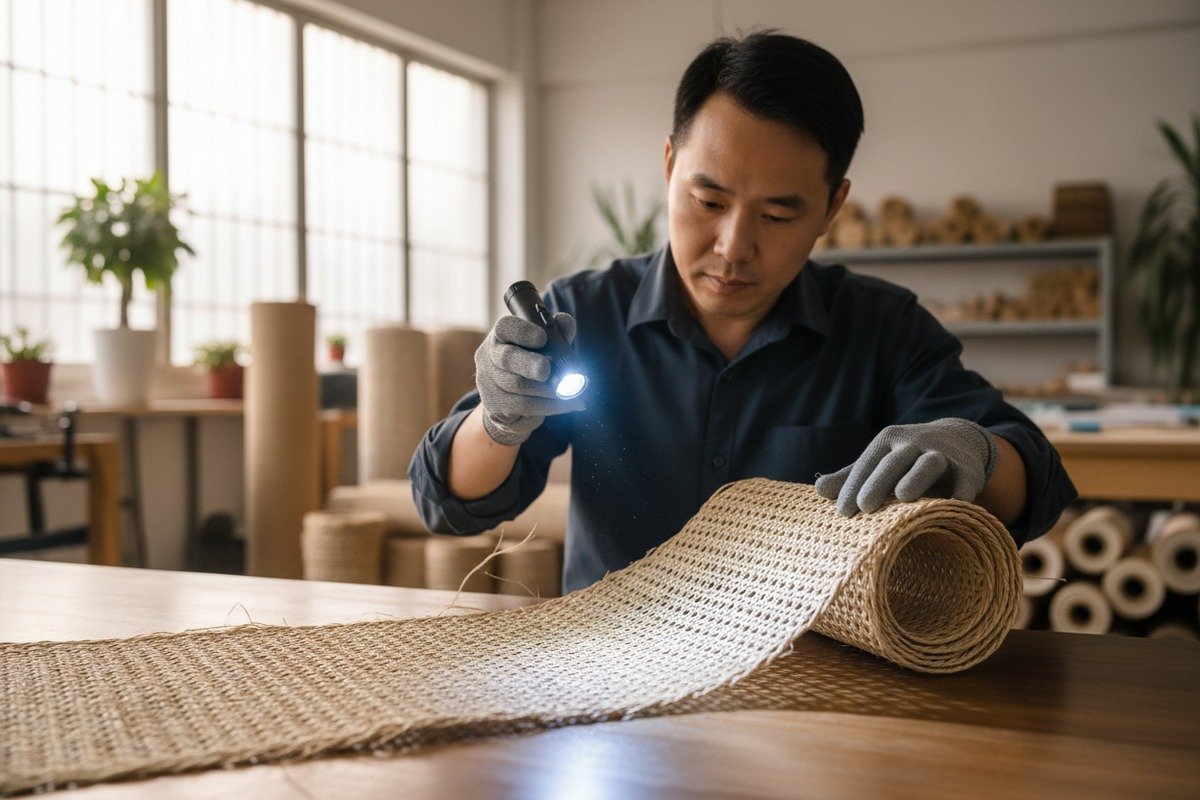
افحص لفائف قصب الروطان المخزنة لديك مرة واحدة على الأقل كل 30 يومًا. تحقق من وجود بقع العفن، والروائح الكريهة، والهشاشة، وثقوب الحشرات، والنشارة (غبار الخشب الناعم). اكتشف المشاكل مبكرًا، ويمكن إنقاذ معظم اللفائف بالترطيب الخفيف أو العلاج المستهدف.
ما الذي يجب البحث عنه أثناء كل فحص
يستغرق الفحص الشامل بضع دقائق فقط لكل لفة. لا تحتاج إلى معدات خاصة - فقط إضاءة جيدة وأيدي نظيفة وأنفك. إليك ما يجب التحقق منه:
العفن والفطريات: ابحث عن بقع بيضاء أو خضراء أو سوداء، خاصة على الطبقات الداخلية الأقرب إلى الأنبوب المركزي. شم اللفة. رائحة عفنة وترابية تعني وجود العفن حتى لو لم تتمكن من رؤيته بعد.
الهشاشة: اثنِ بلطف قسمًا صغيرًا على حافة اللفة. يجب أن ينحني الروطان الصحي دون أن يتشقق. إذا انكسر أو تشقق بسهولة، فإن محتوى الرطوبة منخفض جدًا. يمكن أن يؤدي الرش الخفيف بالماء المقطر متبوعًا بـ 24 ساعة من التجفيف بالهواء إلى استعادة المرونة في كثير من الأحيان.
نشاط الآفات: ابحث عن ثقوب دائرية صغيرة (قطر 1-2 مم) في خيوط القصب. هذه هي ثقوب الخروج من خنافس مسحوق الخشب 9 أو خنافس أنوبيدي. تحقق أيضًا من المخلفات - غبار ناعم ومتفتت يتساقط من الألياف المصابة. إذا وجدت إصابة نشطة، اعزل اللفات المصابة فورًا وعالجها أو تخلص منها لمنع الانتشار.
تغيرات اللون: يظهر بهتان الأشعة فوق البنفسجية كإضاءة غير متساوية. غالبًا ما تظهر أضرار الرطوبة كبقع مائية داكنة أو اصفرار.
السلامة الهيكلية: تحقق من أن اللفة لم تتداخل، أو تهبط، أو تتطور بها بقع مسطحة بسبب الضغط.
تكرار الفحص بناءً على مدة التخزين
للتخزين قصير الأجل لبضعة أيام إلى أسبوعين، عادة ما يكون فحص واحد قبل وبعد كافيًا. ولكن للتخزين الأطول، تعد الفحوصات المنتظمة ضرورية. نوصي بالجدول الزمني التالي:
- أسبوعيًا للشهر الأول من التخزين في بيئة جديدة، حيث أن هذا هو الوقت الذي تظهر فيه معظم المشكلات المتعلقة بالمناخ.
- شهري للتخزين المستمر في مكان مستقر ومتحكم فيه مناخيًا.
- بعد أي حدث جوي مثل الأمطار الغزيرة أو الفيضانات أو موجة الحر التي يمكن أن تغير الظروف الداخلية.
ماذا تفعل عند اكتشاف تلف
العفن: قم بإزالة اللفة المصابة من المجموعة. قم بفكها واتركها لتجف في مكان جاف وجيد التهوية. بالنسبة للعفن السطحي، قم بفركه برفق بفرشاة ناعمة وجافة وامسحه بقطعة قماش مبللة بمحلول خل وماء مخفف (نسبة 1:4). لا تنقع القصب. اتركه ليجف تمامًا قبل إعادة لفه.
الهشاشة: رش اللفة برفق بالماء المقطر باستخدام زجاجة رذاذ. لا تنقعها. اتركه يمتص الرطوبة لبضع ساعات، ثم تحقق من المرونة مرة أخرى. بمجرد أن تشعر بالمرونة، اتركه ليجف عند اللمس وأعد لفه مع عبوات جل السيليكا الجديدة.
الآفات: اعزل اللفة فوراً. في حالات الإصابة الطفيفة، يؤدي تجميد اللفة عند 0 درجة فهرنهايت (-18 درجة مئوية) لمدة 72 ساعة إلى قتل اليرقات والبيض. في حالات الإصابة الشديدة،, التبخير الاحترافي 10 قد يكون ضرورياً. تخلص من اللفات المتضررة بشدة وافحص جميع المخزونات المجاورة.
الاحتفاظ بالسجلات
نحتفظ بسجل بسيط لكل منصة نقالة في مستودعاتنا: تاريخ الاستلام، قراءة الرطوبة عند الوصول، تواريخ الفحص، وأي مشاكل تم العثور عليها. هذا يساعدنا على اكتشاف الأنماط. على سبيل المثال، إذا كانت زاوية معينة من المستودع تنتج باستمرار مشاكل العفن، فإننا نعلم أن تدفق الهواء هناك يحتاج إلى تحسين. جدول بيانات أساسي أو حتى قائمة تحقق على لوحة ورقية يعمل بشكل جيد للمخزونات الصغيرة.
خاتمة
يعتمد التخزين السليم لنسيج الروطان على التحكم في المناخ، ودعم هيكل اللفة، واختيار تغليف يسمح بالتهوية، والفحص المنتظم. إذا قمت بضبط هذه العوامل الأربعة بشكل صحيح، فستظل لفاتك مرنة ونظيفة وجاهزة للاستخدام لسنوات.
ملاحظات سفلية
1. تم استبداله بدليل شامل حول نسيج الروطان. ↩︎
2. يصف خصائص واستخدامات نسيج البولي بروبلين المنسوج. ↩︎
3. يفصل الطبيعة المسترطبة للروطان وتفاعله مع الرطوبة. ↩︎
4. يصف الروطان بأنه نخيل متسلق استوائي وموطنه الطبيعي. ↩︎
5. تم استبداله بمقال يشرح أهمية محتوى الرطوبة في الأخشاب. ↩︎
6. يحدد ما هو مقياس الرطوبة الرقمي وكيف يقيس الرطوبة. ↩︎
7. تم استبداله بمقال يشرح كيفية عمل مادة السيليكا جل المجففة داخل العبوات. ↩︎
8. يناقش تأثير الأشعة فوق البنفسجية على الألياف والمواد الطبيعية. ↩︎
9. يقدم معلومات عن خنافس مسحوق الخشب، وهي آفة شائعة تتغذى على الخشب. ↩︎
10. تم استبداله بمقال يشرح عملية التبخير الاحترافية. ↩︎
 English
  Español de México
  العربية
  Deutsch
  Français
  Русский