

Years of shipping rattan webbing to furniture factories and building material wholesalers have shown us one recurring challenge: buyers love the look of rattan partitions but struggle with choosing the right material and installation approach.
To incorporate rattan cane webbing into interior partitions, select the appropriate weave grade and pattern, build or source a sturdy wooden frame, stretch and secure the webbing using splines or staples, and finish with protective coating. This method creates semi-private, light-filtering dividers that suit modern, bohemian, and Japandi interiors.
In this guide, I will walk you through material selection, installation techniques, light-privacy balance, and durability tips نسيج سلة مربع كثيف 1. Each section draws on our production experience and the feedback we collect from wholesale buyers across more than a dozen countries. Let’s get started.
How do I choose the right grade of rattan cane webbing for my partition project?
When we grade rattan webbing at our processing facility in Indonesia, we sort every roll by strand thickness, weave consistency 2, and color uniformity. Most buyers who contact us for partition projects do not realize that grade alone can determine whether a partition sags within months or holds shape for years.
Choose Grade A or Grade AA rattan cane webbing for partitions, as these grades offer uniform strand diameter, tight weave density, and minimal natural defects. Grade A ensures structural integrity for stretched panels, while lower grades work better for decorative accents that carry no tension load.
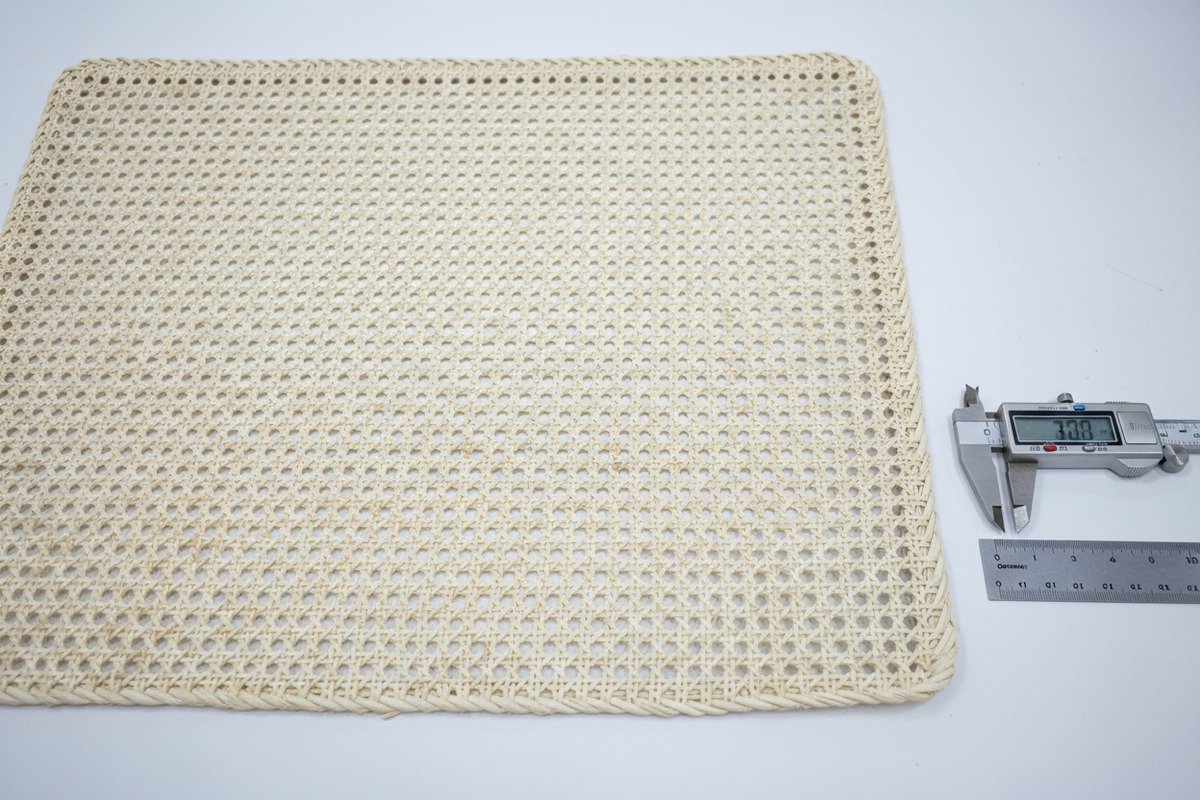
فهم درجات شبكة الروطان
Not all rattan webbing is created equal. Grades reflect the quality of the raw cane, the precision of the weave, and the visual consistency of the finished sheet Diamond geometric weave 3. Here is a breakdown we share with our wholesale clients.
| Grade | توحيد الخيوط | معدل العيوب | Best Use in Partitions |
|---|---|---|---|
| درجة AA | Very high — even diameter, consistent color | أقل من 2% | Large, tension-mounted panels; premium projects |
| Grade A | High — minor color variation | 2-5٪ | Standard partition frames; most residential projects |
| الدرجة ب | Moderate — visible knots, slight gaps | 5–10% | Small decorative inserts; backed panels |
| الدرجة ج | Low — uneven strands, frequent knots | Over 10% | Craft projects; non-structural accents |
نمط النسيج مهم أيضًا
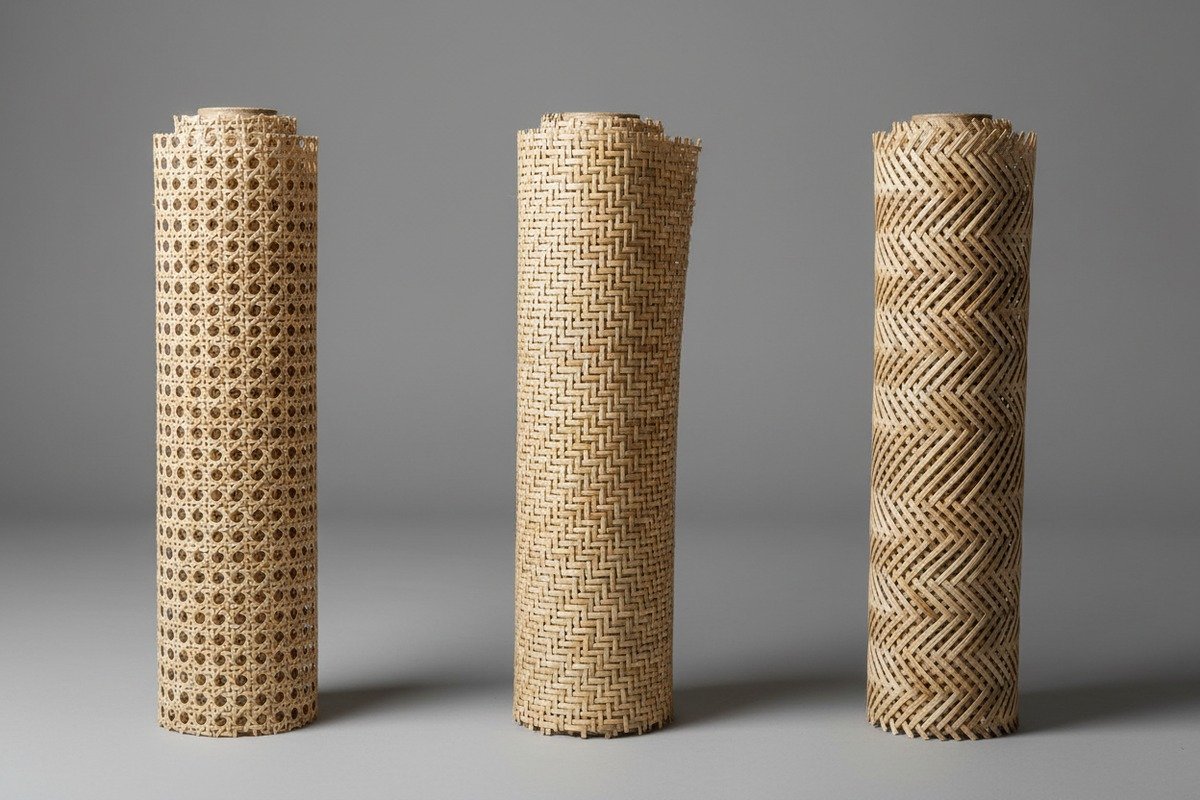
Beyond grade, the weave pattern affects both aesthetics and function polyurethane or lacquer finish 4. Our production lines offer three main patterns relevant to partitions.
شبكة سداسية مفتوحة (نسيج راديوي) allows the most light and airflow. It looks airy and works well in spaces where you want visual separation without blocking brightness. However, it offers minimal privacy.
نسيج سلة مربع كثيف provides tighter coverage. This pattern sits in the middle ground — it filters light softly while reducing direct sight lines. It is the most popular choice among our furniture factory buyers for residential partition projects.
Diamond geometric weave adds a decorative punch. It draws the eye and works as a statement piece, but it requires careful tensioning during installation because the diagonal strands can shift if not secured properly.
Synthetic vs. Natural: A Quick Comparison
We produce both natural cane webbing and حصائر الخيزران الاصطناعية 5. For interior partitions 6, the choice depends on the environment.
Natural cane gives warmth, texture, and an authentic handcrafted look. It performs well indoors where humidity stays below 70%. Synthetic rattan, made from durable plastic fibers, mimics the organic look but resists moisture and UV damage. If your partition sits near a bathroom or an outdoor-adjacent area, synthetic is the safer pick.
Bleached rattan cane webbing 7 offers a lighter, more contemporary tone. It pairs well with white or pale wood frames for Scandinavian and Japandi interiors. Keep in mind that bleaching slightly reduces the strand's tensile strength, so we recommend using it with plywood backing for larger panels.
What is the best way for me to install rattan webbing into a wooden partition frame?
Our team has helped hundreds of furniture factories and building material suppliers plan their partition builds. One lesson keeps repeating: the frame design and the attachment method determine how long the partition holds up, far more than the webbing itself.
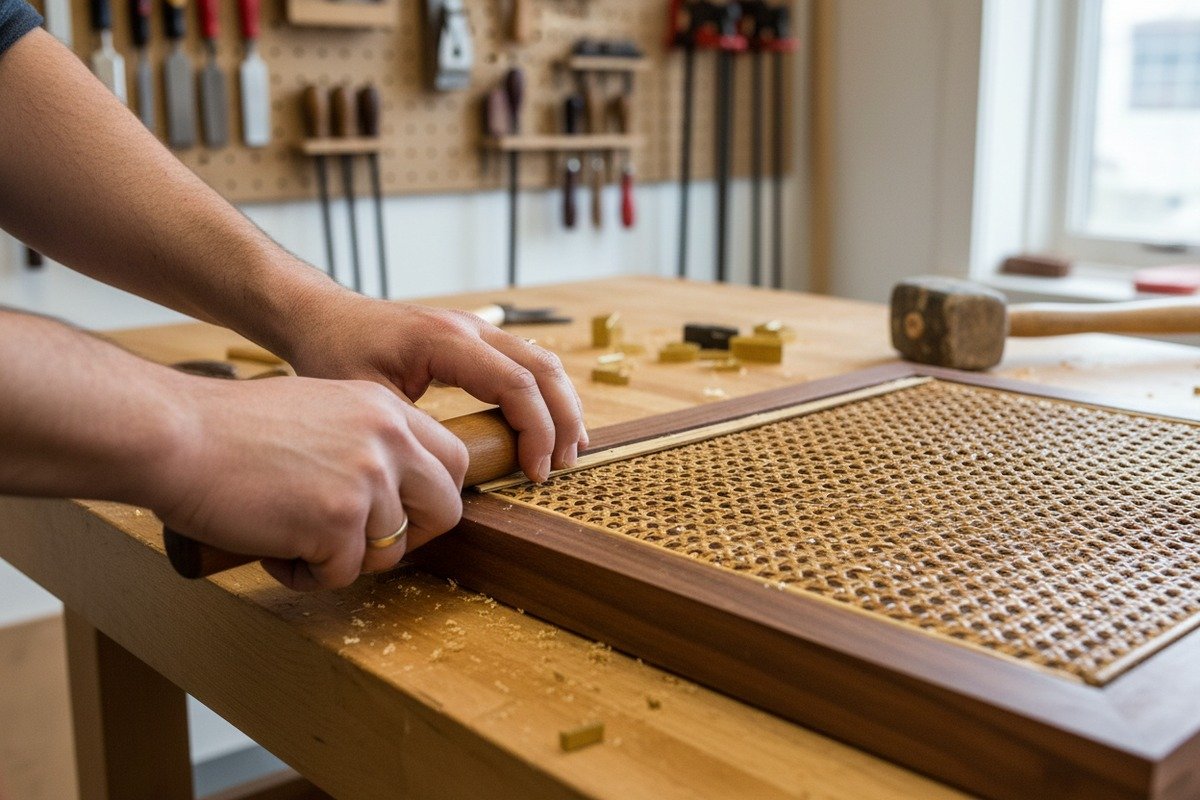
The best installation method is to soak the rattan webbing, stretch it taut across a solid hardwood or plywood-backed frame, and secure it with a wooden spline pressed into a routed groove. This technique provides even tension, a clean finished edge, and long-term durability without visible staples or adhesive residue.
عملية التثبيت خطوة بخطوة
Here is the method we recommend to our B2B clients. It works for single panels and multi-panel foldable partitions.
Step 1: Build or source the frame. Use hardwood like oak, ash, or maple. The frame should be at least 25 mm thick. For partitions taller than 1.5 meters, increase thickness to 35–45 mm for structural rigidity. Route a groove around the inner edge of the frame — typically 4 mm wide and 8 mm deep — to accept a spline.
Step 2: Soak the webbing. Submerge the rattan cane webbing in warm water for 30 to 60 minutes. This softens the fibers, making them pliable and easier to stretch. Do not over-soak, or the strands may weaken.
Step 3: Cut and position. Cut the webbing 25–30 mm larger than the frame opening on each side. Lay the damp webbing over the groove with the pattern centered.
Step 4: Press in the spline. Starting from one corner, press a wooden or reed spline into the groove using a rubber mallet or a spline roller. wooden spline 8 Work your way around the frame, pulling the webbing taut as you go. This locks the webbing in place and creates a clean, professional edge.
Step 5: Trim excess. Once the spline is fully seated, use a sharp utility knife to trim the excess webbing flush against the frame.
الخطوة 6: اتركه ليجف. As the webbing dries, it shrinks slightly and tightens across the frame. This natural tensioning is one of the key advantages of working with soaked cane.
Comparing Attachment Methods
| الطريقة | صعوبة | Finish Quality | Durability | الأفضل لـ |
|---|---|---|---|---|
| شريط وأخدود | متوسط | Professional, clean edges | High — webbing locked in channel | Permanent partitions, premium furniture |
| دباسة | سهل | Visible fasteners unless covered | Medium — staples can pull through | DIY projects, temporary dividers |
| Adhesive (wood glue) | سهل | Clean but irreversible | Medium — can fail in humid conditions | Backing panels, decorative inserts |
| Combination (staples + trim molding) | متوسط | Clean — trim hides staples | High — dual fastening | Large panels, commercial installations |
Choosing Your Partition Configuration
The installation method also depends on how the partition will stand. From our export experience, three configurations dominate the market.
Tension-leg partitions use adjustable poles to press between floor and ceiling. No drilling required. This is the most popular option for rental spaces and temporary offices. The rattan panels slide or clip onto the vertical poles.
Permanent frame-mounted partitions are screwed into wall studs or ceiling joists using U-shaped wooden profiles. These provide the most stable result and work well for semi-permanent room division in homes and commercial spaces.
Freestanding dividers use weighted bases or wide foot profiles. They offer maximum flexibility — you can move them, fold them, or store them. Three-panel folding designs are the most common format we ship to wholesalers in Europe and the Middle East.
Each configuration requires different frame engineering. Tension-leg setups need lightweight panels. Permanent mounts can handle heavier, thicker frames. Freestanding units need hinges between panels and a stable base to prevent tipping.
How can I use rattan webbing to balance privacy and natural light in my space?
This is one of the most common questions we hear from architects and interior designers who source rattan from us. They want the warmth of natural material without sacrificing the openness of their floor plan. The challenge is real — solid walls block light; open shelving lacks privacy. Rattan sits right in between.
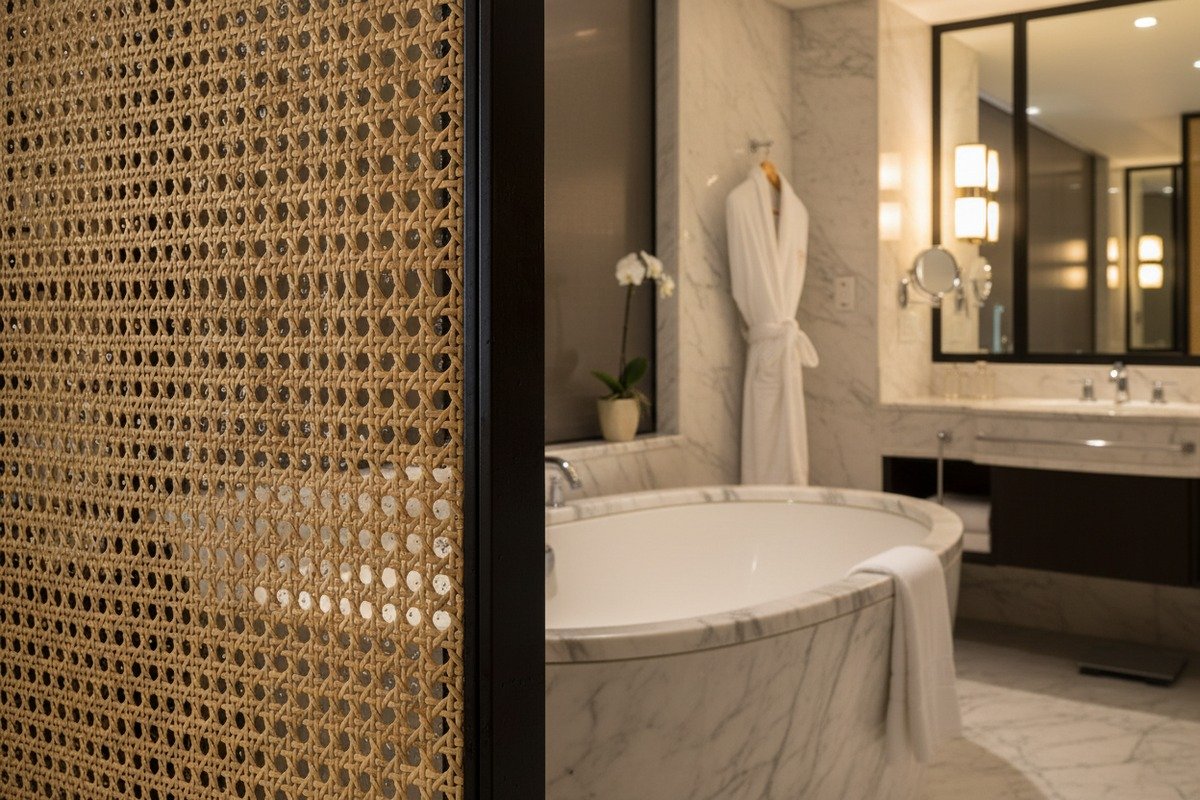
Rattan cane webbing creates semi-privacy by filtering sight lines while allowing up to 60–70% of ambient light to pass through, depending on the weave density. Pair open-mesh patterns with sheer curtains or layer two sheets for adjustable privacy without losing the airy, breathable quality of the space.
How Weave Density Affects Light and Privacy
The tighter the weave, the less light passes through and the more privacy you gain. Here is a practical guide based on patterns we manufacture.
| نمط النسج | انتقال الضوء | مستوى الخصوصية | Recommended Rooms |
|---|---|---|---|
| شبكة سداسية مفتوحة 9 | 65-75٪ | Low — silhouettes visible | Living rooms, entryways, studios |
| Standard square basketweave | 45–55% | Medium — blurred visibility | Bedrooms, home offices |
| نسيج ماسي كثيف | 30–40% | Medium-high — shapes barely visible | Dressing areas, therapy rooms |
| Double-layer webbing | 15–25% | High — near-opaque | Private consultation rooms, nurseries |
Layering Techniques for Adjustable Privacy
One approach that several of our European wholesale clients have adopted is the double-layer partition. Two sheets of rattan webbing are mounted on the same frame with a 10–15 mm air gap between them. When the weave patterns overlap, the visual density increases dramatically. This creates a moiré effect that blocks sight lines while still admitting diffused light.
Another option is to combine rattan webbing with a secondary material. A sheer linen panel hung behind the rattan adds warmth and privacy when needed but can be pulled aside for full transparency. This works especially well in bedroom partitions.
Smart Lighting Integration
Some designers integrate LED strip lights into the partition frame. When lit from behind, rattan webbing transforms into a glowing textured screen. The woven pattern casts intricate shadows and creates ambient warmth. This technique works best with open-mesh patterns that allow the light to project through the gaps.
Side-mounted or top-mounted LED channels highlight the weave texture without creating harsh glare. We have seen this approach used in boutique hotels and co-working spaces where the partition doubles as a design feature.
Sound and Airflow Considerations
Rattan webbing does not block sound like a solid wall. However, the woven structure does subtly diffuse sound waves, reducing the sharpness of conversations and ambient noise. In open-plan offices, a rattan partition can soften acoustic harshness enough to improve focus, especially when paired with soft furnishings on either side.
The breathable nature of cane webbing also prevents the stuffy, closed-in feeling that solid partitions create. Air circulates freely, which is a significant advantage in warm climates. Many of our buyers in the Middle East and Southeast Asia specifically choose rattan partitions for this reason.
For spaces where more sound control is needed, consider filling the gap between double-layer panels with a thin acoustic felt. This preserves the look of rattan on both sides while adding meaningful sound absorption.
How do I ensure the rattan webbing for my partitions stays durable and high-quality?
Running our own rattan processing facility gives us a front-row view of what goes wrong when webbing is poorly handled — from storage mishaps that cause mold to installations that crack within a year. Durability is not just about buying good material. It is about the entire chain: sourcing, treatment, installation, and ongoing care.
To ensure durable, high-quality rattan webbing partitions, source Grade A or higher webbing with consistent strand diameter, apply a clear polyurethane or lacquer finish after installation, avoid direct sunlight exposure, and maintain indoor humidity between 40–60%. Proper treatment at each stage prevents cracking, sagging, and discoloration.
Pre-Installation Quality Checks
Before you cut and install, inspect every roll. Here is what we tell our wholesale buyers to look for.
Strand consistency. Roll out a one-meter section and check that strands are uniform in width and color. Variations of more than 1 mm in strand diameter suggest lower-grade material.
إحكام النسيج. Press a finger against the weave. If the strands shift easily, the webbing is too loose for an unsupported partition panel. It will sag under its own weight within months.
محتوى الرطوبة. The webbing should feel dry but not brittle. Overly dry cane snaps during installation. Webbing that feels damp may have been stored improperly and could develop mold.
اتساق اللون. Natural rattan has inherent color variation, but the range should be subtle — light beige to straw yellow. Large dark spots or green streaks indicate cane that was not properly dried or treated.
Protective Finishes and Coatings
Once installed, rattan webbing benefits greatly from a protective finish. We recommend the following options based on the environment.
Clear polyurethane (water-based) is the most popular choice for indoor partitions. It adds a slight sheen, deepens the natural color, and seals the fibers against moisture and dust. Apply two thin coats with a spray gun for even coverage.
Natural oil finish (tung oil or linseed oil) penetrates the fibers and provides a matte, organic look. It requires reapplication every 12–18 months but maintains the raw texture that many designers prefer.
بخاخ الورنيش provides the hardest surface protection. It is ideal for high-traffic commercial spaces but creates a glossy finish that may not suit every aesthetic.
For outdoor-adjacent partitions or humid environments, a marine-grade sealant offers the best moisture protection, though it does alter the natural feel of the cane.
Ongoing Maintenance Practices
Rattan is low-maintenance, but it is not zero-maintenance. A few simple habits extend the life of your partition significantly.
Dust regularly with a soft brush or vacuum with a brush attachment. Dirt trapped in the weave acts as an abrasive over time. Wipe down with a slightly damp cloth every two weeks. Avoid soaking the webbing after installation.
Keep humidity stable. Rattan absorbs and releases moisture with changes in رطوبة محيطة أعلى بكثير 10. Rapid fluctuations cause expansion and contraction cycles that lead to cracking. If you live in a dry climate, a room humidifier helps. In tropical environments, ensure adequate ventilation to prevent mold growth.
Avoid placing rattan partitions in direct sunlight for extended periods. UV rays bleach the natural color unevenly and dry out the fibers, making them brittle. If your partition is near a window, consider UV-filtering window film or curtains.
اعتبارات التعبئة والشحن
For wholesalers and procurement managers, durability starts before the webbing reaches the project site. We wrap every roll in moisture-barrier film and place them inside reinforced cardboard tubes. Flat sheets get sandwiched between corrugated boards. This protects against crushing, moisture damage, and edge fraying during transit.
If you are ordering from overseas, ask your supplier about their packaging standards. Poorly packed webbing arrives with creases, broken strands, and moisture damage — all of which compromise the finished partition.
خاتمة
Rattan cane webbing brings natural warmth, flexible privacy, and timeless style to interior partitions. Choose the right grade, install with proper technique, and maintain with simple care — your rattan partition will serve you beautifully for years.
ملاحظات سفلية
1. Located a product page that explicitly describes a ‘CLOSED BASKET weave pattern’ for rattan cane webbing, aligning with ‘dense square basketweave’. ↩︎
2. Explains how weave consistency is a key factor in rattan material grading and quality. ↩︎
3. Presents examples and descriptions of diamond geometric weave patterns. ↩︎
4. Compares the properties and applications of polyurethane and lacquer wood finishes. ↩︎
5. Details the properties, benefits, and applications of synthetic rattan materials. ↩︎
6. Defines interior partitions and their role in architectural space division. ↩︎
7. Replaced with an authoritative Wikipedia page explaining caning and rattan cane webbing. ↩︎
8. Explains the definition and use of wooden splines in woodworking joinery. ↩︎
9. Found a specific product page detailing open hexagonal rattan webbing. ↩︎
10. Discusses the impact of ambient humidity on wood furniture and its durability. ↩︎


 English
  Español de México
  العربية
  Deutsch
  Français
  Русский