
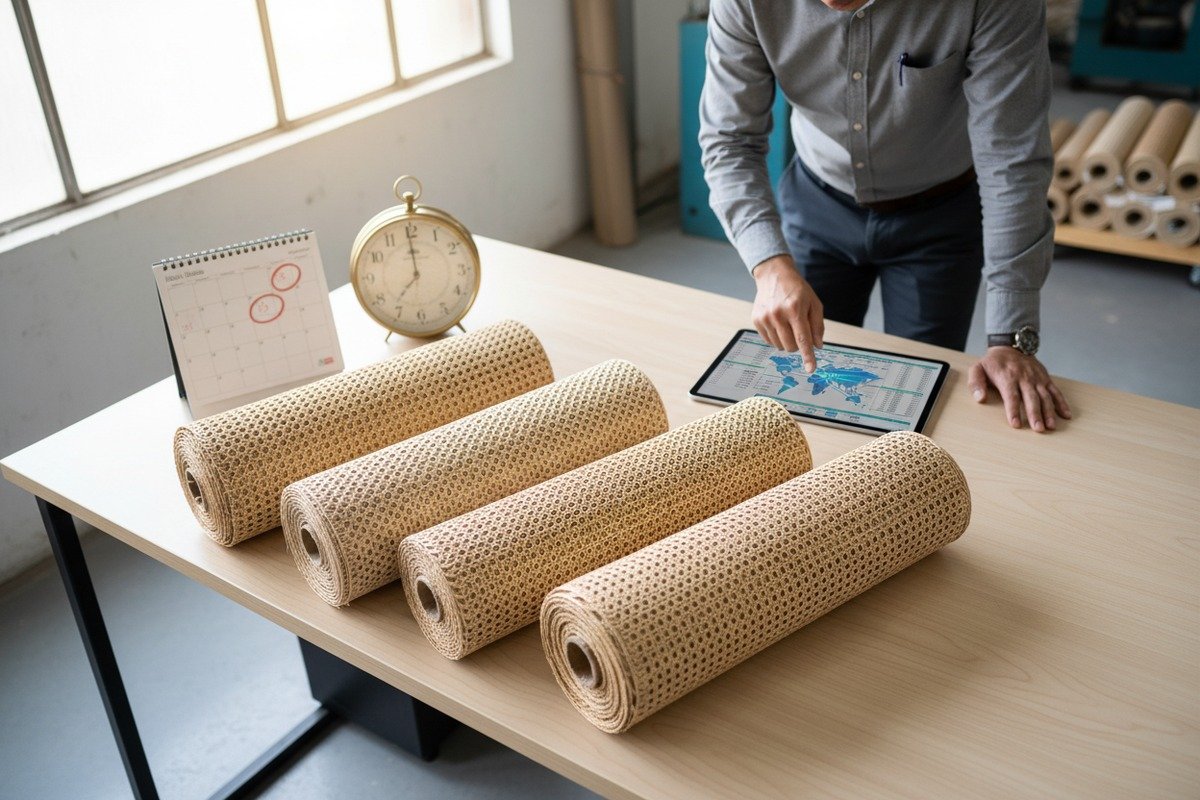
Every week, our sales team fields calls from furniture makers who underestimated how long طلبات شبكات الروطان المخصصة 1 takes to arrive at their workshop.
Custom rattan cane webbing lead times typically range from 10 to 15 business days for production, plus 8 to 20 days for international shipping. Standard patterns with stock materials ship faster, while unique weave designs, special finishes, or high-volume orders can extend timelines to 4–6 weeks total.
Understanding each stage of the sourcing process helps you plan smarter الدولي 2. Below, we break down production timelines, common delay factors, shipping windows, and strategies to keep your furniture line running without interruption.
How long will it take to manufacture my custom rattan cane webbing specifications?
When we schedule production runs across our three factories, the answer depends on what "custom" actually means for your specific order.
Manufacturing custom rattan cane webbing generally takes 10 to 15 business days from sample approval to finished goods. Simple modifications like custom widths or standard pattern cuts can be completed in 1 to 3 days, while complex custom weave patterns, special dye colors, or large bulk runs may require 15 to 20 days.
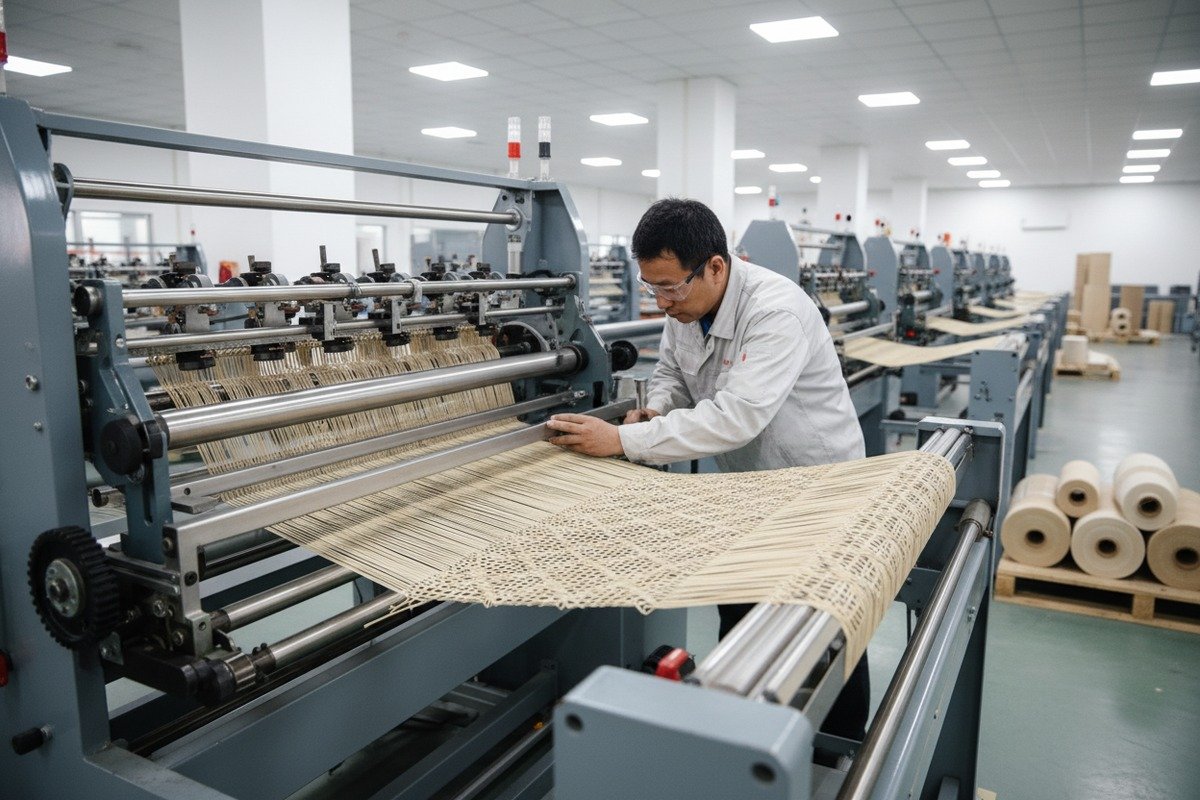
Breaking Down the Production Stages
The manufacturing timeline is not one block of time. It is a chain of steps. Each step has its own clock. Here is what happens from the moment you confirm your order.
Stage 1: Design Consultation and Sampling. This is where most buyers lose time without realizing it. You send us your specifications — pattern type, width, length, color, finish. We create a physical sample. For standard patterns like نسج الراديو الشبكي السداسي المفتوح 3 or square basketweave, sampling takes 1 to 2 days. For a brand-new geometric diamond motif or a custom color match, expect 3 to 5 days.
Stage 2: Sample Approval. This stage is entirely in the buyer's hands. Some clients approve within 24 hours. Others take a week for internal review. Every day of delay here pushes your delivery date.
Stage 3: Mass Production. Once approved, the production floor kicks in. Our facility runs 165+ automated weaving machines alongside skilled handweavers. Standard orders clear production in 7 to 10 days. High-volume runs above 3,000 kg may need 12 to 15 days.
Stage 4: Quality Control and Finishing. Inspection, trimming, rolling, and packaging add 1 to 2 days. We check weave density, color consistency, and roll dimensions before anything ships.
Production Timeline by Order Type
| نوع الطلب | Typical Production Time | Key Variables |
|---|---|---|
| Stock pattern, standard width (45–60 cm) | 1–3 أيام | Available in warehouse inventory |
| Custom width/length, standard pattern | 5-7 أيام | Machine adjustment and cutting |
| Custom weave pattern, natural rattan | 10–15 يومًا | Handweaving or machine reprogramming |
| Custom color/finish (bleached, stained) | 12–18 days | Dyeing, drying, and curing time |
| Bulk order 3,000+ kg, standard specs | 10–15 يومًا | Requires full production line allocation |
| Synthetic PE/PP rattan 4, custom pattern | 8–12 يومًا | Faster extrusion but pattern setup needed |
Natural vs. Synthetic: Does Material Choice Affect Speed?
نعم. قصب الروطان الطبيعي 5 comes from Indonesian palm. It requires harvesting, drying, grading, and splitting before weaving begins. If our Indonesian processing facility has pre-graded cane in stock, production starts immediately. If a specific cane diameter is out of stock, add 5 to 7 days for raw material preparation.
Synthetic PE/PP rattan is extruded from plastic pellets. The raw material is always available. Production is faster and more predictable. But custom color matching for synthetic still requires compounding and test runs, which adds 2 to 3 days.
One thing we tell every buyer: the fastest path to short lead times is choosing from existing patterns and standard dimensions. Custom is beautiful. Custom also takes time.
What factors could potentially delay the production timeline of my bulk rattan order?
Over the past decade, we have shipped rattan to more than 30 countries. Delays happen. But most of them are preventable once you know where the risks hide.
The most common delay factors include slow sample approval cycles, raw material shortages during peak harvesting seasons, factory capacity constraints during Q3–Q4, custom color revision rounds, quality rejections requiring rework, and incomplete or unclear specifications at the order stage.

The Six Biggest Delay Risks
1. Unclear Specifications. This is the number one delay we see. A buyer requests "natural color" without specifying whether that means unbleached, lightly sanded, or lacquered. We produce a sample. The buyer says it is too dark. We produce another. Two weeks disappear. Always provide a physical reference sample or a Pantone color code.
2. Revision Loops. Each design revision adds 2 to 4 days. Some projects go through three or four rounds. We recommend limiting revisions to two rounds maximum by sending detailed drawings upfront.
3. Raw Material Availability. Natural rattan is a tropical crop. Indonesia supplies over 80% of the world's rattan. Raw Material Availability 6 Monsoon seasons, export regulations, and local demand all affect supply. When a specific cane grade runs short, we may need to wait for the next shipment from our Indonesian facility.
4. Peak Season Congestion. July through November is peak ordering season for the furniture industry in Europe and North America. Factories run at full capacity. Lead times can stretch 20% to 30% longer during these months.
5. Quality Rejections. Our QC team inspects every roll. If weave density or color consistency falls below grade A standards, that batch goes back to the production line. This protects you from receiving defective goods, but it adds 2 to 3 days.
6. Minimum Order Quantity Conflicts. Bulk synthetic rattan orders typically require a 300 kg minimum. If your order sits just below the MOQ threshold, it may be grouped with another client's run — which means waiting for that second order to come in.
Delay Risk Assessment Table
| Delay Factor | Potential Time Added | Preventability |
|---|---|---|
| Unclear specifications | 5–10 أيام | High — provide detailed specs and references |
| Multiple revision rounds | 4–12 days | High — limit to 2 rounds with clear brief |
| Raw material shortage | 5-7 أيام | Medium — order during off-peak months |
| Peak season congestion | 3–7 أيام | Medium — place orders before July |
| Quality control rework | 2–3 أيام | Low — necessary for grade A output |
| MOQ batching delays | 3-5 أيام | Medium — meet or exceed MOQ thresholds |
| International holidays (Chinese New Year, Eid) | 7-14 يومًا | High — plan around known holiday schedules |
How Digital Tools Are Reducing Delays
In 2025, we started using digital prototyping and 3D visualization for custom patterns. Buyers can see a realistic render of their weave design before we cut a single strand. This cuts the sample approval stage by 40% to 50%. We also use AI-driven demand forecasting to pre-stock high-demand cane grades, so raw material delays are becoming less frequent.
Blockchain-based tracking is another emerging tool. While not yet standard across the industry, it allows buyers to see exactly where their rattan is — from the Indonesian forest to the Foshan factory floor to the shipping container. This transparency does not speed up production, but it eliminates the anxiety of not knowing.
The simplest way to avoid delays? Communicate early, communicate clearly, and finalize your design before placing the production order.
How much transit time should I budget for shipping my rattan materials from China to my warehouse?
Our logistics team in Foshan coordinates shipments to the Netherlands, the USA, Australia, and the Middle East every week. Shipping times vary far more than most buyers expect.
Ocean freight from China to the US West Coast takes 15 to 20 days, while shipments to Europe average 25 to 35 days. Air freight reduces transit to 5 to 7 days but costs 4 to 6 times more. Budget an additional 3 to 7 days for customs clearance, port handling, and last-mile delivery to your warehouse.
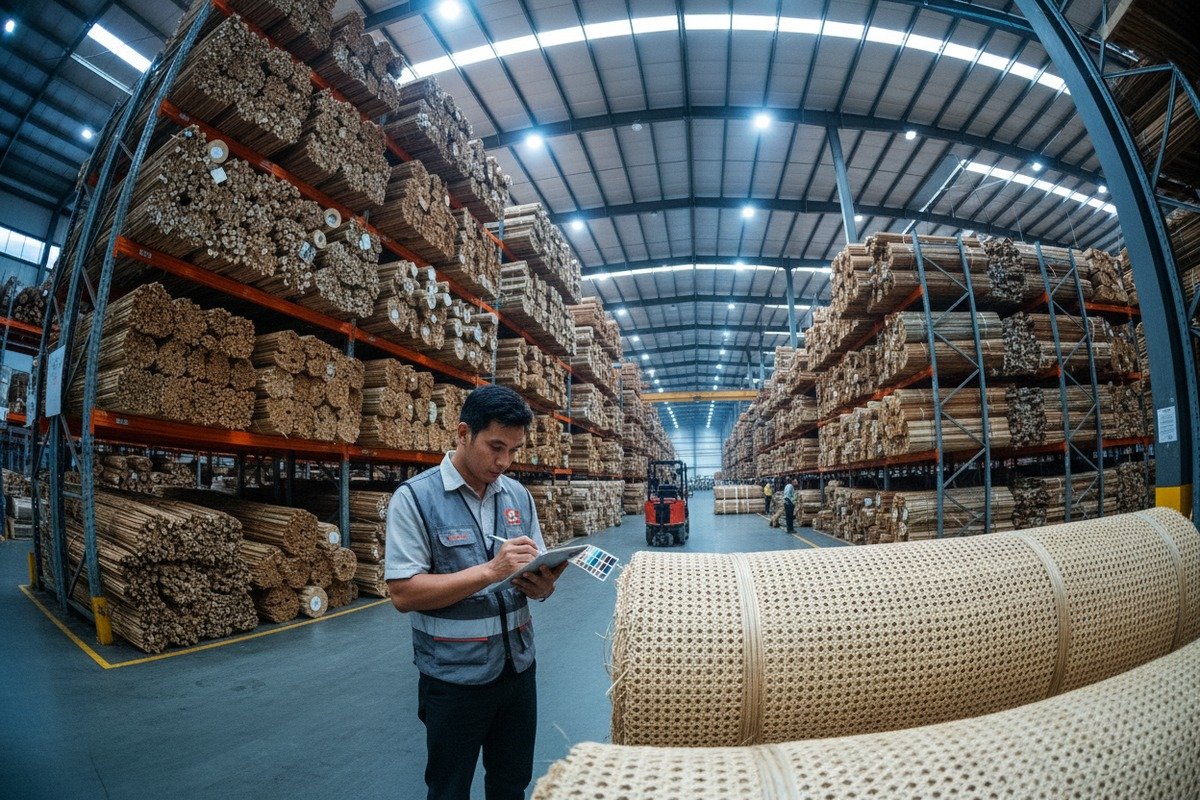
مقارنة طرق الشحن
Choosing the right shipping method is a balance between cost, speed, and order size. Here is a practical comparison based on our actual export records.
| طريقة الشحن | Transit Time (China to US) | Transit Time (China to EU) | Cost per CBM (Approx.) | الأفضل لـ |
|---|---|---|---|---|
| Full Container Load (FCL) ocean | 15–20 يومًا | 25–35 يومًا | $800–$1,500 | Bulk orders 10+ CBM |
| Less than Container Load (LCL) ocean | 20–30 يومًا | 30–40 يومًا | $150–$300 per CBM | Mid-size orders 1–9 CBM |
| شحن جوي | 5-7 أيام | 5–8 أيام | $5–$8 per kg | Urgent or sample shipments |
| Rail freight (China to EU) | 18–22 days | N/A for US | $1,000–$1,800 per CBM | EU-bound mid-volume orders |
| Express courier (DHL/FedEx) | 3-5 أيام | 4–6 أيام | $8–$12 per kg | Small samples under 50 kg |
Key Variables That Affect Transit Time
Port of origin matters. Our Foshan factory ships from Nansha Port in Guangzhou or Shekou Port in Shenzhen. Both are major international ports with daily sailings. Smaller factories in rural Indonesia may only have weekly vessel schedules, adding 3 to 7 days of waiting time.
Destination port congestion. Los Angeles and Long Beach experienced severe congestion in recent years. While conditions have improved in 2025, delays of 2 to 5 days still occur during peak season. Rotterdam and Hamburg tend to be more predictable.
التخليص الجمركي. Rattan products require proper HS codes and الشهادات الصحية النباتية 7 for natural materials. If your paperwork is incomplete, customs can hold your shipment for 3 to 10 business days. We provide all necessary documentation — certificate of origin, packing list, commercial invoice, and fumigation certificates — to prevent this.
Last-mile delivery. Getting your container from the port to your warehouse adds 1 to 3 days domestically. If you are located inland (say, Dallas or Madrid), budget closer to 5 days for trucking.
Total Lead Time: Production Plus Shipping
Here is a realistic total timeline for a standard custom order shipping from our Foshan facility:
- Sample creation and approval: 3–7 days
- Production: 10–15 days
- Quality control and packing: 1–2 days
- شحن بحري 8 to US West Coast: 15–20 days
- Customs and last-mile: 3–7 days
- Total: 32–51 days
For European buyers, add 10 to 15 days to the shipping window. For buyers in Southeast Asia or the Middle East, subtract 5 to 10 days from the ocean freight estimate.
The takeaway is simple. If you need custom rattan webbing at your warehouse in 6 weeks, place your order today. Not next month.
How can I optimize my procurement schedule to ensure my furniture production stays on track?
We have worked with purchasing managers across 30+ countries, and the ones who never run out of rattan all share the same habits.
To keep furniture production on track, place rattan webbing orders at least 6 to 8 weeks before your production start date, maintain a safety stock of 2 to 4 weeks' supply, use rolling forecasts to anticipate demand, and pre-approve sample designs before peak season to avoid revision delays.
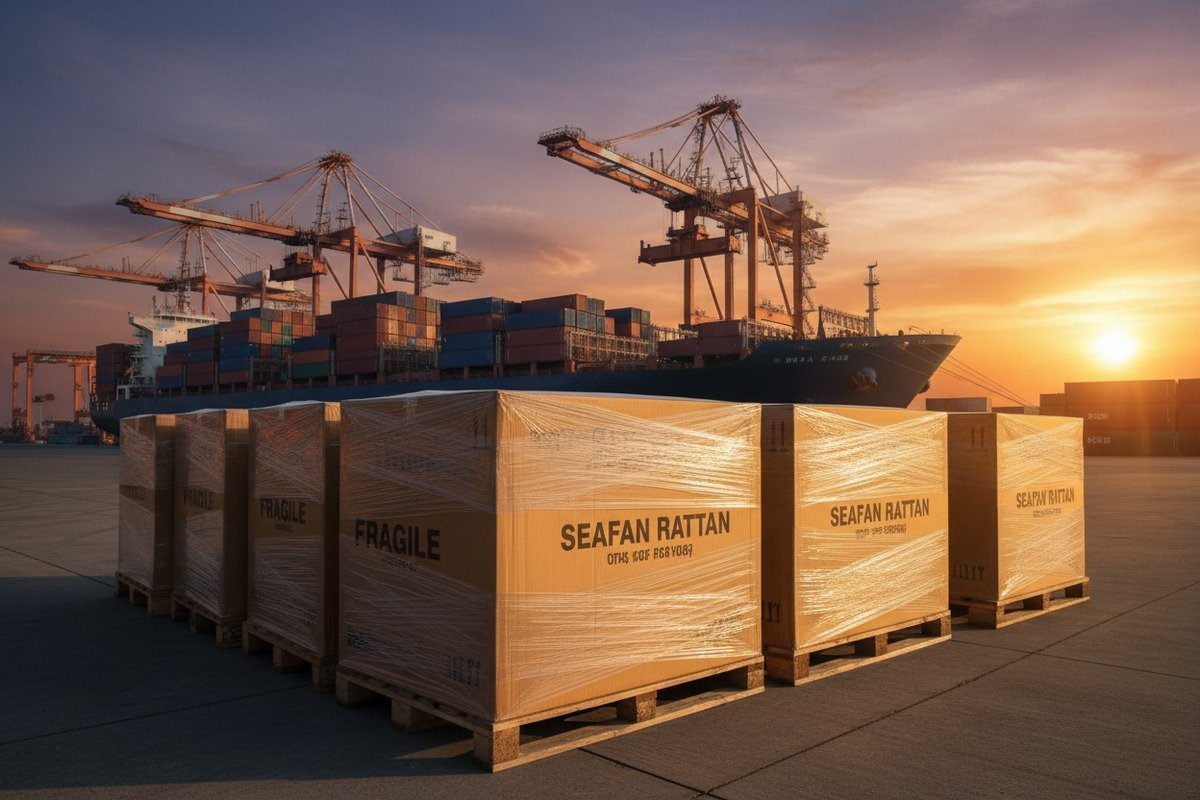
Build a Procurement Calendar
The biggest mistake buyers make is ordering reactively. They wait until rattan stock runs low, then scramble for a rush order. Rush orders cost more. They also carry higher risk of quality issues because the factory compresses its QC window.
Instead, build a quarterly procurement calendar. Here is a sample schedule we recommend to our long-term clients:
يناير - فبراير: Place Q2 production orders before Chinese New Year shutdown. Factories close for 10 to 15 days. Orders placed in late January may not ship until mid-March.
March–May: Ideal ordering window. Factories are fully operational. Lead times are at their shortest. This is when you should order for summer and early fall production runs.
June–August: Place Q4 and holiday season orders. Competition for factory capacity increases. Order early to lock in your production slot.
September–November: Peak congestion. If you have not ordered yet, expect extended lead times. Consider air freight for urgent needs.
December: Pre-order for Q1 of the following year. Many factories offer early-bird pricing for orders placed before the year-end rush.
Seven Strategies for Shorter Lead Times
1. Pre-approve designs. Lock in your weave pattern, color, and dimensions before you need the material. Store approved samples with your supplier so future orders skip the sampling stage entirely.
2. Use modular production. For complex custom projects, request pre-fabricated sections. Our factory can weave standard modules that your team assembles on-site, cutting total lead time by 20% to 30%.
3. Maintain safety stock. Keep 2 to 4 weeks of your most-used webbing patterns in your own warehouse. This buffer absorbs minor shipping delays without halting your production line.
4. Consolidate suppliers. Working with a one-stop rattan wholesaler — rather than sourcing different materials from different factories — simplifies logistics and reduces coordination delays. We supply natural cane webbing, synthetic PE/PP rattan, bleached rattan, and woven panels from a single order point.
5. Leverage AI forecasting. Share your production forecasts with your supplier. When we know your demand curve, we can pre-stock raw materials and reserve machine time. This alone can cut 3 to 5 days from your lead time.
6. Schedule partial shipments. For large orders, ask for staggered deliveries. Receive the first 30% by air freight to start production immediately, while the remaining 70% follows by ocean. This hybrid approach balances cost and speed.
7. Build a relationship. Long-term clients get priority scheduling. When our factory is at 90% capacity, loyal buyers go to the front of the queue. This is not written in any contract, but it is how every factory operates.
Quick Reference: Procurement Best Practices
| الاستراتيجية | Time Saved | التأثير على التكلفة |
|---|---|---|
| Pre-approved sample library | 3–7 أيام | No additional cost |
| Modular pre-fabrication | 3-5 أيام | Slight premium for setup |
| Safety stock 9 (2–4 weeks) | Absorbs all minor delays | Warehousing cost |
| Supplier consolidation | 2–4 days coordination time | Often lower per-unit cost |
| AI demand forecasting 10 | 3–5 days material prep | Free with data sharing |
| Partial air/ocean shipment | 10–15 days on first batch | 15–20% higher shipping cost |
| Long-term supplier relationship | Priority queue access | Volume discount benefits |
The purchasing managers who succeed are the ones who treat rattan sourcing as a continuous process, not a one-time transaction. Plan ahead. Communicate often. Keep your pipeline full.
خاتمة
Custom rattan cane webbing lead times are manageable when you understand production stages, anticipate delays, budget for shipping, and plan procurement proactively.
ملاحظات سفلية
1. يوفر نظرة عامة على نسيج الخيزران. ↩︎
2. Explains the process of moving goods between countries. ↩︎
3. Describes a specific and common rattan weave pattern. ↩︎
4. Explains the composition and characteristics of synthetic rattan. ↩︎
5. Details the origin, properties, and uses of natural rattan. ↩︎
6. Discusses factors impacting the supply of raw materials. ↩︎
7. Defines official documents for plant product trade. ↩︎
8. Describes the method of transporting goods by sea. ↩︎
9. Explains buffer inventory to mitigate stockout risks. ↩︎
10. Details the use of AI for predicting product demand. ↩︎


 English
  Español de México
  العربية
  Deutsch
  Français
  Русский