
Jede Rolle Rattan-Rohrgeflecht 1 die unser Lager in Foshan verlässt, begann ihre Reise in einem tropischen Regenwald 2 Tausende von Kilometern entfernt. Viele unserer B2B-Kunden – Möbelfabriken, Materialgroßhändler und Baustofflieferanten – fragen uns, wie aus einer rohen Dschungelliane die eleganten gewebten Bahnen werden, die sie in Stühle, Schränke und Wandpaneele einbauen. Die Wahrheit ist, dass eine inkonsistente Webqualität einer der größten Schmerzpunkte in dieser Branche bleibt. Wir sehen es jeden Tag, wenn neue Käufer zu uns kommen, nachdem sie minderwertige Rollen von anderen Lieferanten erhalten haben.
Der traditionelle Webprozess für Rattanrohrgeflecht umfasst die Ernte von Rattanpalmen, das Abstreifen des äußeren Rohrs in dünne, gleichmäßige Streifen, das Einweichen zur Biegsamkeit und das Handweben der Stränge zu Mustern wie sechseckigen, quadratischen oder rautenförmigen Designs auf Holzrahmen, bevor sie getrocknet und fertiggestellt werden.
Unten zerlegen wir jede Phase dieses jahrhundertealten Prozesses – von der Rohmaterialaufbereitung in Indonesien bis zu den abschließenden Qualitätskontrollen in unseren Anlagen. Ob Sie Einkaufsmanager sind, der Großrollen beschafft, oder ein Möbelhersteller, der einen neuen Lieferanten bewertet, dieser Leitfaden gibt Ihnen das vollständige Bild.
Wie wird roher indonesischer Rattan vor der Ankunft in meiner Weberei vorbereitet?
Unsere Verarbeitungsanlage in Indonesien bearbeitet jeden Tag rohes Rattan, und in der Vorbereitungsphase wird die Qualität entweder aufgebaut oder verloren. Wenn das Rohr zu dick abgeschält wird, sieht das Gewebe rau aus. Wenn es zu schnell getrocknet wird, reißen die Stränge beim Versand. Diese frühen Schritte entscheiden über das Schicksal Ihrer gesamten Bestellung.
Roher Rattan wird durch Ernten reifer Rattanpalmen, Entfernen der dornigen Außenschicht, maschinelles Schälen des Rohrs in 3–4 mm Streifen, Kochen der Streifen zum Erweichen, Bleichen für eine einheitliche Farbe, Behandlung gegen Schimmel und Sonnentrocknen vor dem Verpacken für den Export vorbereitet.
Ernte und Erstverarbeitung
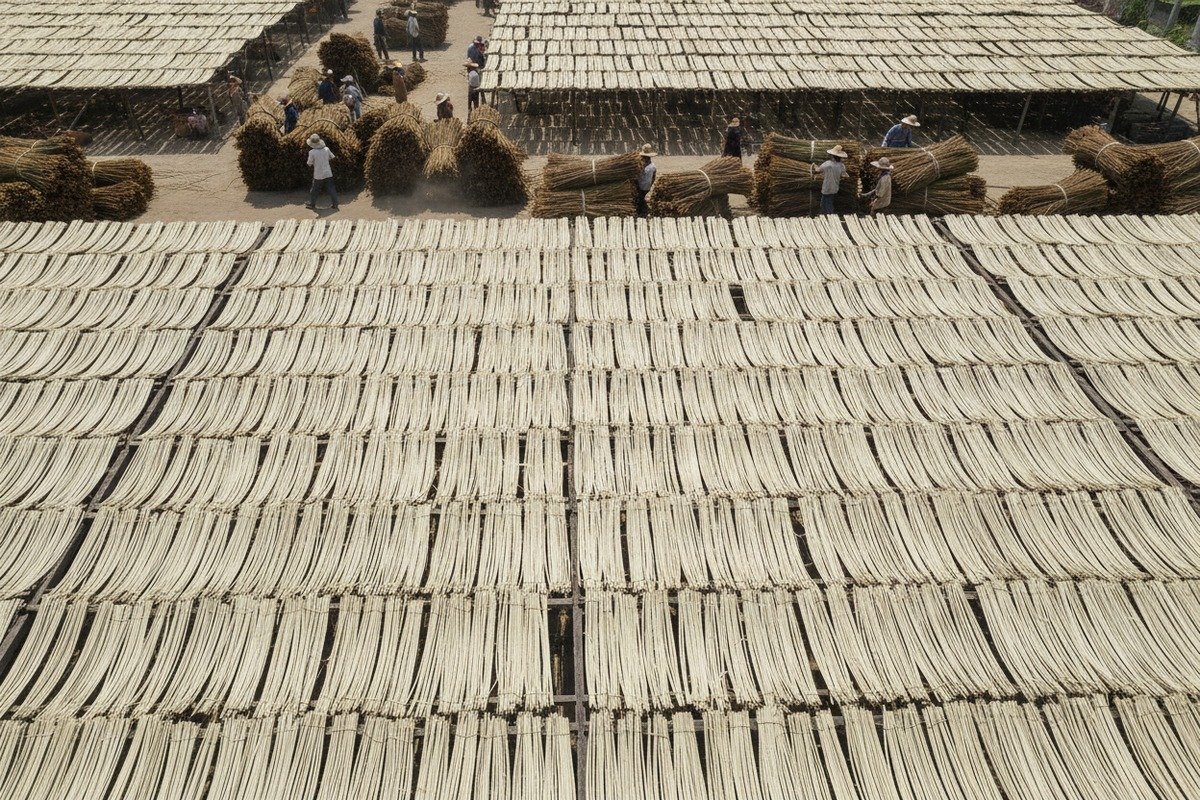
Rattanpalmen 3 wachsen wild und auf bewirtschafteten Plantagen in Kalimantan, Sulawesi und Sumatra. Reife Lianen – typischerweise 5 bis 10 Jahre alt – werden von Hand geschnitten und zu Verarbeitungsdörfern transportiert. Zuerst wird die dornige äußere Rinde entfernt. Dann spalten die Arbeiter jeden Stiel, um das harte äußere Rohr vom weicheren inneren Kern zu trennen. Das äußere Rohr wird zu Webmaterial. Der innere Kern geht in die Möbelrahmenproduktion.
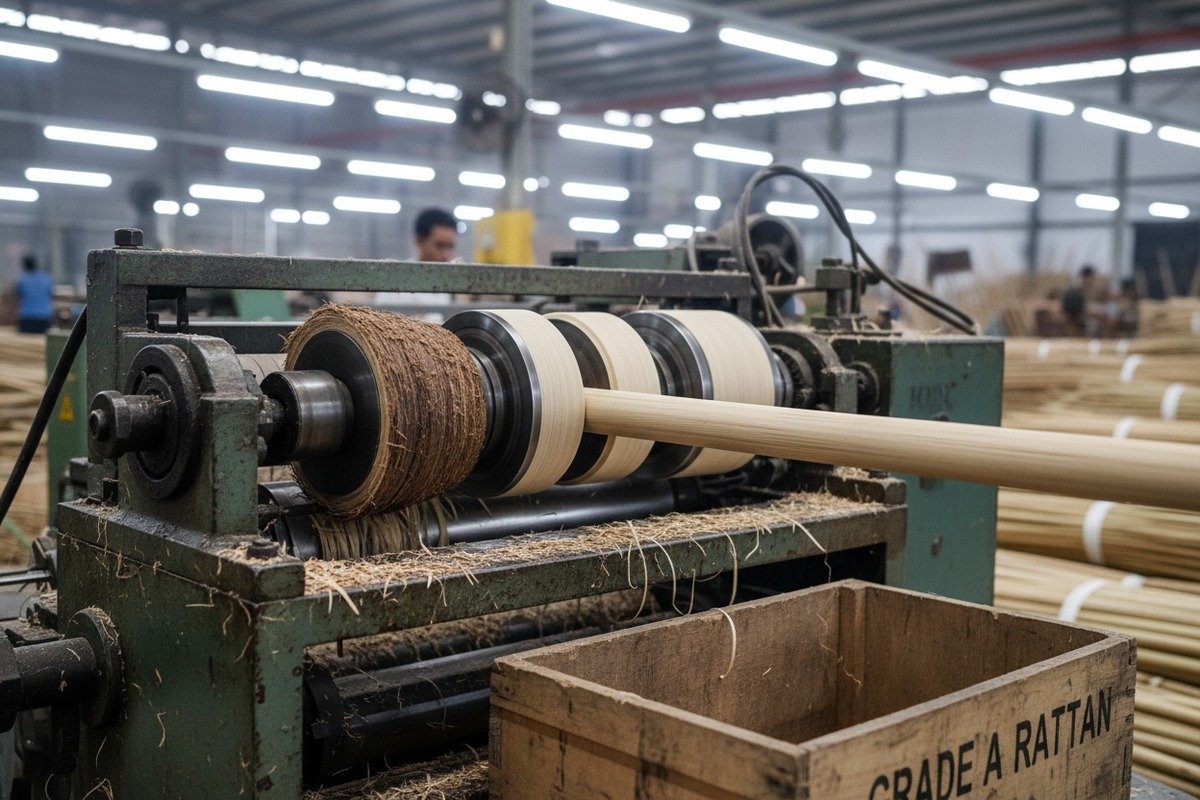
In unserer indonesischen Anlage verwenden wir halbautomatische Schälmaschinen 4 um das Rohr in Streifen zu schneiden. Die Standardbreite für Webstreifen beträgt 3 bis 4 mm, obwohl wir diese je nach bestelltem Muster anpassen. Die Gleichmäßigkeit der Streifenbreite ist entscheidend. Selbst eine Variation von 0,5 mm über eine Charge hinweg kann zu sichtbaren Unebenheiten im fertigen Gewebe führen.
Kochen, Bleichen und Behandlung
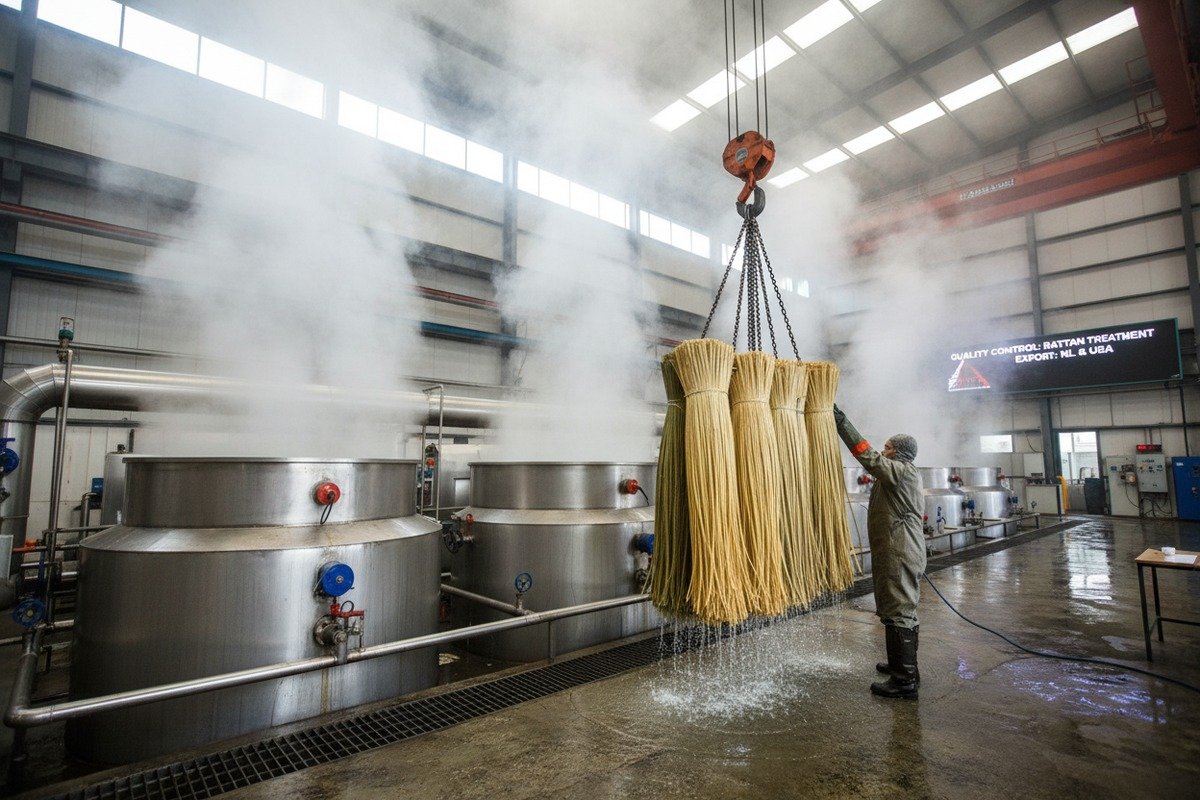
Nach dem Schälen kommen die Streifen in große Kochkessel. Das Kochen erweicht die Fasern und entfernt natürliche Öle, die später zu Verfärbungen führen könnten. Die Streifen werden dann in einem kontrollierten Verfahren gebleicht, um die hellbeige oder strohgelbe Farbe zu erzielen, die die meisten Käufer erwarten. Wir überwachen die Bleichzeit sorgfältig, da Überbleichen die Fasern schwächt.
Als Nächstes folgt die Schimmelbehandlung. Rattan ist ein organisches Material. Ohne richtige Behandlung kann es während des Seetransports schimmeln – insbesondere in feuchte Märkte wie Thailand oder die Philippinen. Wir wenden lebensmittelechte Fungizidlösungen 5 und trocknen die Streifen dann mehrere Tage lang in offenen Schuppen.
Sortierung und Einstufung
Bevor die Streifen an unsere Webpartner oder unsere eigene Weberei geliefert werden, durchlaufen sie eine manuelle Sortierung. Die Arbeiter überprüfen jedes Bündel auf Risse, Verfärbungen und unregelmäßige Dicke. Wir stufen die Streifen in drei Kategorien ein:
| Qualität | Streifenqualität | Typische Verwendung |
|---|---|---|
| Güteklasse A 6 | Gleichmäßige Breite, keine Risse, konsistente Farbe | Premium-Möbelband, Exportaufträge |
| Güteklasse B | Leichte Farbabweichungen, leichte Oberflächenspuren | Mittelklasse-Möbel, Inlandsmarkt |
| Güteklasse C | Sichtbare Unvollkommenheiten, größere Toleranz | Budget-Produkte, Übungsmaterial |
Die meisten unserer internationalen B2B-Kunden – insbesondere in den Niederlanden, Australien und den USA – benötigen ausschließlich die Klasse A. Dieser Bewertungsschritt ist derjenige, bei dem wir Probleme aussortieren, bevor sie Ihre Fabrik erreichen.
Einweichen vor dem Weben
Getrocknete Streifen sind steif. Bevor mit dem Weben begonnen wird, müssen die Streifen 20 bis 45 Minuten lang in sauberem Wasser eingeweicht werden. Die genaue Zeit hängt von der Dicke der Streifen und der Umgebungsfeuchtigkeit ab. Nach unserer Erfahrung beim Versand in trockenere Klimazonen wie Saudi-Arabien und Iran raten wir den Kunden, näher an 45 Minuten einzuweichen. In tropischen Werkstätten reichen normalerweise 20 Minuten aus. Einige Handwerker geben ein paar Tropfen Glycerin in das Einweichwasser. Dies hilft dem Rohrstock, während längerer Webvorgänge länger Feuchtigkeit zu speichern.
Welche traditionellen Handwebtechniken werden verwendet, um mein Rattanrohrgeflecht herzustellen?
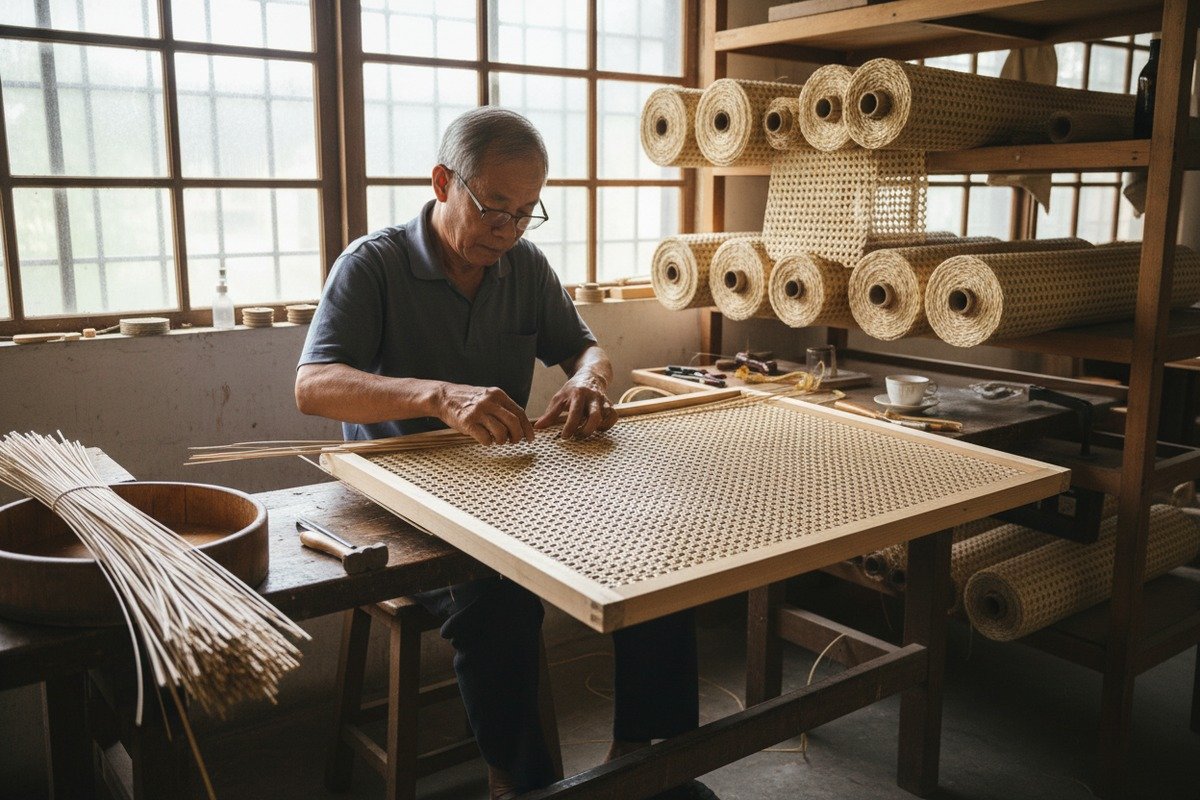
Wenn Kunden unsere Partnerwebereien in Foshan besuchen, sind sie immer wieder beeindruckt, wie viel Facharbeit in jede Rolle fließt. Ein einzelner Weber, der an einem sechseckiges Muster 7 kann nur etwa 3 bis 5 Quadratmeter pro Tag produzieren. Das Verständnis dieser Schritte hilft Ihnen zu erkennen, warum handgewebtes Gurtband teurer ist – und warum es besser funktioniert.
Die traditionelle Handweberei von Rattan-Rohrgeflecht folgt einer mehrstufigen Sequenz: Aufspannen vertikaler Kettfäden auf einem Rahmen, Verflechten horizontaler Schussfäden, Hinzufügen diagonaler Fäden für Muster wie sechseckige Webarten, Festziehen der Kreuzungspunkte und Einnähen oder Abschneiden loser Enden für einen sauberen Abschluss.
Einrichten des Rahmens
Jedes Stück Gurtband beginnt auf einem Holzrahmen. Die Rahmengröße bestimmt die endgültigen Blattabmessungen. Für die Massenproduktion verwenden wir standardisierte Rahmen, die Rollen mit einer Breite von 40 cm, 45 cm, 60 cm oder 90 cm produzieren. Der Weber sichert den ersten Satz vertikaler Stränge – Kette genannt –, indem er sie am oberen und unteren Ende des Rahmens festbindet oder festnagelt. vertikale Kettfäden 8 Der Abstand muss exakt sein. Ein Lineal oder eine vorgemarkierte Schablone stellt sicher, dass jeder Kettfaden im richtigen Abstand sitzt.
Die Kernwebsequenz
Das eigentliche Verflechten folgt einem bestimmten Muster. Hier ist eine vereinfachte Aufschlüsselung der drei gängigsten Muster, die wir produzieren:
| Muster | Technik | Visueller Effekt | Schwierigkeitsgrad |
|---|---|---|---|
| Quadratisches / Radio-Gewebe | Über 1, unter 1 in einem senkrechten Gitter | Enges, gleichmäßiges Gitter | Beginner |
| Sechseckiges / Offenes Gewebe | Senkrechtes Gitter plus 45-Grad-Diagonalen | Offenes Wabenmuster | Intermediate |
| Rauten- / Komplexe Geometrie | Mehrschichtiges Über/Unter mit versetzten Reihen | Dichtes dekoratives Motiv | Fortgeschritten |
Für das klassische sechseckige Muster – unser beliebtestes Exportgut – erstellt der Weber zunächst ein einfaches Karogitter. Dann fügt er diagonale Streifen im 45-Grad-Winkel ein und fädelt jeden über und unter die vorhandenen Gitterkreuzungen. Dies erzeugt die charakteristischen sechseckigen Öffnungen, die viele westliche Designer als "Rohrgeflecht" oder "Radio-Webart" bezeichnen."
Die Sieben-Schritte-Stuhlgeflechtmethode
Für traditionelles Stuhlgeflecht folgen Handwerker einem bekannten Sieben-Schritte-Prozess 9 der seit Generationen weitergegeben wird:
- Erster vertikaler Durchgang: Legen Sie vertikale Stränge von der Vorder- zur Rückseite der Leiste.
- Erster horizontaler Durchgang: Legen Sie horizontale Stränge von Seite zu Seite, über den Vertikalen.
- Zweiter vertikaler Durchgang: Legen Sie einen weiteren Satz Vertikalen direkt über die ersten Horizontalen.
- Zweiter horizontaler Durchgang: Weben Sie Horizontale über und unter den zweiten Vertikalen.
- Erster diagonaler Durchgang: Führen Sie diagonale Stränge von einer Ecke zur gegenüberliegenden ein und weben Sie durch das Gitter.
- Zweiter diagonaler Durchgang: Fügen Sie Diagonalen in die andere Richtung ein, um das Geflecht zu vervollständigen.
- Bindung: Ein breiterer Streifen Rohrdeckt die Rahmenlöcher ab und wird mit Dübeln oder Bindungen befestigt.
Jeder Schritt baut auf dem vorherigen auf. Das Überspringen oder überstürzte Ausführen eines Schritts führt zu Schwachstellen. In unseren Werkstätten beaufsichtigen erfahrene Weber neuere Arbeiter bei den Schritten 5 und 6, da die diagonalen Durchgänge die größte Präzision erfordern.
Stränge arbeitsfähig halten
Luftfeuchtigkeit ist enorm wichtig. Unsere Werkstätten in Foshan liegen in einem subtropischen Klima, das das Rattan beim Weben natürlich geschmeidig hält. Wenn wir jedoch Kunden beraten, die ihre eigenen Montagebetriebe in trockeneren Regionen – Türkei, Iran oder Teilen Australiens – einrichten, empfehlen wir immer, eine Sprühflasche mit Wasser bereitzuhalten. Das erneute Besprühen des Rohrs alle 10 bis 15 Minuten verhindert Risse während des Webens. Einige Weber wickeln feuchte Handtücher um unbenutzte Stränge, um die Feuchtigkeit zu erhalten.
Werkzeuge des Handwerks
Traditionelles Rattanweben erfordert keine teure Ausrüstung. Hier ist, was eine typische Weberstation beinhaltet:
- Ein hölzerner Webrahmen oder Stuhl mit vorgebohrten Löchern
- Ein scharfes Cuttermesser oder eine Schere zum Zuschneiden der Stränge auf Länge
- Klebeband oder kleine Klemmen zum vorübergehenden Fixieren der Stränge
- Ein flacher Ahle oder Stechbeitel zum Einstecken von Enden und Anpassen der Spannung
- Eine Sprühflasche mit Wasser
- Ein kleiner Behälter mit leichtem Öl zum Schmieren widerspenstiger Stränge
Die Einfachheit des Werkzeugsatzes trägt dazu bei, dass dieses Handwerk zugänglich ist – aber Meisterschaft erfordert jahrelange Übung.
Wie kann ich die Qualität und Konsistenz der Weberei bei meinen Großhandelsbestellungen von Rattan überprüfen?
Wir haben Rattanrohrgeflecht in über ein Dutzend Länder versandt, und die größte Sorge der Einkaufsmanager ist immer dieselbe: "Woher weiß ich, dass die Qualität über meine gesamte Bestellung hinweg gleichbleibend sein wird?" Das ist eine berechtigte Frage. Rattan ist ein Naturmaterial, und keine zwei Chargen handgewebten Geflechts sind vollkommen identisch.
Sie können Qualität und Konsistenz überprüfen, indem Sie die Streifengleichmäßigkeit prüfen, die Öffnungsgrößen im Webmuster messen, auf gebrochene oder fehlende Stränge prüfen, die Flexibilität mit einem Biegetest testen und Musterrollen mit einem vorab genehmigten Referenzstück vergleichen, bevor Sie die volle Produktion genehmigen.
Checkliste zur visuellen Inspektion
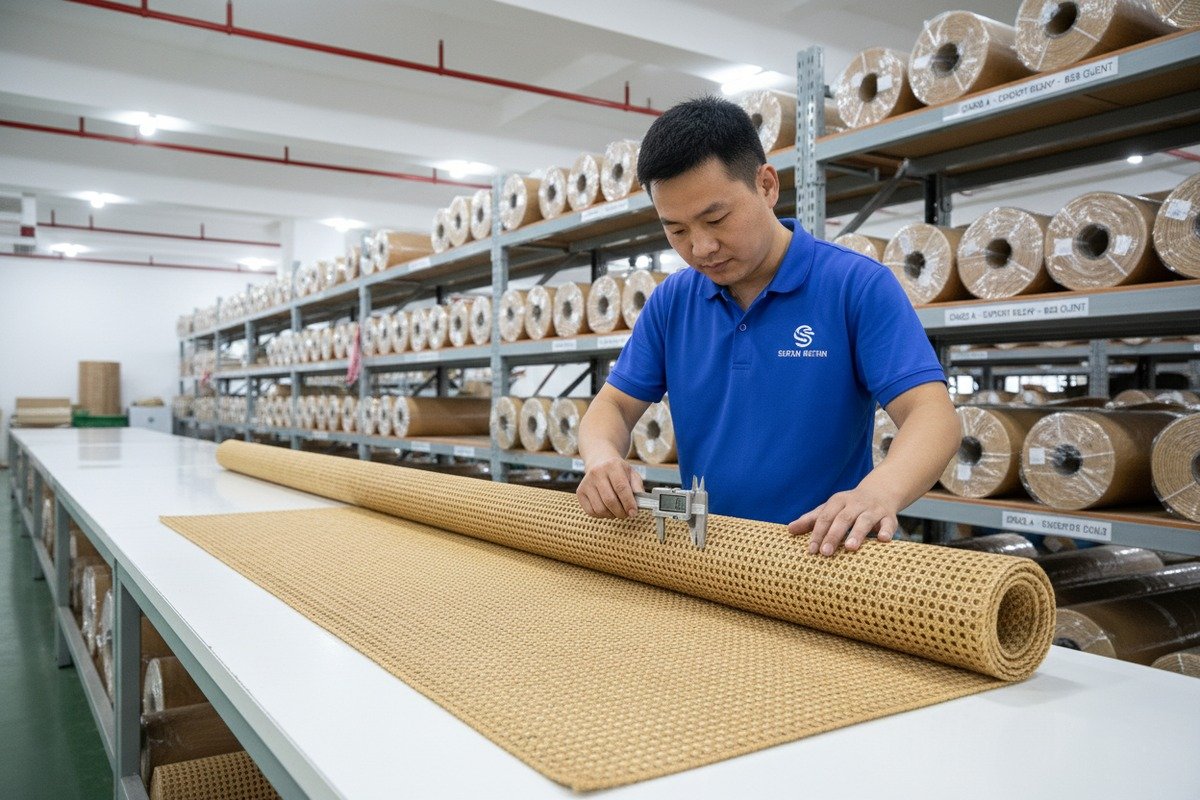
Die erste Qualitätskontrolle ist visuell. Wenn eine Rolle Geflecht in Ihrem Lager ankommt, rollen Sie mindestens 2 Meter ab und überprüfen Sie Folgendes:
- Farbgleichmäßigkeit: Alle Stränge sollten innerhalb eines engen Farbbereichs liegen. Fleckige dunkle Stellen können auf unvollständiges Bleichen oder Schimmel hinweisen.
- Gleichmäßigkeit der Strangbreite: Verwenden Sie einen Messschieber, um mindestens 10 Stränge pro Rolle stichprobenartig zu prüfen. Sie sollten innerhalb von ±0,3 mm der angegebenen Breite liegen.
- Regelmäßigkeit des Musters: Öffnungen in einem sechseckigen Geflecht sollten ungefähr gleich groß sein. Halten Sie das Geflecht gegen das Licht – unregelmäßige Öffnungen deuten auf eine ungleichmäßige Spannung während des Webens hin.
- Oberflächenglätte: Fahren Sie mit der Hand über das Geflecht. Richtig vorbereitetes Rohr fühlt sich glatt an. Raue oder splitternde Oberflächen deuten auf unzureichendes Kochen oder minderwertiges Rohmaterial hin.
Wichtige zu verfolgende Messungen
Wir empfehlen Einkaufsmanagern, für jede Lieferung ein einfaches Messprotokoll zu führen. Hier sind die wichtigsten Kennzahlen:
| Qualitätsmetrik | Akzeptabler Bereich | Red Flag |
|---|---|---|
| Streifenbreite | 3,0–4,0 mm (±0,3 mm) | Abweichung über ±0,5 mm |
| Öffnungsgröße (sechseckig) | 12–15 mm über | Öffnungen kleiner als 10 mm oder größer als 18 mm |
| Roll width | Bestellte Breite ±5 mm | Abweichung größer als 10 mm |
| Feuchtigkeitsgehalt bei Lieferung | 8–12% | Über 15% (Schimmelrisiko) |
| Gebrochene Stränge pro Quadratmeter | 0 | Jeder gebrochene Strang ist ein Mangel |
Der Biegetest
Dies ist ein schneller Feldtest, den wir all unseren Kunden beibringen. Nehmen Sie einen einzelnen Strang vom Rand der Rolle und biegen Sie ihn um 180 Grad. Cane der Güteklasse A sollte sich biegen, ohne zu reißen. Wenn er sauber bricht, ist das Material übertrocknet oder schlecht behandelt. Wenn er sich biegt, aber weiße Spannungsspuren auf der Oberfläche zeigt, ist die Qualität des Rohrs grenzwertig. Dieser einfache Test dauert fünf Sekunden und sagt Ihnen viel über die Charge aus.
Musterfreigabeprozess
Fordern Sie immer eine Musterrolle an, bevor Sie eine Großbestellung aufgeben. Bei Seafan Rattan senden wir physische Muster an Kunden, damit diese Webart, Farbe und Flexibilität bewerten können, bevor sie sich für einen vollen Container entscheiden. Wir ermutigen Kunden, eine freigegebene Musterrolle als Referenz aufzubewahren. Wenn die Großlieferung eintrifft, vergleichen Sie sie Seite an Seite mit der Referenz. Dies ist der wirksamste Weg, um Inkonsistenzen frühzeitig zu erkennen.
Inspektion durch Dritte
Bei sehr großen Bestellungen – insbesondere bei solchen für europäische oder nordamerikanische Märkte – beauftragen einige unserer Kunden externe Inspektionsunternehmen, die Produktionsstätte vor dem Versand zu besuchen. Sie überprüfen alles, von den Lagerbedingungen der Rohmaterialien bis hin zu den Maßen der fertigen Rollen. Wir begrüßen diese Inspektionen, da sie Vertrauen schaffen und spätere Streitigkeiten reduzieren.
Warum ist der traditionelle Webprozess für die Haltbarkeit meiner Möbelprojekte wichtig?
Im Laufe der Jahre haben wir beobachtet, wie einige Kunden zu billigeren maschinell gewebten Alternativen wechselten, nur um nach Beschwerden ihrer Endkunden über durchhängendes oder reißendes Geflecht innerhalb weniger Monate zurückzukommen. Der Zusammenhang zwischen Prozess und Haltbarkeit ist direkt und messbar. Wie das Rohr vorbereitet und gewebt wird, bestimmt, wie lange es in einem Stuhlsitz, einer Schranktür oder einer dekorativen Platte hält.
Der traditionelle Webprozess ist wichtig für die Haltbarkeit, da handgefertigtes Rohr seine natürliche Faserstruktur behält, handgespannte Kreuzungen das Gewicht gleichmäßig verteilen und zeitgeprüfte Mustergeometrien wie sechseckige und rautenförmige Webarten über Jahre hinweg eine überlegene Beständigkeit gegen Dehnung, Durchhängen und Reißen bieten.
Warum die manuelle Vorbereitung die Fasernstärke erhält
Wenn Rattanrohr zu aggressiv maschinell geschält wird, kann die Klinge die Faseroberfläche ritzen. Diese Mikroschnitte werden zu Spannungsstellen, die schließlich unter Last zu Rissen führen. Das traditionelle manuelle Abziehen – oder das sorgfältig kalibrierte halbautomatische Schälen, wie wir es in unserer indonesischen Anlage verwenden – entfernt die äußere Haut schonender. Die natürliche Längsstruktur der Faser bleibt intakt. Deshalb kann richtig vorbereitetes Rohr tausende Male gebogen werden, ohne zu brechen.
Auch das Kochen spielt eine Rolle. Die traditionelle Langzeitkochmethode ermöglicht es den Fasern, Wasser gleichmäßig aufzunehmen. Ein schnelles Dampfverfahren – das von einigen Billigproduzenten zur Zeitersparnis eingesetzt wird – kann dazu führen, dass das Innere des Streifens trocken bleibt, während die Oberfläche weich erscheint. Diese Inkonsistenz führt zu vorzeitigem Reißen, wenn das Geflecht unter Spannung in einem Stuhlsitz angebracht wird.
Wie die Webgeometrie die Lastverteilung beeinflusst
Nicht alle Webmuster verteilen das Gewicht auf die gleiche Weise. Das Sechseckmuster beispielsweise verteilt die Kraft in sechs Richtungen statt in vier. Das macht es widerstandsfähiger gegen konzentrierte Druckpunkte – wie wenn jemand jeden Tag an derselben Stelle auf einem Stuhl sitzt. Das Rautenmuster fügt noch mehr Verriegelungspunkte hinzu, was die Reißfestigkeit erhöht.
Hier ist ein praktischer Vergleich, den wir unseren Möbelherstellerkunden mitteilen:
| Faktor | Sechseckiges Gewebe | Quadratisches Gewebe | Rautenmuster |
|---|---|---|---|
| Lastrichtungen | 6 | 4 | 8+ |
| Durchbiegungswiderstand | Hoch | Moderat | Sehr hoch |
| Reißfestigkeit | Hoch | Moderat | Sehr hoch |
| Atmungsaktivität | Ausgezeichnet (offenes Geflecht) | Gut | Moderat (dichteres Muster) |
| Beste Anwendung | Stuhlsitze, Paneele | Rückwandpaneele, Sichtschutzwände | Hochwertige Sitzmöbel, dekorative Paneele |
Spannungskontrolle beim Handweben
Ein geschickter Handweber passt die Spannung Strang für Strang an. Wenn er spürt, dass ein Strang auf einer Seite zu straff zieht, lockert er ihn, bevor er ihn in das Geflecht einarbeitet. Diese Mikroeinstellung ist etwas, das Maschinen nur schwer nachahmen können. Maschinen üben eine gleichmäßige Spannung aus, was theoretisch gut klingt. Aber Rattan ist ein Naturmaterial – jeder Strang hat eine leicht unterschiedliche Elastizität. Gleichmäßige mechanische Spannung kann dünnere Stränge überlasten und dickere Stränge in derselben Rolle unterlasten.
Das Ergebnis? Maschinell gewebtes Geflecht kann nach einigen Monaten Gebrauch ungleichmäßige Durchhängmuster entwickeln. Handgewebtes Geflecht, das nach Gefühl gespannt wird, neigt dazu, gleichmäßiger zu altern.
Kulturelles Wissen und generationale Fähigkeiten
Traditionelles Rattanweben entstand vor Jahrhunderten in südostasiatischen Gemeinschaften. Die Techniken wurden für Alltagsgegenstände – Schlafmatten, Körbe und Sitzmöbel – entwickelt, die jahrelang starker Beanspruchung unter feuchten tropischen Bedingungen standhalten mussten. Dies ist kein rein dekoratives Handwerk. Es ist Ingenieurwesen, verfeinert durch Generationen von Praxistests.
Wenn wir von Webereigemeinschaften beziehen, die diese Traditionen aufrechterhalten haben, greifen wir auf einen tiefen Wissensschatz zurück, welche Strangdicken für welche Muster am besten geeignet sind, wie straff Diagonalen gezogen werden müssen und wann ein Strang ersetzt werden muss, der sich nicht richtig anfühlt. Dieses Erfahrungswissen lässt sich nur schwer in ein Maschinenprogramm kodieren.
Nachhaltigkeit und langfristiger Wert
Es gibt auch ein Nachhaltigkeitsargument. Ein Möbelstück mit strapazierfähigem, traditionell gewebtem Rattan-Geflecht hält 10 bis 20 Jahre oder länger. Günstige, maschinell gewebte Alternativen müssen möglicherweise nach 3 bis 5 Jahren ersetzt werden. Über die Lebensdauer des Produkts hinweg erzeugt die traditionelle Option weniger Abfall und bietet ein besseres Preis-Leistungs-Verhältnis. Für Marken, die umweltfreundliche Möbel vermarkten – ein wachsender Sektor in Europa, Australien und Nordamerika –, ist dies ein starkes Verkaufsargument.
Rattan selbst ist eine nachwachsende Ressource. Die Palmen wachsen schnell und können geerntet werden, ohne die Pflanze zu töten. In Kombination mit traditionellem Weben, das die Lebensdauer des Materials maximiert, unterstützt die gesamte Lieferkette einen wirklich nachhaltigen Produktzyklus.
Conclusion
Der traditionelle Webprozess für Rattanrohrgeflecht ist ein sorgfältig sequenziertes Handwerk, das direkt die Qualität, Haltbarkeit und Schönheit Ihrer fertigen Möbelprodukte bestimmt. Von der Vorbereitung der Rohmaterialien in indonesischen Wäldern über das handgespannte Weben auf Holzrahmen bis hin zu strengen Qualitätskontrollen ist jeder Schritt wichtig. Wenn Sie für Ihre nächste Großbestellung ein gleichmäßiges Rattanrohrgeflecht der Klasse A benötigen, kontaktieren Sie uns unter www.rattanwholesaler.com.
Fußnoten
1. Erklärt, was Rattanrohrgeflecht ist, seine Herkunft und gängige Muster. ↩︎
2. Bietet eine umfassende Definition und Merkmale von tropischen Regenwäldern. ↩︎
3. Ersetzte HTTP 404 durch eine maßgebliche Wikipedia-Seite, die Rattan als Kletterpalmen definiert. ↩︎
4. Zeigt Beispiele und Beschreibungen von halbautomatischen Schälmaschinen, die in industriellen Prozessen verwendet werden. ↩︎
5. Bietet Informationen zu Pestizidinhaltsstoffen, einschließlich Fungiziden, die von der EPA reguliert werden. (Nächstgelegener maßgeblicher Treffer für ‘lebensmittelsichere Fungizidlösungen’, ohne eine PDF-Datei oder einen Blog zu sein) ↩︎
6. Erklärt die Rattan-Klassifizierung, einschließlich der Merkmale von Rattan der Klasse A für die Qualitätsbewertung. ↩︎
7. Definiert ein Sechseck als ein sechseckiges Polygon, das für sechseckige Muster relevant ist. ↩︎
8. Definiert Kette als die in Längsrichtung verlaufenden Garne, die beim Weben unter Spannung gehalten werden. ↩︎
9. Beschreibt das Flechten als eine Methode zum Weben von Stuhlflächen, die für den Sieben-Schritte-Prozess relevant ist. ↩︎
10. Verweist auf ASTM-Standardprüfverfahren für Biegeprüfungen von Materialien auf Duktilität. ↩︎
 English
  Español de México
  العربية
  Deutsch
  Français
  Русский