
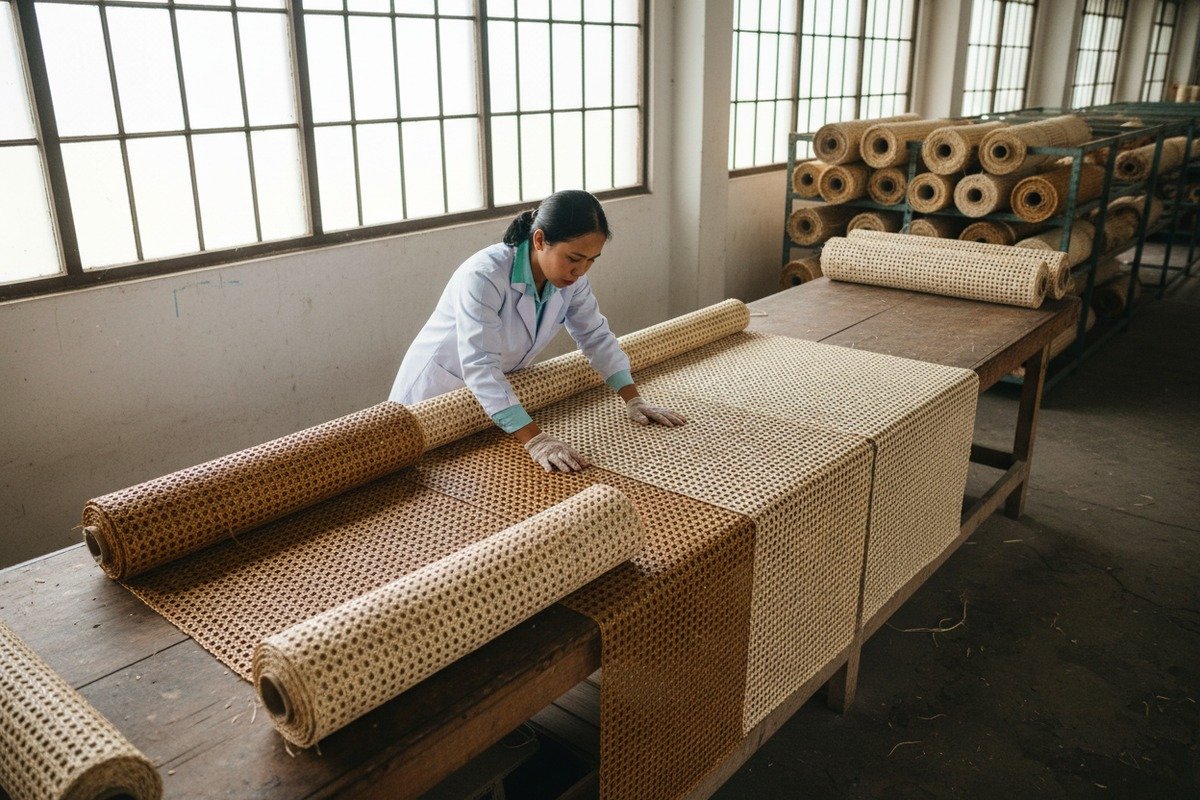
Jede Woche sortiert unser Qualitätskontrollteam Tausende von Metern Rattan-Geflecht in unserer indonesischen Verarbeitungsanlage rattan palm 1. Die Frage, die wir von Käufern am häufigsten hören? “Warum sieht diese Rolle etwas anders aus als die letzte?” Das ist eine berechtigte Sorge. Wenn Sie eine Marke für hochwertige Möbel aufbauen oder Materialien an Fabriken auf verschiedenen Kontinenten liefern, kann selbst eine subtile Farbverschiebung eine Bedrohung für Ihren Ruf darstellen.
Natürliche Farbvariationen in Rattan-Rohrgeflecht entstehen aus der organischen Natur der Rattanpalme selbst. Diese Variationen – von warmen Honig- bis zu hellen Strohtönen – verleihen Fertigprodukten authentischen Charakter und Tiefe. Rattan der Premium-Klasse minimiert Inkonsistenzen, während niedrigere Qualitäten ausgeprägtere, ungleichmäßige Färbungen aufweisen, die ein poliertes Aussehen beeinträchtigen können.
Dieser Artikel erklärt genau, wie diese Farbunterschiede entstehen, was sie für Ihre Projekte bedeuten und wie Sie damit umgehen können. Egal, ob Sie eine Möbelfabrik, ein Großhandelsunternehmen oder ein Innenarchitekturbüro leiten, unten finden Sie praktische Antworten.
Eine Lektion, die wir frühzeitig gelernt haben, als wir Rattan-Geflecht an europäische und amerikanische Möbelhersteller lieferten, ist diese: "Premium" bedeutet nicht "perfekt identisch". Es bedeutet bewusst konsistent. Viele unserer Kunden in den Niederlanden und Australien befürchteten zunächst, dass natürliche Abweichungen ihrem Markenimage schaden würden. Aber das wirkliche Risiko ist nicht die Abweichung selbst – es ist die unkontrollierte, zufällige Abweichung durch schlechte Beschaffung.
Um sicherzustellen, dass natürliche Farbvariationen das hochwertige Aussehen nicht beeinträchtigen, verwenden Sie AAA- oder A-Qualitätsrattan mit einem Feuchtigkeitsgehalt von 8–12%, fordern Sie Muster aus derselben Produktionscharge vor der Bestellung an und kombinieren Sie das Geflecht mit passenden Holztönen. Kontrollierte, subtile Variationen verbessern tatsächlich die wahrgenommene Qualität und Authentizität.
Das Bewertungssystem verstehen
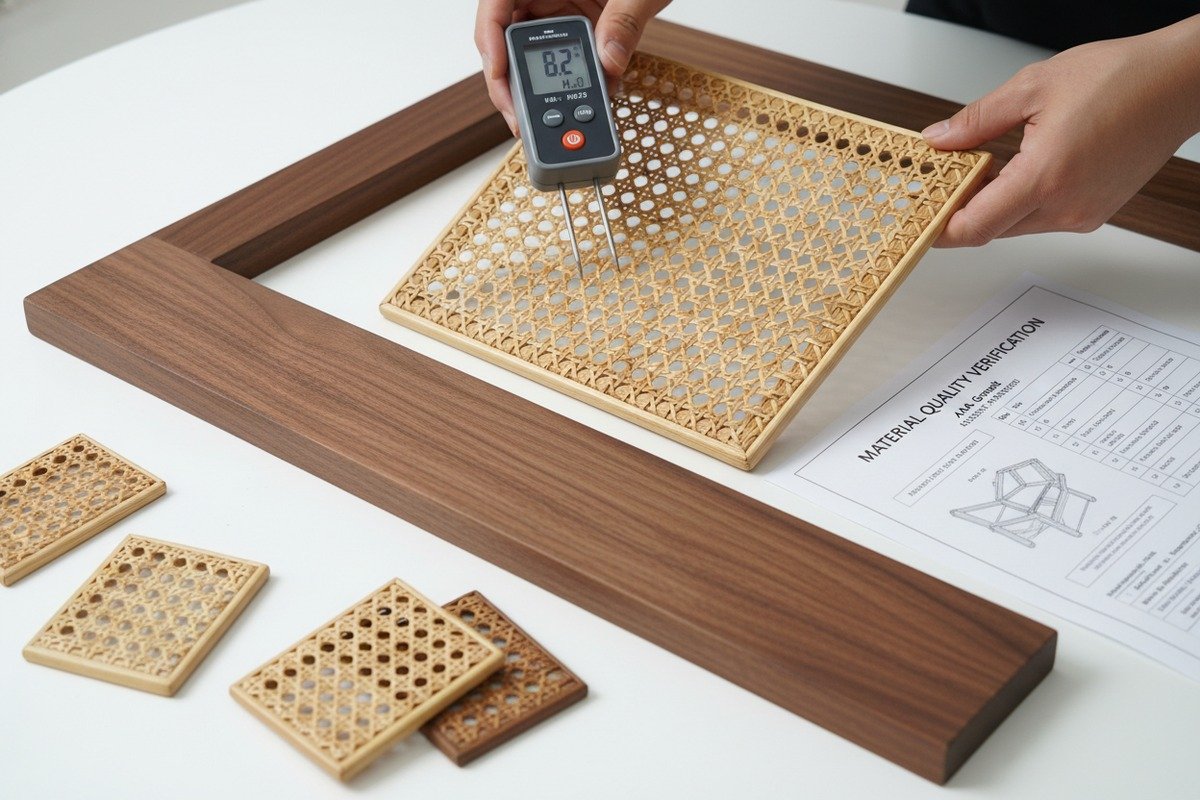
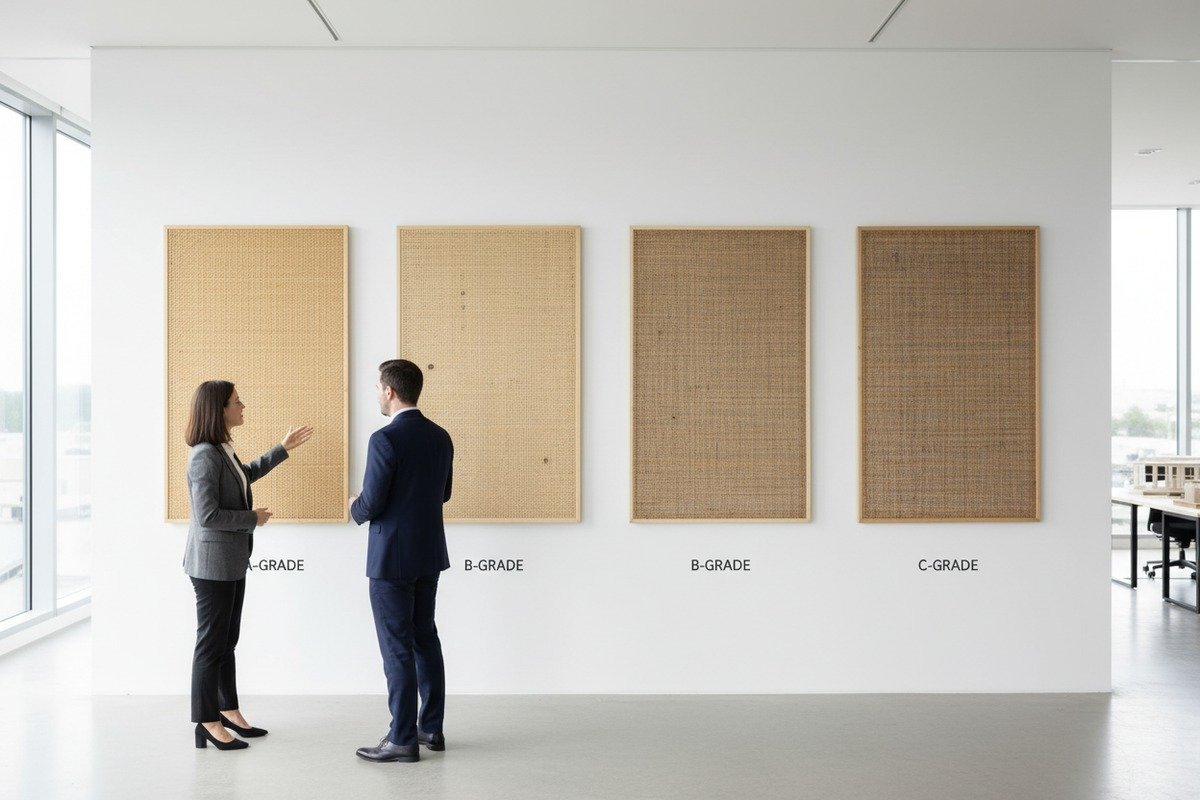
Nicht jedes Rattan ist gleich. Die Bewertungssystem 2 existiert speziell, um Käufern zu helfen, das Farbverhalten vorherzusagen. Hier ist eine kurze Aufschlüsselung, was jede Klasse für das Farbverhalten bedeutet:
| Qualität | Farbeigenschaften | Bester Anwendungsfall |
|---|---|---|
| AAA / A-Note | Reichhaltige, warme Honigtöne mit minimalen Abweichungen; glatte, feine Maserung | Hochwertige Möbel, Luxusschränke, Premium-Einzelhandelsdisplays |
| B-Klasse | Moderate Abweichungen; leichte Tonverschiebungen zwischen den Strängen | Mittelklasse-Möbel, Bohème- und rustikale Dekoration |
| C-Qualität | Stumpfe, fleckige, gräuliche Töne; ausgeprägte Inkonsistenz | Budget-Produkte, verdeckte Anwendungen, Bastelprojekte |
Warum die Feuchtigkeit für die Farbkonstanz wichtig ist
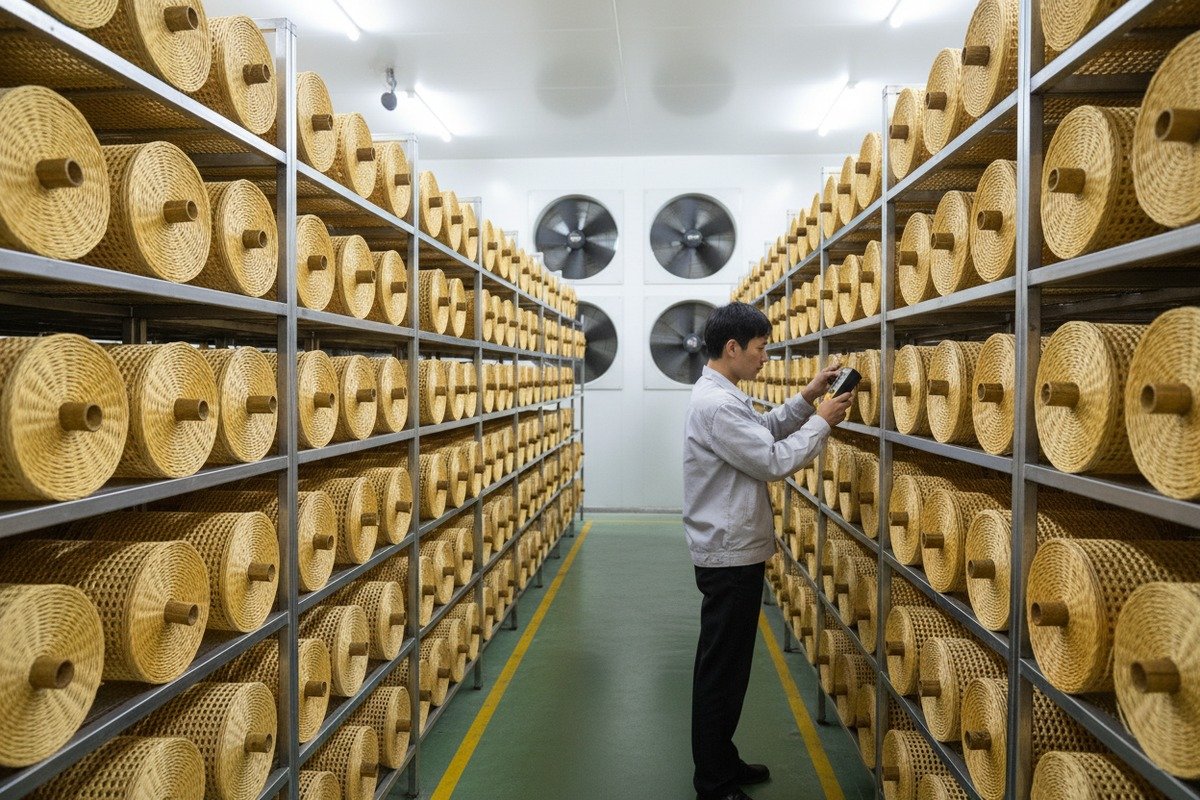
Wenn wir Rattan in unserer Anlage verarbeiten, ist die Feuchtigkeitskontrolle einer der kritischsten Schritte. Rattan, das auf 8–12 % Feuchtigkeit getrocknet ist, behält seine Farbe weitaus besser als ungleichmäßig getrocknetes Material. Ungleichmäßiges Trocknen erzeugt dunkle Flecken, gräuliche Stellen und ein fleckiges Aussehen, das keine Oberflächenbehandlung vollständig beheben kann.
Wenn Ihr Lieferant Ihnen nicht sagen kann, wie hoch der Feuchtigkeitsgehalt 3 ihres Geflechts, das ist ein Warnsignal. Fragen Sie danach. Messen Sie es bei Bedarf selbst. Ein einfacher Feuchtigkeitsmesser kostet sehr wenig und erspart enorme Kopfschmerzen im Nachhinein.
Passendes Rattan zu Ihrem Möbelrahmen
Farbwahrnehmung ist relativ. Das gleiche Stück Rattangeflecht kann gegen einen Nussbaumrahmen warm und elegant aussehen, aber gegen einen hellen Ahornrahmen ausgewaschen und billig. Hier ist eine allgemeine Paarungsanleitung:
| Rattan-Ton | Bestes Rahmenmaterial | Visueller Effekt |
|---|---|---|
| Tiefes Honig / Golden | Nussbaum, dunkle Eiche, Teakholz | Reichhaltiger Kontrast, traditionelle Eleganz |
| Helles Stroh / Creme | Weißeiche, Esche, Birke | Luftig, skandinavisch, zeitgenössisch |
| Halbgebleicht / blass | Weiß oder pastellfarbene Rahmen | Küstennah, böhmisch, sanft modern |
Praktische Schritte zum Schutz Ihres Premium-Looks
Bitten Sie zuerst immer um eine Vorproduktionsprobe aus der exakten Charge, die Sie bestellen möchten. Wir senden Chargenmuster an Kunden wie Ranoo in Thailand vor jeder Lieferung. Zweitens geben Sie Ihre Güteklasse klar in Ihrer Bestellung an. Drittens berücksichtigen Sie das Webmuster. Engere Webarten wie die klassische Radio-Geflecht 4 Zeigen Sie Farbkonsistenz deutlicher an. Lockerere, offenere Webarten können geringfügige Tonverschiebungen tatsächlich kaschieren. Lagern Sie Ihr Rattan schließlich vor der Installation an einem kühlen, trockenen Ort. Hitze- und Feuchtigkeitsschwankungen nach der Lieferung können die Farbe verändern, die Sie ursprünglich genehmigt haben.
Kann ich eine gleichbleibende Farbübereinstimmung für meine gesamte Großbestellung von natürlichem Rattan-Gewebe erwarten?
Das ist die Frage, die Einkaufsmanager nachts wachhält. Wir haben Containerladungen an Möbelfabriken in Spanien, den USA und der Türkei geliefert, und die Farbkonsistenz bei Großaufträgen ist immer ein Top-Drei-Anliegen. Die ehrliche Antwort erfordert einige Nuancen.
Perfekte Farbgleichmäßigkeit über eine gesamte Großbestellung von natürlicher Rattan-Geflecht ist nicht realistisch, da Rattan ein Naturmaterial mit inhärenten organischen Variationen ist. Durch die Bestellung aus einer einzigen Erntecharge, die Spezifikation von Premium-Qualitäten und die Zusammenarbeit mit einem Lieferanten, der eine Vorsortierung nach Farbton vornimmt, können Sie jedoch ein sehr hohes Maß an visueller Konsistenz erreichen.
Warum 100%ige Konsistenz unmöglich ist – und warum das in Ordnung ist
Rattan wächst in tropischen Wäldern 5. Jede Palme nimmt unterschiedliche Mengen an Sonnenlicht, Wasser und Bodennährstoffen auf. Selbst zwei Schilfrohre von derselben Pflanze können leichte Tonunterschiede aufweisen. Wenn Sie das auf eine Bestellung von 500 oder 1000 Metern hochrechnen, ist es wie die Erwartung, dass jeder Zentimeter identische Farbe hat, wie die Erwartung, dass jeder Apfel in einem Korb exakt den gleichen Rottton hat.
Aber hier ist die wichtige Unterscheidung: leichte Tonabweichungen innerhalb eines kontrollierten Bereichs ist sehr unterschiedlich von zufälligen, unvorhersehbaren Farbschwankungen. Das erste verleiht Charakter. Das zweite sieht schlampig aus.
Wie wir die Chargenkonsistenz verwalten
In unserer Verarbeitungsanlage unternehmen wir mehrere Schritte, um Farbabweichungen innerhalb einer einzigen Bestellung zu minimieren:
- Single-origin sourcing. Each batch comes from the same harvesting region and season.
- Color sorting. After drying, our team manually sorts strands into tonal groups before weaving.
- Controlled drying. Uniform kiln conditions ensure even moisture removal, which directly affects color.
- Sample approval. We send physical samples from the production batch before shipping.
Was Sie in Ihrer Bestellung angeben sollten
Many color issues arise not from bad materials, but from vague ordering. Be specific. Here is what to include:
| Order Specification | Why It Matters |
|---|---|
| Grade (AAA, A, B, C) | Directly determines color consistency range |
| Color preference (natural, semi-bleached, custom) | Prevents assumptions on both sides |
| Rollenbreite und -länge | Larger rolls from the same weaving run reduce roll-to-roll variation |
| Batch sample approval required | Bietet Ihnen einen visuellen Maßstab, bevor die Produktion beginnt |
| Akzeptable Variationstoleranz | Legt klare Erwartungen fest; z. B. "innerhalb des Tonbereichs von 10% des genehmigten Musters" |
Planung für Multi-Order-Projekte
Wenn sich Ihr Projekt über mehrere Bestellungen über mehrere Monate erstreckt, ist eine gewisse Farbabweichung zwischen den Lieferungen zu erwarten. In der Trockenzeit geerntetes Rattan sieht oft etwas anders aus als Rattan aus der Regenzeit. Unsere Empfehlung: Bestellen Sie nach Möglichkeit Material für Ihr gesamtes Projekt in einer einzigen Charge. Wenn dies nicht möglich ist, bitten Sie Ihren Lieferanten, Material aus derselben Ernte für zukünftige Bestellungen zu reservieren.
Einer unserer langjährigen Kunden in Australien bestellt aus diesem Grund seinen gesamten jährlichen Rattanbedarf in einer einzigen Lieferung. Dies verursacht zwar geringfügig höhere Lagerkosten, eliminiert aber vollständig die Probleme bei der Farbabstimmung.
Wie wird der natürliche Alterungsprozess meines Rattan-Geflechts die endgültige Farbe meiner fertigen Produkte beeinflussen?
Als wir anfingen, Rattan an Möbelhersteller im Nahen Osten und in Europa zu exportieren, lernten wir schnell, dass viele Käufer nur darüber nachdenken, wie Rattan am ersten Tag aussieht. Aber Rattan ist ein lebendiges Material. Es verändert sich über Monate und Jahre. Wenn man dies ignoriert, können Ihre Kunden überrascht sein – und nicht immer glücklich –, wenn ihre Möbel ein Jahr nach dem Kauf anders aussehen.
Natürliche Rattangeflechte vertiefen mit der Zeit allmählich ihre Farbe und entwickeln sattere goldbraune Töne und eine warme Patina. Sonnenlicht beschleunigt diesen Prozess, während Innenteile in schattigen Bereichen ihre ursprüngliche Honigfarbe länger behalten. Diese Alterung ist ein natürliches Merkmal von echtem Rattan und wird weithin als wünschenswert angesehen, da sie Vintage-Charakter und Tiefe verleiht.
Die Wissenschaft hinter der Farbveränderung
Die äußere Rinde von Rattan enthält natürliche Pigmente, die auf UV-Licht und Sauerstoff 6. reagieren. Mit der Zeit oxidieren diese Pigmente. Das Ergebnis ist eine allmähliche Verschiebung von helleren Stroh-Honig-Tönen zu tieferen Bernstein- und Goldbraun-Schattierungen. Dies ist derselbe Prozess, der antiken Rattanmöbeln ihre begehrte Wärme verleiht.
Die Geschwindigkeit dieser Veränderung hängt von drei Faktoren ab:
- Lichteinwirkung. Stücke in der Nähe von Fenstern oder in sonnendurchfluteten Räumen verändern sich schneller.
- Luftfeuchtigkeitsgehalt. Hohe Luftfeuchtigkeit kann Rattan ebenfalls schneller dunkler werden lassen.
- Oberflächenbehandlungen. Versiegeltes oder lackiertes Rattan altert langsamer, da die Beschichtung UV-Strahlung und Feuchtigkeit blockiert.
Was Ihre Kunden wissen sollten
Wenn Sie fertige Rattanmöbel verkaufen oder Materialien an Möbelmarken liefern, ist die Kommunikation über die Alterung unerlässlich. Stellen Sie es als Vorteil und nicht als Mangel dar. Viele Premium-Möbelmarken in Skandinavien und Japan vermarkten aktiv die Patinaentwicklung von Rattan Patinaentwicklung 7 als Teil der Produktgeschichte. Eine einfache Pflegekarte oder eine Produktbeschreibung – "Dieses natürliche Rattan entwickelt mit der Zeit eine warme Patina, die seinen Charakter unterstreicht" – setzt die richtige Erwartungshaltung.
Wie man die Alterung verlangsamt oder kontrolliert
Für Kunden, die möchten, dass ihr Rattan näher an seiner ursprünglichen Farbe bleibt, gibt es Optionen:
- UV-schützender Klarlack. Eine matte oder seidenmatte Klarlackierung mit UV-Inhibitoren verlangsamt die Farbveränderung erheblich.
- Innenaufstellung abseits direkter Sonneneinstrahlung. Einfach, aber effektiv.
- Klimakontrolle. Gleichbleibende Temperatur und Luftfeuchtigkeit verhindern beschleunigte Alterung.
Es ist jedoch erwähnenswert, dass viele Designer bewusst natürliches Rattan wählen weil es schön altert. Der Versuch, sein Aussehen einzufrieren, untergräbt einen seiner wichtigsten Verkaufsargumente.
Altern vs. Abbau
Es gibt einen entscheidenden Unterschied zwischen schönem Altern und Materialabbau. Altern bedeutet, dass die Farbe tiefer wird und die Oberfläche einen weichen Glanz entwickelt. Abbau bedeutet Rissbildung, Brüchigkeit, Schimmel oder strukturelle Schwäche. Abbau wird durch minderwertiges Material, übermäßige Feuchtigkeit oder Vernachlässigung verursacht – nicht durch normales Altern. Hochwertiges Rattan mit richtigem Feuchtigkeitsgehalt zum Zeitpunkt der Herstellung altert gut. Geringere Qualitäten mit ungleichmäßiger Feuchtigkeit können reißen oder sich verziehen, anstatt eine attraktive Patina zu entwickeln.
Sollte ich gebleichte oder natürliche Rattangeflechte wählen, wenn ich eine bestimmte Ästhetik für meine Marke beibehalten möchte?
Dies ist eine Entscheidung, die wir unseren Kunden fast täglich abnehmen. Unsere Produktionslinien verarbeiten sowohl natürliche als auch gebleichte Rattangeflechte, und die Wahl zwischen ihnen ist nicht nur eine Frage der persönlichen Vorliebe. Es ist eine strategische Markenentscheidung, die alles von der Kundenwahrnehmung bis zu den langfristigen Wartungskosten beeinflusst.
Wählen Sie natürliche Rattan-Gewebe, wenn Ihre Marke Wert auf organische Wärme, rustikale Authentizität und ein Material legt, das mit der Zeit Charakter entwickelt. Wählen Sie gebleichtes Rattan, wenn Sie eine hellere, gleichmäßigere Grundfarbe für eine zeitgenössische oder Küstenästhetik benötigen oder wenn Sie das Gewebe in einer individuellen Farbe färben möchten. Jede Option bedient eine eigene Markenerzählung.
Natürlich vs. Gebleicht: Ein Vergleich von Angesicht zu Angesicht
| Merkmal | Natural Rattan | Gebleichtes Rattan |
|---|---|---|
| Farbe | Warmes Honig, Stroh, Hellbraun | Weiß, blasses Creme, gleichmäßiger heller Ton |
| Farbvariation | Mäßige organische Variation | Minimale Variation |
| Alterungsverhalten | Vertieft sich zu einer goldbraunen Patina | Kann mit der Zeit ungleichmäßig vergilben |
| Färbbarkeit | Begrenzt; natürliche Pigmente widerstehen einigen Farbstoffen | Ausgezeichnet; dient als neutrale Basis für individuelle Farben |
| Stärke | Volle Integrität der Naturfaser | Leicht reduziert; Bleichen kann Fasern schwächen |
| Ästhetik | Rustikal, handwerklich, organisch, böhmisch | Modern, Küstenstil, Skandinavisch, Minimalistisch |
| Wartung | Gering; altert anmutig | Moderat; muss möglicherweise neu versiegelt werden, um Vergilbung zu verhindern |
| Preis | Standard | Leicht höher aufgrund zusätzlicher Verarbeitung |
Wenn Natur die richtige Wahl ist
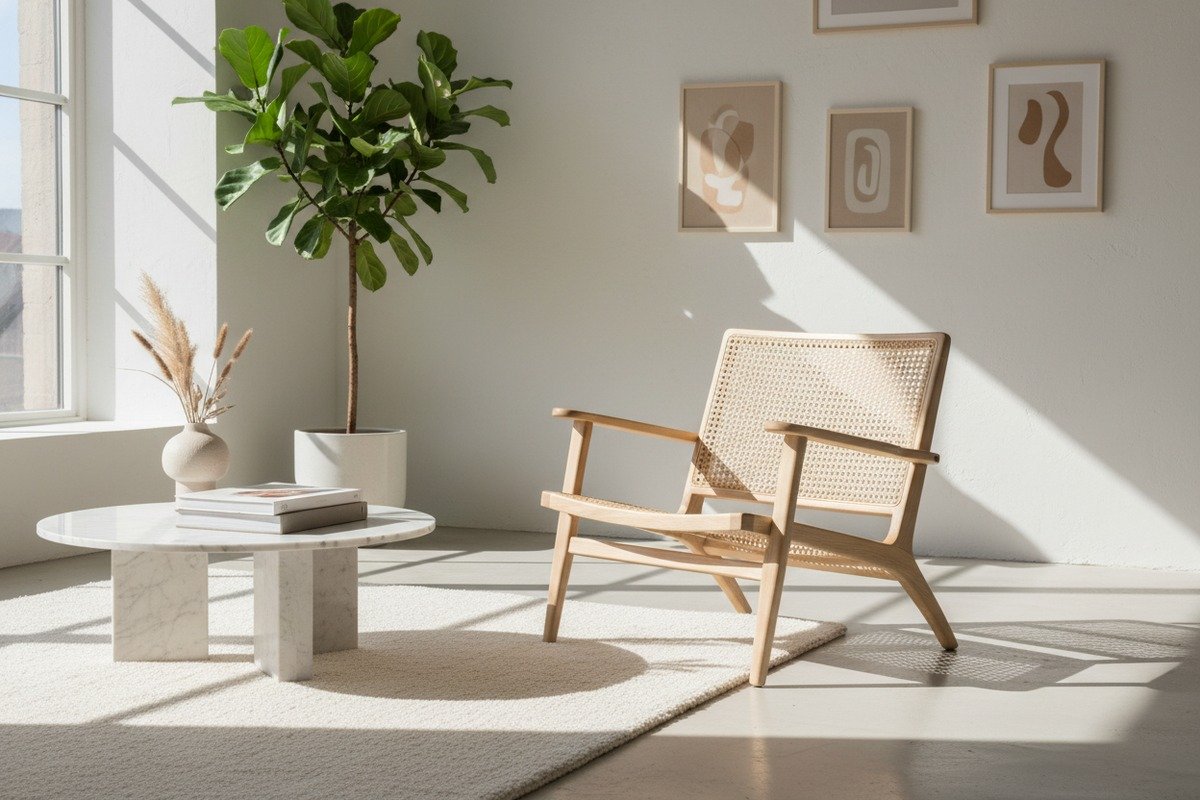
Natürliches Rattan funktioniert am besten, wenn sich Ihre Markenidentität auf Authentizität, Nachhaltigkeit oder traditionelle Handwerkskunst konzentriert. Die warmen Töne ergänzen reiche Holzrahmen, erdige Innenräume und Mid-Century-Modern-Ästhetik. Es passt wunderbar zu Materialien wie Leder, Leinen und Massivholz.
Viele unserer Kunden in den USA und Europa wählen natürliches Rattan, weil ihre Endkunden gezielt nach "echten" Materialien suchen. In einem Markt, der mit synthetischen Alternativen überschwemmt ist, vermittelt die organische Variation von natürlichem Rattan Echtheit. Es sagt: "Dies ist ein echtes Material von einer echten Pflanze."
Wann gebleicht mehr Sinn ergibt
Gebleichtes Rattan ist ideal für Marken, die einen sauberen, hellen, modernen Look anstreben. Möbelserien im Küstenstil, skandinavisch inspirierte Interieurs und Kindermöbel profitieren oft von dem blassen, gleichmäßigen Ton, den das Bleichen bietet.
Es ist auch die praktische Wahl, wenn Sie benutzerdefinierte Farben auftragen möchten. Gebleichtes Rattan nimmt Farbe viel gleichmäßiger an als natürliches Rattan. Wenn Ihre Marke eine bestimmte Pantone-Farbe in ihrer Produktlinie verwendet, erhalten Sie mit einer gebleichten Basis eine viel bessere Kontrolle über den endgültigen Farbton.
Die dritte Option: Halbgebleicht
Viele Käufer übersehen halbgebleichtes Rattan. Diese Option hellt den natürlichen Ton auf, ohne vollständig weiß zu werden. Es behält etwas von der organischen Wärme des natürlichen Rattans bei, bietet aber eine bessere Farbgleichmäßigkeit. Wir verzeichnen eine wachsende Nachfrage nach halbgebleichtem Geflecht von Kunden, die einen Mittelweg suchen – nicht zu rustikal, nicht zu steril.
Ein Wort zur Haltbarkeit
Das Bleichen beeinträchtigt die Faserstärke. Der chemische Prozess öffnet die Zellstruktur des Rattans leicht, was zu einer geringfügigen Reduzierung führen kann. Zugfestigkeit 8 um einen kleinen Betrag. Für die meisten Möbelanwendungen ist dieser Unterschied vernachlässigbar. Aber für Anwendungen mit hoher Belastung – wie Sitzflächen von täglich genutzten Stühlen – kann die volle Fasintegrität von natürlichem Rattan im Laufe der Zeit einen bedeutenden Vorteil bieten.
Unsere Empfehlung: Besprechen Sie Ihre spezifische Anwendung mit Ihrem Lieferanten. Wenn Sie dekorative Schrankeinsätze herstellen, ist gebleichtes Rattan vollkommen in Ordnung. Wenn Sie Sitzflächen für ein Restaurant flechten, sind natürliches oder halbgebleichtes Rattan möglicherweise die sicherere Wahl.
Conclusion
Natürliche Farbvariationen in Rattan-Rohrgeflecht 9 sind keine zu fürchtenden Fehler – sie sind Merkmale, die es zu verstehen und zu managen gilt. Beschaffen Sie die richtige Qualität, kommunizieren Sie mit Ihrem Lieferanten und lassen Sie die organische Schönheit von Rattan für Ihre Marke arbeiten.
Fußnoten
1. Beschreibt die Taxonomie, Biologie und Ökologie von Rattanpalmen. ↩︎
2. Umreißt die Anforderungen und Klassifizierung für die Einstufung von Rattanstäbchenmaterialien. ↩︎
3. Erklärt die Bedeutung des Feuchtigkeitsgehalts und der Trocknung bei der Rattanverarbeitung. ↩︎
4. Beschreibt verschiedene Rattan-Webarten, einschließlich Mustern und Anwendungen. ↩︎
5. Beschreibt den natürlichen Lebensraum und den ökologischen Kontext von Rattan. ↩︎
6. Erklärt, wie ultraviolettes Licht und Sauerstoff zur natürlichen Alterung und Farbveränderung von Holz beitragen. ↩︎
7. Ersetzt durch einen maßgeblichen Wikipedia-Artikel über Patina, der explizit deren Entstehung auf Holzmöbeln und durch Umwelteinflüsse erwähnt. ↩︎
8. Liefert wissenschaftliche Daten und Analysen zur Zugfestigkeit von Rattansfasern. ↩︎
9. Bietet einen umfassenden Überblick über Rattan, das Material für Rohrstuhlgeflecht. ↩︎
 English
  Español de México
  العربية
  Deutsch
  Français
  Русский