
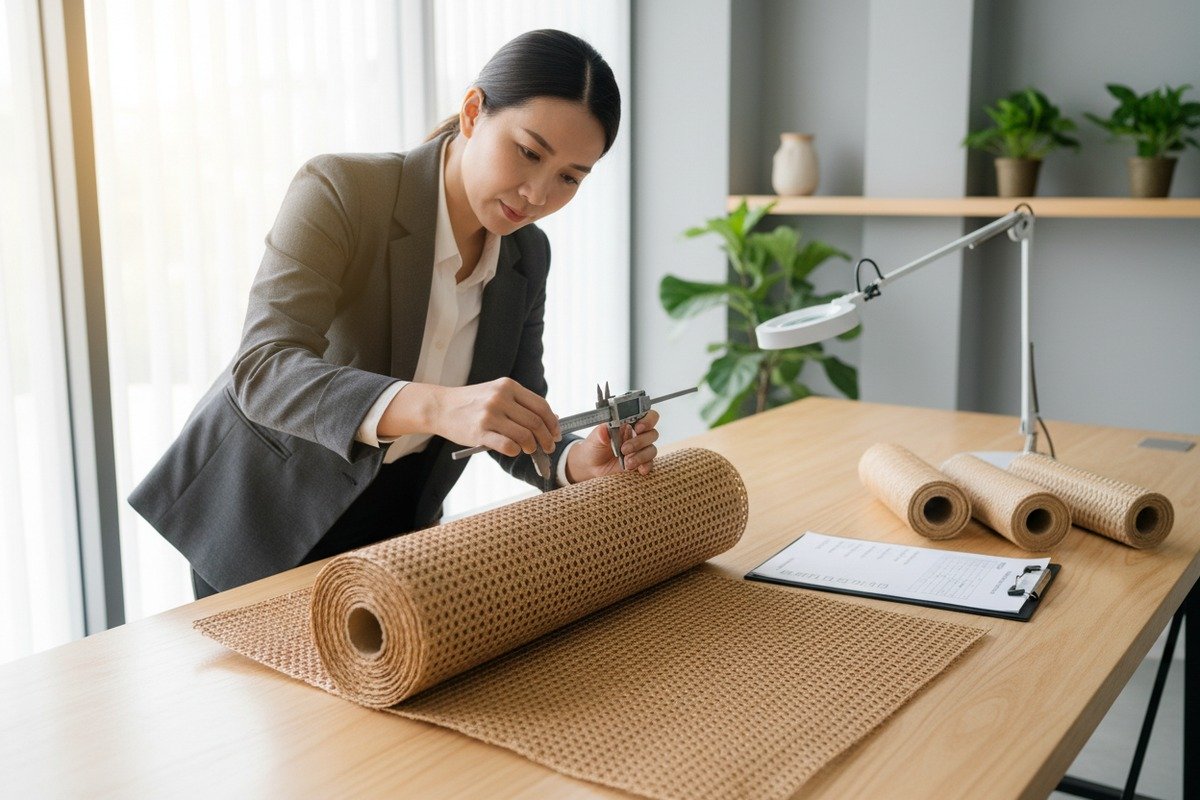
Jedes Jahr bearbeiten wir in unserer Produktion Tausende von Aufträgen für Rattanrohrgeflecht, und wir sehen aus erster Hand, wie eine einzige Charge minderwertigen Materials ein ganzes Möbelprojekt zum Scheitern bringen kann. Qualitätszertifizierungen 1. Die falsche Güteklasse gerät in eine Lieferung. Das Geflecht lockert sich nach der Installation. Die Farbe ändert sich von Rolle zu Rolle. Diese Probleme kosten Käufer Zeit, Geld und Kundenvertrauen – und sie sind weitaus häufiger, als die meisten Leute denken.
Um minderwertiges natürliches Rattanrohrgeflecht zu vermeiden, sollten Käufer das Bewertungssystem des Lieferanten überprüfen, physische Muster vor Großbestellungen anfordern, auf gleichmäßige Geflechtspannung und konsistente Strangdicke prüfen, den richtigen Feuchtigkeitsgehalt und Trocknungsprozesse bestätigen und von seriösen Fabriken mit rückverfolgbaren indonesischen Rohstoffen beziehen.
Dieser Leitfaden beschreibt die genauen Schritte, die Sie in jeder Phase der Beschaffung unternehmen müssen – von der Bewertung der Qualitätsstufen bis zur Sicherstellung, dass Ihre Rollen den internationalen Versand überstehen. Lassen Sie uns jeden kritischen Kontrollpunkt durchgehen, damit Sie nie wieder mit minderwertigem Rattan dastehen.
Woran erkenne ich, ob das von mir bezogene natürliche Rattan-Rohrgeflecht wirklich von A-Qualität ist?
Wenn wir Rattan in unserer Verarbeitungsanlage in Indonesien einstufen, durchläuft jede Charge mehrere Sortierrunden, bevor sie das A-Label erhält. Doch viele Käufer erhalten Material mit der Bezeichnung "Klasse A", das eindeutig darunter liegt. Die Lücke zwischen dem, was Lieferanten behaupten, und dem, was tatsächlich ankommt, ist eine der größten Frustrationen in dieser Branche.
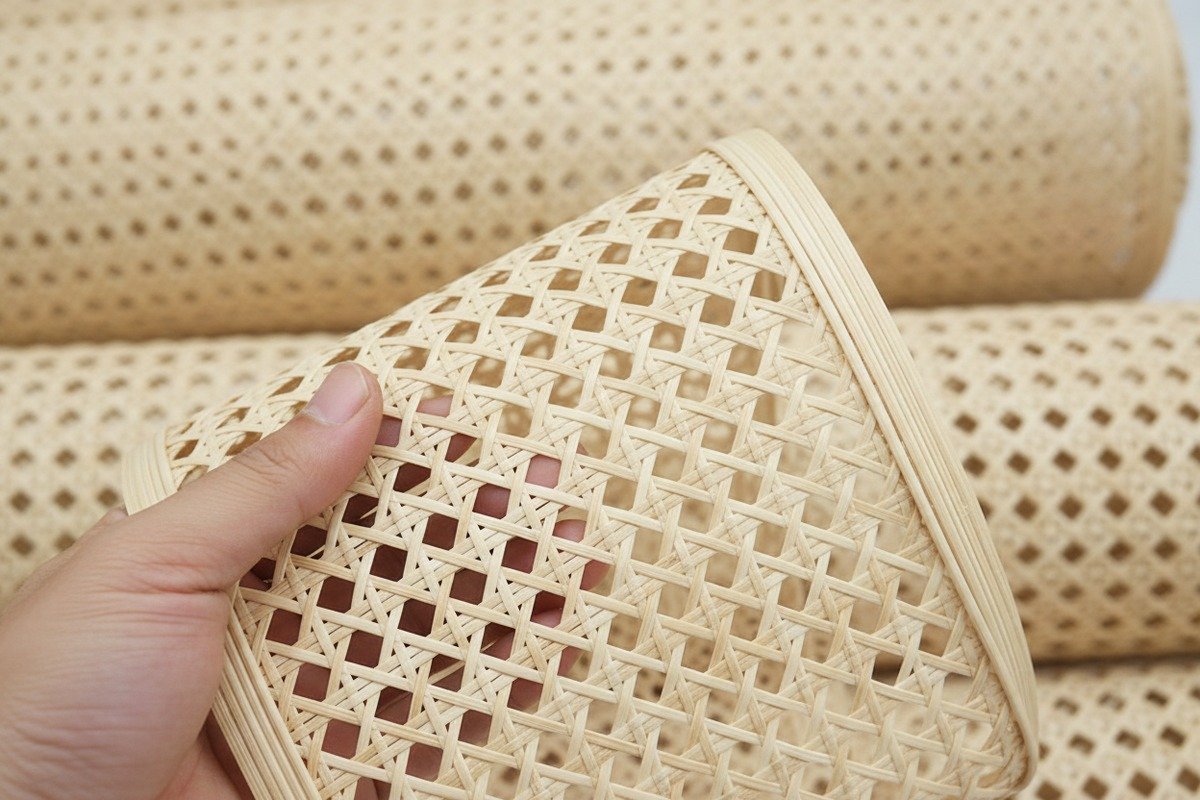
Echtes Rattanrohrgeflecht der Güteklasse A zeichnet sich durch glatte, gleichmäßige Stränge mit konsistenter Dicke, einen hellen und gleichmäßigen Farbton, hohe Elastizität, die sich ohne Risse biegen lässt, enge und symmetrische Weböffnungen sowie minimale sichtbare Knoten oder Oberflächenfehler auf der gesamten Rolle aus.
Verständnis der Einstufungsskala
Rattanrohrgeflecht wird von A (oder AAA für das Feinste) bis D eingestuft. Jede Klasse spiegelt reale Unterschiede in Aussehen, Haltbarkeit und Leistung wider. Hier ist eine Aufschlüsselung:
| Qualität | Oberflächenqualität | Elastizität | Farbkonstanz | Beste Verwendung |
|---|---|---|---|---|
| AAA/A | Glatt, keine Risse, feine Textur | Hoch – biegt sich frei, ohne zu brechen | Sehr gleichmäßig, hellbeige bis strohgelb | Premium-Möbel, Restaurierung, hochwertige Innenausstattung |
| B | Etwas gröber, leichte Oberflächenrisse | Gut – etwas Widerstand beim Biegen | Geringfügige Abweichungen akzeptabel | Mittelklasse-Möbel, Kosten-Nutzen-Verhältnis |
| C | Rauere Textur, sichtbare Unvollkommenheiten | Durchschnittlich – begrenzte Flexibilität vor Spannungsspuren | Deutliche Farbverschiebungen zwischen den Strängen | Günstige Möbel, verdeckte Paneele |
| D | Rau, spröde, häufige Mängel | Schlecht – reißt leicht | Unregelmäßige, dunkle Flecken üblich | Nur kostengünstige Einwegprodukte |
Checkliste zur visuellen Inspektion
Sie brauchen kein Labor, um Qualitätsprobleme zu erkennen. Beginnen Sie mit Augen und Händen. Halten Sie das Gurtband ins natürliche Licht. Material der Klasse A zeigt gleichmäßigen Abstand zwischen den gewebten Strängen. Es sollten keine Lücken, Knäuel oder lose Fäden vorhanden sein. Fahren Sie mit den Fingern über die Oberfläche. Sie sollte sich glatt anfühlen – nicht rau oder splitternd.
Überprüfen Sie die Strangbreite. In einer Qualitätsrolle sollte jeder Strang nahezu identisch dick sein. Abweichungen von mehr als einem halben Millimeter innerhalb derselben Rolle sind ein Warnsignal. Achten Sie auch auf die Knoten – die natürlichen Gelenke im Rattanstamms 2. Bei Gurtband der Klasse A sind die Knoten klein, gleichmäßig verteilt und unterbrechen nicht das Webmuster.
Der Flexibilitätstest
Dies ist einer der einfachsten und aufschlussreichsten Tests. Nehmen Sie einen Strang oder einen kleinen Abschnitt des Gurtbandes und biegen Sie ihn vorsichtig. Gurtband der Klasse A biegt sich sanft und federt zurück. Wenn es reißt, splittert oder gebogen bleibt, ist das Material entweder eine niedrigere Klasse oder wurde falsch getrocknet. Sprödes Rattan bedeutet oft, dass der Feuchtigkeitsgehalt während der Verarbeitung zu niedrig war oder das Rohmaterial zu spät geerntet wurde.
Farbe als Qualitätsindikator
Natürliches Rattan hat einen warmen, hellbeige bis strohgelben Ton. Gurtband der Klasse A behält diese Farbe über eine ganze Rolle hinweg bei. Wenn Sie 3 Meter abrollen und dunkle Flecken, grünliche Tönungen oder starkes Aufhellen sehen, deutet dies auf eine ungleichmäßige Verarbeitung oder gemischte Rohmaterialchargen hin. Einige Lieferanten bleichen Gurtband niedrigerer Qualität, um es heller und gleichmäßiger erscheinen zu lassen. Gebleichtes Material kann zunächst gut aussehen, wird aber tendenziell schneller spröde.
Our Qualitätskontrollteam 3 prüft die Farbkonsistenz unter standardisierter Beleuchtung, bevor eine Rolle versendet wird. Wir empfehlen Käufern, dasselbe zu tun, wenn sie Muster bewerten – vergleichen Sie Abschnitte aus verschiedenen Teilen der Rolle, nicht nur die sichtbare äußere Schicht.
Worauf sollte ich bei Preisvergleichen von verschiedenen Rattan-Materialgroßhändlern achten?
Im Laufe der Jahre haben wir beobachtet, wie Käufer dem niedrigsten Preis nachjagten, nur um neu bestellen zu müssen – manchmal zweimal –, weil die erste Lieferung unbrauchbar war. Der Preis ist wichtig, aber im Rattanhandel verbirgt sich hinter einem Angebot, das zu gut aussieht, fast immer etwas. Unser Verkaufsteam beantwortet täglich Fragen zur Preisgestaltung, und die Muster sind bemerkenswert konsistent.
Rote Flaggen beim Vergleich von Rattan-Großhandelspreisen sind Angebote, die deutlich unter dem Marktdurchschnitt liegen, ohne klare Begründung, die Weigerung, Muster bereitzustellen, vage oder fehlende Gütespezifikationen, keine Informationen über den Ursprung der Rohmaterialien, gebündelte Versandkosten, die die tatsächlichen Produktpreise verschleiern, und Lieferanten, die keine Fotos ihrer Produktionsanlagen oder Qualitätszertifikate vorlegen können.
Preis vs. Noten-Fehlübersetzung
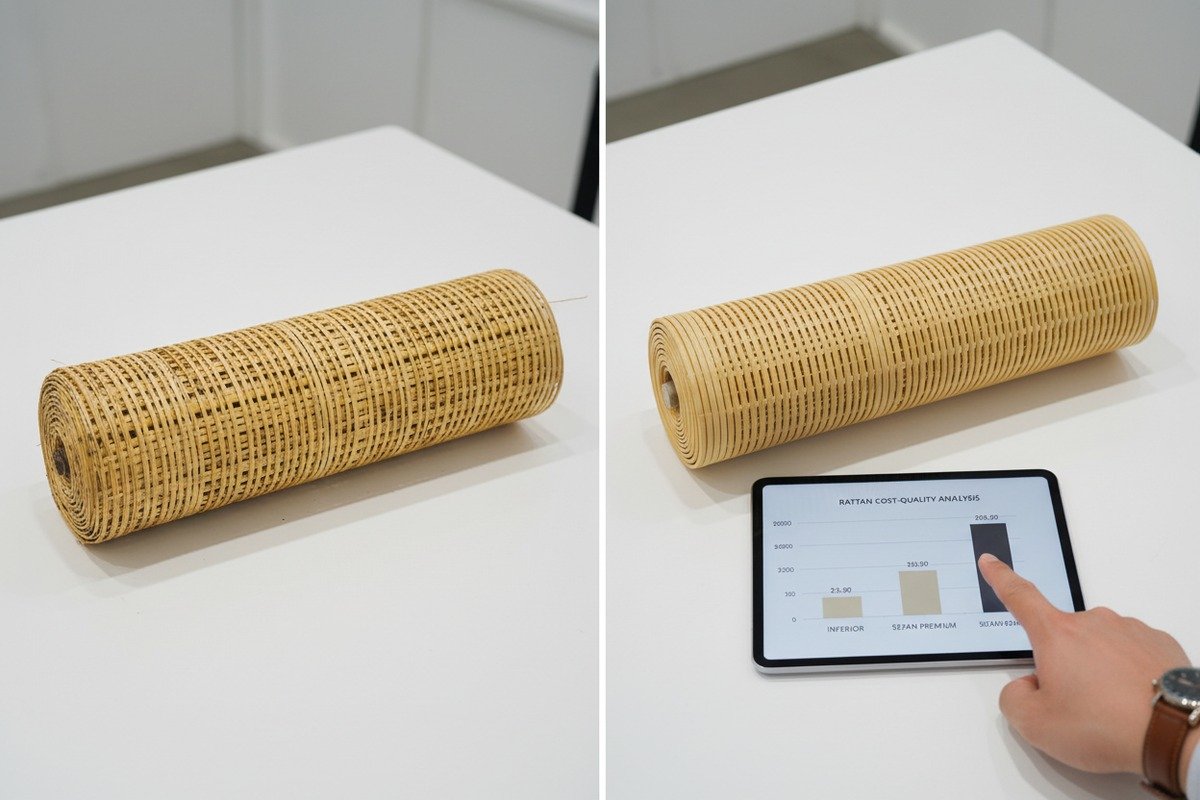
Der häufigste Trick in der Rattan-Lieferkette ist einfach: ein Produkt der Klasse B oder C als Klasse A kennzeichnen und einen mittleren Preis verlangen. Rückverfolgbarkeit von Rohmaterialien 6 Der Käufer denkt, er hat ein Schnäppchen gemacht. Der Lieferant steckt eine gesunde Marge auf billiges Material ein. Um dies zu vermeiden, fordern Sie immer eine Preisaufschlüsselung an, die direkt mit der Klasse verbunden ist.
Hier ist eine allgemeine Preisbeziehung, die Sie verstehen sollten:
| Qualität | Relativer Preisbereich | Was Sie erwarten sollten |
|---|---|---|
| AAA/A | Höchste | Makellose Webart, volle Elastizität, gleichmäßige Farbe, Premium-Verpackung |
| B | 15–30% niedriger als A | Kleinere Unvollkommenheiten akzeptabel, solide Leistung |
| C | 30–50% niedriger als A | Sichtbare Mängel, nur für nicht sichtbare Anwendungen geeignet |
| D | 50–70% niedriger als A | Hohe Fehlerrate, kurze Lebensdauer, nicht für Qualitätsmöbel geeignet |
Wenn ein Lieferant "Note A" zu einem Preis anbietet, der in den Bereich der Note C fällt, fragen Sie nach dem Grund. Es kann einen legitimen Grund geben – Überbestände, Saisonabschluss, ein neuer Lieferant, der Beziehungen aufbaut. Aber öfter ist die Note überhöht.
Fragen, die Sie vor der Bestellung stellen sollten
Vergleichen Sie nicht nur Zahlen auf einem Angebotsblatt. Stellen Sie diese spezifischen Fragen:
- Wo wird das Rohmaterial für Rattan geerntet? Indonesisches Rattan, insbesondere aus Sulawesi und Kalimantan, gilt weithin als Premium-Quelle.
- Was ist die genaue Note und wie definieren Sie sie? Bewertungsstandards können zwischen den Lieferanten variieren. Holen Sie sich deren Kriterien schriftlich.
- Können Sie drei bis fünf physische Muster aus verschiedenen Produktionschargen senden? Ein Muster kann handverlesen sein. Mehrere Muster zeigen Konsistenz.
- Was ist Ihre Fehlertoleranz? Selbst gute Fabriken haben eine geringe Fehlerrate. Seriöse Lieferanten geben ihre offen an – typischerweise unter 3% für Note A.
- Bieten Sie eine Qualitätsgarantie oder eine Ersatzrichtlinie an?
Versteckte Kosten, die Vergleiche verzerren
Einige Lieferanten zitieren einen niedrigen Preis pro Meter, laden aber Kosten in andere Posten. Verpackungsgebühren, Palettierungsgebühren, Binnenfracht zum Hafen und Dokumentationsgebühren können 10–20% zu den Endkosten hinzufügen. Wenn wir bei Seafan Rattan Angebote machen, listen wir jede Kostenposition auf, damit Käufer Äpfel mit Äpfeln vergleichen können. Bitten Sie jeden Lieferanten, dasselbe zu tun.
Achten Sie auch auf Manipulationen der Mindestbestellmenge. Eine sehr niedrige MOQ mit einem sehr niedrigen Preis bedeutet oft, dass der Lieferant Ihre Bestellung mit anderen zusammenlegt, was das Risiko von gemischten Chargen und inkonsistenter Qualität birgt.
Wie stelle ich sicher, dass meine Rattanrollen richtig verpackt sind, um Transportschäden beim internationalen Versand zu vermeiden?
Diese Lektion haben wir uns in der Anfangszeit unserer Exportgeschichte hart erarbeitet. Ein Container mit perfekt sortiertem Rattangewebe kam in den Niederlanden mit zerdrückten Kanten und Schimmelflecken an – alles, weil die Verpackung nicht für eine 30-tägige Seereise durch tropische Feuchtigkeitszonen ausgelegt war. Seitdem sind unsere Verpackungsprotokolle eines der Dinge, auf die unsere Kunden bei der Zusammenarbeit mit uns am meisten vertrauen.
Um Transportschäden zu vermeiden, müssen Rattanrollen in feuchtigkeitsbeständige Kunststofffolie eingewickelt, mit Kantenschutz aus Pappe verstärkt, mit gleichmäßiger Spannung gebündelt, auf erhöhten Paletten platziert werden, um Bodenfeuchtigkeit zu vermeiden, und in Containern mit ausreichender Belüftung oder Trockenmittelpaketen versendet werden, um die Luftfeuchtigkeit während des Transports zu kontrollieren.
Warum Rattan im Transport anfällig ist
Natürliches Rattan ist ein organisches Material. Es nimmt Feuchtigkeit auf und gibt sie je nach Umgebung ab. In einem Schiffscontainer, der den Äquator überquert, können die Temperaturen 60 °C (140 °F) überschreiten und die Luftfeuchtigkeit über 90 % steigen. Dies schafft ideale Bedingungen für Schimmelwachstum, Verzug und Faserschädigung. Selbst eine gut sortierte Rolle der Güteklasse A kann ruiniert ankommen, wenn die Verpackung versagt.
Wichtige Verpackungsschichten
Betrachten Sie die Verpackung als ein System, nicht als einen einzelnen Schritt. Jede Schicht erfüllt einen bestimmten Zweck:
| Verpackungsschicht | Zweck | Worauf Sie achten sollten |
|---|---|---|
| Innere Plastikfolie | Feuchtigkeitsbarriere gegen Nässe | Muss versiegelt sein, nicht nur lose gewickelt |
| Papprolle als Kern | Verhindert, dass die Rolle kollabiert | Sollte steif sein, kein dünnes Recyclingmaterial |
| Kantenschutz | Schützen die Rollenkanten vor Stößen | Ecken und Enden abgedeckt |
| Äußere gewebte Tasche oder Karton | Physischer Schutz und Stapelfestigkeit | Keine Risse, ordnungsgemäß versiegelt |
| Palettenhöhe | Hält Rollen vom Containerboden fern | Mindestens 10 cm Abstand zum Boden |
| Trockenmittelpakete 7 | Nimmt überschüssige Feuchtigkeit im Container auf | Ausreichende Menge für das Container-Volumen |
Belüftung vs. versiegelte Container
Es gibt eine Debatte unter Spediteuren, ob belüftete Container oder versiegelte Container mit Trockenmitteln verwendet werden sollen. Beide können funktionieren. Belüftete Container lassen Luftzirkulation zu, was die Kondensation reduziert. Sie lassen aber auch Feuchtigkeit von außen in feuchten Hafenumgebungen herein. Versiegelte Container mit ausreichenden Trockenmittelpaketen geben Ihnen mehr Kontrolle, erfordern aber eine sorgfältige Berechnung des benötigten Trockenmittelvolumens.
Unsere Empfehlung: Für Sendungen, die länger als 14 Tage dauern, verwenden Sie versiegelte Container mit industriellen Trockenmittelpaketen. Für kürzere Routen – zum Beispiel von Südostasien in nahegelegene Märkte – sind belüftete Container normalerweise ausreichend.
Inspektionspunkte vor dem Versand
Überprüfen Sie Folgendes, bevor ein Container versiegelt wird:
- Rollendurchmesser ist konstant. Ungleichmäßige Rollen verschieben sich während des Transports und zerquetschen sich gegenseitig.
- Keine feuchten Stellen auf der Verpackung. Wenn die Rollen vor dem Verladen in einem feuchten Lager gelagert wurden, ist bereits Feuchtigkeit eingeschlossen.
- Spanngurtspannung ist gleichmäßig. Zu locker und die Rollen verschieben sich. Zu fest und das Gewebe wird komprimiert, was bleibende Spuren hinterlässt.
- Containerboden ist trocken und sauber. Restwasser oder Schmutz von vorheriger Ladung kann Probleme verursachen.
Wir senden jedem Kunden vor dem Schließen der Containertüren Fotos und Videos vor dem Versand. Wenn Ihr Lieferant dies nicht anbietet, fordern Sie es an. Es dauert fünf Minuten und kann Tausende von Dollar sparen.
Welche Fragen sollte ich stellen, um die gleichbleibende Qualität der Produktion meiner Rattanfabrik zu überprüfen?
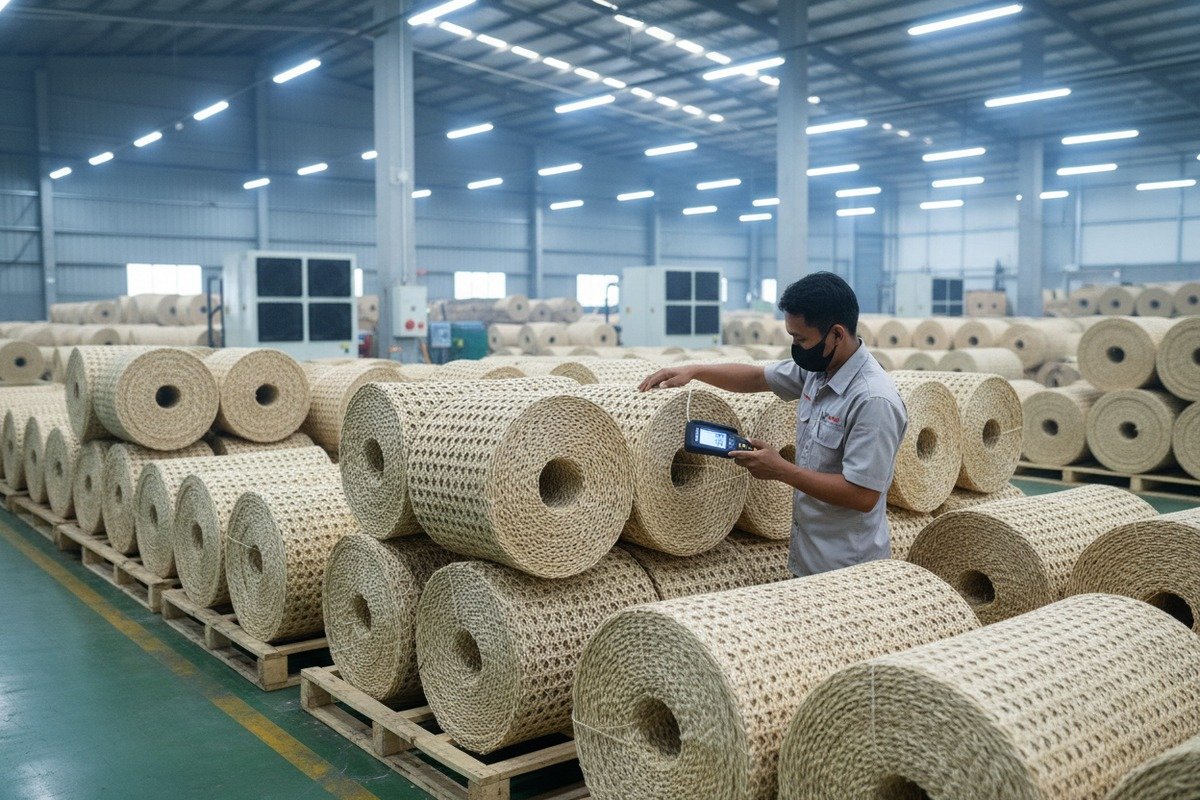
Der Betrieb von drei Fabriken und die Koordination mit über 30 Partnerbetrieben haben unserem Team gezeigt, dass Konsistenz schwieriger zu erreichen ist als Qualität selbst. Jede Fabrik kann eine perfekte Rolle produzieren. Die Herausforderung besteht darin, die tausendste Rolle nach dem gleichen Standard zu produzieren. Wenn wir eine neue Partnerfabrik aufnehmen, unterziehen wir sie einer Konsistenzprüfung, bevor sie eine einzige Kundenbestellung bearbeiten.
Um die Produktionskonsistenz zu überprüfen, erkundigen Sie sich bei Ihrer Rattanfabrik nach deren Rohstoffbeschaffungs- und Sortierprozess, Chargenverfolgungssystemen, Fehlerrate pro Produktionslauf, Qualitätskontrollpunkten in jeder Phase, Schulungsprotokollen für Mitarbeiter, Mustervergleichen über mehrere Chargen hinweg und ob sie Endkontrollen vor dem Versand durchführen.
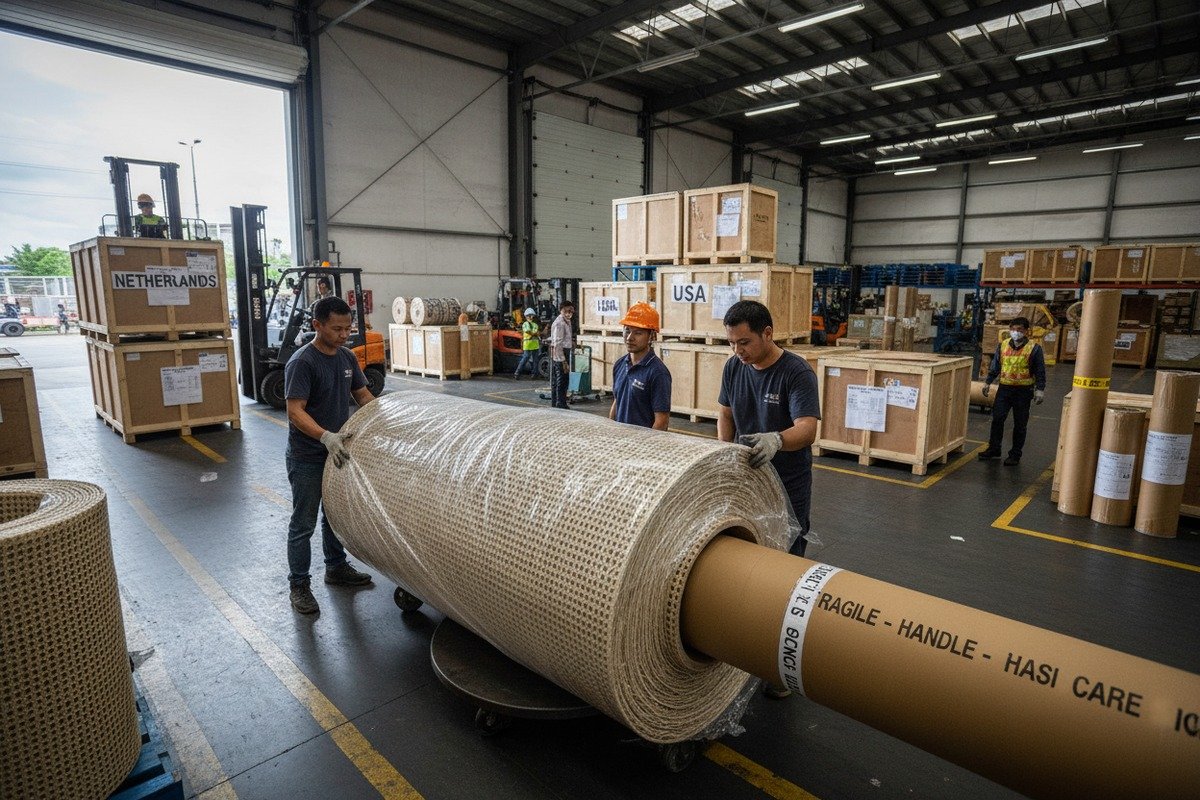
Beginnen Sie mit der Rückverfolgbarkeit von Rohmaterialien
Konsistenz beginnt, bevor das Weben beginnt. Fragen Sie, woher die Fabrik ihr rohes Rattanstroh bezieht. Rückverfolgbarkeit von Rohmaterialien 8 Kaufen sie jede Saison aus denselben Erntegebieten? Haben sie langfristige Verträge mit Rattanbauern oder Sammlern? Fabriken, die auf Spotmärkten kaufen – wer auch immer diese Woche den billigsten Bestand hat – werden wildly inkonsistente Rohmaterialien haben, und diese Inkonsistenz fließt direkt in das fertige Gewebe ein.
In unserer indonesischen Verarbeitungsanlage beziehen wir aus speziellen Rattanplantagen in Sulawesi und Kalimantan. Die Rattanpalmen werden im optimalen Reifezeitfenster von 5 bis 7 Jahren geerntet. Dies gibt uns die Kontrolle über das Rohmaterial, noch bevor es die Spalt- und Sortierstufe erreicht.
Wichtige Fragen an Ihre Fabrik
Hier ist eine strukturierte Liste von Fragen, gegliedert nach Produktionsstufe:
Rohmaterialphase:
- Beziehen Sie Rattan aus derselben Region und von denselben Lieferanten?
- Wie sortieren Sie rohes Rattan vor der Verarbeitung nach Durchmesser, Farbe und Reifegrad?
- Welchen Prozentsatz des eingehenden Rohmaterials lehnen Sie ab?
Verarbeitungsphase:
- Erfolgt das Schälen und Spalten manuell, maschinell oder beides?
- Wie kontrollieren Sie die Toleranzen bei Strangbreite und -dicke?
- Was ist Ihr Trocknungsprozess? Sonnentrocknung, Ofentrocknung oder Lufttrocknung? Welchen Feuchtigkeitsgehalt streben Sie an?
Webphase:
- Wie stellen Sie sicher, dass die Webspannung über eine ganze Rolle gleichmäßig bleibt?
- Kontrollieren Sie während des Webens oder erst nach Fertigstellung?
- Wie gehen Sie mit einem Webfehler um, der mitten in der Rolle gefunden wird?
Endkontrollphase:
- Haben Sie ein eigenes QS-Team, das von den Produktionsmitarbeitern getrennt ist?
- Was ist Ihre dokumentierte Fehlerrate pro Charge?
- Können Sie Inspektionsberichte mit Fotos für jede Sendung bereitstellen?
Manuelle vs. maschinelle Verarbeitung und Konsistenz
Das ist es wert, verstanden zu werden. Die manuelle Verarbeitung – bei der Facharbeiter Rattanrohr von Hand spalten und Stränge nach Augenmaß sortieren – ergibt wunderschöne, erstklassige Bespannung. Sie hängt jedoch stark vom Können und der Aufmerksamkeit der einzelnen Arbeiter ab. Wenn ein Schlüsselarbeiter abwesend oder müde ist, kann die Qualität leiden.
Die maschinelle Verarbeitung bietet eine gleichmäßigere Ausgabe hinsichtlich Strangbreite und -dicke. Sie ist schneller und weniger abhängig von individuellen Fähigkeiten. Maschinen können jedoch subtile Qualitätsprobleme übersehen, die ein erfahrener Handsortierer erkennen würde, wie z. B. innere Sprödigkeit oder feine Oberflächenrisse.
Die besten Fabriken – und das ist unser Ziel – verwenden einen hybriden Ansatz. Maschinen übernehmen das Spalten und die anfängliche Größenbestimmung. Facharbeiter übernehmen die endgültige Sortierung, Einstufung und Webprüfung. Dies gleicht Geschwindigkeit, Konsistenz und Qualität aus.
So erkennen Sie Inkonsistenzen bei verschiedenen Bestellungen
Selbst nachdem Sie eine Fabrik geprüft haben, überwachen Sie die Konsistenz im Laufe der Zeit. Bewahren Sie eine Probe von jeder Bestellung auf. Wenn die nächste Lieferung eintrifft, vergleichen Sie das neue Material Seite an Seite mit Ihrer aufbewahrten Probe. Prüfen Sie Farbe, Strangbreite, Webdichte und Flexibilität. Wenn Sie eine Abweichung feststellen, sprechen Sie diese sofort an. Kleine Verschiebungen können sich im Laufe der Zeit summieren, bis das Material nicht mehr Ihren Standards entspricht.
Wir unterhalten in unserem Hauptsitz in Foshan eine Musterbibliothek genau zu diesem Zweck. Jede Produktionscharge hat eine entsprechende Probe, die mit Datum, Chargennummer und Güteklasse gespeichert ist. Dies erleichtert die Rückverfolgung und Behebung von Konsistenzproblemen, die ein Kunde anspricht.
Conclusion
Die Beschaffung von Qualität natural rattan cane webbing 10 erfordert Aufmerksamkeit für Güteklassen, Preisaufrichtigkeit, Verpackungsintegrität und Produktionskonsistenz. Verwenden Sie die Checklisten und Fragen in diesem Leitfaden, um jede von Ihnen aufgegebene Bestellung zu schützen.
Fußnoten
1. Erläutert den Zweck und die Vorteile der Zertifizierung nach ISO 9001 für Qualitätsmanagementsysteme. ↩︎
2. Beschreibt die biologischen Merkmale und die Struktur des Rattan-Stammes. ↩︎
3. Erklärt die Rolle und Bedeutung der Qualitätskontrolle in der Fertigung. ↩︎
4. Wikipedia-Artikel über Naturfasern, der deren Eigenschaften, einschließlich Elastizität, diskutiert. ↩︎
5. Beschreibt Standards für den Holzfeuchtegehalt und Trocknungsgrade, die für Holz relevant sind. ↩︎
6. Erklärt die Bedeutung der Rückverfolgbarkeit von Rohstoffen in globalen Lieferketten, die für die Beschaffung direkt relevant ist. ↩︎
7. Erklärt die Funktion und Arten von Trockenmitteln, die in Versandcontainern verwendet werden. ↩︎
8. Erklärt die Bedeutung und Vorteile der Rückverfolgbarkeit von Rohstoffen in globalen Lieferketten. ↩︎
9. Umreißt bewährte Verfahren zur Gewährleistung einer gleichbleibenden Qualität in Fertigungsprozessen. ↩︎
10. Bietet wissenschaftlichen Kontext und Eigenschaften von natürlichem Rattan. ↩︎

 English
  Español de México
  العربية
  Deutsch
  Français
  Русский