
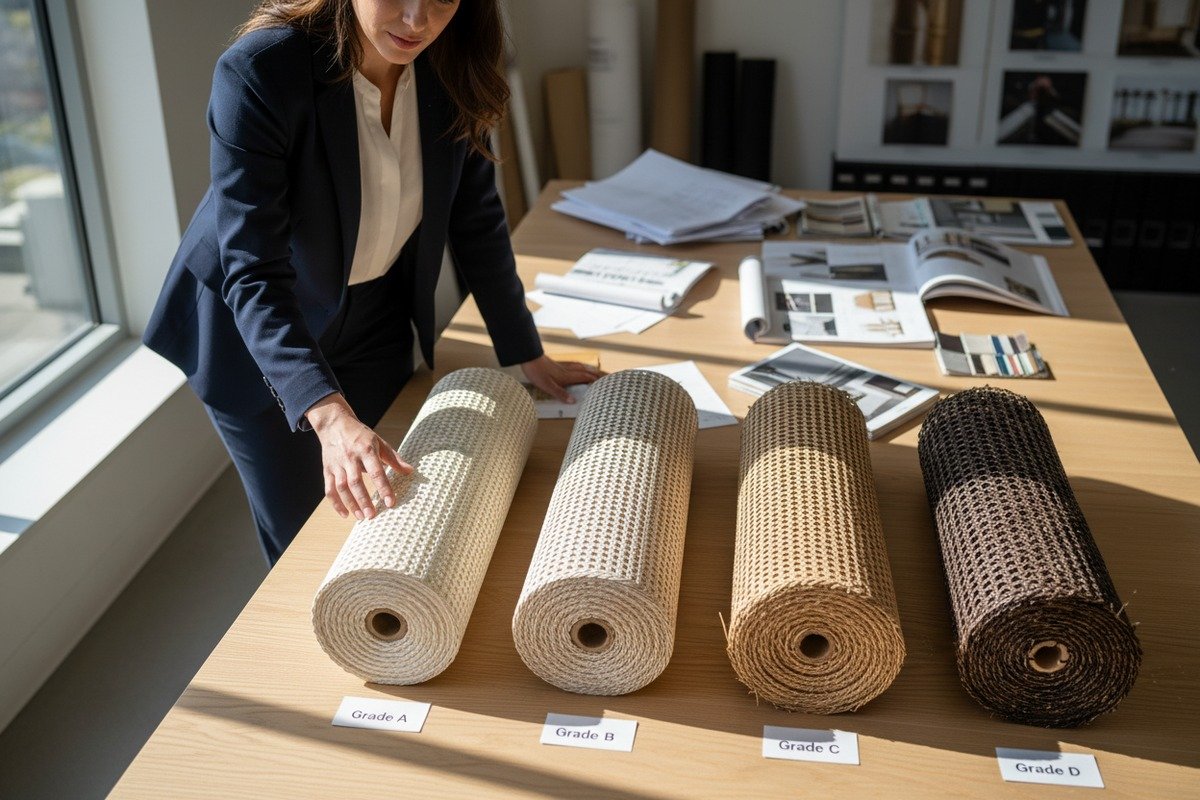
Jedes Jahr lehnen wir Qualitätskontrollteam 1 in Indonesien sortiert Tausende von Rattan-Rohrgeflecht 2 Rollen, bevor sie überhaupt einen Versandcontainer erreichen. Die häufigste Beschwerde, die wir von neuen Käufern hören? Sie bezahlten für Klasse A, erhielten aber etwas, das wie Klasse C aussah und sich auch so anfühlte. Diese Diskrepanz verschwendet Geld, verzögert Projekte und zerstört das Vertrauen zwischen Käufer und Lieferant. Das Problem ist real und es kostet die Möbelindustrie 3 jährlich Millionen.
Um Rattanrohrgeflecht der Klassen A, B, C und D zu vergleichen, bewerten Sie fünf Schlüsselkriterien: Oberflächenglätte, Anzahl der Mängel, Elastizität, Zähigkeit und Farbgleichmäßigkeit. Klasse A weist eine glatte, nahezu fehlerfreie Oberfläche mit ausgezeichneter Flexibilität auf, während Klasse D raue Texturen, sichtbare Risse und geringe Haltbarkeit aufweist.
Unten erklären wir genau, wie Sie jede Rattan-Klasse inspizieren, auswählen und überprüfen, damit Sie jedes Mal mit Zuversicht einkaufen.
Wie kann ich bei meiner Inspektion optisch zwischen Rattan-Rohrgeflecht der Güteklasse A und geringerer Qualität unterscheiden?
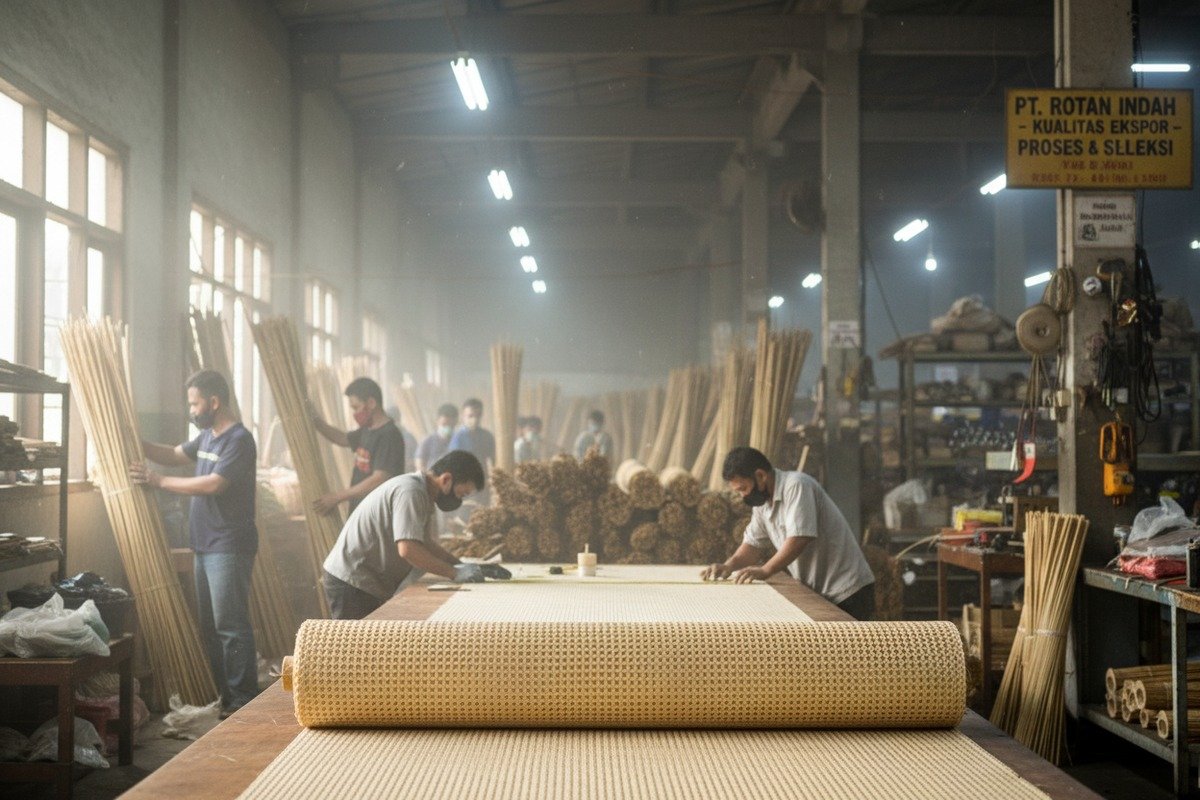
Wenn wir Käufer durch unsere Rattanverarbeitungsanlage in Kalimantan führen, ist die erste Lektion immer, Augen und Hände zusammen zu benutzen. Viele Einkaufsmanager verlassen sich nur auf Fotos. Fotos können täuschen. Echte Inspektion erfordert ein System.
Um die Güteklasse A von niedrigeren Güteklassen visuell zu unterscheiden, untersuchen Sie die Oberfläche auf Glätte und Weiße, prüfen Sie auf Risse oder dunkle Flecken und testen Sie die Gleichmäßigkeit der Stränge über die gesamte Rolle. Güteklasse A weist eine gleichmäßige, saubere Oberfläche ohne sichtbare Mängel auf, während niedrigere Güteklassen zunehmend rauere Texturen und mehr Schönheitsfehler aufweisen.
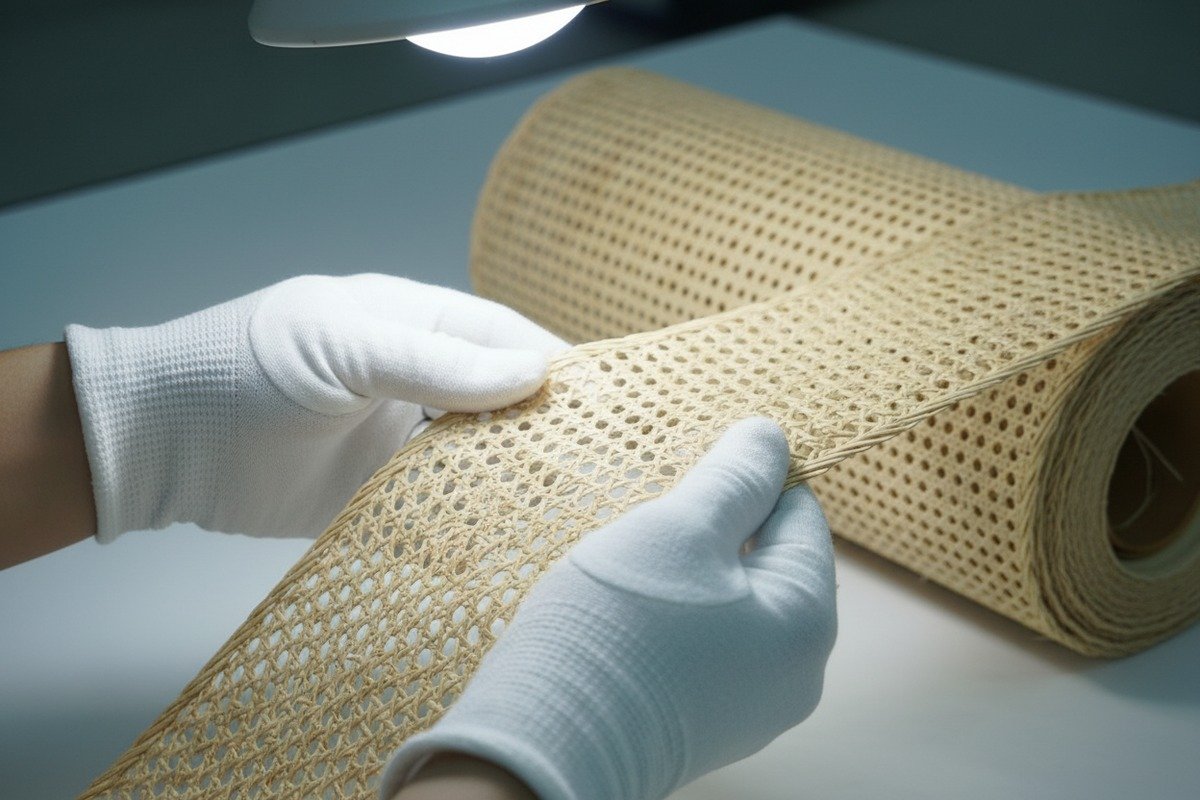
Beginnen Sie mit der Oberfläche
Die äußere Rinde von Rattan erzählt die ganze Geschichte. Oberflächenglätte 4 Rattan der Klasse A stammt von der feinsten äußeren Rinde. Es fühlt sich seidig unter den Fingern an. Streichen Sie mit der Handfläche über das Blatt. Wenn Sie Unebenheiten, Haken oder raue Stellen spüren, sehen Sie wahrscheinlich Rattan der Klasse B oder darunter.
Oberflächen der Klassen C und D sind merklich gröber. Sie können die Rauheit sehen, ohne sie zu berühren. Dunkle Flecken, Knotenmarkierungen und kleine Risse erscheinen über das Gewebe. Diese Mängel sind nicht nur kosmetisch. Sie signalisieren eine schwächere Faserstruktur darunter.
Überprüfen Sie die Konsistenz der Strangdicke
Ziehen Sie die Rolle auf und betrachten Sie die einzelnen Stränge. Bei Rattan der Klasse A ist jeder Strang fast identisch in Breite und Dicke. Das Gewebe sieht dicht und gleichmäßig aus. Bei niedrigeren Klassen variieren die Stränge. Einige sind dicker. Einige sind dünner. Dies erzeugt ein ungleichmäßiges Webmuster.
Verwenden Sie den Biegetest
Nehmen Sie einen einzelnen Strang und biegen Sie ihn vorsichtig. Biegetest 5 Rattan der Klasse A biegt sich glatt, ohne zu reißen. Klasse B kann eine leichte Spannungsspur aufweisen. Klasse C reißt oft leicht. Klasse D bricht oder splittert.
Farbe erzählt eine Geschichte
Natürliches Rattan der Güteklasse A hat einen gleichmäßigen strohweißen oder hellcremigen Ton. Mit sinkenden Noten nimmt die Farbvariation zu. Braune Flecken, grüne Streifen und ungleichmäßiges Vergilben sind bei den Klassen C und D üblich.
| Visueller Indikator | Güteklasse A | Güteklasse B | Güteklasse C | Klasse D |
|---|---|---|---|---|
| Oberflächengefühl | Seidig glatt | Leicht rau | Rau | Sehr rau |
| Sichtbare Mängel | Keine | Kleine Flecken | Risse, dunkle Flecken | Viele Risse, Spalten |
| Gleichmäßigkeit der Stränge | Hochgradig konsistent | Größtenteils einheitlich | Merklich uneben | Unregelmäßig durchgehend |
| Farbton | Saubere Creme/Weiß | Leichte Variation | Fleckige Färbung | Ungleichmäßige, dunkle Flecken |
| Biegeverhalten | Sanfte Biegung | Leichte Spannungslinie | Leichte Rissbildung | Bricht oder splittert |
Fordern Sie physische Muster an, bevor Sie bestellen
Wir empfehlen Käufern immer, mindestens drei Musterstücke von verschiedenen Rollen anzufordern, bevor sie eine Großbestellung aufgeben. Fotografien komprimieren Details und glätten die Textur. Wenn Sie das Gurtband in der Hand halten, enthüllt es alles, was ein Bildschirm nicht kann. Wenn wir Muster an unsere Kunden in den Niederlanden oder Australien versenden, legen wir ein Stück jeder Güteklasse bei, damit sie es nebeneinander vergleichen können.
Achten Sie auf inkonsistente Güteklassen-Etiketten
Nicht jeder Lieferant folgt der gleichen Güteklassenskala. Einige verwenden AAA als Marketing-Premium über der Standard-A-Güte. Andere kennzeichnen B-Güte-Material als "A-Minus". Unsere Fabrik verwendet ein standardisiertes Vier-Stufen-System 6 im Einklang mit den Normen der indonesischen Rattanindustrie. Bitten Sie Ihren Lieferanten immer, seine Güteklassifizierung schriftlich zu definieren.
Welche Rattan-Qualität sollte ich wählen, um hochwertige Qualität mit meinem spezifischen Projektbudget in Einklang zu bringen?
Unser Verkaufsteam beantwortet diese Frage fast täglich von Möbelherstellern in der Türkei, Großhändlern in Spanien und Baustofflieferanten in ganz Südostasien. Das Budget spielt eine Rolle. Aber auch der Ruf des Endprodukts.
Für die meisten gewerblichen Möbel bietet die Klasse B das beste Gleichgewicht zwischen Qualität und Kosten. Sie hat eine gute Elastizität, geringfügige Mängel, die bei normaler Betrachtungsentfernung unsichtbar sind, und deutlich niedrigere Preise als Klasse A. Klasse A ist für Luxus- oder gut sichtbare Stücke reserviert. Verwenden Sie Klasse C nur für verdeckte oder strukturelle Anwendungen.

Passen Sie die Klasse an die Anwendung an
Nicht jedes Möbelstück benötigt die Güteklasse A. Der Sitz eines Esszimmerstuhls, der aus Armlänge sichtbar ist? Güteklasse A ist sinnvoll. Die Rückwand eines Schranks, der an einer Wand steht? Güteklasse B oder sogar C ist in Ordnung. Entscheidend ist die Anpassung der Materialqualität an Sichtbarkeit und Beanspruchung.
Verstehen Sie die Preisunterschiede
Die Preise variieren je nach Lieferant, Breite und Oberflächenbehandlung. Aber das allgemeine Muster ist klar. Güteklasse A hat einen Aufpreis. Güteklasse B kostet typischerweise 20–35% weniger als A. Güteklasse C fällt weiter ab. Güteklasse D ist die billigste, aber selten für sichtbare Anwendungen geeignet.
| Qualität | Typischer Anwendungsfall | Relative Kosten | Empfohlen für |
|---|---|---|---|
| A / AAA | Luxusmöbel, Restaurierung, Designermöbel | Höchste ($112+ pro Meter bei 24" Breite) | High-End-Marken, sichtbare Oberflächen |
| B | Objektmöbel, mittelpreisiger Einzelhandel | 20–35% weniger als A | Möbelhersteller, Großhändler |
| C | Budgetmöbel, verdeckte Paneele, Rückwand | 40–55% weniger als A | Kostenorientierte Projekte, nicht sichtbare Bereiche |
| D | Einwegartikel, interne Polsterung | Niedrigste | Nicht-ästhetische Produkte mit kurzer Lebensdauer |
Berücksichtigen Sie die Oberflächenart in Ihrem Budget
Gebleichtes Rattan beginnt weißer und passt gut zu modernen, minimalistischen Designs mit hellen Hölzern wie Eiche oder Esche. Natürliches Rattan hat wärmere Töne und passt gut zu Nussbaum oder Mahagoni. Gebleichte Gurtbänder kosten aufgrund des Dampf- und chemischen Behandlungsverfahrens etwas mehr. Wenn Ihr Kunde einen makellosen weißen Look wünscht, berücksichtigen Sie dies in den Gesamtkosten des Materials.
Denken Sie an die Lebensdauer, nicht nur an den Preis
Ein häufiger Fehler, den wir sehen, ist, dass Käufer die Klasse C wählen, um Geld bei einem Produkt zu sparen, das jahrelang halten soll. Die Risse und die geringe Elastizität der Klasse C bedeuten einen schnelleren Verschleiß. Die Ersatzkosten summieren sich. Für Möbel, die dem täglichen Gebrauch standhalten müssen – Stühle, Kopfteile, Schranktüren – empfehlen wir mindestens die Klasse B.
Der "kostengünstige" Sweet Spot
Nach unserer Erfahrung mit dem Versand in über ein Dutzend Länder ist die Klasse B der Sweet Spot für die meisten B2B-Käufer. Sie bietet eine saubere Ästhetik zu moderaten Kosten. Viele unserer Stammkunden in den USA und Australien standardisieren auf Klasse B für ihre gesamte Produktlinie und steigen nur für Flaggschiff-Kollektionen auf Klasse A um.
Ein Kunde in Thailand, ein Einkaufsmanager, der Rattan-Rohrgeflecht für ein Hotelmöbelprojekt beschaffte, bat zunächst um ausschließlich Klasse A. Nach gemeinsamer Prüfung von Mustern und Budgets einigten wir uns auf Klasse A für Lobby-Möbel und Klasse B für Gästezimmer-Stücke. Das Ergebnis? Eine Kostenreduzierung um 25%, ohne sichtbaren Qualitätsunterschied in den Gästezimmern.
Wie überprüfe ich, ob die erhaltene Rattan-Qualitätsstufe den Qualitätsstandards entspricht, für die ich bezahlt habe?
Nach Jahren der Bearbeitung von Reklamationen und Streitigkeiten von Käufern, die falsch zugeordnete Klassen erhielten, entwickelte unser Qualitätssicherungsteam ein Verifizierungsprotokoll, das wir nun mit jedem neuen Kunden teilen. Vertrauen ist wichtig. Aber Verifizierung ist unerlässlich.
Überprüfen Sie die Rattan-Qualität, indem Sie die erhaltenen Waren mit vorab genehmigten physischen Mustern vergleichen, die Oberflächenglätte prüfen, die Flexibilität der Stränge von Hand testen, sichtbare Mängel pro Quadratmeter zählen und die Ergebnisse mit Fotos dokumentieren. Fordern Sie für große Bestellungen eine Qualitätszertifizierung und eine Inspektion durch Dritte an, um Fehlkennzeichnungen zu vermeiden.
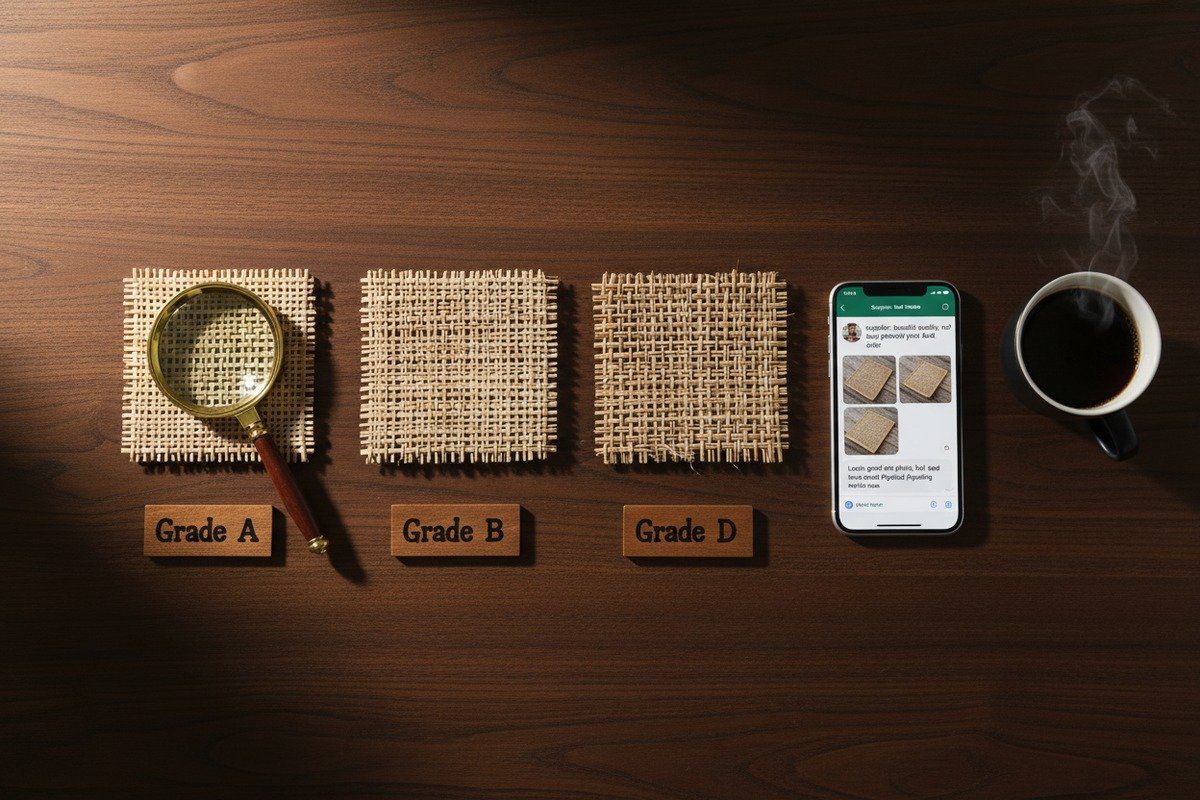
Bewahren Sie genehmigte Muster als Ihren Maßstab auf
Bevor eine Großbestellung unser Werk verlässt, senden wir Produktionsmuster zur Genehmigung durch den Käufer. Bewahren Sie diese Muster auf. Wenn die Lieferung eintrifft, legen Sie Ihr genehmigtes Muster neben ein Stück aus der neuen Charge. Vergleichen Sie Farbe, Textur und Webart. Jede signifikante Abweichung ist ein Grund für eine Reklamation.
Führen Sie eine Mängelzählung durch
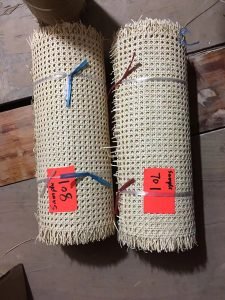
Wählen Sie drei zufällige Rollen aus der Lieferung aus. Rollen Sie jeweils einen Meter ab. Zählen Sie jeden sichtbaren Mangel: Risse, dunkle Flecken, raue Stellen, ungleichmäßige Stränge. Klasse A sollte null bis eine geringfügige Unvollkommenheit pro Quadratmeter aufweisen. Klasse B erlaubt zwei bis fünf geringfügige Mängel. Alles darüber hinaus deutet auf eine niedrigere Klasse als angegeben hin.
Der Flex-Test bei Erhalt
Biegen Sie einen Strang aus der neuen Lieferung. Vergleichen Sie seine Widerstandsfähigkeit und Rückstellung mit Ihrem Referenzmuster. Klasse A federt sauber zurück. Wenn das neue Material reißt oder eine Falte behält, handelt es sich möglicherweise um Material der Klasse C, das als A gekennzeichnet ist.
Dokumentieren Sie alles mit Fotos
Machen Sie Nahaufnahmen von allen gefundenen Mängeln. Fügen Sie ein Lineal oder eine Münze zur Skalierung hinzu. Fotografieren Sie die Versandetiketten und Klassenmarkierungen auf jeder Rolle. Diese Dokumentation ist entscheidend, wenn Sie einen Qualitätsstreit einreichen müssen.
Zertifizierungen anfordern
Seriöse Lieferanten stellen mit jeder Bestellung eine Qualitätszertifizierung aus. In unserer Anlage ist jede Rolle mit ihrer Qualität, dem Produktionsdatum und der Chargennummer gekennzeichnet. Wir bieten auch FSC-Zertifizierung 8 für Käufer an, die einen Nachweis für nachhaltige Beschaffung benötigen. Wenn ein Lieferant keine Dokumentation vorlegen kann, ist dies ein Warnsignal.
Drittanbieterinspektion für Großaufträge nutzen
Bei Lieferungen im Wert von $10.000 oder mehr sollten Sie die Beauftragung eines unabhängigen Inspektionsdienstes 9. in Erwägung ziehen. Unternehmen wie SGS oder Bureau Veritas können vor dem Versand das Lager des Lieferanten besuchen und die Qualitätsangaben in Ihrem Namen überprüfen. Wir begrüßen unabhängige Inspektoren in unseren Anlagen, da dies langfristiges Vertrauen aufbaut.
Häufige Fehlkennzeichnungs-Warnsignale
Achten Sie auf diese Warnzeichen:
- Der Preis erscheint für die angegebene Qualität zu niedrig.
- Der Lieferant vermeidet es, physische Muster zu versenden.
- Farbe oder Textur variieren stark zwischen den Rollen derselben Lieferung.
- Keine Chargennummern oder Qualitätskennzeichnungen auf einzelnen Rollen.
- Der Lieferant verwendet nicht standardisierte Qualitätsbegriffe wie "Super A" oder "Premium Plus" ohne klare Definitionen.
Welche spezifischen Unterschiede in Bezug auf Haltbarkeit und Farbkonstanz kann ich zwischen Materialien der Klasse A und Klasse C erwarten?
Wenn wir in unserer Verarbeitungsanlage nebeneinanderliegende Alterungstests durchführen, wird der Unterschied zwischen Klasse A und Klasse C unübersehbar. Dies sind keine geringfügigen kosmetischen Unterschiede. Sie beeinträchtigen die Lebensdauer des Produkts, die Kundenzufriedenheit und den Ruf Ihrer Marke.
Rattan der Güteklasse A hält bei richtiger Pflege 8–15 Jahre, behält über die Zeit eine gleichmäßige Farbe und widersteht Rissen unter täglicher Belastung. Güteklasse C hält typischerweise 2–5 Jahre, zeigt innerhalb von Monaten ungleichmäßige Vergilbung und Verblassen und entwickelt unter mäßiger Beanspruchung sichtbare Risse aufgrund geringerer Faserqualität und Elastizität.
Haltbarkeit im täglichen Gebrauch
Rattan der Klasse A hat eine ausgezeichnete Elastizität und Zähigkeit 10. Es absorbiert die Belastung durch Sitzen, Anlehnen und Biegen, ohne seine Form zu verlieren. Die Fasern sind dicht und eng gepackt. Fasern der Klasse C sind lockerer. Sie reißen unter wiederholtem Druck schneller. An einem Esszimmerstuhl kann ein Gurtband der Klasse A ein Jahrzehnt halten. Klasse C auf demselben Stuhl kann in zwei bis drei Jahren versagen.
Farbkonstanz über die Zeit
Farbe ist, wo Klasse A wirklich glänzt. Die für Klasse A verwendete äußere Rinde wird sorgfältig auf gleichmäßigen Ton ausgewählt. Ob natürlich oder gebleicht, die Farbe bleibt über die gesamte Rolle hinweg konstant und altert anmutig. Natürliches Klasse A entwickelt über Jahre eine warme Honigpatina. Gebleichtes Klasse A behält seinen Weißton länger, bevor es allmählich vergilbt.
Klasse C ist eine andere Geschichte. Das Rohmaterial hat von Anfang an mehr Farbvariationen. Natürliches Klasse C zeigt ungleichmäßige grüne, braune und gelbliche Flecken. Gebleichtes Klasse C kann anfangs akzeptabel aussehen, vergilbt aber ungleichmäßig und schnell. Innerhalb von sechs Monaten Sonneneinstrahlung entstehen Flecken mit dunkleren und helleren Tönen.
| Leistungsfaktor | Güteklasse A | Güteklasse C |
|---|---|---|
| Erwartete Lebensdauer | 8–15 Jahre | 2–5 Jahre |
| Rissbeständigkeit | Ausgezeichnet, kein Reißen bei normalem Gebrauch | Schlecht, Risse treten bei mäßiger Belastung auf |
| Farbgleichmäßigkeit (neu) | Hochgradig einheitlich | Fleckige, ungleichmäßige Töne |
| Farbalterung (natürlich) | Gleichmäßige Honigpatina | Ungleichmäßige Vergilbung und Bräunung |
| Farbalterung (gebleicht) | Allmähliche, gleichmäßige Vergilbung | Schnelle, fleckige Vergilbung |
| Aufnahme von Flecken/Versiegelungen | Glatte, gleichmäßige Abdeckung | Ungleichmäßiges, fleckiges Finish |
| Webdichte unter Spannung | Behält die Form | Verzerrt sich, Lücken entstehen |
| Eignung für stark beanspruchte Möbel | Ausgezeichnet | Nicht empfohlen |
Wie Oberflächenbehandlungen unterschiedlich reagieren
Wenn Sie Beize, Öl oder Versiegelung auf Rattan der Güteklasse A auftragen, nimmt die glatte Oberfläche die Behandlung gleichmäßig auf. Das Ergebnis ist ein sauberes, professionelles Finish. Die raue und poröse Oberfläche der Güteklasse C nimmt ungleichmäßig auf. Einige Bereiche saugen zu viel Produkt auf. Andere widerstehen ihm. Das fertige Aussehen ist fleckig und inkonsistent.
Dies ist von enormer Bedeutung für Möbelhersteller, die lackierte oder gebeizte Rattanstücke herstellen. Wenn Ihr Kunde ein gleichmäßiges, walnussfarben gebeiztes Rattanpaneel erwartet, wird die Güteklasse C enttäuschen.
Die versteckten Kosten von Güteklasse-C-Fehlern
Wir hatten einen Kunden in Russland, der von Güteklasse B auf Güteklasse C umstieg, um Kosten bei einer Reihe von Restaurantstühlen zu senken. Innerhalb von acht Monaten zeigten mehrere Stühle gerissene Bespannung. Die Ersatzkosten – einschließlich Arbeitsaufwand, Versand und Kundenbeschwerden – überstiegen die Einsparungen beim ursprünglichen Materialkauf. Sie wechselten dauerhaft zurück zu Güteklasse B.
Hinweise zur Umgebungs- und Oberflächenkombination
Natürliches Rattan der Klasse A mit grünlichen Tönen passt wunderbar zu dunklen Holzbeizen wie Nussbaum oder Mahagoni. Gebleichtes Rattan der Klasse A eignet sich für moderne minimalistische Designs mit heller Eiche oder Esche. Bei Klasse C schränkt die Farbinkonsistenz die Kombinationsmöglichkeiten ein. Die meisten Designer vermeiden es, Klasse C in sichtbaren Anwendungen zu verwenden.
Premium-Rattan-Sorten wie Manau (bis zu 10 cm Durchmesser, hervorragend für tragende Rahmen) und Rotin Tohiti (2,5–5 cm, ideal für detaillierte Verwebungen) sind fast ausschließlich in Klasse A oder B erhältlich. Klasse C und D werden typischerweise aus weniger wünschenswerten Rankenabschnitten gewonnen.
Nachhaltigkeit und Klassifizierung
Käufer fragen zunehmend nach Umweltzertifikaten. Rattan höherer Klassen stammt oft von Lieferanten mit FSC-Zertifizierung und nachverfolgbaren Lieferketten. Unsere indonesische Anlage folgt verantwortungsvollen Erntepraktiken, und wir können vollständige Rückverfolgbarkeitsdokumentationen für Materialien der Klasse A und B bereitstellen. Die Beschaffung von Klasse C und D ist weniger reguliert, und Nachhaltigkeitsaussagen sind bei diesen Preispunkten schwerer zu überprüfen.
Conclusion
Die Wahl der richtigen Klasse von Rattanrohrgeflecht schützt Ihr Budget, Ihre Produktqualität und Ihren Ruf. Prüfen Sie Muster, verifizieren Sie die Klassen bei Erhalt und passen Sie das Material an die Anwendung an. Unser Team bei Seafan Rattan hilft Ihnen gerne dabei, zuversichtlich einzukaufen.
Fußnoten
1. Ersetzt durch einen Wikipedia-Artikel, der Qualitätskontrolle definiert, was oft ein Team beinhaltet. ↩︎
2. Definiert Rattanrohrgeflecht, seinen Ursprung und Produktionsprozess. ↩︎
3. Bietet einen Überblick über den globalen Möbelmarkt und seine Trends. ↩︎
4. Erklärt das Konzept und die Bedeutung von Oberflächenrauheit bei Materialien. ↩︎
5. Erklärt den Zweck und die Methodik eines Biegetests für Materialien. ↩︎
6. Es wurde keine direkte maßgebliche Quelle für ein ‘standardisiertes Vier-Stufen-System’ für Rattan gefunden. Ersetzt durch einen Wikipedia-Artikel über Produktqualität, der das Konzept von Qualitätsstufen und -standards breit abdeckt. ↩︎
7. Hebt hervor, warum physische Muster für eine genaue Produktbewertung entscheidend sind. ↩︎
8. Erklärt, was FSC-Zertifizierung ist und ihre Bedeutung für nachhaltige Beschaffung. ↩︎
9. Erklärt die Rolle und Vorteile der Inspektion durch Dritte bei der Qualitätssicherung. ↩︎
10. Definiert Elastizität und Zähigkeit als wichtige mechanische Materialeigenschaften. ↩︎

 English
  Español de México
  العربية
  Deutsch
  Français
  Русский