
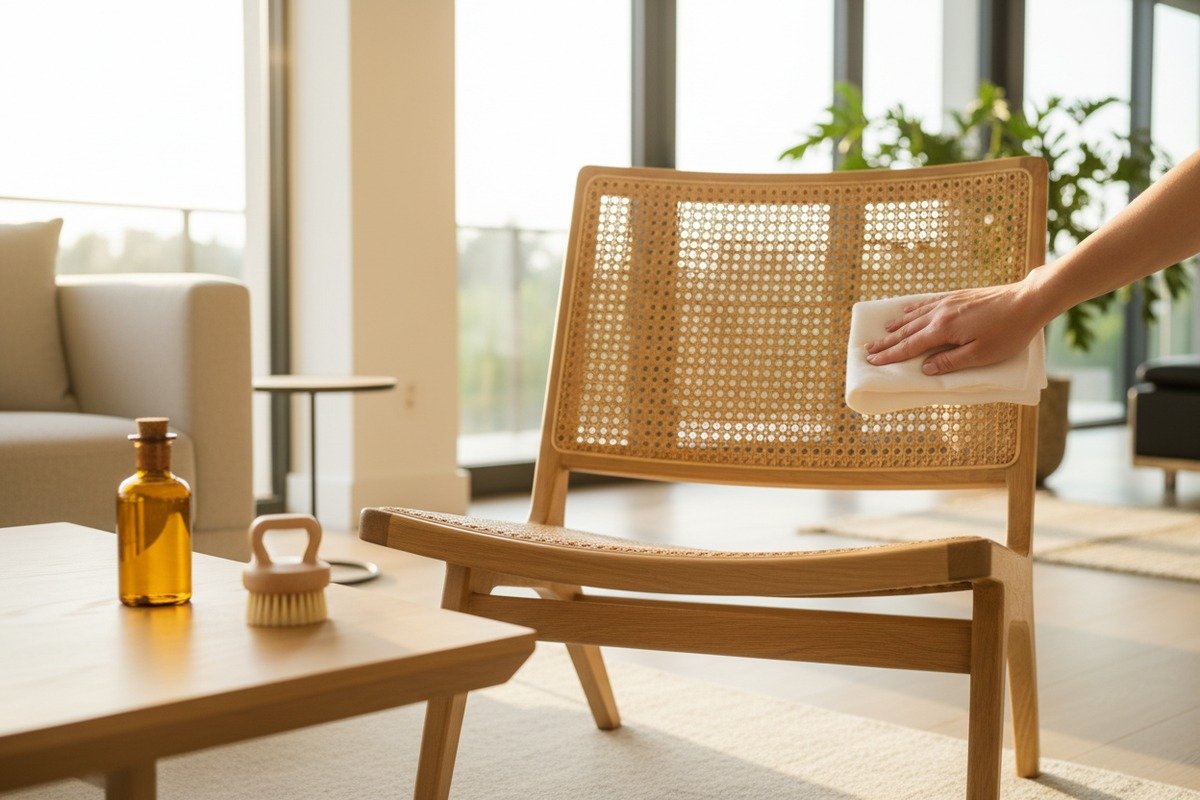
Jahrelanges Versenden von Rattan-Rohrgeflecht aus unseren Fabriken an Kunden in Dutzenden von Ländern hat uns eine schmerzliche Wahrheit gelehrt: Selbst das feinste Rattan der Güteklasse A kann ohne richtige Pflege schnell seine Schönheit verlieren. Wir hören es ständig von unseren Käufern – Möbelherstellern in den Niederlanden, Großhändlern in Australien, Einkaufsmanagern in Thailand –, die in erstklassiges natürliches Rohrgeflecht investieren, nur um zu sehen, wie es innerhalb weniger Monate reißt, durchhängt oder stumpf wird. Die Frustration ist real, und die Kosten für den Ersatz beschädigten Geflechts summieren sich schnell.
Um Rattangeflecht richtig zu pflegen und seinen Glanz zu erhalten, sollten Sie es wöchentlich mit einer weichen Bürste abstauben, es vorsichtig mit einem feuchten Tuch und milder Seife reinigen, ein- bis zweimal im Jahr natürliche Öle wie Lein- oder Mineralöl auftragen und die Luftfeuchtigkeit in Innenräumen zwischen 40 und 60 % halten, um Austrocknung und Rissbildung zu vermeiden.
Dieser Leitfaden erläutert die genauen Schritte zur Reinigung, Wiederherstellung, zum Schutz und zur Reparatur Ihres Rattan-Rohrgeflechts. Jeder Abschnitt stützt sich auf praktische Erfahrungen und bewährte Methoden. Gehen wir ihn gemeinsam durch.
Wie kann ich mein natürliches Rattan-Rohrgeflecht sicher reinigen, ohne die Fasern zu beschädigen?
In unserer Produktion und Qualitätskontrollprozesse zu überprüfen 1, sehen wir aus erster Hand, wie Schmutz und Dreck Rattan lautlos zerstören. Staubpartikel setzen sich in der engen Webart fest, speichern Feuchtigkeit und fressen sich langsam in die Fasern. Viele Käufer erkennen den Schaden erst, wenn es zu spät ist. Die gute Nachricht? Sicheres Reinigen ist einfach und dauert nur wenige Minuten.
Um natürliche Rattan-Rohrgeflechte sicher zu reinigen, stauben Sie sie wöchentlich mit einer weichen Bürste ab oder saugen Sie sie mit einem Bürstenaufsatz ab und wischen Sie sie dann mit einem leicht feuchten Mikrofasertuch ab. Für eine tiefere Reinigung verwenden Sie eine milde Spülmittel- und warmes Wasserlösung, schrubben Sie sanft und trocknen Sie das Geflecht sofort und gründlich.
Warum wöchentliches Entstauben wichtiger ist, als Sie denken
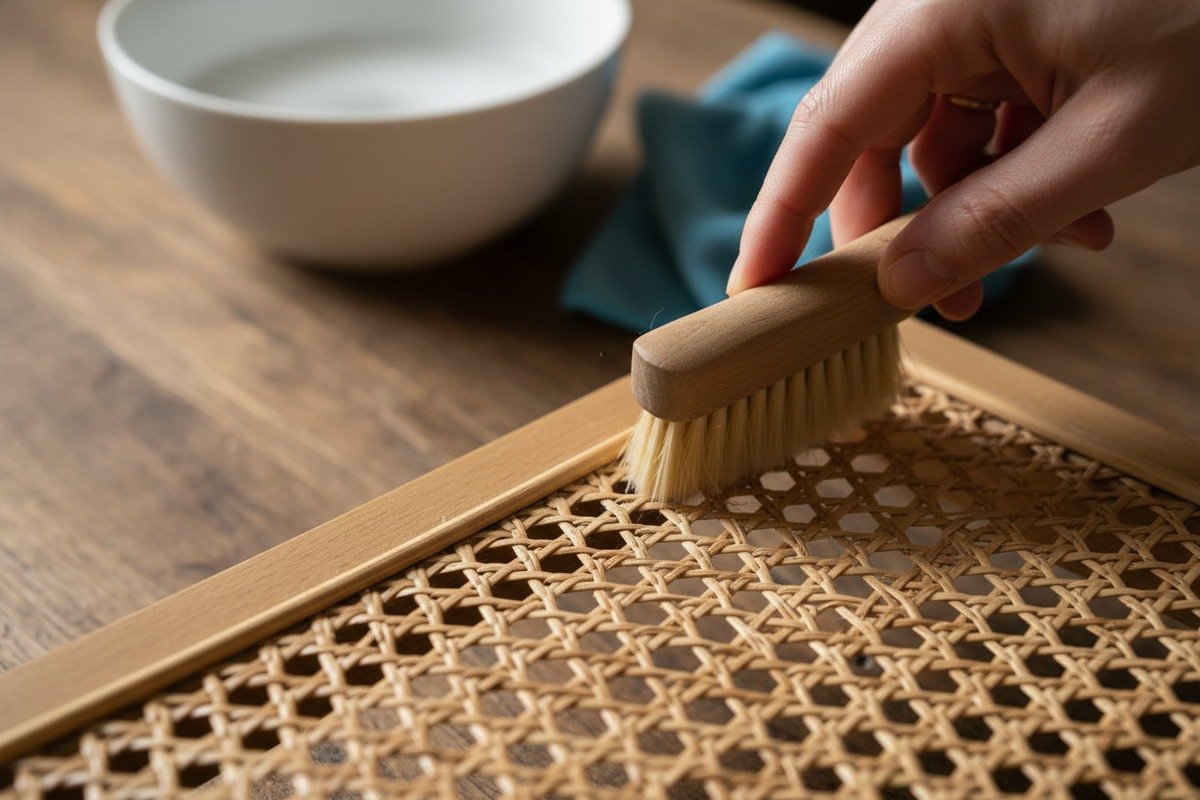
Staub ist nicht nur ein kosmetisches Problem. Bei natürlichem Rattan hält angesammelter Staub Feuchtigkeit gegen die Fasern. Über Wochen und Monate hinweg schafft dies die perfekte Umgebung für Schimmel und Mehltau. Es lässt die Oberfläche auch rau anfühlen und stumpf aussehen.
Verwenden Sie eine weiche Bürste 2, ein Mikrofasertuch oder ein Staubsauger mit einer weichen Bürstenaufsatz. Bewegen Sie sich in Richtung der Webart. Achten Sie besonders auf die Vertiefungen und Kreuzungen, wo sich Stränge kreuzen – diese Stellen fangen am meisten Schmutz.
Die richtige Art der Tiefenreinigung
Wenn das Entstauben allein nicht ausreicht, ist eine tiefere Reinigung erforderlich. Hier ist ein Schritt-für-Schritt-Prozess, den wir unseren Kunden empfehlen:
- Entfernen Sie zuerst losen Staub mit einer Bürste oder einem Staubsauger.
- Mischen Sie eine kleine Menge mildes Spülmittel 3 in warmem Wasser.
- Tauchen Sie ein weiches Tuch oder einen Schwamm in die Lösung. Wringen Sie es gut aus – das Tuch sollte feucht, nicht nass sein.
- Wischen Sie das Rattan vorsichtig ab und arbeiten Sie in kleinen Abschnitten.
- Verwenden Sie für hartnäckigen Schmutz in engen Webmustern eine weiche Zahnbürste.
- Wischen Sie erneut mit einem sauberen, feuchten Tuch ab, um Seifenreste zu entfernen.
- Trocknen Sie das Gurtband sofort mit einem trockenen Handtuch ab und lassen Sie es dann an einem gut belüfteten Ort an der Luft trocknen.
Was bei der Reinigung zu vermeiden ist
Viele Reinigungsfehler sind irreversibel. Hier ist eine Kurzübersichtstabelle:
| Aktion | Sicher oder schädlich? | Warum |
|---|---|---|
| Abstauben mit einer weichen Bürste | Sicher | Entfernt Staub, ohne die Fasern zu zerkratzen |
| Feuchtes Mikrofasertuch | Sicher | Hebt Oberflächenschmutz sanft an |
| Rattan in Wasser einweichen | Schädlich | Verursacht Verzug, Schwellung und Schimmel |
| Ammoniakhaltige Reiniger 4 | Schädlich | Entzieht natürliche Öle und beschädigt die Oberfläche |
| Scheuerschwämme oder Stahlwolle | Schädlich | Zerkratzt und bricht einzelne Rohrstücke |
| Bleichmittel (volle Stärke) | Schädlich | Verursacht vorzeitliche Faserschädigung |
| Milde Spülmittel-Lösung | Sicher | Wirksam für tiefere Reinigung ohne Beschädigung |
Ein Hinweis zu Bleichmittel
Bleichmittel ist ein kontroverses Thema bei der Rattanpflege. Es kann Schimmel oder starke Flecken entfernen. Aber es muss stark verdünnt, nur mit einer weichen Bürste auf die betroffene Stelle aufgetragen und schnell mit frischem Wasser abgespült werden. Wenn Ihr Rattan eine farbige Oberfläche hat, testen Sie es zuerst an einer unauffälligen Stelle. In den meisten Fällen erledigt milde Seife die Arbeit ohne Risiko.
Die wichtigste Regel ist einfach: weniger Wasser, weniger Chemikalien, mehr Trocknung. Befolgen Sie dies, und Ihr Rattan-Rohrgeflecht bleibt jahrelang sauber und intakt.
Was sind die besten Methoden, um den ursprünglichen Glanz und Schimmer meiner Rattanmöbel wiederherzustellen?
Wenn unser Team zurückgesandte Muster inspiziert oder Showrooms von Kunden besucht, ist mattes und dunkler gewordenes Rattan eine der häufigsten Beschwerden, die wir feststellen. Natürliches Rattan dunkelt mit der Zeit nach. Das ist normal. Aber der Verlust dieses warmen, honigfarbenen Glanzes muss nicht von Dauer sein. Mit den richtigen Ölen und Techniken können Sie den ursprünglichen Glanz wiederherstellen.
Die besten Methoden, um Rattan seinen Glanz zurückzugeben, sind das Auftragen natürlicher Öle wie Leinöl, Mineralöl oder Zitronenöl mit einem weichen Tuch, das Einziehen für mehrere Stunden und anschließendes sanftes Polieren. Bei stark abgenutzten Stücken stellen leichtes Schleifen, gefolgt von einer neuen Schicht Klarlack, sowohl das Aussehen als auch den Schutz wieder her.
Verstehen, warum Rattan seinen Glanz verliert
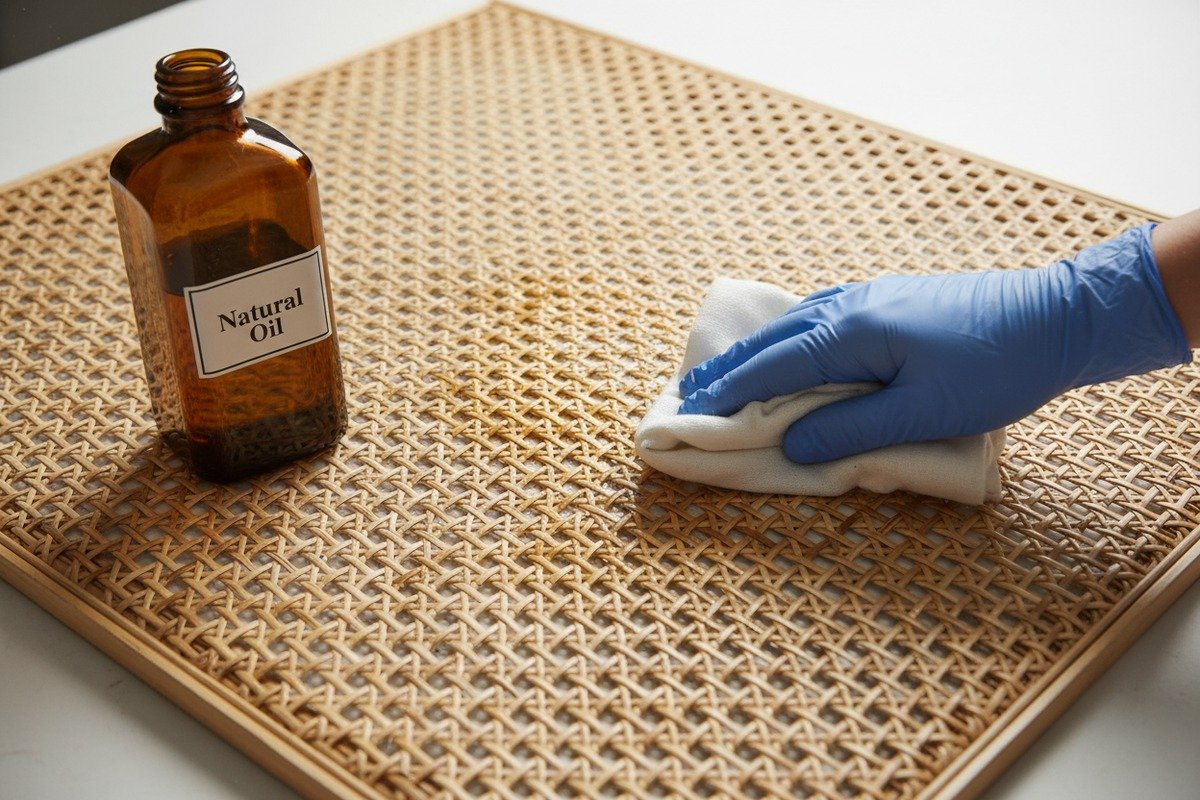
Rattan ist eine natürliche Pflanzenfaser. Mit der Zeit führen Luft, Licht und trockene Bedingungen dazu, dass die Oberflächenöle verdunsten. Das Rohr wird trocken und verliert seinen natürlichen Glanz. Handhabung, Staubansammlung und UV-Licht beschleunigen diesen Prozess. Stellen Sie es sich wie Haut vor – ohne Feuchtigkeit wird sie matt und rau.
Ölbehandlung: Der effektivste Ansatz
Die Ölbehandlung ist der Goldstandard für die Rattanrestaurierung. Hier ist ein Vergleich der am häufigsten verwendeten Öle:
| Öltyp | Vorteile | Am besten geeignet für | Anwendungshäufigkeit |
|---|---|---|---|
| Leinöl 5 | Tiefe Penetration, langanhaltende Feuchtigkeit | Stark ausgetrocknetes Rattan | 2–3 Mal pro Jahr |
| Mineralöl 6 | Leicht, rückstandsfrei, einfach aufzutragen | Regelmäßige Pflege | 3–4 Mal pro Jahr |
| Zitronenöl | Angenehmer Duft, milde Reinigungseigenschaften | Leichte Erfrischung zwischen Tiefenbehandlungen | Monatlich oder nach Bedarf |
| Murphys Oil Soap (verdünnt) | Reinigt und pflegt gleichzeitig | Routinemäßige Instandhaltung | Monatlich |
| Orangenöl | Natürlicher Conditioner, UV-beständige Eigenschaften | Möbel im Innenbereich in der Nähe von Fenstern | 2–3 Mal pro Jahr |
Schritt-für-Schritt-Ölanwendung
- Reinigen Sie das Rattan gründlich und lassen Sie es vollständig trocknen.
- Geben Sie eine kleine Menge Öl auf ein weiches, fusselfreies Tuch.
- Reiben Sie das Öl in das Rattan ein, wobei Sie sich zuerst auf die Unterseite konzentrieren. Die Unterseite ist oft unversiegelt und nimmt Öl besser auf.
- Arbeiten Sie in kleinen Abschnitten und folgen Sie der Webrichtung.
- Wischen Sie überschüssiges Öl mit einem sauberen Tuch ab.
- Lassen Sie das Stück vor Gebrauch mindestens 4–6 Stunden trocknen.
Mischen Sie für stark ausgetrocknetes oder vernachlässigtes Rattan gleiche Teile Öl und Wasser. Diese leichtere Mischung dringt leichter in spröde Fasern ein, ohne sie zu übersättigen.
Auffrischung für stark abgenutzte Stücke
Manchmal reicht Öl allein nicht aus. Wenn die ursprüngliche Oberfläche abgenutzt ist oder sich rau anfühlt, ist eine Auffrischung der nächste Schritt.
Beginnen Sie damit, das Rattan zu reinigen und vollständig zu trocknen. Schleifen Sie die Oberfläche leicht mit feinkörniges Schleifpapier 7 (220er Körnung funktioniert gut), um die alte Oberfläche zu entfernen und raue Stellen zu glätten. Wischen Sie allen Schleifstaub mit einem feuchten Tuch ab.
Tragen Sie dann einen Klarlack auf, der für Korbmöbel oder Rattan bestimmt ist. Verwenden Sie dünne, gleichmäßige Schichten und lassen Sie jede Schicht trocknen, bevor Sie die nächste auftragen. Zwei bis drei Schichten bieten guten Schutz. Dieser Prozess stellt den Glanz wieder her und bietet eine Schutzbarriere gegen Feuchtigkeit und UV-Strahlung.
Für im Freien verwendete Stücke bietet eine Außenmöbelfarbe oder ein Lack in Schiffsqualität zusätzliche Haltbarkeit gegen Witterungseinflüsse.
Ein Wort zu Schutzbeschichtungen
Das Auftragen einer Schutzbeschichtung nach der Ölbehandlung verlängert die Ergebnisse. Versiegeln Sie jedoch niemals die Unterseite von Rattan-Geflecht mit einer nicht atmungsaktiven Oberfläche. Die Unterseite muss offen bleiben, um Umgebungsfeuchtigkeit aus der Luft aufzunehmen. Das Versiegeln schließt Feuchtigkeit in den Fasern ein und führt zu Rissen oder Schimmel.
Wie verhindere ich, dass meine Rattanbespannung in verschiedenen Klimazonen austrocknet und reißt?
Der Versand unserer Rattanprodukte in über ein Dutzend Länder hat uns einen direkten Einblick gegeben, wie Klima Rattan zerstört. Eine Rolle Geflecht, die im feuchten Thailand perfekt ankommt, verhält sich in einem trockenen niederländischen Winter oder einem sengenden australischen Sommer sehr anders. Klima ist der unsichtbare Feind von Rattan, und es zu verstehen ist die halbe Miete.
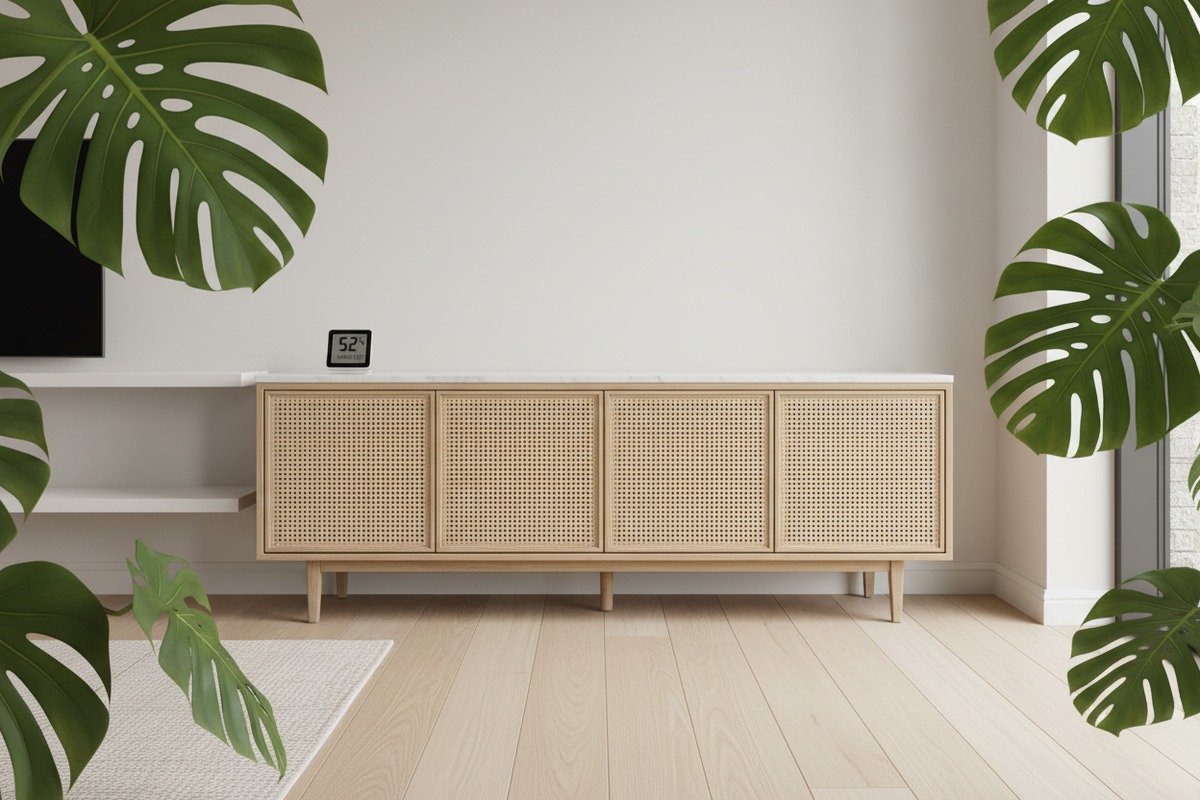
Um zu verhindern, dass Rattan-Geflecht austrocknet und reißt, halten Sie die Luftfeuchtigkeit in Innenräumen zwischen 40–60%, indem Sie bei Bedarf Luftbefeuchter oder Luftentfeuchter verwenden, Möbel von direkter Sonneneinstrahlung und Heizungsöffnungen fernhalten, regelmäßig natürliche Öle auftragen und wasserdichte Abdeckungen für Möbel im Freien bei extremem Wetter verwenden.
Die Wissenschaft hinter Klimaschäden
Rattan ist eine hygroskopisches Material 8. Es nimmt Feuchtigkeit auf und gibt sie je nach Umgebung ab. Bei feuchten Bedingungen quillt es auf. Bei trockenen Bedingungen schrumpft es. Schnelle oder extreme Änderungen der Luftfeuchtigkeit verursachen Stress auf die Fasern, was zu Rissen, Spalten und Verzug führt.
Direkte Sonneneinstrahlung fügt eine weitere Schadensschicht hinzu. UV-Strahlen bauen die Lignin in Rattan 9, was zu Verblassen führt und die Fasern spröde macht. Hitze von Heizkörpern und Lüftungskanälen beschleunigt den Feuchtigkeitsverlust noch weiter.
Klimaspezifischer Pflegeleitfaden
Unterschiedliche Umgebungen erfordern unterschiedliche Strategien. Hier ist ein praktischer Leitfaden:
| Klimatyp | Hauptrisiko | Empfohlene Maßnahmen |
|---|---|---|
| Heiß und feucht (tropisch) | Schimmel, Aufquellen, Verziehen | Verwenden Sie einen Luftentfeuchter, sorgen Sie für gute Belüftung, reinigen Sie häufiger, um Schimmel vorzubeugen |
| Heiß und trocken (Wüste/Arid) | Rissbildung, Sprödigkeit, Verblassen | Tragen Sie häufiger Öl auf (alle 2–3 Monate), verwenden Sie einen Luftbefeuchter, vermeiden Sie direkte Sonneneinstrahlung |
| Kalt und trocken (kontinentaler Winter) | Extreme Austrocknung, Faserspaltung | Betreiben Sie einen Luftbefeuchter für den ganzen Raum, halten Sie Rattan von Heizungen und Heizkörpern fern |
| Küstengebiete/maritim | Salzkorrosion, Feuchtigkeitsschäden | Reinigen Sie regelmäßig, um Salzablagerungen zu entfernen, tragen Sie Schutzbeschichtungen auf, lagern Sie es nach Möglichkeit drinnen |
| Gemäßigt (moderate Jahreszeiten) | Saisonale Schwankungen | Luftfeuchtigkeit saisonal anpassen, 2–3 Mal pro Jahr ölen, Möbel von Fenstern wegdrehen |
Sonneneinstrahlung managen
Rattan sollte nicht mehr als 6 Stunden direkter Sonneneinstrahlung pro Tag ausgesetzt sein. Wenn Ihre Möbel in der Nähe eines Fensters stehen, verwenden Sie während der Spitzenstunden Vorhänge oder UV-filternde Jalousien. Regelmäßiges Drehen der Möbel sorgt für gleichmäßige Sonneneinstrahlung und verhindert, dass eine Seite schneller ausbleicht.
Positionieren Sie Rattanmöbel für den Außenbereich unter überdachten Terrassen oder Pergolen. Wenn sie im Sommer nicht benutzt werden, decken Sie die Möbel mit einer leichten, atmungsaktiven Abdeckung ab.
Strategien zum Winterschutz
Der Winter ist besonders hart für Rattan. Zentralheizungssysteme senken die Luftfeuchtigkeit in Innenräumen weit unter 30%, was für natürlichen Rohrstock gefährlich niedrig ist. Ein Luftbefeuchter für den ganzen Raum, der auf eine Luftfeuchtigkeit von 40–60% eingestellt ist, macht einen erheblichen Unterschied.
Stellen Sie Rattanmöbel mindestens zwei Fuß von Heizlüftern, Heizkörpern und Kaminen entfernt auf. Die konzentrierte Wärme dieser Quellen entzieht den Fasern viel schneller Feuchtigkeit als die Umgebungstemperatur.
Erhöhen Sie im Winter die Ölbehandlungen auf einmal alle zwei Monate. Konzentrieren Sie sich auf die Unterseite und die Gelenke, wo Risse am ehesten zuerst auftreten.
Küstenpflege
Für unsere Kunden in Küstenregionen ist Salz in der Luft ein versteckter Zerstörer. Salzkristalle setzen sich in das Geflecht und entziehen den Fasern Feuchtigkeit, während sie gleichzeitig Metallkomponenten im Möbelrahmen korrodieren. Regelmäßiges Abwischen mit einer milden Seifenlösung entfernt Salzablagerungen. Eine dünne Schicht schützendes Wachs oder Lack bildet eine zusätzliche Barriere.
Aufbewahrungstipps für saisonale Nutzung
Wenn Sie Rattanmöbel saisonal lagern, reinigen Sie sie gründlich und lassen Sie sie trocknen. Lagern Sie sie drinnen in einem kühlen, trockenen Raum. Stellen Sie sie auf ebenen, stabilen Boden, um ungleichmäßigen Druck zu vermeiden. Decken Sie sie mit einer atmungsaktiven Staubschutzhülle ab – niemals Plastik, das Feuchtigkeit einschließt und Schimmelbildung fördert.
Welche Schritte sollte ich unternehmen, um ein Durchhängen zu beheben und die Spannung meines Rohrspannbandes aufrechtzuerhalten?
Eine der Fragen, die unser Kundenservice-Team am häufigsten hört, betrifft das Durchhängen. Ein Einkaufsmanager aus Thailand erzählte uns kürzlich, dass seine Möbelfabrik Beschwerden über lockere Rohrsitze innerhalb weniger Monate nach der Produktion erhielt. Durchhängen ist frustrierend, aber es ist normalerweise behebbar – und mit den richtigen Gewohnheiten fast immer vermeidbar.
Um durchhängendes Rohrgewebe zu reparieren, befeuchten Sie die Unterseite mit warmem Wasser und einem Schwamm und lassen Sie es dann 24–48 Stunden vollständig an der Luft trocknen, ohne darauf zu sitzen. Die Naturfasern ziehen sich beim Trocknen zusammen und stellen die Spannung wieder her. Verhindern Sie zukünftiges Durchhängen, indem Sie das Gewicht gleichmäßig verteilen und konzentrierten Druck auf das Gewebe vermeiden.
Warum Rohrgewebe durchhängt
Rohrgewebe hängt aus drei Hauptgründen durch. Erstens dehnt wiederholter Druck an derselben Stelle einzelne Stränge über ihre elastische Grenze hinaus. Zweitens verursacht hohe Luftfeuchtigkeit, dass die Fasern anschwellen und sich lockern. Drittens schwächen Alter und mangelnde Wartung die strukturellen Bindungen im Gewebe.
Das Verständnis der Ursache hilft Ihnen, die richtige Lösung zu wählen.
Die Warmwasser-Methode: Schritt für Schritt
Dies ist die am weitesten verbreitete Technik zum Straffen von durchhängendem Rohr. Sie funktioniert, weil sich Rattansfasern zusammenziehen, wenn sie Feuchtigkeit verlieren.
- Drehen Sie das Möbelstück um, damit Sie die Unterseite des Rohrgewebes erreichen können.
- Befeuchten Sie einen sauberen Schwamm oder ein Tuch mit warmem (nicht heißem) Wasser.
- Tragen Sie das Wasser nur auf die Unterseite des Rohrs auf. Weichen Sie die Oberseite oder den Rahmen nicht ein.
- Lassen Sie die Feuchtigkeit einige Minuten einwirken.
- Stellen Sie das Möbelstück richtig herum in einen gut belüfteten Bereich.
- Lassen Sie es 24–48 Stunden vollständig an der Luft trocknen.
- Setzen Sie sich während des Trocknens nicht auf das Rohr und üben Sie keine Gewichte darauf aus.
Wenn das Wasser verdunstet, straffen sich die Fasern und ziehen das Gewebe straff. Diese Methode eignet sich gut für leichtes bis mittelschweres Durchhängen.
Wenn die Warmwasser-Methode nicht ausreicht
Bei starkem Durchhängen, bei dem die Fasern dauerhaft gedehnt sind, kann die Warmwasser-Methode die Spannung nur teilweise wiederherstellen. In diesen Fällen sollten Sie folgende Optionen in Betracht ziehen:
- Neu verweben: Wenn einzelne Stränge gebrochen oder stark gedehnt sind, kann ein erfahrener Handwerker die beschädigten Stränge ersetzen. Dies ist im Vergleich zum vollständigen Austausch kostengünstig.
- Vollständiger Ersatz: Für Geflechte, die nicht mehr zu reparieren sind, ist der Austausch der gesamten Rohrspannplatte die beste Lösung. Vorgefertigte Rohrspannplattenbahnen machen diesen Vorgang relativ einfach.
- Stützbretter: Als vorübergehende Lösung kann ein dünnes Sperrholz-Stützbrett, das passend für den Sitzrahmen zugeschnitten ist, zusätzlichen Halt unter dem Rohrgeflecht bieten.
Durchhängen verhindern, bevor es beginnt
Vorbeugung ist immer billiger und einfacher als Reparatur. Hier sind die effektivsten Gewohnheiten:
- Verteilen Sie das Gewicht gleichmäßig. Vermeiden Sie es, auf einer Kante eines Rohrgeflechtsitzes zu sitzen. Zentrieren Sie Ihr Gewicht.
- Knien Sie niemals auf Rohrgeflecht. Konzentrierter Druck von den Knien übt extreme Belastung auf einen kleinen Bereich aus.
- Kissen drehen. Wenn Ihre Rohrgeflechtmöbel Kissen haben, drehen Sie diese regelmäßig, um das Druckmuster zu ändern.
- Luftfeuchtigkeit kontrollieren. Eine Luftfeuchtigkeit in Innenräumen zwischen 40 und 60 % verhindert, dass sich die Fasern durch übermäßige Feuchtigkeit lockern.
- Kleinere Probleme frühzeitig beheben. Wenn Sie einen einzelnen losen Faden bemerken, stecken Sie ihn wieder in das Geflecht oder tragen Sie eine winzige Menge klar trocknenden Holzleims auf, um ihn zu befestigen. Kleine Probleme wachsen schnell, wenn sie ignoriert werden.
Schneller Fehlerbehebungsleitfaden
| Problem | Wahrscheinliche Ursache | Empfohlene Behebung |
|---|---|---|
| Leichte Durchhängung in der Mitte | Wiederholter konzentrierter Druck | Warmwasser-Methode, 24–48 Stunden an der Luft trocknen lassen |
| Durchhängung mit sichtbaren gedehnten Fäden | Überlastung oder Alter | Beschädigte Fäden neu flechten oder Paneel ersetzen |
| Lose Kanten, die sich vom Rahmen lösen | Feuchtigkeitsschwankungen oder schlechte Installation | Kanten mit Holzleim neu verkleben, Keilriemen ggf. neu einsetzen |
| Einzelner gebrochener Faden | Aufprallschäden oder Knien | Faden wieder hineinstecken, mit klarem Kleber befestigen |
| Allgemeine Lockerheit über das gesamte Paneel | Hohe Luftfeuchtigkeit | Entfeuchten Sie den Raum und wenden Sie nach Stabilisierung der Luftfeuchtigkeit die Warmwassermethode an. |
Langfristige Spannungserhaltung
Gute Spannung beginnt mit der richtigen Installation. Beim Einbau von vorgefertigtem Rohrstuhlgeflecht weichen Sie es kurz ein, um es biegsam zu machen, spannen Sie es dann gleichmäßig über den Rahmen und befestigen Sie es mit einer Leiste und Klebstoff. Beim Trocknen schrumpft es leicht und zieht sich straff.
Nach der Installation hält die regelmäßige Pflege die Spannung aufrecht. Vermeiden Sie es, schwere Gegenstände auf Rohrstuhlgeflecht-Sitze zu legen, wenn diese nicht benutzt werden. Lagern Sie Stühle mit Rohrstuhlgeflecht-Sitzen fern von feuchten Kellern oder nassen Lagerräumen. Und handeln Sie immer schnell, wenn Sie die ersten Anzeichen von Lockerung bemerken.
Conclusion
Natürliches Rattankorbgeflecht 10 belohnt diejenigen, die es richtig pflegen. Regelmäßig abstauben, sanft reinigen, periodisch ölen, die Luftfeuchtigkeit kontrollieren und Durchhänge frühzeitig beheben. Diese einfachen Gewohnheiten halten Ihr Rattan schön, stark und langlebig für viele Jahre.
Fußnoten
1. Erklärt die Qualitätskontrolle in der Fertigung, einschließlich Grundlagen und Best Practices. ↩︎
2. Erklärt den Zweck und die Vorteile der Verwendung von weichen Bürsten für empfindliche Reinigungsarbeiten. ↩︎
3. Beschreibt die Wirksamkeit und Vielseitigkeit von milder Spülmittel für verschiedene Reinigungsaufgaben. ↩︎
4. Warnt vor den Gesundheitsrisiken und Umweltauswirkungen von ammoniakhaltigen Reinigern. ↩︎
5. Erklärt, wie Leinöl Holz durch tiefes Eindringen nährt und schützt. ↩︎
6. Beschreibt Mineralöl als ungiftiges, leicht aufzutragendes Finish, das Holz schützt. ↩︎
7. Beschreibt die Verwendung von feinkörnigem Schleifpapier zum Glätten und Vorbereiten von Oberflächen für die Endbearbeitung. ↩︎
8. Definiert hygroskopische Materialien als Substanzen, die Feuchtigkeit aus ihrer Umgebung aufnehmen und speichern. ↩︎
9. Erklärt, wie UV-Strahlung zum Abbau von Lignin in Pflanzenfasern beiträgt. ↩︎
10. Erklärt, was Rattanrohrgeflecht ist und woher es stammt. ↩︎

 English
  Español de México
  العربية
  Deutsch
  Français
  Русский