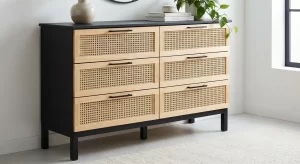
What Are the Pros and Cons of Sourcing Natural vs. Bleached Rattan Cane Webbing?
Natural rattan cane webbing retains its original golden-brown color and organic oils, making it eco-friendly and cost-effective but prone to color variation …
To calculate rattan cane webbing usage, measure your furniture opening from groove to groove, add 2 to 4 inches of allowance on each side for spline installa…
Grade D natural rattan cane webbing works best in budget furniture production, concealed panel applications, rustic or vintage-style product lines, high-volu…
There is no universal standard roll length for rattan cane webbing. However, the most common wholesale length is 15 meters (approximately 49 feet) per roll f…
Grade C natural rattan cane webbing displays green markings primarily because it uses immature or mixed-origin cane that retains residual chlorophyll, and be…
Standard widths for rattan cane webbing typically range from 12 inches (30 cm) to 100 cm (39 inches). The most common widths sourced in bulk are 18 inches (4…
Rattan cane webbing prices vary based on quality grade, rattan species, weaving pattern, material width, geographic origin, and processing method. Grade A we…
Grade A natural rattan cane webbing features smoother, denser fibers with uniform color and virtually no defects, while Grade B has a coarser texture, minor …
You can identify genuine natural rattan cane webbing by examining its organic color variations, slightly irregular surface texture, visible nodes on the back…
In rattan cane webbing, 1/2 mesh means the distance from the center of one hole to the center of the adjacent hole measures exactly 1/2 inch. This creates a …
The toughness and flexibility of natural rattan cane webbing depend on several interconnected factors: the botanical species selected, the geographical origi…
Hexagonal weave rattan cane webbing is a pre-woven sheet material made from thin strips of natural rattan cane skin, featuring an open hexagonal or octagonal…
Bleached rattan cane webbing offers a bright, contemporary white tone ideal for modern furniture, easy dyeability, and eco-friendly appeal. However, it comes…
Natural rattan cane webbing gradually changes from its original light golden-tan color to a richer, deeper honey-brown over time. This shift is driven by nat…
Choosing between natural and bleached rattan cane webbing depends on your target market aesthetic, durability requirements, budget, and sustainability goals….
Natural rattan cane webbing is eco-friendly because it comes from a rapidly renewable climbing palm that matures in 2 to 7 years, biodegrades completely with…
Hexagonal mesh natural rattan cane webbing is woven by first preparing thin rattan peels from tropical climbing palms, forming a square-grid base using machi…
Grade C and D rattan cane webbing are best used for budget-friendly furniture inserts, painted or stained panels, interior decorative screens, cabinet door o…
Grade A rattan cane webbing is made from premium, uniform rattan strips with tight weave patterns, near-zero defects, and advanced finishing treatments. Grad…
Natural rattan cane webbing comes from the outer bark of tropical rattan palms and offers authentic texture with organic warmth, but it is best for indoor us…
Rattan cane webbing is commonly graded from AAA (premium) down to D (lowest quality), based on strip uniformity, surface smoothness, color consistency, elast…
The primary sourcing regions for natural rattan cane webbing are Southeast Asia—led by Indonesia, which supplies roughly 80–90% of the world’s raw rattan—fol…
The traditional weaving process for rattan cane webbing involves harvesting rattan palms, stripping the outer cane into thin uniform strips, soaking them for…
Natural rattan cane webbing is manufactured exclusively from the outer skin or peel of the rattan palm, a climbing vine harvested in tropical forests of Sout…
Rattan cane webbing is popular for high-end furniture because it combines natural aesthetic warmth, exceptional breathability, proven durability, and sustain…
Natural rattan cane webbing comes from the outer bark of rattan palm vines, offering organic texture and warmth for indoor use. Synthetic rattan webbing is m…
The raw materials for rattan cane webbing come primarily from tropical Southeast Asian countries. Indonesia leads global production with roughly 70% of the w…
Rattan cane webbing for furniture is primarily manufactured from the outer peel (skin) of natural rattan palm stems, harvested mainly in Indonesia. The peel …
This blog I want to write to my VIP customer Abdullah alijandoul. As we have take the cooperation since 2016. Our cooperation item will be have : Natural rattan cane webbing PVC rattan cane webbing Rattan core Rattan Chair Cane
Quality Concerns with Rattan Cane Webbing We are writing to formally raise a concern regarding a noticeable increase in reported breakages and brittleness in the rattan recently supplied to us. Over the past 2 years, we have observed a higher-than-usual
Your One Stop Rattan Supplier
Natural rattan cane webbing retains its original golden-brown color and organic oils, making it eco-friendly and cost-effective but prone to color variation …
To calculate rattan cane webbing usage, measure your furniture opening from groove to groove, add 2 to 4 inches of allowance on each side for spline installa…
Grade D natural rattan cane webbing works best in budget furniture production, concealed panel applications, rustic or vintage-style product lines, high-volu…
There is no universal standard roll length for rattan cane webbing. However, the most common wholesale length is 15 meters (approximately 49 feet) per roll f…
Grade C natural rattan cane webbing displays green markings primarily because it uses immature or mixed-origin cane that retains residual chlorophyll, and be…
Standard widths for rattan cane webbing typically range from 12 inches (30 cm) to 100 cm (39 inches). The most common widths sourced in bulk are 18 inches (4…
Rattan cane webbing prices vary based on quality grade, rattan species, weaving pattern, material width, geographic origin, and processing method. Grade A we…
Grade A natural rattan cane webbing features smoother, denser fibers with uniform color and virtually no defects, while Grade B has a coarser texture, minor …
You can identify genuine natural rattan cane webbing by examining its organic color variations, slightly irregular surface texture, visible nodes on the back…
In rattan cane webbing, 1/2 mesh means the distance from the center of one hole to the center of the adjacent hole measures exactly 1/2 inch. This creates a …
The toughness and flexibility of natural rattan cane webbing depend on several interconnected factors: the botanical species selected, the geographical origi…
Hexagonal weave rattan cane webbing is a pre-woven sheet material made from thin strips of natural rattan cane skin, featuring an open hexagonal or octagonal…
Bleached rattan cane webbing offers a bright, contemporary white tone ideal for modern furniture, easy dyeability, and eco-friendly appeal. However, it comes…
Natural rattan cane webbing gradually changes from its original light golden-tan color to a richer, deeper honey-brown over time. This shift is driven by nat…
Choosing between natural and bleached rattan cane webbing depends on your target market aesthetic, durability requirements, budget, and sustainability goals….
Natural rattan cane webbing is eco-friendly because it comes from a rapidly renewable climbing palm that matures in 2 to 7 years, biodegrades completely with…
Hexagonal mesh natural rattan cane webbing is woven by first preparing thin rattan peels from tropical climbing palms, forming a square-grid base using machi…
Grade C and D rattan cane webbing are best used for budget-friendly furniture inserts, painted or stained panels, interior decorative screens, cabinet door o…
Grade A rattan cane webbing is made from premium, uniform rattan strips with tight weave patterns, near-zero defects, and advanced finishing treatments. Grad…
Natural rattan cane webbing comes from the outer bark of tropical rattan palms and offers authentic texture with organic warmth, but it is best for indoor us…
Rattan cane webbing is commonly graded from AAA (premium) down to D (lowest quality), based on strip uniformity, surface smoothness, color consistency, elast…
The primary sourcing regions for natural rattan cane webbing are Southeast Asia—led by Indonesia, which supplies roughly 80–90% of the world’s raw rattan—fol…
The traditional weaving process for rattan cane webbing involves harvesting rattan palms, stripping the outer cane into thin uniform strips, soaking them for…
Natural rattan cane webbing is manufactured exclusively from the outer skin or peel of the rattan palm, a climbing vine harvested in tropical forests of Sout…
Rattan cane webbing is popular for high-end furniture because it combines natural aesthetic warmth, exceptional breathability, proven durability, and sustain…
Natural rattan cane webbing comes from the outer bark of rattan palm vines, offering organic texture and warmth for indoor use. Synthetic rattan webbing is m…
The raw materials for rattan cane webbing come primarily from tropical Southeast Asian countries. Indonesia leads global production with roughly 70% of the w…
Rattan cane webbing for furniture is primarily manufactured from the outer peel (skin) of natural rattan palm stems, harvested mainly in Indonesia. The peel …
This blog I want to write to my VIP customer Abdullah alijandoul. As we have take the cooperation since 2016. Our cooperation item will be have : Natural rattan cane webbing PVC rattan cane webbing Rattan core Rattan Chair Cane
Quality Concerns with Rattan Cane Webbing We are writing to formally raise a concern regarding a noticeable increase in reported breakages and brittleness in the rattan recently supplied to us. Over the past 2 years, we have observed a higher-than-usual
Your One Stop Rattan Supplier