
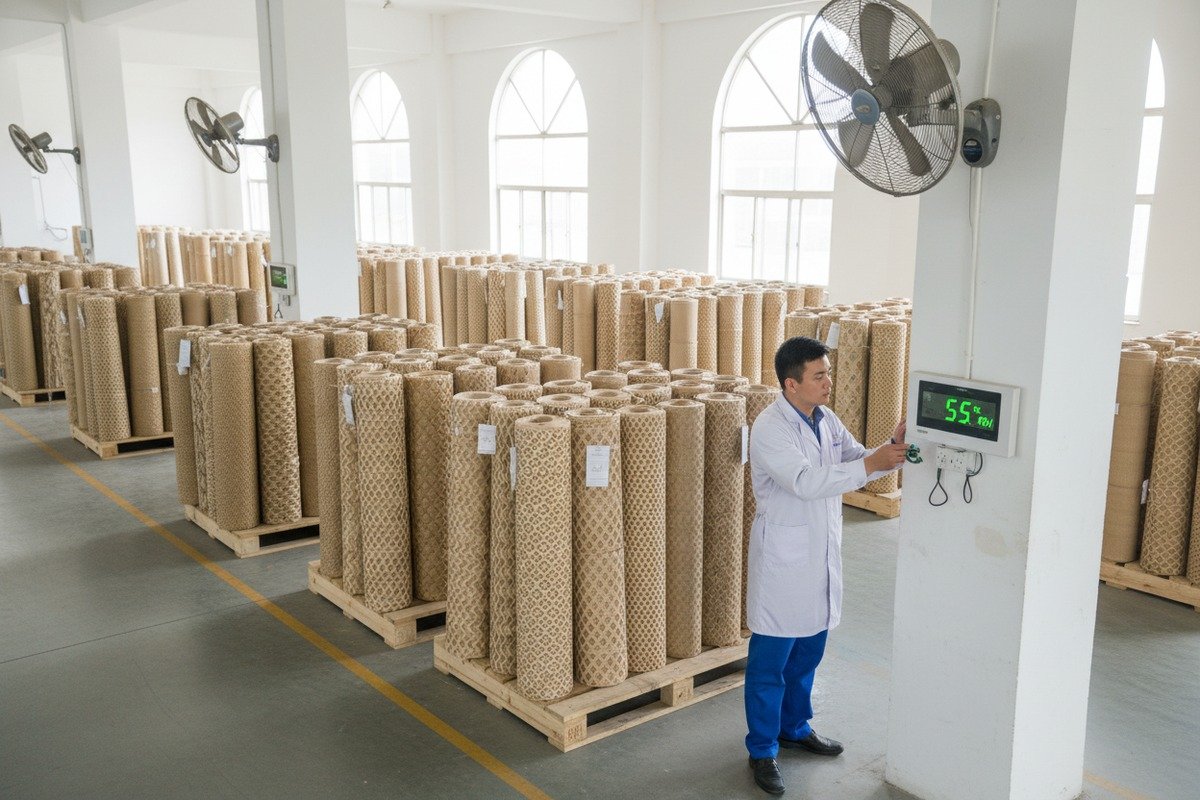
Jedes Jahr, wenn die Pflaumenregenzeit 1 beginnt, sind unsere Lagerteams in höchster Alarmbereitschaft, denn eine Woche Vernachlässigung kann ganze Paletten wunderschöner natural rattan cane webbing 2.
Um Schimmelbildung auf natürlichem Rattan-Rohrgeflecht während der Pflaumenregensaison zu verhindern, müssen Sie die Luftfeuchtigkeit im Lager unter 60 % halten, Schutzversiegelungen oder natürliche Ölbehandlungen vor Beginn der Saison anwenden, für gleichmäßige Luftzirkulation um gelagerte Rollen sorgen und feuchtigkeitsdichte Verpackungen für alle Lieferungen und Lagerungen verwenden.
In diesem Leitfaden führen wir Sie durch die genauen Schritte, die wir in unseren eigenen Einrichtungen anwenden, und geben praktische Ratschläge, auf die sich unsere globalen Einkäufer jedes Jahr verlassen Polyurethan-Dichtstoffe 3. Egal, ob Sie Rattan in großen Mengen lagern oder im Einzelhandel verkaufen, diese Methoden werden Ihren Bestand retten.
Wie lagere ich meine Rattanrohrgeflechtballen richtig, um Feuchtigkeitsschäden in meinem Lager zu vermeiden?
Als wir unsere Rattanverarbeitungsanlage in Indonesien eröffneten, verloren wir in der ersten feuchten Jahreszeit fast 15 % unseres Bestands, nur weil wir unterschätzt hatten, wie schnell sich Schimmel auf porösen Naturfasern ausbreitet. Silikagel-Trockenmittelpakete 4.
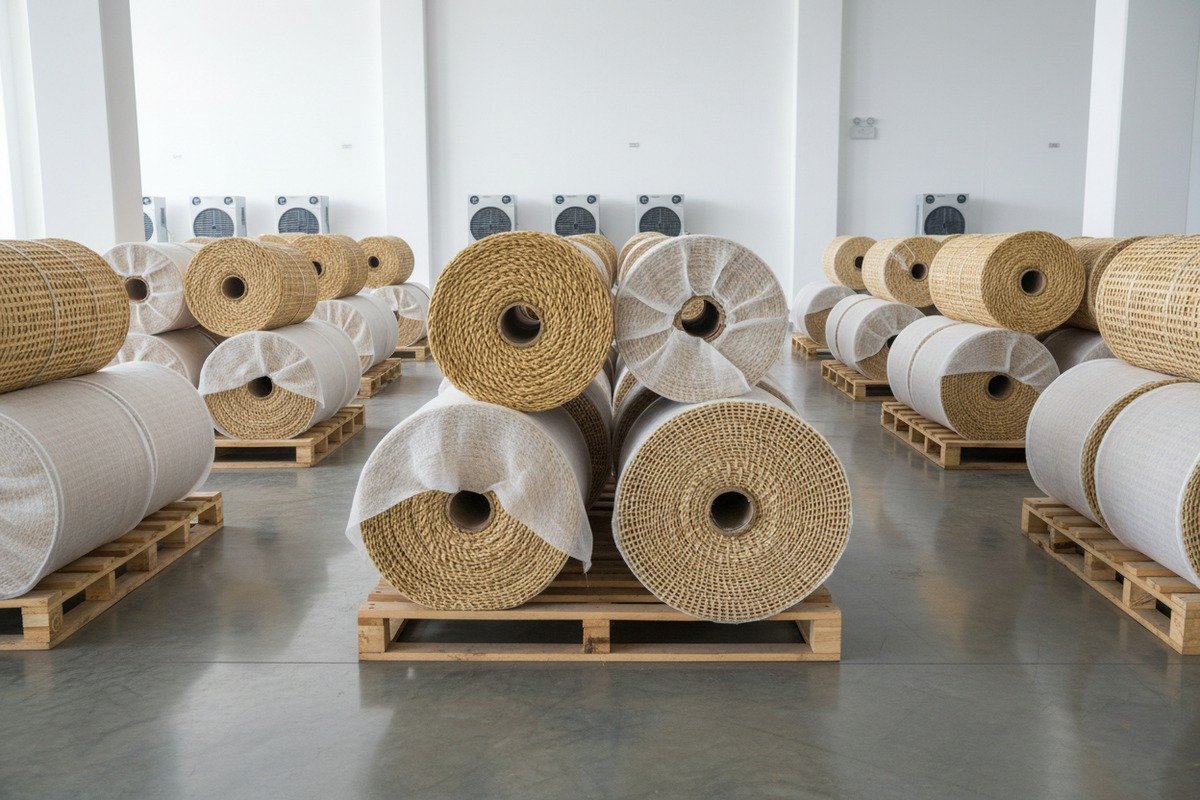
Lagern Sie Rattanrohrgeflecht auf erhöhten Paletten mindestens 15 cm über dem Boden in einem gut belüfteten Lagerhaus mit einer Luftfeuchtigkeit zwischen 40-60%. Verwenden Sie atmungsaktive Stoffabdeckungen anstelle von luftdichtem Kunststoff und halten Sie die Rollen von Außenwänden fern, um Kondensationsschäden zu vermeiden.
Warum Luftfeuchtigkeit im Lager Ihr größter Feind ist
Schimmelsporen sind überall. Sie brauchen nur zwei Dinge zum Wachsen: Feuchtigkeit und eine organische Nahrungsquelle. Natürliches Rattanrohrgeflecht bietet ihnen die perfekte Nahrungsquelle. Während der Pflaumenregenzeit erreicht die Umgebungsfeuchtigkeit oft 80-95 %. Das liegt weit über dem Schwellenwert von 60-70 %, bei dem sich Schimmel zu vermehren beginnt.
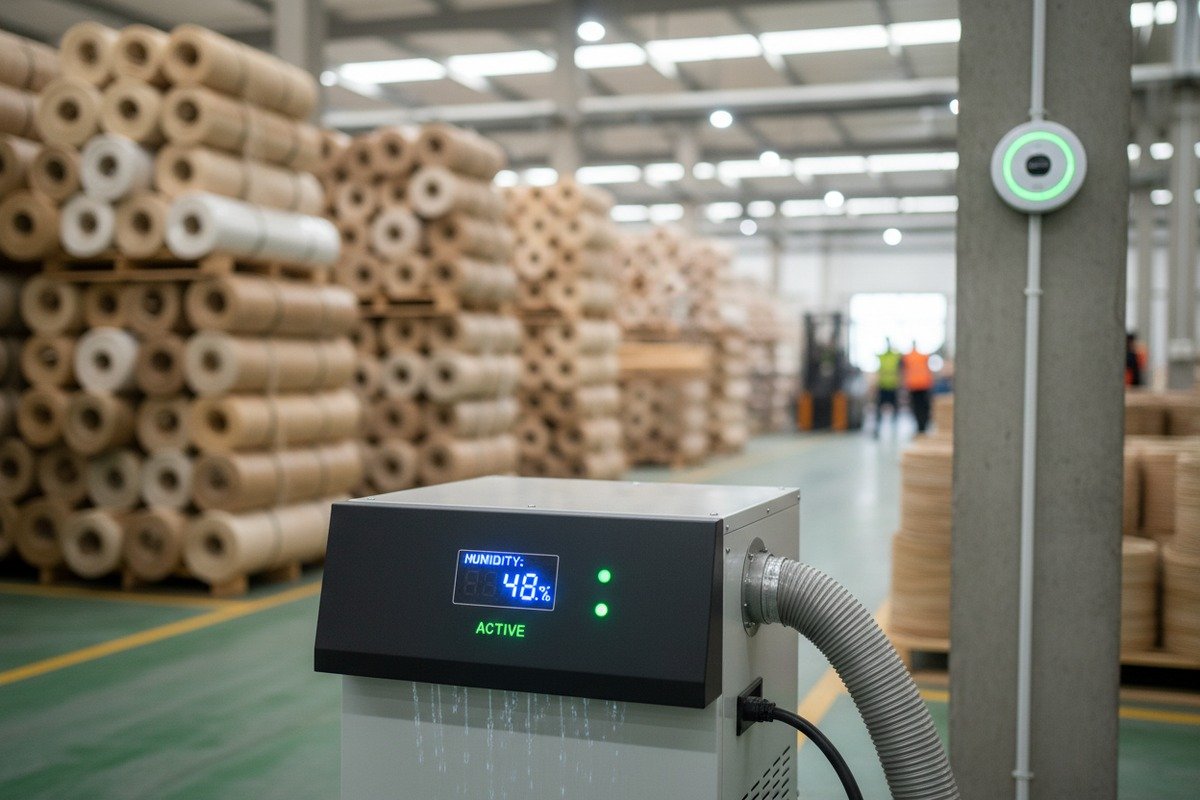
In unseren Lagern in Foshan betreiben wir industrielle Luftentfeuchter 5 24 Stunden am Tag von Mitte Mai bis Ende Juni. Wir verwenden auch Wandhygrometer an mehreren Stellen in jedem Gebäude. Wenn die Luftfeuchtigkeit in einer Zone über 60 % steigt, wird ein Alarm ausgelöst und zusätzliche Luftentfeuchter werden herangebracht.
Höhe und Luftzirkulation: Die beiden nicht verhandelbaren Punkte
Legen Sie Rattanrollen niemals direkt auf einen Betonboden. Beton schwitzt bei feuchtem Wetter. Selbst eine dünne Feuchtigkeitsschicht auf der Bodenoberfläche kann innerhalb von Stunden in die unteren Schichten Ihres Rattanrohrgeflechts aufsteigen. Wir verwenden Kunststoff- oder Holzpaletten, die alles mindestens 15 cm vom Boden abheben.
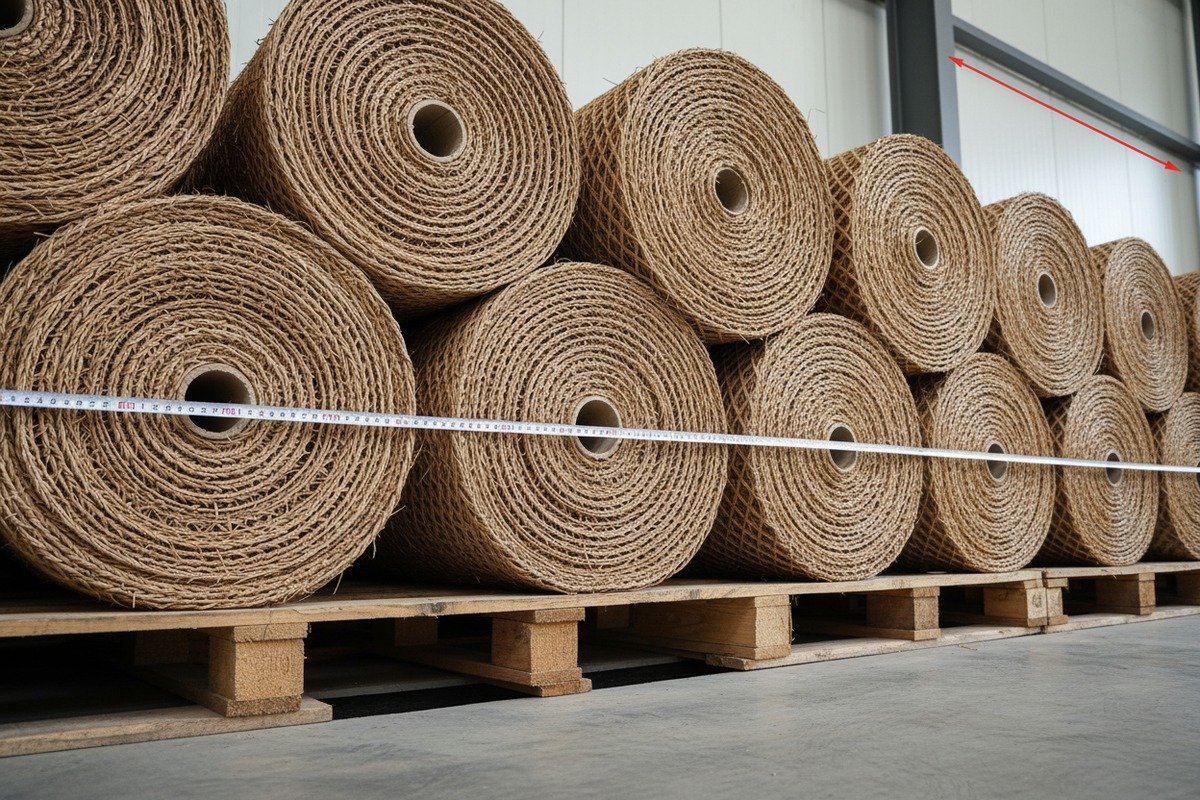
Luftzirkulation ist ebenso entscheidend. Zu dicht gestapelte Rollen blockieren die Luftzirkulation. Wir lassen einen Mindestabstand von 10 cm zwischen jeder Rolle und mindestens 30 cm zwischen jedem Stapel und der nächsten Wand.
Abdeckmaterialien: Atmungsaktiv vs. Luftdicht
This is where many warehouse managers make a costly mistake. They wrap rattan in plastic film thinking it keeps moisture out. In reality, any trapped humidity inside the plastic creates a greenhouse effect. Mold explodes in these conditions.
Use breathable fabric covers or non-woven polypropylene sheets 6. These allow air to pass through while still protecting against dust and minor splashes.
| Lagerfaktor | Empfohlene Praxis | Häufiger Fehler |
|---|---|---|
| Bodenkontakt | Elevate on pallets ≥15 cm | Placing directly on concrete |
| Luftfeuchtigkeitsstufe | Maintain 40-60% RH | No humidity monitoring |
| Airflow Gaps | ≥10 cm between rolls, ≥30 cm from walls | Tight stacking against walls |
| Covering Material | Breathable fabric or non-woven covers | Airtight plastic wrap |
| Monitoring | Hygrometers + daily visual checks | Seasonal inspection only |
Smart Technology for Modern Warehouses
In 2025, smart dehumidifiers with built-in humidity sensors and app-controlled fans have become very affordable. We installed IoT-based environmental sensors 7 across all three of our factory buildings last year. These sensors send real-time data to a dashboard. If any zone exceeds our humidity threshold, the system automatically increases dehumidifier output and activates ceiling fans.
For buyers who manage smaller storage spaces, even a basic $40 digital hygrometer paired with a portable dehumidifier can cut mold incidence by up to 70%.
Welche Behandlungen kann ich anwenden, um die Bildung von Schimmel auf meinen natürlichen Rattanprodukten zu verhindern?
Over the years, our R&D team has tested dozens of treatments on natural rattan, from traditional Leinöl 8 zu modernen Polyurethan-Dichtstoffen, und die Ergebnisse haben geprägt, wie wir jede Sendung vorbereiten, die unser Werk verlässt.
Die wirksamsten Methoden zur Vorbeugung von Schimmel bei natürlichem Rattan sind das Auftragen von Leinöl oder Mineralöl zur Feuchtigkeitsbeständigkeit, die Verwendung einer leichten Polyurethan-Deckschicht als Versiegelung und das Abwischen der Oberflächen mit verdünnten Essig- oder Nelkenöl-Lösungen als natürliche Antimykotika vor Beginn der feuchten Jahreszeit.
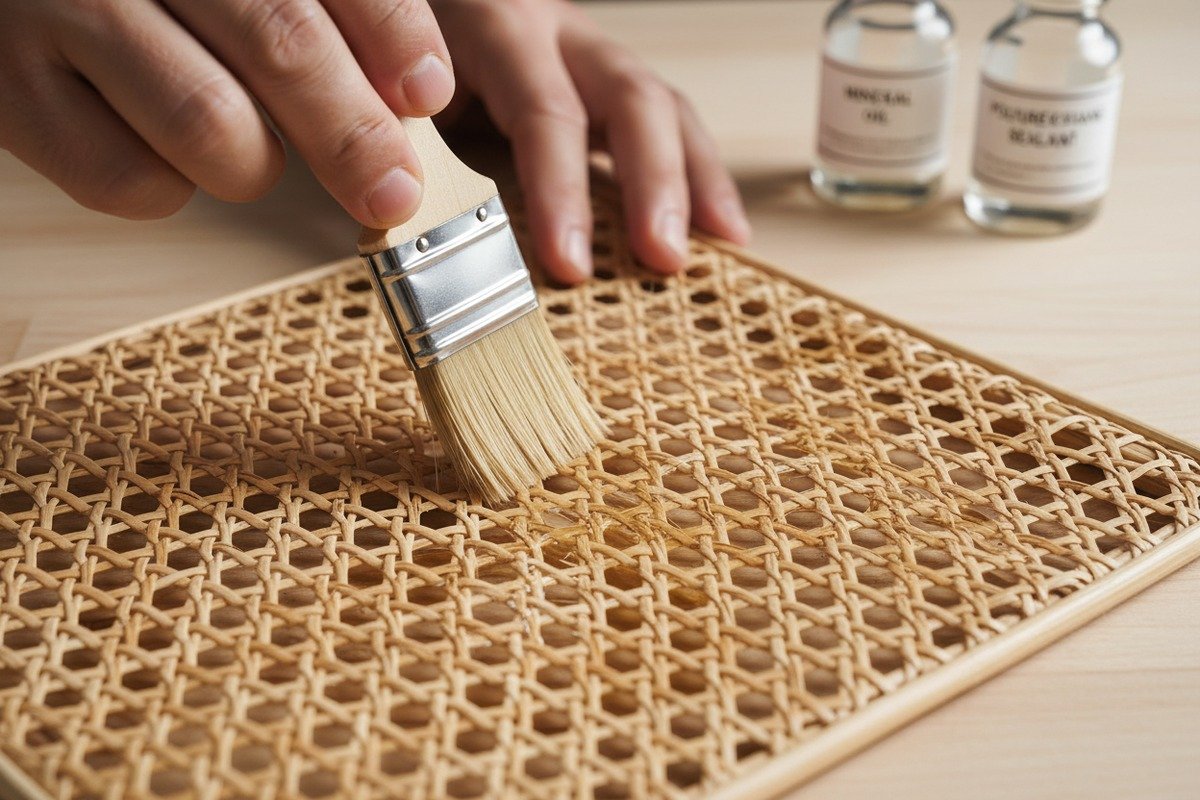
Natürliche Öle: Die umweltfreundliche erste Verteidigungslinie
Natürliche Öle wie Leinöl, Mineralöl und Zitronenöl dringen in die Rattanfasern ein. Sie füllen die mikroskopischen Poren, die sonst Feuchtigkeit aus der Luft aufnehmen würden. In unseren Tests zeigten mit Öl behandelte Rattanstichproben eine 15-20% bessere Flexibilität und deutlich geringere Feuchtigkeitsaufnahme im Vergleich zu unbehandelten Stichproben nach 30-tägiger Einwirkung von 85% Luftfeuchtigkeit.
So empfehlen wir die Anwendung von Öl:
- Reinigen Sie die Rattanoberfläche mit einer trockenen, weichen Bürste.
- Tragen Sie eine dünne Schicht Lein- oder Mineralöl mit einem fusselfreien Tuch auf.
- Lassen Sie es 20-30 Minuten einziehen.
- Wischen Sie überschüssiges Öl ab.
- Lassen Sie es 24 Stunden lang an einem gut belüfteten Ort trocknen.
Übermäßig viel Öl auftragen. Zu viel Öl auf der Oberfläche zieht Staub an, der Feuchtigkeit einschließt, was direkt zurück zu Schimmel führt.
Chemische Dichtstoffe: Wenn Sie maximalen Schutz benötigen
Für Käufer in extrem feuchten Regionen – denken Sie an die Küstenregionen Südostasiens, die Golfstaaten oder den Südosten der Vereinigten Staaten – bietet eine leichte Polyurethan- oder Schellack-Deckschicht eine stärkere Barriere. Polyurethan kann die Feuchtigkeitsaufnahme um bis zu 50% reduzieren.
Es gibt jedoch einen Kompromiss. Chemische Dichtstoffe reduzieren die natürliche Atmungsaktivität von Rattan. Für dekorative Geflechte, die in Innenräumen mit Klimatisierung verwendet werden, ist dies in der Regel in Ordnung. Für Geflechte, die in Freiluftmöbeln verwendet werden, ist ein hybrider Ansatz am besten: Ölbasis plus eine sehr dünne Lack-Deckschicht.
Antimykotische Tücher und Sprays
Ein neuerer Trend, der bei unseren europäischen und australischen Kunden an Popularität gewinnt, ist die Verwendung natürlicher antimykotischer Lösungen als vorbeugende Tücher. Nelkenöl, Teebaumöl und weißer Essig haben nachweislich antimykotische Eigenschaften.
| Behandlungsart | Feuchtigkeitsreduktion | Schimmelbekämpfungsrate | Häufigkeit der Wiederanwendung | Am besten geeignet für |
|---|---|---|---|---|
| Leinöl | Mäßig (15-20%) | Gering (nur vorbeugend) | Alle 6-12 Monate | Dekorative Geflechte für den Innenbereich |
| Mineralöl | Mäßig (15-20%) | Gering (nur vorbeugend) | Alle 6-12 Monate | Allzweck |
| Polyurethan-Deckschicht | Hoch (bis zu 50%) | Keine (nur Barriere) | Alle 1-2 Jahre | Umgebungen mit hoher Luftfeuchtigkeit |
| Verdünnte Essig-Lösung | Niedrig | Hoch (90% Oberflächenschimmel) | Monatlich während der feuchten Jahreszeit | Vorbeugung vor der Saison |
| Nelkenöl-Lösung | Niedrig | Hoch | Monatlich während der feuchten Jahreszeit | Umweltbewusste Käufer |
Der von uns empfohlene Hybridansatz
Basierend auf jahrelanger Kundenrückmeldung und unseren eigenen Werkstattversuchen empfehlen wir einen zweistufigen Prozess zur Vorbereitung auf die Pflaumenregenzeit:
Schritt 1: Tragen Sie zwei Wochen vor der Regenzeit eine Schicht Lein- oder Mineralöl auf. Dies stellt die Flexibilität der Fasern wieder her und füllt die Poren.
Schritt 2: Eine Woche vor der Saison alle Oberflächen mit einer verdünnten Nelkenöl- oder Essiglösung (1 Teil Essig auf 4 Teile Wasser) abwischen. Dies schafft eine antimykotische Barriere auf der Oberfläche.
Diese Kombination bewahrt das natürliche Aussehen und Gefühl des Rattans und bietet gleichzeitig einen echten Schutz vor Schimmel. Sie entspricht auch der wachsenden Nachfrage unserer Kunden in den Niederlanden und Spanien nach umweltfreundlichen, ungiftigen Behandlungsmethoden.
Wie kann ich überprüfen, ob mein Lieferant für meine internationalen Sendungen feuchtigkeitsgeschützte Verpackungen verwendet?
Wir versenden Rattanrohrgeflecht in über ein Dutzend Länder, und eine der häufigsten Beschwerden, die wir von neuen Käufern hören, ist, dass die Verpackung ihres früheren Lieferanten während des Transports auseinanderfiel, insbesondere auf Seetransportrouten, die durch tropische Zonen führen.
Überprüfen Sie die feuchtigkeitsgeschützte Verpackung, indem Sie Fotos vom tatsächlichen Verpackungsprozess anfordern, prüfen, ob sich Silikagel-Trockenmittelpackungen in jedem Bündel befinden, die Verwendung von feuchtigkeitsbeständigem Kraftpapier oder PE-ausgekleideten Verpackungen bestätigen und Ihren Lieferanten um Feuchtigkeitsindikator-Karten im Container bitten, die ihre Farbe ändern, wenn die Bedingungen sichere Werte überschreiten.
Worauf Sie vor dem Versand achten sollten
Vertrauen, aber überprüfen. Das ist die Regel, die wir bei unseren eigenen Partnerfabriken befolgen, und es ist die Regel, die wir allen Käufern empfehlen, auch bei uns zu befolgen. Bevor eine Sendung unser Werk in Foshan verlässt, senden wir den Käufern einen detaillierten Verpackungsfotobericht. Dieser beinhaltet:
- Nahaufnahmen der Verpackungsmaterialien
- Fotos, die Silicagel-Packs zeigen, die in Bündel gelegt wurden
- Bilder von Feuchtigkeitsanzeigekarten 9 im Container platziert
- Eine Aufnahme des versiegelten Containers mit sichtbarer Siegelnummer
Wenn Ihr derzeitiger Lieferant dieses Dokumentationsniveau nicht bereitstellt, fordern Sie es an. Ein guter Lieferant wird ohne zu zögern zustimmen.
Wichtige Verpackungskomponenten für feuchten Transport
Seetransportcontainer können dramatischen Temperatur- und Feuchtigkeitsschwankungen ausgesetzt sein. Ein bei kühlem Wetter beladener Container kann intern "schwitzen", wenn er durch tropische Gewässer fährt. Dieser Containerregen tropft auf die Ladung und kann unzureichende Verpackungen durchweichen.
Hier sind die wesentlichen Verpackungskomponenten:
Trockenmittelpackungen: Silicagel- oder Calciumchlorid-Packs absorbieren überschüssige Feuchtigkeit in versiegelten Verpackungen. Für eine Standardpalette von Rattanrohrgeflecht verwenden wir mindestens 500 g Trockenmittel pro Kubikmeter.
Feuchtigkeitsdichte Umhüllung: Standard-Kraftpapier reicht nicht aus. Wir verwenden PE-beschichtetes (polyethylenbeschichtetes) Kraftpapier oder aluminiumkaschierte feuchtigkeitsdichte Beutel für hochwertige Sendungen.
Feuchtigkeitsanzeigekarten: Diese kleinen Karten wechseln von blau zu rosa, wenn die Luftfeuchtigkeit einen bestimmten Schwellenwert überschreitet (typischerweise 30 %, 40 % oder 50 %). Wenn der Käufer den Container öffnet, kann er auf einen Blick erkennen, ob die Bedingungen während des Transports sicher waren.
Fragen, die Sie Ihrem Lieferanten stellen sollten
Hier ist eine Checkliste, die Sie bei der Bewertung der Verpackungspraktiken eines jeden Rattanlieferanten verwenden können:
| Verifizierungspunkt | Was Sie fragen sollten | Rotes Flagge, wenn fehlend |
|---|---|---|
| Trockenmittel-Packs | Wie viele Gramm pro Palette/Container? | Gar kein Trockenmittel verwendet |
| Verpackungsmaterial | Ist es PE-beschichtet oder nur Standard-Kraft? | Einschichtige Zeitungspapierverpackung |
| Feuchtigkeitsanzeigen | Sind Karten im Container platziert? | Lieferant ist damit nicht vertraut |
| Verpackungsfotos | Können Sie Verpackungsbilder vor dem Versand senden? | Ablehnung oder vage Versprechungen |
| Container-Auskleidung | Ist der Container ausgekleidet oder mit Trockenmittel behängt? | Keine Feuchtigkeitskontrolle auf Containerebene |
| Palettierung | Sind die Produkte im Container erhöht? | Produkte stehen auf dem nackten Containerboden |
Was wir bei Seafan Rattan anders machen
Da wir unsere eigene Verarbeitungsanlage in Indonesien und unsere eigenen Lagerhäuser in Foshan verwalten, kontrollieren wir die Qualität vom Rohmaterial bis zum versiegelten Container. Jede Rolle Rattanrohrgeflecht wird vor dem Verpacken auf einen sicheren Feuchtigkeitsgehalt (unter 12 %) getrocknet. Anschließend wickeln wir doppelt in atmungsaktive Innenschichten und eine feuchtigkeitsdichte Außenschicht. Silicagel-Packs kommen hinein. Feuchtigkeitsanzeigekarten kommen außen auf jede Palette und innen in die Containertür.
Für Käufer wie Ranoo in Thailand, der regelmäßig Rattanrohrgeflecht bestellt und über WhatsApp kommuniziert, senden wir Echtzeit-Verpackungsaktualisierungen mit zeitgestempelten Fotos. Dieses Maß an Transparenz gibt Einkaufsmanagern die Gewissheit, dass das, was sie bestellt haben, in einwandfreiem Zustand ankommt.
Welche Reinigungsmethoden sind für mich am besten geeignet, wenn sich Schimmel auf meinem Rattan-Geflecht bildet?
Trotz all unserer vorbeugenden Bemühungen tritt manchmal immer noch Schimmel auf. Nach unserer Erfahrung mit Käufern in feuchten Klimazonen von den Philippinen bis Florida macht die Früherkennung und schnelle Reaktion den Unterschied zwischen einem rettbaren Produkt und einem Totalverlust.
Wenn sich Schimmel auf dem Rattan-Geflecht bildet, bringen Sie es zuerst an einen gut belüfteten Ort und bürsten Sie lose Sporen mit einer weichen Bürste ab. Reinigen Sie dann die Oberfläche mit einer verdünnten Weißweinessiglösung oder Wasserstoffperoxid, spülen Sie sie leicht mit einem feuchten Tuch ab und trocknen Sie sie gründlich mit Ventilatoren oder einem Luftentfeuchter – versiegeln oder lagern Sie sie niemals wieder, bis sie vollständig trocken ist.
Schritt 1: Schaden isolieren und bewerten
Sobald Sie Schimmel entdecken – normalerweise sichtbar als weiße, grüne oder schwarze Flecken, manchmal begleitet von einem muffigen Geruch – entfernen Sie das betroffene Stück vom Rest Ihres Inventars. Schimmel breitet sich durch luftgetragene Sporen aus. Eine schimmlige Rolle, die auf einem Regal liegt, kann innerhalb weniger Tage einen ganzen Bereich Ihres Lagers kontaminieren.
Bewegen Sie das betroffene Rattan an einen offenen, gut belüfteten Ort. Im Freien im Schatten ist ideal, wenn das Wetter es zulässt. Untersuchen Sie es genau. Ist der Schimmel nur oberflächlich oder ist er in die Fasern eingedrungen? Oberflächlicher Schimmel (weißer oder hellgrüner Flaum) ist fast immer zu retten. Tiefer schwarzer Schimmel, der die Faserstruktur abgebaut hat, erfordert möglicherweise eine professionelle Restaurierung oder Entsorgung.
Schritt 2: Trockenbürsten
Verwenden Sie eine weiche Bürste oder einen Staubsauger mit Bürstenaufsatz, um lose Schimmelsporen zu entfernen. Tun Sie dies vorsichtig. Rattanfasern sind stark, können aber reißen, wenn Sie zu stark schrubben. Arbeiten Sie in einer Richtung entlang des Web-Musters.
Tragen Sie bei diesem Schritt immer eine Staubmaske. Schimmelsporen sind ein Reizstoff für die Atemwege.
Schritt 3: Wählen Sie Ihre Reinigungslösung
Hier kommt die Debatte zwischen Essig, Bleichmittel und Wasserstoffperoxid 10 ins Spiel. Jede hat Vor- und Nachteile.
Weißer Essig ist unsere empfohlene Lösung. Mischen Sie einen Teil weißen Essig mit vier Teilen Wasser. Mit einem weichen Tuch oder einer Sprühflasche auftragen. Essig tötet etwa 90% der oberflächlichen Schimmelarten ab und ist sicher für Rattanfasern. Er ist außerdem ungiftig und hinterlässt keine schädlichen Rückstände.
Wasserstoffperoxid (3%-Lösung) ist ein guter Mittelweg. Sie tötet Schimmel wirksam ab, ohne die Fasern zu schädigen, wie es Bleichmittel tun kann. Tragen Sie sie direkt auf, lassen Sie sie 10 Minuten einwirken und wischen Sie sie dann sauber.
Bleichmittel ist die Atombombe. Es tötet praktisch alle Schimmelsporen bei Kontakt ab. Verdünntes Bleichmittel (1 Teil Bleichmittel auf 10 Teile Wasser) kann jedoch natürliche Rattanfasern schwächen und verfärben. Wir empfehlen Bleichmittel nur bei schweren Befällen, bei denen die Alternative darin besteht, das Stück wegzuwerfen.
Schritt 4: Gründlich abspülen und trocknen
Wischen Sie nach der Reinigung die Oberfläche mit einem sauberen, leicht feuchten Tuch ab, um restliche Lösungen zu entfernen. Trocknen Sie das Rattan dann vollständig. Dieser Schritt ist absolut entscheidend. Wenn Sie Rattan lagern, das auch nur leicht feucht ist, wird der Schimmel innerhalb weniger Tage zurückkehren.
Verwenden Sie Ventilatoren, die direkt auf das Stück gerichtet sind. Wenn Sie einen Luftentfeuchter haben, lassen Sie ihn im selben Raum laufen. Vermeiden Sie längere direkte Sonneneinstrahlung. Während UV-Licht Schimmelsporen abtötet, macht längere Sonneneinstrahlung Rattan spröde und kann Risse verursachen.
In unserer Fabrik verwenden wir einen speziellen Trockenraum mit kontrollierter Temperatur (25-30 °C) und geringer Luftfeuchtigkeit (unter 40%) für alle Teile, die einer Schimmelbehandlung unterzogen wurden. Wir streben eine Trocknungszeit von mindestens 48 Stunden an, bevor wir sie neu verpacken oder versenden.
Schritt 5: Nachbehandlung
Sobald das Rattan vollständig trocken ist, tragen Sie eine leichte Schicht Leinöl oder Mineralöl auf, um den Feuchtigkeitsgehalt der Fasern wiederherzustellen. Folgen Sie mit einem antimykotischen Tuch (verdünntes Nelkenöl oder Essig), um ein Wiederauftreten zu verhindern.
Wann Sie einen Fachmann rufen sollten
Wenn der Schimmel tief in das Rattan eingedrungen ist und die Fasern sich weich, schwammig oder brüchig anfühlen, kann eine professionelle Restaurierung erforderlich sein. Einige Restauratoren verwenden Dampfbehandlungen in Kombination mit professionellen antimykotischen Versiegelungen, die tiefer eindringen als jede DIY-Lösung.
Bei Großbeständen raten wir unseren Kunden, einen Schwellenwert festzulegen. Wenn mehr als 20% einer Rolle tief betroffen sind, ist es in der Regel kostengünstiger, sie zu ersetzen als zu restaurieren.
Conclusion
Der Schutz von natürlichem Rattanrohrgeflecht während der Pflaumenregensaison hängt von der Kontrolle der Luftfeuchtigkeit, der Anwendung der richtigen Behandlungen, der Überprüfung der Verpackungsqualität und schnellem Handeln bei Auftreten von Schimmel ab.
Fußnoten
Erklärt das saisonale Wetterphänomen, das die Rattanlagerung in Ostasien beeinflusst. ↩︎
Bietet eine umfassende Definition und Details zu natürlichem Rattanrohrgeflecht. ↩︎
Erklärt eine chemische Behandlung für maximalen Feuchtigkeitsschutz und ihre Eigenschaften. ↩︎
Beschreibt eine Schlüsselkomponente zur Absorption überschüssiger Feuchtigkeit in Verpackungen. ↩︎
Beschreibt Geräte zur Feuchtigkeitskontrolle in großen Lagereinrichtungen. ↩︎
Beschreibt ein Material für atmungsaktive Lagerabdeckungen und seine Eigenschaften. ↩︎
Erklärt moderne Technologie zur Echtzeit-Umgebungsüberwachung in Lagern. ↩︎
Maßgebliche und umfassende Übersicht über Leinöl. ↩︎
Erklärt ein visuelles Werkzeug zur Überwachung des Feuchtigkeitsgehalts während des Transports und der Lagerung. ↩︎
Erklärt, wie Wasserstoffperoxid Schimmel abtötet, wie es verwendet wird und seine Wirksamkeit und Grenzen. ↩︎

 English
  Español de México
  العربية
  Deutsch
  Français
  Русский