

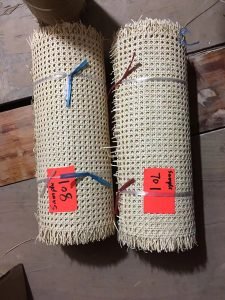
Cada año, nuestra planta de producción envía miles de tejido de caña de ratán 1 rollos a proyectos de hostelería en Europa, Oriente Medio y el Sudeste Asiático. Sin embargo, una pregunta vuelve una y otra vez tanto de diseñadores como de gerentes de compras: ¿cómo se utiliza realmente bien este material en un hotel o restaurante? proceso de control de calidad 2? El problema es claro:los materiales naturales 3 pueden parecer arriesgados en espacios comerciales de mucho tránsito. Los huéspedes derraman bebidas. Las sillas se arrastran por los suelos. La humedad fluctúa. Sin el enfoque adecuado, el ratán puede parecer desgastado en cuestión de meses. Pero cuando se hace bien, transforma un espacio.
La rejilla de ratán natural eleva los interiores de hoteles y restaurantes al añadir calidez orgánica, textura y profundidad visual a muebles, paneles de pared, divisiones y acentos decorativos. Seleccionar el grado correcto, aplicar acabados adecuados y obtener el material de un proveedor mayorista confiable garantizan que este material sostenible funcione maravillosamente en entornos comerciales exigentes.
A continuación, detallamos exactamente cómo elegir el grado correcto, dónde aplicar la malla de ratán para un máximo impacto, cómo encontrar un proveedor de confianza y cómo mantener todo impecable en zonas de comedor concurridas. Vamos a ello.
¿Cómo elijo el grado correcto de cincha de ratán natural para mi proyecto de mobiliario de hotel?
Cuando clasificamos la malla de ratán en nuestra planta de procesamiento en Indonesia, clasificamos cada lote a mano. Las diferencias entre grados no son solo cosméticas, afectan directamente a la durabilidad de los muebles de su hotel. Elegir el grado incorrecto es uno de los errores más costosos que puede cometer un gerente de compras.
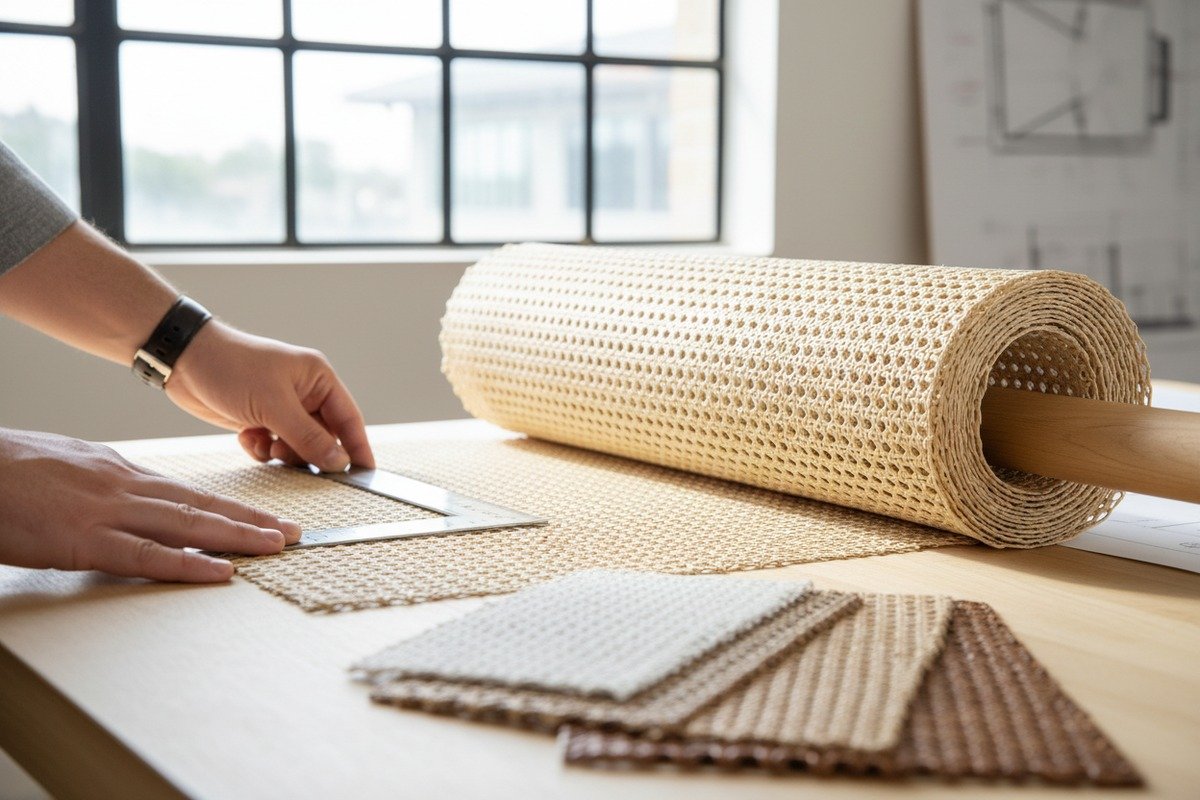
Para elegir el grado correcto, evalúe la malla de ratán en función de la uniformidad de las hebras, la suavidad de la superficie, la tensión del tejido y la consistencia del color. El Grado A (o "primera calidad") ofrece las menores imperfecciones y es el más adecuado para muebles de hotel de lujo, mientras que el Grado B funciona bien para aplicaciones de gama media o semicubiertas.
Comprensión de las calidades del ratán tejido
No toda la malla de ratán es igual. El sistema de clasificación refleja la calidad de la piel de ratán cruda y la precisión del tejido. Aquí hay un desglose simple de lo que cada grado significa típicamente en la práctica.
| Grade | Calidad de la hebra | Consistencia del color | Mejor uso en hoteles |
|---|---|---|---|
| Grado A 4 (Primera calidad) | Grosor uniforme, superficie lisa, nudos mínimos | Tono rubio natural y uniforme | Cabeceros, muebles de vestíbulo, respaldos de sillas visibles |
| Grado B (Estándar) | Ligera variación en el grosor, pequeñas marcas en la superficie | Ligera variación de color | Mesas auxiliares, inserciones de gabinetes, paneles semivisibles |
| Grado C (Económico) | Nudos notables, parches ásperos, hebras irregulares | Tonos mixtos, algunas manchas oscuras | Paneles traseros, elementos estructurales ocultos |
Factores clave a inspeccionar antes de realizar el pedido
Por nuestra experiencia enviando a hoteles en España, los Países Bajos y Australia, aquí están las cosas que más importan al inspeccionar las muestras:
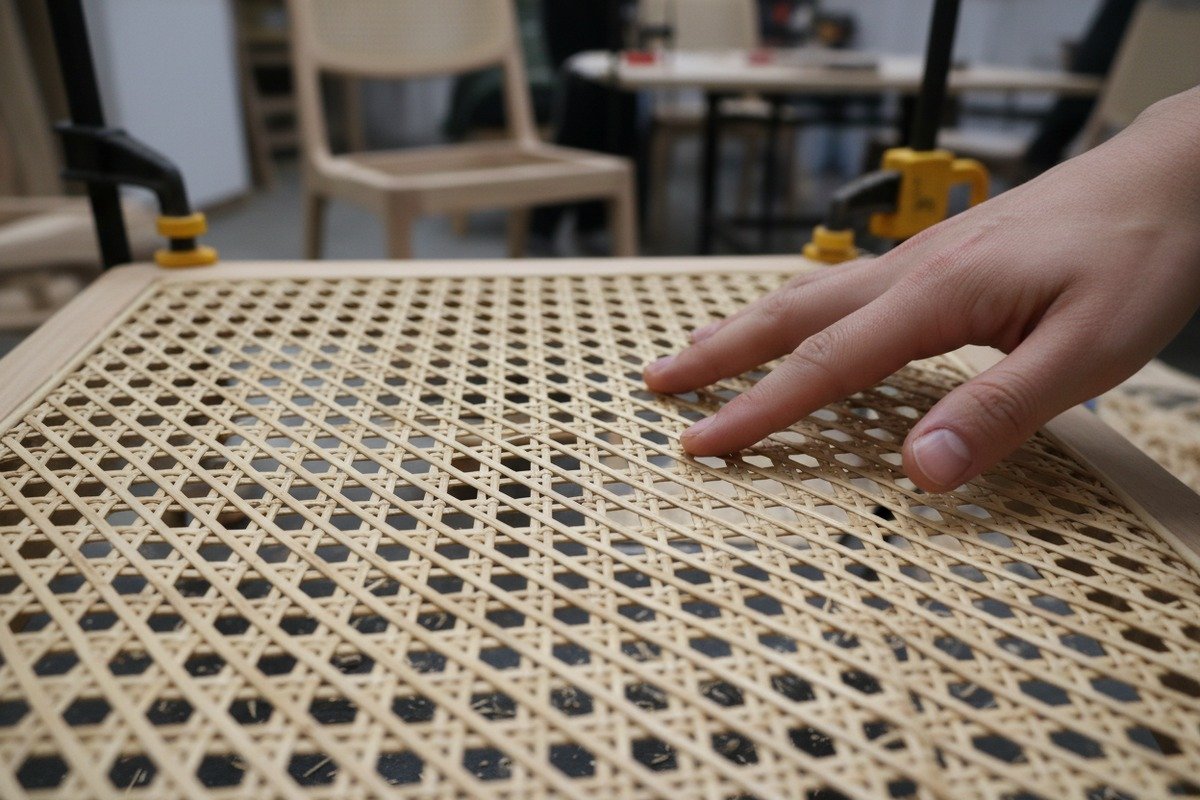
Uniformidad de las hebras. Sostenga la muestra a la luz. La cincha de Grado A debe mostrar espacios uniformes en el tejido. Los espacios irregulares significan que las hebras varían en diámetro. Esto creará puntos débiles con el tiempo.
Suavidad de la superficie. Pase la mano por la cincha. Si se engancha o se siente astillada, los huéspedes lo notarán. Los muebles de hotel están a centímetros de la piel. La cincha áspera genera quejas.
Tensión del tejido. Presione suavemente en el centro de una lámina de cincha. Una buena cincha vuelve a su forma. Las cinchas sueltas se hunden más rápido bajo uso repetido, especialmente en asientos de sillas.
Consistencia del color. El ratán natural tiene cierta variación; eso es parte de su encanto. Pero los grandes parches de color o las manchas oscuras en un rollo de Grado A generalmente indican problemas de procesamiento o almacenamiento deficientes.
Emparejar el grado con la aplicación
Un error común es pedir Grado A para cada aplicación. Eso aumenta el costo sin agregar valor. Para los elementos que los huéspedes tocan directamente, como los respaldos de las sillas de comedor y las cabeceras, el Grado A vale la inversión. Para las puertas de gabinetes que los huéspedes ven pero rara vez tocan, el Grado B ofrece excelentes resultados a un precio más bajo. Para el revestimiento oculto o las áreas detrás de la tapicería, el Grado C es perfectamente funcional.
Siempre recomendamos pedir muestras de al menos dos grados antes de comprometerse con un pedido completo. Esto permite que su equipo de diseño compare lado a lado y tome una decisión segura que equilibre la estética con el presupuesto.
Selección del patrón de tejido
Más allá de la calificación, el patrón de tejido 5 importa para la intención del diseño. Un patrón clásico de caña abierta hexagonal se lee como tradicional y elegante. Un tejido de cesta más apretado se siente más moderno y robusto. Una simple cuadrícula cuadrada abierta ofrece un aspecto limpio y minimalista. Cada patrón tiene una densidad visual y un comportamiento estructural diferentes.
| Weave Pattern | Densidad visual | Resistencia estructural | Adecuación al estilo de diseño |
|---|---|---|---|
| Caña abierta hexagonal 6 | Bajo (aireado, abierto) | Moderada | Tradicional, costero, colonial |
| Motivo de diamante | Medio-alto | Alto | Bohemio, ecléctico, boutique |
| Tejido de cesta apretado | Alto (denso) | Muy alto | Moderno, escandinavo, minimalista |
| Cuadrícula cuadrada abierta | Bajo-medio | Moderada | Contemporáneo, moderno de mediados de siglo |
Elegir la combinación adecuada de grado y patrón es cómo pasas de "aspecto genérico de ratán" a "diseño de hotel exclusivo"."
¿Dónde puedo usar tejido de ratán en el diseño interior de mi restaurante para crear una sensación de lujo?
Al recorrer proyectos de restaurantes que hemos suministrado en Dubái y Grecia, una cosa destaca: la colocación de la rejilla de ratán importa más que la cantidad que se utiliza. Un solo panel bien colocado puede hacer más que cubrir una pared entera.
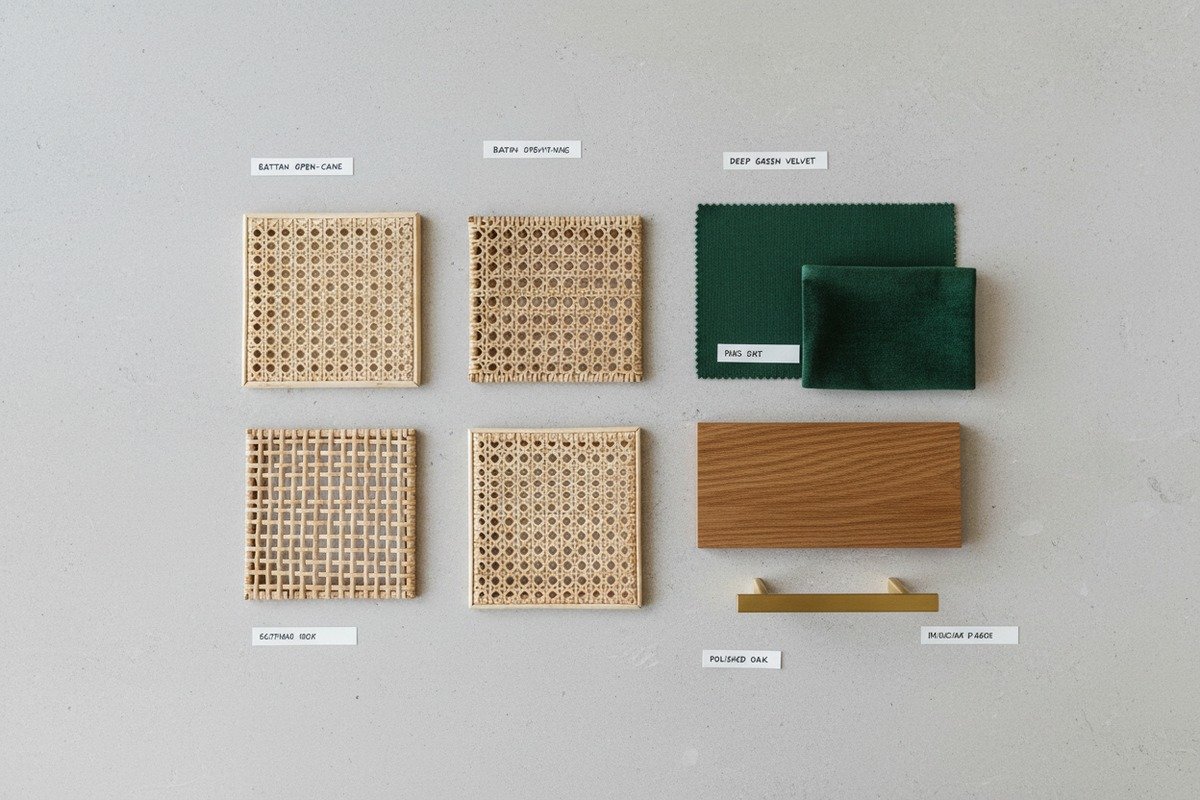
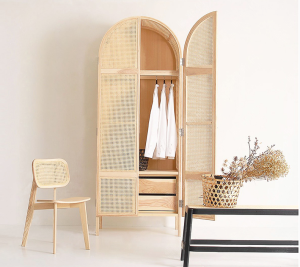
La rejilla de ratán crea una sensación de lujo en los restaurantes cuando se utiliza estratégicamente en paneles de techo, separadores de ambientes, frentes de barra, respaldos de banquetas, paneles de acento de pared, puertas de gabinetes y pantallas de lámparas colgantes. La clave es combinar la textura orgánica del ratán con materiales refinados como latón, mármol o madera oscura.
Ideas de colocación de alto impacto
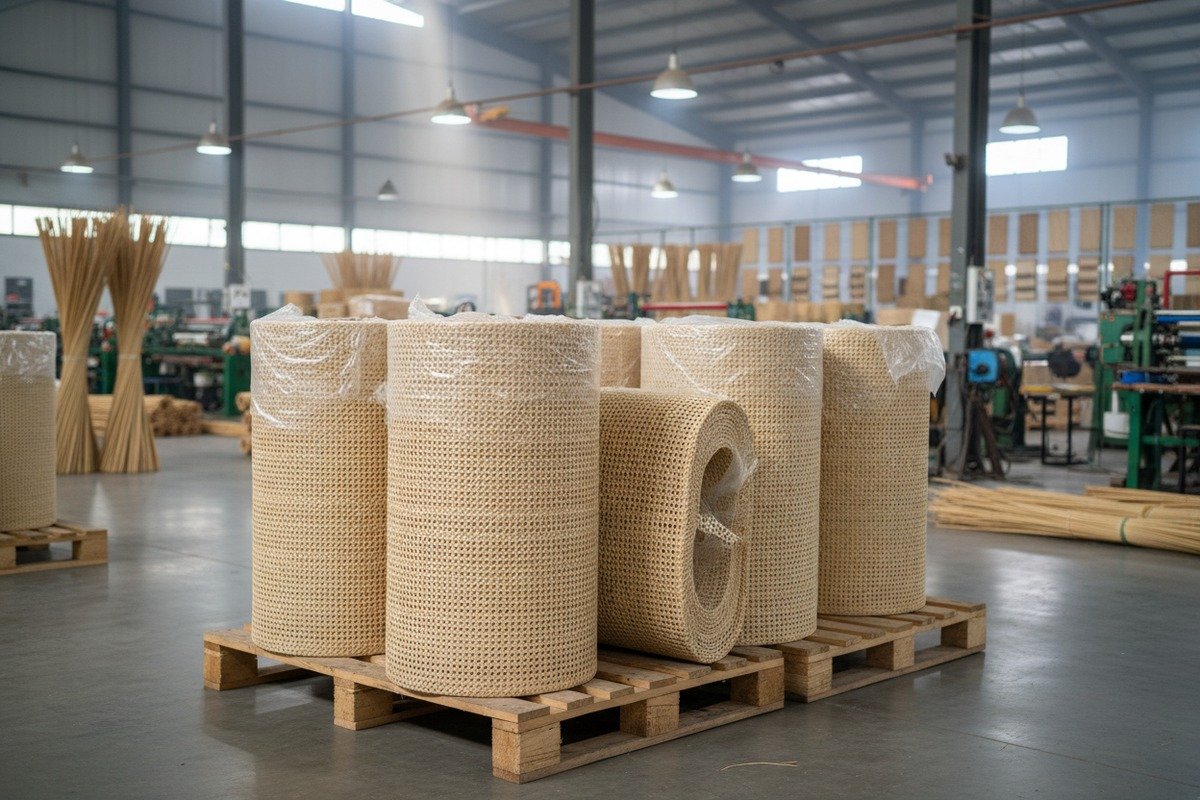
Aquí están los lugares más efectivos donde la rejilla de ratán ofrece una estética premium en los comedores.
Paneles de techo y soffits. Enmarcar la rejilla de ratán dentro de una cuadrícula de techo empotrada agrega calidez en la parte superior sin abarrotar las paredes. Los paneles de ratán retroiluminados en los techos crean un brillo suave y ambiental que los materiales sintéticos simplemente no pueden replicar.
Divisores de habitaciones y particiones. La rejilla de ratán tensada dentro de marcos de madera o metal crea divisores semitransparentes. divisores de ambientes 7 Estos ofrecen separación visual entre las zonas de comedor, preservando la apertura. Los invitados sienten una sensación de privacidad sin sentirse encerrados. Esto funciona especialmente bien en restaurantes de planta abierta que necesitan áreas distintas para diferentes tamaños de grupos.
Frentes de barra. La cara frontal de un mostrador de bar es un espacio privilegiado para el impacto del diseño. Forrarlo con rejilla de ratán, enmarcada en madera oscura o metal negro mate, crea un punto focal instantáneo. Este es uno de los lugares más fotografiados en los restaurantes que utilizan esta técnica.
Respaldos de banquetas y cabinas. En lugar de tapicería completa, insertar paneles de rejilla de ratán en la sección superior de los asientos de las cabinas añade ligereza visual. También mejora la ventilación detrás de los invitados sentados, lo que es importante en climas cálidos.
Paneles de acento de pared. Un gran panel de ratán enmarcado detrás de una mesa destacada o en la entrada del restaurante funciona como arte textil. Añade textura y dimensión sin ser tan pesado o costoso como revestimientos de piedra o madera.
Combinación de ratán con otros materiales
La rejilla de ratán por sí sola puede parecer informal. El lujo proviene del contraste. Nuestros clientes en proyectos de hostelería de alta gama suelen combinar el ratán con estos materiales:
- Metales de latón u oro — Añade una capa de refinamiento y calidez.
- Marcos de madera oscura — Crea un contraste rico y terroso.
- Superficies de mármol — La cualidad suave y fresca del mármol contra la textura cruda del ratán crea interés sensorial.
- Lino y textiles naturales — Refuerza una paleta orgánica cohesiva.
- Acero negro mate — Ofrece un toque industrial-chic que evita que el ratán parezca demasiado rústico.
Sinergia de iluminación y ratán
La rejilla de ratán interactúa maravillosamente con la luz. Cuando se ilumina desde atrás, el tejido abierto proyecta intrincados patrones de sombras en las superficies circundantes. Las lámparas colgantes envueltas en rejilla de ratán crean charcos de luz cálida y filtrada sobre las mesas del comedor. Esta es una forma rentable de hacer una gran declaración visual. Hemos visto a diseñadores de restaurantes utilizar nuestra rejilla de caña abierta hexagonal para proyectos personalizados de pantallas de lámparas, donde un solo rollo de material produce veinte o más pantallas.
Beneficios Acústicos
Algo que a menudo se pasa por alto: la superficie texturizada y permeable de la rejilla de caña ofrece sutiles beneficios acústicos. En los restaurantes, las superficies duras como el azulejo, el vidrio y el hormigón reflejan el sonido y crean ruido. Los paneles de rejilla de ratán en paredes o techos ayudan a difundir las ondas sonoras. No son un reemplazo para el tratamiento acústico profesional, pero suavizan el entorno sonoro. Los invitados notan la diferencia, incluso si no pueden nombrarla. Describen el espacio como "cálido" o "cómodo", que es exactamente la sensación de lujo que desea.
¿Cómo encuentro un proveedor mayorista confiable de rejilla de ratán de alta calidad para mis proyectos comerciales?
Durante la última década, hemos visto a muchos compradores luchar con este desafío exacto. Encuentran un proveedor en línea, reciben una muestra de gran apariencia, realizan un pedido a granel y luego los productos entregados no coinciden. La brecha de consistencia entre la muestra y la producción a granel es el mayor riesgo en el abastecimiento de ratán.
Para encontrar un proveedor confiable de ratán al por mayor, verifique su capacidad de producción a través de visitas a la fábrica o recorridos en video, solicite muestras de varios lotes antes de realizar el pedido, verifique las certificaciones de exportación y el cumplimiento fitosanitario, evalúe su proceso de control de calidad y confirme que pueden escalar de manera consistente para proyectos de volumen comercial.
Señales de Alerta a Tener en Cuenta
Antes de comprometerse con cualquier proveedor, tenga en cuenta estas señales de advertencia:
- No hay fotos ni videos de fábrica disponibles. Un fabricante real puede mostrarle su planta de producción. Si solo muestran tomas de productos sobre un fondo blanco, pueden ser una empresa comercial que revende de fuentes desconocidas.
- Precios inusualmente bajos sin explicación. El procesamiento del ratán implica pasos laboriosos. Si un precio parece demasiado bueno para ser verdad, es probable que el proveedor esté escatimando en clasificación, secado o tratamiento.
- Muestra única solamente. Un proveedor seguro enviará múltiples muestras de diferentes lotes de producción para que pueda ver la consistencia. Una muestra perfecta no significa nada si la calidad a granel varía.
- Sin certificados fitosanitarios ni de fumigación. El ratán es un material natural que cruza fronteras internacionales. La certificación de fumigación adecuada es legalmente requerida para la importación a la UE, EE. UU. y Australia. Cumplimiento fitosanitario 8 Un proveedor que no pueda proporcionar estos documentos causará demoras en la aduana.
Preguntas para hacerle a su posible proveedor
Aquí hay una lista de verificación que recomendamos a cada gerente de adquisiciones que evalúa proveedores de cincha de ratán:
| Pregunta | Por qué importa |
|---|---|
| ¿De dónde se obtiene y procesa su ratán? | La trazabilidad garantiza la calidad del material y el abastecimiento ético. |
| ¿Puedo ver su proceso de clasificación? | Confirma que realmente clasifican por calidad, no solo venden lo que sale del telar. |
| ¿Cuál es su capacidad de producción mensual? | Asegura que pueden cumplir con el plazo de su proyecto sin caídas de calidad. |
| ¿Ofrecen anchos y patrones de tejido personalizados? | Los proyectos comerciales a menudo necesitan tamaños no estándar. |
| ¿Qué embalaje utilizan para la exportación? | Un embalaje deficiente causa daños en tránsito: rollos aplastados, moho por humedad, infestación de insectos. |
| ¿Pueden proporcionar referencias de otros clientes B2B? | La prueba social de compradores comerciales reales es la mejor validación. |
| ¿Cuál es su tasa de defectos y política de devoluciones? | Cada proveedor tiene algunos defectos. Los honestos lo reconocen y tienen políticas claras. |
El valor de un proveedor integral
Para proyectos de hoteles y restaurantes que requieren múltiples productos de ratán —cuerda, cañas de ratán, paneles de mimbre, caña de atar— trabajar con un único proveedor integrado simplifica enormemente la logística. Desde nuestras operaciones en Foshan, coordinamos entre nuestras propias instalaciones de procesamiento en Indonesia y más de treinta fábricas asociadas. Esto significa que un comprador que pide cuerda de ratán para sillas de comedor y cañas de ratán para pantallas decorativas recibe todo de una sola fuente, un solo envío, un estándar de calidad.
Dividir los pedidos entre múltiples proveedores pequeños introduce riesgos en cada punto: colores no coincidentes, diferentes plazos de entrega, calificación inconsistente. Para proyectos de hostelería a gran escala, la consolidación no es solo conveniente, es una estrategia de control de calidad.
Solicitar un pedido de prueba
Siempre animamos a los nuevos clientes a realizar un pequeño pedido de prueba antes de comprometerse con cantidades para todo el proyecto. Un pedido de prueba de dos a cinco rollos revela cómo el proveedor maneja la comunicación, el embalaje, la documentación de envío y la consistencia del producto. Es una pequeña inversión que previene problemas a gran escala. Preste atención a cómo empaquetan los rollos, qué tan rápido responden a las preguntas y si el producto coincide con la muestra.
¿Cuáles son las mejores maneras de mantener y proteger la rejilla de ratán natural en áreas de comedor de mucho tránsito?
Según los comentarios que recibimos de grupos de restaurantes en Turquía, Australia y EE. UU., la ansiedad por el mantenimiento es la razón número uno por la que los compradores dudan en comprar ratán. Les encanta el aspecto, pero les preocupa la realidad a largo plazo. La buena noticia: con una rutina de cuidado sencilla, el ratán natural funciona notablemente bien en entornos de comedores comerciales.
Las mejores maneras de mantener la rejilla de ratán natural en áreas de comedor de mucho tránsito incluyen aplicar una laca o sellador protector antes de la instalación, limpiar las superficies regularmente con un paño húmedo, evitar la exposición prolongada a la humedad directa, controlar los niveles de humedad interior y programar un sellado periódico cada 12 a 18 meses.
Protección previa a la instalación
El paso de mantenimiento más importante ocurre antes de que el ratán se instale. Aplicar un acabado protector transparente, ya sea una laca de poliuretano o un sellador a base de aceite natural, crea una barrera contra la humedad, los derrames y la exposición a los rayos UV. Este paso es innegociable para entornos de restaurantes.
Recomendamos una laca de acabado satinado para la mayoría de las aplicaciones de comedor. Protege el material sin añadir un brillo artificial que reste valor al aspecto natural. Para entornos costeros o de alta humedad, un sellador de grado marino proporciona una resistencia adicional a la humedad.
Rutina de cuidado diario y semanal
Aquí hay un programa de mantenimiento práctico que compartimos con nuestros clientes de restaurantes:
| Frequency | Acción | Tools Needed |
|---|---|---|
| Daily | Limpiar con un paño suave ligeramente húmedo | Paño de microfibra, agua tibia |
| Semanalmente | Aspirar las grietas con un accesorio de cepillo para eliminar el polvo y las migas | Aspiradora de mano o boquilla de cepillo |
| Mensualmente | Inspeccionar si hay hebras sueltas, grietas o decoloración | Inspección visual |
| Cada 12–18 meses | Volver a aplicar sellador o laca protectora | Laca transparente satinada, cepillo suave |
| Según sea necesario | Limpiar las manchas inmediatamente con agua y jabón suave | Jabón suave para platos, paño húmedo |
Manejo de derrames y manchas
La velocidad lo es todo. Cuando un invitado derrama vino, salsa o café sobre una malla de ratán, sécalo inmediatamente con un paño seco. Luego, límpialo con un paño humedecido en agua tibia con una gota de jabón suave. No empapes la zona. El exceso de humedad es el enemigo. Después de limpiar, deja que la zona se seque al aire por completo.
Para manchas difíciles, una pasta de bicarbonato de sodio y agua aplicada suavemente con un cepillo suave puede eliminar la decoloración sin dañar las fibras. Evita los limpiadores químicos agresivos, la lejía o los estropajos abrasivos. Estos eliminan los aceites naturales del ratán y aceleran el agrietamiento.
Control de humedad y medio ambiente
El ratán es un fibra natural 9. Se expande ligeramente en alta humedad y se contrae en condiciones secas. En restaurantes con aire acondicionado, el ambiente interior suele ser lo suficientemente estable como para que esto no sea una preocupación. Sin embargo, los restaurantes en climas tropicales o aquellos con secciones al aire libre deben monitorear los niveles de humedad 10.
El rango ideal para la longevidad del ratán se encuentra entre 40% y 60% de humedad relativa. Por debajo de 30%, el ratán se vuelve quebradizo y propenso a agrietarse. Por encima de 70%, corre el riesgo de crecimiento de moho. Un higrómetro básico cerca de las instalaciones de ratán ayuda al personal a anticiparse a los problemas.
Cuándo reparar vs. reemplazar
No cada hebra dañada significa reemplazo. Las pequeñas grietas en hebras individuales se pueden estabilizar con una capa fina de pegamento para madera y un retoque de sellador. Una sola hebra rota en un panel de malla a menudo puede ser tejida de nuevo o reparada por un artesano hábil.
El reemplazo completo está justificado cuando la integridad estructural se ve comprometida: cuando la malla se hunde bajo peso normal, cuando el moho ha penetrado profundamente en las fibras, o cuando más del 15-20% de la superficie visible muestra daños. En nuestra experiencia, un panel de malla de ratán de Grado A bien mantenido en un restaurante debería durar de cinco a ocho años antes de necesitar ser reemplazado. Eso es un fuerte retorno de la inversión en comparación con muchas telas de tapicería que se desgastan en dos o tres años.
Comparación de mantenimiento: Ratán vs. Alternativas
Algunos compradores comparan el ratán con alternativas sintéticas como el ratán de plástico o el mimbre de resina. Los materiales sintéticos son, de hecho, de bajo mantenimiento. Pero carecen de la textura auténtica, la calidez y el carácter que atraen a los huéspedes al ratán natural en primer lugar. La inversión en mantenimiento para el ratán natural es modesta, medida en minutos por día, mientras que la recompensa en diseño es significativa.
Conclusión
La rejilla de caña de ratán natural es un material probado para interiores de hoteles y restaurantes cuando se elige el grado correcto, se coloca estratégicamente, se obtiene de un proveedor mayorista confiable y se sigue una rutina de mantenimiento simple. El resultado es un espacio que se siente cálido, distintivo y genuinamente acogedor para cada huésped.
Notas al pie
1. Define la rejilla de caña de ratán y sus características. ↩︎
2. Explica la importancia y las mejores prácticas del control de calidad en la fabricación. ↩︎
3. Discute los beneficios y desafíos de los materiales naturales en el diseño de interiores. ↩︎
4. Explica los principios generales y los criterios para los sistemas de clasificación de ratán. ↩︎
5. Ilustra varios patrones de tejido de ratán y sus aplicaciones de diseño. ↩︎
6. Detalla las características y usos del tejido de caña abierta hexagonal. ↩︎
7. Proporciona una definición completa y usos de los divisores de ambientes de una fuente autorizada. ↩︎
8. Proporciona directrices para un sistema regulatorio de importación fitosanitaria de una organización internacional autorizada. ↩︎
9. Proporciona una definición completa y ejemplos de fibras naturales. ↩︎
10. Explica cómo los niveles de humedad afectan la preservación y la longevidad de los materiales naturales. ↩︎
 English
  Español de México
  العربية
  Deutsch
  Français
  Русский