
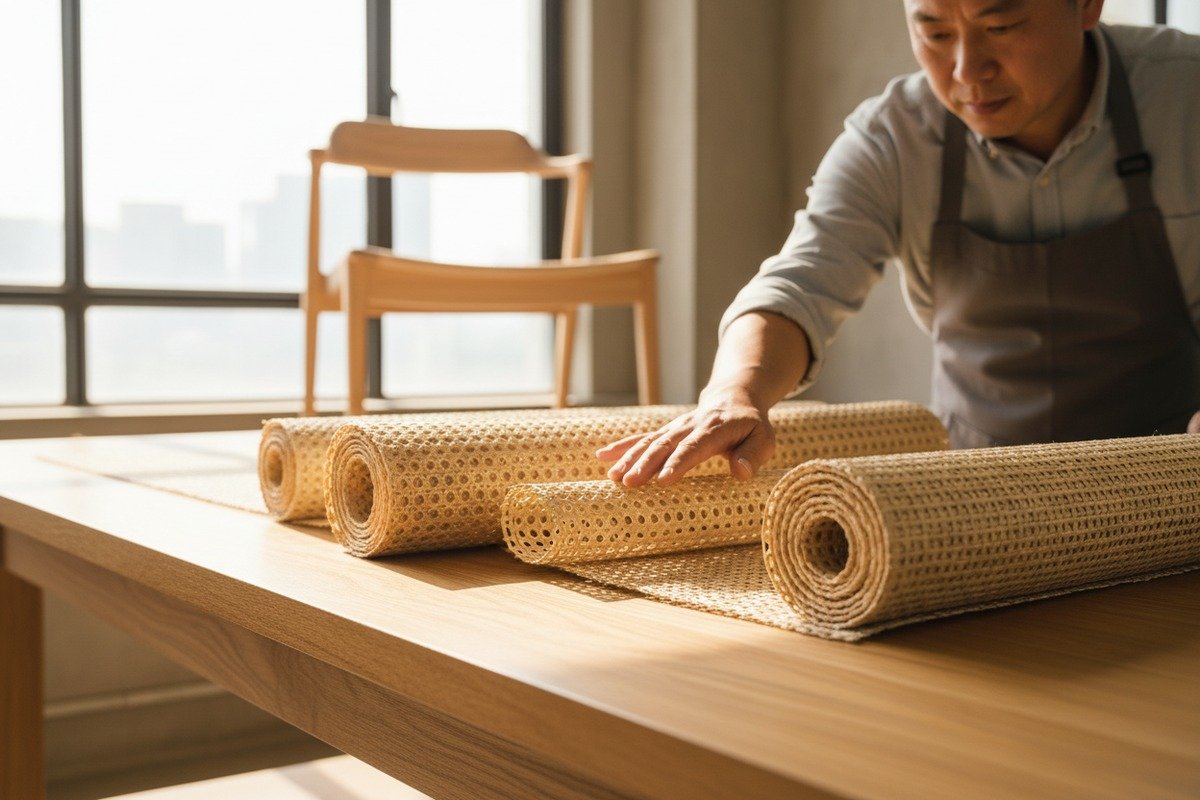
Every week, our sales team fields calls from furniture makers who bought the wrong rattan webbing grade and ended up with sagging seats or cracked panels.
Choosing the right rattan cane webbing grade depends on matching the rattan species, weave pattern, and material thickness to your specific furniture type. High-traffic chairs need dense, flexible Indonesian radio weave, while cabinet panels work best with close-woven or hexagonal patterns that prioritize aesthetics and privacy over structural flex.
This guide breaks down every grade, weave, and material option so you can make a confident decision. We will walk through real grading criteria, durability data, cost comparisons, and quality checks. Let’s start with the fundamentals.
How do I distinguish between Grade A and lower rattan webbing grades for my high-end furniture projects?
Many buyers assume all tejido de caña de ratán 1 looks the same on a roll. That confusion has cost our clients thousands in returns and rework.
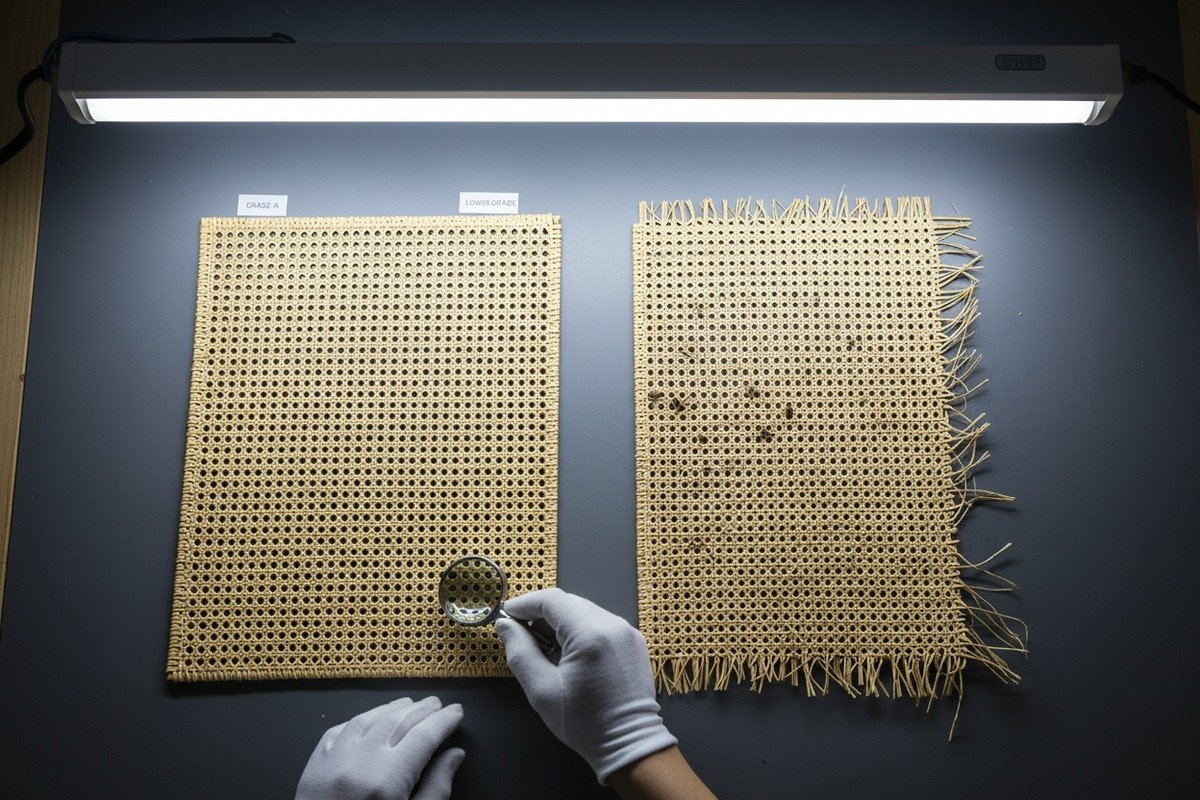
Grade A rattan webbing features uniform strand thickness, consistent color without dark spots or cracks, tight and even weave tension, and smooth surface texture. Lower grades show irregular strand widths, color mismatches, loose weave gaps, and visible knots or fiber breaks that compromise both appearance and structural reliability.
What Makes Grade A Different at the Raw Material Level
The grading process starts long before weaving. At our rattan processing facility in Indonesia, we sort raw rattan poles by diameter, surface smoothness, and moisture content. Grade A cane comes from the outer skin of mature rattan vines, specifically from species like Manau, which can grow up to 4 inches in diameter. Ratán Manau 2 This outer layer is naturally harder, smoother, and more uniform in color.
Lower grades use inner pith or younger vines. These strands are softer, more porous, and prone to breaking during weaving. When you hold a Grade A sheet up to light, the weave pattern should be symmetrical. Every opening should be the same size. Every strand should be roughly the same width.
Visual Indicators You Can Check Immediately
You do not need a lab to spot grading differences. Here is a quick reference table we share with our wholesale partners:
| Indicador de Calidad | Grado A | Grado B | Grado C |
|---|---|---|---|
| Grosor de la hebra | Uniform (1.5–2mm) | Slight variation (1–2.5mm) | Inconsistent (0.8–3mm) |
| Textura de la superficie | Smooth, glossy skin | Rugosidad menor | Rough, fibrous, flaky |
| Consistencia del color | Even straw-yellow or cream | Occasional dark spots | Patchy, mixed tones |
| Tejer tensión | Ajustado, sin huecos | Minor looseness | Visible gaps, sag risk |
| Knots or breaks | Ninguna | 1–2 per square foot | 3+ per square foot |
| Flexibilidad | Se dobla sin agrietarse | Slight cracking at sharp angles | Cracks easily |
Species and Origin Matter
Not all especies de ratán 3 produce Grade A webbing. Manau rattan is the gold standard for structural strength. Ratán indonesio 4, often from Kalimantan or Sulawesi, is prized for its lighter color and superior flexibility. Vietnamese rattan 5 tends to be darker and rougher. It works well for rustic aesthetics but rarely qualifies as Grade A for premium furniture lines.
When we export to markets like the Netherlands or Australia, buyers specifically request Indonesian-origin Grade A with bleached or natural finish. They need consistency across large production runs. A single roll with color variation can disrupt an entire batch of chair backs or headboard panels.
The Cost of Getting It Wrong
Choosing a lower grade for high-end furniture creates hidden costs. Rework labor, customer complaints, and brand damage all add up. We have seen furniture factories in Turkey and Spain switch to Grade A after a single season of warranty claims on Grade B seats. The upfront price difference is roughly 15–25%, but the long-term savings in quality assurance are significant.
For high-end projects, always request a sample swatch before ordering rolls. Our standard practice is to send 12-inch samples so buyers can test weave tension, color match, and flexibility before committing to a full order.
Which rattan cane webbing grade is most durable for my chairs and heavy-use seating?
Chairs take more punishment than any other furniture piece. We have tested webbing samples that looked identical on the roll but performed very differently after six months of daily use.
For chairs and heavy-use seating, medium-thick Indonesian rattan in a radio (square) weave pattern offers the best durability. The open grid structure distributes weight evenly, allows airflow to reduce moisture damage, and the flexible Indonesian rattan species resists cracking under repeated stress far better than rigid or thin alternatives.
Why Weave Pattern Affects Chair Durability
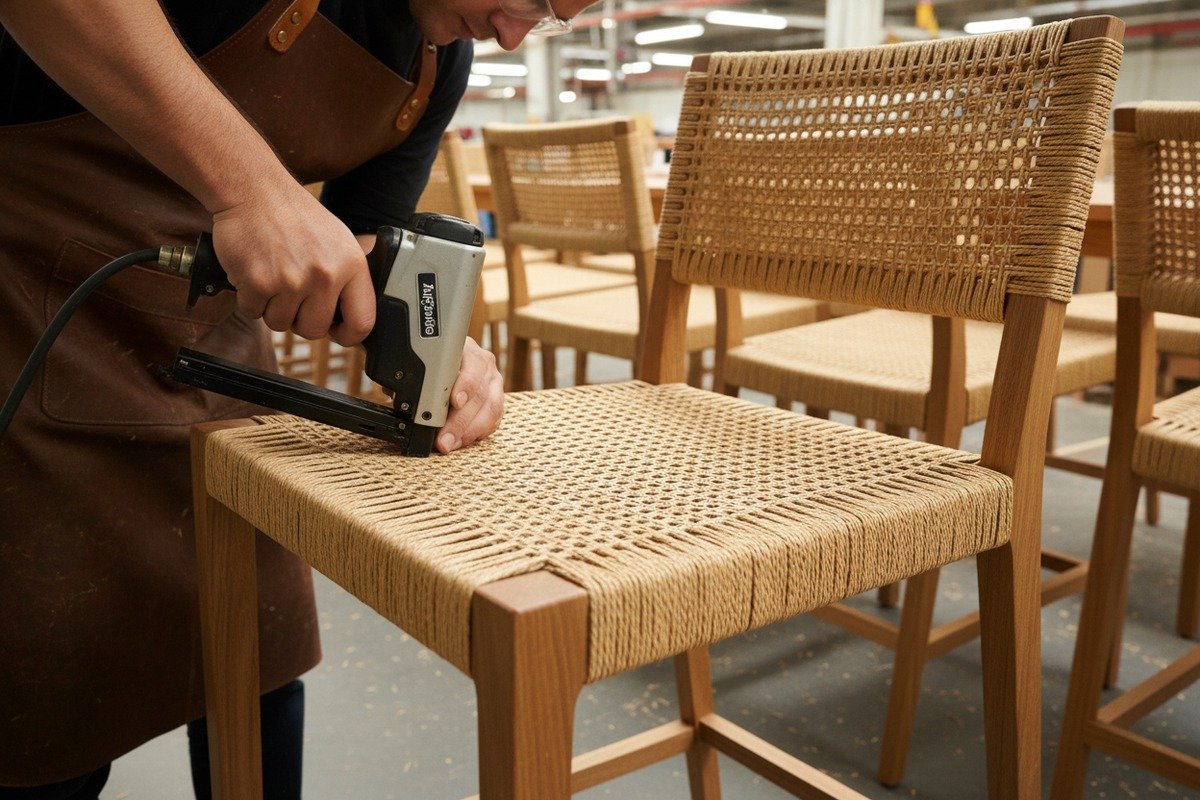
The weave pattern is not just decoration. It is engineering. An open radio weave creates a grid of small squares. radio weave pattern 6 Each square shares the load with its neighbors. When someone sits down, the force spreads across dozens of intersection points. This prevents any single strand from bearing too much weight.
A close-woven pattern, by contrast, is beautiful for panels but too rigid for seating. It does not flex. It does not breathe. Over time, moisture from body heat gets trapped and weakens the fibers. Hexagonal patterns 7 fall in between. They look stunning but have fewer intersection points than radio weave, so they offer slightly less load distribution.
Matching Thickness to Function
Strand thickness matters for seating more than for any other application. Too thin and the webbing sags within weeks. Too thick and it feels stiff, uncomfortable, and cracks at flex points.
| Seating Application | Recommended Strand Thickness | Best Weave Pattern | Key Benefit |
|---|---|---|---|
| Dining chairs (daily use) | 1.8–2.2mm | Radio/square weave | Even weight distribution |
| Lounge chairs (extended sitting) | 2.0–2.5mm | Radio/square weave | Support + comfort |
| Bar stools (frequent on/off) | 1.5–2.0mm | Radio/square weave | Flexibility under quick loads |
| Outdoor chairs | Synthetic (any thickness) | Radio or hexagonal | Resistencia a la intemperie |
| Decorative accent chairs | 1.2–1.8mm | Hexagonal or radio | Aesthetics over durability |
The Role of Installation in Durability
Even the best Grade A radio weave will fail if installed incorrectly. For chair seats, the webbing must sit in a properly routed groove. The junco de caña 8 must fit snugly. We recommend a spline diameter that is 0.5mm larger than the groove width so it compresses slightly and holds firm.
Glue alone is not enough. Many of our furniture factory clients in the USA and Australia now use a combination of wood glue in the groove and small staples on the underside for added security. This dual-fix method extends the lifespan of the seat by 30–40% based on feedback from our partners.
Natural vs. Synthetic for High-Traffic Seating
This is where opinions divide. Natural rattan gives an authentic, warm feel. It ages beautifully, developing a honey-toned patina over years. But it does not love moisture or direct sunlight. For indoor dining chairs in a dry climate, natural Grade A radio weave is the clear winner.
For outdoor seating, restaurants, or humid environments, synthetic rattan webbing is the only practical choice. Modern PE-based synthetics mimic the look of natural cane remarkably well. They resist UV, rain, and temperature swings. However, purists argue that synthetics lack the organic texture and slight irregularity that makes natural rattan special.
Our recommendation for heavy-use indoor seating is always Grade A natural Indonesian radio weave, installed with spline and glue, finished with a light coat of clear lacquer for moisture protection. For outdoor or commercial spaces, go synthetic without hesitation.
How can I choose a cost-effective rattan grade for my cabinet panels without sacrificing the aesthetic?
Cabinet panels are one of the fastest-growing applications we supply. Designers want the rattan look, but procurement managers want to keep costs under control.
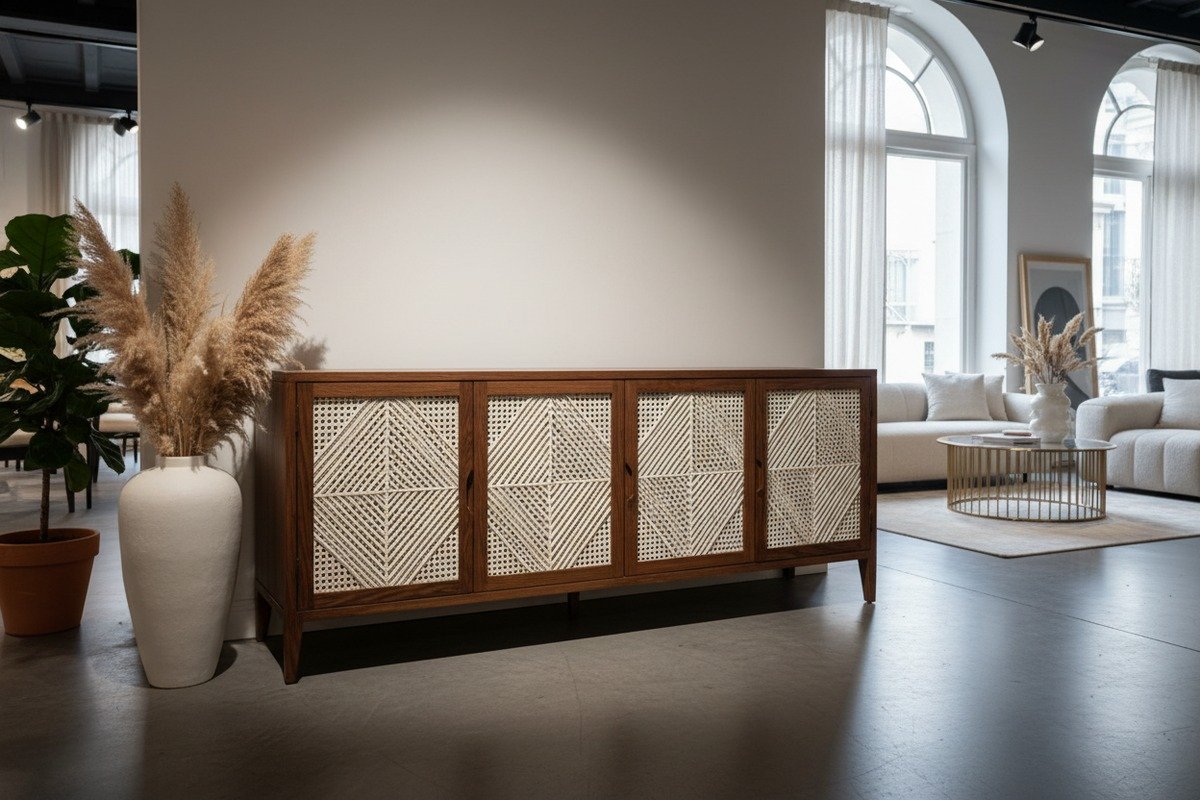
For cabinet panels, Grade B rattan in hexagonal or close-woven patterns delivers excellent aesthetics at 20–35% lower cost than Grade A. Since cabinet panels bear no structural load, minor strand variations are hidden behind frames, and the decorative weave pattern becomes the visual focus rather than individual strand perfection.
Why Cabinets Are Different from Chairs
Cabinet panels sit inside a frame. They do not flex. They do not bear weight. Nobody touches them repeatedly. This means the top priority shifts from durability to appearance. And here is the key insight: a hexagonal or close-woven pattern hides minor imperfections that would be obvious in an open radio weave.
When we advise our wholesale clients in Spain and the Netherlands, we often suggest Grade B for cabinet work. The slight color variations in Grade B actually add character. They create an organic, handcrafted look that many designers prefer over the clinical uniformity of Grade A.
Cost Comparison by Grade and Pattern
Here is a pricing framework based on our current export catalog. Exact prices vary by order volume and destination, but the ratios hold:
| Tipo de tela | Grade A (per linear meter, 24" wide) | Grade B (per linear meter, 24" wide) | Savings with Grade B |
|---|---|---|---|
| Radio/square weave | $8.50–$10.00 | $6.00–$7.50 | ~25% |
| Hexagonal weave | $7.00–$9.00 | $5.00–$6.50 | ~28% |
| Close-woven | $9.00–$11.00 | $6.50–$8.00 | ~30% |
| Geométrico de diamantes | $10.00–$12.00 | $7.50–$9.00 | ~25% |
These numbers show that Grade B close-woven delivers the biggest cost saving. And for cabinet panels, close-woven is often the best aesthetic choice anyway. It provides privacy (you cannot see through it), a sophisticated texture, and a modern feel that works in both boho and minimalist interiors.
Vietnamese Rattan for Rustic Cabinet Designs
If your brand leans rustic or farmhouse, Vietnamese rattan is worth considering. It has a naturally darker tone and a rougher texture. These characteristics, which disqualify it from Grade A in most systems, actually enhance a rustic aesthetic. It costs less than Indonesian rattan and works perfectly in groove-mounted cabinet panels where flexibility is not critical.
We have seen a growing number of orders from furniture factories in the Middle East and India using Vietnamese rattan for kitchen cabinet inserts. The darker color complements walnut and dark oak frames beautifully.
Minimizing Waste for Panel Applications
One common mistake is ordering rolls that are too wide. Cabinet panels are usually narrow, between 8 and 16 inches. If you order 24-inch rolls, you waste 30–50% of the material in trimming. We offer custom-width rolls and cut-to-size sheets specifically for panel applications. This alone can save 10–15% on material costs without any change in grade.
Another tip: order samples in multiple weave patterns. A hexagonal weave might look perfect in a catalog photo but feel wrong when installed in your specific frame design. We ship sample sets of 6–8 patterns at minimal cost so buyers can compare side by side before committing.
What specific quality indicators should I check to ensure my rattan webbing grade matches my brand's standards?
Over the years, we have developed a quality control checklist alongside our clients. Some of the most damaging defects are invisible until the webbing is already installed.
Check six critical quality indicators: strand uniformity, weave tension consistency, moisture content (ideal 8–12%), color batch matching, flexibility without cracking, and packaging integrity. Request a certificate of origin specifying rattan species and grade, and always test a sample swatch under your specific installation conditions before placing bulk orders.
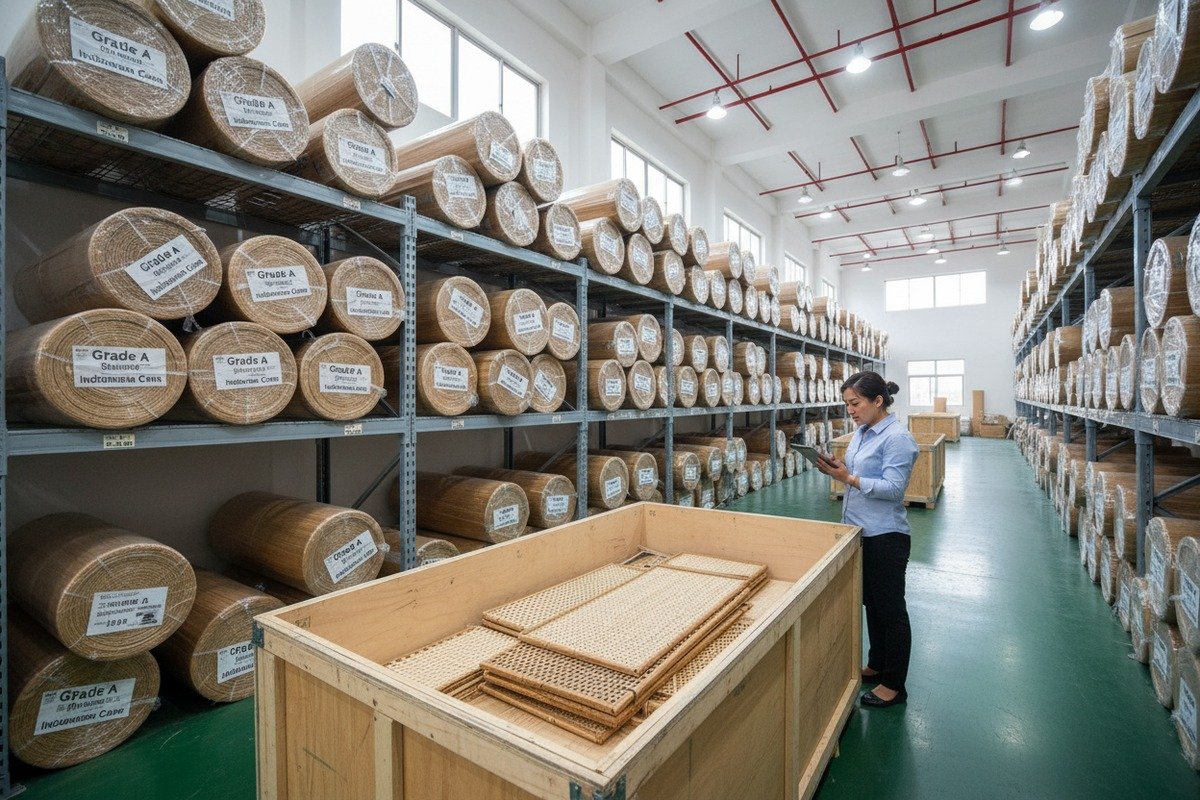
The Six-Point Quality Check
Every roll that leaves our warehouse goes through a six-point inspection. We recommend our wholesale partners apply the same checks when receiving shipments. Here is the breakdown:
1. Strand Uniformity. Measure strand width at five random points across the roll. Grade A should show less than 0.3mm variation. Grade B allows up to 0.5mm. Anything beyond that is Grade C or defective.
2. Weave Tension. Press your palm flat against the webbing surface. It should feel firm and even. If some sections feel tighter than others, the weaving machine was improperly calibrated or the rattan was unevenly prepared.
3. Moisture Content. This is the hidden killer. Rattan that is too dry becomes brittle and cracks during installation. Rattan that is too wet will shrink after mounting, creating gaps and sag. The ideal range is 8–12% moisture. You can check this with a basic wood moisture meter 9.
4. Color Batch Matching. Unroll two or three rolls from the same order side by side in natural daylight. They should match closely. Indoor lighting, especially fluorescent, can hide color differences that become obvious once furniture is in a showroom or customer's home.
5. Flexibility Test. Bend a strand 90 degrees. Grade A should bend smoothly without cracking. Grade B may show a faint surface mark but should not break. If the strand snaps, the material is too dry or too old.
6. Packaging Integrity. This is often overlooked but critical. Rattan webbing should arrive wrapped in protective paper or plastic, with cardboard cores inside rolls to prevent crushing. Damaged packaging usually means damaged webbing. We use double-layer kraft paper and rigid cardboard tubes for all export shipments.
Setting Up a Brand-Specific Quality Standard
If you are a furniture brand or wholesaler, do not rely only on supplier grading. Create your own specification sheet. Include acceptable ranges for every indicator above, plus any brand-specific requirements like maximum roll width, preferred color tone, or required weave pattern density.
Share this specification with your supplier before ordering. At our facility, we keep customer specification files on record. When a repeat order comes in from a client in Australia or the USA, we pull their file and match every parameter. This eliminates guesswork and reduces rejection rates to under 2%.
Common Quality Pitfalls to Avoid
Some buyers focus only on price per linear meter and ignore everything else. This leads to three common problems. First, mixed-grade rolls where Grade A and Grade B strands are woven together. Second, excessive moisture that causes post-installation shrinkage. Third, poor packaging that results in creased or cracked webbing on arrival.
Another pitfall is assuming that bleached rattan is always weaker. Bleaching does remove some surface hardness, but a well-processed bleached Grade A webbing retains excellent structural integrity. The key is the bleaching method. Chemical bleaching with hydrogen peroxide 10, done correctly, whitens without degrading the fiber. Sun bleaching is gentler but less consistent in color output.
Long-Term Aging and Patina
Natural rattan darkens over time. This is not a defect. It is a feature. The golden patina that develops over months and years adds warmth and character. However, if your brand requires color consistency across production runs that span years, you need to account for this. Keep a reference sample from each batch. Compare new shipments against it. And communicate to your end customers that natural color evolution is part of the material's charm.
If color stability is non-negotiable, consider UV-treated or lacquer-sealed webbing. We offer clear matte and satin finishes that slow the darkening process significantly while preserving the natural texture.
Conclusión
Choosing the right rattan cane webbing grade comes down to matching material, weave, and grade to your specific furniture application and brand standards.
Notas al pie
1. Found a comprehensive guide on what cane webbing is, its source, types, and production. ↩︎
2. Describes Manau rattan as a strong and durable species for furniture. ↩︎
3. Explores different types and varieties of rattan species. ↩︎
4. Highlights Indonesia’s role and history in rattan craftsmanship. ↩︎
5. Replaced with an authoritative Wikipedia article on the Vietnamese rattan and bamboo industry. ↩︎
6. Defines the radio box weave as a distinctive square pattern. ↩︎
7. Explains hexagonal openwork as a common basketry technique. ↩︎
8. Describes reed spline for fastening cane webbing into grooves. ↩︎
9. Explains how wood moisture meters work to measure moisture content. ↩︎
10. Describes hydrogen peroxide as a powerful oxidizing and bleaching agent. ↩︎


 English
  Español de México
  العربية
  Deutsch
  Français
  Русский