
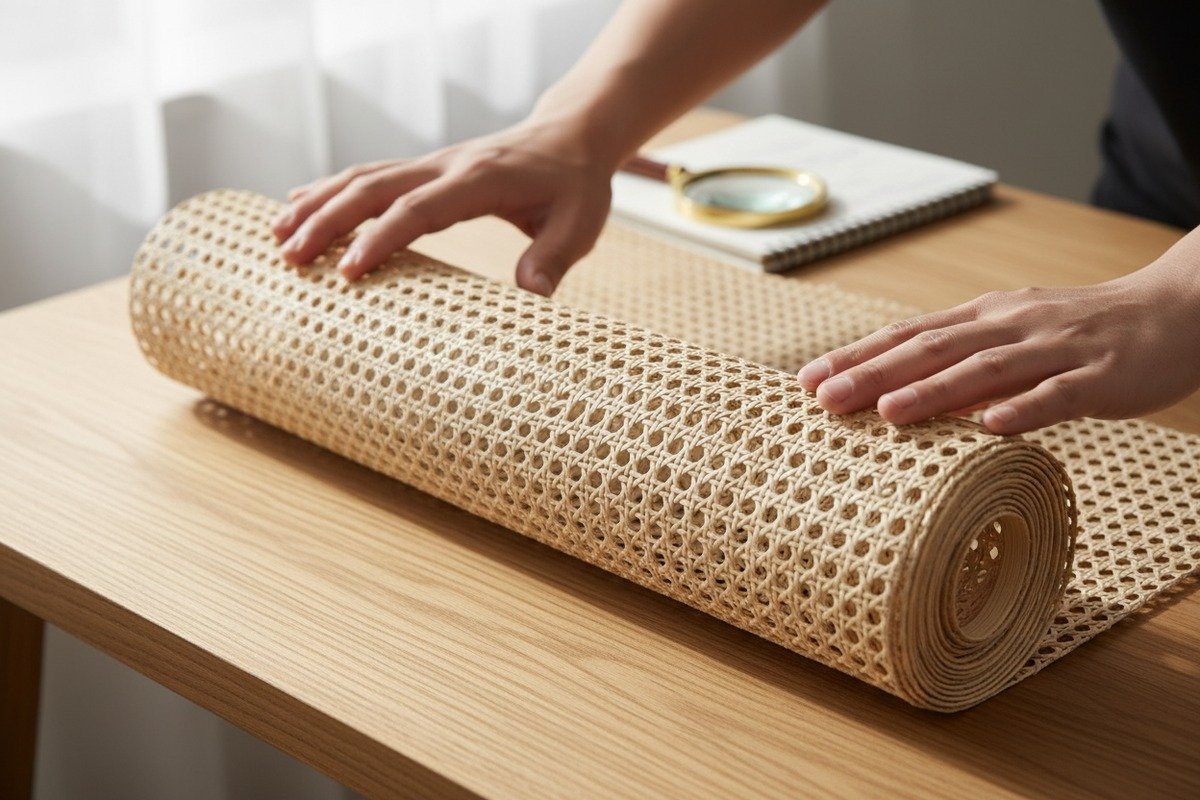
Every week, our customer service team receives photos from buyers who received rattan webbing that looked nothing like what they ordered. The strips crack on arrival. The weave gaps are uneven. The color screams synthetic. For purchasing managers sourcing thousands of meters at a time, one bad shipment can halt an entire furniture production line and damage client relationships.
To identify authentic, high-quality rattan cane webbing, examine five key areas: the natural gloss on the outer bark side, uniform strand thickness, tight and consistent weave patterns, flexibility after soaking, and a mild earthy scent. These indicators separate genuine Grade A rattan from synthetic imitations and lower-grade materials.
In this guide, we break down every test, visual check, and supplier question you need to protect your investment. Whether you run a furniture factory or wholesale building materials, these steps will save you time, money, and headaches. Let us walk through each critical area.
We have processed rattan at our own facility in Indonesia for years, and the difference between natural and synthetic is obvious to trained hands — but tricky for first-time buyers ordering online.
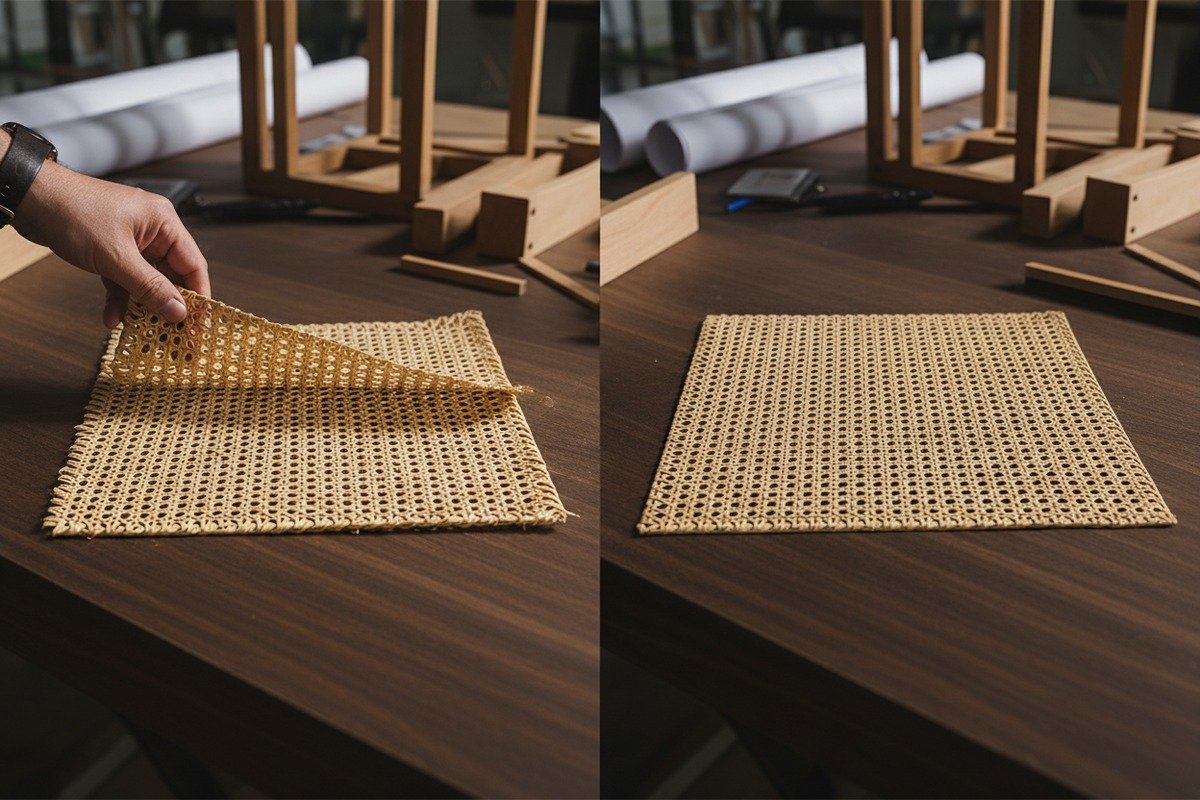
Premium natural rattan cane webbing comes from the outer bark of the rattan palm (genus Calamus). It features a glossy visible side, a porous reverse side, subtle color variations, and a mild earthy scent. Synthetic imitations are plastic-based, uniform in color, and lack natural porosity or organic aroma.
The Origin Makes All the Difference
Natural tejido de caña de ratán 1 is peeled from the stem of the rattan palm. Beneath a thorny outer surface lies a smooth, glossy bark. This bark is the "right side" of authentic webbing. The inner side — the porous, rougher surface — faces down in furniture applications. The rattan core 2 is separated and used for other products like perfume reed sticks 3.
Synthetic rattan, on the other hand, is extruded plastic. Manufacturers mold it to resemble natural fibers. Some versions are quite convincing at first glance. But they fail under closer inspection.
Comparación lado a lado
| Característica | Ratán natural | Ratán Sintético 4 |
|---|---|---|
| Fuente del material | Outer bark of palmera de ratán 5 | Plastic (PE, PVC, or resin) |
| Surface gloss | Natural, warm sheen on outer side | Uniform plastic shine |
| Variación de color | Subtle shifts from greenish to straw | Consistent, factory-set color |
| Texture feel | Slightly rough, organic, warm | Smooth, cool, plastic-like |
| Olor | Mild earthy or woody aroma | No scent or faint chemical smell |
| Porosity | Porous on reverse side | Non-porous on both sides |
| Aging behavior | Darkens to honey tone over time | Fades or discolors unevenly |
The Paper Fibre Rush Trap
One of the most common fakes is man-made paper fibre rush. Invented in 1904 to mimic Victorian wicker, it features a distinctive barber-pole twist pattern. The strands are perfectly uniform in diameter — a dead giveaway. Natural rattan strips have slight organic variations in width and surface texture. If every strand looks identical under magnification, question its authenticity.
Quick Touch and Smell Tests
Pick up a strand and press it between your fingers. Natural rattan feels warm and slightly fibrous. Synthetic feels cool and slick. Now smell it. Genuine cane has a subtle grassy or woody scent. If you detect nothing — or worse, a chemical odor — you are likely holding a synthetic product.
Another reliable test: bend the material gently. Dry natural rattan is somewhat brittle and can snap if forced. Synthetic bends easily without cracking. This brittleness is not a flaw — it is a sign of authenticity. Once soaked, natural rattan becomes supple and workable again.
Why It Matters for Your Production Line
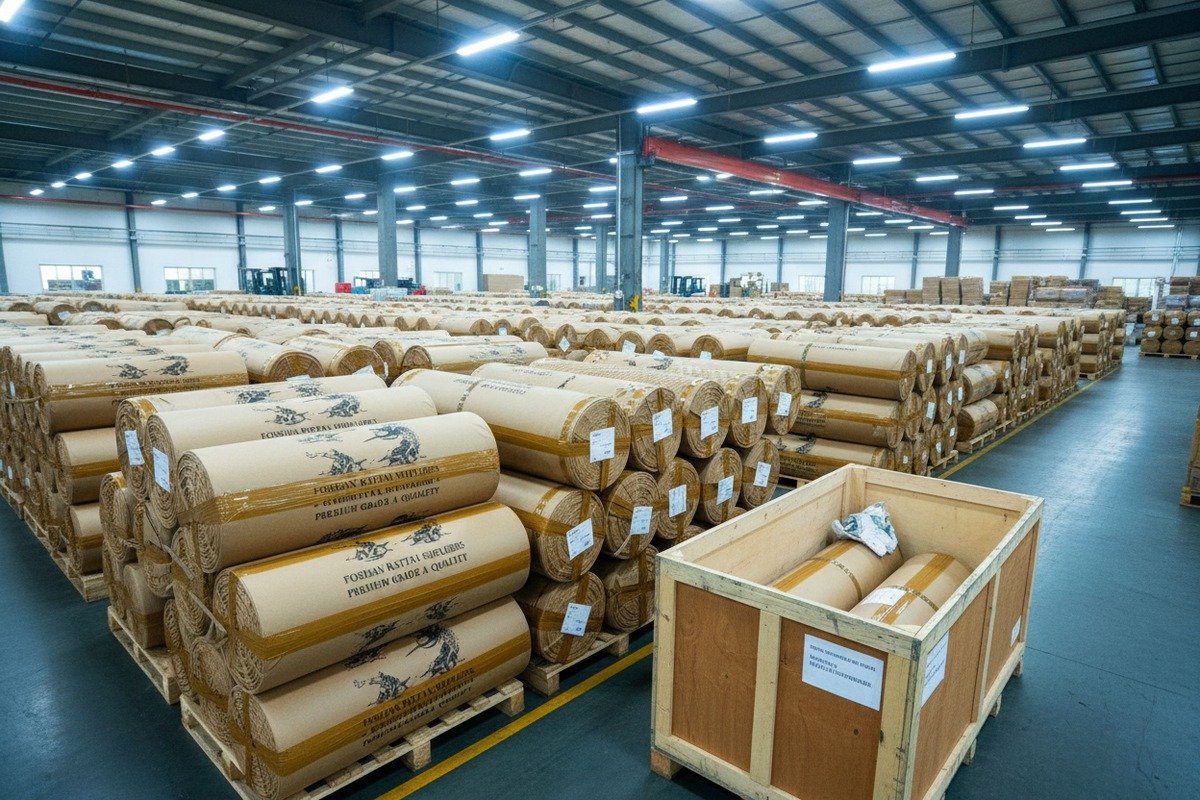
For furniture factories, using synthetic when natural is specified leads to customer complaints and returns. For wholesalers, mislabeled product damages reputation. When we ship from our Foshan warehouses, every roll includes material origin documentation. Insist on the same from any supplier.
What are the key visual indicators I should check to ensure Grade A quality in my shipment?
When our quality control team inspects rattan webbing before shipping, they follow a strict checklist. Over 30% of raw material arriving at our Indonesia processing facility gets downgraded during manual sorting. Grade A is not just a label — it is earned strip by strip.
Grade A rattan cane webbing shows flawless uniformity in strand thickness, a smooth sanded surface free of nodule bumps, tight and even weave tension, consistent natural coloring without dark spots or impurities, and clean-cut edges with minimal splintering. Any visible defect moves the material to Grade B or lower.
Comprensión del sistema de clasificación
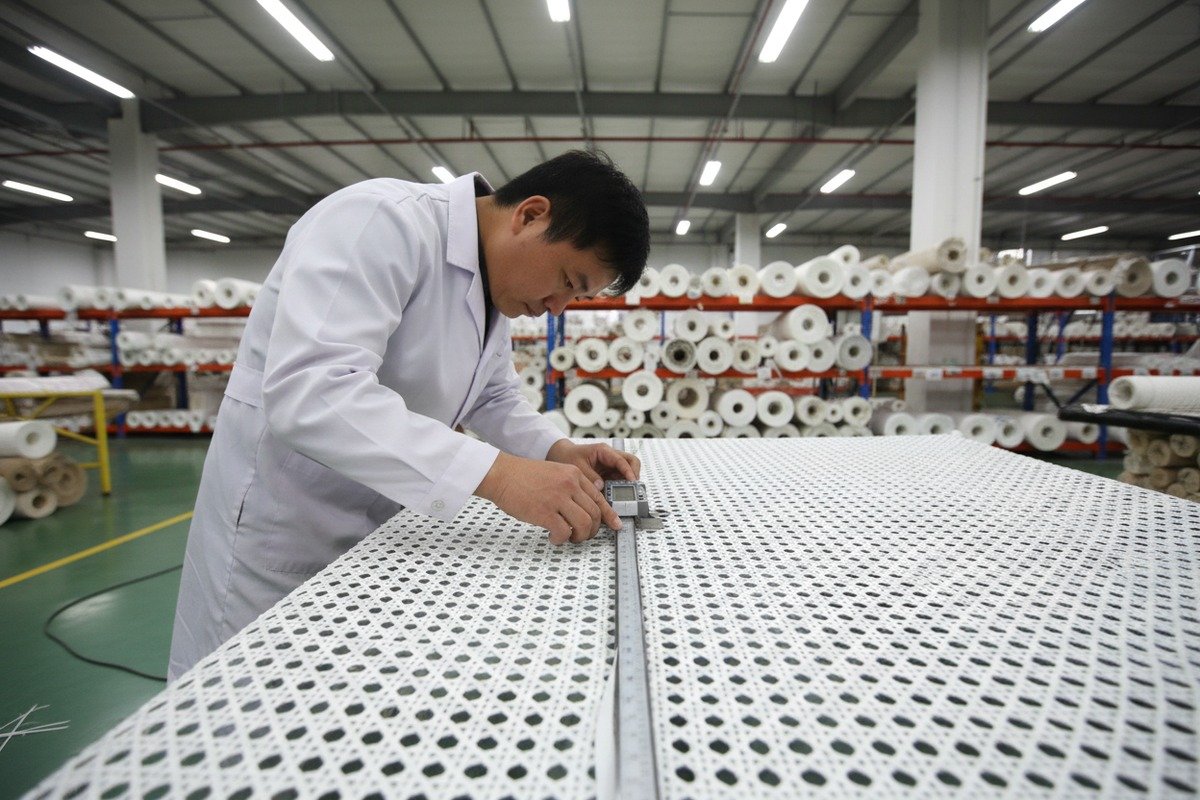
Rattan webbing is graded from A to D after a multi-step process: peeling, drying, sanding, manual inspection, and splicing. Grade A represents the top tier — strips with no visible flaws. Grade B has minor imperfections. Grades C and D show increasing defects like uneven thickness, discoloration, or surface roughness.
There is no standardized global grading system. Each producer sets its own criteria. This is why trusting your supplier matters more than trusting the label alone.
Lista de verificación de inspección visual
Here is what to look for when your shipment arrives:
| Indicador | Estándar de Grado A | Señal de alerta |
|---|---|---|
| Grosor de la hebra | Uniform throughout entire length | Varies noticeably along single strand |
| Acabado de la superficie | Smooth, sanded, no raised nodules | Rough patches, visible bumps |
| Tejer tensión | Tight, even across full sheet | Loose areas, sagging, gaps |
| Consistencia del color | Natural straw/beige, minor organic variation | Dark spots, blotches, uneven bleaching |
| Edge quality | Corte limpio, deshilachado mínimo | Excessive splintering, ragged edges |
| Splice visibility | Subtle, nearly invisible joins | Obvious lumps or overlaps at joins |
| Defects/impurities | No visible | Insect marks, mold spots, foreign particles |
Surface and Nodule Quality
Rattan stems have natural nodules — the bumps where leaves once grew. In Grade A material, these nodules are sanded completely smooth. You should not feel them when running your fingers along a strip. If you feel raised bumps, the sanding was insufficient, and the grade should be lower.
Integridad del patrón de tejido
The weave pattern itself tells a story. In a square (radio) weave, every intersection should show a consistent one-over-one interlacing. In hexagonal patterns, the additional diagonal strips inserted at 45 degrees should be evenly spaced. Gaps between strips should be uniform across the entire sheet.
Hold the sheet up to light. In a dense square weave, you should see very little light passing through. In an open hexagonal weave, the openings should be identical in size and shape. Irregular openings mean sloppy weaving or inconsistent strip widths.
Color and Aging Expectations
Fresh Grade A rattan typically ranges from light greenish-tan to pale straw. Over time, it naturally darkens to a warm honey tone. This is normal and desirable. However, if you notice patches that are already significantly darker at the time of delivery, this may indicate moisture damage during storage or shipping. Bleached rattan should show an even, consistent white or cream tone without yellow streaks.
What to Do When You Spot Issues
Document everything with photos immediately upon opening the shipment. Measure specific problem areas. Contact your supplier within the agreed inspection window. At our facilities, we encourage buyers to send photos within 48 hours of delivery so we can resolve issues quickly.
How do I test the durability and flexibility of the webbing for my furniture production needs?
Our production partners in Foshan test every batch before it goes into cabinet doors, headboards, and chair panels. We learned early on that skipping this step leads to cracked panels and wasted labor. A few simple tests can save an entire production run.
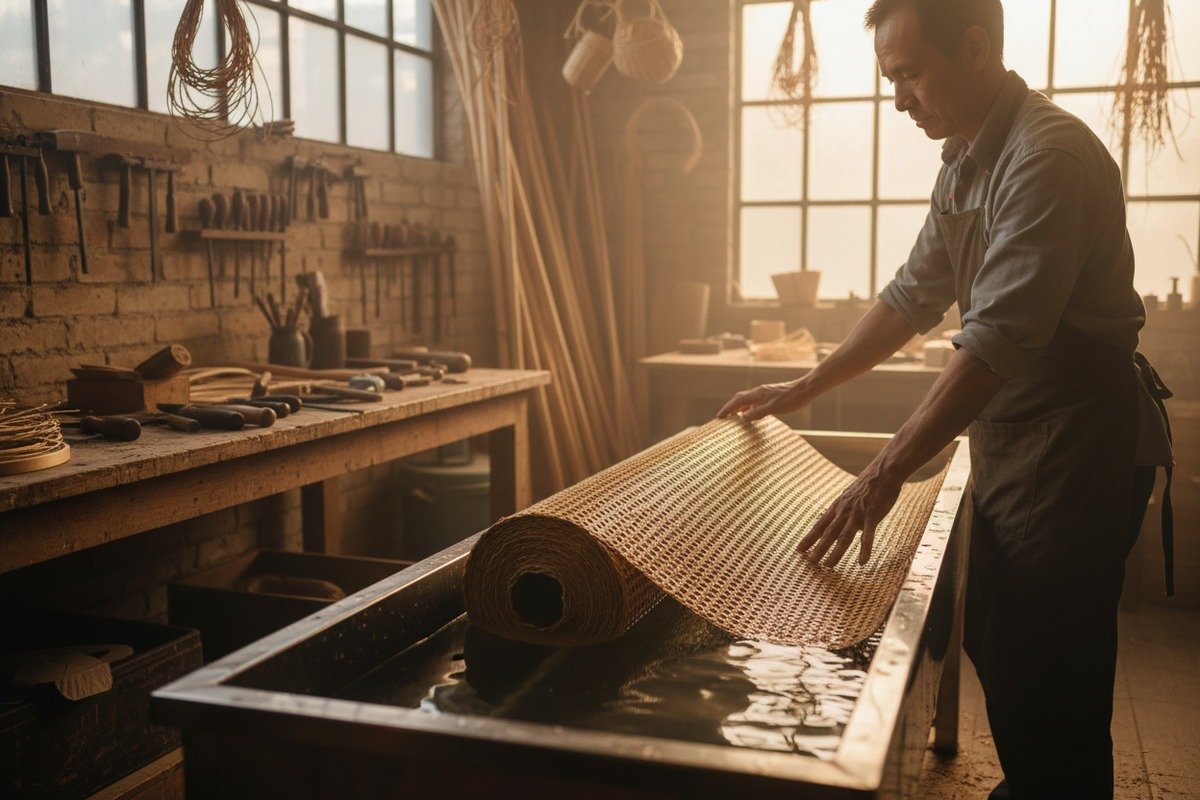
Test rattan cane webbing durability by soaking a sample for 15–30 minutes — quality material becomes pliable without tearing. Check dry flexibility by gently bending strips; Grade A resists cracking. Perform a pull test on individual strands to assess tensile strength, and inspect woven joints for secure interlocking under stress.
The Soaking Test
This is the most important hands-on test for any furniture factory. Natural rattan must be soaked before installation. Cut a small sample from your shipment and submerge it in room-temperature water for 15 to 30 minutes. After soaking, the webbing should feel supple and easy to bend. It should not tear when pulled gently. It should not disintegrate or leave excessive fiber residue in the water.
If the webbing remains stiff after soaking, the material may be over-dried or of poor quality. If it becomes mushy or falls apart, the fibers are degraded — possibly from improper storage or old stock.
La prueba de flexión
Take a dry strip of rattan and bend it slowly into a U-shape. Grade A material will resist bending but should not snap immediately. It will show flexibility before reaching its breaking point. Lower-grade or degraded material snaps quickly with a dry, brittle crack.
After soaking, repeat the test. The soaked strip should bend easily into a tight curve without cracking. This pliability is essential for wrapping around curved furniture frames and pressing into spline grooves.
The Pull Test
Grip a single strand at both ends and pull firmly. Quality rattan has good resistencia a la tracción 6 — it should stretch slightly and resist breaking. If it snaps with minimal effort, the fibers are weak. This could be due to poor species selection, over-processing, or aging.
Weave Stress Test
Apply moderate pressure to the center of a woven panel with your palm. The weave should flex slightly and spring back. It should not shift, gap, or show permanent deformation. Check the edges of the panel — are the strands pulling out? If so, the weave tension was too loose during manufacturing.
Environmental Durability Considerations
| Prueba | Método | Expected Result (Grade A) | Señal de advertencia |
|---|---|---|---|
| Prueba de remojo | Submerge in water 15–30 min | Pliable, no tearing, minimal residue | Mushy, disintegrating, heavy residue |
| Dry bend | Bend strip into U-shape | Resists but does not snap immediately | Snaps with brittle crack |
| Wet bend | Bend soaked strip tightly | Curves easily, no cracking | Cracks or splinters despite soaking |
| Pull test | Pull single strand firmly | Stretches slightly, holds | Snaps with minimal force |
| Weave pressure | Press palm into center of panel | Flexes and springs back | Gaps form, permanent deformation |
| Edge check | Tug on edge strands | Strands stay locked in weave | Strands pull free easily |
Sensibilidad a la humedad
Natural rattan is sensitive to humidity and moisture. This is not a defect — it is a characteristic of organic material. For indoor furniture, this is rarely a problem. But if your clients use rattan webbing in bathrooms, covered patios, or humid climates, you must communicate these limitations clearly. Over time, excessive moisture causes mold, warping, and fiber breakdown. Treated or coated natural rattan exists, but purists prefer the untreated, breathable version for its authentic feel and appearance.
What We Recommend to Our Factory Partners
Request a sample roll before committing to a large order. Run all five tests above. Compare results across suppliers. The few days and small cost involved will protect you from thousands of dollars in defective product. When we work with new partners, we always ship test samples first and walk them through these exact checks.
What specific questions should I ask my wholesaler to verify the origin and processing of the rattan?
In our years of exporting rattan cane webbing to over a dozen countries, we have seen buyers accept vague answers from suppliers and pay the price later. The right questions expose unreliable sellers fast. The wrong questions — or no questions at all — leave you guessing until the container arrives.
Ask your wholesaler these critical questions: What rattan species is used? Where is the raw material sourced and processed? What grading criteria define your Grade A? Can you provide processing documentation and photos? What is your defect rate, and what is your return policy for quality issues? Verified answers reveal trustworthy suppliers.
Start with Species and Origin
Not all rattan is created equal. Hundreds of species exist in the genus Calamus 7, but only a handful produce strips suitable for furniture-grade weaving. Ask your supplier which species they use and where it is harvested. Rattan primarily grows in Southeast Asia 8 — Indonesia, Vietnam, the Philippines, and Malaysia are major sources.
If a supplier cannot name the species or country of origin, that is a red flag. At our processing facility in Indonesia, we work with specific species selected for their fiber density, strip width, and weave performance. This is not proprietary information — a trustworthy supplier should share it openly.
Ask About Processing Steps
The journey from raw rattan stem to finished webbing involves multiple steps: peeling, sorting, sanding, drying, grading, splicing, and weaving. Ask your wholesaler to describe their process. Better yet, ask for factory photos or videos. Modern suppliers often document their production lines for buyer transparency.
Key processing questions include:
- How is the rattan dried? Sun-dried or kiln-dried?
- Is the surface sanded by machine or hand?
- How are short strips spliced together? Are the joins inspected?
- What weaving method is used? Is tension controlled during weaving?
Grading Criteria Deep Dive
When a supplier says "Grade A," ask them what that specifically means. Request their written grading criteria. How do they define the boundary between Grade A and Grade B? What defect tolerance exists?
Here are the questions that matter most:
| Question | Por qué importa | Acceptable Answer |
|---|---|---|
| What species of rattan do you use? | Not all species are suitable for weaving | Specific species name, e.g., Calamus Rotan |
| Where is the rattan harvested? | Origin affects quality and sustainability | Named region or country (e.g., Kalimantan, Indonesia) |
| Can you share your grading criteria? | "Grade A" varies by supplier | Written document with specific defect tolerances |
| What is your typical defect rate? | Reveals honesty and QC rigor | Honest percentage (e.g., 2–5% for Grade A batches) |
| Do you offer pre-shipment inspection? | Ensures accountability | Yes, with photo/video documentation |
| What is your return/claim policy? | Protects your investment | Clear terms with defined inspection window |
| Is the rattan treated with chemicals? | Important for "100% natural" claims | Disclosure of any treatments, coatings, or bleaching |
| Can you send a sample before bulk order? | Allows hands-on testing | Yes, at minimal or no cost |
Sostenibilidad y Abastecimiento Ético
El industria del ratán 9 faces real sustainability challenges. Overharvesting in Southeast Asian forests is a legitimate concern. Ask your supplier whether their rattan comes from managed plantations or wild harvest. Certification is still limited in this industry, but responsible suppliers can at least describe their sourcing practices.
We work directly with plantation growers near our Indonesian facility. This gives us traceability from forest to finished roll. Not every supplier can offer this, but those who invest in their cadena de suministro 10 should be able to provide some level of origin verification.
Chemical Treatments and "Natural" Claims
Some rattan labeled "100% natural" has been bleached, fumigated, or coated with protective finishes. These treatments are not necessarily bad — bleaching creates the popular white rattan look, and anti-mold fumigation protects the material during shipping. But buyers deserve to know. Ask directly: has this material been treated with any chemicals? If yes, which ones?
This matters especially for markets with strict import regulations, such as the EU and Australia, where certain fumigants are restricted.
Señales de Alerta a Tener en Cuenta
Be cautious if a supplier cannot answer basic origin questions, refuses to send samples, has no written grading standards, or offers prices significantly below market average. Extremely low prices usually mean lower grades being sold as premium, synthetic material mixed in, or corners cut during processing.
Trust is built through transparency. The best supplier relationships we have — whether shipping to the Netherlands, the US, or Australia — are built on open communication and documented quality standards.
Conclusión
Identifying authentic, high-quality rattan cane webbing comes down to knowing what to look for, what to touch, and what to ask. Use the visual checks, hands-on tests, and supplier questions in this guide to protect every order you place.
Notas al pie
1. Replaced with an informative article explaining rattan cane webbing and its production from an industry supplier. ↩︎
2. Explains what rattan core is and its various applications in furniture and crafts. ↩︎
3. Describes how reed diffusers work and the role of rattan sticks in scent diffusion. ↩︎
4. Details the composition and manufacturing of synthetic rattan as an alternative material. ↩︎
5. Describes the rattan palm plant, its origin, and how it is harvested. ↩︎
6. Provides a scientific definition of tensile strength and its importance in materials. ↩︎
7. Replaced with a Wikipedia page providing an authoritative overview of the genus Calamus (palm). ↩︎
8. Identifies Southeast Asia as the primary region for rattan growth and production. ↩︎
9. Discusses the global rattan industry, its potential, and sustainability challenges. ↩︎
10. Explains sustainable supply chain management and its importance for businesses. ↩︎

 English
  Español de México
  العربية
  Deutsch
  Français
  Русский