
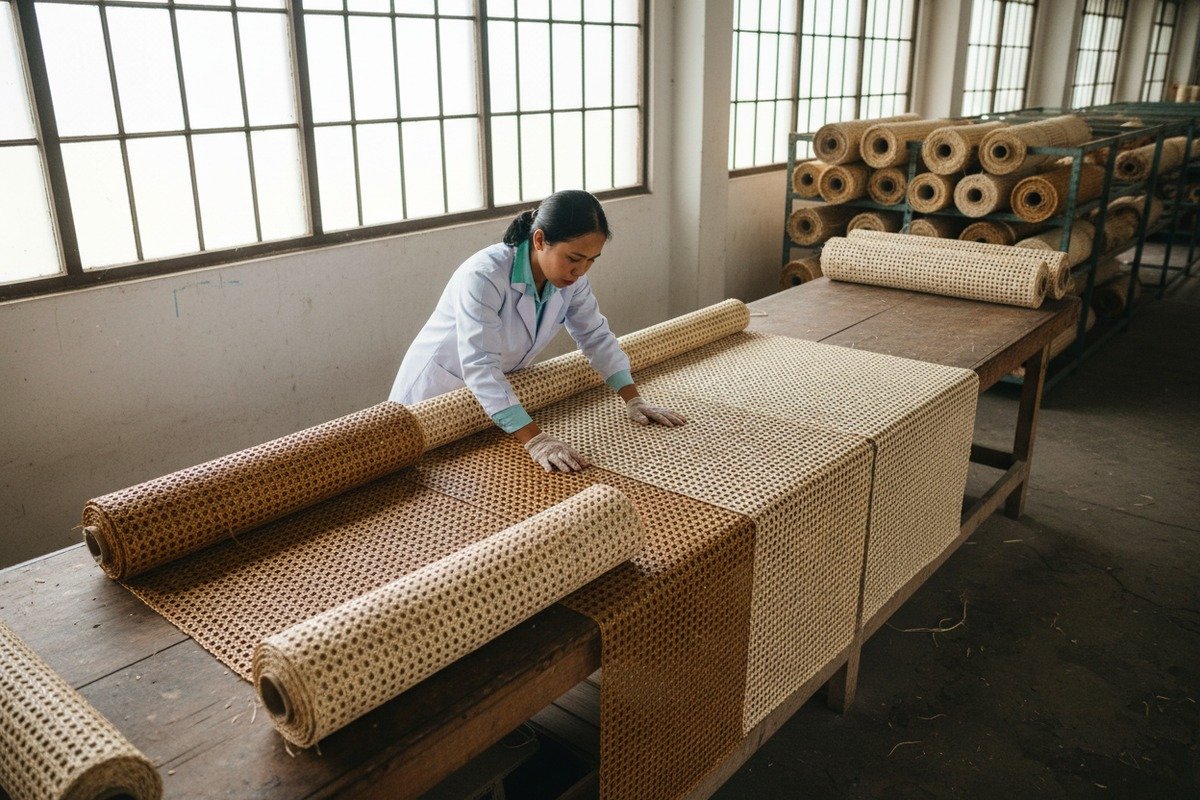
Every week, our quality control team sorts through thousands of meters of rattan webbing at our Indonesian processing facility palmera de ratán 1. The question we hear most from buyers? “Why does this roll look slightly different from the last one?” It is a fair concern. When you are building a brand around premium furniture or supplying materials to factories across continents, even a subtle color shift can feel like a threat to your reputation.
Natural color variations in rattan cane webbing stem from the organic nature of the rattan palm itself. These variations—ranging from warm honey to light straw tones—add authentic character and depth to finished products. Premium-grade rattan minimizes inconsistency, while lower grades show more pronounced, uneven coloring that can compromise a polished look.
This article breaks down exactly how these color differences happen, what they mean for your projects, and how to manage them. Whether you run a furniture factory, wholesale operation, or interior design firm, you will find practical answers below.
One lesson we learned early on while supplying rattan webbing to European and American furniture makers is this: "premium" does not mean "perfectly identical." It means intentionally consistent. Many of our clients in the Netherlands and Australia initially worried that natural variation would hurt their brand image. But the real risk is not variation itself—it is uncontrolled, random variation from poor sourcing.
To ensure natural color variations do not compromise a premium look, source AAA or A-grade rattan with 8–12% moisture content, request samples from the same production batch before ordering, and pair the webbing with complementary wood tones. Controlled, subtle variation actually enhances perceived quality and authenticity.
Comprensión del sistema de clasificación
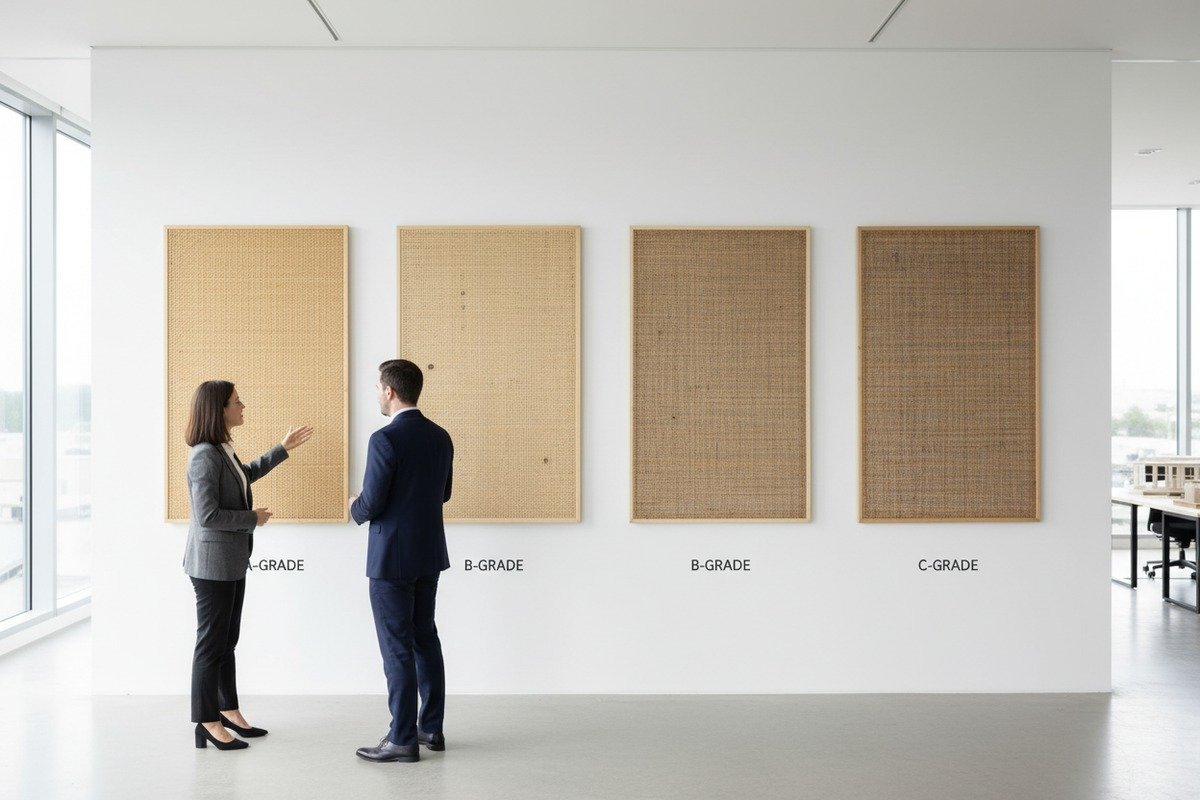
Not all rattan is created equal. The grading system 2 exists specifically to help buyers predict color behavior. Here is a quick breakdown of what each grade means for color appearance:
| Grade | Color Characteristics | Mejor caso de uso |
|---|---|---|
| AAA / A Grade | Rich, warm honey tones with minimal variation; smooth, fine grain | High-end furniture, luxury cabinetry, premium retail displays |
| Grado B | Moderate variation; slight tonal shifts between strands | Mid-range furniture, bohemian and rustic decor |
| Grado C | Dull, blotchy, grayish tones; pronounced inconsistency | Budget products, concealed applications, craft projects |
Why Moisture Content Matters for Color Stability
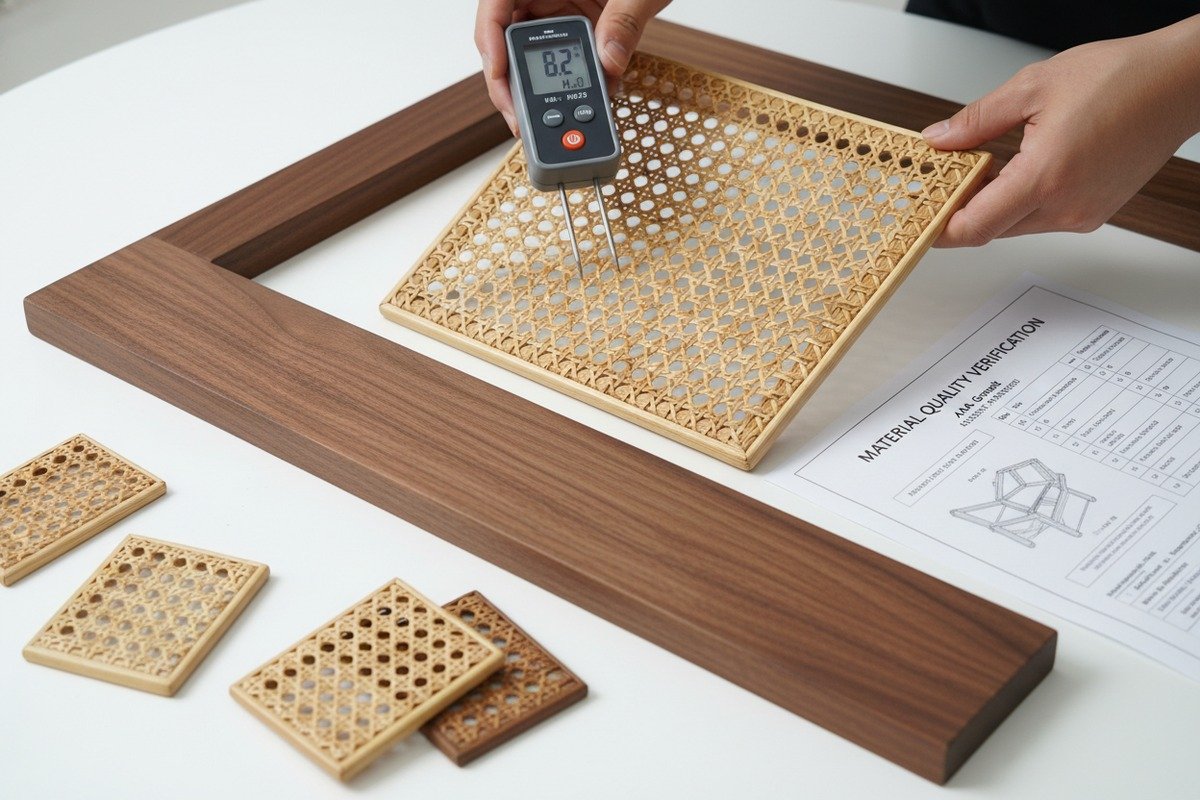
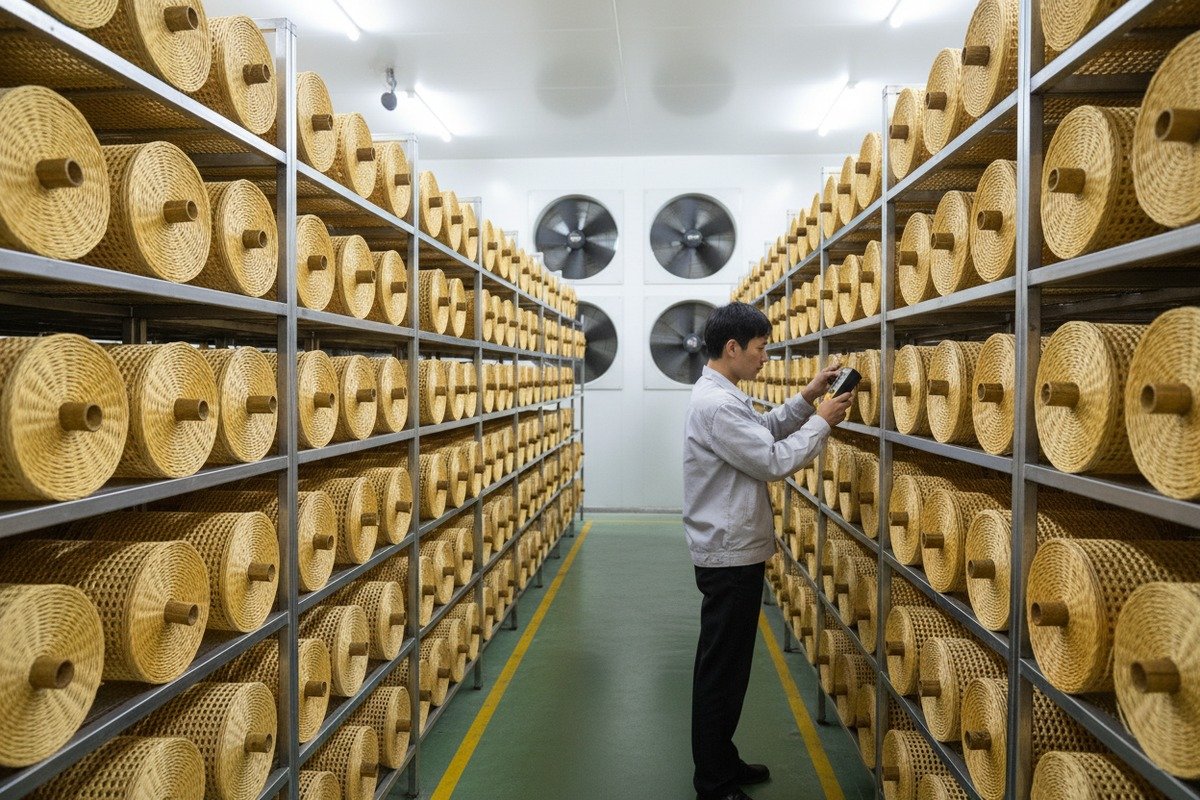
When we process rattan at our facility, moisture control is one of the most critical steps. Rattan dried to 8–12% moisture holds its color far better than material dried unevenly. Uneven drying creates dark spots, grayish patches, and a blotchy appearance that no amount of finishing can fully fix.
If your supplier cannot tell you the contenido de humedad 3 of their webbing, that is a red flag. Ask for it. Measure it yourself if needed. A simple moisture meter costs very little and saves enormous headaches down the line.
Matching Rattan to Your Furniture Frame
Color perception is relative. The same piece of rattan webbing can look warm and elegant against a walnut frame, but washed-out and cheap against a light maple frame. Here is a general pairing guide:
| Rattan Tone | Best Frame Material | Efecto visual |
|---|---|---|
| Deep honey / golden | Walnut, dark oak, teak | Rich contrast, traditional elegance |
| Light straw / cream | White oak, ash, birch | Airy, Scandinavian, contemporary |
| Semi-bleached / pale | Painted white or pastel frames | Coastal, bohemian, soft modern |
Practical Steps to Protect Your Premium Look
First, always request a pre-production sample from the exact batch you plan to order. We send batch samples to clients like Ranoo in Thailand before every shipment. Second, specify your grade clearly in your purchase order. Third, consider the weave pattern. Tighter weaves like the classic tejido de radio 4 show color consistency more clearly. Looser, more open weaves can actually camouflage minor tonal shifts. Finally, store your rattan in a cool, dry environment before installation. Heat and humidity shifts after delivery can alter the color you originally approved.
Can I expect a consistent color match across my entire bulk order of natural rattan webbing?
This is the question that keeps purchasing managers up at night. We have shipped container loads to furniture factories in Spain, the USA, and Turkey, and color consistency across bulk orders is always a top-three concern. The honest answer requires some nuance.
Perfect color uniformity across an entire bulk order of natural rattan webbing is not realistic because rattan is a natural material with inherent organic variation. However, by ordering from a single harvest batch, specifying premium grades, and working with a supplier who pre-sorts by color tone, you can achieve a very high level of visual consistency.
Why 100% Consistency Is Impossible—and Why That Is Okay
Rattan grows in bosques tropicales 5. Each palm absorbs different amounts of sunlight, water, and soil nutrients. Even two canes from the same plant can show slight tonal differences. When you scale that up to a 500-meter or 1,000-meter order, expecting identical color across every centimeter is like expecting every apple in a bushel to be the exact same shade of red.
But here is the important distinction: slight tonal variation within a controlled range is very different from random, unpredictable color swings. The first adds character. The second looks sloppy.
How We Manage Batch Consistency
At our processing facility, we take several steps to minimize color discrepancy within a single order:
- Single-origin sourcing. Each batch comes from the same harvesting region and season.
- Color sorting. After drying, our team manually sorts strands into tonal groups before weaving.
- Controlled drying. Uniform kiln conditions ensure even moisture removal, which directly affects color.
- Sample approval. We send physical samples from the production batch before shipping.
What to Specify in Your Purchase Order
Many color issues arise not from bad materials, but from vague ordering. Be specific. Here is what to include:
| Order Specification | Por qué importa |
|---|---|
| Grade (AAA, A, B, C) | Directly determines color consistency range |
| Color preference (natural, semi-bleached, custom) | Prevents assumptions on both sides |
| Roll width and length | Larger rolls from the same weaving run reduce roll-to-roll variation |
| Batch sample approval required | Gives you a visual benchmark before production proceeds |
| Acceptable variation tolerance | Sets clear expectations; e.g., "within 10% tonal range of approved sample" |
Planning for Multi-Order Projects
If your project spans multiple purchase orders over several months, some color drift between shipments is expected. Rattan harvested in the dry season often looks slightly different from wet-season rattan. Our recommendation: order enough material for your full project in one batch whenever possible. If that is not feasible, request that your supplier reserves material from the same harvest for future orders.
One of our long-term clients in Australia orders all their annual rattan needs in a single shipment specifically for this reason. It costs slightly more in warehousing, but eliminates color-matching headaches entirely.
How will the natural aging process of my rattan webbing affect the final color of my finished products?
When we first started exporting rattan to furniture makers in the Middle East and Europe, we quickly learned that many buyers only think about how rattan looks on day one. But rattan is a living material. It changes over months and years. Ignoring this means your customers may be surprised—and not always happily—when their furniture looks different a year after purchase.
Natural rattan webbing gradually deepens in color over time, developing richer golden-brown tones and a warm patina. Sunlight accelerates this process, while interior pieces in shaded areas retain their original honey color longer. This aging is a natural feature of genuine rattan and is widely considered desirable, adding vintage character and depth.
The Science Behind Color Change
Rattan's outer bark contains natural pigments that react to ultraviolet light and oxygen 6. Over time, these pigments oxidize. The result is a gradual shift from lighter straw-honey tones toward deeper amber and golden-brown shades. This is the same process that gives antique rattan furniture its sought-after warmth.
The speed of this change depends on three factors:
- Light exposure. Pieces near windows or in sunlit rooms change faster.
- Humidity levels. High humidity can also darken rattan more quickly.
- Finishing treatments. Sealed or lacquered rattan ages more slowly because the coating blocks UV and moisture.
What Your Customers Should Know
If you sell finished rattan furniture or supply materials to furniture brands, communicating about aging is essential. Frame it as a benefit, not a defect. Many premium furniture brands in Scandinavia and Japan actively market rattan's patina development 7 as part of the product's story. A simple care card or product description line—"This natural rattan will develop a warm patina over time, enhancing its character"—sets the right expectation.
How to Slow or Control Aging
For clients who want their rattan to stay closer to its original color, there are options:
- UV-protective clear coat. A matte or satin clear finish with UV inhibitors slows color change significantly.
- Indoor placement away from direct sun. Simple but effective.
- Climate control. Consistent temperature and humidity prevent accelerated aging.
However, it is worth noting that many designers specifically choose natural rattan because it ages beautifully. Trying to freeze its appearance defeats one of its core selling points.
Aging vs. Degradation
There is a critical difference between graceful aging and material degradation. Aging means the color deepens and the surface develops a soft sheen. Degradation means cracking, brittleness, mold, or structural weakness. Degradation is caused by poor-quality material, excessive moisture, or neglect—not by normal aging. Premium-grade rattan with proper moisture content at the time of manufacture ages well. Lower grades with uneven moisture may crack or warp instead of developing an attractive patina.
Should I choose bleached or natural rattan webbing if I want to maintain a specific aesthetic for my brand?
This is a decision we walk our clients through almost daily. Our production lines handle both natural and bleached rattan webbing, and the choice between them is not just about personal preference. It is a strategic brand decision that affects everything from customer perception to long-term maintenance costs.
Choose natural rattan webbing if your brand values organic warmth, rustic authenticity, and a material that develops character over time. Choose bleached rattan if you need a lighter, more uniform base color for a contemporary or coastal aesthetic, or if you plan to dye the webbing a custom color. Each option serves a distinct brand narrative.
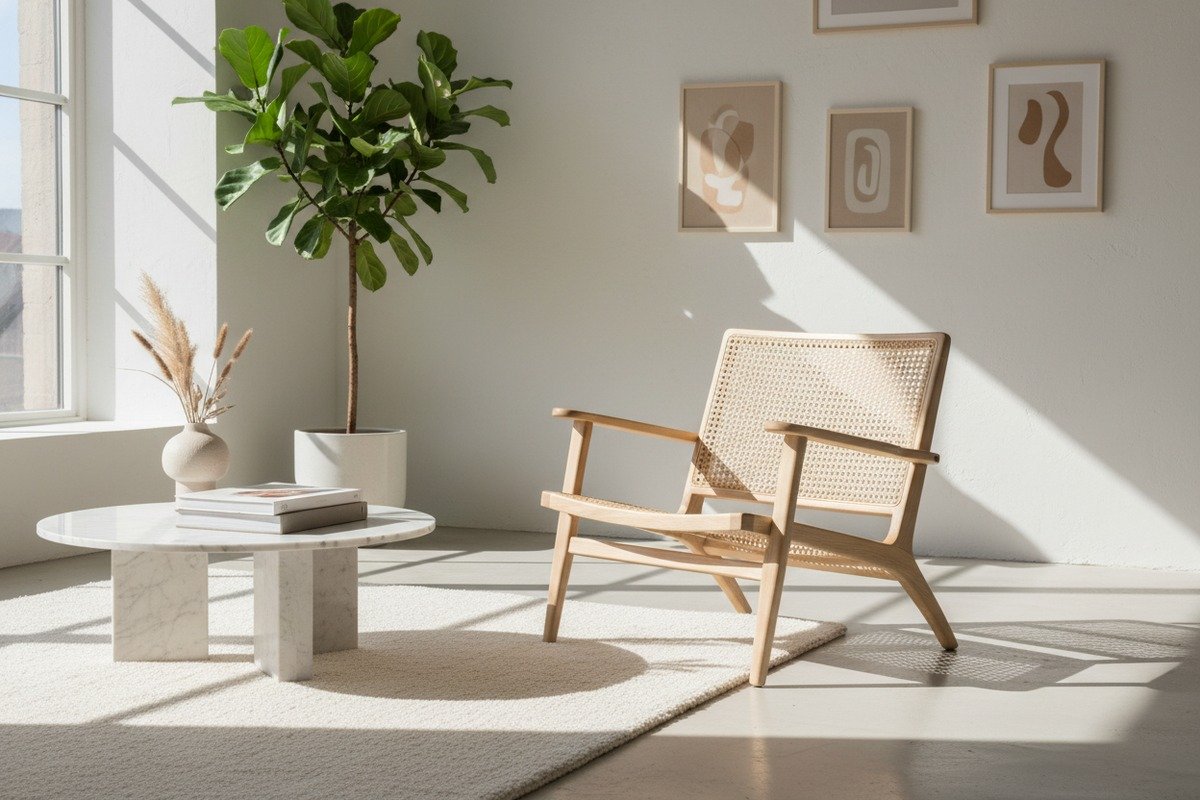
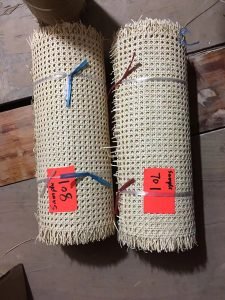
Natural vs. Bleached: A Side-by-Side Comparison
| Característica | Ratán natural | Ratán Blanqueado |
|---|---|---|
| Color | Warm honey, straw, light brown | White, pale cream, uniform light tone |
| Variación de color | Moderate organic variation | Minimal variation |
| Aging behavior | Deepens to golden-brown patina | May yellow unevenly over time |
| Dyeability | Limited; natural pigments resist some dyes | Excellent; serves as a neutral base for custom colors |
| Fuerza | Full natural fiber integrity | Slightly reduced; bleaching can weaken fibers |
| Estética | Rustic, artisanal, organic, bohemian | Modern, coastal, Scandinavian, minimalist |
| Mantenimiento | Low; ages gracefully | Moderate; may need re-sealing to prevent yellowing |
| Price | Estándar | Slightly higher due to additional processing |
When Natural Is the Right Choice
Natural rattan works best when your brand identity centers on authenticity, sustainability, or traditional craftsmanship. The warm tones complement rich wood frames, earthy interiors, and mid-century modern aesthetics. It pairs beautifully with materials like leather, linen, and solid wood.
Many of our clients in the USA and Europe choose natural rattan because their end customers specifically seek out "real" materials. In a market flooded with synthetic alternatives, the organic variation of natural rattan communicates genuineness. It says, "This is a real material from a real plant."
When Bleached Makes More Sense
Bleached rattan is ideal for brands targeting a clean, light, contemporary look. Coastal-themed furniture lines, Scandinavian-inspired interiors, and children's furniture often benefit from the pale, consistent tone that bleaching provides.
It is also the practical choice if you plan to apply custom colors. Bleached rattan accepts dye much more evenly than natural rattan. If your brand uses a specific Pantone color in its product line, starting with a bleached base gives you much better control over the final shade.
The Third Option: Semi-Bleached
Many buyers overlook semi-bleached rattan. This option lightens the natural tone without going fully white. It retains some of the organic warmth of natural rattan but offers better color consistency. We have seen growing demand for semi-bleached webbing from clients who want a middle ground—not too rustic, not too sterile.
A Word on Durability
Bleaching does affect fiber strength. The chemical process opens up the rattan's cell structure slightly, which can reduce resistencia a la tracción 8 by a small margin. For most furniture applications, this difference is negligible. But for high-stress applications—like seating surfaces on chairs used daily—natural rattan's full fiber integrity may offer a meaningful advantage over time.
Our recommendation: discuss your specific application with your supplier. If you are making decorative cabinet inserts, bleached rattan is perfectly fine. If you are weaving chair seats for a restaurant, natural or semi-bleached may be the safer bet.
Conclusión
Natural color variations in tejido de caña de ratán 9 are not flaws to fear—they are features to understand and manage. Source the right grade, communicate with your supplier, and let rattan's organic beauty work for your brand.
Notas al pie
1. Details the taxonomy, biology, and ecology of rattan palms. ↩︎
2. Outlines the requirements and classification for rattan cane materials grading. ↩︎
3. Explains the importance of moisture content and drying in rattan processing. ↩︎
4. Details various rattan weave types, including patterns and applications. ↩︎
5. Describes the natural habitat and ecological context of rattan. ↩︎
6. Explains how ultraviolet light and oxygen contribute to the natural aging and color change of wood. ↩︎
7. Replaced with an authoritative Wikipedia article on patina, which explicitly mentions its formation on wooden furniture and through environmental exposure. ↩︎
8. Provides scientific data and analysis on the tensile strength of rattan fibers. ↩︎
9. Provides a comprehensive overview of rattan, the material used for cane webbing. ↩︎
 English
  Español de México
  العربية
  Deutsch
  Français
  Русский