
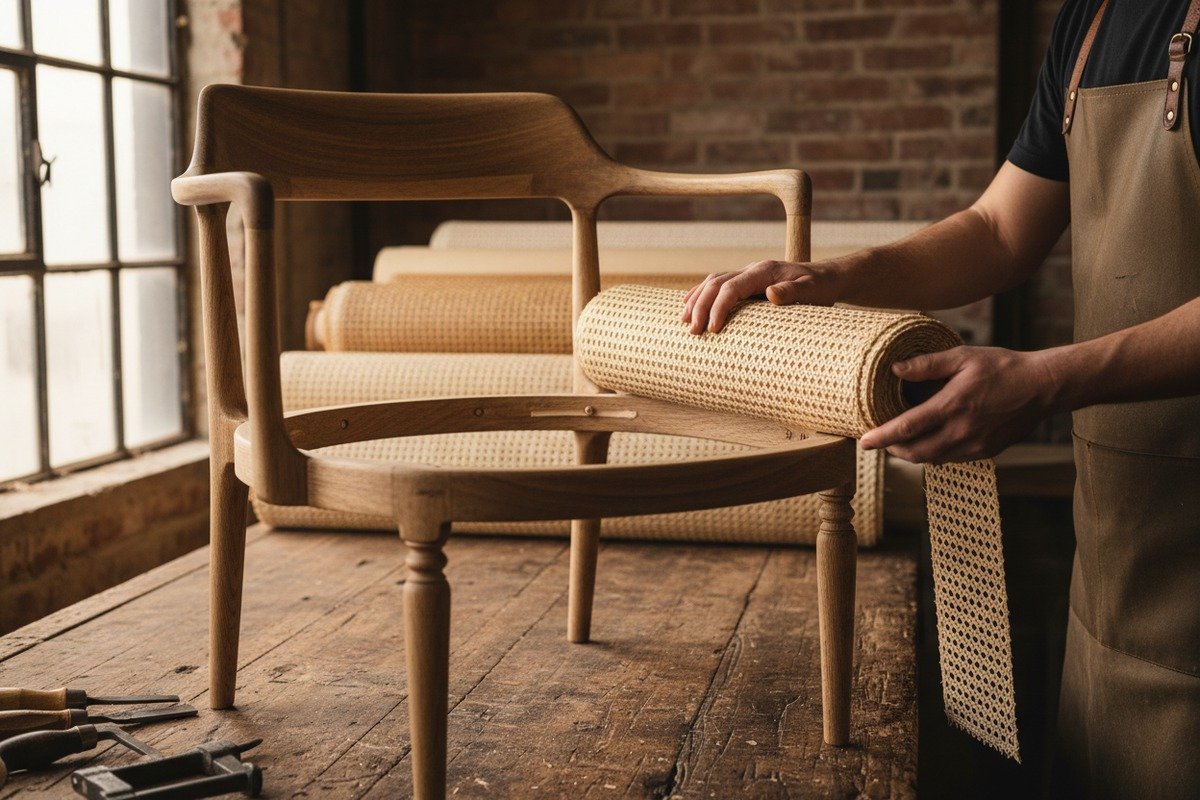
Every week, our production floor in Foshan processes thousands of meters of tejido de caña de ratán 1 destined for furniture restoration projects worldwide. Yet the question we hear most from buyers, workshops, and DIY enthusiasts alike remains the same: how do you actually replace old, sagging cane on a beloved chair without ruining it?
To replace worn rattan cane webbing, remove the old spline and cane from the groove, clean all residue, soak new pre-woven webbing in warm water for 20–30 minutes, press the pliable cane into the groove using wedges, apply water-soluble glue, and tap in a new reed spline to lock everything tight.
This guide walks you through every stage of the process. From picking the correct cane grade to long-term maintenance, we cover the details that separate a clean, professional result from a frustrating weekend project. Let’s get started.
How do I choose the right grade of rattan cane webbing for my chair restoration?
Choosing the wrong grade of cane webbing is a mistake we see constantly when clients send us photos of failed restorations. The webbing either buckles, tears, or simply does not fit the groove. Getting this right from the start saves time and money.
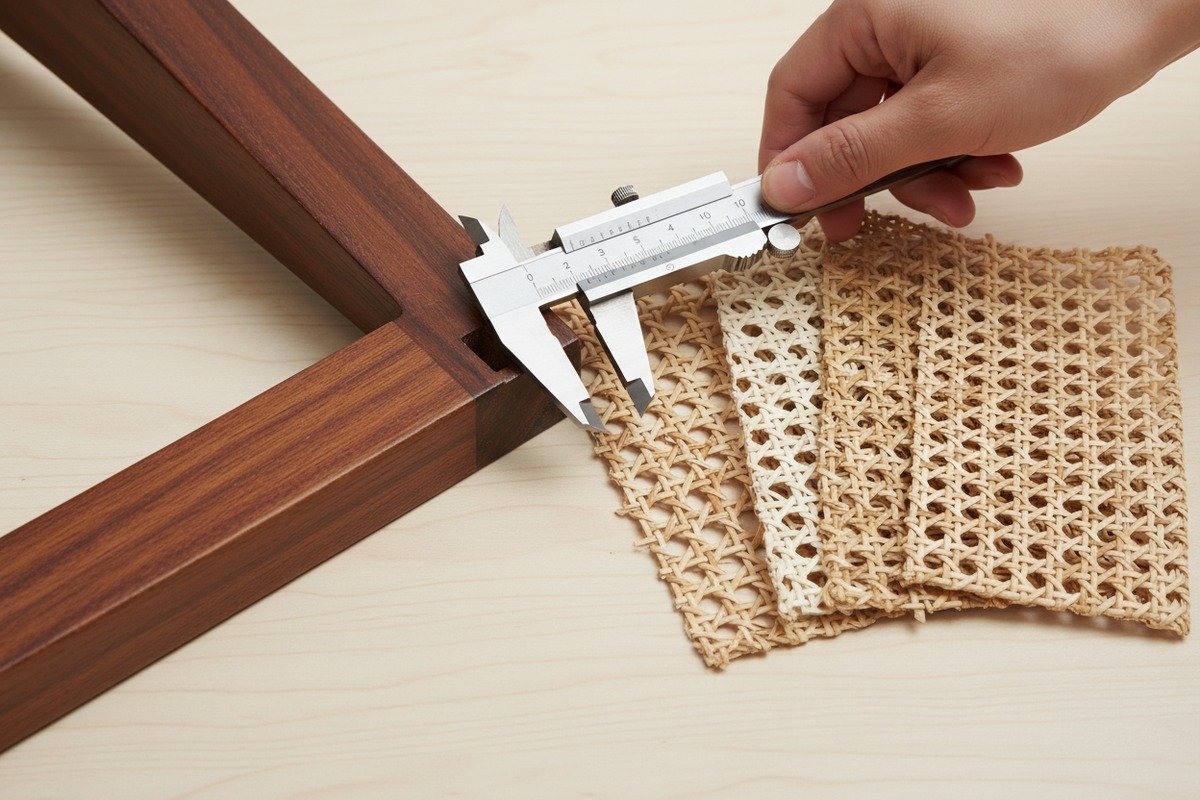
Select your rattan cane grade by measuring the chair's groove width, identifying the weave pattern of the original cane, and matching the strand thickness. Common groove sizes are 1/8", 1/4", and 3/8", with 1/4" being the most widely used for pressed cane seats and backs.
Understanding Pressed Cane vs. Hand-Woven Cane
Before you pick a grade, know the two main types. Pressed cane 2 (also called sheet cane or pre-woven webbing) uses a groove-and-spline system. Caña tejida a mano 3 threads individual strands through drilled holes around the seat frame. This article focuses on pressed cane because it is the most common type for DIY restoration and mid-century modern revivals 4.
Pressed cane comes in rolls or sheets. It is fast to install — often under an hour once prep is done. Hand-weaving, on the other hand, can take a full day or more and requires specialized skills. For antique purists, hand-woven cane is considered more authentic. But for practical restoration, pressed cane dominates the market.
Weave Patterns and Their Uses
Our factory produces several standard weave patterns. Each one suits a different aesthetic and furniture era.
| Weave Pattern | Descripción | Mejor para |
|---|---|---|
| Open Hexagonal (Radio Weave) | Six-pointed star mesh, airy look | Mid-century modern chairs, speaker cabinets |
| Close Basketweave | Tight square grid, dense surface | Traditional dining chairs, headboards |
| Motivo de diamante | Geometric diamond repeats | Decorative panels, cabinet doors |
| Fine Open Weave | Thin strands, delicate mesh | Lightweight accent chairs, French antiques |
Matching the Groove and Spline
Measure the groove on your chair frame with a caliper or a small ruler. The groove width determines the spline size you need. If the groove is 1/4 inch wide, you need a 1/4 inch spline. Simple.
Here is a tip from our quality control team: always keep a small piece of the old cane and the old spline. Bring them to your supplier or send a photo. Color, strand thickness, and pattern all matter. Natural rattan has organic variation — light beige, straw yellow, cream — so matching is easier when you have a sample.
Natural vs. Synthetic Cane
We produce both natural and ratán sintético 5 webbing. Natural rattan has a warm, matte, fibrous texture. It is ideal for indoor furniture. Synthetic rattan mimics the organic look but resists moisture, UV light, and heavy use. If the chair will see outdoor use or heavy traffic, synthetic is the smarter choice. Our synthetic line features chevron wave patterns, basketweave textures, and comes in a range of earthy tones.
For bleached rattan, the cane is treated to remove natural color, resulting in a lighter, more uniform appearance. This suits Scandinavian or minimalist design styles.
What steps should I follow to properly install new rattan webbing on my old furniture?
When our team trains new installers at our partner workshops, we always emphasize the same thing: preparation is 80% of the job. Rushing through removal and cleanup causes most failures during installation.
To install new rattan webbing, first remove the old spline and cane with a chisel and utility knife, clean the groove thoroughly, soak the new webbing for 20–30 minutes, press it into the groove with wedges starting from the center of each side, then glue and tap in a new spline.
Step 1: Remove the Old Cane and Spline
Use a utility knife or box cutter to score along the edges of the old spline. Do not cut into the wood. Then use a small chisel or flat-blade screwdriver to pry out the spline. Work slowly. The old glue may be stubborn. If the chair used yellow carpenter's glue, you will have a harder time. That is one reason we always recommend water-soluble glue 6s for future reversibility.
Once the spline is out, pull the old cane from the groove. Use an awl or chisel to scrape out leftover glue and cane fragments. Finish with fine sandpaper or a rasp to smooth the groove walls. Bevel any sharp edges — these will cut your new cane.
This step typically takes one to two hours depending on the chair's condition.
Step 2: Prepare the Chair Frame
If you plan to refinish, strip, or paint the chair, do it now. You do not want chemicals or paint on fresh cane. Let any finish dry completely before proceeding.
Step 3: Soak the New Materials
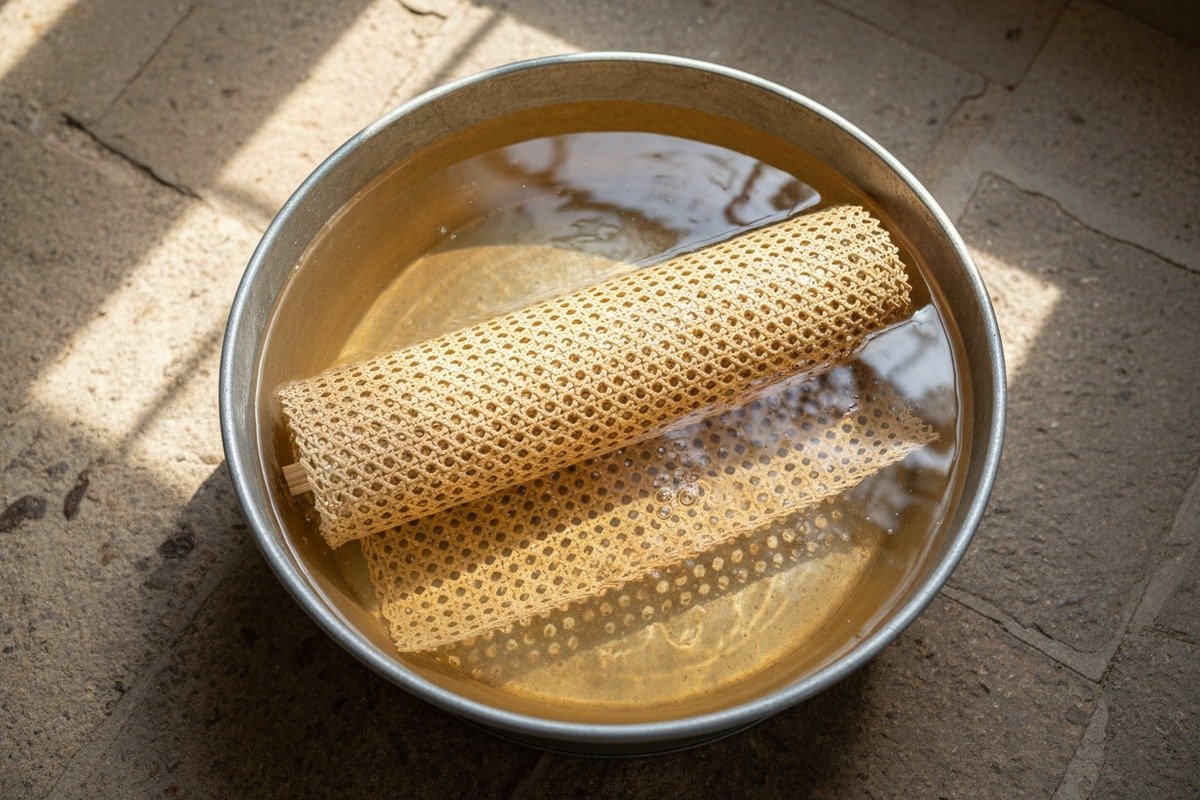
Cut your pre-woven cane webbing about two inches larger than the opening on all sides. This gives you trimming room. Soak the webbing in warm water. Most professionals recommend 20 to 30 minutes. Some sources say up to three hours for thick webbing. In our experience, 30 minutes works well for standard grades. Over-soaking weakens the fibers.
Soak your junco de caña 7 for 15 to 30 minutes as well. You want it flexible, not mushy.
Step 4: Press the Cane Into the Groove
Lay the damp webbing over the seat opening. Align it square with the front edge. The weave pattern should run parallel to the chair's front rail.
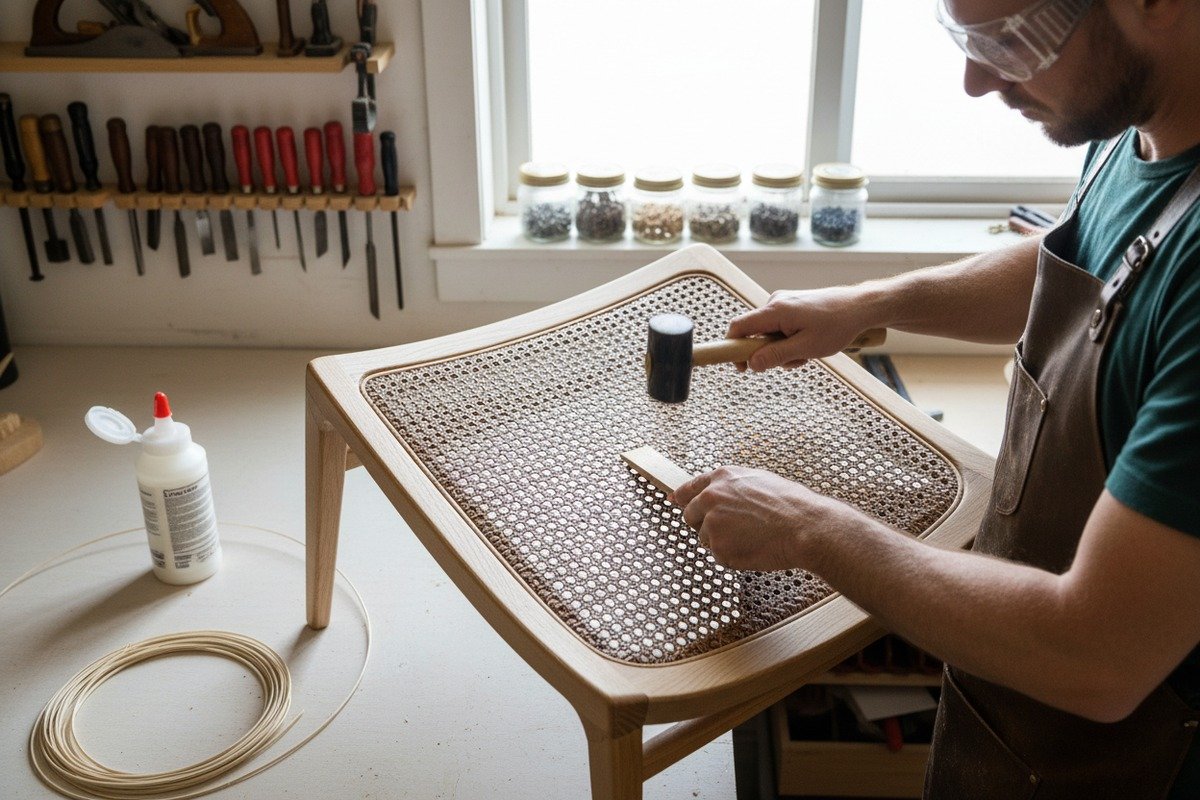
Start pressing the cane into the groove at the center of the front side. Use a wooden or plastic caning wedge and a rubber mallet. Tap gently. Move to the center of the back, then the sides. Work outward from the center on each side, alternating to keep even tension. Keep checking that the weave stays square.
| Installation Sequence | Acción |
|---|---|
| 1 | Center of front rail — press cane in, insert wedge |
| 2 | Center of back rail — pull slightly taut, press in, wedge |
| 3 | Center of left rail — press in, wedge |
| 4 | Center of right rail — press in, wedge |
| 5 | Work outward from center on all four sides, alternating |
| 6 | Remove wedges one section at a time before spline |
Some installers use a scrap piece of spline instead of wedges to hold the cane in place temporarily. This method provides a tighter hold but is less forgiving for beginners.
Step 5: Glue and Insert the Spline
Remove the wedges one at a time. Apply a thin bead of water-soluble glue — pegamento de piel 8 or fish glue works best — along the groove on top of the cane. Do not flood the groove.
Press the reed spline into the groove. For chairs with sharp corners, start at a corner. For rounded seats, use one continuous piece. Tap the spline in gently with a mallet. If two ends of spline meet, cut them at matching 45-degree angles for a clean joint.
Step 6: Trim and Finish
Use sharp nippers or scissors to trim the excess cane flush with the groove. A razor blade works for a clean edge. Remove any "hairs" or splinters with fine sandpaper.
Allow the chair to dry for 24 to 48 hours. As the cane dries, it shrinks and tightens. This natural tension gives the seat its final firmness.
Errores comunes a evitar
- Crooked alignment: Always check the weave pattern against the front rail before pressing in.
- Wrong glue: Never use yellow carpenter's glue or acrylic adhesive. These are nearly impossible to reverse for future repairs.
- Over-soaking: Soggy cane tears easily and loses structural integrity once dried.
- Skipping groove cleanup: Old residue prevents the new spline from seating properly.
Where can I find high-quality rattan webbing rolls at wholesale prices for my business?
Sourcing rattan at the right price-to-quality ratio is something we deal with every single day. Our three self-invested factories — including our own rattan processing facility in Indonesia — exist precisely to solve this problem for B2B buyers around the world.
For wholesale rattan webbing, source directly from manufacturers or dedicated rattan suppliers who offer Grade A materials in bulk rolls. Key channels include specialized rattan wholesalers like rattanwholesaler.com, B2B platforms such as Alibaba, and industry trade shows. Direct sourcing cuts middlemen costs and ensures quality control.
Why Direct Sourcing Matters
When you buy through distributors or retail craft shops, you pay a markup of 30% to 60%. For a single DIY chair project costing $20–$50 in materials, this might not matter. But for furniture factories, wholesalers, and building material suppliers ordering hundreds of meters, the difference is significant.
Direct sourcing also gives you control over specifications. You can request specific groove widths, weave patterns, strand thickness, and color tones. Our clients in the Netherlands, Spain, Australia, and the USA regularly order custom runs tailored to their regional market preferences.
Qué buscar en un proveedor
Not all rattan is equal. Here is what experienced buyers check:
| Factor de Calidad | Qué comprobar | Señal de alerta |
|---|---|---|
| Consistencia de las hebras | Even thickness, no thin spots | Uneven strands, visible breaks |
| Uniformidad del color | Consistent tone across the roll | Blotchy, dark patches |
| Tensión del tejido | Pattern holds shape when flexed | Loose gaps, shifting strands |
| Packaging | Rolled on cardboard cores, wrapped for shipping | Folded (causes crease damage) |
| Sourcing transparency | Supplier discloses origin and processing | Vague or no sourcing info |
| Flexibilidad de MOQ | Reasonable minimums for trial orders | Extremely high MOQs with no samples |
Sustainable and Ethical Sourcing
The 2020s have brought a sharp focus on sustainability in rattan sourcing. Sustainable and Ethical Sourcing 9 Rattan is a fast-growing, renewable palm that supports tropical forest ecosystems 10 when harvested responsibly. Our Indonesian facility works directly with local harvesters who practice selective cutting, allowing plants to regenerate.
For buyers who market eco-friendly products, this traceability is a selling point. Certifications and transparent supply chain documentation are increasingly expected by end consumers, especially in European and North American markets.
Online Kits and Bundled Supplies
A growing trend is the one-stop cane repair kit. These bundles include pre-woven webbing, a coil of reed spline (typically six feet per chair), a small bottle of glue, and sometimes basic tools. They are popular with DIY customers and small repair shops. If you are a wholesaler, offering these kits is a smart way to capture the home-restorer market segment that has surged thanks to thrift-flip culture and mid-century modern revivals.
Price Benchmarks
DIY tutorials frequently cite material costs of $20 to $50 per chair for retail buyers. At wholesale, depending on grade and order volume, costs can drop substantially. Thrift-store chairs purchased for as little as $35 per set have been transformed into stylish heirloom pieces at minimal expense — a narrative that drives demand for affordable, high-quality cane.
How do I maintain my newly replaced rattan cane to prevent it from sagging over time?
After spending years developing our product line and hearing feedback from clients across dozens of countries, we know that installation is only half the battle. The way you care for rattan cane in the months and years after replacement determines how long it lasts.
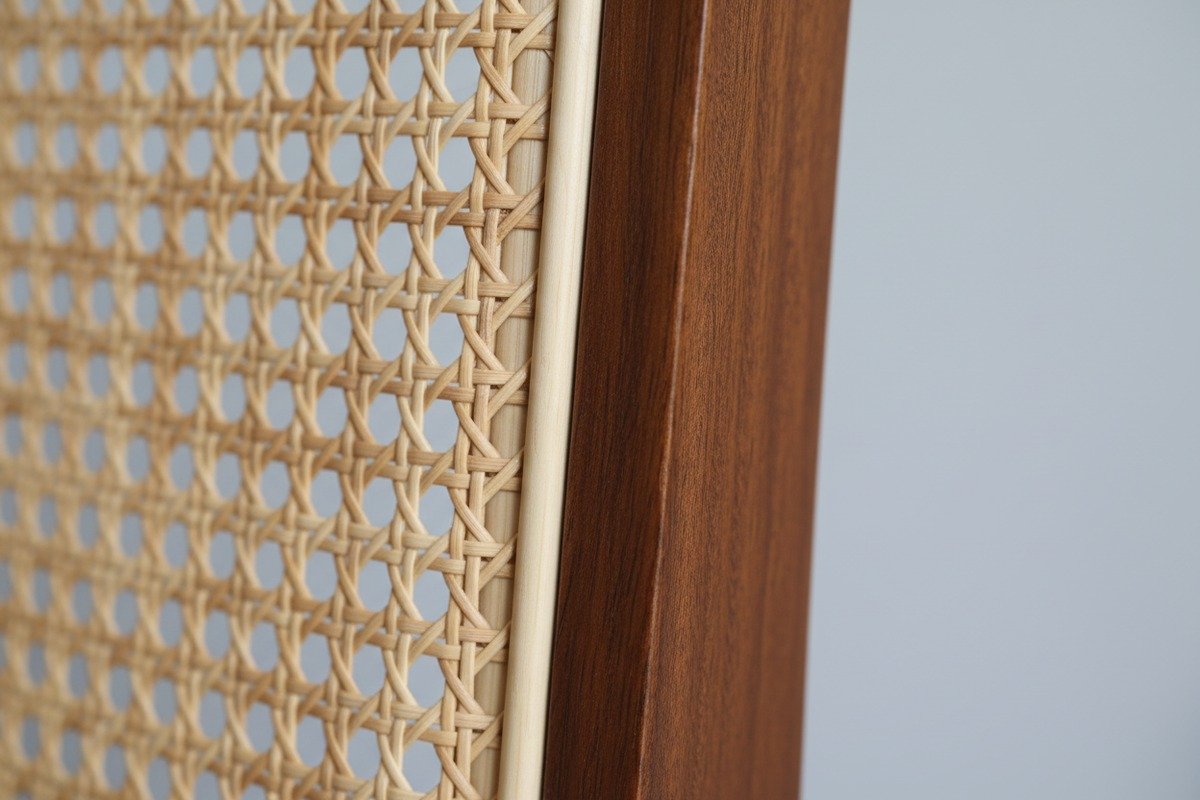
Maintain new rattan cane by keeping it away from direct sunlight and extreme humidity, cleaning it regularly with a damp cloth, avoiding heavy concentrated weight, and periodically misting the underside with water to preserve flexibility. Proper care prevents sagging, cracking, and premature aging of the natural fibers.
The First 48 Hours
After installation, let the chair sit undisturbed for at least 24 to 48 hours. During this time the cane dries, shrinks, and tightens in the groove. Do not sit on the chair or place weight on it. The drying process is essential for achieving drum-tight tension.
Routine Cleaning
Rattan cane collects dust in its weave. A soft brush or vacuum with a brush attachment works well for weekly cleaning. For deeper cleaning, wipe the cane with a damp cloth — not soaking wet. Excess moisture can swell the fibers and loosen the spline over time.
Avoid harsh chemical cleaners. They strip the natural oils from rattan and make it brittle. A mild soap solution is safe if needed.
Factores ambientales
Sunlight and humidity are rattan's biggest enemies.
| Factor ambiental | Efecto en el ratán | Prevention |
|---|---|---|
| Luz solar directa | Bleaching, drying, cracking | Position away from windows, use curtains |
| High humidity (>70%) | Swelling, mold, loosening | Use dehumidifiers, ensure ventilation |
| Low humidity (<30%) | Brittleness, cracking | Use humidifiers, occasional misting |
| Temperature extremes | Warping, fiber stress | Keep indoors, stable temperature |
Misting for Longevity
Once or twice a year, lightly mist the underside of the cane seat with water from a spray bottle. This rehydrates the fibers slightly and helps maintain flexibility. Do not soak it. Just a fine mist. Let it dry naturally. This practice is especially important in dry climates or heated indoor environments.
Preventing Sag
Sagging usually comes from three causes: poor initial installation, excessive weight in one spot, or environmental damage. If you installed the cane properly with correct tension and good spline, sagging is uncommon.
For chairs used daily, rotate seating positions when possible. Avoid sitting on the very edge repeatedly — this concentrates force on a small area of cane. Cushions distribute weight and reduce direct wear on the weave.
When to Re-Cane
Even with excellent care, natural rattan cane has a lifespan. Expect 5 to 15 years of use depending on traffic and environment. Synthetic rattan lasts longer — often 15 to 25 years — because it resists moisture and UV. If the cane begins to sag despite misting and tightening, it is time for a fresh replacement. Fortunately, if hide glue was used originally, the removal and re-caning process is straightforward.
Custom Finishing Tips
Some restorers dye or stain rattan before installation for a custom look. If you choose to do this, always dye the webbing before pressing it into the groove. Dyeing after installation results in uneven color and paint build-up in the groove. A light coat of clear matte sealant after installation can add UV protection without changing the natural texture.
Conclusión
Replacing rattan cane webbing is a rewarding skill. Choose the right grade, follow careful installation steps, source quality materials, and maintain the cane properly — your restored chair will last for years.
Notas al pie
1. Found a comprehensive guide explaining what cane webbing is, its origin, and production process. ↩︎
2. Defines pressed cane and its use in furniture, often with a spline system. ↩︎
3. Describes the traditional method of hand-weaving individual rattan strands into furniture frames. ↩︎
4. Explores the reasons behind the enduring popularity and revival of mid-century modern furniture design. ↩︎
5. Found a detailed explanation of what synthetic rattan is, its composition, and how it differs from natural rattan. ↩︎
6. Explains water-based adhesives, their properties, and use in furniture for easy cleanup. ↩︎
7. Found an article that clearly defines reed spline and details its installation process with cane webbing. ↩︎
8. Found a working page on the original domain that explains hide glue, its properties, and applications. ↩︎
9. Found a working page on the original domain discussing sustainable rattan and ethical sourcing practices from Indonesia. ↩︎
10. Explains how rattan cultivation supports tropical forest ecosystems and biodiversity. ↩︎

 English
  Español de México
  العربية
  Deutsch
  Français
  Русский