
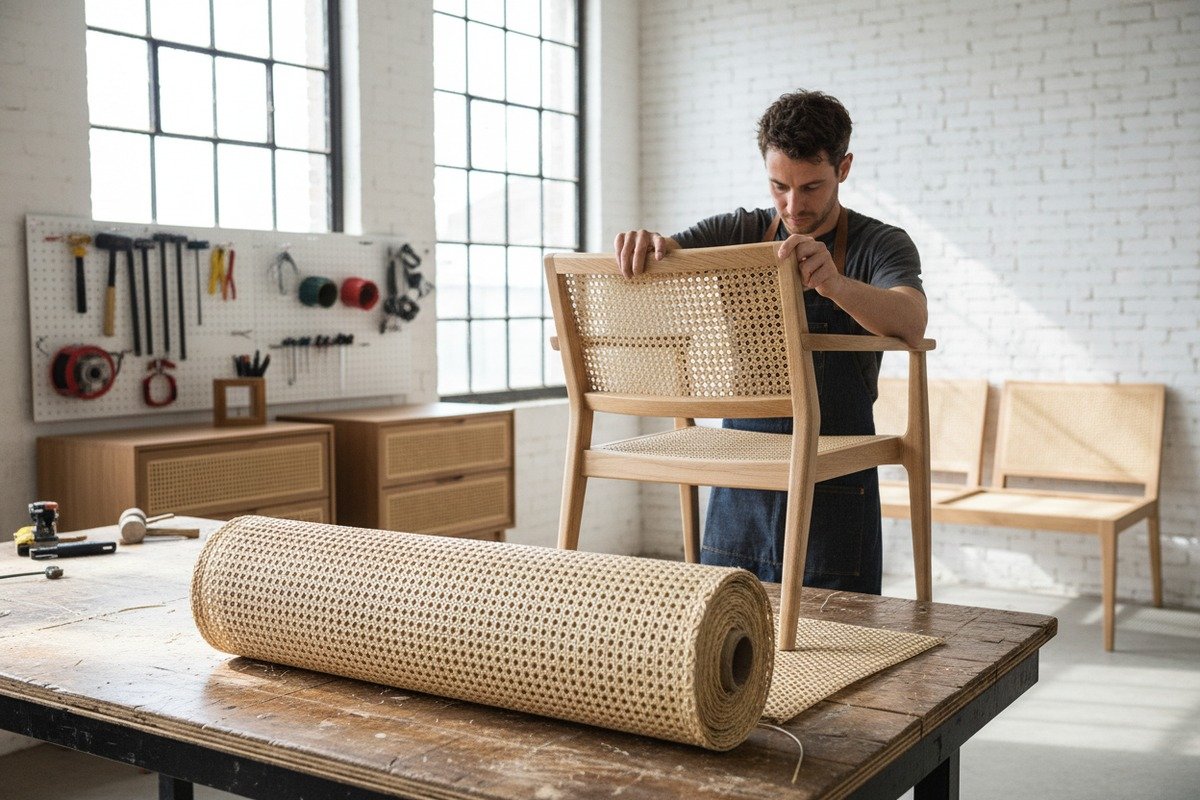
Every week on our production floor in Foshan, we process thousands of meters of tejido de caña de ratán 1 — and demand keeps climbing.
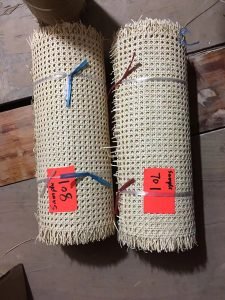
Rattan cane webbing is popular for furniture manufacturing because it combines exceptional sustainability, lightweight durability, natural aesthetic appeal, and design versatility at competitive cost, enabling factories to produce eco-friendly, stylish furniture that meets growing consumer demand for organic materials across residential and commercial markets.
This article breaks down the exact reasons behind the material’s rising popularity. We cover quality sourcing, design advantages, supplier selection, and pricing strategies. Whether you run a furniture factory or manage procurement for a wholesaler, you will find practical answers here.
How can I ensure the rattan cane webbing I source meets my factory's quality standards?
Inconsistent webbing quality has caused production delays on our lines more than once. estándares de calidad 2 It is a headache every purchasing manager knows well.
To ensure rattan cane webbing meets your factory's quality standards, establish clear grading specifications upfront, request pre-shipment samples from every production batch, verify the supplier's processing facility directly, and implement incoming material inspections covering strand thickness, weave density, moisture content, and color uniformity.
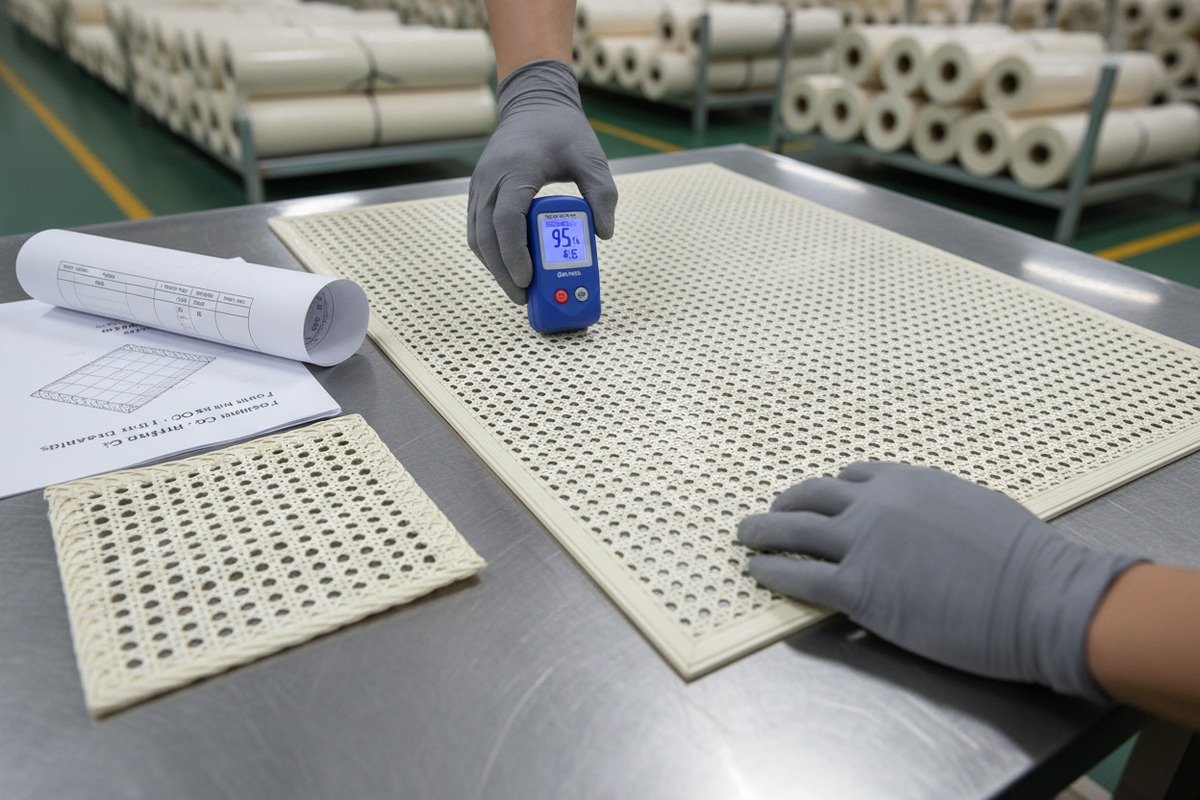
Quality control in rattan cane webbing starts long before the material reaches your factory floor. It begins at the source — the rattan processing facility. When our team visits our own rattan processing plant in Indonesia, we check the raw cane at every stage. The outer bark must be peeled cleanly. The inner core strips need consistent width. Any irregularity here causes problems downstream.
Define Your Quality Grade
Not all rattan cane webbing is the same. The market generally recognizes three grades. Knowing which grade your products need saves time and money.
| Grade | Strand Quality | Consistencia del color | Mejor Uso |
|---|---|---|---|
| Grado A (Premium) | Uniform thickness, no knots, smooth surface | Highly consistent, minimal color variation | High-end furniture, visible surfaces |
| Grado B (Estándar) | Minor knots allowed, slight thickness variation | Moderate variation, acceptable for stained finishes | Mid-range furniture, semi-visible panels |
| Grado C (Económico) | Visible knots, variable strand width | Variación notable | Budget furniture, hidden or covered applications |
Set Incoming Inspection Checkpoints
When webbing arrives at your warehouse, run through a simple checklist. First, check contenido de humedad 3. Ideally, it should sit between 8% and 14%. Too dry and the cane cracks during installation. Too wet and it invites mold during storage. Second, examine weave density. Count the strands per square inch and compare against the sample you approved. Third, look at color. Natural rattan has organic variation, but large dark spots or bleaching marks signal poor processing.
Request Batch Samples Before Shipment
We always encourage our clients — from the Netherlands to Australia — to request a cutting sample from each production batch before we ship. This one step prevents most quality disputes. A reliable supplier will not hesitate to send a 30cm x 30cm sample piece for your review.
Watch for Common Defects
Broken strands in the weave pattern weaken the entire sheet. Uneven tension causes the webbing to buckle when applied to a frame. Chemical odor suggests over-bleaching or improper treatment. These are red flags. If your supplier cannot explain and correct these issues, it is time to look elsewhere.
Building a quality standard document — even a simple one-page spec sheet — gives your supplier a clear target. It also protects you during disputes. At our facility, we welcome detailed specs. They make production smoother for everyone.
Why should I choose natural rattan cane webbing for my modern furniture designs?
When we first started supplying rattan webbing to European furniture brands ten years ago, some designers thought it looked "too traditional." That perception has completely reversed.
Choose natural rattan cane webbing for modern furniture because it delivers a warm, organic texture that contrasts beautifully with contemporary materials like metal and glass, offers excellent breathability for seating comfort, supports sustainable manufacturing goals, and enables creative design flexibility across headboards, cabinet fronts, and decorative panels.

The design world has shifted. Consumers want pieces that feel authentic. Natural rattan cane webbing delivers that authenticity in a way synthetic materials simply cannot. The tactile quality — slightly rough, warm to the touch — creates a sensory experience. It connects people to nature inside their homes.
Aesthetic Versatility Across Styles
Rattan cane webbing is not locked into one design language. It adapts. The classic hexagonal open-mesh "radio weave" fits mid-century modern aesthetics perfectly. A dense square basketweave suits minimalist Scandinavian designs. The complex diamond motif adds drama to bohemian or coastal interiors.
Our factory produces webbing in multiple patterns. We also offer bleached rattan cane webbing for clients who want a lighter, more neutral palette. The warm beige, straw yellow, and cream tones of natural webbing complement wood, stone, and even concrete surfaces.
How It Compares to Alternatives
Designers often ask us how natural rattan stacks up against synthetic options and other materials. Here is a straightforward comparison.
| Característica | Tejido de ratán de caña natural | Mimbre de ratán sintético | Solid Wood Panels |
|---|---|---|---|
| Estética | Warm, organic, unique variations | Uniform, plastic-like | Solid, heavy appearance |
| Transpirabilidad | Excellent (open weave) | Limitado | Ninguna |
| Weight | Very lightweight | Lightweight | Pesado |
| Sostenibilidad | Renovable, biodegradable | Petroleum-based, non-biodegradable | Depends on sourcing |
| Flexibilidad | High — easy to shape | Moderada | Bajo |
| Tactile Quality | Rich, natural texture | Smooth, artificial feel | Smooth, cold |
| Costo | Moderada | Baja a moderada | Alto |
La ventaja de la sostenibilidad
This matters more each year. Rattan is a palm that grows rapidly in bosques tropicales 4. It does not require clear-cutting. Harvesting rattan actually supports forest ecosystems because the plant needs the canopy to grow. The cane — the outer layer of the rattan stem — is peeled off without destroying the plant. It regenerates.
For furniture brands marketing to eco-conscious consumers 5 in Europe, North America, and Australia, this is a powerful story. Natural rattan cane webbing is biodegradable at end of life. Synthetic webbing ends up in landfills. The environmental math is clear.
Design Innovation With Hybrid Materials
Some of the most striking modern furniture pieces we have seen from our clients combine rattan cane webbing with black powder-coated steel frames 6, tempered glass tops, or marble accents. The contrast works because rattan's warm, organic texture softens the hard edges of industrial materials. It creates visual balance.
Cabinet doors with rattan inserts allow airflow while hiding contents — a practical and beautiful solution. Headboards wrapped in radio weave add depth and warmth to bedrooms without visual heaviness. Room dividers made from rattan webbing panels create separation in open-plan spaces while keeping the area light and airy.
How do I find a reliable one-stop supplier for all my rattan material needs?
Over the years, we have heard the same frustration from purchasing managers: juggling five or six suppliers for different rattan materials wastes time, increases shipping costs, and creates quality inconsistencies.
Find a reliable one-stop rattan supplier by evaluating their product range across all rattan categories, verifying they own or directly control processing facilities, checking export experience to your region, requesting references from existing factory clients, and confirming they can provide consistent quality across natural webbing, synthetic matting, and bleached cane products.
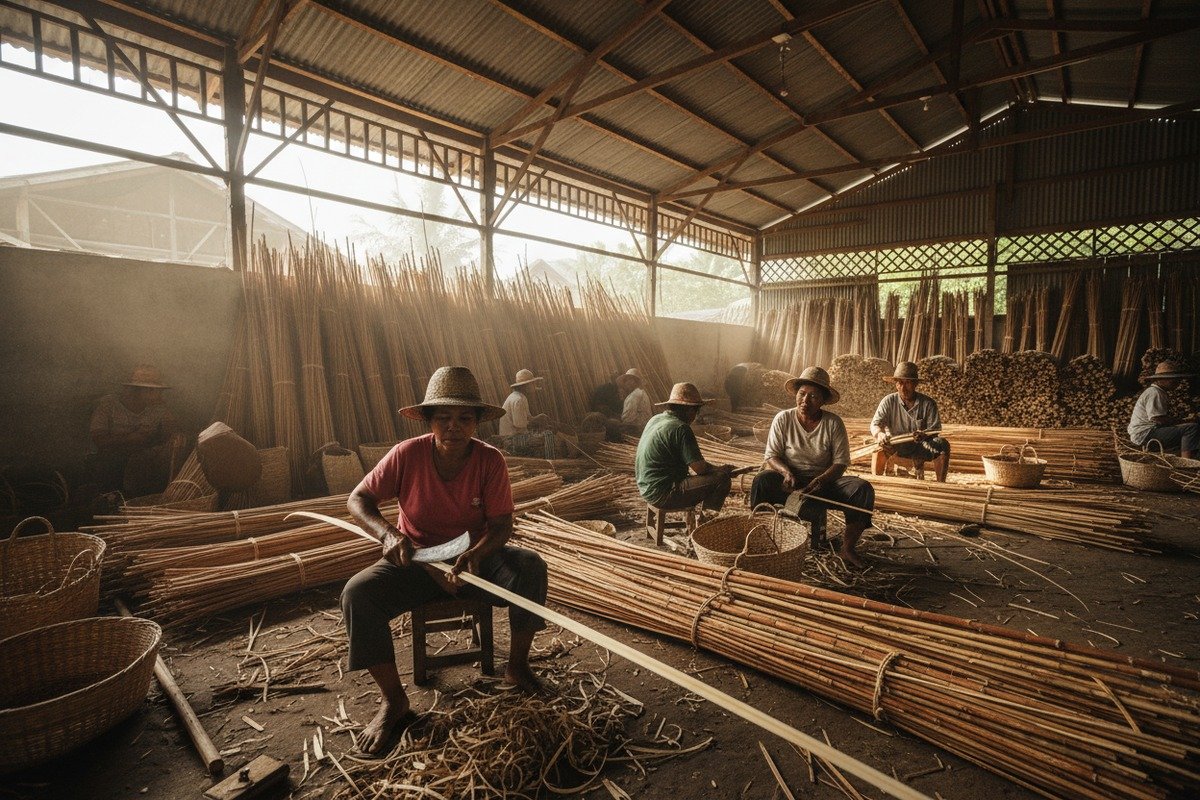
A one-stop supplier does more than sell products. They solve supply chain problems 8. When your factory needs natural rattan webbing in radio weave pattern, synthetic rattan matting in chevron design, and bleached cane webbing — all for the same production run — working with one supplier simplifies everything.
Qué buscar en un proveedor
Start with product range. A true one-stop rattan wholesaler covers the full spectrum: natural cane webbing in multiple patterns, synthetic rattan matting in various textures and colors, bleached and dyed options, rattan poles, rattan peel, and woven sheets. If a supplier only offers one or two categories, you will still need to source from others.
Next, check their supply chain control. Do they own or invest in processing facilities 9? Our three self-invested factories — including our rattan processing facility in Indonesia — give us direct control over raw material quality. We do not rely entirely on third-party processors. This matters because it means we can trace quality issues back to the source and fix them quickly.
Key Evaluation Criteria
| Criterios | Por qué importa | How to Verify |
|---|---|---|
| Product Range | Reduces number of suppliers needed | Request full product catalog with specifications |
| Factory Ownership | Ensures quality control at source | Ask for factory photos, certifications, invite visit |
| Export Experience | Reduces shipping and customs issues | Ask for export country list and reference clients |
| MOQ Flexibility | Allows trial orders before commitment | Request MOQ per product category |
| Communication Speed | Prevents production delays | Test response time on WhatsApp or email |
| Sample Availability | Confirms actual product quality | Order samples before committing to bulk |
The Partner Factory Network Advantage
Beyond our own facilities, we work with over 30 partner factories in the Foshan area. This network allows us to handle large, diverse orders without bottlenecks. If one factory specializes in tight-weave patterns and another excels at open-mesh designs, we route each product to the right facility. The result is better quality across the board.
For clients like Ranoo in Thailand — a purchasing manager who values high quality at competitive prices and communicates quickly via WhatsApp — having a single point of contact for all rattan materials saves hours of coordination every week. One purchase order. One quality standard. One shipment. One invoice.
Señales de Alerta a Tener en Cuenta
Be cautious with suppliers who cannot provide factory-level documentation. If they cannot show you where the rattan is processed, they are likely a trading company adding a markup without adding value. Also, watch for suppliers who accept every custom request without questions. A knowledgeable supplier will ask about your application, your quality grade requirements, and your end market. These questions show expertise.
Finally, test the relationship with a small order before committing to containers. A supplier's true reliability shows when something goes wrong — and how they handle it.
How can I get competitive pricing on bulk rattan webbing without sacrificing my product quality?
Pricing negotiations are a daily reality in our business. We talk to factory buyers who need to hit a target cost per unit while maintaining a quality level their end customers expect.
Get competitive pricing on bulk rattan webbing without sacrificing quality by consolidating orders across product categories with one supplier, committing to regular order volumes for better rates, specifying the exact quality grade needed to avoid overpaying for unnecessary premium, optimizing packaging to reduce shipping costs, and timing purchases around raw material availability cycles.
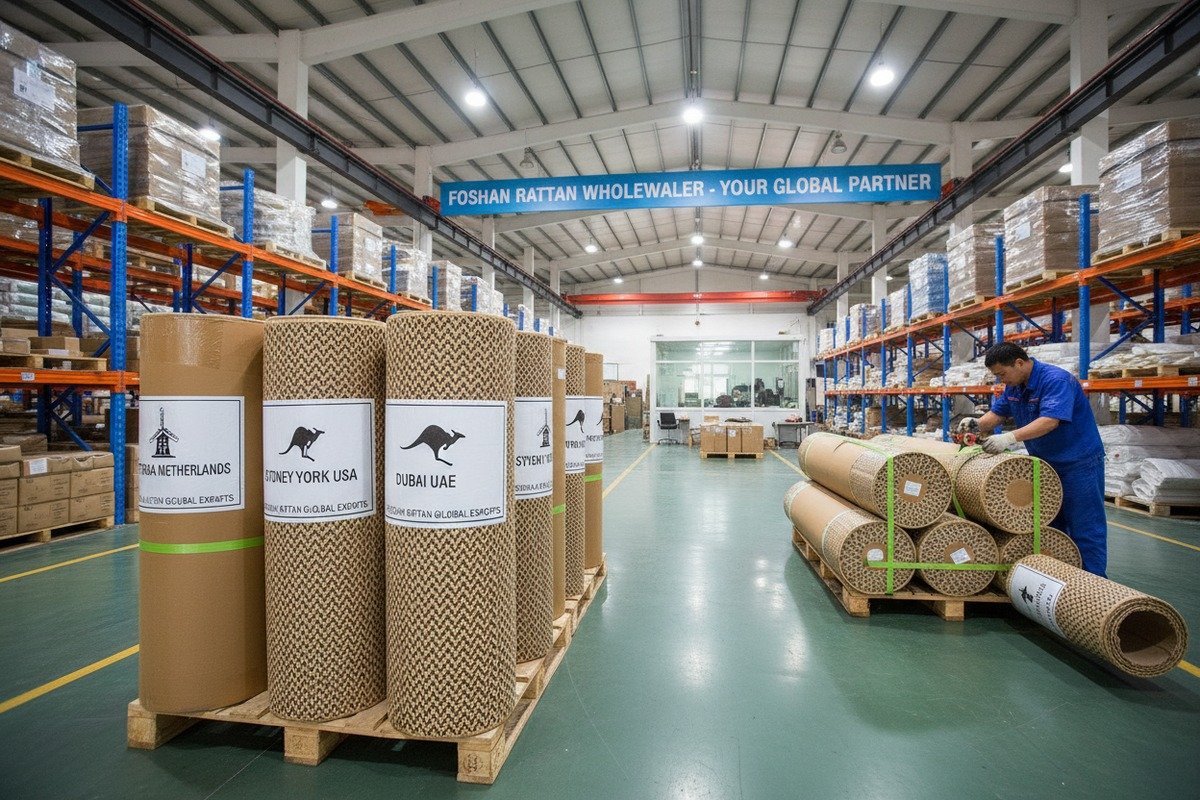
Price and quality are not enemies. They can coexist when you approach procurement strategically. The key is understanding where costs come from — and which costs you can influence without degrading the product.
Comprensión de la estructura de costos
Rattan cane webbing pricing depends on several factors. Raw material cost fluctuates with harvest seasons in Indonesia and other Southeast Asian countries. Processing labor — peeling, splitting, weaving — adds to the base. Pattern complexity matters too. A simple open weave is faster to produce than an intricate diamond motif.
Here is a general breakdown of where your money goes in a typical bulk order:
| Componente de Costo | Approximate Share | Your Influence Level |
|---|---|---|
| Raw rattan material | 30–40% | Low (market-driven) |
| Processing and weaving | 25–35% | Medium (pattern choice) |
| Quality grading and inspection | 5–10% | High (grade selection) |
| Packaging | 5–10% | High (spec optimization) |
| Shipping and logistics | 15–25% | Medium (volume consolidation) |
Strategies That Actually Work
Consolidate your orders. Instead of buying natural webbing from one supplier, synthetic matting from another, and bleached cane from a third, place everything with one supplier. The combined volume gives you leverage. We offer better per-unit pricing when a client orders across multiple product categories because it improves our production planning efficiency.
Commit to forecast volumes. If you can share a quarterly or annual purchase forecast, your supplier can plan raw material procurement and production scheduling more efficiently. This translates to lower costs passed on to you. It also secures your supply during peak demand periods when material availability tightens.
Choose the right grade — not the highest grade. If your rattan webbing will be painted, stained, or used in a semi-hidden application, Grade A premium is an unnecessary expense. Grade B standard gives you solid performance at a meaningfully lower price point. Match the grade to the application.
Packaging Optimization
Packaging is an often-overlooked cost driver. Rattan webbing is lightweight but bulky. How it is rolled, stacked, and protected directly affects how many meters fit in a container. We have worked with clients to redesign packaging — switching from individual plastic wrapping to consolidated roll packaging with edge protection — and reduced their per-unit shipping cost by up to 15%.
Durable packaging also prevents damage in transit. A single damaged roll creates waste, production delays, and sometimes customer complaints. Investing slightly more in packaging quality often saves more than it costs.
Timing Your Purchases
Raw rattan availability follows seasonal patterns. Harvesting peaks during dry seasons in Southeast Asia. Ordering during or just after peak harvest periods typically yields better pricing because raw material supply is abundant. Conversely, ordering during the rainy season — when harvesting slows — can mean tighter supply and higher prices.
We advise our long-term clients to plan major orders around these cycles. It is a simple tactic that many buyers overlook, but it consistently delivers 5–10% savings on raw material costs.
Long-Term Relationships Beat One-Time Bargains
The most competitive pricing we offer goes to clients who have been with us for years. They get priority production slots, first access to new patterns, and pricing that reflects the full volume of our relationship — not just a single order. Building a partnership with your rattan supplier is the most reliable path to sustained competitive pricing.
Conclusión
Rattan cane webbing earns its popularity through real performance — sustainability, versatility, beauty, and value that furniture manufacturers can count on every production cycle.
Notas al pie
1. This article provides a comprehensive guide to what cane webbing is, its source material (rattan), and its production process. ↩︎
2. Explains ISO 9001 as a global standard for quality management in manufacturing. ↩︎
3. Details the importance of moisture content for wood stability in furniture manufacturing. ↩︎
4. Describes the characteristics and location of tropical forests, rattan’s natural habitat. ↩︎
5. Provides statistics and trends on the growing market of environmentally aware consumers. ↩︎
6. Explains powder coating as a durable, weather-resistant finish for metal furniture. ↩︎
7. Confirms rattan’s status as a fast-growing and sustainable natural material. ↩︎
8. Outlines common challenges and disruptions in modern supply chain management. ↩︎
9. Highlights the importance of controlling processing facilities for raw material quality. ↩︎
10. Defines packaging optimization and its role in reducing costs and improving efficiency. ↩︎

 English
  Español de México
  العربية
  Deutsch
  Français
  Русский