

Every week on our production floor in Foshan, buyers ask us the same question — natural or bleached rattan cane webbing 1? The choice seems simple, but getting it wrong means mismatched furniture lines, unhappy end customers, and costly re-orders.
Choosing between natural and bleached rattan cane webbing depends on your target market aesthetic, durability requirements, budget, and sustainability goals. Natural rattan offers warm golden-brown tones for classic designs, while bleached webbing provides a lighter, uniform finish ideal for modern and minimalist furniture projects.
Below, we break down the key differences across aesthetics, strength, pricing, and project suitability so you can make a confident sourcing decision.
How do I decide between the raw look of natural rattan and the uniform finish of bleached webbing?
When we prepare sample boards for our export clients in the Netherlands and Australia, the first conversation is always about color direction sustainability goals 2. A wrong finish can clash with an entire furniture collection and stall your product launch.
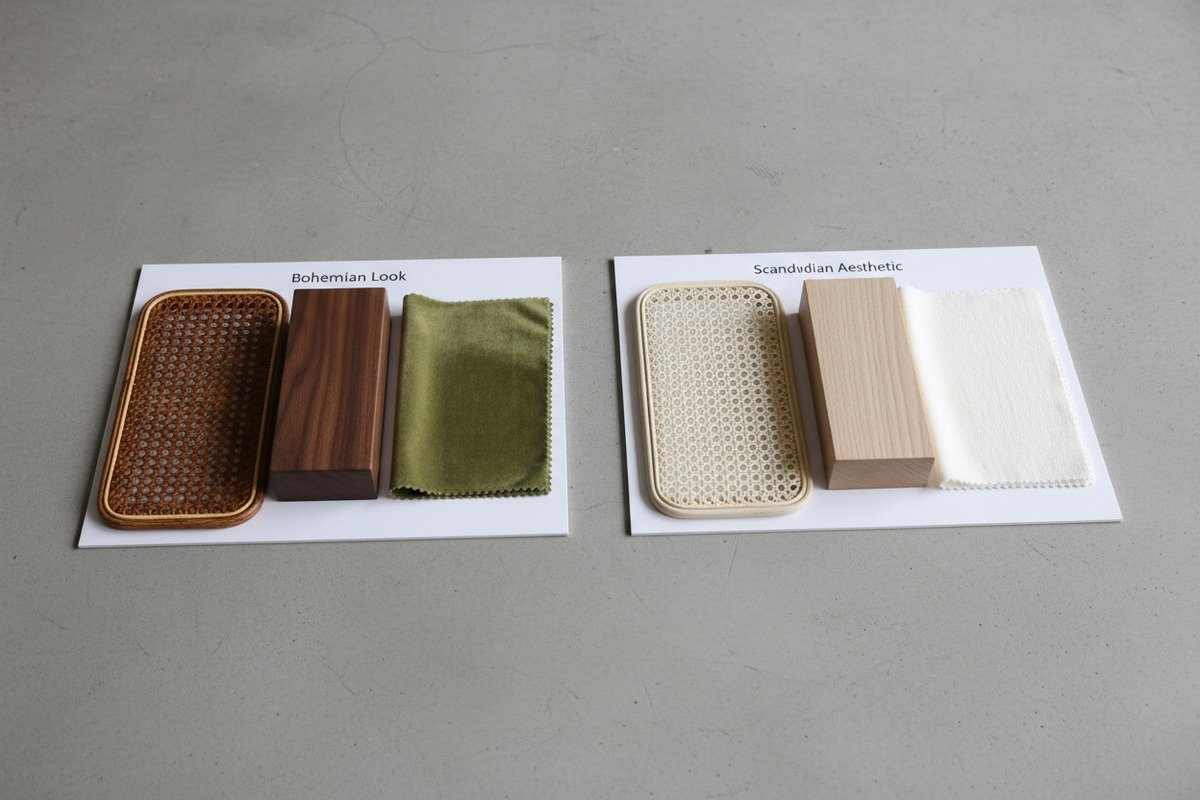
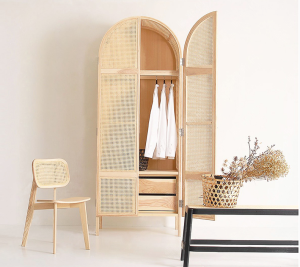
Decide by matching the rattan finish to your furniture's wood tone, target interior style, and customer demographic. Natural rattan pairs best with dark woods and bohemian or vintage aesthetics, while bleached rattan complements light woods, white paints, and Scandinavian or coastal design trends.
Understanding the Visual Difference
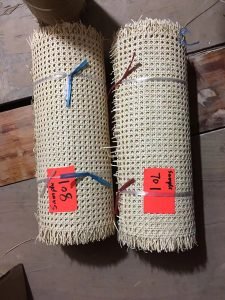
Natural rattan cane webbing keeps the original color of the rattan peel. That means warm golden-brown hues, sometimes with subtle amber tones. No two rolls look exactly identical. There are slight variations in shade and texture. This is the charm of natural rattan — it feels authentic and organic.
Bleached rattan, on the other hand, goes through a lightening process. The result is a cleaner, lighter tone — often creamy white or pale straw. The color is more uniform across a roll. This consistency is what draws modern furniture makers to bleached webbing.
Matching Rattan to Your Design Direction
Your furniture's target style should drive your choice. Here is a simple decision framework we share with our B2B clients:
| Design Style | Recommended Finish | Best Wood Pairings | Typical Market |
|---|---|---|---|
| Bohemian / Rustic | Natural | Walnut, mahogany, cherry | USA, Middle East |
| Scandinavian / Minimalist | Bleached | Oak, ash, birch | Netherlands, Australia |
| Coastal / Tropical Modern | Bleached | White-painted, light teak | Spain, Greece, USA |
| Mid-Century / Vintage | Natural | Teak, rosewood | Europe, Turkey |
| Contemporary Eclectic | Either (project-dependent) | Mixed materials | Global |
The Color Consistency Challenge
One thing we always tell first-time buyers: achieving perfect color consistency is hard with any natural material. Natural rattan varies from harvest to harvest. Bleached rattan requires rigorous sorting and quality control 3 to avoid uneven spots. In our Indonesian processing facility, we grade every batch before bleaching. Poorly processed bleached webbing can show blotchy patches — a red flag when sourcing from unknown suppliers.
For natural rattan, the variation is part of the product. But if you need tight color matching across a large order, specify your tolerance range upfront. Ask for pre-production samples from the same batch.
The Aging Factor
Natural rattan develops a rich patina over time. It deepens in color and gains character. Many designers and end consumers love this aging process. Bleached rattan aims to stay light, but it may yellow slightly with prolonged sun exposure. If your furniture will sit near windows, this matters. We recommend informing your end customers about proper placement to preserve the finish.
Also worth noting: natural rattan often carries a subtle earthy scent, especially in humid conditions. Bleached webbing has this scent reduced or eliminated during processing. For indoor cafe furniture or bedroom pieces, some buyers prefer the neutral scent profile of bleached webbing.
Will bleaching affect the tensile strength and long-term durability of my rattan materials?
This is one of the most common concerns we hear from furniture factory procurement managers. When our team in Indonesia first standardized our bleaching protocols, we ran side-by-side stress tests on natural and bleached samples to get real answers.
Bleaching can slightly reduce rattan cane's surface integrity, but when done with premium steaming or chemical-free methods, the impact on tensile strength is minimal. Both natural and bleached rattan cane webbing remain highly durable for indoor furniture use, with natural varieties retaining a slight edge in long-term robustness.
How the Bleaching Process Works
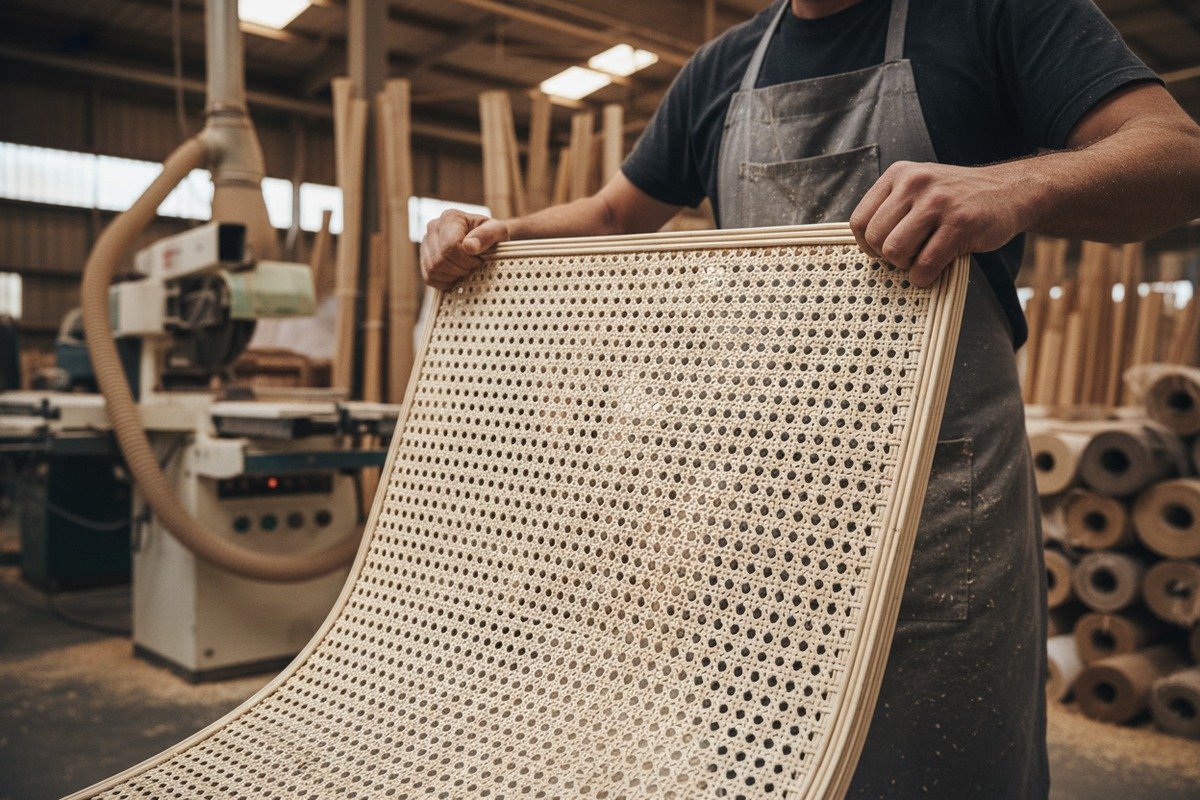
Not all bleaching is the same. There are three common methods:
- Steaming — The gentlest approach. Uses pressurized steam to lighten the rattan peel. Minimal impact on fiber structure.
- Natural coloring agents — Plant-based or mineral agents that lighten without harsh chemicals. Moderate impact.
- Chemical whitening — Uses hydrogen peroxide or similar agents. Fastest results but can weaken fibers if overdone.
At our processing facility, we primarily use steaming combined with natural agents. This preserves the rattan's structural integrity while achieving the light tone buyers want. We avoid aggressive chemical whitening 4 because it can make the cane brittle over time.
Strength Comparison
Rattan cane webbing — the outer peel of the rattan vine — is naturally stronger than rattan core 5 (the inner strand). The peel is dense, smooth, and naturally mold-resistant. Bleaching affects only the surface layer. If done correctly, the core strength stays intact.
Here is what we observe in practice:
| Property | Natural Rattan Cane | Bleached Rattan Cane (Steam Method) | Bleached Rattan Cane (Chemical Method) |
|---|---|---|---|
| Tensile Strength 6 | High | High (minimal reduction) | Moderate (noticeable reduction) |
| Flexibility After Soaking | Excellent, longer workability window | Good, slightly shorter window | Reduced flexibility |
| Mold Resistance | Naturally high | High | Moderate (surface coating affected) |
| Lifespan (Indoor Use) | 10–15+ years with care | 10–15 years with care | 8–12 years |
| Surface Adhesion for Finishes | Strong | Good (test compatibility) | Variable (may repel some glues) |
Practical Durability Tips
One thing buyers often overlook: the bleaching method affects how well finishes and glues adhere to the rattan surface. If your furniture factory applies lacquer or varnish after weaving, run a small adhesion test first. Some chemical-bleached webbing can repel certain water-based finishes.
For natural rattan, applying a light coat of clear varnish after installation extends its lifespan and protects against moisture. We recommend this for any indoor furniture piece, regardless of finish type.
Both natural and bleached rattan are strictly indoor materials. Neither performs well outdoors. Rain, direct sun, and temperature swings will degrade any rattan cane webbing within months. For outdoor projects, synthetic rattan 7 is the right choice.
The Workability Window
When craftspeople soak rattan before weaving, natural rattan tends to stay pliable longer. This gives furniture makers more time to work with it during installation. Some bleached varieties — especially those processed with chemicals — lose pliability faster after soaking. If your factory runs high-volume production lines, this shorter workability window can slow things down. Ask your supplier about recommended soaking times for their specific bleached product.
How much price difference should I expect when sourcing natural versus bleached rattan cane?
Price is always a deciding factor for our wholesale clients. When we quote buyers from Turkey or Saudi Arabia, the first question after "what does it look like?" is almost always "what does it cost?" The answer is more nuanced than most people expect.
Expect bleached rattan cane webbing to cost 10–30% more than comparable natural rattan due to additional processing, quality control, and sorting requirements. However, garden-grown natural rattan from controlled plantations can also carry a premium of 20–50% over wild-harvested material, narrowing the price gap significantly.
What Drives the Price Difference?
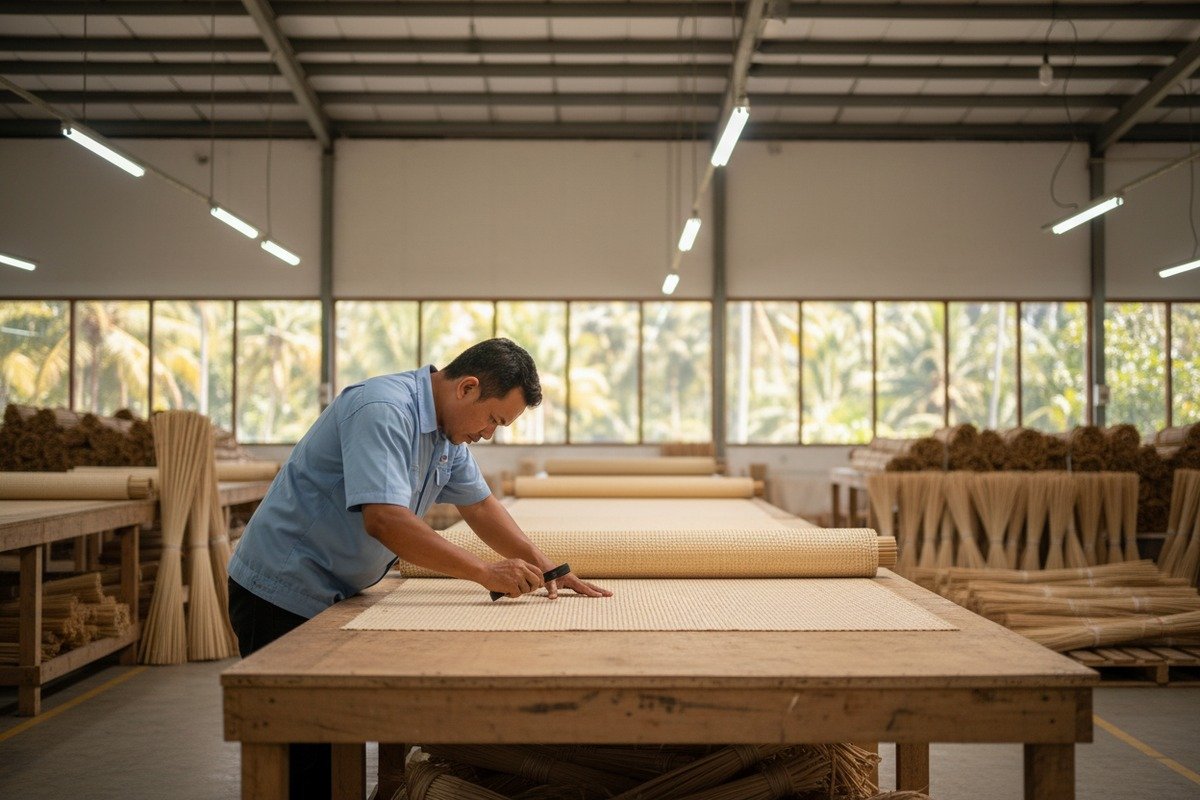
Several factors influence the final price per square meter or per roll. It is not just about whether the webbing is natural or bleached.
Source origin matters most. Garden-grown rattan from Vietnam, where vines are cultivated with care, typically costs more than wild-harvested rattan from remote forests. The quality is more consistent, the strands are more uniform in thickness, and defects are fewer. Wild rattan is cheaper, but you trade off quality consistency.
Processing adds cost. Bleaching — whether by steaming, natural agents, or chemicals — requires additional labor, equipment, and time. Each roll must be inspected for even color. Uneven batches get downgraded or discarded. This sorting process is labor-intensive and directly adds to the unit cost.
Grade and pattern affect pricing too. A premium hexagonal open-mesh "radio weave" with tight, uniform weaving costs more than a loose basketweave, regardless of color.
Price Breakdown by Factor
| Cost Factor | Natural Rattan Cane | Bleached Rattan Cane |
|---|---|---|
| Raw Material (Wild) | Baseline | Baseline + processing |
| Raw Material (Garden-Grown) | +20–50% over wild | +20–50% over wild + processing |
| Bleaching/Processing | None | +10–30% |
| Quality Sorting & Grading | Standard | More rigorous (+5–10%) |
| Weaving Pattern Complexity | Varies by pattern | Varies by pattern |
| Minimum Order Volume Discount | Typically 5–15% for large orders | Typically 5–15% for large orders |
Hidden Costs to Watch For
Beyond the quoted price per roll, watch for these hidden expenses:
- Rejects and returns. Poorly bleached webbing with uneven spots may need to be rejected. This is wasted material. Sourcing from a supplier with strong QC — like what we maintain at our Indonesian facility — reduces this risk.
- Finish compatibility. If your factory applies coatings and the bleached rattan rejects them, you spend extra on testing and re-application.
- Packaging durability. Rattan is lightweight but fragile during shipping. Damaged rolls mean lost money. We use reinforced tube packaging for export orders to prevent crushing.
Getting the Best Value
For buyers targeting mid-range furniture markets — like our clients in Thailand and India — natural rattan often delivers the best cost-to-quality ratio. It requires less processing and pairs well with popular wood tones in those markets.
For buyers targeting high-end European or Australian markets where light, minimalist aesthetics dominate, the extra cost of bleached rattan is justified by the design premium their end customers will pay. Think of it as a small input cost increase for a meaningful output price increase on the finished furniture.
Our recommendation: request samples of both finishes from your supplier, price them side by side, and calculate the impact on your finished product margin before committing to a large order.
Which rattan webbing option is best suited for my high-end furniture export projects?
Over the past decade, we have shipped rattan cane webbing to furniture factories across more than 15 countries. The "best" option for high-end export projects is never one-size-fits-all. It depends on your destination market, target consumer, and brand positioning.
For high-end furniture exports, choose garden-grown rattan cane webbing with chemical-free processing. Bleached webbing suits European and Australian markets favoring minimalist design, while natural webbing excels in markets valuing artisanal character. Prioritize suppliers offering traceable sourcing, Grade A sorting, and consistent roll-to-roll quality.
Matching Finish to Export Market
Your destination market's design preferences should be the primary driver. Here is what we see from our global order data:
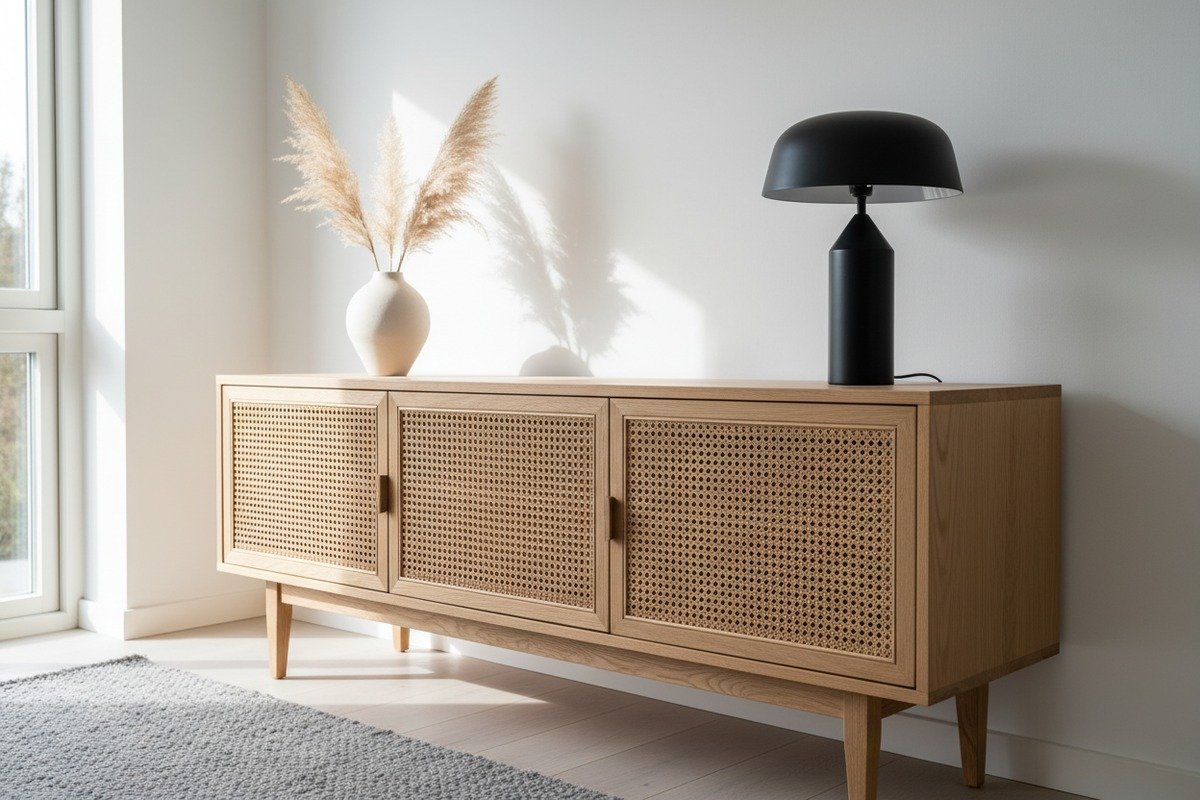
European markets (Netherlands, Spain, Greece) lean heavily toward bleached rattan for contemporary furniture lines. Clean lines, light tones, and airy aesthetics dominate showroom floors. Bleached webbing in open hexagonal or radio weave patterns is the top seller.
North American markets (USA, Canada) are split. Coastal and modern collections favor bleached. Farmhouse, mid-century, and rustic lines prefer natural. Many US furniture brands carry both finishes in their catalogs.
Middle Eastern markets (Saudi Arabia, Dubai, Iran) tend to prefer natural rattan with rich, warm tones that complement the region's interior design traditions featuring dark woods and layered textures.
Southeast Asian markets (Thailand, Philippines) often choose natural rattan for its authenticity and lower cost, though premium bleached products are gaining traction in upscale hotel and resort furniture.
Quality Benchmarks for High-End Projects
High-end furniture demands zero compromises. Here is what to verify when sourcing:
- Grade A sorting. Every strand should be uniform in width and thickness. No splits, no discoloration, no weak spots.
- Garden-grown origin. Ask for documentation. Garden-grown rattan from Vietnam or managed plantations in Indonesia produces the most consistent quality.
- Chemical-free bleaching certification. If choosing bleached webbing, confirm the method. Steaming or natural agents are the standard for premium products. Chemical-free processing means lower VOC off-gassing 9 — critical for indoor furniture, especially in markets with strict environmental regulations like the EU.
- Pattern precision. Whether it is a classic hexagonal mesh, dense basketweave, or geometric diamond motif, the weaving should be tight and even. Ask for close-up photos of the weave pattern before ordering.
Sustainability as a Selling Point
Eco-conscious consumers are a growing segment in high-end furniture. Both natural and bleached rattan can be positioned as sustainable — but only with the right sourcing story.
Natural rattan from managed plantations is fully biodegradable and supports rural communities. Bleached rattan processed without harsh chemicals maintains its biodegradability and minimizes environmental impact. Both stories resonate with green-minded buyers.
The key is traceability. Can your supplier tell you where the rattan was grown, how it was harvested, and how it was processed? At our facilities, we maintain documentation from plantation to finished roll. This gives our clients confidence to make sustainability claims to their end customers.
Care Instructions for End Customers
High-end furniture buyers expect longevity. Include care guidance with your products:
- Dust regularly with a soft brush or vacuum with a brush attachment.
- Clean with mild soap and a damp cloth. Avoid soaking.
- Apply a light coat of clear varnish or furniture wax annually for natural rattan.
- Keep away from direct sunlight to prevent yellowing (especially bleached rattan).
- Maintain moderate indoor humidity — avoid very dry environments that can cause cracking.
These simple steps extend the life of rattan cane webbing by years and keep your end customers satisfied.
Common Myths to Avoid
Some buyers confuse rattan cane (the outer peel) with rattan core (the inner strand) or with wicker 10 (which is a weaving technique, not a material). Rattan cane webbing is the strongest and most refined part of the rattan vine. It is not interchangeable with core rattan in high-end applications. Make sure your product descriptions and marketing materials use the correct terminology to maintain brand credibility.
Conclusion
Choosing between natural and bleached rattan cane webbing comes down to your market's aesthetic, your quality standards, and your budget. Both are excellent materials when sourced responsibly from reliable suppliers.
Footnotes
1. Defines the material and its origin from rattan palm. ↩︎
2. Replaced with an authoritative source from the United Nations on Sustainable Development Goals. ↩︎
3. Replaced with a comprehensive article on quality control in manufacturing from an authoritative logistics publication. ↩︎
4. Explains the chemical process used to lighten materials. ↩︎
5. Differentiates between the structural parts of the rattan plant. ↩︎
6. Replaced with a Wikipedia article providing a clear and authoritative definition of tensile strength. ↩︎
7. Replaced with a detailed guide explaining what synthetic rattan is and its characteristics. ↩︎
8. Explains the cultivation practices and benefits of farmed rattan. ↩︎
9. Discusses the reduction of harmful chemical emissions for indoor air quality. ↩︎
10. Clarifies the definition of wicker as a weaving technique, not a material. ↩︎
 English
  Español de México
  العربية
  Deutsch
  Français
  Русский