
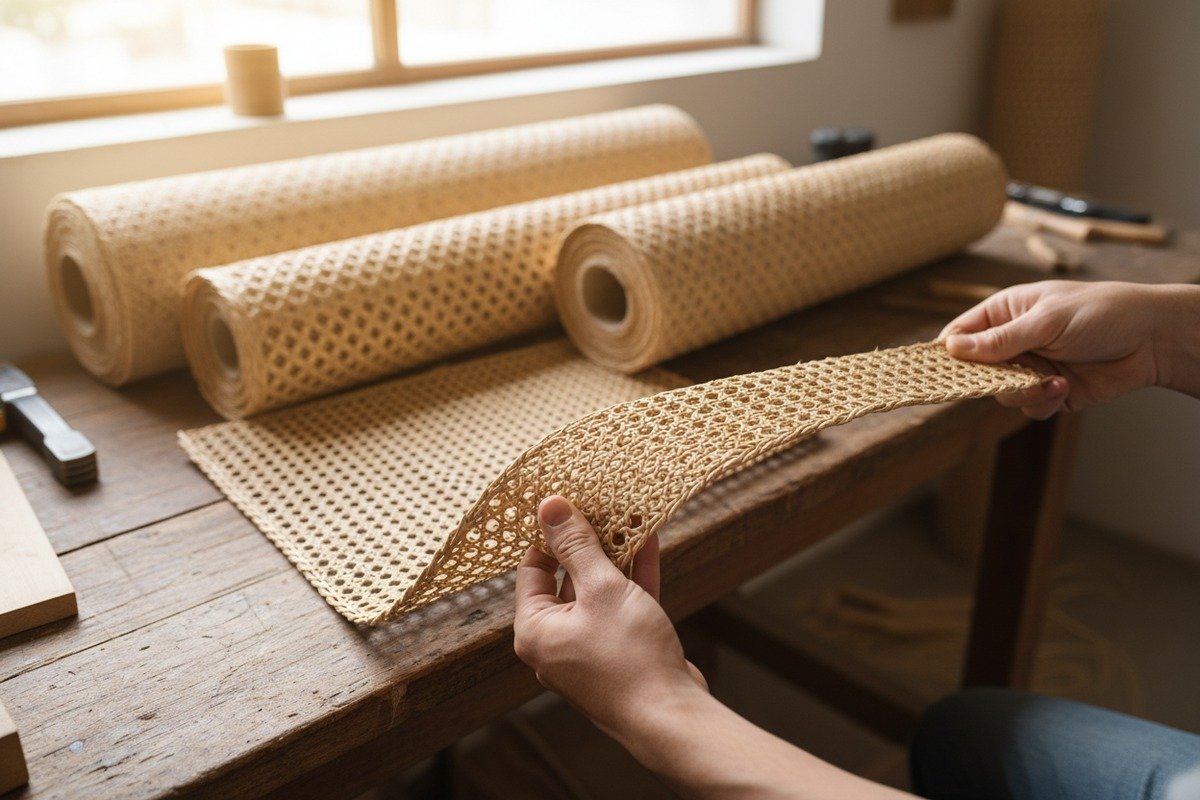
Every week at our production facility, we receive inquiries from furniture factories struggling with rattan webbing that cracks during installation or loses shape within months botanical species selected 1. The frustration is real. Inconsistent quality wastes time, money, and client trust.
The toughness and flexibility of natural rattan cane webbing depend on several interconnected factors: the botanical species selected, the geographical origin and growing conditions, the maturity of the vine at harvest, processing methods such as boiling, drying, and bleaching, the weave pattern used, and ongoing moisture management during storage and installation.
In this guide, we break down each of these factors so you can make smarter sourcing decisions and deliver furniture that lasts. Let’s start from the ground up—literally, with where the rattan grows.
How does the geographical origin of the raw material impact the flexibility of my rattan cane webbing?
When we source rattan from our own processing facility in Indonesia, we see firsthand how dramatically the origin of the vine shapes the final product. Not all rattan is created equal, and location matters more than most buyers realize.
The geographical origin of rattan directly affects its fiber density, moisture content, and natural oil levels. Rattan grown in the humid, mineral-rich rainforests of Indonesia, particularly Kalimantan and Sulawesi, produces cane with superior flexibility and tensile strength compared to rattan sourced from drier or less nutrient-dense regions.

Why Soil and Climate Create Different Fibers
Rattan is a climbing palm vine, not a grass like bamboo. It grows in tropical rainforests 2, wrapping around trees as it reaches for sunlight. The soil it grows in feeds its cellular structure 3. Volcanic soil 4 in regions like Java and Sulawesi is rich in potassium, phosphorus, and organic matter. These nutrients help the vine develop dense, tightly packed fibers. The result is cane that bends without snapping.
Rainfall patterns matter too. Rattan that grows in consistently humid environments retains a natural moisture balance within its cells. This internal moisture acts like a built-in lubricant, keeping fibers pliable. In contrast, rattan from areas with long dry seasons can develop a more brittle cellular structure from the start.
Key Rattan-Producing Regions Compared
| Region | Typical Species | Fiber Density 5 | Natural Flexibility | Notes |
|---|---|---|---|---|
| Kalimantan, Indonesia | Rotin Tohiti, Manau | High | Excellent | Volcanic soil, consistent rainfall |
| Sulawesi, Indonesia | Rotan Sego, Tohiti | High | Very Good | Strong tradition of sustainable harvest |
| Vietnam | Mixed species | Medium-High | Good | Growing export industry |
| Philippines | Palasan, Limuran | Medium | Moderate | Drier conditions in some islands |
| Myanmar | Mixed wild species | Variable | Variable | Less standardized harvesting |
Microclimate and Altitude Effects
Even within Indonesia, we notice subtle but meaningful differences. Rattan harvested from lowland swamp forests tends to have a looser, more flexible fiber. Rattan from highland forests grows more slowly, producing tighter grain and greater toughness. The best balance of both properties often comes from mid-elevation forests with year-round humidity above 70%.
This is why we maintain sourcing relationships in specific districts rather than buying from the open market. When a furniture factory in the Netherlands or a wholesaler in Australia orders Grade A cane webbing from us, we can trace it back to the forest where the vine grew. That traceability is what ensures consistency shipment after shipment.
The Harvest Maturity Factor
Geography also influences when the rattan is ready for harvest. In nutrient-rich Indonesian forests, a vine may reach optimal maturity—typically 7 to 10 years—faster than in less fertile areas. Harvesting too early gives you thin, weak cane. Harvesting too late yields cane that is overly rigid and prone to splitting. The sweet spot produces outer bark that peels cleanly and flexes without cracking.
Why is the grading process so critical for the toughness of the rattan I use in my furniture factory?
Our quality control team sorts thousands of rattan strips every day, and one thing we've learned through decades of export work is this: skipping the grading step is the fastest way to ruin a production run.
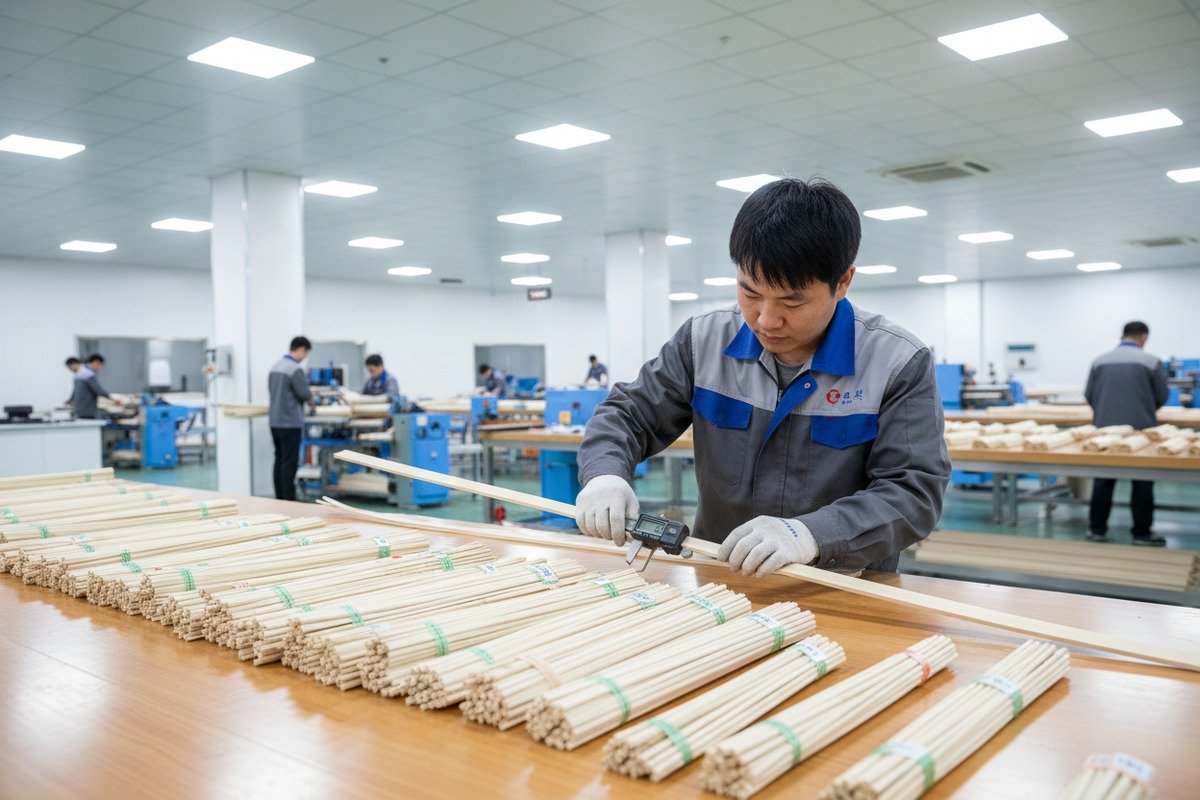
Grading is critical because it ensures every strip of rattan in your webbing has uniform width, thickness, fiber density, and surface quality. Without rigorous grading, inconsistent strips create weak points in the weave, leading to premature sagging, cracking, or breakage under the daily stress of furniture use.
What Grading Actually Involves
Grading is not just about separating good from bad. It is a multi-step process. First, raw rattan poles are sorted by diameter and species. Then, after the outer skin is peeled into strips, each strip is inspected for width consistency, surface blemishes, node placement, and moisture content 6. Strips with irregular widths, deep scratches, or excessive nodes get downgraded or rejected.
At our facility, we use a three-tier grading system: Grade A, Grade B, and Grade C. Here is what separates them.
Rattan Cane Strip Grading Criteria
| Criteria | Grade A | Grade B | Grade C |
|---|---|---|---|
| Width Consistency | ±0.2 mm tolerance | ±0.5 mm tolerance | ±1.0 mm or more |
| Surface Quality | Smooth, no visible defects | Minor scratches, light marks | Noticeable blemishes, rough patches |
| Node Frequency | Minimal, evenly spaced | Moderate, mostly even | Frequent, irregularly spaced |
| Color Uniformity | Even tone throughout | Slight variation | Obvious color differences |
| Moisture Content | 12–15% (optimal) | 10–18% (acceptable) | Below 10% or above 20% |
| Flexibility Test | Bends 180° without cracking | Bends 150° without cracking | May crack at 120° or less |
Why Uniformity Equals Toughness
Think of rattan webbing like a chain. Its strength depends on the weakest link. If nine strips in a weave are 2mm thick and one is only 1.2mm, that thin strip will bear less load. Over time, it stretches, sags, or snaps. The surrounding strips then carry extra weight, and the failure cascades.
This is why procurement managers who specify Grade A in their purchase orders get significantly fewer complaints from their end customers. The upfront cost difference between Grade A and Grade B is small. The difference in product lifespan and customer satisfaction is large.
Nodes: The Hidden Variable
Nodes are the natural joints along a rattan vine. In the outer cane, they appear as slightly raised bumps. A well-graded strip has nodes that are sanded smooth and spaced far enough apart that they do not interfere with the weave. Poorly graded strips may have nodes clustered together, creating stiff spots that resist bending. During installation, these stiff spots can cause the webbing to buckle or sit unevenly in a frame.
We pay special attention to node placement in our Grade A output. Each strip is checked to ensure nodes will not overlap when woven, allowing the finished sheet to flex evenly across its entire surface. This kind of attention may seem excessive, but our repeat customers in Spain, Turkey, and the USA tell us it is exactly why they keep ordering.
Species Selection as Part of Grading
Grading also involves matching the right species to the right application. Rotin Tohiti, with its 1-to-2-inch diameter and golden-brown color, yields wide, flexible strips ideal for open hexagonal weaves. Rotan Sego, thinner and lighter, works better for tight binding and fine detail work. Mixing species in a single webbing sheet would create inconsistent behavior under stress.
How do specific processing techniques like bleaching or drying affect the long-term durability of my order?
Running three factories, including our own rattan processing plant in Indonesia, has taught us that raw rattan and finished rattan are almost two different materials. The processing steps in between define whether your webbing lasts five years or fifteen.
Processing techniques such as boiling, controlled drying, bleaching, and anti-mildew treatment fundamentally alter rattan's cellular structure and surface chemistry. Properly executed, these steps enhance tensile strength, reduce brittleness, improve mildew resistance, and stabilize the material for consistent long-term performance in furniture applications.
The Processing Chain: Step by Step
After raw rattan is peeled into strips and graded, it goes through a precise sequence of treatments. Each step has a specific purpose. Skipping or rushing any one of them compromises the final product.
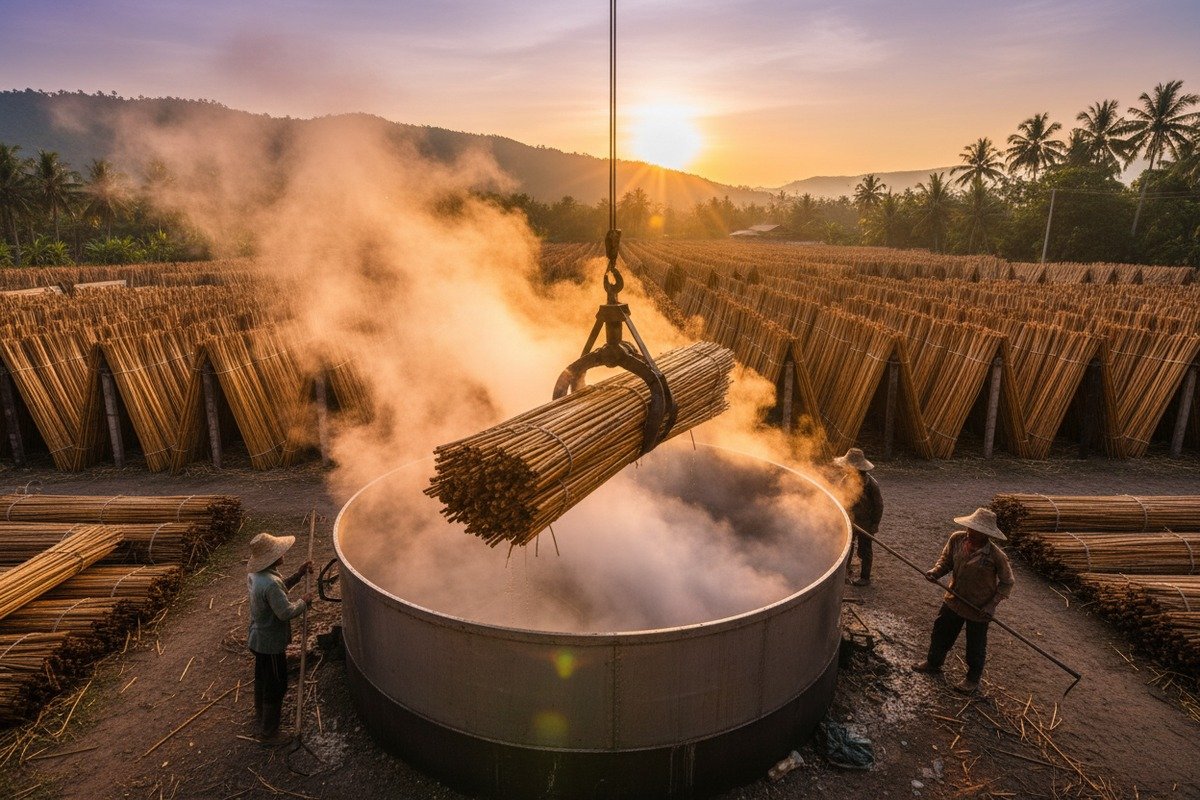
Boiling is typically the first treatment. Strips are immersed in hot water, sometimes with natural sulfur or citric acid, for a controlled period. This does several things: it kills insects and larvae embedded in the fibers, it softens the natural resins in the bark, and it allows the fibers to relax into a more uniform structure. Boiling 7 also brings natural sugars to the surface, which are then washed away. If left in, those sugars attract mold.
Drying follows boiling. This is perhaps the most critical step. We use a combination of sun drying and controlled kiln drying 8 to bring moisture content down to the 12–15% range. Too fast and the outer cells shrink faster than the inner cells, causing micro-cracks that lead to brittleness. Too slow and you risk mold growth before the material stabilizes.
Drying Methods and Their Impact
| Drying Method | Speed | Risk | Resulting Flexibility | Best For |
|---|---|---|---|---|
| Open-air sun drying | Slow (3–7 days) | Uneven drying, mold risk in humid weather | Good, if well-monitored | Budget production, dry climates |
| Covered shade drying | Moderate (5–10 days) | Lower mold risk, but slower | Very Good | Mid-range production |
| Controlled kiln drying | Fast (24–48 hours) | Over-drying if poorly calibrated | Excellent when optimized | High-volume, consistent output |
| Hybrid (sun + kiln) | Moderate (2–4 days) | Balanced | Excellent | Premium production like ours |
At our facility, we use the hybrid method. Strips air-dry under covered racks for 48 hours, then finish in a kiln set to 45–55°C with controlled humidity. This approach gives us the best balance of efficiency and quality.
Bleaching: Aesthetics vs. Integrity
Bleaching lightens the natural color of rattan and gives it a clean, uniform appearance. Most buyers in Europe and the USA prefer a lighter tone. However, bleaching involves chemicals—usually hydrogen peroxide or sulfur dioxide—that can weaken fibers if the concentration is too high or the exposure too long.
We control bleaching time down to the minute and monitor chemical concentration with each batch. The goal is to lighten the surface without penetrating deep into the fiber. A well-bleached strip should look pale and even but still pass a 180-degree bend test without cracking. If it cracks, the bleaching was too aggressive.
Anti-Mildew and Surface Treatments
For customers shipping to humid climates—Thailand, the Philippines, coastal Australia—we apply anti-mildew treatment as a standard step. This involves a food-grade fungicide that bonds to the cane surface, creating an invisible barrier against mold spores. It does not change the look or feel of the webbing, but it dramatically extends its useful life in high-humidity environments.
Some clients also request natural oil conditioning. A light application of linseed or tung oil penetrates the surface layer, restoring moisture balance and adding a subtle sheen. Oiled rattan is noticeably more pliable and less prone to drying out during long ocean freight containers where temperatures can fluctuate widely.
The Synthetic Comparison
It is worth noting how natural rattan compares to synthetic alternatives after processing. Synthetic rattan—typically made from polyethylene or PVC—does not need boiling, drying, or mildew treatment. It is consistent out of the mold. But it does not breathe. It does not develop a patina. And it cannot match the tensile flex-and-return behavior of well-processed natural cane. For indoor furniture, especially chairs and headboards, natural cane processed correctly will outperform synthetics in comfort and longevity.
What steps can I take to ensure my rattan webbing remains pliable and easy to work with during installation?
We hear this question constantly from factory partners and even experienced furniture restorers. You can source the best rattan in the world, but if you mishandle it on the workshop floor, it will fight you every step of the way.
To keep rattan webbing pliable during installation, soak it in warm water for 15 to 30 minutes before use, work in a humidity-controlled environment above 40% relative humidity, avoid direct heat sources or sunlight during the process, and allow the installed webbing to dry slowly and tighten naturally within the frame.
The Science of Soaking
Rattan's flexibility comes from its cellular structure. The fibers in the outer bark are arranged in long, parallel bundles held together by natural lignin 9. When dry, these bundles are rigid. When water enters the cells, it acts as a plasticizer, allowing the fibers to slide against each other. This is why soaking transforms stiff cane into something you can bend around a curved frame.
The ideal soak is warm water—around 30 to 40°C—for 15 to 30 minutes. Hot water above 60°C can cook the natural resins and make the surface gummy. Cold water takes much longer to penetrate. A good test: bend a soaked strip gently. It should flex smoothly without any cracking sound. If it still resists, give it another 10 minutes.
Pre-Installation Checklist
Here is a simple checklist our team shares with factory customers who are new to working with natural cane webbing:
- Check moisture content on arrival. Use a pin-type moisture meter. Ideal range is 12–15%. Below 10% means extra soaking time is needed.
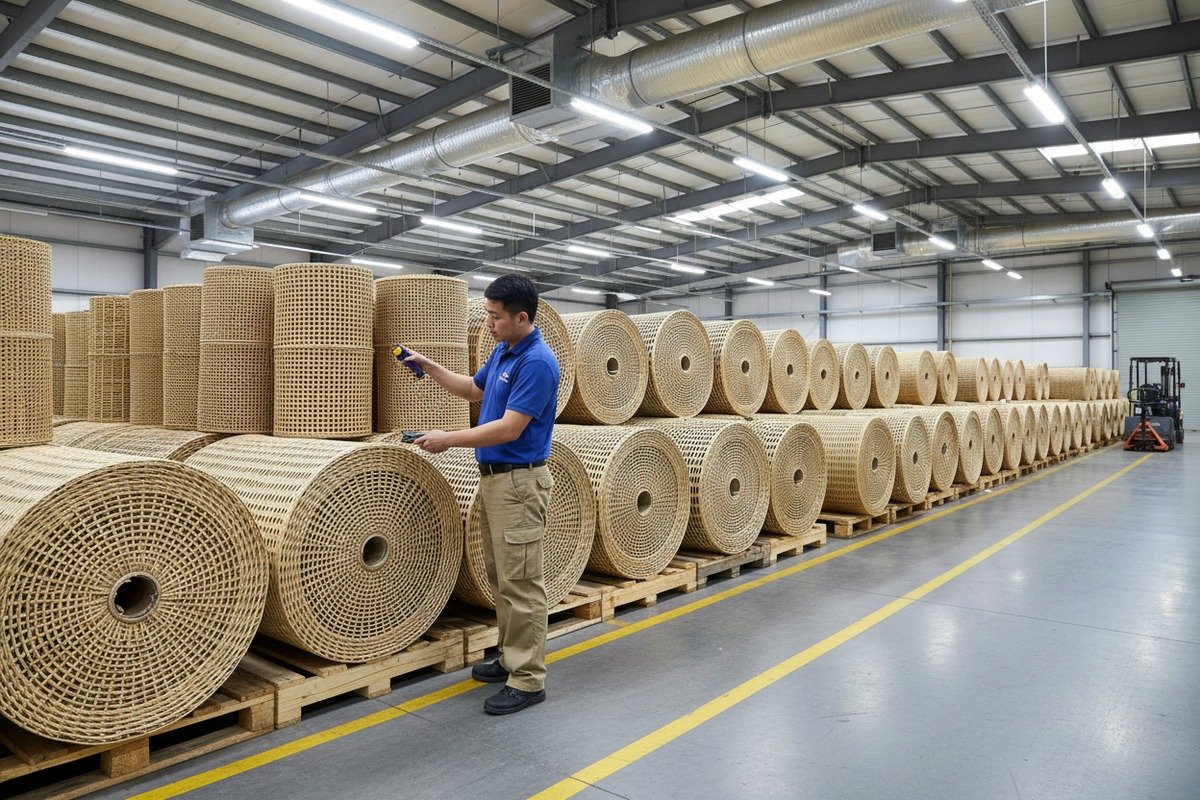
- Store rolls flat or loosely rolled. Never stack heavy objects on top. Compression creates permanent creases.
- Keep storage area ventilated. Stagnant humid air promotes mold. Moving air keeps it safe.
- Cut panels slightly oversized. Rattan shrinks as it dries. Leave 10–15mm extra on each edge for trimming after installation.
- Work within two hours of soaking. Once rattan starts drying, it stiffens quickly. Re-soaking repeatedly degrades the fibers.
Common Installation Mistakes
Even skilled workers make errors that reduce webbing life. Here are the most common ones we see when visiting partner factories.
Over-stretching during installation. Pulling the webbing too tight while it is wet seems to give a clean, drum-tight finish. But as it dries and contracts further, the tension can exceed the material's elastic limit. This leads to tearing at the spline groove or along frame edges within months.
Using a heat gun to speed drying. Direct heat causes rapid, uneven moisture loss. The surface dries and locks while the interior is still wet. This creates internal stress that manifests as cracking weeks later.
Installing in an air-conditioned room set below 18°C. Cold air has low moisture-carrying capacity. The rattan dries too fast and unevenly. A room at 22–26°C with moderate humidity is ideal.
Post-Installation Care Tips for End Users
If you supply webbing to wholesalers or retailers, you can add value by including simple care instructions. Here are the key points we recommend:
- Wipe with a damp cloth monthly to maintain surface moisture.
- Keep furniture away from heating vents and direct sunlight.
- Apply a light coat of natural furniture oil once a year.
- If the webbing sags slightly, mist it lightly with water and let it dry. It will tighten on its own.
- Never use harsh chemical cleaners. A mild soap solution is sufficient.
Why Natural Cane Outperforms Alternatives for Indoor Use
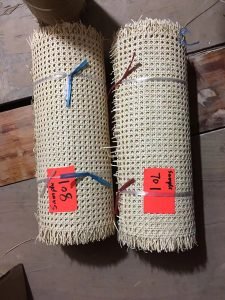
During installation and throughout its life, natural rattan cane webbing 10 has properties that paper webbing, cotton webbing, and even synthetic rattan cannot match. It breathes. It tightens when it dries. It develops a beautiful warm patina over years of use. These qualities are why high-end furniture brands still specify natural cane despite the care it requires. The material rewards proper handling with decades of service.
We have customers using our webbing in chair seats that see daily use in restaurants and hotels. With proper installation and basic maintenance, these seats last 8 to 12 years before needing replacement. That kind of performance is hard to match with any alternative material at a comparable price point.
Conclusion
The toughness and flexibility of natural rattan cane webbing come down to origin, grading, processing, and handling. Master these four pillars, and your furniture products will deliver lasting quality your customers trust.
Footnotes
1. Explains the importance of species selection for rattan properties. ↩︎
2. Contextualizes the natural habitat and growth environment of rattan. ↩︎
3. Describes the basic biological building blocks of rattan fibers. ↩︎
4. Explains how volcanic soil contributes to rattan’s fiber development. ↩︎
5. Provides a clear definition and explanation of fiber density and its relevance. ↩︎
6. Wikipedia provides a comprehensive and authoritative definition of moisture content in various materials. ↩︎
7. Describes the initial processing step for rattan strips. ↩︎
8. Explains a key drying method used to stabilize rattan. ↩︎
9. Explains the natural polymer providing structural support in rattan. ↩︎
10. Provides a comprehensive overview of natural rattan cane webbing, its origins, manufacturing, and uses. ↩︎

 English
  Español de México
  العربية
  Deutsch
  Français
  Русский