
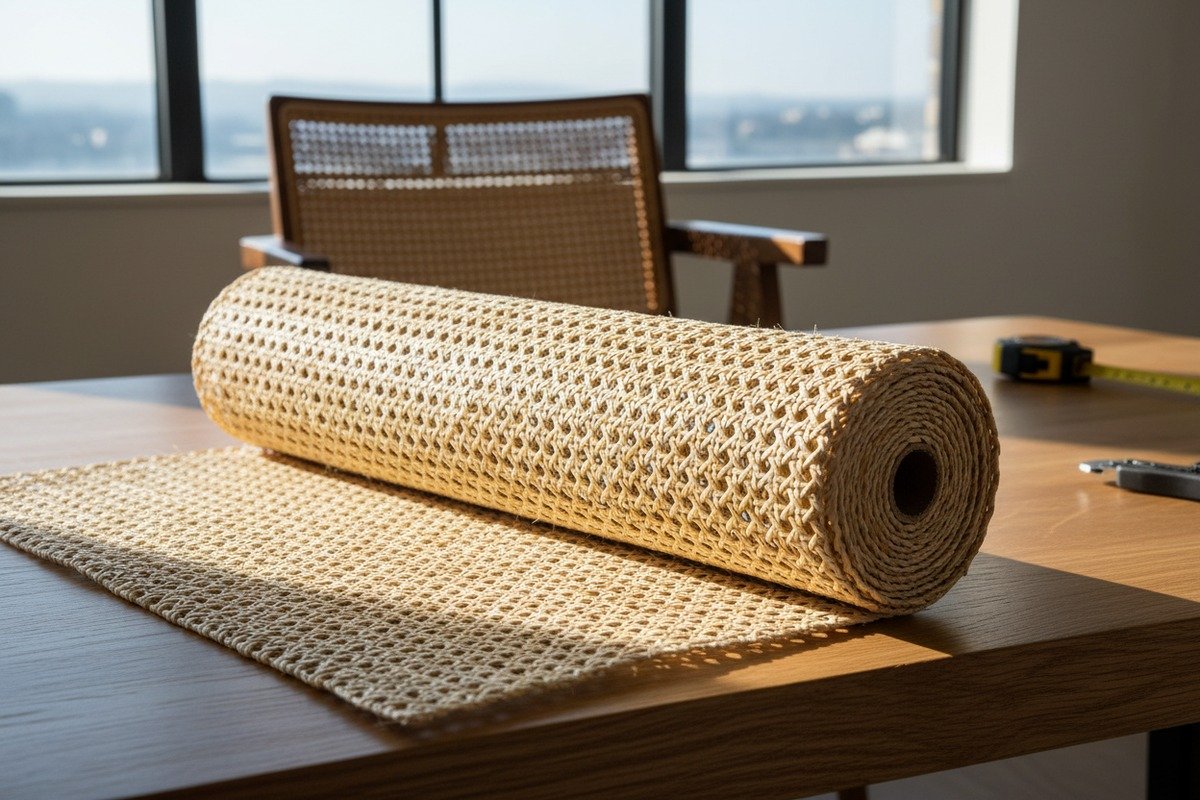
Choosing the wrong mesh density 1 has ruined countless furniture projects octagonal open-weave pattern 2. We see it every week at our production facility in Foshan—clients receive rattan webbing that looks right but fails structurally because the mesh spacing was off.
The standard mesh density for rattan cane webbing is 1/2 inch (also called “Fine 1/2 mesh”), measured from the center of one cane strand to the center of the next. This octagonal open-weave pattern is the most widely used density for chair seats, cabinet doors, headboards, and decorative panels worldwide.
But “standard” does not mean “only option.” Mesh density ranges from 3/8 inch superfine to 1 inch jumbo, and the right choice depends on your project Raw Material Sorting 3. Let me walk you through everything you need to know.
How can I accurately measure the mesh density of my rattan cane webbing?
When we train new quality inspectors at our rattan processing plant in Indonesia, measuring mesh density is the very first skill they learn. Getting it wrong means shipping the wrong product—and that costs everyone time and money.
To measure mesh density accurately, place a ruler across the webbing and count the number of holes per inch, or measure from the center of one cane strand to the center of the adjacent strand. For standard 1/2 inch mesh, you should find approximately two holes per linear inch in both directions of the weave.
Understanding What "Mesh Density" Actually Means
Mesh density in rattan cane webbing 4 refers to the spacing between weave intersections. It is not the same as material density, which describes the weight and thickness of the cane itself. This confusion trips up many buyers.
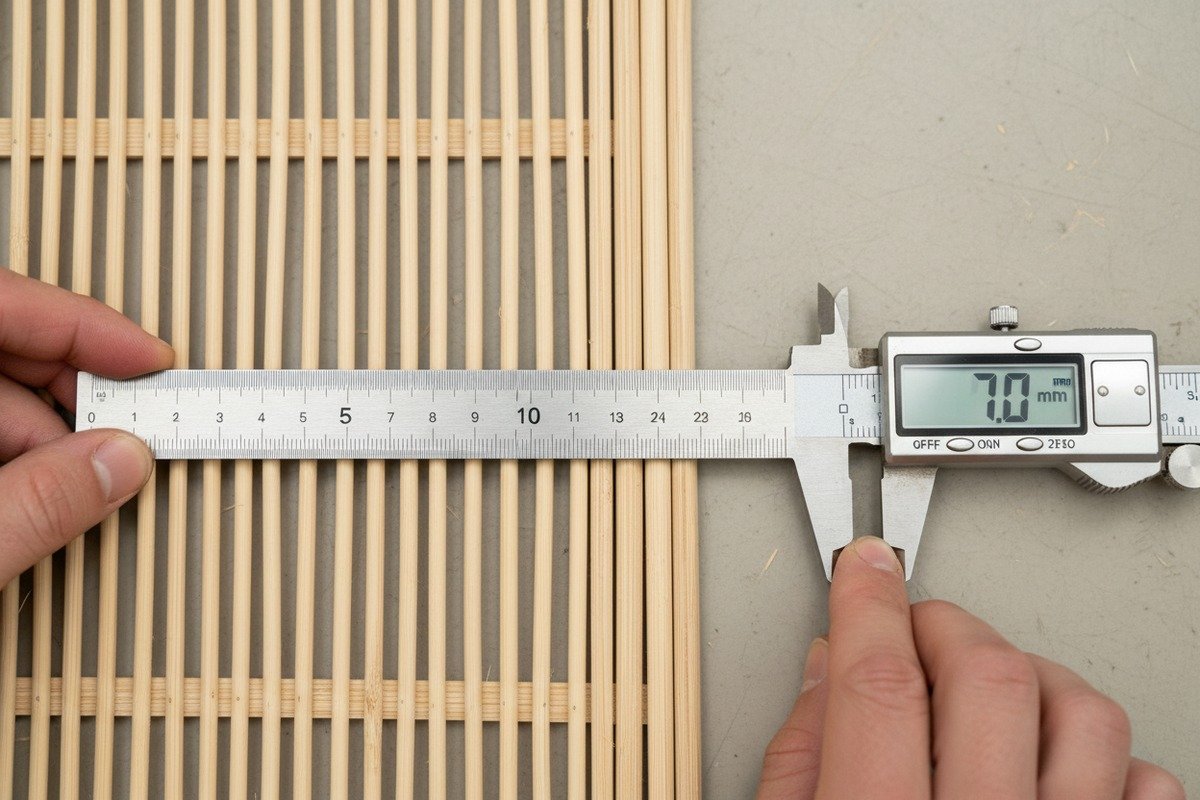
In an octagonal (sometimes called hexagonal) open-weave pattern, the "mesh" is the hole created by the interlocking cane strands. When we say "1/2 inch mesh," we mean the distance from the center of one strand to the center of the next is approximately half an inch. The cane diameter for this standard mesh is typically 7mm.
Step-by-Step Measurement Process
Here is how our quality control team 5 measures every batch:
- Lay the webbing flat on a clean surface. Do not stretch it.
- Place a rigid ruler (not a cloth tape) across the weave horizontally.
- Count the holes within a 6-inch span and divide by 6. This gives you average holes per inch.
- Repeat vertically. The count should be similar in both directions for uniform mesh.
- Measure strand-to-strand. Use calipers if possible. Center-to-center distance confirms mesh size.
Common Mesh Sizes and Their Measurements
| Mesh Type | Hole Spacing (Center to Center) | Holes per Inch | Typical Cane Diameter | Common Use |
|---|---|---|---|---|
| Superfine | 3/8 inch (9.5mm) | ~2.7 | 5mm | Delicate furniture, decorative panels |
| Fine (Standard) | 1/2 inch (12.7mm) | ~2.0 | 7mm | Chair seats, cabinet doors, headboards |
| Medium | 5/8 inch (15.9mm) | ~1.6 | 8mm | Larger panels, room dividers |
| Coarse | 3/4 inch (19mm) | ~1.3 | 9mm | Decorative screens, ceiling panels |
| Jumbo | 1 inch (25.4mm) | ~1.0 | 10mm+ | Statement furniture, artistic installations |
Avoiding Measurement Mistakes
One common error is measuring the hole itself rather than strand-to-strand. The hole opening on a 1/2 inch mesh is smaller than 1/2 inch because the cane strand takes up space. Always measure center-to-center.
Another mistake is measuring webbing under tension. Rattan stretches when pulled. Always measure in a relaxed state. At our facility, we measure at three different points on each roll—beginning, middle, and end—to confirm consistency. Temperature and humidity also affect measurements. Rattan at 8-12% moisture content 6 gives the most reliable readings.
Regional differences matter too. European suppliers often label this same density as "1/2 maille" and reference a 7mm cane diameter. US and Asian markets use inch-based measurements. Both describe the same product.
Does mesh density impact the durability and strength of my rattan furniture?
Over the past decade of supplying rattan to furniture factories across Europe, the US, and the Middle East, our team has tracked which mesh densities hold up best in different applications. The answer is not always what people expect.
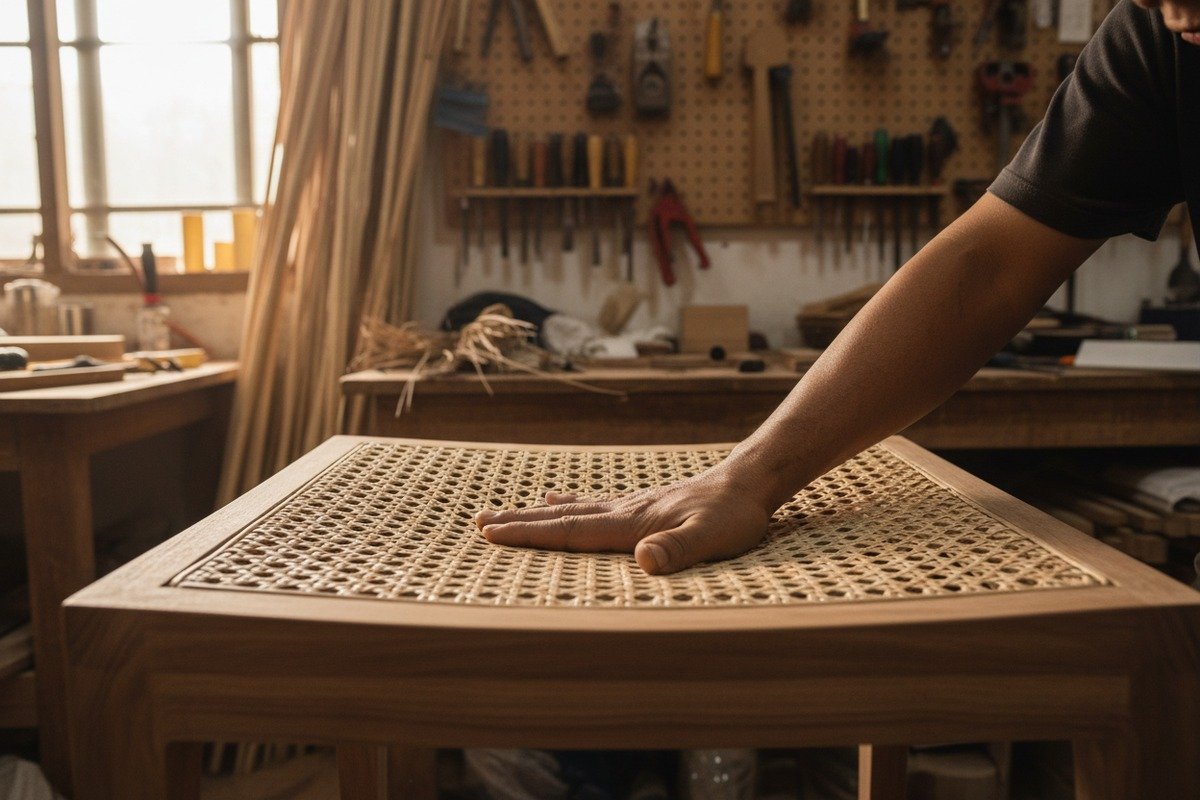
Yes, mesh density directly impacts durability and strength. Denser meshes (smaller holes) distribute weight across more strands and contact points, making them stronger for load-bearing applications like chair seats. However, overly dense weaves can trap moisture and reduce the natural flexibility that gives rattan its resilience.
How Density Affects Load Distribution
Think of mesh density like a net. A net with more threads catches more weight at more points. The same principle applies to rattan webbing. In a 1/2 inch mesh, each square foot contains roughly 4 weave intersections per square inch. Each intersection is a structural node that shares the load.
Finer meshes like 3/8 inch have about 7 intersections per square inch. That is nearly double the support points. For chair seats that bear human weight daily, this matters.
But there is a trade-off. More intersections mean more points where cane strands bend over each other. Over time, these bending points can weaken. The 1/2 inch mesh hits the sweet spot—enough density for structural strength, enough openness for the cane to flex naturally.
Mesh Density and Environmental Resistance
Rattan is a natural material 7. It responds to humidity, temperature, and UV exposure. Denser meshes have less airflow between strands. In humid climates, this can trap moisture and accelerate mold or rot.
Our clients in Southeast Asia and the Middle East often ask about this. We recommend the standard 1/2 inch mesh for most indoor furniture in humid regions. It breathes well. For outdoor or high-moisture environments, synthetic rattan 8 with a similar mesh density provides better weather resistance without sacrificing the look.
Strength Comparison by Mesh Density
| Mesh Density | Relative Tensile Strength 9 | Weight Capacity (Chair Seat) | Best For | Risk Factor |
|---|---|---|---|---|
| Superfine (3/8") | High strand count, moderate per-strand | Up to 80 kg | Light seating, decorative | Prone to tearing under sharp impact |
| Fine/Standard (1/2") | Optimal balance | Up to 120 kg | General furniture, chair seats | Minimal with proper installation |
| Medium (5/8") | Moderate | Up to 90 kg | Panels, non-primary seating | Sagging over time under heavy use |
| Coarse (3/4"+) | Lower overall | Up to 60 kg | Decorative, non-load-bearing | Not suited for weight-bearing |
The Role of Material Quality
Mesh density alone does not determine durability. The grade of rattan matters just as much. At our Indonesian processing facility, we grade cane from AAA down to C.
AAA-grade cane has uniform thickness, tight grain, and no visible knots. When you tap it, it produces a solid, resonant sound—what we call the "tap test." This high material density means each strand in the weave is individually stronger. A 1/2 inch mesh made with AAA cane will outlast a 3/8 inch mesh made with C-grade cane every time.
Low-grade cane is irregular in diameter, has soft spots, and warps easily. It might look fine initially, but under stress, individual strands snap. We have seen entire chair seats fail because a buyer chose cheap cane to save a few cents per meter.
Natural vs. Synthetic: Durability Differences
Natural rattan in the standard 1/2 inch density offers excellent indoor durability—typically 10-15 years with proper care. Synthetic rattan (plastic or paper-based) mimics the aesthetic but behaves differently under stress.
Paper rattan can achieve a +15% denser weave pattern, but it absorbs moisture and loses structural integrity faster. Plastic rattan resists water and UV but lacks the natural flexibility that allows real rattan to absorb and distribute sudden impacts. For load-bearing furniture, we always recommend natural rattan in the 1/2 inch density with AAA or A grading.
Which mesh density is best suited for my specific furniture manufacturing needs?
When procurement managers visit our showroom in Nanhai, Foshan, the first question is almost always about mesh density. The answer depends entirely on what they are building and who will use it.
The best mesh density depends on your application: use Fine 1/2 inch for chair seats, cabinet doors, and headboards requiring both strength and aesthetics; choose Superfine 3/8 inch for delicate decorative panels; and select 6×6 radio weave or 3×3 closed weave for modern furniture designs needing a distinct visual texture.
Matching Mesh to Application
Not every piece of furniture needs the same mesh. A dining chair seat takes daily weight and friction. A cabinet door insert faces no structural load at all. A headboard sits somewhere in between—minimal load but frequent contact.
The mistake we see most often is furniture factories using one mesh density for everything. This either over-engineers decorative pieces (wasting money) or under-engineers structural ones (risking failure).
Application-Based Mesh Selection Guide
| Application | Recommended Mesh | Pattern | Why |
|---|---|---|---|
| Dining chair seats | Fine 1/2" | Octagonal open weave | Load-bearing, breathable, classic look |
| Cabinet door inserts | Fine 1/2" or Medium 5/8" | Octagonal or radio weave | Decorative, no load, visual openness |
| Headboards | Fine 1/2" | Octagonal open weave | Light contact, traditional aesthetic |
| Room dividers/screens | Medium 5/8" or Coarse 3/4" | Any pattern | Decorative, light filtering, no load |
| Ceiling panels | Superfine 3/8" or Fine 1/2" | Octagonal | Aesthetic, minimal contact |
| Speaker grilles | 6×6 radio weave | Square grid | Sound transparency, clean modern lines |
| Radiator covers | Medium 5/8" | Open weave | Heat dissipation, durability near heat |
| Bar stools | Fine 1/2" | Octagonal | High stress, needs strong weave |
| Decorative wall panels | Any density | Mixed patterns | Purely aesthetic choice |
Understanding Pattern Options Beyond Octagonal
The 1/2 inch octagonal weave is the classic. But modern furniture design has expanded the palette considerably. Here are the main pattern families we produce:
Octagonal (Hexagonal) Open Weave: The traditional pattern. Six-sided holes create an organic, timeless look. This is what most people picture when they think of rattan cane webbing. Available in all mesh densities from superfine to jumbo.
Radio Weave (Square Block): Small square blocks arranged in a grid. The 6×6 radio weave is popular for mid-century modern designs 10 and speaker panels. It offers a more geometric, structured appearance than octagonal patterns.
Closed Weave (3×3): A tight, nearly opaque surface with minimal visible holes. This provides more privacy and solidity. It works well for furniture backs and side panels where you want the texture of rattan without see-through openness.
Diamond and Chevron Patterns: These are specialty weaves gaining popularity in 2025-2026 design trends. They create bold visual statements and work best as accent panels rather than primary structural surfaces.
Cost Considerations by Mesh Density
Finer meshes use more material per square meter. A superfine 3/8 inch mesh requires roughly 40% more cane than a standard 1/2 inch mesh to cover the same area. This directly affects pricing.
At our current pricing, standard 1/2 inch natural rattan webbing runs about $0.95 per inch in retail quantities. Wholesale pricing for bulk orders drops significantly—contact us at su********@*****63.com for specific quotes. Superfine mesh commands a premium of 20-30% over standard, while coarser meshes cost 10-15% less.
For furniture factories processing hundreds of chairs per month, this price difference adds up fast. That is another reason the 1/2 inch standard dominates—it offers the best value for the broadest range of applications.
Bleached vs. Natural for Different Markets
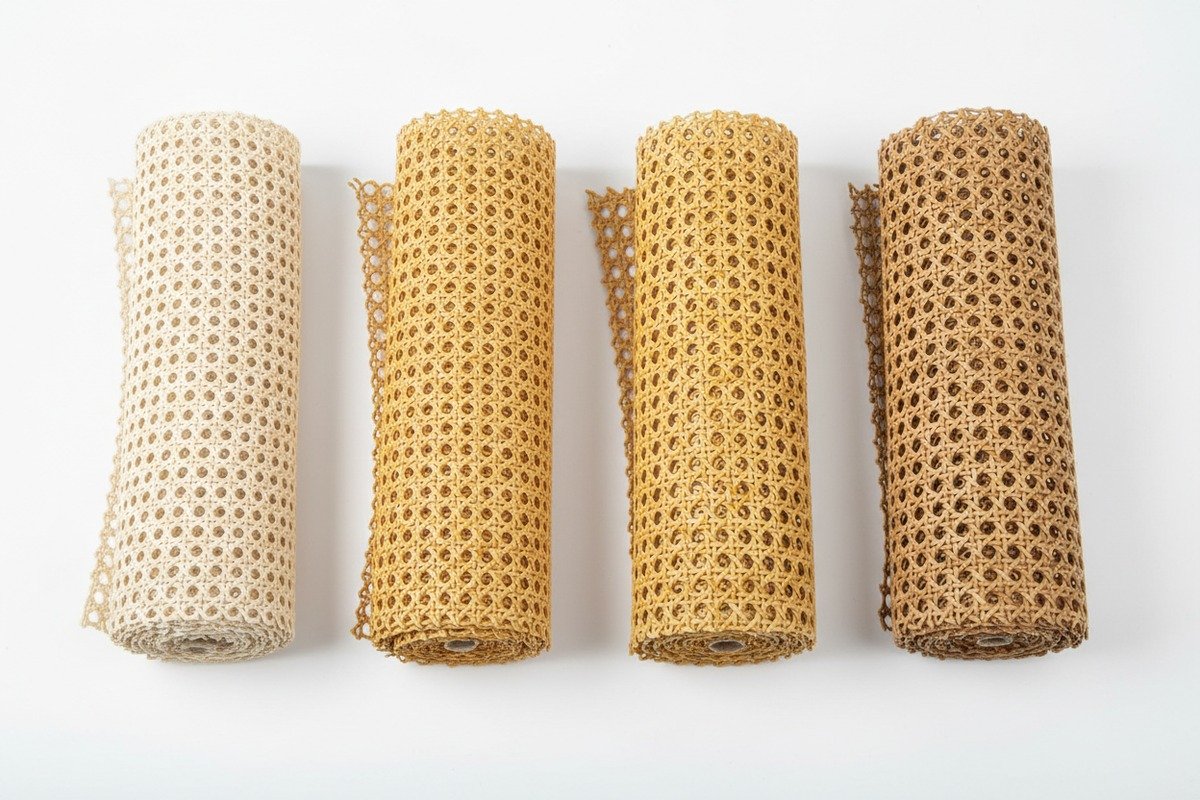
Our Dutch and Spanish clients increasingly request bleached rattan webbing for lighter interior aesthetics. Bleaching does not change mesh density, but it can slightly affect strand flexibility. Bleached 1/2 inch mesh is ideal for Scandinavian-style furniture and bright, airy spaces. Natural (unbleached) rattan suits bohemian, rustic, and mid-century designs. Both are available in identical mesh densities from our production lines.
How do I ensure consistent mesh density across my bulk wholesale orders?
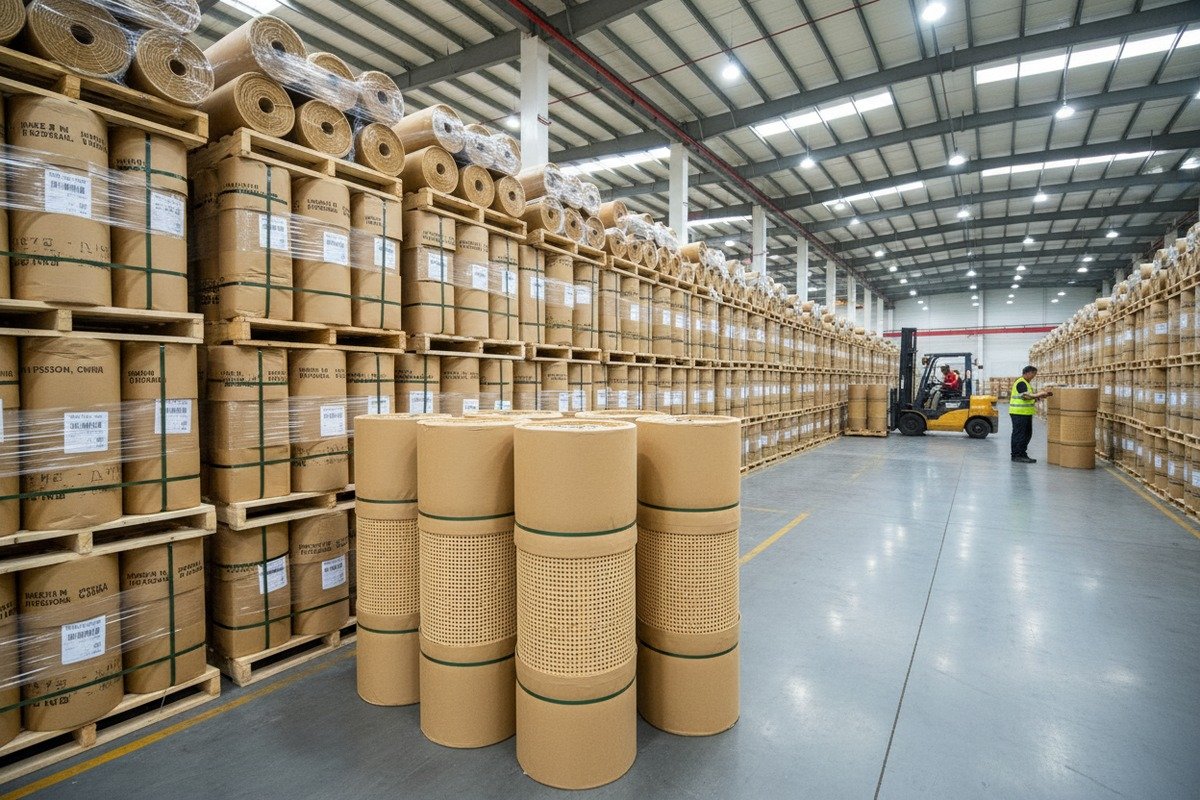
We have shipped rattan cane webbing to over 30 countries. The single biggest complaint from first-time wholesale buyers is inconsistency—rolls from the same order having visibly different mesh spacing. Here is how we solved that problem across our three factories.
To ensure consistent mesh density in bulk orders, establish clear specifications with your supplier including mesh size tolerance (±1mm), cane diameter range, moisture content (8-12%), and quality grade (AAA/A). Request pre-production samples, implement incoming quality inspection with spot-check measurements, and work with suppliers who control their own raw material processing.
Why Inconsistency Happens
Rattan is a natural vine harvested from tropical forests, primarily in Indonesia and Malaysia. No two vines are identical. The cane diameter varies slightly from one plant to the next. When weavers work with cane that varies even 0.5mm in diameter, the resulting mesh spacing shifts.
Add to this the human element. Most rattan webbing is still woven by hand or on semi-automated looms. Weaver tension, humidity during production, and drying conditions all affect the final mesh density. At our Indonesian processing facility, we address these variables at every stage.
Our Quality Control Process
Here is the system we have developed over years of refining our production:
Raw Material Sorting: Before weaving begins, we sort cane by diameter. Only cane within a ±0.3mm tolerance of the target diameter (7mm for 1/2 inch mesh) enters the weaving line for that specification. Off-spec cane goes to other products.
Weaving Tension Calibration: Our looms are calibrated daily. We check tension settings every morning and after each roll changeover. Consistent tension equals consistent spacing.
In-Process Inspection: Quality inspectors measure mesh density at the beginning, middle, and end of every roll. If a roll drifts outside ±1mm tolerance, it is flagged and separated.
Moisture Control: Finished rolls are stored at controlled humidity to maintain 8-12% moisture content. Rattan that dries below 8% shrinks and tightens the mesh. Above 12%, it swells and loosens the weave.
What to Specify in Your Purchase Order
When you place a bulk order—whether through our website at www.rattanwholesaler.com or through platforms like Alibaba—include these specifications:
- Mesh density: 1/2 inch (or your required size) with ±1mm tolerance
- Cane diameter: 7mm ±0.3mm
- Weave pattern: Octagonal, radio, closed, or other
- Material grade: AAA, A, B, or C
- Treatment: Natural, bleached, or stained
- Roll dimensions: Width (0.40m to 0.90m) and length (up to 15m)
- Moisture content: 8-12% at time of packing
- Packaging: Specify roll protection to prevent transit damage
Incoming Inspection Checklist for Buyers
Even with a reliable supplier, smart procurement managers inspect incoming goods. Here is what to check:
Visual Inspection: Unroll 10% of received rolls. Look for uniform color, consistent hole size, and no broken strands. AAA-grade rattan should have smooth surfaces without knots or rough patches.
Tap Test: Hold the webbing taut and tap it. Premium high-density cane produces a solid, resonant sound. Low-grade cane sounds dull and flat. This takes practice but becomes intuitive quickly.
Measurement Spot-Check: Measure mesh density at three points per inspected roll. All measurements should fall within the agreed tolerance.
Flexibility Test: Bend a section gently. Quality rattan flexes smoothly and returns to shape. Poor-quality material cracks, splinters, or stays bent.
Smell Test: Natural rattan has a mild, woody scent. Chemical smells indicate synthetic material or excessive treatment. If you ordered natural, it should smell natural.
Building a Long-Term Supplier Relationship
Consistency improves with partnership. When we work with a client like Ranoo in Thailand over multiple orders, we learn their exact preferences. We tag their specifications in our production system. Their orders route to the same weaving team every time.
One-off purchases from random suppliers on commodity platforms carry higher inconsistency risk. If mesh density consistency matters to your business—and for furniture manufacturing, it absolutely should—invest in a relationship with a supplier who controls their own raw material chain from Indonesian forest to finished roll.
We offer OEM options with custom packaging and private labeling. Our minimum order quantities are designed to be accessible for mid-sized furniture factories and wholesalers. Reach out through www.rattanwholesaler.com to discuss your specific requirements.
Conclusion
The standard mesh density for rattan cane webbing is 1/2 inch, and it remains the industry's most trusted choice for good reason. Whether you need structural strength or decorative beauty, proper mesh selection and quality control make all the difference.
Footnotes
1. Defines mesh density in a technical context, aligning with the article’s focus on precise measurement. ↩︎
2. Illustrates and defines the octagonal weave pattern, relevant to the article’s description. ↩︎
3. Discusses quality control in raw material processing, relevant to ensuring consistency. ↩︎
4. Provides a general overview and definition of rattan cane webbing and its use in furniture. ↩︎
5. Provides a definition and explanation of quality control processes and their importance. ↩︎
6. Explains wood moisture content and its impact on material properties. ↩︎
7. Explains the properties and origin of rattan as a natural material. ↩︎
8. Compares synthetic rattan to natural rattan, detailing its composition and benefits. ↩︎
9. Defines tensile strength as a material property, crucial for understanding durability. ↩︎
10. Wikipedia provides a comprehensive and authoritative overview of mid-century modern design. ↩︎


 English
  Español de México
  العربية
  Deutsch
  Français
  Русский