

Choosing your first rattan cane webbing 1 can feel overwhelming when you see terms like Grade A 2, Grade B, and AAA floating around supplier catalogs. Having run our own rattan processing facility in Indonesia and shipped to over a dozen countries, we see this confusion every week from new buyers raw rattan peel 3. The wrong grade can mean cracked panels, unhappy customers, and wasted money.
Beginners should choose rattan cane webbing grade by matching project requirements to material quality. Assess the intended use (indoor vs. outdoor), inspect texture and elasticity, set a realistic budget, and request samples from suppliers. Grade A suits high-end furniture, while Grade B or C works for casual or decorative projects.
This guide walks you through every step of the selection process. We will cover how to tell grades apart, which grade fits which project, how to balance cost and quality, and how to keep your supplier honest. Let’s dig in.
How can I distinguish between Grade A and Grade B rattan cane webbing?
When our quality control team 4 sorts raw rattan peel at our Indonesian processing plant, the differences between grades become obvious within seconds. Yet for someone seeing rattan webbing for the first time, the grades can look almost identical. That gap in experience costs buyers real money.
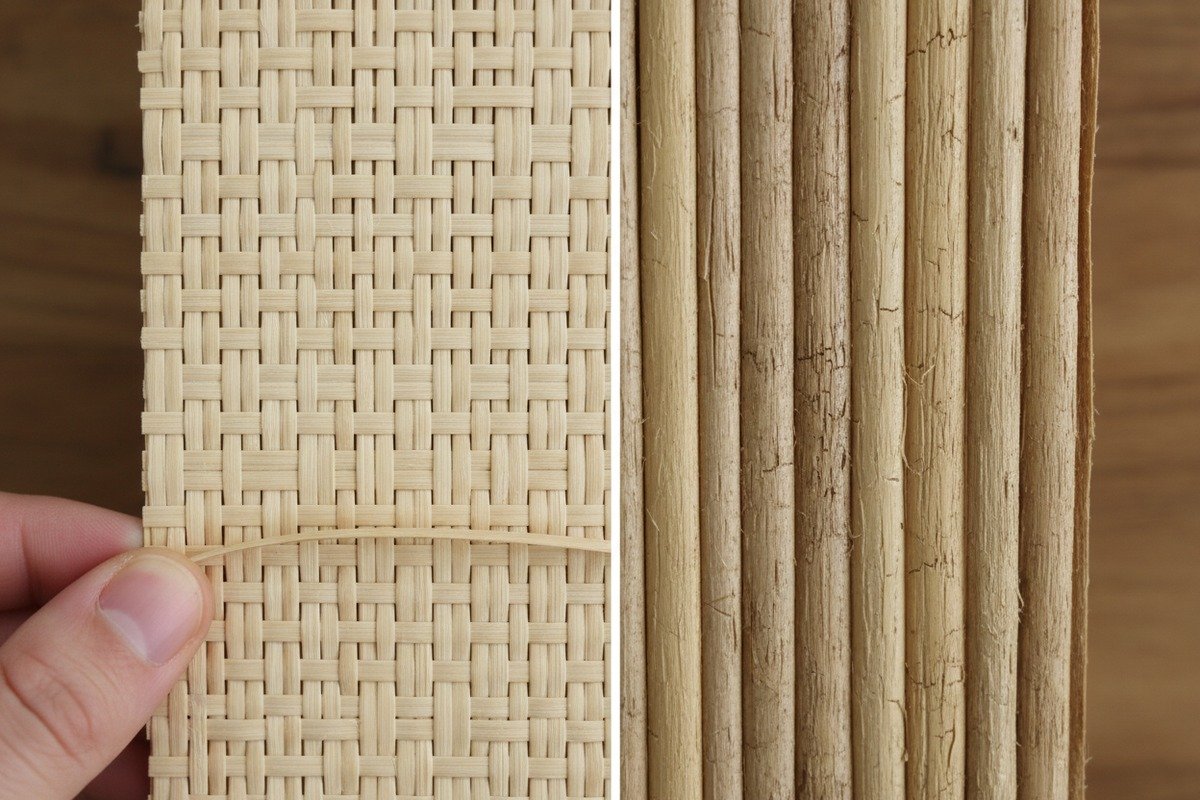
Grade A rattan cane webbing uses the finest outer peel, producing a smooth, uniform surface with high elasticity and minimal defects. Grade B webbing shows minor cracks, slight color inconsistencies, and thinner strands, but still offers decent flexibility. You can distinguish them by checking surface texture, strand width uniformity, and bend resistance.
Surface Texture Is Your First Clue
Pick up a sheet of Grade A webbing and run your fingers across it. The surface feels smooth, almost silky. The strands are consistent in width. There are no rough spots or splinters. Now do the same with Grade B 5. You will notice small cracks, occasional rough patches, and slight bumps where the peel was not perfectly trimmed.
At our factory, we train new inspectors to use this simple touch test before anything else. If the webbing snags your skin, it is likely Grade B or lower.
Color Uniformity Matters
Grade A natural rattan has an even, warm straw-yellow tone. Grade B often shows greenish tints or darker patches where the peel came from a different part of the stem. Bleached Grade A looks consistently white. Bleached Grade B may have uneven whiteness or slight yellowing in spots.
The Bend Test
Take a single strand and bend it gently. Grade A rattan bends smoothly without cracking. The Bend Test 6 Grade B may produce a faint cracking sound or show stress lines. Grade D rattan snaps easily. This elasticity test is one of the most reliable ways to sort grades without lab equipment.
Full Grade Comparison
| Feature | Grade A / AAA | Grade B | Grade C | Grade D |
|---|---|---|---|---|
| Surface | Smooth, no defects | Minor cracks | Rough, visible flaws | Very rough, brittle |
| Color | Uniform straw-yellow or clean white (bleached) | Slight inconsistencies | Noticeable patches | Uneven, dark spots |
| Elasticity | High — bends without cracking | Good — slight stress lines | Average — some cracking | Poor — snaps easily |
| Strand Width | Consistent throughout | Mostly consistent | Variable | Irregular |
| Best Use | High-end furniture, heirloom pieces | Mid-range furniture, DIY | Budget decor, hidden panels | Cheap disposable items |
| Price Range | Highest | Moderate | Low | Lowest |
Common Mistakes When Inspecting Grades
Many beginners rely only on photos. That is risky. Photos can hide cracks and color issues. Always request physical samples. At our warehouse in Foshan, we send sample swatches to first-time buyers at no charge because we know seeing and touching the material changes the conversation completely.
Another mistake is assuming "natural" always means high grade. Natural finish simply means the rattan has not been bleached. A natural finish can be Grade A or Grade D. The finish and the grade are two separate things.
Also, watch out for node spacing. Premium rattan varieties like Manau have fewer, smoother nodes. Cheaper varieties have frequent, bumpy nodes that weaken the weave. If the webbing looks lumpy at regular intervals, the raw material was likely lower quality.
Which rattan grade should I choose for my specific furniture project?
Over the years, we have shipped rattan cane webbing to furniture factories in the Netherlands building luxury dining chairs and to small workshops in Thailand making decorative panels. The grade they need is never the same. Picking the wrong grade for your project is like using plywood where you need hardwood.
Choose Grade A or AAA for high-use, visible furniture like dining chairs, headboards, and cabinet doors. Grade B works well for mid-range projects such as decorative screens, side tables, and DIY restorations. Grade C suits hidden panels or budget items. For outdoor furniture, skip natural rattan entirely and use synthetic PE webbing for weather resistance.

Match the Grade to the Stress Level
Think about how much stress the webbing will endure. A chair seat bears body weight daily. A decorative wall panel just hangs there. The stress level determines the minimum grade you need.
Grade A handles repeated pressure and flexing. That makes it essential for seating surfaces and frequently touched areas. Grade B can handle moderate use but may develop small cracks over several years on high-stress applications. Grade C should only go where appearance and durability are secondary concerns.
Indoor vs. Outdoor: A Critical Decision
Natural rattan, regardless of grade, does not belong outdoors without serious protection. UV light yellows it. Rain warps and molds it. If your project lives on a patio, balcony, or poolside area, synthetic rattan webbing is the right choice. Synthetic options made from PE or plastic mimic the look of natural cane but resist moisture, UV, and temperature swings.
Our synthetic webbing line comes in chevron, basketweave, and hexagonal patterns that closely replicate natural designs. Many of our Australian and Middle Eastern buyers use synthetics exclusively because of their harsh climates.
Project-Based Grade Selection Guide
| Project Type | Recommended Grade | Why |
|---|---|---|
| Dining chair seat/back | Grade A / AAA | Bears body weight daily, visible surface |
| Headboard panel | Grade A | Large visible area, moderate stress |
| Cabinet door insert | Grade A or B | Visible but low physical stress |
| Decorative room divider | Grade B | Moderate visibility, no load-bearing |
| DIY chair restoration | Grade B | Good balance of cost and quality for learning |
| Wall art or ceiling panel | Grade B or C | Low stress, partially hidden |
| Budget retail display | Grade C | Temporary use, cost-driven |
| Outdoor furniture | Synthetic PE webbing 7 | Weather and UV resistance required |
| Bathroom vanity panel | Synthetic or sealed Grade A | Moisture exposure demands protection |
Weave Pattern Also Matters
The classic 1/2-inch hexagonal open-mesh 8, often called radio weave, is the most popular choice for fine furniture. It looks elegant and allows airflow. For a denser look, square basketweave provides more privacy and a modern feel. Diamond motifs add geometric interest to bohemian or mid-century designs.
For beginners, we recommend starting with the standard hexagonal mesh in pre-woven rolls. It is forgiving to install and widely available in heights from 14 to 48 inches and lengths up to 50 feet.
Finish Matching Tips
Bleached webbing pairs beautifully with light oak, white-washed, or Scandinavian-style frames. Natural webbing complements walnut, teak, and darker wood tones. If you are staining or painting the frame, decide on the finish first, then choose the webbing color to match.
One thing our team always tells new buyers: order a small piece of both natural and bleached webbing and hold them against your wood samples before committing to a bulk order. The difference in person is much more noticeable than on screen.
How do I balance high quality with my budget when sourcing rattan materials?
When we quote prices to a new customer, the first reaction is often surprise at the gap between Grade A and Grade C. A fine 1/2-inch AAA pre-woven webbing can cost around $0.95 per inch, while a Grade C equivalent might be half that. The question is not just about price. It is about total cost of ownership.
Balance quality and budget by defining your project's minimum acceptable grade, then sourcing directly from manufacturers or wholesalers who offer tiered pricing. Request samples across grades to compare real performance. Investing in Grade A for high-visibility, high-stress areas while using Grade B for secondary surfaces is the most cost-effective strategy for most furniture projects.
The True Cost of Cheap Rattan
Saving 30% upfront on Grade C webbing sounds smart until the material cracks during installation, or a customer returns a chair six months later. Replacement costs, wasted labor, and reputation damage add up fast. We have seen furniture factories switch from Grade C to Grade B after one bad production run because the rework cost more than the material savings.
Grade D is especially dangerous for any commercial application. It is brittle, rough, and inconsistent. We honestly discourage buyers from using it unless the rattan is completely hidden and the product is disposable.
Tiered Sourcing Strategy
The smartest buyers do not use one grade for everything. They use a tiered approach:
- Primary surfaces (seat, backrest, front panels): Grade A
- Secondary surfaces (side panels, less visible areas): Grade B
- Internal or hidden elements: Grade C
- Outdoor projects: Synthetic
This approach can reduce your total material cost by 15–25% compared to using Grade A everywhere, without sacrificing the quality your end customer sees and touches.
Pricing Comparison by Grade and Finish
| Grade | Finish | Approximate Cost (per inch) | Best Bulk Source |
|---|---|---|---|
| AAA / Fine A | Natural | $0.90 – $1.10 | Direct from manufacturer |
| Grade A | Bleached | $0.85 – $1.05 | Manufacturer or wholesaler |
| Grade B | Natural | $0.55 – $0.75 | Wholesaler |
| Grade B | Bleached | $0.60 – $0.80 | Wholesaler |
| Grade C | Natural | $0.35 – $0.50 | Wholesaler or trading company |
| Synthetic PE | Various colors | $0.70 – $1.00 | Manufacturer |
These are approximate figures based on our 2024–2025 export pricing. Actual costs vary by order volume, roll dimensions, and shipping destination.
Volume Discounts and MOQ
Most manufacturers, including us, offer significant price breaks at certain volume thresholds. volume discounts 9 A 500-meter order costs less per meter than a 50-meter order. If you are a small workshop, consider pooling orders with other makers or buying through a wholesaler who aggregates demand.
Our minimum order quantity for standard webbing is typically one roll per style. But for custom sizes or finishes, MOQs go up. Planning your orders quarterly instead of monthly can help you hit better price tiers.
Don't Forget Hidden Costs
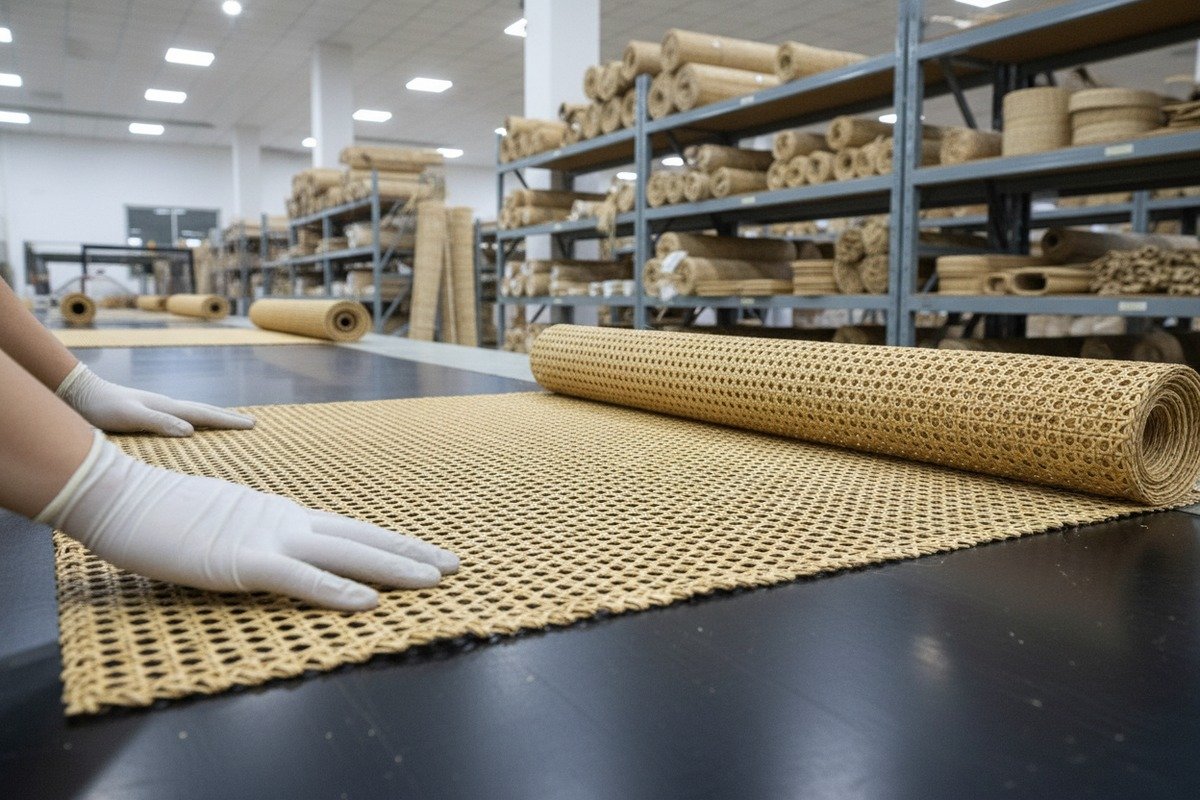
Shipping weight matters. Natural rattan is lightweight, but large rolls take up cargo space. Poorly packed rolls arrive damaged. We invest in reinforced tube packaging and moisture-barrier wrapping because a crushed roll is a total loss. When comparing supplier quotes, ask about packaging standards and who bears the risk during transit.
Also factor in waste. Grade A cuts cleanly with minimal waste. Lower grades may have defective sections you need to trim out, effectively raising your real cost per usable inch.
Sustainability and Price
There is a growing demand for eco-bleached and sustainably harvested rattan 10. These products cost slightly more but appeal to environmentally conscious brands and consumers. If your target market values sustainability, the premium you pay for certified materials can be passed along — and often increases your selling price by more than the extra cost.
How can I verify that my supplier provides consistent quality across every batch?
Quality consistency is the single biggest pain point we hear from purchasing managers. One batch looks perfect. The next has color shifts, thinner strands, or reduced elasticity. After operating our own rattan processing facility in Indonesia for years, we understand exactly why this happens — and how to prevent it.
Verify supplier consistency by requesting pre-shipment samples from each production batch, establishing written quality specifications with measurable criteria, conducting third-party inspections for large orders, and tracking performance across multiple deliveries. A reliable supplier will welcome these measures and provide batch traceability documentation.

Why Inconsistency Happens
Rattan is a natural material. Every harvest season produces stems with slightly different thickness, color, and fiber density. The outer peel from the top of a stem differs from the bottom. Wet-season rattan behaves differently from dry-season rattan. Without rigorous sorting and processing controls, these natural variations pass straight into the finished webbing.
At our facility, we sort raw peel into grades before weaving begins. We calibrate our machines for strand tension. And we singe the finished webbing to remove loose fibers and create a uniform surface. Not every supplier does this. That is where inconsistency starts.
Set Written Specifications
Never rely on verbal agreements. Create a simple quality specification document that covers:
- Grade: A, B, or C with reference photos
- Color range: Acceptable tones with physical or digital color samples
- Strand width: Minimum and maximum in millimeters
- Mesh size: Exact opening dimensions (e.g., 1/2 inch)
- Roll dimensions: Height, length, and tolerance
- Defect allowance: Maximum number of defects per square meter
- Packaging: Material, protection method, labeling
Share this document with your supplier before the first order. A professional supplier will review it, suggest adjustments if needed, and sign off. If a supplier resists putting specifications in writing, that is a red flag.
Pre-Shipment Inspection Checklist
Before any shipment leaves the factory, inspect or have someone inspect the following:
- Surface smoothness — touch test on random rolls
- Color consistency — compare rolls side by side under natural light
- Strand elasticity — bend test on strands from different rolls
- Dimensional accuracy — measure roll height and mesh opening
- Packaging integrity — check for moisture barriers and structural support
- Labeling — confirm grade, batch number, and quantity
For orders above a certain value, we recommend hiring a third-party inspection company. Services like SGS, Bureau Veritas, or local inspection firms in China can visit the factory before shipment and provide a detailed report with photos.
Build a Supplier Scorecard
Track each delivery with a simple scorecard. Over time, patterns emerge. You will see if quality dips during certain months (often rainy season), if certain product lines are more consistent, or if the supplier is gradually lowering quality to protect margins.
Here is a simple template:
| Delivery Date | Batch Number | Grade Ordered | Grade Received | Color Match (1–5) | Defects Found | On-Time Delivery | Notes |
|---|---|---|---|---|---|---|---|
| 2025-01-15 | SF-2501A | A | A | 5 | None | Yes | Excellent batch |
| 2025-03-20 | SF-2503B | A | A- | 3 | Minor color shift | Yes | Rainy season harvest |
| 2025-06-10 | SF-2506A | B | B | 4 | 2 thin strands/m² | No (3 days late) | Port congestion |
Review this scorecard quarterly with your supplier. Share the data. Good suppliers use this feedback to improve. Poor suppliers make excuses.
Sourcing From the Right Place
Indonesia produces the vast majority of the world's rattan. Factories with their own rattan plantations or direct harvesting relationships control raw material quality better than traders who buy on the open market. When we process rattan at our Indonesian facility, we select stems before peeling. That upstream control is the foundation of batch consistency.
Ask your supplier where their raw rattan comes from. Ask if they own or directly manage their processing. Ask for photos or videos of their sorting process. Transparency at this stage tells you a lot about what you will receive.
Communication Frequency
Stay in regular contact with your supplier. A quick WhatsApp message asking for photos of production in progress costs nothing and catches problems early. Our best long-term customers check in during production, not just after shipment. That proactive approach has saved countless orders from quality issues.
Conclusion
Choosing the right rattan cane webbing grade comes down to four things: knowing how to inspect grades, matching grades to projects, spending wisely, and holding suppliers accountable.
Footnotes
1. Provides an overview of rattan cane webbing as a natural material. ↩︎
2. Details the characteristics and quality standards of Grade A rattan webbing. ↩︎
3. Describes the origin and initial processing of rattan raw material. ↩︎
4. Highlights the critical role of quality control in manufacturing processes. ↩︎
5. Explains the features and acceptable imperfections of Grade B rattan webbing. ↩︎
6. Illustrates a method for evaluating rattan’s flexibility and quality. ↩︎
7. Introduces synthetic rattan as a durable, weather-resistant alternative for outdoor use. ↩︎
8. Showcases a popular and classic weave pattern for rattan cane webbing. ↩︎
9. Explains the concept and benefits of price reductions for large quantity purchases. ↩︎
10. This page from House of Bamboo explicitly mentions ‘Sustainable: Global GreenTag Platinum Health Rating and Level C Rating. Rattan is a naturally renewable climbing plant,’ providing strong information on sustainable rattan. ↩︎

 English
  Español de México
  العربية
  Deutsch
  Français
  Русский