
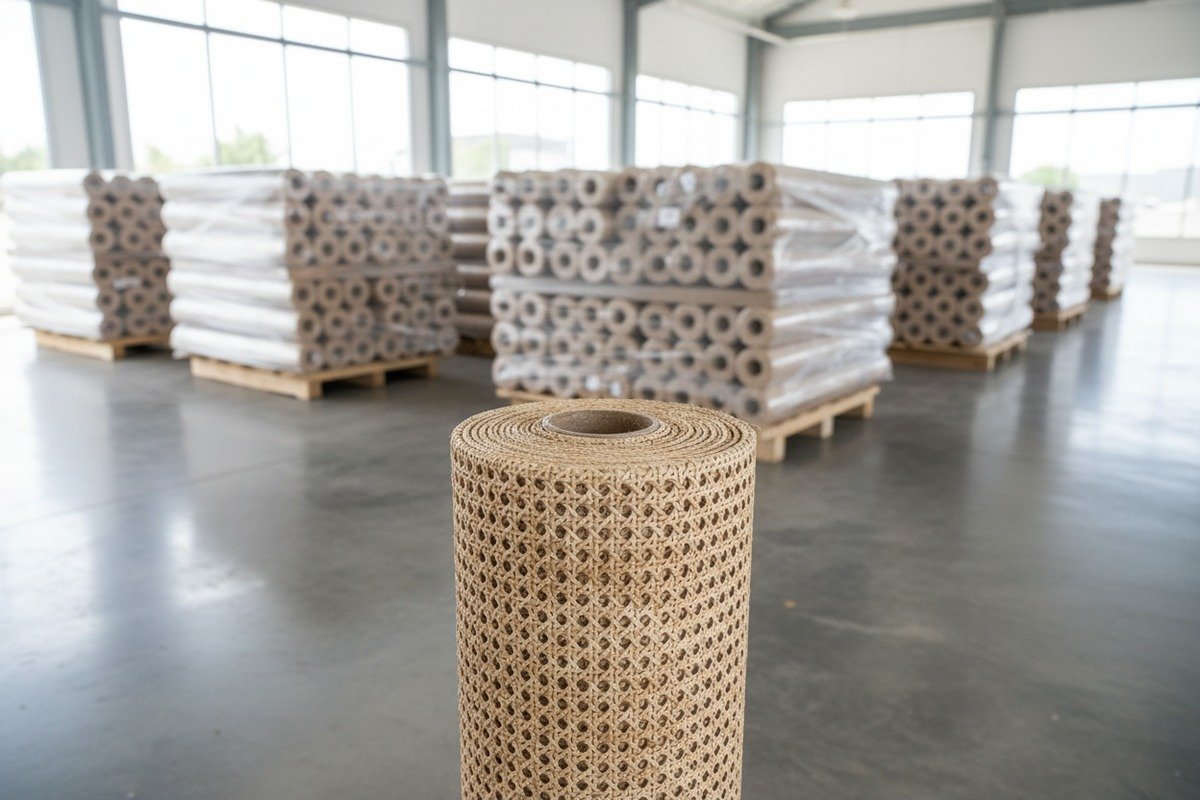
Every week, our sales team fields the same question from buyers around the world — furniture factories in Turkey, material wholesalers in the Netherlands, and DIY shop owners across the US all want to know one thing before they place a custom rattan order.
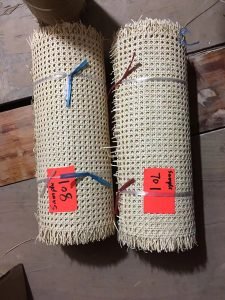
The MOQ for custom natural rattan cane webbing typically ranges from 1 roll (15 meters) for standard items to 50–100 rolls or more for fully customized specifications. Retail buyers can often purchase as little as 12 linear inches, but custom widths, colors, or weave patterns usually require higher minimums to justify production setup costs.
The answer is not as simple as a single number. Your MOQ depends on several factors — the type of weave, the width you need, the color finish, and whether you are buying stock items or requesting something made to your exact specifications. Let me walk you through how it all works so you can plan your order with confidence.
How will the MOQ affect the wholesale pricing for my custom rattan order?
When we quote pricing for rattan cane webbing at our Foshan headquarters, the very first thing we look at is the order volume — because it changes everything about cost.
Wholesale pricing for custom rattan cane webbing follows a tiered structure. Orders of 1–5 rolls typically carry the highest per-meter cost, while orders exceeding 50 rolls can unlock discounts of 10–25%. Larger volumes spread fixed costs like production setup, dyeing, and quality inspection across more units, lowering your price per meter significantly.

Why Volume Drives Price Down
The cost of rattan cane webbing is not just the raw material. It includes harvesting, peeling, grading, weaving, quality control 1, and packing. Many of these steps carry fixed costs. When you order 5 rolls, those fixed costs get divided by 5. production setup costs 2 When you order 100 rolls, the same costs get divided by 100. The math is straightforward.
Our rattan processing facility in Indonesia sources raw rattan 3 from certified plantations. The peeling and grading process is labor-intensive. Workers sort rattan peels by thickness, color uniformity, and flexibility. A Grade A peel has no cracks, consistent color, and a smooth surface. This sorting takes time regardless of whether we produce 3 rolls or 300 rolls.
Typical Pricing Tiers
Here is a general breakdown of how MOQ affects pricing for natural rattan cane webbing 4. These numbers reflect common market ranges based on our export experience to markets like the US, Europe, and the Middle East.
| Order Quantity | Price Range (per linear meter) | Discount vs. Base Price | Typical Buyer Type |
|---|---|---|---|
| 1–5 rolls (15–75m) | $3.50–$6.50 | Base price | Small retailers, DIY shops |
| 6–20 rolls (90–300m) | $2.80–$5.00 | 10–15% off | Interior designers, small wholesalers |
| 21–50 rolls (315–750m) | $2.20–$4.00 | 15–20% off | Furniture factories, mid-size wholesalers |
| 50+ rolls (750m+) | $1.80–$3.50 | 20–25% off | Large manufacturers, building material distributors |
Hidden Costs to Watch
Price per meter is only part of the equation. Shipping weight, packing method, and destination port all affect your landed cost. A roll of 60cm-wide close-weave rattan weighs about 3–4 kg. A roll of 100cm-wide radio weave can weigh 6–8 kg. We pack rolls in cardboard tubes wrapped with plastic film to prevent moisture damage during transit. For FOB Foshan shipments, we can fit approximately 200–300 standard rolls in a 20-foot container, depending on width.
One thing many first-time buyers overlook is the cost difference between CIF and FOB terms 5. If you are ordering fewer than 50 rolls, CIF shipping often makes more sense because we can consolidate your shipment with other orders heading to the same port. For 50+ rolls, FOB pricing with your own freight forwarder 6 usually saves money.
Negotiating Better Rates
The best way to get a lower per-meter price without massively increasing your order is to standardize your specifications. If you can accept our stock widths (40cm, 60cm, or 90cm) and natural color, we can often offer near-wholesale pricing even at lower quantities. Custom widths or colors trigger additional setup, which raises the effective MOQ.
Can I get custom widths and patterns if my order meets your minimum requirements?
Our production teams in both Foshan and Indonesia handle custom requests every month — from 18-inch-wide hexagonal open cane for a Dutch furniture line to 72-inch-wide close-weave sheets for an American cabinet maker.
Yes, custom widths and patterns are available once your order meets the supplier's minimum requirements. Standard widths range from 40cm to 100cm with MOQs as low as 1 roll, but non-standard widths (up to 180cm) or unique weave patterns typically require 10–50 rolls minimum due to loom reconfiguration and setup costs.
Available Weave Patterns
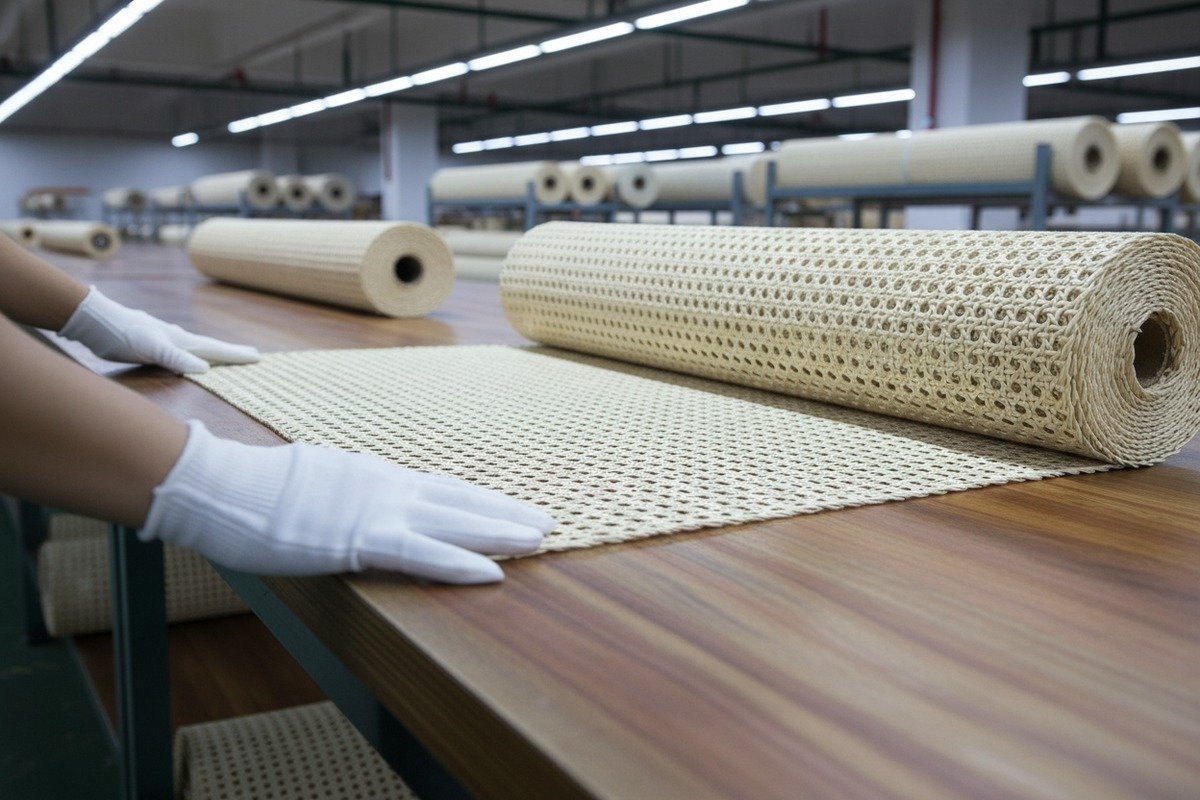
Rattan cane webbing comes in several standard weave patterns. Each has a different look, strength level, and application. Here is a quick guide to the most common options.
| Weave Pattern | Description | Common Use | Stock Availability |
|---|---|---|---|
| Close Weave (RA-3) | Tight, interlocking pattern with no visible gaps | Chair seats, cabinet doors, headboards | Widely stocked, low MOQ |
| Close Weave (RA-5) | Similar to RA-3 but with finer fibers | High-end furniture, decorative panels | Stocked in standard widths |
| Radio Weave | Open hexagonal pattern, classic cane look | Chair backs, room dividers | Stocked in standard widths |
| Square Mesh / Open Weave | Simple grid pattern with square openings | Speaker covers, ventilation panels | Stocked in limited widths |
| Herringbone | Diagonal V-shaped pattern | Accent walls, premium furniture | Custom order only |
| Diamond Motif | Dense diamond-shaped interlocking weave | Decorative screens, luxury furniture | Custom order only |
Custom Width Options
Standard widths that we keep in stock are 40cm (16"), 60cm (24"), and 90cm (36"). These are woven on preset loom configurations and can ship within 3–5 days of order confirmation.
Widths beyond 100cm require loom adjustments 7. Our widest natural rattan weave reaches 180cm (72"), but rolls at this width are shorter — typically 10 meters instead of the standard 15 meters. This is because wider rattan sheets are heavier and harder to roll tightly without cracking the fibers.
For widths between 100cm and 180cm, we ask for a minimum of 10 rolls per specification. This covers the labor cost of reconfiguring the loom and ensures our weavers can maintain consistent tension across the wider surface.
Custom Colors and Finishes
Natural rattan comes in a warm beige-to-straw-yellow range. But many buyers want bleached (light cream), smoked (medium brown), or carbonized (dark brown) finishes. We can also apply custom stain colors on request.
Color customization requires batch processing 8. We dye or treat the raw rattan peels before weaving, not after. This ensures uniform color throughout the weave. Because of this, color-customized orders typically need a minimum of 20 rolls to justify the dye bath setup.
One important note: painted or heavily dyed rattan loses some of its natural flexibility. If your project requires bending or wrapping the webbing around curved surfaces, we recommend sticking with natural, bleached, or lightly stained finishes.
Combining Custom Specs
If you need both a non-standard width and a custom color, the MOQ rises. A reasonable expectation is 30–50 rolls for a fully custom specification. We recommend standardizing at least one variable (width or color) to keep your MOQ manageable.
Is there a way for me to test the quality with a sample before committing to a large MOQ?
We learned early on — after a client in Saudi Arabia rejected a 200-roll shipment over a color mismatch — that samples are not optional. They are essential for both sides.
Yes, most reputable suppliers offer sample programs before you commit to a full MOQ. Options include small cut samples (10x10cm or 30x30cm) shipped free or at low cost, and paid sample rolls (1–2 meters) that let you test weave quality, color accuracy, flexibility, and compatibility with your production process before placing a bulk order.
Our Sample Process
At Seafan Rattan, we offer two levels of sampling. The first is a swatch sample — a small piece, usually 20cm x 20cm, cut from our current stock. We can ship these via express courier within 2 days. The cost is minimal, and we often waive it for serious wholesale inquiries.
The second level is a production sample. This is a 1–2 meter piece woven to your exact custom specifications — your chosen width, pattern, and color. Production samples take 7–10 days to prepare because we run them through the same process as a full order. There is a sample fee, usually $30–$80 depending on complexity, but we credit this amount toward your first bulk order.
What to Check in Your Sample
When you receive a rattan cane webbing sample, test it for these key quality indicators 9:
Fiber consistency. Look closely at the individual rattan strips. Grade A peels should be uniform in width (3–5mm), free of cracks, and consistent in color. If you see dark spots, splits, or irregular widths, the material may be Grade B or lower.
Flexibility. Bend the sample gently. Good natural rattan webbing should flex without cracking or breaking. If it snaps easily, the material may have been over-dried or stored improperly.
Weave tightness. Run your fingers across the surface. The weave should feel even, with no loose strands or gaps. Uneven tension is a sign of poor craftsmanship and will lead to durability issues in finished furniture.
Color uniformity. Hold the sample under natural light. The color should be consistent across the entire piece. Slight variations are normal in natural rattan, but blotchy or streaky color indicates poor grading or inconsistent dye application.
Smell. Fresh, properly treated rattan has a mild, woody scent. A musty or chemical smell could indicate mold risk or excessive preservative treatment. Our Indonesia facility uses garden-grown rattan and avoids chemical preservatives to minimize mold and termite risks.
Sample-First Approach Saves Money
Many buyers, especially those new to importing rattan from Asia, skip the sample step to save time. This is a costly mistake. A $50 sample can prevent a $5,000 quality dispute. We have seen buyers in Australia and the US place large orders based only on photos, only to find that the weave pattern or color did not match their expectations.
The sample also lets you test compatibility with your production process. If you are upholstering chair backs, you need to know how the webbing behaves when stapled, glued, or stretched over a frame. A 1-meter sample gives you enough material to run a real test.
Turnaround and Shipping
Swatch samples ship via DHL or FedEx and arrive in 3–5 business days to most countries. Production samples take 7–10 days to make, plus 3–5 days shipping. If you are working on a tight project timeline, request samples as early as possible in your planning process.
Why does the MOQ vary based on the specific grade and weave I choose for my project?
Running three factories and coordinating with over 30 partner workshops has taught us that not all rattan products are created equal — and the production realities behind each grade and weave directly shape the MOQ we can offer.
MOQs vary by grade and weave because each specification requires different raw materials, loom configurations, weaver skill levels, and processing times. Premium Grade A rattan peels are scarcer and require more careful sorting, while complex weave patterns demand specialized looms and experienced artisans — all of which increase minimum batch sizes to maintain quality and cost efficiency.
Rattan Grades Explained
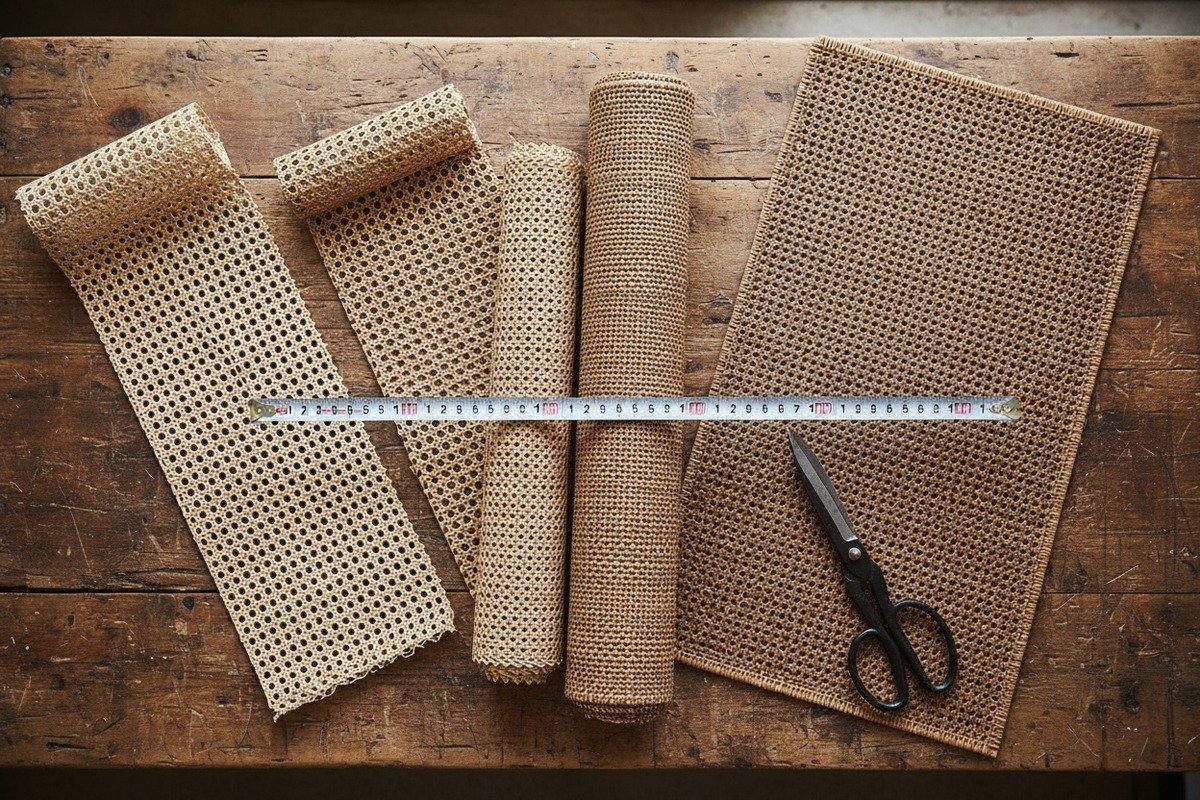
Not all rattan is the same. The grade of rattan used in cane webbing depends on which part of the rattan stem 10 the material comes from and how it is processed.
| Grade | Source | Characteristics | Typical MOQ Impact |
|---|---|---|---|
| Grade A (Premium Peel) | Outer skin of rattan stem | Smooth, uniform color, high flexibility, strongest fibers | Higher MOQ — scarcer material, careful sorting needed |
| Grade B (Secondary Peel) | Second layer beneath outer skin | Slightly rougher texture, minor color variation | Moderate MOQ — more readily available |
| Grade C (Core) | Inner core of rattan stem | Softer, less durable, lighter color | Lower MOQ — abundant material |
| Synthetic (PVC/Paper) | Manufactured material | Uniform, longer rolls (30m), custom colors | Lowest MOQ — machine-produced |
Grade A peels come from the outermost layer of the rattan stem. This layer is the hardest, most flexible, and most visually appealing. But it represents only a small percentage of the total stem. When we process raw rattan at our Indonesia facility, a single stem yields far more core material than premium peel. This scarcity means Grade A orders need higher minimums to justify a dedicated sorting and production run.
Weave Complexity and Production Speed
Simple weave patterns like open square mesh can be produced quickly. A skilled weaver can complete a 15-meter roll of 60cm-wide open mesh in about one working day. Complex patterns like herringbone or diamond motif take 2–3 times longer because each intersection requires precise alignment.
This speed difference directly affects MOQ. If a weave pattern ties up a loom and a weaver for three days per roll, we need a larger order to make the production run worthwhile. Otherwise, the cost per roll becomes unreasonably high for both us and the buyer.
Natural vs. Synthetic Considerations
Synthetic rattan webbing — made from PVC, paper cord, or resin-coated fibers — is machine-woven. This means it can be produced in longer rolls (up to 30 meters) with perfect consistency. The MOQ for synthetic is often lower because there is no manual labor bottleneck.
Natural rattan, by contrast, is handwoven. Every roll passes through human hands. This is what gives it the organic, slightly irregular texture that designers love. But it also means production capacity is limited. During peak season (typically March through August), our weavers are fully booked, and lead times stretch from 2 weeks to 4–6 weeks for custom orders.
How to Choose the Right Grade for Your Project
For high-end furniture restoration or visible surfaces like chair backs and cabinet fronts, Grade A peel is worth the higher MOQ. The surface is smooth, the color is warm and even, and the material lasts for decades.
For hidden or semi-visible applications — like the interior of drawer bottoms or backing panels — Grade B or even core-based webbing works perfectly well at a lower cost and lower MOQ.
If your project prioritizes color customization and uniformity over natural texture, synthetic rattan may be your best option. We stock several synthetic patterns in widths from 40cm to 120cm, and the MOQ starts as low as 5 rolls.
Seasonal Supply Chain Factors
Raw rattan harvesting in Indonesia follows seasonal cycles. The dry season (May–October) yields the best quality rattan with lower moisture content. Wet season rattan requires more drying time and has a higher rejection rate during grading. This means MOQs can fluctuate throughout the year. If you place your order during peak harvest season, we can often be more flexible on minimums because raw material supply is abundant.
Global shipping disruptions also play a role. During periods of container shortages or port congestion, we may consolidate orders to fill containers efficiently. This can sometimes work in your favor — if your order aligns with other shipments heading to the same region, we can offer reduced MOQs.
Conclusion
Understanding MOQ for custom natural rattan cane webbing helps you plan smarter, negotiate better pricing, and avoid costly surprises — whether you are restoring one chair or outfitting an entire furniture line.
Footnotes
1. Wikipedia provides a comprehensive and authoritative definition of quality control. ↩︎
2. Found a clear definition of ‘setup cost’ which is described as a fixed cost for a production run, aligning with the original context. ↩︎
3. Describes rattan as a raw material. ↩︎
4. Provides a general overview of rattan and its uses. ↩︎
5. Wikipedia offers a detailed explanation of FOB (Free on Board) as an Incoterm, which is an authoritative source. ↩︎
6. Wikipedia provides a concise and clear definition of a freight forwarder. ↩︎
7. Provides context on how looms operate and are adjusted. ↩︎
8. Wikipedia’s entry on ‘Batch production’ is directly relevant and an authoritative source. ↩︎
9. Defines key quality indicators in manufacturing. ↩︎
10. Describes the botanical source of rattan material. ↩︎

 English
  Español de México
  العربية
  Deutsch
  Français
  Русский