
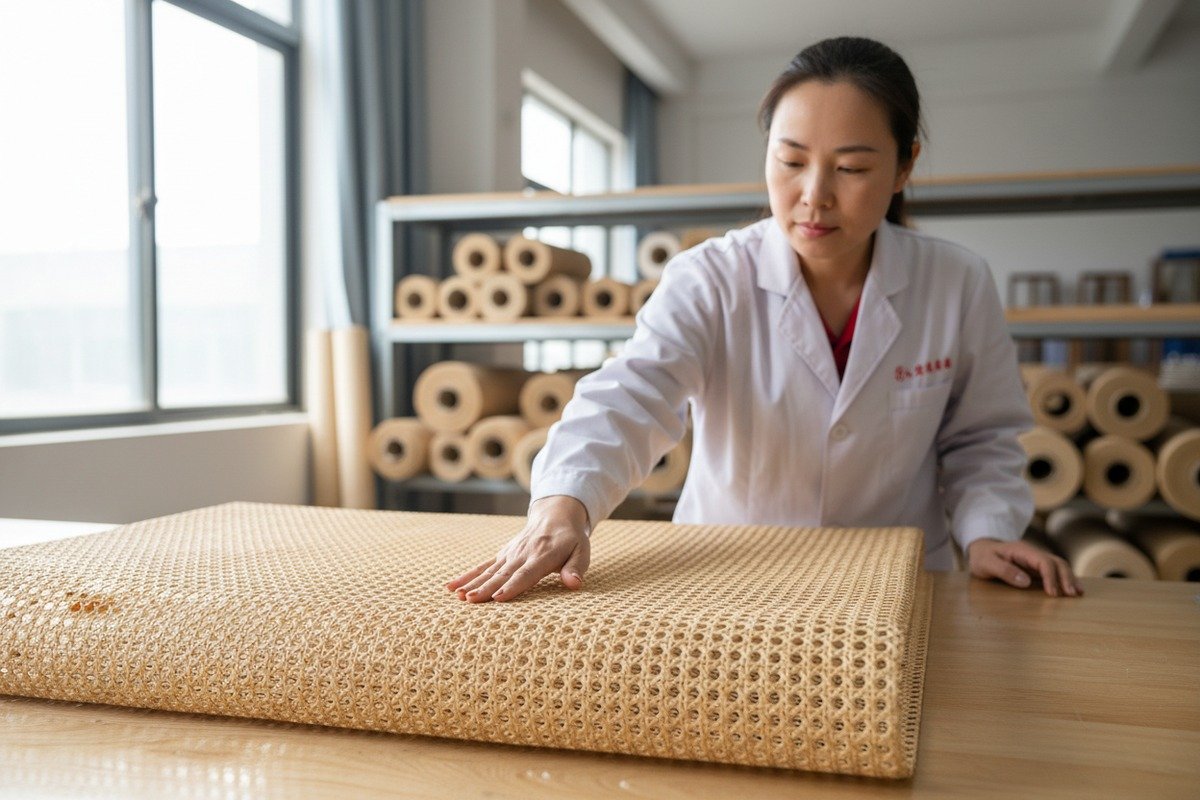
Every week, our quality control team 1 in Foshan inspects thousands of meters of rattan cane webbing 2 before it ships worldwide. The problem? Many buyers receive material that looks nothing like what they ordered. Without knowing how to visually assess grade, you risk paying premium prices for mediocre rattan.
You visually assess natural rattan cane webbing grade by examining five key factors: strip uniformity and thickness consistency, color tone and natural luster, surface smoothness and absence of defects, weave tightness and hole regularity, and flexibility without cracking. Higher grades show smooth, even-toned, tightly woven material.
Below, I will walk you through each visual checkpoint so you can confidently evaluate any rattan webbing that lands on your doorstep. Whether you are a furniture factory buyer or a material wholesaler, these skills will save you money and headaches.
How can I identify color consistency and natural luster in my Grade A rattan webbing?
One of the first things our sorting team checks on the production floor in Indonesia is color. When a roll of webbing looks patchy or dull right out of the wrapper, we know something went wrong upstream. Color tells a story about raw material quality and processing care. natural rattan material 3
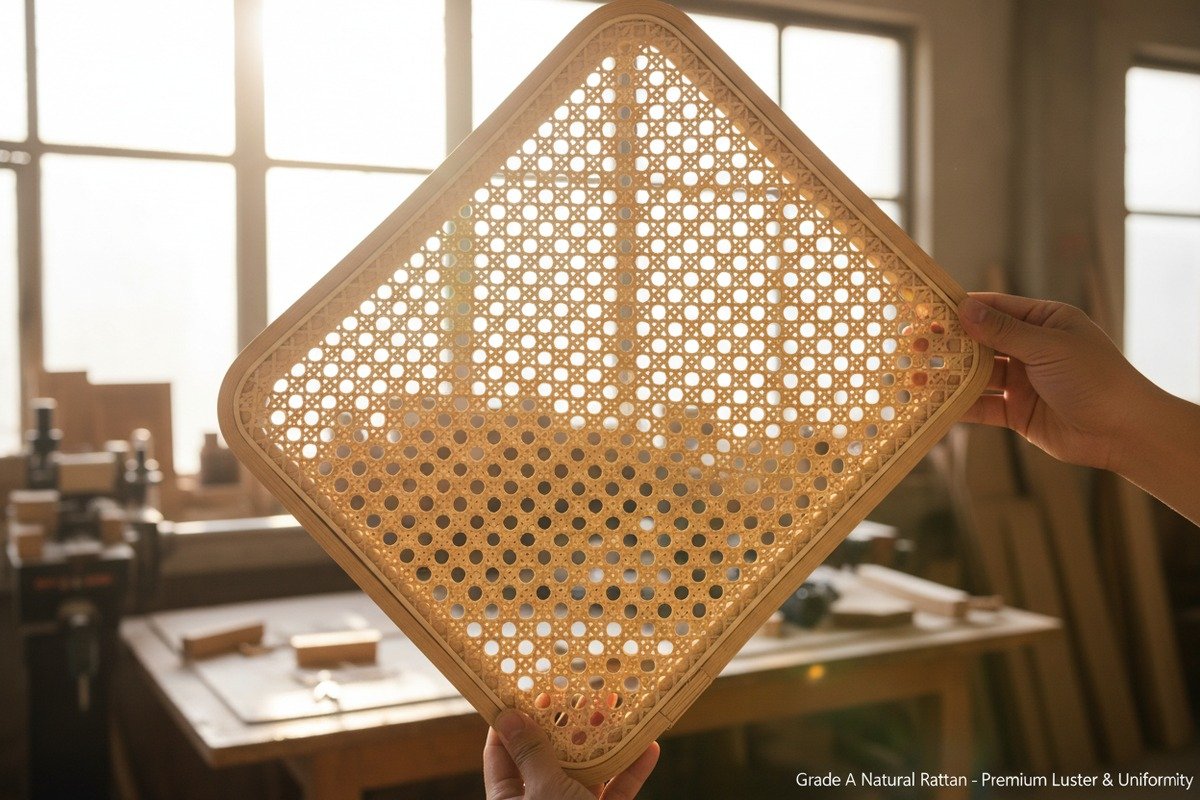
Grade A rattan webbing displays a warm, uniform honey-to-straw tone across the entire sheet with a subtle natural luster. You should see minimal color variation between individual strips, no dark spots or gray patches, and a gentle sheen that reflects light evenly rather than appearing flat or chalky.
What Does "Color Consistency" Actually Mean?
Color consistency does not mean every single strip is identical. Rattan is a natural material. Slight tonal variation is normal and even desirable. It proves the material is genuine. But the key word is "slight." In Grade A or AAA webbing, the strips stay within a narrow color range. Think of it like a family resemblance rather than a clone.
When you unroll your shipment, hold it at arm's length first. Your eye should see one unified tone, not a patchwork. Then move closer. Individual strips may vary by a shade, but none should jump out as obviously darker or lighter.
The Luster Test
Natural luster comes from the outer skin of the rattan palm 4. When rattan is properly peeled, thinned, and dried, this skin retains a gentle sheen. It is not glossy like lacquer. It is more like the soft glow of well-cared-for wood.
Here is what to look for:
- Hold the sheet at a 45-degree angle under natural light.
- Tilt it slowly. You should see a subtle light reflection move across the surface.
- If the surface looks flat and matte with no reflection at all, the material may be over-dried, poorly processed, or lower grade.
Color Indicators by Grade
| Color Feature | Grade AAA/A | Grade B | Grade C/D |
|---|---|---|---|
| Overall Tone | Warm honey, straw yellow | Light tan with some variation | Dull, grayish, or uneven |
| Strip-to-Strip Variation | Minimal, stays within one shade range | Moderate, a few strips stand out | High, obvious patchwork |
| Dark Spots | None or extremely rare | Occasional small spots | Frequent, scattered |
| Luster | Soft natural sheen | Slight sheen, some dull areas | Flat, no visible sheen |
| Bleached Options | Even, clean white-to-cream | Slight yellowing in spots | Blotchy, uneven bleaching |
Common Color Red Flags
Watch out for these warning signs. Gray or ashen tones often mean the rattan was stored in damp conditions or harvested too late. Green tinges suggest insufficient drying. Black spots may indicate mold or insect damage. And if the color looks artificially uniform with a plastic-like sheen, you might be looking at synthetic rattan pretending to be natural.
From our experience exporting to over a dozen countries, we have found that buyers in Europe and the US tend to prefer the warm, natural honey tones of unbleached Grade A material. Buyers in Southeast Asia sometimes prefer bleached options for dyeing later. Either way, the consistency standard remains the same.
What specific surface defects should I watch for when checking my rattan material quality?
When we run our quality checks at the factory, surface inspection is where most batches get downgraded. A roll can have perfect color but still fail on surface defects 5. Knowing what to look for here separates experienced buyers from those who get stuck with returns.
When checking rattan webbing quality, watch for cracks, splits, rough patches, visible knots, insect holes, mold spots, excessive fuzz, and poorly integrated splices. Grade A material has a smooth, clean surface with almost no blemishes, while lower grades show increasing roughness, knots, and surface breaks that compromise both appearance and durability.
The Surface Smoothness Test
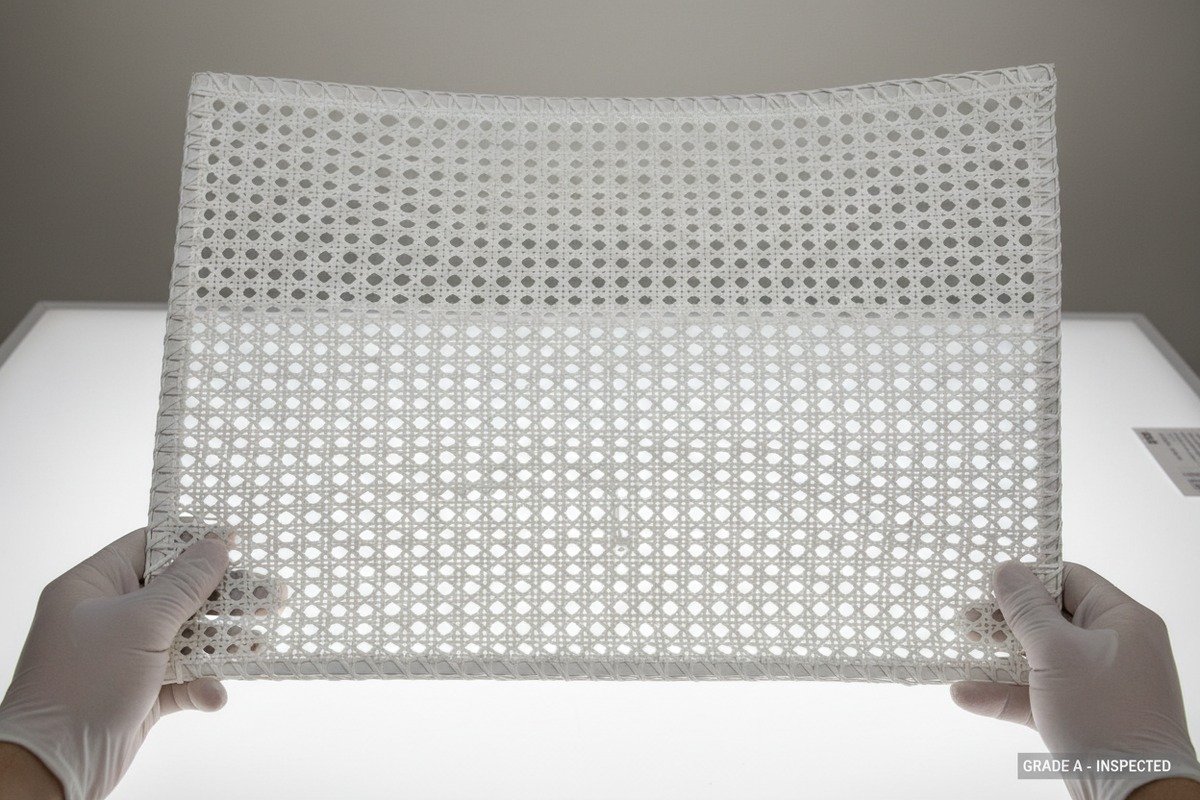
Run your fingertips lightly across the face of the webbing. Grade A material should feel smooth and even. You should not catch any splinters or rough edges. The strips should feel consistent in thickness. If you feel ridges, bumps, or rough patches, the material has not been properly thinned or sanded during processing.
In our Indonesian processing facility, the singeing step 6 is critical. Workers pass the woven sheets over a controlled flame to burn off fine fuzz and hair-like fibers. This step is what gives Grade A webbing its clean, refined surface. Skip it or rush it, and you get a fuzzy, rough product.
Defect Categories and Severity
Not all defects are equal. Here is how we classify them:
| Defect Type | Description | Impact on Grade | Acceptable in Grade A? |
|---|---|---|---|
| Hairline Cracks | Tiny surface cracks along the grain | Minor if rare | Only 1-2 per square meter |
| Deep Splits | Cracks through the full strip thickness | Major | No |
| Rough Patches | Areas where the surface peel is uneven | Moderate | No |
| Knots | Visible nodes from the rattan plant | Minor if smooth | Only if smoothly integrated |
| Insect Holes | Small round holes from boring insects | Major | No |
| Mold/Dark Spots | Discoloration from moisture damage | Major | No |
| Fuzz/Fiber Hair | Fine fibers standing up from the surface | Minor | No, should be singed clean |
| Splices/Joins | Points where strips are connected | Minor if well-done | Maximum 1-2, nearly invisible |
| Edge Fraying | Loose fibers at cut edges of sheets | Minor | Minimal at roll edges only |
How to Do a Proper Visual Scan
Here is the step-by-step approach our QC inspectors use:
- Unroll at least two meters of the webbing on a clean, flat surface.
- Stand directly above and scan the full width slowly, left to right.
- Get down to eye level with the surface. This angle reveals bumps and ridges that you miss from above.
- Hold a flashlight at a low angle across the surface. Shadows will highlight any raised defects, cracks, or rough spots.
- Flip the sheet over. Check the back side too. Some defects only show on one face.
- For bulk shipments, sample at least three rolls from different parts of the pallet.
The Flexibility Connection
Surface defects often predict structural weakness. A strip with cracks on the surface will snap when bent. A strip with insect damage has compromised internal fibers. So surface inspection is not just cosmetic. It tells you how long the webbing will last in a finished piece of furniture.
We always tell our wholesale clients to do a quick bend test alongside the visual check. Take a single strip from the edge. Bend it gently into a U shape. Grade A bends smoothly with no cracking sounds. Grade B may show slight resistance. Grade C or D will crack or splinter.
How do I judge the weaving precision and hole uniformity in my bulk rattan shipment?
After years of shipping rattan webbing to furniture factories across Europe, the US, and the Middle East, we have learned that weaving quality is where buyer complaints concentrate most. weaving precision 7 Color and surface issues are easy to spot. But weave problems? They show up later, during installation, when it is too late.
Judge weaving precision by checking three things: consistent hole size across the entire sheet, straight and parallel rows without drift, and uniform tension with no sagging or overly tight areas. In quality webbing, every hexagonal, square, or octagonal opening should be identical in shape and size, and the strips should intersect at clean, even angles.
Why Hole Uniformity Matters
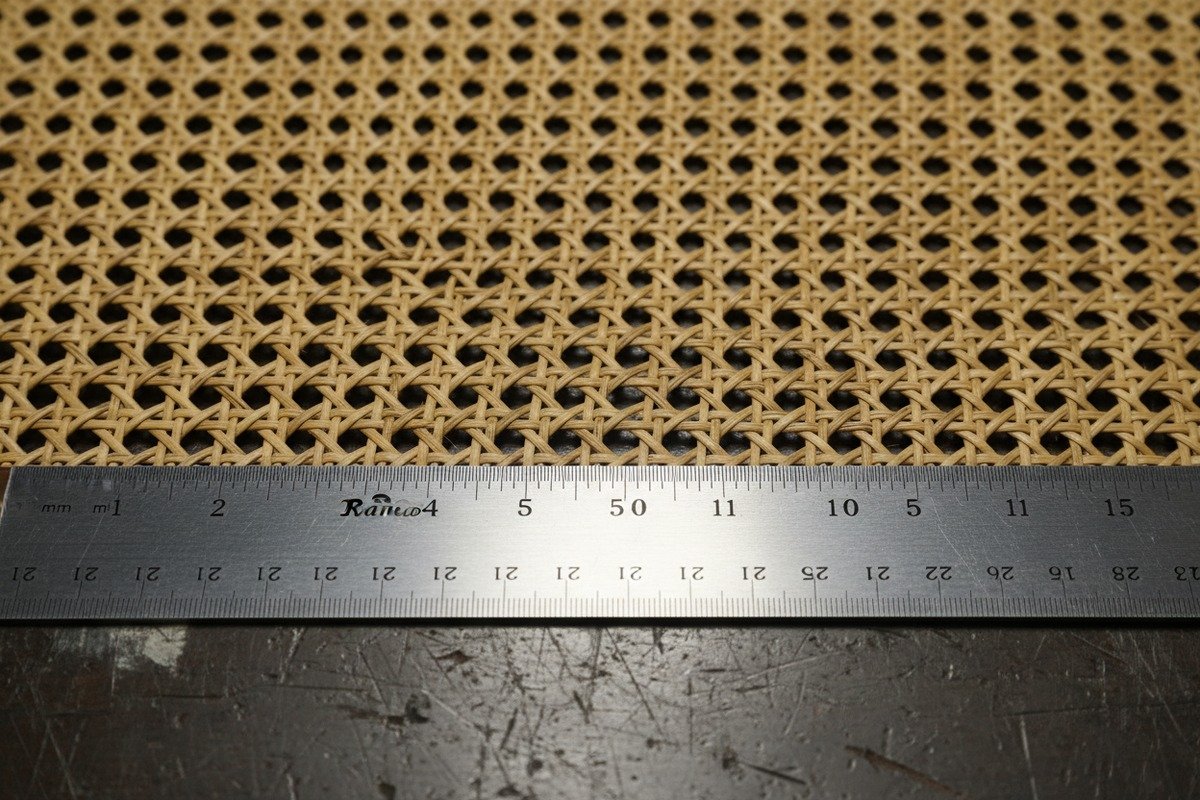
In most rattan webbing patterns—whether classic hexagonal open cane 8, radio weave, or close weave—the holes are the pattern. They define the look. If holes vary in size and shape, the finished piece looks sloppy. For furniture factories that build high-end chairs and headboards, uneven holes mean rejected product and wasted labor.
Here is a practical way to check. Lay the sheet flat. Pick any hole in the center. Now compare it to holes at the edges, corners, and opposite end. They should look like copies of each other. If edge holes are stretched or compressed compared to the center, the weaving tension was inconsistent.
Measuring Weave Precision
You do not need fancy tools. A simple ruler and your eyes do most of the work.
| Check Point | What to Measure | Grade A Standard | Red Flag |
|---|---|---|---|
| Hole Size | Diameter or width of openings | Consistent within 1mm variance | Variance exceeds 2mm |
| Row Straightness | Alignment of horizontal/vertical rows | Rows are straight and parallel | Visible drift or waviness |
| Intersection Angles | Where strips cross each other | Clean, consistent angles | Overlapping, bunched, or gaps |
| Strip Spacing | Distance between parallel strips | Even throughout | Irregular gaps |
| Edge Finishing | How the weave terminates at edges | Clean, secure edge | Loose, unraveling strips |
| Tension | Tautness across the sheet | Even, slight give when pressed | Sagging spots or overly rigid areas |
Pattern-Specific Checks
Different weave patterns have different precision challenges. Open hexagonal cane (the classic chair cane look) demands perfect symmetry in each hexagon. If even one strip shifts, the entire row distorts.
Close weave (tight basketweave) requires consistent strip width because there are no holes to hide variation. Any thicker or thinner strip breaks the visual rhythm.
Radio weave, with its radiating sunburst pattern, needs precise angular spacing. Uneven angles create lopsided fans that look amateur.
The Light Test for Weave Quality
One of our most reliable QC tricks is the light test. Hold the webbing sheet up against a window or bright light source. Look through from the back side. Every opening should let through roughly the same amount of light. If some holes are obviously larger or smaller, or if you see blocked spots where strips bunch together, the weave quality is below Grade A.
This test also reveals hidden splices and joins. When a strip ends and a new one begins, the overlap should be minimal and tight. Sloppy splices create thick spots that distort nearby holes.
Bulk Shipment Sampling Strategy
For large orders, you cannot inspect every roll. But smart sampling catches problems early. We recommend inspecting at least 10% of rolls in any shipment. Pull samples from the top, middle, and bottom of the pallet. Unroll at least one full meter from each sampled roll. Check the beginning, middle, and end because quality can vary within a single roll if the weaver's tension changed during production.
Can I recognize the difference between high-end Indonesian rattan and budget alternatives visually?
This is a question we hear constantly from new wholesale clients. They see two rolls side by side at a trade show. The prices differ by 40%. Both look like rattan. Both feel like rattan. So how do you tell them apart? Having operated our own rattan processing facility in Indonesia for years, we have developed a keen eye for the differences.
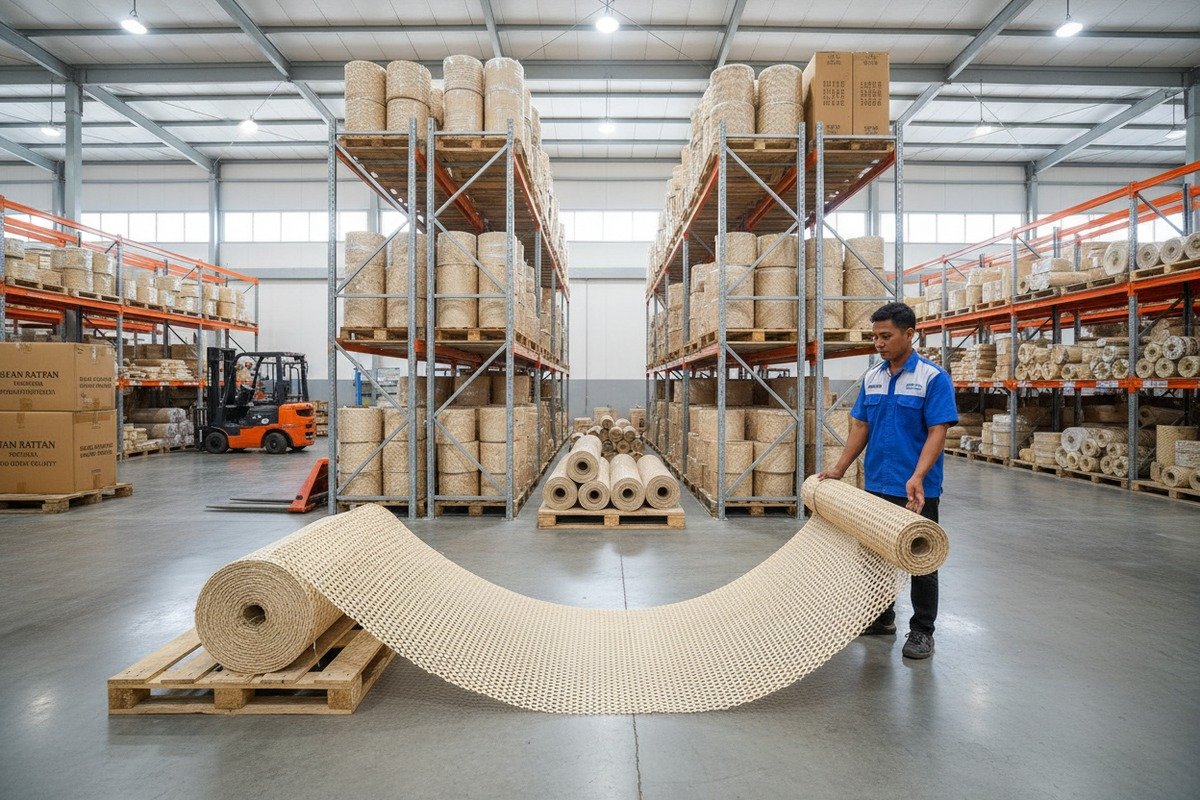
Yes, you can distinguish high-end Indonesian rattan from budget alternatives through visual and tactile cues. Genuine premium Indonesian rattan has a warm honey tone, tight fine grain, high density that produces a solid sound when tapped, supple flexibility without cracking, and a faint woody scent. Budget alternatives typically appear duller, feel lighter, and lack this combination of characteristics.
The Origin Factor
Indonesia produces the vast majority of the world's high-quality rattan. The tropical climate and specific Calamus species 9 that grow there yield cane with superior density, flexibility, and grain structure. Rattan from other sources can look similar at first glance but often falls short on durability and workability.
The challenge is that many suppliers are vague about origin. They say "Southeast Asian rattan" without specifying the country or species. This vagueness is often intentional. When a supplier proudly states "Indonesian rattan," they usually have nothing to hide.
The Five-Sense Authentication Test
Here is the practical test our team teaches to every new buyer who visits our Foshan showroom:
Sight: Look at the grain. Premium Indonesian rattan has fine, tight grain 10 lines running along each strip. Budget material has coarser, more widely spaced grain. The color should be warm, not grayish.
Touch: Run your thumb along a strip. Premium rattan feels smooth and slightly waxy from its natural oils. Budget alternatives feel dry, rough, or papery.
Sound: Tap the webbing with your knuckle against a hard surface. Dense, high-quality rattan produces a solid, almost woody knock. Low-density material sounds hollow or dull.
Flex: Gently bend a strip. Premium rattan curves smoothly and springs back. Budget rattan resists, cracks, or stays bent.
Smell: Hold the material close. Natural Indonesian rattan has a faint, pleasant woody-earthy scent. Synthetic material smells like plastic. Chemically over-treated rattan smells sharp or acidic.
Visual Comparison Guide
| Feature | Premium Indonesian Rattan | Budget Alternatives |
|---|---|---|
| Grain | Fine, tight, consistent | Coarse, wide, irregular |
| Color | Warm honey to golden straw | Pale, washed out, or grayish |
| Surface Texture | Smooth, slightly waxy feel | Dry, rough, or papery |
| Strip Thickness | Consistent, approximately 1/16" | Variable, some strips noticeably thicker/thinner |
| Nodes | Smoothly integrated, barely visible | Prominent, bumpy, sometimes cracked |
| Density | Heavy for its size, solid | Light, feels hollow or flimsy |
| Flexibility | Supple, bends without cracking | Stiff or brittle, may snap |
| Scent | Mild, woody, earthy | None, chemical, or musty |
Beware of Synthetic Imitations
The market has seen a surge in synthetic rattan that mimics natural material with impressive accuracy. From the product images we work with daily, we know that synthetic rattan matting can feature intricate geometric patterns in warm monochromatic palettes that look remarkably like real cane from a distance.
How to tell them apart up close:
- Natural rattan has irregularities. Each strip is slightly unique. Synthetic strips are perfectly uniform.
- Natural rattan has visible grain under magnification. Synthetic material has a smooth, homogeneous cross-section.
- Natural rattan absorbs water. Drop a small amount on the surface. If it beads up and rolls off, the material is likely synthetic or heavily coated.
- Burn test (use extreme caution): A tiny fiber of natural rattan will char and smell like burning wood. Synthetic rattan melts and smells like plastic.
The Cost-Value Question
Some buyers ask whether premium Indonesian rattan is worth the 2-3x price difference over budget alternatives. The answer depends on the end use. For visible furniture surfaces—chair backs, headboard panels, cabinet fronts—Grade A Indonesian rattan makes a dramatic difference in the finished product's look and longevity. For hidden structural elements or budget furniture lines, Grade B or even C material can deliver acceptable results at much lower cost.
Our recommendation to wholesale clients is to stock multiple grades. Match the grade to the application. This is how smart furniture factories optimize their material costs without sacrificing quality where it counts.
Conclusion
Visually grading rattan cane webbing comes down to a disciplined checklist: color, surface, weave, and origin authentication. Trust your eyes, your fingertips, and these practical tests to protect your investment and deliver quality products to your customers.
Footnotes
1. Replaced with a Wikipedia article providing a general, authoritative overview of quality control, which also mentions quality control teams in project management. ↩︎
2. Explains what rattan is, including its use in webbing. ↩︎
3. Replaced with a document from the Food and Agriculture Organization of the United Nations (FAO) that details the taxonomy, biology, and ecology of rattan, aligning with the original authoritative source and content. ↩︎
4. Replaced with a Wikipedia article on rattan, which comprehensively describes rattan as a type of climbing palm. ↩︎
5. Replaced with an article discussing manufacturing defects, including surface defects, which is relevant to assessing product quality in a manufacturing context. ↩︎
6. Replaced with a Wikipedia article specifically on singeing in textiles, providing an authoritative explanation of the process. ↩︎
7. Provides an overview of weaving, including the importance of consistent patterns. ↩︎
8. Provides historical context for furniture design and construction techniques. ↩︎
9. Provides botanical information about the Calamus genus, which includes rattan. ↩︎
10. Explains the characteristics of wood grain and how it relates to material quality. ↩︎


 English
  Español de México
  العربية
  Deutsch
  Français
  Русский