
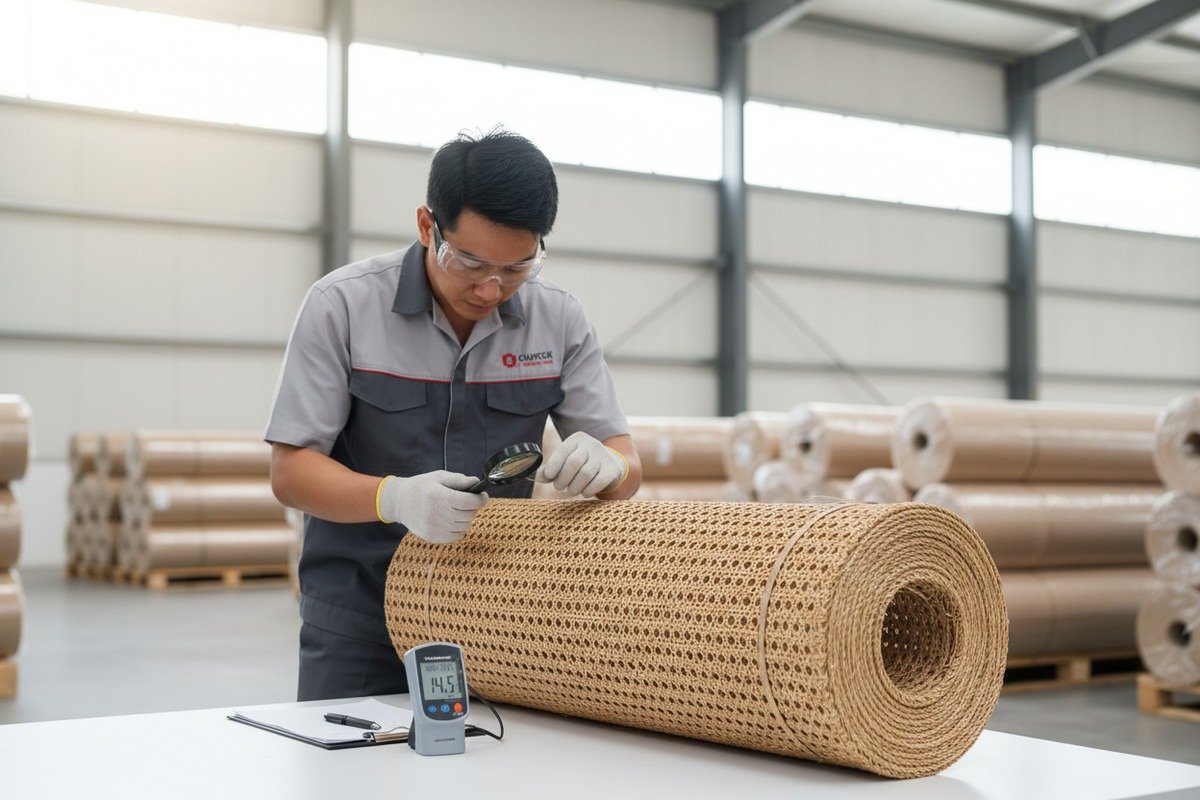
Years of shipping rattan cane webbing 1 from our processing facility in Indonesia have taught us one painful lesson: a single overlooked beetle larva can destroy an entire warehouse pallet. The problem is real, costly, and far more common than most buyers expect wood-boring insects 2. If you have ever opened a shipment to find powdery frass 3 or tiny bore holes in your premium cane rolls, you know the frustration.
Detecting insect infestation risks in natural rattan cane webbing requires systematic visual inspections for bore holes and frass, tactile checks for soft or weakened fibers, environmental monitoring of humidity levels above 60%, and verification of supplier fumigation and drying processes before goods enter your warehouse.
This guide walks you through every step. We cover early warning signs, supplier verification, distinguishing blemishes from damage, and warehouse protection ISPM-15 compliance certificates 4. Let us get started.
How can I identify the early warning signs of wood-boring insects in my rattan cane rolls?
When our quality control team inspects incoming raw rattan at our Indonesian plant, they follow a strict checklist before any material enters the production line. Missing even one sign can mean shipping compromised webbing to clients across 30+ countries. The stakes are high, and early detection is everything.
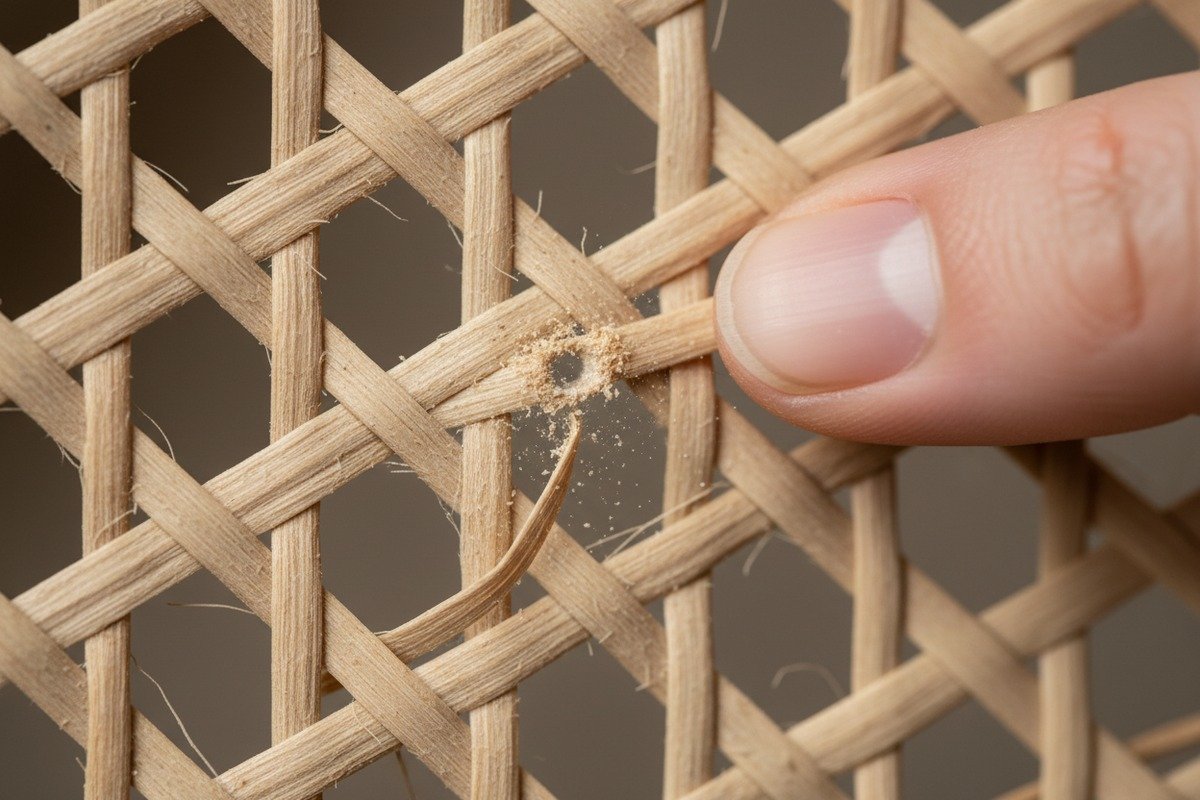
Early warning signs of wood-boring insects in rattan cane rolls include pin-sized exit holes on the surface, fine powdery frass or sawdust-like residue in the weave gaps, faint crackling or ticking sounds from within the fibers, and localized soft spots indicating internal structural damage from larvae feeding.
The Seven-Point Visual and Tactile Inspection
Start with your eyes. Lay the rattan cane roll flat on a clean white surface. A white background makes it easy to spot falling debris. Unroll at least two meters and scan slowly. You are looking for small, round holes about 1–2 mm in diameter. These are exit points where adult beetles have emerged. If you find even one, assume more larvae remain inside.
Next, run your fingers along the cane strands. Healthy rattan feels firm and slightly springy. If a section feels soft, spongy, or crumbles under light pressure, larvae have likely been feeding internally. Beetles and termites can consume up to 30% of a strand's internal structure before any visible sign appears on the surface.
The Tap and Listen Test
Pick up a section of the roll and gently tap it against a hard surface. Watch for fine dust or tiny pellets falling out. This dust is frass — digested fiber that boring insects push out as they tunnel. Then hold the webbing close to your ear in a quiet room. Active larvae produce faint crackling or ticking sounds as they chew through fibers. This is subtle but unmistakable once you know what to listen for.
The Smell Test
Fresh, healthy rattan has a clean, earthy scent. If you detect a musty, damp, or slightly sour odor, it often signals moisture retention. Moisture invites mold, and mold invites insects. The two problems feed each other. In our experience exporting to humid markets like Thailand and the Philippines, musty-smelling rolls are almost always at higher infestation risk.
Key Signs at a Glance
| Warning Sign | What It Means | Severity Level |
|---|---|---|
| Pin-sized holes (1–2 mm) | Adult beetle exit points | High |
| Fine powdery frass in weave gaps | Active or recent larval feeding | High |
| Soft or spongy fiber sections | Internal structural damage | Critical |
| Faint crackling or ticking sounds | Live larvae actively feeding | Critical |
| Musty or sour odor | Moisture and potential mold | Moderate |
| Localized discoloration (dark patches) | Insect secretions or fungal growth | Moderate |
| Tiny egg clusters in crevices | Early-stage infestation, not yet hatched | High |
Use Magnification for Confirmation
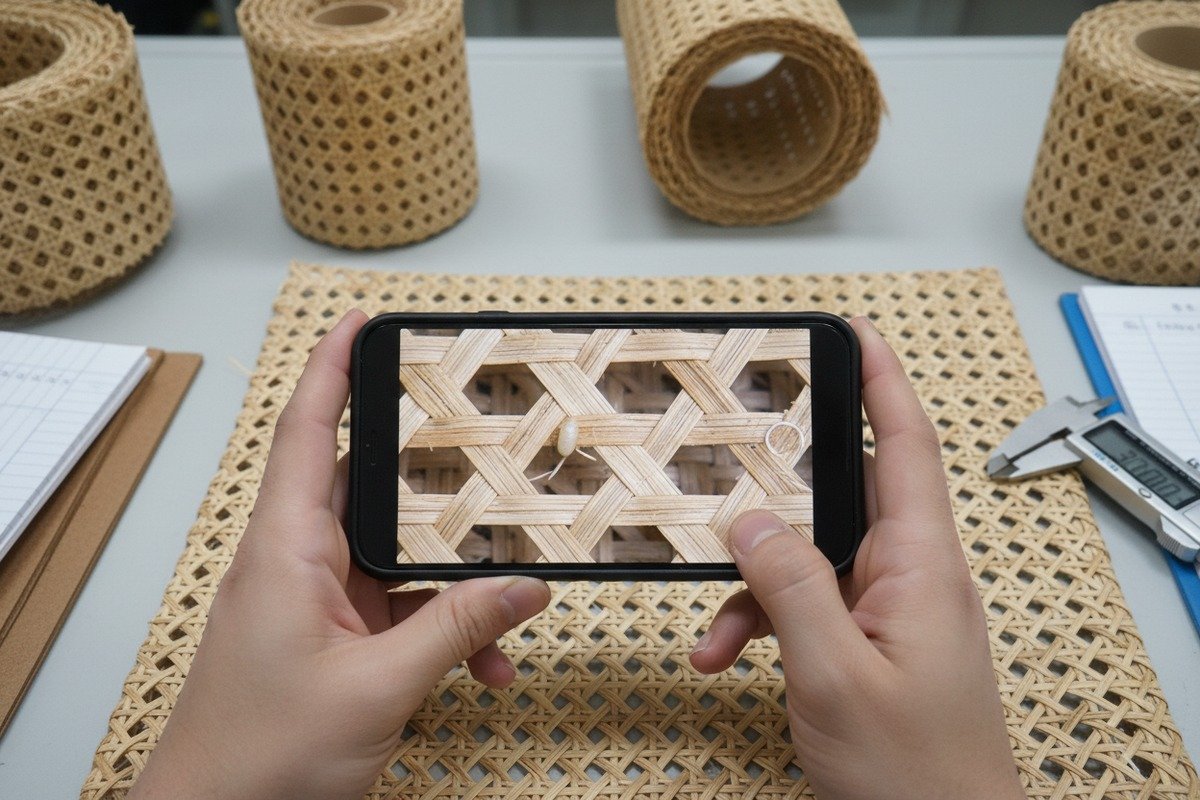
A simple phone camera with macro mode can reveal what your naked eye misses. Zoom into the weave intersections. Look for tiny oval eggs, shed exoskeletons, or pupal casings. These confirm active or recent pest activity. Compare suspect areas against a known healthy section of the same roll. Healthy weave joints are tight, clean, and uniform. Infested areas look loose, dusty, or discolored.
We recommend weekly inspections for any stock stored in humid environments above 60% relative humidity 5. For climate-controlled warehouses, monthly checks are usually sufficient. Keep a flashlight, a soft brush, a hygrometer, and a magnifying tool in your inspection kit.
What steps should I take to verify that my supplier's fumigation process meets international standards?
Our three factories process thousands of rattan poles monthly, and we have learned that the drying and fumigation stage is where quality is won or lost. Buyers who skip supplier verification often pay for it later with rejected shipments or customer complaints about damaged furniture panels.
To verify your supplier's fumigation process, request their ISPM-15 compliance certificates, ask for detailed treatment logs showing temperature and duration data, confirm whether they use kiln drying or chemical fumigation methods, and arrange third-party pre-shipment inspections at the factory before goods are containerized.
Understanding the Two Main Treatment Methods
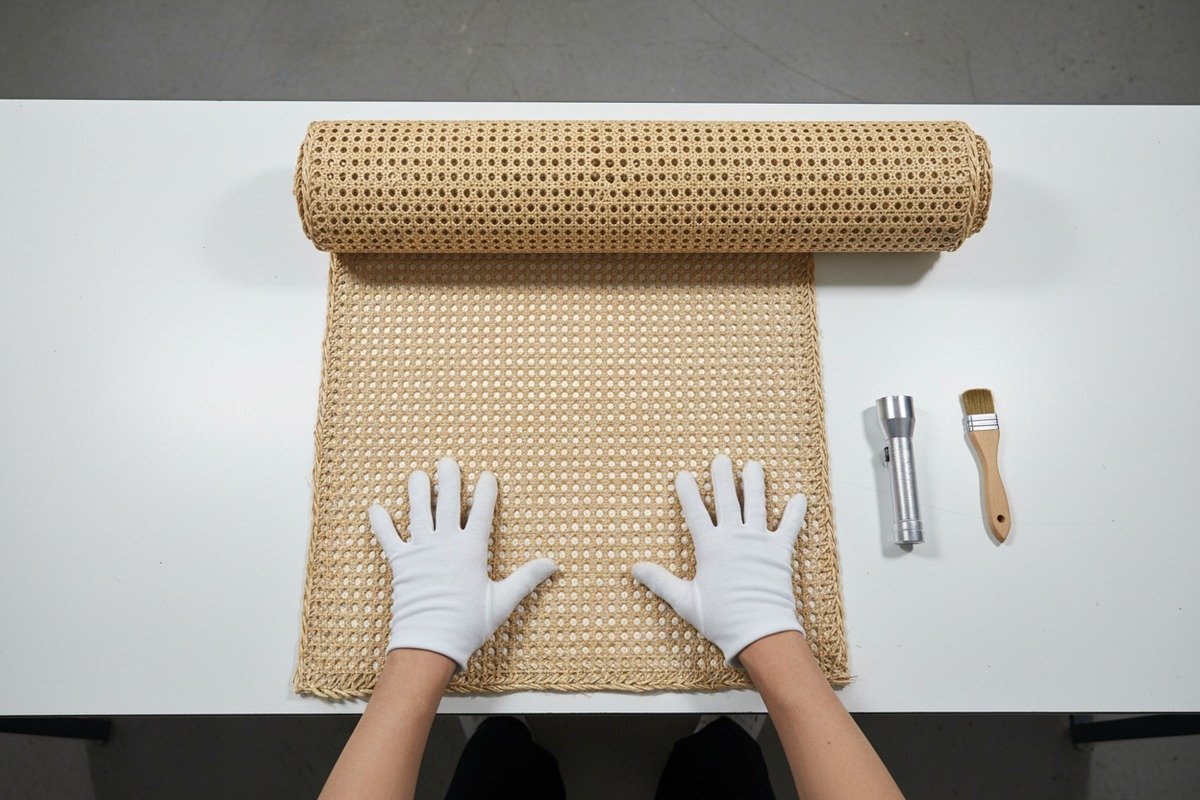
There are two primary approaches to pest elimination in raw rattan: chemical fumigation and mechanical kiln drying 6. Chemical fumigation typically uses methyl bromide 7 or phosphine gas. It kills insects at all life stages but leaves chemical residues. Many countries now restrict methyl bromide under the Montreal Protocol 8.
Kiln drying, which we use at our Indonesian processing facility, heats rattan to a core temperature of 56°C for at least 30 minutes. This kills 99% of insects and mold spores without any chemical input. It is cleaner, safer for workers, and preferred by buyers in the EU, Australia, and the US.
A third legacy method — diesel or sulfur boiling — is still used by some small-scale suppliers. This exposes workers to harmful fumes and can leave sulfur residue on the rattan. We strongly advise against sourcing from suppliers who rely on this outdated technique.
What to Ask Your Supplier
Do not just ask "Do you fumigate?" That question is too vague. Instead, ask these specific questions:
- What method do you use — kiln drying, chemical fumigation, or boiling?
- What core temperature and duration do you target?
- Can you provide batch-specific treatment logs?
- Do you hold ISPM-15 or equivalent phytosanitary certification?
- Will you allow a third-party inspector to verify the process on-site?
A reliable supplier will answer these without hesitation. Evasive or vague responses are a red flag.
Comparison of Treatment Methods
| Treatment Method | Pest Kill Rate | Chemical Residue | Worker Safety | Buyer Acceptance |
|---|---|---|---|---|
| Kiln Drying (56°C / 30 min) | 99%+ | None | High | Preferred globally |
| Methyl Bromide Fumigation | 99%+ | Possible residue | Moderate (requires PPE) | Restricted in many countries |
| Phosphine Gas Fumigation | 95–99% | Minimal | Moderate | Accepted with certification |
| Diesel / Sulfur Boiling | 80–90% | Sulfur residue likely | Low (fume exposure) | Not recommended |
Arrange Pre-Shipment Inspections
Even with valid certificates, we recommend arranging a third-party pre-shipment inspection. Companies like SGS, Bureau Veritas, or TÜV can visit the factory, check treatment logs, and physically inspect sample rolls before loading. This costs a few hundred dollars but can save you thousands in rejected goods or customer claims.
When our clients in the Netherlands or Spain request inspection reports, we welcome it. It builds trust and ensures both sides are aligned on quality expectations. Any supplier who resists third-party access should raise concerns.
Certifications Worth Checking
Look for FSC certification 9 if sustainable sourcing matters to your market. FSC-labeled rattan is harvested responsibly and often comes from suppliers with better processing controls. Additionally, phytosanitary certificates 10 issued by the exporting country's agricultural authority confirm that the goods have been treated and inspected before export.
How do I distinguish between natural surface blemishes and actual pest damage in my cane webbing?
One of the most common calls we get from first-time rattan buyers sounds like this: "There are dark spots on my webbing — is it infested?" Nine times out of ten, the answer is no. Natural rattan has inherent variations. But telling the difference matters, because treating a blemish like an infestation wastes money, and ignoring real damage costs even more.
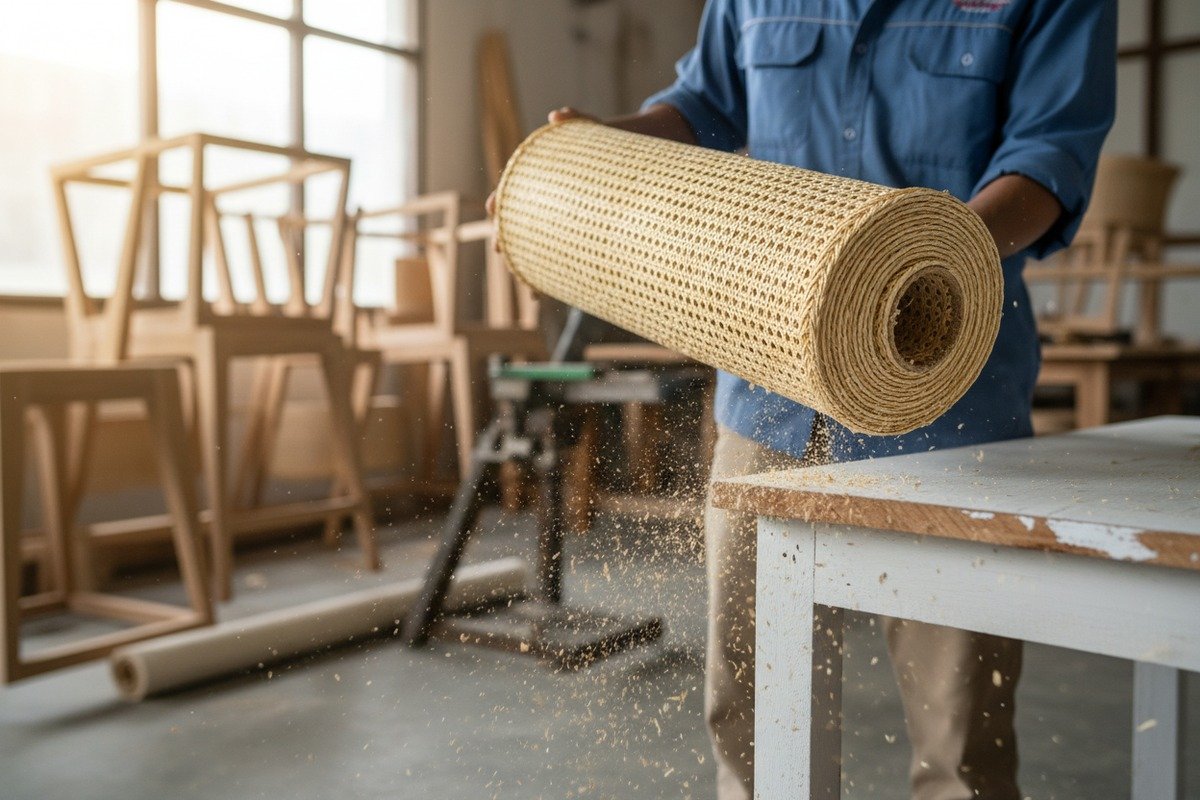
Natural blemishes in rattan cane webbing include uniform color variations, knot marks, and slight surface roughness that are consistent across the material. Pest damage, by contrast, shows localized patterns such as clustered bore holes, concentrated frass deposits, fiber softening in specific spots, and irregular dark stains from insect secretions or associated fungal growth.
What Natural Blemishes Look Like
Rattan is a palm fiber. It grows in tropical forests with variable sunlight, rainfall, and soil conditions. No two strands are identical. Here is what is perfectly normal:
- Color variation: Shades range from pale straw to golden tan within the same roll. This is natural pigment difference, not damage.
- Knot marks: Small bumps or slight ridges where a node grew on the original palm stem. They are structural and do not indicate weakness.
- Surface grain lines: Fine, parallel lines running along the fiber length. These are the natural vascular structure of the plant.
- Minor roughness: Some areas may feel slightly coarser than others. This is typical in unbleached or minimally processed rattan.
These features actually confirm authenticity. Perfectly uniform, blemish-free webbing might suggest heavy chemical processing or even synthetic material.
What Pest Damage Looks Like
Pest damage has distinct characteristics that differ from natural variation. The key word is "localized." Blemishes are spread evenly. Damage clusters in specific spots.
- Bore holes: Round, clean-edged holes 1–2 mm wide, often clustered in groups. Natural cane does not have holes unless an insect made them.
- Frass deposits: Fine, powdery sawdust concentrated around holes or in weave intersections. Natural dust settles evenly; frass accumulates where larvae are feeding.
- Soft spots: Press the cane with your thumbnail. If it dents easily in one spot but feels firm everywhere else, internal feeding has weakened that section.
- Irregular dark stains: Insect secretions and frass-related fungal growth produce dark, blotchy, unevenly shaped stains. Natural color variation transitions gradually.
Side-by-Side Comparison
| Feature | Natural Blemish | Pest Damage |
|---|---|---|
| Color variation | Gradual, spread across roll | Sudden, localized dark blotches |
| Surface texture | Consistent roughness or smoothness | Localized crumbling or softening |
| Holes | None | Clustered pin-sized openings |
| Residue/dust | Minimal, evenly distributed | Concentrated frass near holes |
| Odor | Earthy, clean | Musty, sour, or chemical |
| Structural integrity | Firm throughout | Weak spots when pressed |
The Magnification Confirmation
When you are unsure, magnification resolves most cases. Use a 10x loupe or your phone's macro lens. Zoom into suspect areas. Natural blemishes look like smooth, organic patterns under magnification. Pest damage reveals rough, chewed edges around holes. You may also see tiny oval eggs or translucent larval casings in weave gaps.
When to Accept, When to Reject
Minor natural blemishes are expected in Grade A natural rattan. They do not affect performance or longevity. However, even a single confirmed bore hole warrants closer inspection of the entire batch. In our production line, we isolate any roll with suspected pest damage and inspect at least 20% of the batch from the same production run. If more than 2% of sampled rolls show damage, we hold the entire lot for re-treatment.
For buyers, a practical rule is this: if the issue looks the same everywhere on the roll, it is probably natural. If it looks different in one spot, investigate further.
What are the best practices I can follow to protect my warehouse stock from potential infestation?
Running warehouses that hold rattan inventory across different climate zones has taught our logistics team that prevention always costs less than treatment. A client in Saudi Arabia and a client in the Netherlands face very different humidity challenges, but both need the same disciplined approach to warehouse pest management.
Best practices for protecting warehouse rattan stock include maintaining relative humidity below 60%, ensuring proper ventilation and airflow around stored rolls, applying natural oil sealants like linseed or tung oil, conducting weekly inspections in high-risk seasons, keeping rattan elevated off floors on pallets, and isolating new shipments for quarantine inspection before integrating them with existing inventory.
Environmental Controls Come First
Insects and mold both thrive in warm, humid environments. The single most impactful thing you can do is control moisture. Rattan's organic moisture content attracts insects two to three times more aggressively in environments above 70% relative humidity compared to dry conditions. Your target is below 60% RH at all times.
Invest in a digital hygrometer for each storage zone. In tropical or coastal warehouses, a commercial dehumidifier is not optional — it is essential. Smart dehumidifiers with automatic humidity sensing are increasingly affordable and can maintain precise conditions without constant manual monitoring.
Airflow matters as much as humidity levels. Stagnant air allows moisture pockets to form around stacked rolls. Use ceiling fans or portable industrial fans to keep air moving. Never store rattan rolls directly against walls. Leave at least 15 cm of clearance on all sides for air circulation.
Storage Layout and Handling
Always store rattan cane webbing on raised pallets. Direct floor contact wicks moisture from concrete and creates a perfect habitat for termites and ants. Stack rolls horizontally, not vertically, to prevent stress on the weave. Limit stack height to four rolls to avoid crushing the lower layers.
Keep rattan separate from other organic materials like cardboard, wood scraps, or paper packaging. These materials attract insects independently and can serve as bridge hosts that transfer pests to your rattan inventory.
The Quarantine Protocol
Every new shipment should be quarantined for at least 48 hours before being placed alongside existing stock. During this quarantine period, inspect sample rolls using the seven-point checklist described earlier. Look for bore holes, frass, soft spots, odor, and visible insect activity. Only release the batch into general inventory after it passes inspection.
This quarantine step is especially critical when sourcing from new or unverified suppliers. Even suppliers with valid fumigation certificates can have occasional lapses.
Preventive Treatments
Applying a thin coat of natural linseed oil or tung oil to rattan webbing creates a protective barrier that discourages insects and reduces moisture absorption. Studies in furniture care suggest that regular oil application extends rattan life by 20–50% and reduces infestation risk by up to 80% when combined with proper cleaning.
Avoid synthetic varnishes for interior-grade rattan webbing. They can trap moisture underneath and create conditions that paradoxically promote mold growth. For outdoor applications, consider hybrid sealants that combine natural oils with UV protectants.
Cleaning Protocols
Dust and food residues attract ants and beetles. Clean rattan surfaces weekly with a soft brush or vacuum with a brush attachment. For deeper cleaning, use a lightly damp cloth with mild soap. Never soak rattan in water. Excess moisture is the number one enemy.
Seasonal Vigilance Calendar
Pest activity peaks in warm, humid months. Schedule more frequent inspections during these periods.
- Spring: Increase inspections to bi-weekly. Check for emerging beetle activity as temperatures rise.
- Summer: Weekly inspections. Monitor humidity daily. Ensure dehumidifiers and fans are running continuously.
- Autumn: Maintain bi-weekly schedule. Inspect for spider nests and egg casings before the dormant season.
- Winter: Monthly inspections are usually sufficient in temperate climates. Continue humidity monitoring in heated warehouses.
When to Call a Professional
If you discover active infestation — live insects, widespread frass, or structural collapse — do not attempt DIY chemical treatment. Contact a licensed pest management professional who has experience with natural fiber materials. Generic insecticides can damage rattan weave and leave residues that discolor the surface. Rattan-specific treatments target pests without harming the material.
Conclusion
Protecting natural rattan cane webbing from insect infestation comes down to early detection, verified supplier processes, accurate damage identification, and disciplined warehouse management. Apply these practices consistently, and your rattan stock stays safe.
Footnotes
1. Provides an overview of rattan cane webbing as a material for furniture and decor. ↩︎
2. Details common types of wood-boring insects and their signs of damage. ↩︎
3. Replaced with a relevant page from the original authoritative domain (.edu) explaining powderpost beetles and their frass. ↩︎
4. Explains the purpose and issuance of phytosanitary certificates, including ISPM-15. ↩︎
5. Defines relative humidity and its importance in atmospheric moisture. ↩︎
6. Describes kiln drying as a method to eliminate insects and diseases from wood. ↩︎
7. Replaced with a highly authoritative government (.gov) source from the US EPA detailing methyl bromide’s uses and regulations. ↩︎
8. Official site detailing the Montreal Protocol’s role in phasing out ozone-depleting substances. ↩︎
9. Official site explaining FSC certification for sustainable forestry and product sourcing. ↩︎
10. Explains phytosanitary certificates as official documents for international trade of plant products. ↩︎

 English
  Español de México
  العربية
  Deutsch
  Français
  Русский