
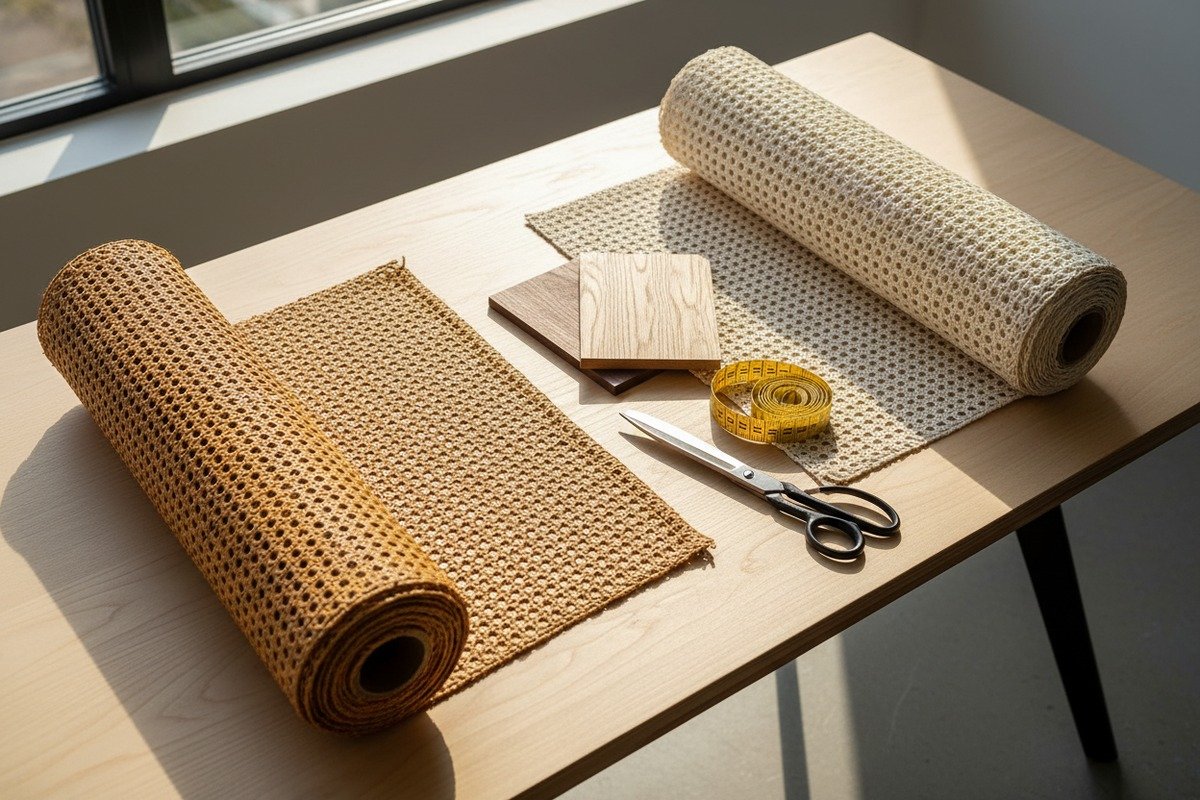
Every week, our sales team fields the same question from furniture factories and wholesalers around the world: “Should I go with natural or bleached rattan cane webbing 1?”
Choosing between natural and bleached rattan cane webbing depends on your project’s aesthetic direction, durability requirements, budget constraints, and production workflow. Natural rattan offers warm, organic tones ideal for rustic designs, while bleached rattan delivers a lighter, uniform finish suited for modern and minimalist furniture styles.
This guide breaks down the key differences between natural and bleached rattan 2 cane webbing. We cover aesthetics, durability, pricing, and factory suitability so you can make a confident sourcing decision. Let’s dig in.
How do I decide between the raw look of natural rattan and the uniform finish of bleached webbing?
When we first started exporting rattan cane webbing to European and American buyers, the finish question came up in nearly every order conversation sulfur-based compounds 3.
Natural rattan cane webbing has a warm amber tone with organic color variation, while bleached webbing offers a crisp, lighter hue with greater uniformity. Your decision should be guided by your target market's design preferences, the wood finishes you pair with, and how much color consistency your production line demands.
Understanding the Visual Difference
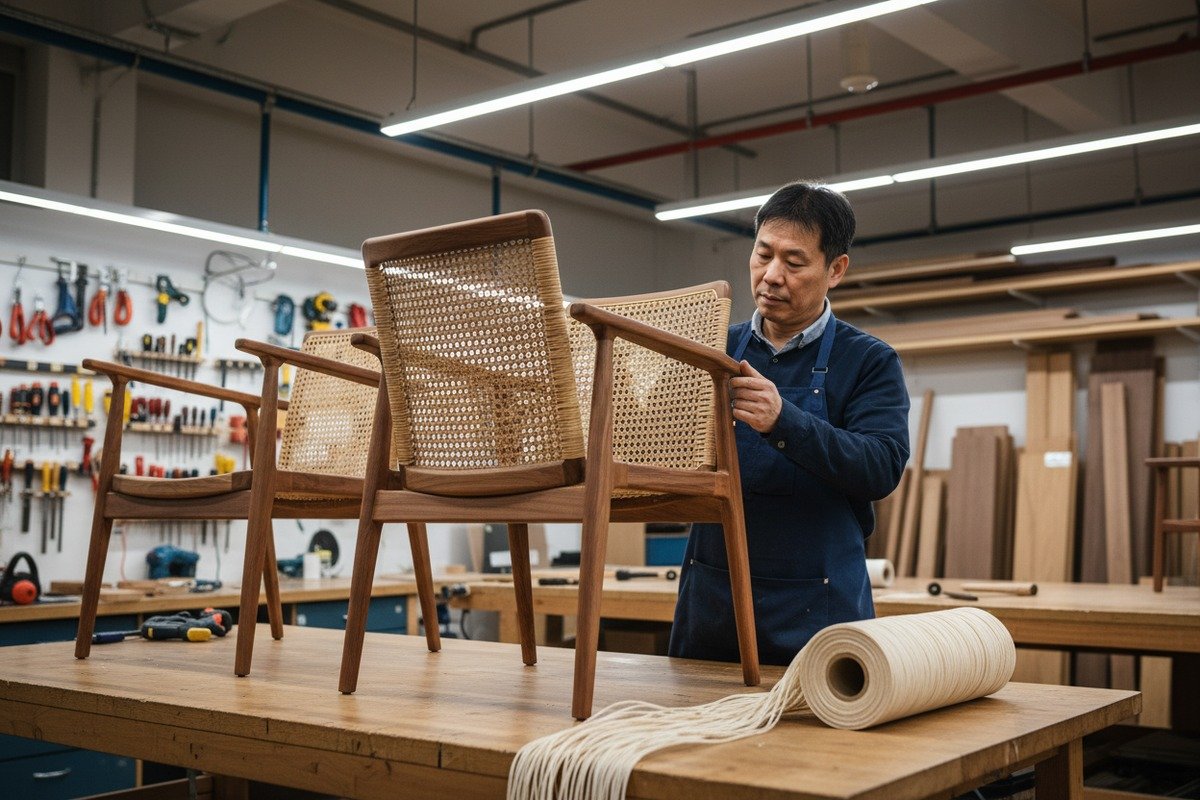
The difference between natural and bleached rattan is immediately visible FOB pricing breakdowns 4. Natural rattan 5 retains the outer bark of the rattan palm vine. It shows warm amber, honey, and straw tones. No two strands are exactly the same shade. This is part of its charm for many designers. It gives furniture a handcrafted, artisanal look.
Bleached rattan goes through a lightening process. The result is a paler, more uniform surface. The tones shift toward cream and off-white. This cleaner palette fits well in Scandinavian, coastal, and minimalist design schemes. It also works better when the final product will be painted or stained in a light color.
Matching Rattan to Your Design Direction
From our experience working with furniture factories in over a dozen countries, design direction drives 70% of the natural-vs-bleached decision. Here is a simple guide we share with our buyers:
| Design Style | Recommended Finish | Best Wood Pairings | Mood |
|---|---|---|---|
| Bohemian / Rustic | Natural | Walnut, mahogany, cherry | Warm, earthy, organic |
| Scandinavian / Minimalist | Bleached | Light oak, ash, birch | Clean, airy, modern |
| Coastal / Tropical | Bleached or semi-bleached | White-painted, light teak | Bright, relaxed, breezy |
| Mid-Century Modern | Natural | Teak, rosewood | Retro, sophisticated |
| Contemporary Luxury | Either (project-dependent) | Dark stains or matte white | Refined, curated |
The Role of Color Consistency
One thing our quality control team flags repeatedly is this: natural rattan has inherent shade variation. In a single roll, you may notice lighter and darker strands woven together. For artisanal or handmade-look products, this is desirable. But for factory production lines that need exact color matching across hundreds of chair seats, it can create headaches.
Bleached rattan is specifically processed to reduce this variation. However, even bleached webbing can show uneven lightening if the raw material is not pre-sorted by density. Denser fibers absorb the bleaching agent differently. That is why we invest extra time in sorting rattan strands before any bleaching step at our Indonesian processing facility. Rigorous pre-sorting is the single biggest factor in achieving a consistent bleached finish.
Semi-Bleached: The Middle Ground
A growing number of our buyers now ask for semi-bleached or lightly treated rattan. This option brightens the base color without stripping away all the natural character. It retains some warmth and grain variation but looks cleaner than fully natural webbing. If you are targeting a versatile aesthetic that works across multiple furniture lines, semi-bleached is worth sampling.
We always recommend requesting physical samples before placing a bulk order. Photos on screens can shift in color. Holding a piece of natural next to a piece of bleached webbing — and comparing both against your wood finish — gives you the clearest answer.
Will bleaching impact the long-term durability and strength of my rattan cane webbing?
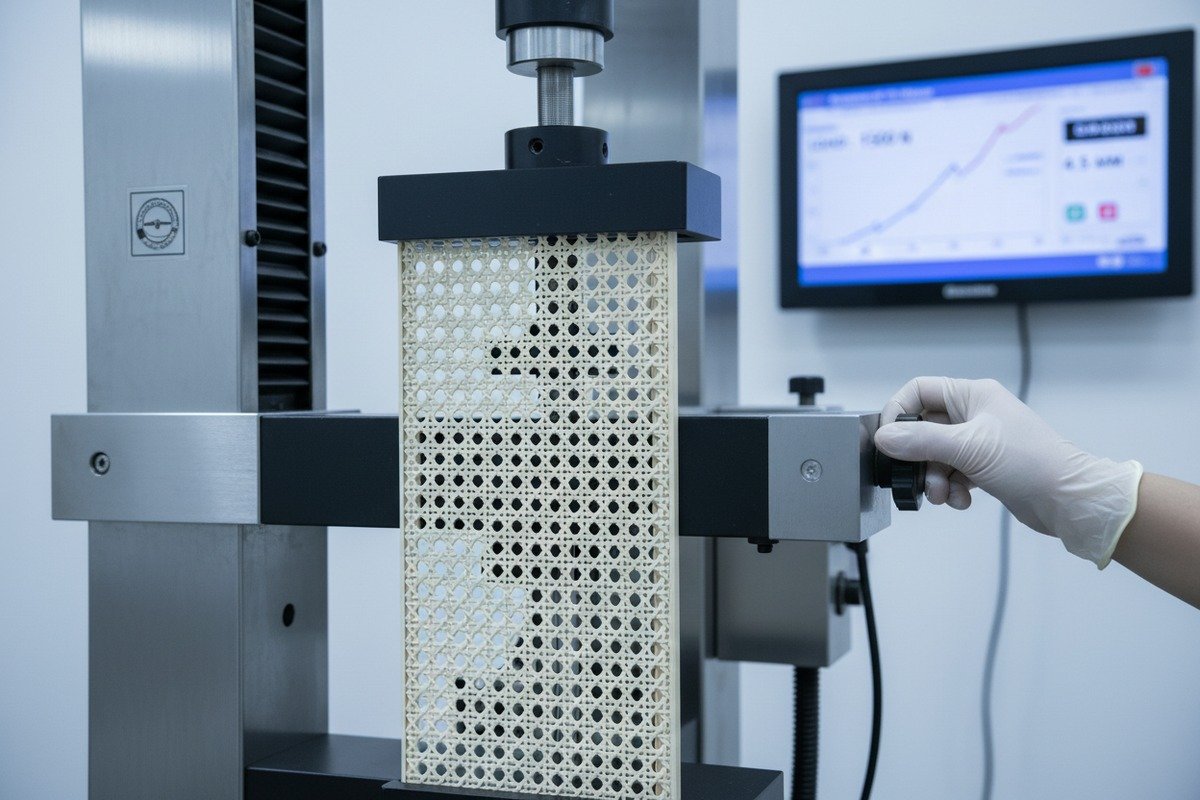
On our production floor, we test tensile strength 6 on both natural and bleached rattan samples regularly, because this question matters for every factory buyer who needs their furniture to last.
Bleaching does not significantly reduce rattan cane webbing's structural strength when done properly using controlled steaming or mild eco-friendly agents. However, harsh chemical bleaching or over-processing can weaken fibers, reduce flexibility, and shorten the product's lifespan, making supplier quality control essential.
How Bleaching Works
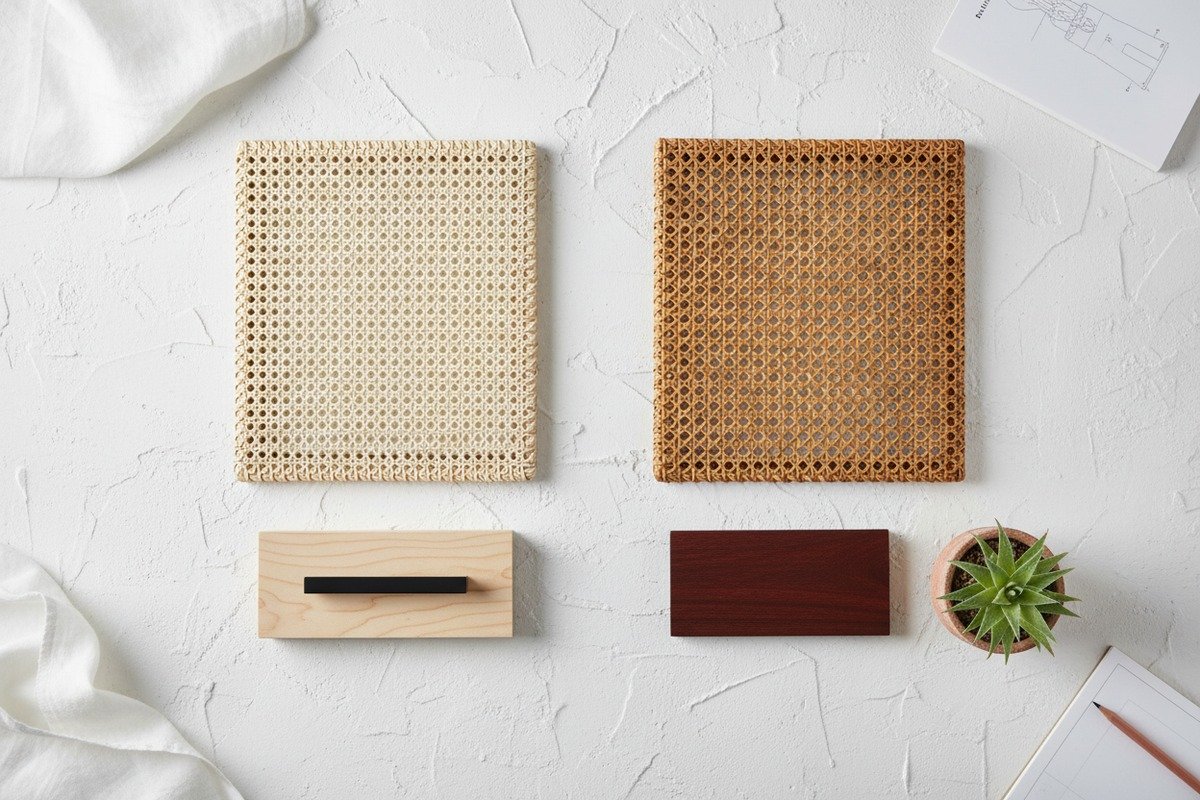
Bleaching rattan involves lightening the natural pigments in the outer bark. There are two main methods:
Chemical bleaching uses agents like hydrogen peroxide 7 or sulfur-based compounds to strip color. This is fast and cost-effective but can be aggressive on the fibers if concentrations are too high or exposure times are too long.
Eco-friendly bleaching relies on steaming, sun exposure, or mild natural agents. This approach is gentler on the rattan fibers and produces fewer off-gassing concerns. At our Indonesian facility, we favor steaming combined with controlled natural drying. It takes longer, but the rattan retains more of its original flexibility and strength.
Comparing Durability: Natural vs Bleached
Both natural and bleached rattan cane webbing are strong and flexible when used indoors. Rattan's cellular structure 8 gives it excellent tensile strength for its weight. The key durability factors are not just about the finish — they also involve moisture exposure, UV light 9, and physical stress.
| Durability Factor | Natural Rattan | Bleached Rattan |
|---|---|---|
| Tensile Strength | High (unaltered fibers) | High if properly processed; reduced if over-bleached |
| Flexibility | Excellent; soaking restores pliability | Good; may be slightly reduced by chemical methods |
| UV Resistance | Low; fades and becomes brittle in direct sunlight | Low; also fades, may yellow over time |
| Moisture Sensitivity | High; can warp, mold, or crack | High; similar sensitivity, needs indoor use |
| Expected Indoor Lifespan | 10–20+ years with care | 10–20+ years if quality-bleached |
| Off-Gassing Risk | None | Low with steaming; moderate with chemical agents |
What Weak Bleaching Looks Like
When we inspect competitor samples that come in with buyer complaints, the signs of poor bleaching are consistent. Brittle strands that snap instead of flex. Uneven white patches next to yellowish spots. A slight chemical odor that does not fade. These are red flags that indicate rushed processing, poor-quality raw material, or excessive chemical use.
Protecting Your Investment
For both natural and bleached rattan, a light coat of clear lacquer or varnish extends the product's life. It seals the fibers against humidity without changing the look much. We recommend this step especially for buyers shipping to humid climates like Southeast Asia or coastal regions.
If you source bleached rattan, always ask your supplier: What bleaching method do you use? What is the concentration and exposure time? Can you provide test reports on fiber strength post-bleaching? A reliable supplier will answer these questions openly.
Natural rattan, on the other hand, requires soaking in water for 15 to 20 minutes before installation. This restores flexibility and prevents cracking during weaving or stapling onto frames. Bleached rattan may or may not need soaking depending on the method used — ask your supplier for specific handling instructions.
How does the price difference between natural and bleached rattan affect my sourcing budget?
Running three factories and coordinating with over 30 partner workshops in Foshan gives us a clear view of how rattan pricing breaks down across the supply chain 10.
Natural rattan cane webbing is generally less expensive than bleached because it skips the additional processing step. Bleached rattan commands a premium of roughly 10–25% due to sorting, treatment, and quality control costs. However, the real budget impact depends on order volume, quality grade, waste rates, and consistency requirements for your production line.
Why Bleached Costs More
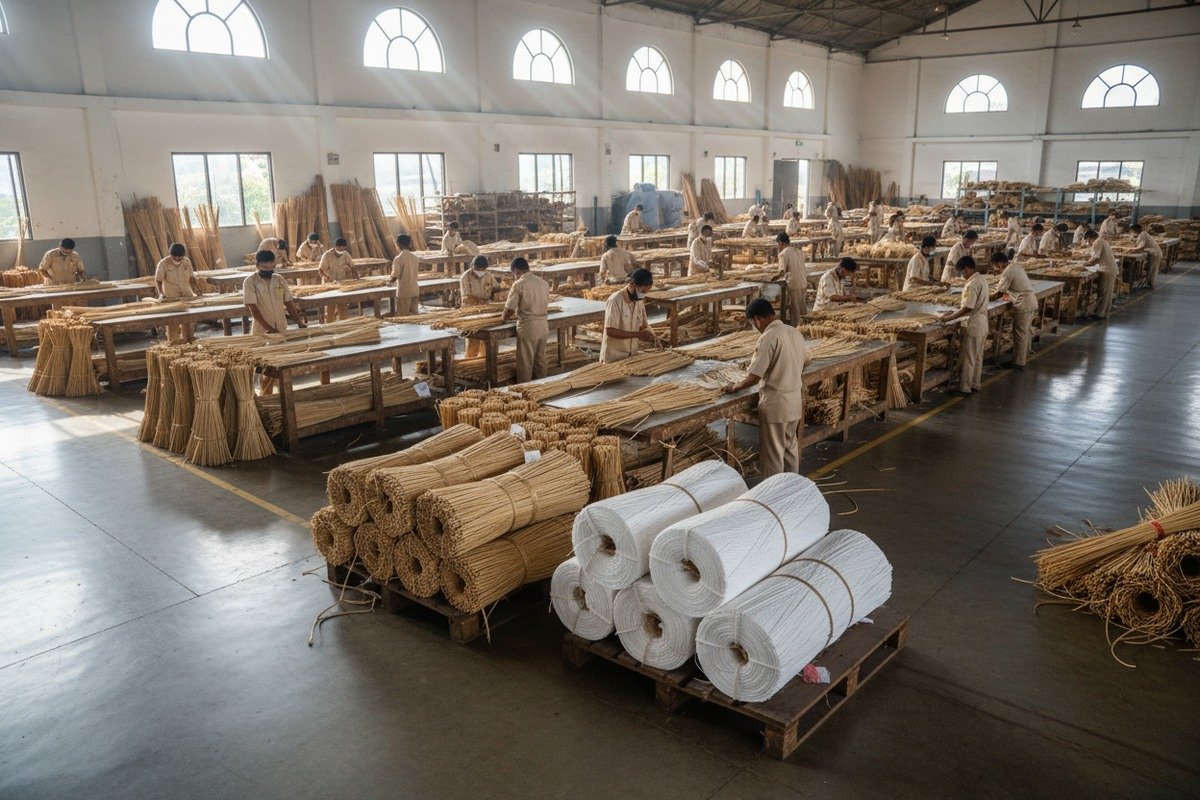
The price difference is not just about the bleaching itself. It starts earlier in the supply chain. To produce a uniform bleached product, the raw rattan must be sorted more carefully before processing. Strands with knots, color defects, or inconsistent thickness get pulled out. This sorting step increases labor costs and reduces yield from each batch of raw material.
Then comes the bleaching process. Whether steaming or chemical, it requires equipment, energy, water, and time. Eco-friendly steaming methods take longer — sometimes several days of controlled drying — which adds to the per-unit cost. Finally, bleached rattan undergoes a second round of quality inspection to check for uneven spots or fiber damage. All of these steps add up.
Breaking Down the Cost Factors
| Cost Component | Natural Rattan | Bleached Rattan |
|---|---|---|
| Raw Material | Standard harvest cost | Same raw material, but requires pre-sorting |
| Sorting & Grading | Basic visual check | Rigorous density and shade sorting |
| Processing | None (cut, peel, weave) | Steaming or chemical treatment + drying |
| Quality Control | Standard weave inspection | Additional color uniformity and fiber checks |
| Waste / Rejection Rate | Lower (minor shade variance accepted) | Higher (uneven bleaching = rejected rolls) |
| Packaging & Shipping | Standard | Standard (no difference) |
| Typical Price Premium | Baseline | +10% to +25% over natural |
How to Optimize Your Budget
Here are strategies we share with our wholesale buyers:
Mix finishes across product lines. Not every piece in your catalog needs bleached rattan. Use natural for your rustic or boho lines and bleached for your contemporary range. This balances your overall material cost.
Order in volume. Bleaching costs per unit drop significantly at scale. If you commit to a larger order, we can run a dedicated bleaching batch with better efficiency and pass the savings to you.
Choose the right grade. Premium Grade A bleached rattan has the tightest color consistency. But Grade B bleached may be sufficient for products that will receive a tinted lacquer or stain. Buying a slightly lower grade — when your end finish allows — can save 5–10% without visible quality loss.
Request FOB pricing breakdowns. A trustworthy supplier will show you how the cost splits between material, processing, and logistics. This transparency helps you compare quotes fairly across different vendors.
The Hidden Cost of Going Too Cheap
We have seen buyers chase the lowest quote, only to receive natural rattan with high shade variance or bleached rattan with spotty whitening. The rework and waste on the factory floor cost more than the savings. In our experience, mid-range pricing from a reliable supplier with quality controls delivers the best total cost of ownership. Cheap rattan that causes a 15% rejection rate on your production line is never actually cheap.
Which rattan webbing finish is better suited for my specific furniture factory production needs?
Over the years, we have supplied rattan cane webbing to factories making everything from dining chairs in the Netherlands to decorative wall panels in Saudi Arabia, and the right finish always depends on the production context.
The best rattan webbing finish for your factory depends on your end-product design, finishing process (staining, lacquering, or leaving raw), production speed requirements, and target market preferences. Natural rattan suits factories producing rustic or artisanal pieces, while bleached webbing is better for factories requiring color-consistent output at scale for modern furniture lines.
Matching the Finish to Your Production Workflow
Your factory's workflow should play a central role in this decision. Consider how rattan webbing enters your assembly process.
If your production line applies a dark stain or tinted lacquer over the rattan, natural webbing is usually the smarter pick. The stain will mask shade variations, making the lower cost of natural rattan a clear advantage. There is no point paying for bleached uniformity when a walnut stain will cover it.
If you sell furniture with exposed, unstained rattan — like a minimalist cane-back dining chair in light ash — bleached rattan is essential. Your customers will see the webbing directly. Any shade inconsistency becomes visible and looks like a defect rather than a feature. In this case, the premium for bleached webbing pays for itself in fewer returns and complaints.
Factory-Floor Considerations
Soaking and handling: Natural rattan needs 15–20 minutes of soaking before it becomes flexible enough to install without cracking. Your production team needs a soaking station and drying area. Bleached rattan that has been steamed may retain slightly more pliability, but you should still test your specific supply to confirm. Build soaking time into your production schedule.
Cutting and waste: Bleached rattan that is poorly processed can crack more easily during cutting and stapling. If you notice higher breakage rates on your line, the issue is likely sourcing quality, not the bleaching itself. Request sample rolls and run them through your actual production process before committing to a bulk order.
Storage: Both finishes need dry, ventilated storage. Rattan absorbs moisture quickly. Rolls stacked in a humid warehouse can develop mold within weeks — regardless of whether they are natural or bleached. We ship our products in sealed, moisture-resistant packaging, but once opened, proper storage is your responsibility.
Which Markets Prefer Which Finish?
From our export data across dozens of countries, regional preferences are clear:
- Europe (Netherlands, Spain, Greece): Strong demand for bleached and semi-bleached. Scandinavian and Mediterranean design trends favor lighter tones.
- USA and Australia: Mixed demand. Coastal and farmhouse styles want natural; modern urban furniture lines prefer bleached.
- Middle East (Saudi Arabia, Dubai, Iran): Preference for natural rattan in luxury and traditional furniture. Bleached is growing in hospitality projects.
- Southeast Asia (Thailand, Philippines): Both finishes sell well. Local designers often blend natural and bleached in the same piece for contrast.
Indoor vs Outdoor Suitability
Both natural and bleached rattan cane webbing are primarily indoor materials. They are not designed for direct outdoor exposure. UV light causes fading and brittleness. Rain and humidity cause swelling, warping, and mold. If your factory produces outdoor furniture, consider synthetic PE rattan that mimics the natural look but resists weathering. We offer both natural materials and synthetic alternatives so you can choose based on the application.
For indoor use, the finish choice has no major impact on functional performance. Both are breathable, lightweight, and flexible. The decision comes down to aesthetics, consistency needs, and cost.
Making the Final Call
Before placing your order, we suggest this simple checklist:
- Define your design direction — rustic or modern?
- Will you stain or lacquer the rattan, or leave it exposed?
- How important is color uniformity on your production line?
- What is your target price point per unit of finished furniture?
- Request samples of both natural and bleached from your supplier.
- Run samples through your actual production process.
- Compare the total cost including waste and rework, not just material price.
This systematic approach takes the guesswork out of the decision. And if you are still unsure, our team is happy to send comparison sample packs so you can evaluate both finishes side by side.
Conclusion
Choosing between natural and bleached rattan cane webbing is a strategic sourcing decision that shapes your product's look, cost, and market fit. Evaluate your design goals, production workflow, and budget — then request samples to confirm your choice before scaling up.
Footnotes
1. Provides general information about rattan cane webbing material. ↩︎
2. Describes the general chemical processes involved in bleaching. ↩︎
3. Provides information on sulfur-based compounds as bleaching agents. ↩︎
4. Explains the meaning and implications of FOB (Free On Board) Incoterms. ↩︎
5. Explains the characteristics and properties of natural rattan. ↩︎
6. Defines and explains the concept of tensile strength in materials. ↩︎
7. Explains the chemical properties and uses of hydrogen peroxide. ↩︎
8. Explains the anatomical and microstructural features of rattan. ↩︎
9. Describes the effects of UV light on materials and health. ↩︎
10. Defines and explains the concept of a supply chain. ↩︎

 English
  Español de México
  العربية
  Deutsch
  Français
  Русский