
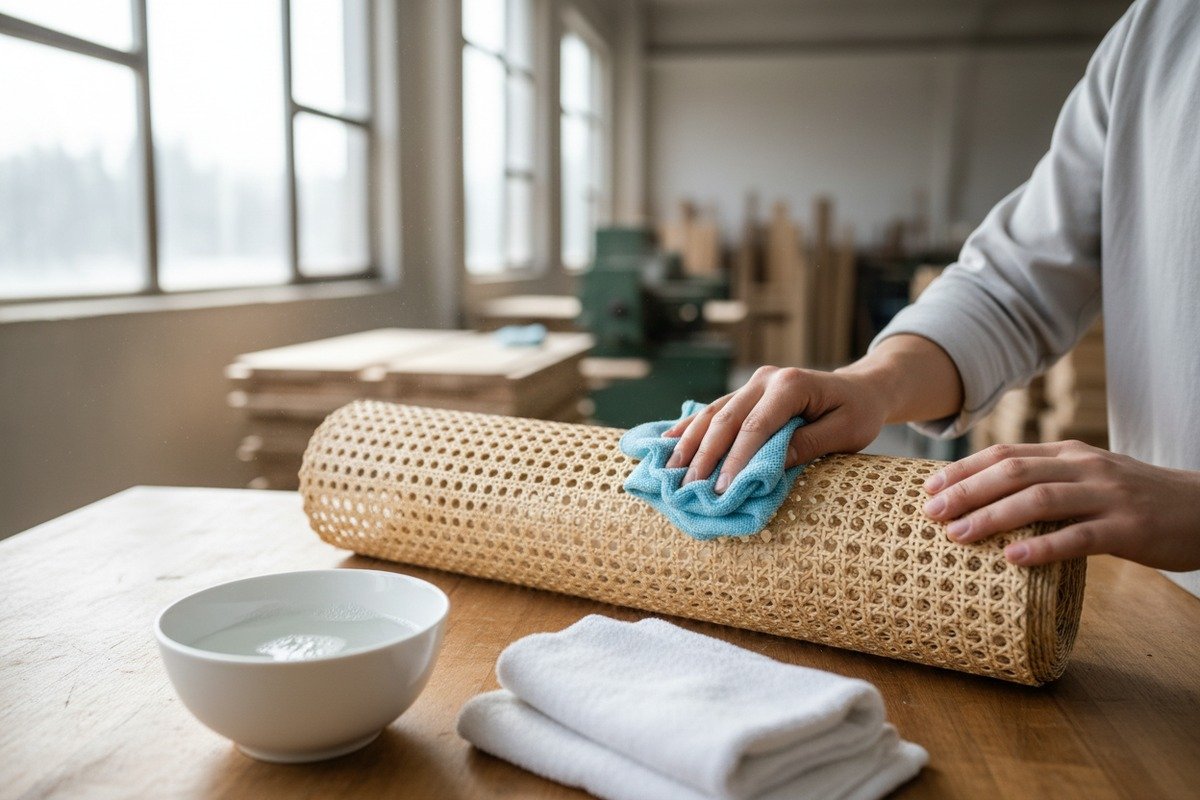
Every week, our customer service team fields the same urgent question from furniture factories and wholesalers around the world — can I just rinse my rattan cane webbing under a tap or hose to clean it quickly?
No, you should not rinse natural rattan cane webbing directly with water. Excess moisture causes the organic fibers to swell, warp, crack, and develop mold. Instead, use a lightly damp cloth with mild soap or a vinegar-water solution, and dry immediately to preserve the material’s structural integrity and appearance.
This topic matters more than most people realize organic fibers 1. A single careless rinse can ruin an entire roll of premium webbing. Below, we break down the safest cleaning methods, drying techniques, and long-term maintenance strategies so you can protect your rattan investment from day one.
How should I clean my natural rattan webbing without causing water damage?
We have seen it happen on our production floor in Foshan — a new worker grabs a hose to clean dust off a stack of natural rattan cane webbing 2, and within hours the fibers start swelling and curling at the edges.
To clean natural rattan webbing safely, dust it first with a soft brush or vacuum attachment. Then wipe gently with a well-wrung damp cloth using mild soap or a diluted vinegar solution. Never soak, spray, or submerge the material. Always dry the surface immediately after wiping.
Why Water Is the Enemy of Natural Rattan
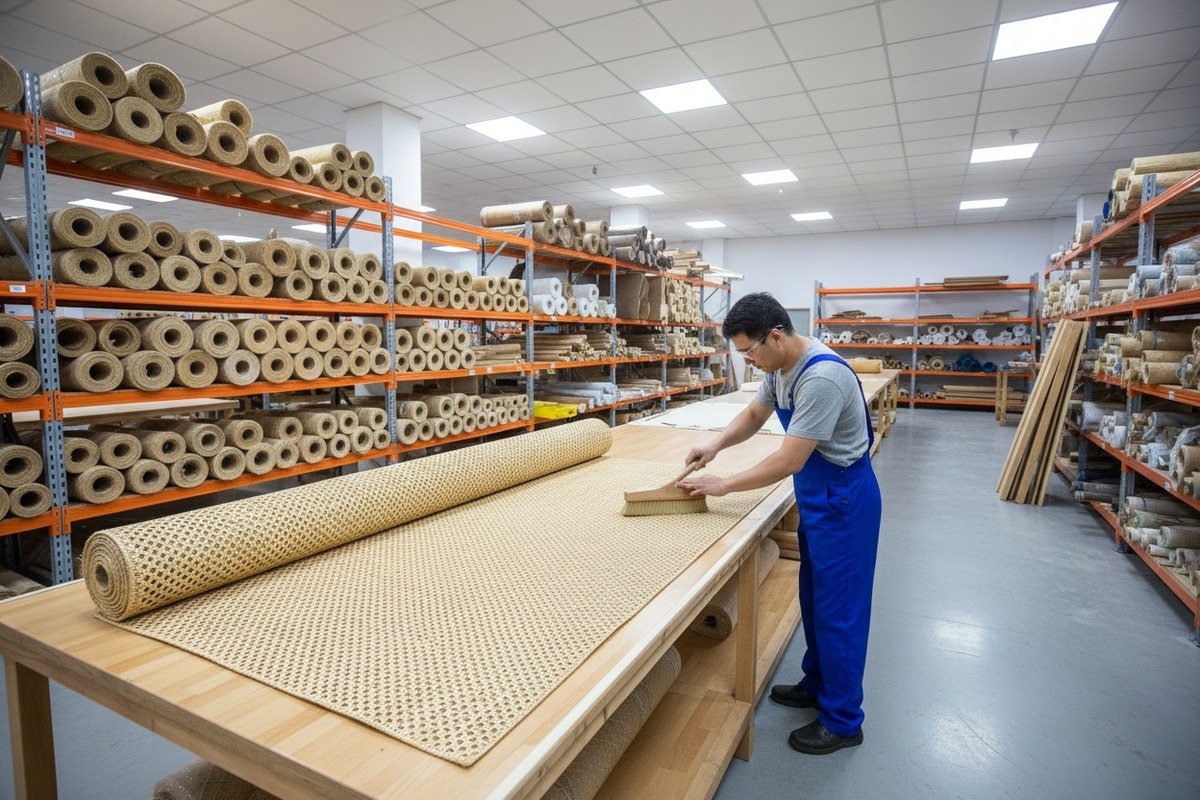
Natural rattan is a hygroscopic material 3. That means it absorbs moisture from its environment. When you rinse it directly, the fibers soak up water fast. They expand. They lose their original shape. Once that happens, the webbing rarely returns to its former tension and form. This is the core reason why every major rattan care source — from furniture specialists to experienced craftspeople — warns against direct rinsing.
Synthetic rattan 4, on the other hand, is made from resin or plastic. You can hose it down without any worry. This difference causes a lot of confusion, especially among buyers who have used both types. If you are not sure which type you have, try the smell test. Natural rattan has a mild, earthy scent. Synthetic rattan smells like plastic.
The Right Way to Clean: Step by Step
Here is the safest cleaning routine we recommend to our wholesale clients:
- Remove loose dust. Use a soft-bristle brush, a feather duster, or a vacuum with a brush attachment. Work along the direction of the weave.
- Prepare a mild solution. Mix a few drops of dish soap in warm water, or combine equal parts white vinegar and water. mild solution 5
- Dampen a cloth. Dip a soft microfiber cloth in the solution. Wring it out thoroughly. The cloth should feel barely damp — not wet.
- Wipe gently. Follow the grain of the weave. Do not press hard. Do not let water pool in any crevices.
- Dry immediately. Use a separate dry cloth to absorb any remaining moisture. Then let the piece air-dry in a well-ventilated area.
Cleaning Methods Compared
| Method | Suitable for Natural Rattan? | Risk Level | Notes |
|---|---|---|---|
| Hose or direct rinse | No | High | Causes warping, mold, fiber damage |
| Soaking in water | No | Very High | Leads to rot and structural failure |
| Damp cloth with mild soap | Yes | Low | Wring cloth thoroughly first |
| Vinegar-water damp wipe | Yes | Low | Good for light stains and odor |
| Dry brush or vacuum | Yes | None | Best for routine dust removal |
| Pressure washer | No | Extreme | Destroys weave structure instantly |
Dealing With Stubborn Stains
For tougher spots, make a paste with baking soda 6 and a small amount of water. Apply it to the stain with a soft cloth. Let it sit for no more than 5 minutes. Then wipe it away with a barely damp cloth and dry the area right away. Avoid bleach on natural rattan — it breaks down the fibers and discolors the surface.
A diluted vinegar solution also works well for mildew spots. Apply with a cloth, let it sit for up to 15 minutes, then wipe clean and dry. This is the maximum contact time we recommend. Anything longer increases moisture risk.
Will rinsing my rattan cane directly lead to mold or structural warping?
When our factory in Indonesia processes raw rattan poles, controlling moisture is one of the most critical steps in the entire workflow — because we have learned firsthand what happens when rattan stays wet too long.
Yes, rinsing rattan cane directly with water frequently leads to mold growth and structural warping. Natural rattan fibers absorb water quickly and expand unevenly, causing the weave to distort. Trapped moisture in tight weave patterns creates ideal conditions for mold and mildew, especially in warm or humid environments.
How Water Damages Rattan at the Fiber Level
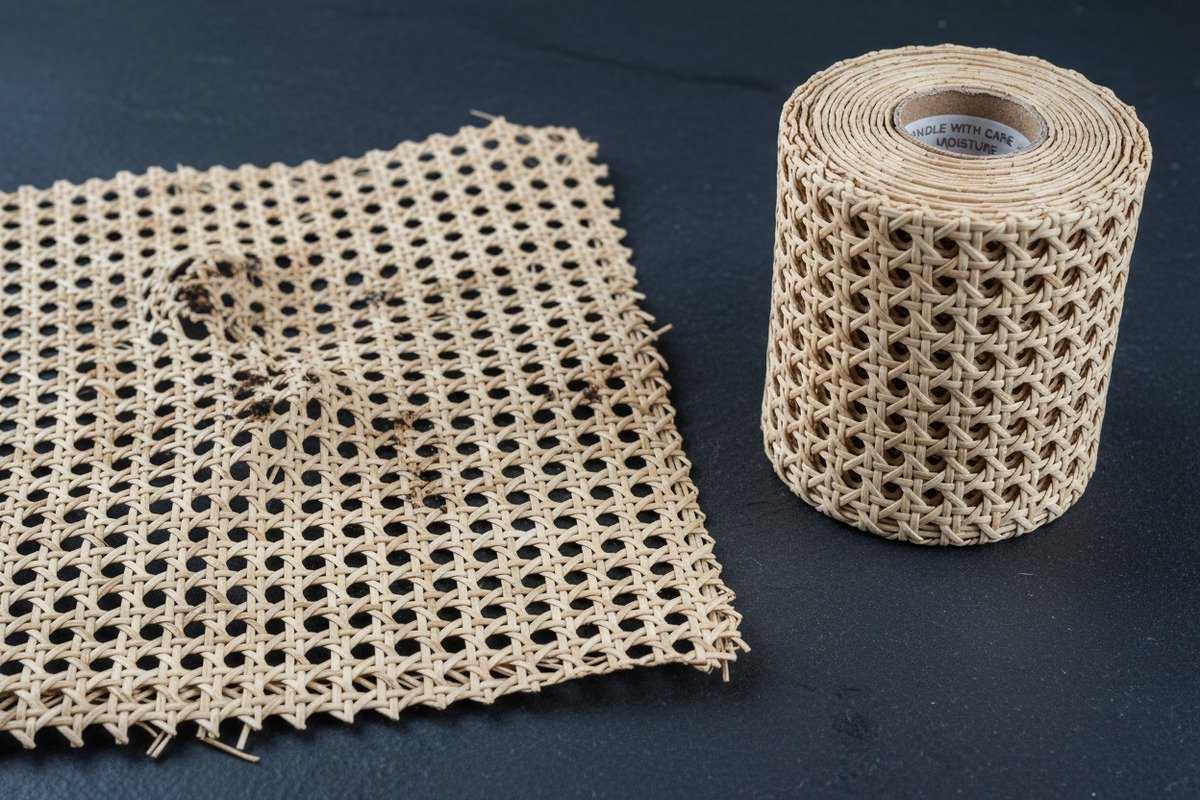
Rattan is essentially a palm vine. Its internal structure is porous and fibrous. When water enters these pores, the fibers swell. Different parts of the weave absorb water at different rates, which creates uneven tension. The result is warping — the webbing buckles, lifts, or pulls away from its frame.
If the moisture is not removed quickly, something worse happens. Mold spores 7, which are present in almost every indoor and outdoor environment, begin to colonize the damp fibers. Mold loves warm, moist, organic material. Natural rattan provides all three conditions at once.
The Timeline of Water Damage
Understanding how fast damage occurs can help you act quickly if your rattan gets accidentally wet.
| Time After Wetting | What Happens | Reversible? |
|---|---|---|
| 0–30 minutes | Surface moisture sits on fibers | Yes, if dried immediately |
| 30 minutes – 2 hours | Fibers begin absorbing water, slight swelling | Mostly yes, with prompt drying |
| 2–6 hours | Noticeable swelling, weave tension changes | Partially — some distortion may remain |
| 6–24 hours | Warping begins, musty smell may appear | Difficult — professional repair may be needed |
| 24–72 hours | Mold spores activate, visible mildew spots | Hard to fully reverse; structural compromise likely |
| 72+ hours | Rot sets in, fibers weaken permanently | Irreversible — replacement usually required |
What About Intentional Soaking for Installation?
Here is where things get nuanced. Natural rattan cane webbing is intentionally soaked in water — typically for 15 to 30 minutes — before installation. This makes the material pliable so craftspeople can stretch and tension it properly into a frame. Once installed, the rattan dries and contracts, pulling tight.
This is a controlled process. The key differences between installation soaking and careless rinsing are:
- Duration is limited. Soaking is 15–30 minutes. Not hours.
- Cool or lukewarm water only. Hot water can weaken fibers prematurely.
- Immediate tensioning and drying follows. The rattan is stretched into a frame and dried in open air.
- It happens once. Not repeatedly.
Rinsing for cleaning purposes, especially with no drying plan, is an entirely different situation. The water sits in the weave with nowhere to go. There is no tension to pull it tight. Mold risk skyrockets.
Climate and Storage Factors
Where you store rattan matters just as much as how you clean it. In our experience shipping to humid markets like Thailand, the Philippines, and parts of the USA, we always advise clients to keep rattan materials in climate-controlled storage. Ideal conditions are 40–60% relative humidity 8 and away from direct sunlight.
High humidity accelerates mold. Low humidity causes cracking and brittleness. Direct sunlight fades the natural color and dries out the fibers. Balance is everything.
What are the best ways for me to dry rattan webbing if it gets wet during production?
On our production lines across Foshan and in our Indonesian rattan processing facility, accidental wetting happens — a leaking roof during monsoon season, a spill near storage, or excess moisture from the soaking process during cane chair assembly.
If rattan webbing gets wet during production, immediately blot excess water with absorbent towels, then air-dry the material in a well-ventilated area with good airflow. Avoid direct heat sources like hair dryers or heaters, which cause cracking. Position the rattan flat or under gentle tension to prevent warping as it dries.
Immediate Response: The First 30 Minutes
Speed is your greatest ally. The moment rattan gets wet beyond what you intended, do the following:
- Blot, do not rub. Use clean, absorbent towels or cloths. Press firmly to draw moisture out of the weave. Rubbing can fray fibers, especially when they are wet and soft.
- Tilt and drain. If you are drying a sheet or panel, tilt it at an angle to let gravity pull water out of the weave intersections.
- Separate wet pieces. Do not stack wet rattan sheets on top of each other. Stacking traps moisture between layers and doubles the mold risk.
Drying Methods Ranked
Not all drying methods are equal. Here is a comparison based on what works best in real production environments.
| Drying Method | Effectiveness | Risk to Rattan | Best Use Case |
|---|---|---|---|
| Open-air drying (shaded, ventilated) | Excellent | Very Low | Standard post-soak drying for installation |
| Fan-assisted air drying | Excellent | Very Low | Indoor production when outdoor drying is not possible |
| Sunny outdoor drying | Good | Low–Medium | Annual deep cleans; monitor to avoid UV damage |
| Dehumidifier room | Good | Low | Humid climates where air drying is slow |
| Hair dryer (low heat) | Fair | Medium | Small spot-drying only; keep moving, no concentrated heat |
| Oven or space heater | Poor | High | Never recommended — causes cracking and warping |
| Leaving wet in storage | None | Extreme | Guarantees mold and rot |
Maintaining Tension During Drying
One critical detail that many people overlook: rattan should dry under some degree of tension or in a flat position. If you drape wet rattan over a rod or let it sag, it will dry in that sagged shape. Once dry, rattan holds its form. You cannot easily reshape it without soaking it again, which starts the whole risk cycle over.
In our factory, we use flat drying racks with clamps at the edges. This keeps the webbing taut and flat as it contracts during drying. For furniture makers installing cane webbing into chair seats, the frame itself provides the tension — but you still need to ensure air can circulate around both sides of the panel.
What If Mold Has Already Started?
If you spot early mold — small white or grayish patches — act fast. Mix equal parts white vinegar and water. Dampen a cloth with this solution and wipe the affected area. Let the vinegar sit for no more than 10–15 minutes. Then wipe clean and dry immediately. Vinegar's mild acidity kills most surface mold without damaging the rattan.
For more stubborn mold, a baking soda paste can help. Apply it, let it sit briefly, then brush away with a soft bristle brush. Follow with the vinegar wipe. If the mold has penetrated deep into the fibers and the rattan smells strongly of mildew, the material may be beyond saving.
How can I maintain the high-quality finish of my rattan materials over time?
Through years of supplying rattan cane webbing to markets across Europe, the Middle East, and Southeast Asia, our team has gathered feedback from hundreds of buyers on what keeps rattan looking beautiful for decades — and what causes it to deteriorate within months.
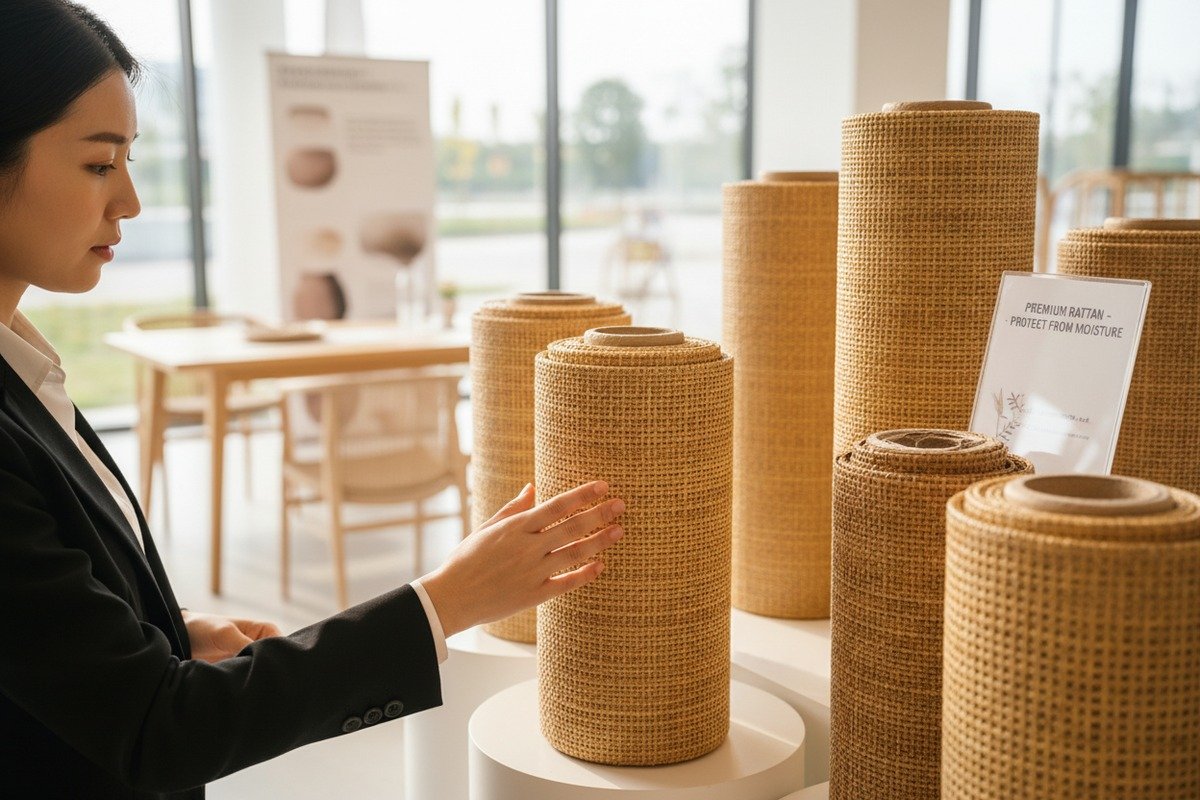
To maintain high-quality rattan over time, apply a natural oil like linseed or mineral oil once or twice a year to prevent brittleness. Keep rattan indoors or in climate-controlled spaces, away from direct sunlight and extreme humidity. Dust regularly and clean only with a barely damp cloth to preserve the finish and weave integrity.
The Role of Oils and Conditioning
Rattan fibers naturally lose moisture over time. Without periodic rehydration, they become dry, brittle, and prone to cracking. This is where natural oils come in. They penetrate the fibers and restore flexibility without introducing the risks that water does.
Here are the most commonly used conditioning oils and their characteristics:
- Linseed oil. The classic choice. It penetrates deeply and dries to a slight sheen. Use boiled linseed oil 9 for faster drying.
- Mineral oil. Food-safe and odorless. A good choice for rattan used in kitchen or dining furniture.
- Lemon oil. Adds a pleasant scent and light conditioning. Better as a supplement than a primary conditioner.
- Tung oil. Provides a more durable, water-resistant finish. Takes longer to cure.
- Murphy's Oil Soap (diluted). A gentle cleaner and light conditioner in one. Good for routine maintenance.
Apply oil with a soft cloth. Work it into the weave. Let it absorb for 15–20 minutes. Then buff away any excess with a clean, dry cloth. Do this once or twice a year, depending on your climate.
Protective Finishes and Sealants
The finish on your rattan makes a significant difference in how water-resistant it is. Unfinished rattan is the most vulnerable. A light polyurethane coat 10, lacquer, or wax sealant adds a barrier that protects against casual moisture, stains, and UV fading.
At our facility, we offer clients several finish options depending on their end use. Here is a quick guide:
| Finish Type | Water Resistance | UV Protection | Natural Look Preserved? | Reapplication Frequency |
|---|---|---|---|---|
| Unfinished (raw) | Very Low | None | Yes — fully natural | N/A (recommend sealing) |
| Linseed oil | Low–Medium | Minimal | Yes — slight sheen | Every 6–12 months |
| Wax sealant | Medium | Low | Yes — matte to satin | Every 12 months |
| Polyurethane (clear) | High | Moderate | Mostly — slight gloss | Every 2–3 years |
| Lacquer spray | High | Moderate–High | Depends on sheen level | Every 2–3 years |
Long-Term Storage Best Practices
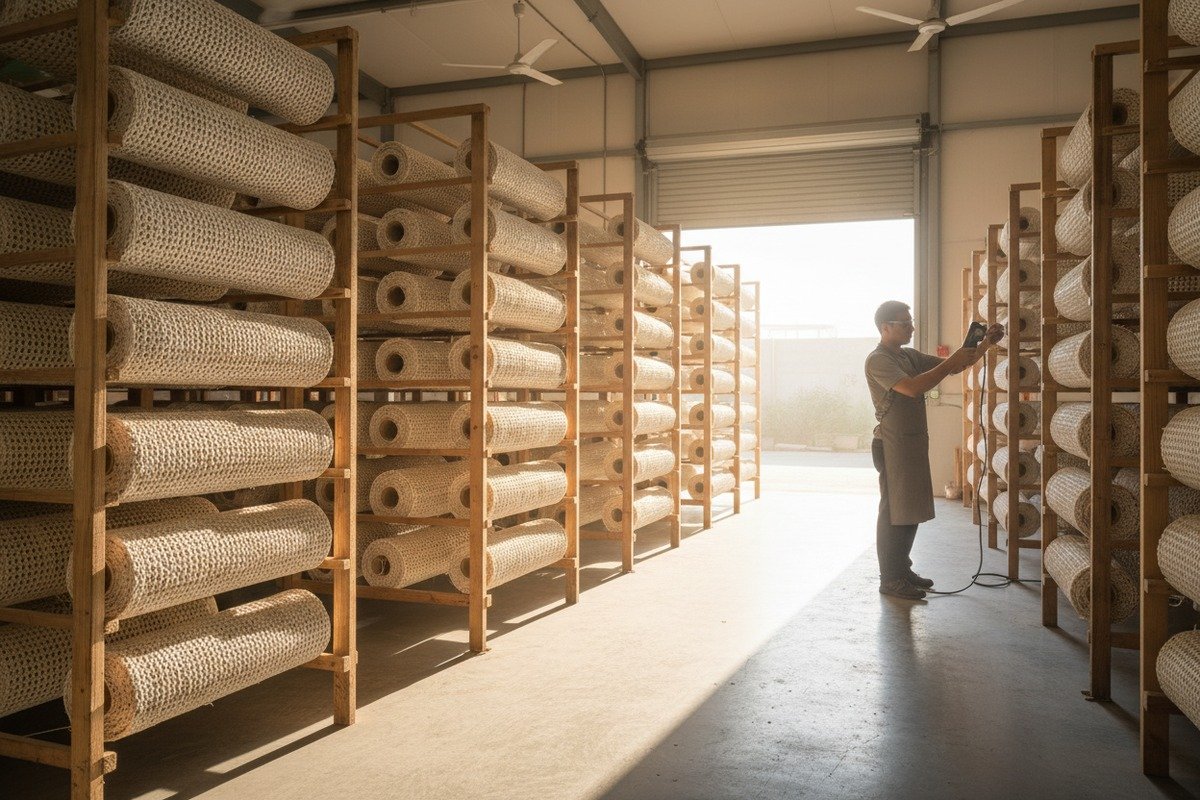
If you are a wholesaler or purchasing manager storing large quantities of rattan webbing, proper storage is non-negotiable. Here are the rules we share with every client:
- Store indoors. Never leave natural rattan outside for extended periods.
- Control humidity. Aim for 40–60% relative humidity. Use dehumidifiers in tropical climates.
- Avoid direct sunlight. UV rays fade and dry out rattan fibers. Use curtains or UV-filtering covers.
- Keep rolls upright or flat. Do not hang rolls, as gravity causes stretching and deformation over time.
- Inspect periodically. Check for early signs of mold, pest activity, or drying. Catching problems early saves entire shipments.
The Natural Aging of Rattan
One thing to keep in mind: natural rattan darkens over time. This is normal. The warm, golden-honey patina that develops is actually considered desirable by many furniture designers and interior decorators. Oils help maintain an even color transition. Water, ironically, can cause blotchy discoloration that disrupts this natural aging process.
Clients who embrace this natural patina and invest in simple, consistent care routines often report that their rattan pieces last 15–20 years or more. Neglected pieces rarely survive beyond 3–5 years, especially in challenging climates.
Sustainability and the Bigger Picture
There is a growing trend toward eco-friendly rattan care. Many of our European buyers, particularly in the Netherlands and Spain, specifically ask for care instructions that avoid chemical cleaners. Vinegar, baking soda, and plant-based oils are not just gentler on rattan — they are better for the environment. Using these simple, natural products extends the life of your rattan, reduces waste from premature replacement, and aligns with the sustainability values that drive much of today's market demand for natural materials.
Conclusion
Natural rattan cane webbing thrives with gentle, dry care — never direct rinsing. Dust regularly, clean with barely damp cloths, condition with natural oils annually, and store wisely to enjoy beautiful, durable rattan for years.
Footnotes
1. Explains how organic materials like wood fibers react to changes in moisture. ↩︎
2. Provides a clear definition and comparison of natural rattan. ↩︎
3. Wikipedia provides a comprehensive and accessible definition of hygroscopy. ↩︎
4. Explains the composition and properties of synthetic rattan as a man-made alternative. ↩︎
5. Defines mild detergents and their suitability for cleaning delicate materials safely. ↩︎
6. Provides information on using baking soda for cleaning from a relevant brand. ↩︎
7. Details the conditions required for mold spores to grow and colonize surfaces. ↩︎
8. Discusses ideal relative humidity levels for preserving wood furniture and preventing damage. ↩︎
9. Describes the properties and benefits of linseed oil for protecting and nourishing wood. ↩︎
10. Explains the durability and protective qualities of polyurethane as a wood finish. ↩︎

 English
  Español de México
  العربية
  Deutsch
  Français
  Русский